The Uninvited Return
The doorbell rang at exactly 9:00 a.m. on a Sunday morning, and I knew—with the kind of certainty that makes your blood run cold—that whatever was waiting on the other side of that door would change everything. I set down my wrench, wiped the grease from my hands, and stared at my phone screen. Seven faces. Seven people I’d spent a decade trying to forget. And now they were here, standing on my front porch like they belonged there.
I wasn’t ready for this. But then again, you’re never really ready for the moment your past comes knocking.
My name is Derek Mitchell, and I’m thirty-five years old. For the past decade, I’ve built a life that most people would call successful—a custom home design and construction company that’s earned a reputation for quality and craftsmanship, a six-acre property on the outskirts of Austin with a house I designed and built myself, and enough financial security that I don’t have to think twice about the cost of groceries or car repairs.
But success, I’ve learned, is a strange thing. It doesn’t erase the past. It doesn’t make the hurt go away. It just gives you better walls to hide behind and a nicer view while you’re licking your wounds.
That Sunday morning, I was in my garage—a space I’d designed to be part workshop, part sanctuary. Three thousand square feet of organized tools, project space, and a lift for working on vehicles. I was in the middle of customizing a 1972 Honda CB750 motorcycle, hands deep in engine work, when my Ring doorbell chimed.
At first, I thought it might be a delivery. Maybe some religious group making their rounds. But when I pulled up the app and saw the faces staring back at me through the camera, my stomach dropped like I’d missed a step on a staircase.
Seven of them. Standing in a loose semicircle on my front porch.
Grandmother Patricia, matriarch of the family, the woman who’d perfected the art of the cutting remark disguised as concern.
Aunt Monica and Uncle Steve, the golden couple who’d always treated family gatherings like networking events.
My cousins Tyler and Brandon, who’d tormented me throughout our childhood for being “the weird one” who preferred building things to playing sports.
My older brother Jake, who’d once been my hero and protector before he decided I was an embarrassment.
And some blonde woman I’d never seen before, standing close to Jake with the practiced posture of someone used to being photographed.
Seeing them all together felt like opening a closet and having a decade’s worth of accumulated junk come crashing down on your head. You know it’s been there all along, quietly gathering dust, but that doesn’t make it any less shocking when it finally spills out.
I stood there in my garage, staring at my phone screen, and felt something cold settle in my chest. Not quite anger. Not quite fear. Something closer to weary resignation mixed with a sharp, defensive instinct.
They hadn’t just shown up randomly. This was planned. Coordinated. Which meant they wanted something.
I took three deep breaths—a habit I’d developed in therapy years ago—and walked toward the house. My boots echoed on the imported Italian stone flooring of the entryway, each step deliberate and measured. The stone had cost a fortune to install, but I’d wanted it specifically because of how it felt—solid, permanent, cool even in the Texas summer heat.
I’d built this house with my own hands and my own money. Every beam, every finish, every detail had been chosen with intention. Not out of pride, though I won’t lie and say there wasn’t some of that. Mostly out of necessity.
Because I’d learned the hard way that if I wanted something solid in my life, I had to build it myself.
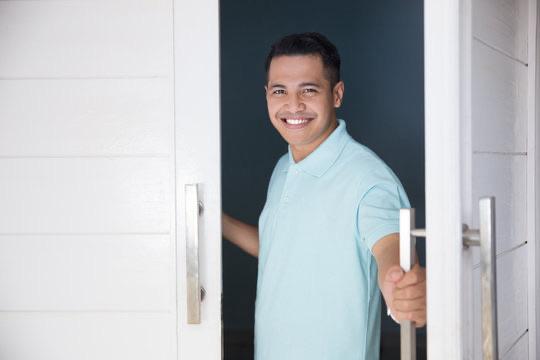
I opened the door.
For a moment, nobody spoke. They just stared at me like I was a stranger wearing a familiar face. I watched their expressions shift in real time—surprise giving way to confusion, confusion giving way to something that looked uncomfortably like recalculation.
Because the version of me they’d carried in their heads all these years was the family disappointment. The kid who “played with tools.” The one who “didn’t apply himself.” The one who’d chosen trade school over university and been talked about in hushed, pitying tones at family gatherings I was no longer invited to.
The one they could mention with a sigh and a slow shake of the head to make themselves feel superior about their own choices.
What they got instead was a man who’d learned how to stand tall. Who’d learned that rough hands weren’t something to be ashamed of. Who’d learned that the best response to judgment is simply living well.
I was wearing a flannel shirt that actually fit my frame, quality jeans without holes, and work boots that had cost more than the dress shoes Jake used to wear to his office job. My hair was shorter than it used to be, threaded with just enough gray at the temples to suggest I’d earned some wisdom along the way. My face had learned the valuable skill of staying neutral when people tried to press old buttons.
Grandmother Patricia recovered first, because she always did. Her entire identity was built on being the first person to speak, the first person to control the narrative, the first person to establish the terms of any interaction.
“Derek,” she said, her voice trying for warmth but landing somewhere closer to stiff formality. “What a… beautiful home you have.”
I nodded once, keeping my expression even. “Hard work pays off.”
It came out smoother than I’d expected. Not bitter. Not angry. Just factual. A simple truth stated without embellishment or apology.
The silence that followed felt like that moment in a song where everyone forgets the next line and the music just hangs there, waiting.
Monica stepped forward, deploying her signature bright plastic smile—the one she used at country club brunches, charity auctions, and funerals where she wanted people to think she was grieving more than she actually was.
“We were in town for the Johnson family reunion,” she said lightly, as if this were the most natural thing in the world. “We thought we’d stop by since we heard you lived out this way.”
The Johnsons lived in Dallas. A solid two-hour drive from Austin, and that was if traffic cooperated. Even if they were “in town” for some event, there was no casual stop-by involved. This was planned. Researched. A group decision that had been discussed and debated.
They’d found my address somehow. They’d coordinated their schedules. They’d driven here together with a purpose.
I kept my face carefully neutral and opened the door wider, stepping back to let them in.
“Do you want to come in,” I asked, keeping my tone flat and unreadable, “or are we having this conversation on the porch?”
They filed inside, one by one, each of them trying not to look too eager or too curious. But I saw the way their eyes widened. I saw the moment the full reality of my life hit them.
Because the inside of my house doesn’t whisper about money. It doesn’t try to look expensive with flash and labels. It simply is what it is—quality built on quality, detail stacked on detail, craftsmanship that speaks for itself.
The entryway alone had taken me three weeks to get right. Vaulted ceilings that drew the eye upward. Custom ironwork on the chandelier and wall sconces, designed by a metalworker in Bastrop who understood that iron should look both strong and graceful. Original paintings from a local artist whose work I’d discovered at a gallery opening—large abstract pieces in earth tones that complemented the stone and wood without overwhelming the space.
The flooring was imported Italian stone with radiant heating underneath, so it stayed comfortable year-round. The staircase was solid walnut with hand-forged railings done by a craftsman who’d actually cried the day we installed it. He’d told me he’d spent thirty years in his trade and had never had a client who cared about the work itself, not just the end result.
I’d cared about every single detail.
Tyler couldn’t help himself. His mouth actually fell open as he looked around. “Man,” he said, half under his breath, like he was talking to himself more than to anyone else. “This place is… insane.”
I looked at him directly, remembering every time he’d called me “tool boy” like it was clever. Every time he’d laughed when I’d shown up to family events with sawdust still in my hair. Every time he’d made sure everyone knew that trade school wasn’t “real college.”
“It’s home,” I said simply.
Brandon’s eyes were darting around like he was trying to figure out what he was allowed to admire without looking jealous or bitter. Steve was examining the stonework with an appraiser’s eye, clearly looking for some flaw he could point out later, some small imperfection he could use to diminish what I’d built.
Jake stood stiff, shoulders tight, his jaw working like he was chewing on words he couldn’t quite spit out. The blonde woman beside him—I’d learn later her name was Brittany—held her posture like she was on camera, all perfect angles and practiced elegance, her eyes scanning every corner and cataloging every detail with cool efficiency.
And Grandmother Patricia… she didn’t look impressed. She looked like someone who’d just been handed a piece of information that contradicted everything she’d said for years. Someone who was being forced to rewrite her internal narrative in real time.
Because if I was successful—truly, undeniably successful—then everything she’d said about me, every cutting remark about my choices, every pitying look she’d given my mother at family gatherings, wasn’t just mean.
It was wrong.
And Grandmother Patricia hated being wrong more than she hated anything else in the world.
I did something that surprised even me. I offered them coffee.
Not because I wanted to play nice. Not because I was trying to win them over or prove anything. But because I needed to see this through to the end. I needed to watch them try to perform closeness after a decade of absence. I needed to witness the exact moment when the mask slipped and the real reason for their visit came tumbling out.
“I just made a fresh pot,” I said, gesturing toward the kitchen. “French roast. Or I have tea if anyone prefers.”
They accepted, of course. Because turning down the offer would have been admitting that this wasn’t a friendly visit, and they weren’t ready to admit that yet.
We ended up in the living room—my favorite room in the entire house, because it’s the one that feels most honest, most like the truest version of who I am.
Twenty-foot ceilings with exposed beams made from reclaimed barn wood. A massive stone fireplace that I’d faced with rock from my own property, each stone individually selected and placed. A mantle cut from a single piece of mesquite that I’d had milled and then finished by hand over the course of two months, bringing out the deep reds and golds in the grain.
Floor-to-ceiling windows looked out over the engineered lake I’d had dug and landscaped, surrounded by native Texas plants and trees. The afternoon sun would hit the water just right and send ripples of light across the ceiling, turning the whole room golden.
I hadn’t built this place to show off. I’d built it because I wanted something that would last. Because I wanted a home that felt like mine in every detail—a place where no one else had a claim, where no one else’s opinions or judgments could touch me.
They sat on the leather couches like they were afraid to leave fingerprints, like they were visiting a museum instead of someone’s living room. Monica’s eyes kept darting to the windows, to the view, calculating property values in her head. Steve continued his inspection of the stonework, still searching for that flaw. Tyler leaned forward, restless and uncomfortable. Brandon tried to act calm and failed spectacularly, his fingers drumming against his thigh.
Jake sat with his shoulders tight and his jaw clenched, looking like a man who’d swallowed something bitter and was trying not to show it. Brittany perched with perfect posture, legs crossed at the ankle, expression confident in a way that didn’t quite match the calculation in her eyes.
Grandmother Patricia sat in the center of it all like a queen holding court, her back straight, her hands folded in her lap, her expression carefully controlled.
I served coffee in handmade ceramic mugs from a potter in Wimberley, set them on coasters made from reclaimed wood, and then sat down in my favorite chair—a leather wingback that faced the fireplace and the windows beyond.
We did small talk. Weather. Traffic. The state of Austin’s growth. Safe topics that floated around the real reason they were here like everyone could see the elephant in the room but nobody wanted to acknowledge it first.
They asked about the house. About my business. About how I’d ended up in this particular area.
I answered their questions with just enough detail to let them understand the scale of what I’d built. Not to brag—I’d never been the bragging type—but to make sure nobody could pretend later that they “didn’t realize” how well I’d done for myself.
“I started the company eight years ago,” I said, wrapping my hands around my own mug. “Custom home design and construction. We focus on quality craftsmanship, sustainable materials, and working directly with clients who care about the details. We’re small—just twelve employees—but we’re selective about our projects. We only take on work we can be proud of.”
“That’s… wonderful,” Monica said, her smile not quite reaching her eyes. “I had no idea you’d done so well for yourself.”
You had no idea because you never asked, I thought. Because you never called. Because for ten years, I didn’t exist to any of you unless someone needed a punchline for a joke about family disappointments.
But I didn’t say that. I just nodded and took a sip of my coffee.
The small talk continued. Tyler mentioned his job in pharmaceutical sales. Brandon talked about his marketing position at some tech startup. Jake said almost nothing, just sat there looking increasingly uncomfortable. Brittany made a few comments about interior design, clearly trying to establish some common ground.
And then Monica cleared her throat.
That sound. That careful, deliberate pause that people make right before they ask for something they know they haven’t earned. I’d heard it before in business meetings, in negotiations, in uncomfortable conversations where someone was about to make a play.
My stomach tightened, but my face didn’t change. I waited, keeping my expression neutral, giving them nothing.
“Derek,” Monica began, her voice taking on that gentle, concerned tone that people use when they’re about to deliver bad news or ask for a favor. “We’ve been thinking about family lately. About how important it is to stay connected.”
I stayed silent. Let her keep talking. In negotiations, silence is power.
“Jake’s going through some… financial difficulties,” she continued, like she was discussing a sick pet rather than a grown man sitting right there in the room. “The economy has been tough, and he made some investments that didn’t pan out the way he’d hoped. He’s facing some challenges with the house, and—”
“And we thought,” Grandmother Patricia interrupted, taking control of the narrative the way she always did, “that perhaps you might be in a position to help family.”
There it was. The real reason for the visit. The coordinated trip. The carefully rehearsed approach.
They wanted money.
I looked at Jake, who was staring at the floor like he wanted it to swallow him whole. His face was red, his hands clenched into fists on his thighs.
“How much?” I asked quietly.
Monica and Patricia exchanged glances. Steve shifted uncomfortably.
“Seventy-five thousand,” Patricia said. “It would keep Jake and Brittany from losing their home. It would give them a chance to get back on their feet.”
I took another sip of my coffee, letting the silence stretch out. Seventy-five thousand dollars. Not a small amount, but not devastating either. I could write that check right now and barely notice the impact on my accounts.
But that wasn’t the point.
“When’s the last time any of you called me?” I asked, my voice still calm, still even. “Not to ask for something. Just to call. To check in. To see how I was doing.”
More silence. Monica opened her mouth, then closed it again.
“When’s the last time I was invited to a family gathering?” I continued. “Christmas? Thanksgiving? Anyone’s birthday?”
“Derek,” Patricia said, her voice taking on that commanding tone she used when she expected people to fall in line, “family doesn’t keep score.”
I laughed. Actually laughed. It came out harsh and unexpected, surprising even me.
“You’re absolutely right, Grandma. Family doesn’t keep score. But what we had? That wasn’t family. That was you all deciding I wasn’t worth your time because I didn’t fit your idea of success. Because I chose trade school instead of university. Because I worked with my hands instead of sitting in an office. Because I built things instead of pushing paper.”
“That’s not fair,” Monica protested. “We’ve always cared about you.”
“Really?” I set my mug down on the side table with a careful click. “Ten years. Not one phone call. Not one text. Not one email. Jake got married—” I gestured to Brittany, “—and I found out about it from Facebook. Tyler had a kid. I saw the pictures online. Brandon bought a house. I heard about it third-hand from a mutual friend.”
I stood up, walked to the windows, looked out at my lake. The water was still, reflecting the sky like a mirror.
“I’m not angry anymore,” I said, and realized as I said it that it was true. “I was, for a long time. I was hurt and bitter and I spent years trying to figure out what I’d done wrong. Why I wasn’t good enough for my own family.”
I turned back to face them.
“But then I realized I hadn’t done anything wrong. I’d just had the audacity to choose my own path. And when that path turned out differently than you all expected, instead of being happy for me or proud of me, you just… disappeared.”
Jake finally looked up, his eyes red-rimmed. “I’m sorry,” he said, his voice cracking. “I was wrong. We were all wrong. I should have—”
“You should have been my brother,” I said quietly. “Not when I had money that could help you. Just… always.”
Brittany was crying now, silent tears running down her carefully made-up face. Tyler looked sick. Brandon was staring at his hands. Steve had his arms crossed, defensive. Monica looked like she’d been slapped.
And Grandmother Patricia… she looked old. For the first time in my life, she actually looked her age—small and tired and defeated.
“I’m not going to give you the money,” I said. Not cruel. Not angry. Just stating a fact. “Not because I want Jake to lose his house. But because giving you money won’t fix what’s actually broken here. It’ll just put a bandaid on a wound that needs stitches.”
“So that’s it?” Patricia asked, her voice sharp. “You’re going to let your brother suffer out of spite?”
“No,” I said. “I’m going to let him figure out his own solution, the same way I had to figure out mine when none of you were there to help me. I’m going to let him learn what I learned—that the only person you can really count on is yourself.”
I walked to the front door and opened it, a clear signal that this conversation was over.
They filed out slowly, one by one. Some of them wouldn’t look at me. Others shot me looks that ranged from hurt to angry to ashamed.
Jake was the last one, Brittany trailing behind him. He stopped in the doorway, turned back to face me.
“I really am sorry,” he said again. “For everything. You deserved better.”
“Yeah,” I said softly. “I did.”
I watched them walk to their cars—two SUVs parked in my circular driveway. Watched them leave the same way they’d arrived: together, as a unit, without me.
I closed the door, locked it, and stood there in my beautiful entryway with my imported stone floor and my custom ironwork and my carefully chosen art.
And I felt… okay.
Not happy, exactly. Not victorious. But okay.
Because the truth is, I’d spent ten years building a life that didn’t need their approval. Building a home that was mine. Building a business that reflected my values. Building a version of myself that was stronger and wiser and more resilient than the hurt kid they’d left behind.
They’d shown up looking for the old Derek, the one they could use, the one who’d be grateful for their attention after a decade of silence.
But that Derek was gone.
And the man standing in this house, in this life I’d built with my own hands?
He didn’t need them anymore.
I walked back to my garage, picked up my wrench, and got back to work on the motorcycle. The engine was cold now, but that was okay. I’d just start over, take my time, get it right.
That’s what I do.
I build things. I fix things. I make things that last.
And I do it on my own terms, with my own hands, in my own way.
The doorbell didn’t ring again that day. Or any day after.
And I was fine with that.
More than fine, actually.
I was free.
THE END

Adrian Hawthorne is a celebrated author and dedicated archivist who finds inspiration in the hidden stories of the past. Educated at Oxford, he now works at the National Archives, where preserving history fuels his evocative writing. Balancing archival precision with creative storytelling, Adrian founded the Hawthorne Institute of Literary Arts to mentor emerging writers and honor the timeless art of narrative.