The Hidden Truth
Every time her husband came back from a business trip, he found his wife changing the bed sheets. At first, it seemed harmless. Then curiosity turned into doubt—and what he later saw on the hidden camera changed everything.
Part One: The Pattern
The promotion had been everything Ethan Parker had worked toward for the last five years. Regional Manager at Davidson Construction wasn’t just a title—it was validation. Recognition. The kind of career milestone that should have filled him with pride and satisfaction.
Instead, as he sat in yet another airport terminal, waiting for yet another delayed flight, he felt only a gnawing emptiness that had nothing to do with the stale coffee in his hand or the uncomfortable plastic chair beneath him.
Seattle had become more familiar to him than his own home in Portland. He knew the best coffee shops near the downtown office, had a favorite table at the Italian restaurant on Pike Street, and could navigate the construction sites scattered across King County with his eyes closed. The hotel staff greeted him by name. His suits hung in the closet of Room 412 as if it were his personal quarters.
But the house on Maple Drive—the one he’d bought with Lily six years ago, with the small garden she tended every spring and the porch where they used to drink wine on summer evenings—that place was becoming a memory. A photograph. Somewhere he visited rather than lived.
The trips had started innocently enough. Three days here, four days there. Brief absences that felt manageable, even necessary for his career. Lily had understood. She’d kissed him goodbye at the door, told him to be safe, and welcomed him home with warmth and dinner waiting on the table.
But as the months passed and his responsibilities grew, the trips lengthened. A week became ten days. Ten days became two weeks. Once, he’d been gone for seventeen consecutive days, hopping from Seattle to Portland to Sacramento and back again, living out of suitcases and hotel rooms while Lily maintained their life alone.
She never complained. Not once.
That should have relieved him. Instead, it unsettled him in ways he couldn’t quite articulate.
When he did make it home—exhausted, jet-lagged, smelling of recycled airplane air and hotel soap—Lily was always there with that same calm smile. She’d ask about his trip in that gentle way of hers, listen to his stories about difficult clients and construction delays, and then they’d fall into the comfortable rhythm of a couple who’d been together for eight years.
But there was something else. Something that had begun to needle at the edges of his consciousness, small at first, then impossible to ignore.
The sheets.
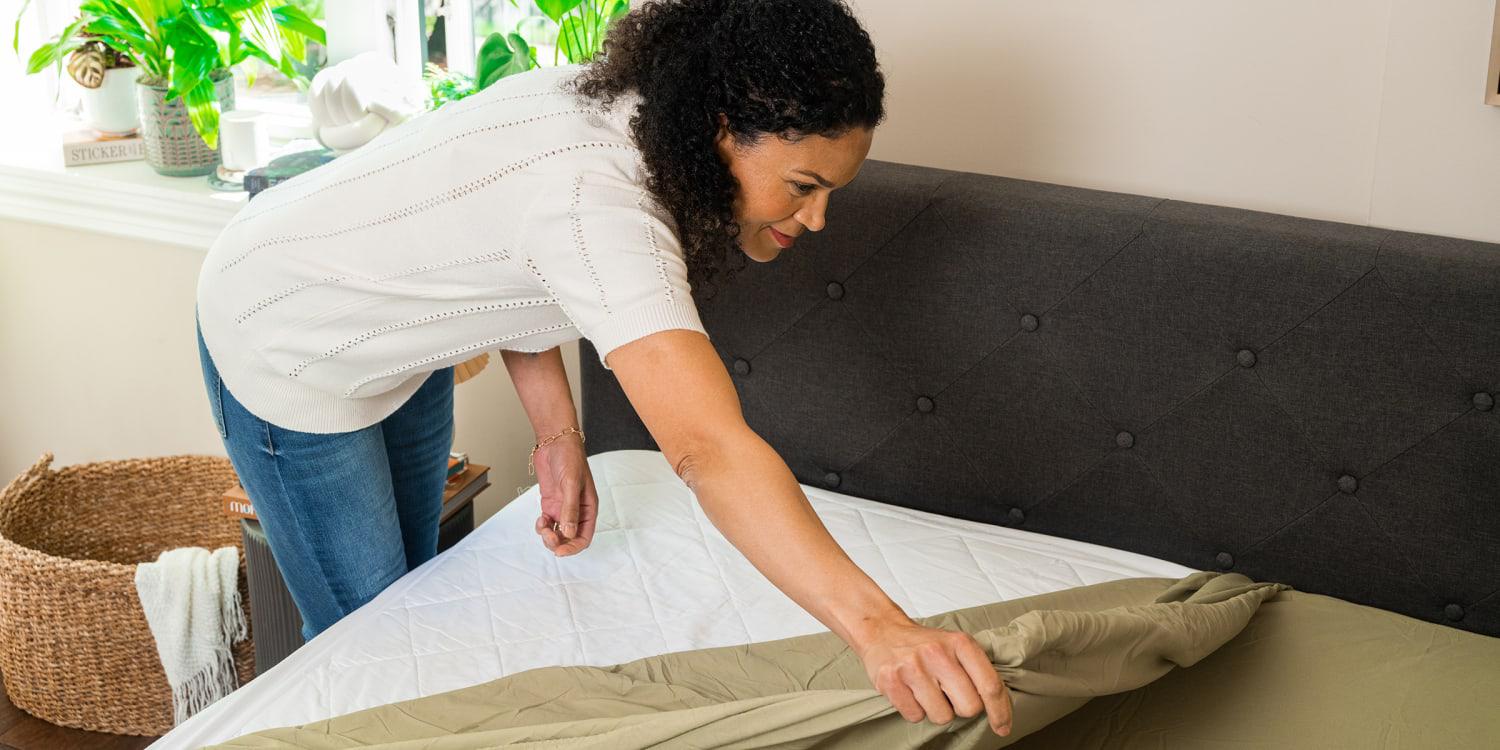
Every single time he came home, Lily was either washing the sheets or had just changed them. The bed was always immaculate—corners tucked with military precision, pillows fluffed and arranged just so, the duvet smooth as glass. The scent of lavender laundry detergent hung in the air, fresh and clean.
At first, he’d attributed it to Lily’s natural tidiness. She’d always been particular about cleanliness, the kind of person who wiped down counters immediately after cooking and couldn’t relax if the dishes were dirty. It was one of the things he loved about her—the way she created order and comfort in their home.
But as the pattern continued, trip after trip, month after month, something about it began to feel off.
Why was she always washing the sheets when he came home?
It wasn’t as if they needed to be changed. He wasn’t there to sleep in them. The bed should have stayed pristine during his absences—untouched, waiting for his return like everything else in the house.
Yet somehow, mysteriously, the sheets always seemed to need washing.
The thought first struck him one rainy Tuesday evening in March. He’d been gone for twelve days, navigating a complex project in Tacoma that had required his constant attention. He’d arrived home around seven, shoulders tight with tension, looking forward to a hot shower and his own bed.
As he’d climbed the stairs, he’d heard the familiar hum of the washing machine coming from the laundry room adjacent to their bedroom.
He’d found Lily folding a fitted sheet—their fitted sheet, the navy blue one with the white piping that usually dressed their king-sized bed.
“Hey,” he’d said, dropping his bag by the door. “You didn’t have to change the sheets tonight. I’m so tired I’d sleep on cardboard.”
Lily had looked up, and for just a fraction of a second—so brief he almost missed it—something had flickered across her face. Surprise? Anxiety? It was gone before he could identify it, replaced by her usual warm smile.
“I know,” she’d said, smoothing the sheet with practiced hands. “I just wanted everything fresh for when you got back.”
It was a perfectly reasonable explanation. Sweet, even. The kind of thoughtful gesture that made him feel cared for.
So why did it feel like a lie?
He’d brushed the thought aside that night, attributing his suspicion to exhaustion and the paranoia that sometimes came with too many nights alone in hotel rooms.
But the next trip, it happened again.
And the next.
And the next.
It became a ritual he couldn’t unsee. He’d walk through the door, and within hours—sometimes minutes—Lily would be stripping the bed, gathering the sheets into her arms, disappearing into the laundry room while he unpacked or checked his email.
When he’d ask about it, she always had an answer.
“I spilled coffee on them this morning.”
“I wanted to wash them while the weather’s nice so they’d dry faster.”
“I hadn’t changed them in a while. They were due.”
Reasonable. Logical. Perfectly innocent explanations.
Except they kept coming, one after another, trip after trip, until the explanations themselves became suspicious by their sheer frequency.
One evening in late April, after returning from a particularly grueling two-week stretch, Ethan decided to say something. Not accusatory—just curious. A gentle probe to see if Lily would offer more information.
They were sitting at the kitchen table, finishing dinner. Chicken piccata, his favorite. Lily had outdone herself, and the gesture made him feel guilty for the thoughts that had been circling in his mind like vultures.
“Do you secretly enjoy washing sheets?” he said, trying to keep his tone light, almost joking. “That bed looks brand new every time I come home.”
Lily’s fork paused halfway to her mouth. She set it down slowly, deliberately, and looked at him with an expression he couldn’t quite read.
For a moment, she said nothing.
Then, quietly: “I just sleep better with clean sheets. They get dirty sometimes.”
“Dirty?” The word came out sharper than he’d intended. “From what?”
Lily’s eyes widened slightly—that same flicker he’d seen before, there and gone in an instant.
“From normal use, Ethan. Skin cells, dust, you know.” She picked up her fork again, attention returning to her plate. “Why are you asking me this?”
“I’m not—” He stopped himself, recognizing the defensive edge in her voice. “I’m just making conversation. It’s just something I noticed.”
“Well, now you know.” Her tone was still gentle, but there was a finality to it. A door closing.
He’d let it drop. Finished his dinner. Helped with the dishes. Gone to bed in those perfectly clean sheets and tried not to think about why they’d needed to be washed.
But that night, he couldn’t sleep.
He lay there in the darkness, Lily’s steady breathing beside him, and his mind filled with images he didn’t want to see.
Another man. In this bed. In their bed.
Lily, smiling the way she smiled at him, but offering that smile to someone else.
Hands that weren’t his touching her skin, tangling in the sheets that she so carefully, so consistently washed away.
The images were vivid, intrusive, impossible to banish. They played behind his closed eyelids like a film he couldn’t turn off.
He told himself he was being ridiculous. Paranoid. Lily had given him no real reason to doubt her. She was loyal, loving, devoted. Eight years together, six of them married. She’d never given him cause for suspicion.
Except for the sheets.
Always the sheets.
By the time dawn broke, casting gray light through their bedroom window, Ethan had made a decision.
He needed to know.
Not because he wanted to catch her in betrayal—the thought made him physically ill—but because the not-knowing was eating him alive. The suspicion was poisoning everything, turning innocent gestures into evidence, transforming his home into a crime scene he was too afraid to investigate.
If he was wrong, if there was some perfectly innocent explanation he’d overlooked, he’d laugh at himself and put the whole thing behind him.
And if he was right…
He couldn’t let himself finish that thought.
Part Two: The Camera
The electronics store was in a strip mall fifteen minutes from their house, sandwiched between a dry cleaner and a smoothie shop. Ethan had driven past it a thousand times without really seeing it, but now he studied the storefront with the intensity of a man on a mission.
Inside, the teenage clerk barely looked up from his phone as Ethan browsed the security camera section. The selection was more extensive than he’d expected—everything from elaborate multi-camera systems to simple wireless devices no bigger than a USB drive.
He chose something in the middle: small enough to hide, sophisticated enough to provide clear footage, with Wi-Fi connectivity that would allow him to monitor it remotely from his phone.
“Home security?” the clerk asked as he rang up the purchase, finally showing some interest.
“Something like that,” Ethan replied, avoiding the kid’s eyes.
He felt like a criminal. Like he was doing something shameful and wrong.
But he couldn’t stop.
At home, he waited until Lily left for her weekly yoga class. She’d started going every Thursday evening about six months ago—another small change he’d barely noticed at the time but now seemed potentially significant.
How many other small changes had he missed?
The bedroom was quiet, filled with afternoon sunlight that made everything look innocent and normal. Their bed, neatly made with the fresh sheets Lily had put on two days ago when he’d returned from Seattle. The dresser with their wedding photo—both of them younger, happier, full of hope for the future they were building together. The bookshelf where Lily kept her favorite novels and he stored his collection of photography books from his brief stint as an amateur photographer in college.
The bookshelf.
Perfect.
He positioned the camera on the third shelf, tucked behind a thick hardcover coffee table book about American architecture. The angle gave a clear view of the bed—more than clear enough to see anyone who might be in it.
His hands shook as he adjusted the position, and he hated himself for it. Hated the necessity of this moment. Hated that his marriage had come to this: surveillance, suspicion, secrets.
But he activated the camera anyway.
Connected it to his phone.
Checked the feed to make sure it worked.
The image appeared on his screen, sharp and damning in its clarity. Their bed, centered perfectly in the frame, waiting to reveal its secrets.
Ethan deleted his browsing history, threw away the receipt, and buried the camera’s box at the bottom of the outside trash can.
When Lily came home, glowing with post-yoga serenity, he kissed her cheek and asked about her class and pretended everything was normal.
That night, lying beside her in the darkness, he felt the camera’s presence like a third entity in the room—watching, waiting, recording the slow dissolution of his trust.
The next morning, he told Lily about his upcoming trip to Chicago.
“Ten days,” he said over breakfast, watching her face for any reaction. “Big project. I’ll probably have spotty cell service for part of it.”
“That’s a long one,” Lily said, concern in her voice. “Will you be okay?”
“I’ll manage.” He reached across the table, took her hand. “Will you?”
“Of course.” She squeezed his fingers, smiled. “I always do.”
She always did.
That was part of what bothered him. Lily never seemed lonely, never seemed to miss him the way he missed her. She was content in his absence in a way that should have been reassuring but instead felt suspicious.
He left the next morning as planned, hugged her goodbye, threw his suitcase in the car.
But he didn’t drive to the airport.
Instead, he drove to an extended-stay hotel on the other side of Portland, checked in under his own name, and carried his bag up to a sterile room that smelled of industrial cleaning products and loneliness.
He had ten days.
Ten days to watch.
To wait.
To learn the truth.
Part Three: The Revelation
For the first day and a half, nothing happened.
Ethan checked the camera feed obsessively, his phone always within reach, the app open more often than not. He watched Lily move through their bedroom with normal, mundane activity—getting dressed in the morning, putting away laundry, reading in bed before turning off the light.
Nothing suspicious.
Nothing unusual.
Just his wife, alone, going about her daily life.
He began to feel foolish. Paranoid. Like he’d created an entire conspiracy theory out of clean sheets and his own insecurity.
Maybe he should just go home. Confess what he’d done. They could laugh about it—or fight about it—but either way, at least the uncertainty would end.
But something kept him in that hotel room, watching.
On the second night, at 10:47 p.m., the bedroom door opened.
Ethan’s heart lurched. He’d been lying on the hotel bed, phone in hand, half-watching some forgettable show on TV while the camera feed played in the corner of his screen.
Now the TV was forgotten, the phone gripped so tightly his knuckles went white.
Lily walked into the bedroom, wearing her favorite oversized sweatshirt and pajama pants. But she wasn’t alone in the frame. She was holding something against her chest, cradling it carefully as she moved toward the bed.
Ethan’s breath caught.
This was it.
The moment of truth.
The confirmation of his worst fears.
She set the object on the bed, and in the camera’s clear image, he could finally see what it was.
A pillow.
Just a pillow.
Except—
No.
Not a pillow.
As Lily adjusted it, smoothing it gently, Ethan saw the truth.
It was his pillow. The one from his side of the bed. The one that held the shape of his head, that smelled like his shampoo and his skin.
And Lily was hugging it.
She sat on the edge of the bed, the pillow pressed against her chest, her face buried in the fabric. Her shoulders shook.
She was crying.
Ethan’s phone nearly slipped from his numb fingers.
For long minutes, he watched his wife sob into his pillow, clutching it like a lifeline, her whole body curled around this piece of him that remained while he was gone.
Eventually, she lay down, still holding the pillow. She positioned it beside her, where he would normally sleep, and curled against it. Her hand rested on it the way she used to rest her hand on his chest when they first started dating—seeking comfort, connection, the reassurance of presence.
She fell asleep that way, the pillow tucked against her body, filling the space where her husband should have been.
Ethan set down his phone and stared at the ceiling of his hotel room, shame washing over him in waves so powerful he felt physically sick.
The sheets.
She’d been washing the sheets because they stopped smelling like him. Because his scent faded while he was gone, and she couldn’t bear it. So she washed them when he came home, reset them with his presence, so that when he left again, she could hold onto that smell, that memory, for as long as possible before it disappeared into the fabric’s fibers and left her alone with nothing but empty cloth.
She wasn’t covering up an affair.
She was mourning his absence.
The next morning, he watched her wake up, carefully remove his pillow, and put it back on his side of the bed before starting her day. She moved through her morning routine with the same calm efficiency she always displayed, no trace of the previous night’s tears visible on her face.
Stoic. Strong. Suffering in silence while he was away, never burdening him with her loneliness because she knew his career was important, knew he was working hard for their future.
She’d been protecting him from her pain while he’d been suspecting her of betrayal.
On the third night, he watched it again. The same ritual. The pillow held close, tears soaked into fabric, her body curled around the ghost of his presence.
This time, he cried too.
By the fourth night, Ethan had seen enough.
He’d seen his wife brush her hand over his side of the bed before getting in, as if checking for him in some unconscious hope. He’d seen her wear his old college sweatshirt—the oversized gray one with the faded logo—because it still held traces of him. He’d seen her fall asleep with her phone on his pillow, as if the device that connected them across distance could somehow substitute for the man himself.
He’d seen her lonely. Heartbroken. Faithful beyond question.
And he’d seen himself clearly for the first time in months: a man so consumed with career advancement that he’d abandoned his wife emotionally while physically absent, a man so insecure in his own worth that he’d assumed betrayal rather than believe someone could actually miss him this much.
The camera had revealed a truth—just not the one he’d expected.
Part Four: Coming Home
Ethan checked out of the hotel on the morning of the fifth day.
He didn’t call ahead. Didn’t warn Lily he was coming home early. He simply drove through Portland’s morning traffic, hands steady on the wheel, rehearsing what he would say and finding no words adequate for the moment.
How do you apologize for doubting someone’s love?
How do you explain that surveillance was an act of fear, not malice?
How do you rebuild trust that you yourself had broken, even if she never knew it was fractured?
The house looked exactly as it always did when he returned—quiet, well-maintained, the garden showing the first signs of spring growth. Lily’s car was in the driveway. She’d be inside, probably working from home at the kitchen table where she’d set up her makeshift office since her company had gone partially remote.
He let himself in with his key, set down his bag quietly in the entryway.
“Lily?”
Silence for a moment, then the scrape of a chair, footsteps approaching from the kitchen.
She appeared in the doorway, confusion and concern mingling on her face.
“Ethan? What are you—is everything okay? Did something happen?”
She thought there was an emergency. That something had gone wrong. Because why else would he be home five days early, without warning?
“Everything’s fine,” he said quickly. “The project wrapped up early. I wanted to surprise you.”
The lie came easily, and he hated himself for it. Another deception in a relationship that had already borne too many, even if she didn’t know about them.
Relief flooded her features, followed immediately by joy—pure, unguarded happiness at his unexpected presence.
“I’m so glad you’re home,” she said, crossing the space between them to wrap her arms around him. “I missed you.”
He held her tight, breathing in the scent of her hair, feeling the solid reality of her body against his.
“I missed you too,” he whispered. “More than you know.”
They stood that way for a long moment, reunited in their entryway, the morning light streaming through the window to illuminate their embrace.
Later that day, after he’d unpacked and they’d shared lunch and caught up on the small details of their separate lives, Ethan found himself standing alone in their bedroom.
The bed was still made with the sheets that had been on it when he left. They didn’t look any different to him, but he knew what they meant to her. How she’d held his pillow in the darkness, seeking comfort in his absence.
He walked to the bookshelf, retrieved the camera from its hiding place behind the architecture book.
The device was small in his palm, innocuous, a piece of technology that had shown him the truth but in doing so had revealed his own failures more clearly than any mirror.
He disconnected it from his phone, deleted the app, erased all the footage.
Then he went to his car, drove to a public dumpster across town, and threw it away where Lily would never accidentally discover it.
When he returned home, she was in the laundry room, and his heart sank before he realized what she was doing: washing his clothes from the trip, not the bed sheets.
“Leave those,” he said from the doorway. “I’ll do them later.”
“It’s fine,” Lily said, not turning around. “I don’t mind.”
He watched her work, this woman who’d stood by him through career changes and long absences, who’d suffered her loneliness silently rather than add to his burdens, who’d been nothing but faithful while he’d constructed elaborate scenarios of betrayal.
“Lily,” he said.
Something in his tone made her turn, hands still full of his laundry.
“I want to talk about my job.”
Confusion crossed her face. “Your job?”
“I’m traveling too much. I’m away too much. I—” He paused, choosing his words carefully. “I think I need to tell them I can’t do these long trips anymore. Maybe ask for different responsibilities.”
“Ethan, no.” She set down the laundry, alarm evident in her expression. “You worked so hard for that promotion. You can’t just—”
“I can, and I should have done it months ago.” He stepped into the laundry room, took her hands in his. “I’ve been chasing this career path so hard that I forgot what I was working for in the first place. This. Us. Our life together. And what’s the point of building a future if I’m not here to live it with you?”
Tears welled in Lily’s eyes. “I never wanted you to choose between me and your career.”
“I’m not,” he said gently. “I’m choosing you and a career that doesn’t require me to be gone half my life. There’s a difference.”
She was crying now, and he pulled her close, letting her tears soak into his shirt while she released months of accumulated loneliness and grief.
“I’ve been so lonely,” she admitted, the words muffled against his chest. “I didn’t want to tell you because you were working so hard, and I knew it was important to you, and I didn’t want to be the wife who complains—”
“You should have told me.”
“Would you have listened?”
The question hit him like a physical blow because he knew the answer. A month ago, even a week ago, he might not have. He might have reassured her that it was temporary, that things would get better, that his career demands would eventually ease.
All the comfortable lies that people tell themselves when they’re prioritizing the wrong things.
“I’m listening now,” he said. “And I’m sorry it took me so long.”
That evening, they ordered takeout and ate it in bed—something they used to do when they were first dating, when breaking the rules felt romantic rather than careless. They talked for hours, really talked in a way they hadn’t in months, about loneliness and loss and the slow erosion that happens when two people live parallel lives instead of a shared one.
“I sleep with your pillow,” Lily confessed at one point, her voice small and embarrassed. “When you’re gone. I hold it at night. Is that weird?”
Ethan’s throat tightened. “No. It’s not weird at all.”
“Sometimes I spray your cologne on it so it smells like you longer.”
“Lily—”
“I know it’s pathetic, but—”
“It’s not pathetic. It’s heartbreaking.” He cupped her face in his hands, made her look at him. “I’m so sorry. I’m sorry I made you so lonely that you had to hold a pillow to feel close to me.”
She was crying again, and so was he, both of them releasing months of accumulated pain in the safety of their bedroom, with takeout containers scattered on the sheets and the evening light fading outside their window.
Part Five: The After
True to his word, Ethan spoke with his boss the following Monday. The conversation was difficult—there was pressure to maintain his current responsibilities, hints that reducing his travel might impact his career trajectory, the implication that he was throwing away an opportunity others would kill for.
But he stood firm.
They reached a compromise: he would continue as Regional Manager but with restricted travel, handling projects within driving distance and delegating the farther sites to other team members. It meant less visibility, potentially fewer future promotions, and definitely less money.
But it meant being home for dinner. Waking up beside Lily. Building the life they’d promised each other eight years ago.
The first few weeks of the new arrangement were an adjustment. Ethan found himself restless sometimes, feeling the phantom tug of career ambition, wondering if he’d made a mistake. The house felt small after so many hotels, and the routine of daily life seemed mundane compared to the variety of constant travel.
But then he’d see Lily—really see her, present and engaged in the moment—and remember why he’d made this choice.
He was there when she got frustrated with a work project and needed someone to vent to.
He was there for the mundane grocery shopping and meal planning and paying of bills that constitute a shared life.
He was there when her mother called with bad news about her father’s health, and Lily needed someone to hold her while she cried.
He was there.
Actually, physically, emotionally there.
And slowly, he began to see the change in Lily too. The tension in her shoulders eased. Her smiles came more readily. She laughed more often at his terrible jokes, sang in the shower again, stayed up late talking about nothing and everything the way they used to.
She stopped sleeping with his pillow.
One night, about two months after he’d come home, Ethan woke in the darkness to find Lily awake beside him, propped on one elbow, watching him with an expression he couldn’t quite read.
“What?” he asked, voice rough with sleep.
“I’m just happy,” she said simply. “You’re here. You’re really here.”
He pulled her close, tucked her head beneath his chin.
“I’m here,” he confirmed. “And I’m not going anywhere.”
They never spoke about the sheets again. Lily still changed them regularly, but now it was just normal household maintenance, stripped of the loaded significance it had once carried.
Ethan never told her about the camera. What would be the point? It would only hurt her to know he’d doubted her, and the doubt had been his problem, not hers. She deserved to move forward without that knowledge weighing on her.
Instead, he showed her every day through action what the camera had taught him: that love isn’t just a feeling but a choice, a commitment, a thousand small decisions to prioritize presence over prestige, connection over career, the person beside you over the person you’re trying to become.
He’d spent months chasing a version of success that required him to abandon what he already had.
The camera had shown him the cost of that pursuit.
And he’d come home.
Epilogue
Two years later, Ethan stood in their newly renovated kitchen, cooking dinner while Lily set the table. He’d taken up cooking as a hobby, something to do with his evenings now that he was actually home to have evenings.
Tonight was pasta—nothing fancy, just spaghetti carbonara, but it had become a Sunday tradition.
“How was your day?” Lily asked, arranging napkins with the care she brought to all domestic details.
“Good. The Beaverton project is coming along nicely. Should be done ahead of schedule.”
“That’s great.”
“How about you?”
“Productive. Finally finished that presentation I’ve been working on. And I called my parents—Dad’s doing much better.”
It was mundane conversation, the kind of everyday exchange that happens in kitchens across the world every evening. Nothing dramatic or exciting.
But Ethan had learned that this was what mattered. Not the dramatic gestures or the grand romantic moments, but this: the dailiness of a shared life, the comfort of routine presence, the accumulation of small moments that build into something lasting.
He’d traveled halfway across the Pacific Northwest searching for success, only to find that everything he needed had been right here all along, waiting patiently in a house on Maple Drive for him to open his eyes and see it.
The sheets in their bedroom were clean, changed that morning because it was Sunday and Sunday was sheet-washing day. Not because Lily was trying to preserve his scent or hide evidence of loneliness, but because it was simply time to wash the sheets.
Sometimes, that’s all it is.
Just sheets that need washing.
Just a life that needs living.
Just love that needs presence to survive.
And Ethan was finally, fully present.
THE END

Sophia Rivers is an experienced News Content Editor with a sharp eye for detail and a passion for delivering accurate and engaging news stories. At TheArchivists, she specializes in curating, editing, and presenting news content that informs and resonates with a global audience.
Sophia holds a degree in Journalism from the University of Toronto, where she developed her skills in news reporting, media ethics, and digital journalism. Her expertise lies in identifying key stories, crafting compelling narratives, and ensuring journalistic integrity in every piece she edits.
Known for her precision and dedication to the truth, Sophia thrives in the fast-paced world of news editing. At TheArchivists, she focuses on producing high-quality news content that keeps readers informed while maintaining a balanced and insightful perspective.
With a commitment to delivering impactful journalism, Sophia is passionate about bringing clarity to complex issues and amplifying voices that matter. Her work reflects her belief in the power of news to shape conversations and inspire change.