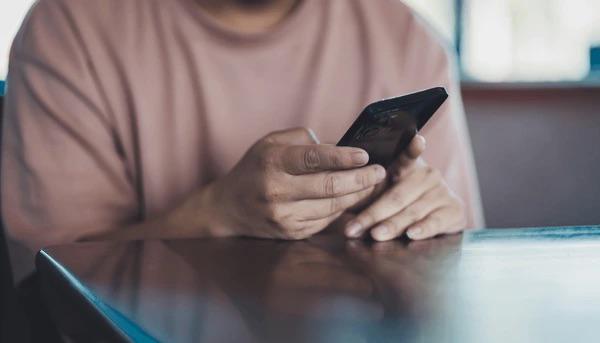
The Morning Everything Changed
My wife woke me at 5:30 in the morning, her hand trembling against my shoulder in the darkness of our bedroom. The digital clock on the nightstand cast a pale blue glow across her face, and even before my eyes fully adjusted, I could tell something was catastrophically wrong. Her voice, when it came, was barely above a whisper—not the voice of the woman I’d married nine years ago, not the voice that sang off-key in the shower or laughed at her own jokes before delivering the punchline. This was the voice of someone standing at the edge of a cliff, looking down.
“Don’t look at your phone today,” she said, and there was something in her tone that made my stomach clench even before I was fully awake. “Just give it to me. Please.”
The way she said “please” didn’t sound like a request. It sounded like a prayer.
I refused, of course. It was my phone, my property, my connection to the world. The refusal was instinctive, the kind of automatic response you give when someone asks you to do something that doesn’t make immediate sense. But the moment the word left my lips, Jessica’s face transformed. The color drained from her cheeks like someone had pulled a plug, and her eyes—those warm brown eyes I’d stared into on our wedding day—went wide with something that looked uncomfortably close to terror.
“You’re going to hate me by noon,” she whispered, and then she was gone, slipping out of our bedroom and down the stairs before I could form another word.
I lay there in the darkness, my heart hammering against my ribs, trying to make sense of what had just happened. Outside our window, the neighborhood was still caught in that strange liminal space between night and morning. The streetlights were still on, casting orange pools of light onto the empty sidewalks. Somewhere down the block, a dog barked once, twice, then fell silent. The little American flag on our mailbox—the one Jessica had insisted we put up after we bought the house five years ago—hung completely still in the windless dawn.
The house we’d built our life in suddenly felt unfamiliar, as if I’d woken up in a stage set designed to look like my home but missing some essential element that made it real.
I should have grabbed my phone right then. I should have demanded answers, refused to play along with whatever strange game this was. But there’s something about love, about trust built over years of shared meals and mortgage payments and inside jokes, that makes you want to believe the best even when every instinct is screaming warnings. So instead of reaching for the phone on my nightstand, I made a promise—the kind of promise that loyal people make when they think loyalty is enough to protect them from the truth.
I would wait. I would trust her. I would give her this one strange request, because that’s what you do when you love someone.
The relief that washed across Jessica’s face when I agreed was almost more disturbing than her initial fear. She murmured “thank you” like it was a benediction, like I’d just agreed to something far more significant than simply avoiding my phone for a few hours. Then she gathered her purse and her keys with movements that seemed too quick, too purposeful, and slipped out the front door. It closed with barely a sound, as if even the house was trying not to wake whatever sleeping monster we were all pretending didn’t exist.
The Longest Morning
For the next several hours, my phone sat face-down on the kitchen counter like an unexploded bomb. I could see it in my peripheral vision as I moved through the morning routine—showering, dressing, brewing coffee in the machine Jessica had bought me for Christmas two years ago. Every time I passed it, I felt its presence like a physical weight in the room, pulling at my attention with an almost gravitational force.
I turned on the television, letting a local morning show fill the silence with its aggressively cheerful chatter about weather patterns and traffic updates and a feel-good story about a dog that had learned to skateboard. The normalcy of it felt like a lie, like everyone on the screen was in on a joke I hadn’t been told yet.
At 7:30, the landline rang—yes, we still had a landline, one of those relics from an earlier era that your parents insist you keep “just in case” something happens to your cell service. The shrill, old-fashioned ring cut through the apartment like an alarm, and I found myself staring at it for three full rings before I picked up.
“Have you looked yet?” The voice belonged to Marcus, my best friend since college, the guy who’d been best man at my wedding and godfather to the child Jessica and I kept saying we’d have “someday, when we’re ready.”
“Looked at what?” I asked, though the pit in my stomach was already deepening.
There was a long pause on the other end of the line, the kind of pause that’s full of words people don’t know how to say. In the background, I could hear the familiar sounds of Marcus’s kitchen—the coffee maker gurgling, the distant sound of morning traffic through his windows.
“Call me when you do,” he finally said, and then the line went dead before I could ask any of the thousand questions suddenly crowding my mind.
I stood there holding the silent phone, my own reflection staring back at me from the darkened television screen. I looked like a man who’d just been told to brace for impact but didn’t know which direction the blow would come from.
At 8:15, my brother Daniel showed up on the porch in his construction work boots and a jacket that still had drywall dust on the sleeves. I saw him through the front door window, hovering on the welcome mat like he wasn’t sure whether to knock or just leave. When I opened the door, he looked past me into the house with an expression I’d never seen on his face before—something between pity and dread.
“You okay?” he asked, which was strange because Daniel wasn’t the kind of guy who asked about feelings. We were the kind of brothers who showed affection through insults and the occasional beer on a Sunday afternoon, not wellness checks at 8:15 on a weekday morning.
“Why wouldn’t I be?”
He glanced down at his boots, then back up at me. “You haven’t checked your phone.”
It wasn’t a question. Somehow, he already knew.
When I confirmed that no, I hadn’t looked at my phone since waking up, Daniel’s jaw tightened in a way that reminded me of our dad when he had to deliver bad news. “Don’t stay here tonight,” he said, and then he was walking back to his truck before I could ask him what the hell that meant.
I watched him drive away, his brake lights flashing red at the stop sign at the end of our street, and felt the world tilting just slightly on its axis.
Even my mom called before her yoga class, and I could hear the tears in her voice before she said a word. My mother wasn’t a crier—she was the woman who’d held our family together through my dad’s layoff and Daniel’s divorce and my own stupid phase in high school when I thought I might not graduate. To hear her voice crack like that sent ice down my spine.
“Whatever it is,” she said, each word careful and measured like she was reading from a script she’d prepared, “this isn’t your fault. Do you hear me, Brandon? This isn’t your fault.”
“Mom, what—”
But she’d already hung up, leaving me standing in my kitchen holding a dead phone, surrounded by the familiar objects of my life that suddenly felt like set pieces in a play I didn’t remember auditioning for.
The Weight of Waiting
By late morning, I couldn’t stay in the house anymore. The walls felt like they were closing in, every familiar object taking on a sinister quality in the strange half-knowledge of knowing something terrible had happened without knowing what. I walked through the rooms like a stranger, seeing everything with new eyes.
The photo on the fridge from our trip to Yellowstone three years ago—Jessica’s arms around my waist, both of us grinning at the camera with Old Faithful erupting behind us. Had she been planning this even then? Was I already being betrayed while I smiled at a stranger with a camera?
The half-finished paint samples in the hallway, the ones we’d put up six months ago when we were discussing whether to repaint before we “started trying for real” to have a baby. The colors had names like “Morning Dove” and “Soft Linen” and “Tranquil Blue,” and now they looked like evidence from a crime scene, proof of a future that was never going to happen.
The mug on the counter that said “World’s Okayest Husband,” a gag gift from Jessica on our anniversary. I’d laughed when I opened it, had used it every morning since. Now I wondered if it was a joke with layers I hadn’t understood, a message hidden in plain sight.
Every object in the house told a story, and suddenly I didn’t trust any of them.
I tried to distract myself with mundane tasks. I loaded the dishwasher even though there were only a few dishes. I wiped down the counters that were already clean. I stood in front of the open refrigerator, staring at the same groceries we bought every week—milk, eggs, the fancy cheese Jessica liked, the beer I drank on Friday nights—as if the contents might reveal some hidden truth about what was happening to my life.
At 11:30, I found myself in our bedroom, standing in front of Jessica’s dresser. This felt like a violation somehow, like I was crossing a line, but what line hadn’t already been crossed? I pulled open her top drawer, half-expecting to find evidence of whatever bomb was about to go off—plane tickets to somewhere far away, divorce papers, a confession letter. Instead, I found exactly what had always been there: socks, underwear, a tangle of charging cables she kept meaning to organize.
Nothing and everything was wrong at the same time.
At 11:45, I sat down on the edge of our bed—the bed we’d picked out together at IKEA, had argued about assembling because the instructions didn’t make sense, had made love in and fought in and slept in for five years—and stared at the wall. Fifteen minutes until noon. Fifteen minutes until whatever Jessica had tried to spare me from would arrive whether I was ready or not.
At 11:59, I couldn’t take it anymore.
My hand moved toward the phone on the kitchen counter like it belonged to someone else, like I was watching myself from a distance. Every second stretched out, elastic with dread. I could hear my own heartbeat in my ears, could feel the sweat on my palms as my fingers closed around the device.
One minute. Sixty seconds. The last minute of whatever my life had been before this moment.
The Flood
At noon exactly, the phone lit up in my hand.
And then it didn’t stop.
The screen exploded with notifications, message after message after message, all arriving at once like they’d been held back by a dam that had finally, catastrophically broken. The phone vibrated so continuously that it felt alive, felt like something writhing and terrible in my grip. The numbers kept climbing: 23 messages, 47 messages, 83 messages, more and more and more until the counter seemed to lose meaning entirely.
147 messages total, when the flood finally stopped.
Texts from numbers I’d deleted years ago. Missed calls from people I hadn’t spoken to since high school. Voicemails from former coworkers and distant cousins and my aunt in Phoenix who I only heard from at Christmas. Every single person I’d ever known, it seemed, had woken up this morning and decided they needed to reach me at exactly noon.
Not one of them felt neutral. Even without opening them, I could sense the weight of what they contained—the awkward apologies, the secondhand embarrassment, the voyeuristic concern of people who’d heard something terrible and couldn’t resist reaching out, even if they had no idea what to say.
My hands were shaking now. The morning’s coffee threatened to come back up. I stood in my kitchen—my kitchen, with its white cabinets and the granite countertops we’d saved up for and the window over the sink where Jessica liked to put fresh flowers—and felt like an actor who’d just discovered he was the only one who didn’t know he was in a horror movie.
The first message was from my sister Emily, sent at 12:00:01 a.m., which meant she’d been waiting, watching the clock, ready to reach out the instant whatever embargo had lifted. The preview showed only the first few words: “I’m so sorry, Brandon,” followed by a small thumbnail image—one of those compressed screenshots that shows up as a tiny rectangle in the message preview.
I stared at that thumbnail for a long time. It was small enough that I couldn’t make out details, just shapes and colors that might mean anything or nothing. My thumb hovered over it, and in that frozen moment, I understood exactly why Jessica had tried to keep my phone away from me. Why she’d woken me in the dark with her voice full of fear. Why she’d looked at me like she was memorizing my face before everything changed.
Because there are things you can’t unsee. Moments you can’t take back. Lines you can’t uncross.
Once you know, you can’t unknow.
Once you see, you can’t unsee.
Once the future you thought you had dissolves, you can’t reconstitute it from memory and hope.
My thumb moved.
The Image
The screenshot expanded to fill my phone screen, and for a moment my brain couldn’t process what it was seeing. The image was familiar and foreign at once—I recognized the background, the angle, the composition. It was from a website I knew, a platform I’d used myself countless times. But the content, the specific arrangement of pixels on my screen, didn’t make sense with what I knew about my life.
It was a GoFundMe page.
The header image showed a photo I recognized: me and Jessica at my company picnic last summer, arms around each other, squinting into the sun. But someone had cropped me out—Jessica stood alone in the frame now, smiling that smile I’d fallen in love with, the one that crinkled the corners of her eyes.
The title of the campaign was simple, devastating: “Help Me Start Over.”
My vision blurred. I had to read the description three times before the words stopped sliding off my comprehension like water off glass.
“After five years of marriage, I’ve finally found the courage to leave an emotionally abusive relationship. My husband is a master manipulator who has isolated me from friends and family, controlled our finances, and made me believe I was crazy for wanting my own life. I need help affording a security deposit on an apartment, money for a lawyer, and resources to rebuild. Any amount helps. I just want to be free.”
The words sat on the screen, each one a small detonation. Emotionally abusive. Master manipulator. Isolated. Controlled. Made me believe I was crazy.
None of it was true.
All of it sounded plausible.
I scrolled down with numb fingers. The campaign had been live for sixteen hours. It had raised $23,847 from 412 donors. Four hundred and twelve people who’d read Jessica’s story and believed it, who’d opened their wallets to help her escape from me, from the monster she’d painted me as.
The comments section was worse than the description.
“You’re so brave for sharing your story.”
“Stay strong! You deserve so much better.”
“I was in a similar situation. You’re going to get through this.”
“What an asshole. I hope he gets what’s coming to him.”
And worst of all: “I always thought something was off about him. She deserves the world.”
That last comment was from Sarah, Jessica’s best friend from college. Sarah, who’d been at our wedding. Who’d stayed at our house just last month. Who’d sat at our dining room table drinking wine and laughing at my jokes and, apparently, always thought something was off about me.
My phone rang in my hand, and I dropped it like it had burned me. It clattered against the kitchen tile, and I stared at it vibrating there on the floor, the name “Mom” flashing on the screen. I couldn’t answer it. Couldn’t explain something I didn’t understand myself. Couldn’t find words for the feeling of watching your life be rewritten by someone who’d sworn to love you.
The phone stopped ringing. Started again immediately. This time it was Marcus.
Then Emily.
Then my brother again.
Then numbers I didn’t recognize—probably reporters, I realized with a sick jolt. By now the story would be spreading, being shared, gaining momentum. The algorithm would push it to more and more people. Jessica’s brave story of escape. My unwitting transformation into a villain.
I picked up the phone with shaking hands and opened my texts. The messages from the past few hours finally made a terrible kind of sense.
Marcus: “Jesus Christ, man. Call me. Whatever she said, there has to be another side to this.”
Emily: “I’m so sorry, Brandon. I don’t know what’s true anymore but I’m here if you need to talk.”
My brother: “Saw the GoFundMe. This is bullshit and everyone who knows you knows it. But you need to get a lawyer. Now.”
My mom: “I don’t believe a word of it, but other people will. Please call me. Please.”
Even people I barely knew had reached out:
“Hey man, just want you to know I think there’s more to the story than what’s being shared.”
“Not sure what’s going on but that doesn’t sound like the guy I know.”
“I hope you’re doing okay. This must be really hard.”
But for every message of support, there were others:
“I always knew you were an asshole.”
“Hope you’re happy. She’s better off without you.”
“You should be ashamed of yourself.”
“Someone should investigate you. There’s probably more she’s not saying.”
The Unraveling
I don’t know how long I stood there, scrolling through message after message, watching my life disintegrate in real-time. The sun moved across the kitchen floor, the shadows shifted, and I remained frozen, phone in hand, reading the same impossible words over and over.
Eventually, my brain started working again in stuttering increments. Questions formed through the shock.
Why? Why would she do this?
When had she planned it? The GoFundMe had gone live at 8 p.m. the previous evening, which meant while we’d been eating the pasta I’d cooked, while we’d been watching TV on the couch, while I’d kissed her goodnight, she’d already published her story. Had already cast me as the villain in her narrative. Had already pressed the button that would detonate my reputation.
And the timing of the messages—they’d all come through at exactly noon. Which meant she’d sent them earlier, scheduled them to deliver at the same time. She’d planned it like a military operation. The early morning warning, the request for my phone, the carefully orchestrated reveal. She’d known exactly what would happen and exactly when.
This wasn’t a spur-of-the-moment decision born from fear or desperation. This was premeditated, calculated, designed for maximum impact.
I thought about the past few weeks, searching for signs I’d missed. Had she been distant? Secretive? Planning her exit?
But that was the thing—she hadn’t been. Just three days ago, we’d had friends over for dinner. Jessica had laughed at their jokes, had squeezed my hand under the table, had kissed me goodbye at the door when they left. Two weeks before that, we’d talked about finally booking that trip to Japan we’d been planning for years. A month ago, she’d insisted on hosting Thanksgiving at our place, had spent three days preparing, had raised a glass and toasted to “the family we’ve built and the family we’re going to grow.”
Every memory was now suspect, every moment of apparent happiness potentially a lie.
The house phone rang, making me jump. I stared at it, watching the caller ID scroll across the tiny screen. Unknown number. Probably a reporter. Definitely someone I didn’t want to talk to.
The ringing stopped. Started again immediately.
I yanked the cord from the wall, and the sudden silence felt like a reprieve and an accusation at once.
My phone buzzed with a new message. This one was from Jessica.
My heart lurched. Despite everything, some stupid part of me hoped this would be an explanation, an apology, a revelation that would make it all make sense. That she’d been hacked. That this was a misunderstanding. That the woman I’d loved for nine years hadn’t just systematically destroyed my life before breakfast.
Instead, the message said: “I’m sorry you had to find out this way. I needed to protect myself. Please don’t try to contact me. My lawyer will be in touch.”
That was it. Nine years of marriage, of shared dreams and inside jokes and late-night conversations and building a life together, reduced to a two-sentence text that sounded like it had been written by a stranger.
I tried to call her. Straight to voicemail.
I tried to text back. The message showed as delivered but not read.
I pulled up her social media, something I never did because why would I need to when she was right there in my house, in my life? Her accounts were gone. Not just private—deleted entirely, as if Jessica had simply ceased to exist in the digital world the moment she pushed that button on her campaign.
She’d thought of everything.
The Aftermath Begins
The next few hours passed in a kind of fugue state. I sat on the couch, then stood in the kitchen, then found myself in the bedroom again without remembering walking there. The phone kept ringing, buzzing, lighting up with new messages that I couldn’t bring myself to read. The world kept spinning, and I kept standing still, unable to process what had happened or what I was supposed to do next.
At some point, my brother came back. I heard his truck in the driveway, heard him try the doorbell, heard him use the spare key I’d given him years ago for emergencies. This qualified as an emergency.
“Brandon?” His voice came from the living room. “You here?”
I was sitting on the bedroom floor, back against the wall, phone dark in my lap. I didn’t answer.
Daniel found me anyway. He stood in the doorway for a moment, taking in the scene—his younger brother, reduced to this, sitting on the floor of his own bedroom like a child who didn’t understand why he was being punished.
“Come on,” he said finally. “You’re not staying here tonight.”
“I live here.”
“Doesn’t matter. Pack a bag. You’re coming to my place.”
“She’s the one who left. Why do I have to leave?”
Daniel sat down next to me, our shoulders touching against the wall in a way that reminded me of being kids, sitting just like this on the stairs of our parents’ house, united against whatever unfair punishment we’d received.
“Because in about six hours, this house is going to be surrounded by news vans,” he said quietly. “Because some well-meaning neighbor is going to see that GoFundMe and call the cops for a wellness check on your wife who they haven’t seen leave the house. Because your address is probably already being shared in some Facebook group dedicated to exposing abusers. Because you need to be somewhere safe while we figure out what the hell to do about this.”
He was right. Of course he was right. But the thought of leaving felt like admitting guilt, like running away, like letting her win.
“She planned this,” I said, and my voice sounded strange to my own ears—flat, disconnected, like it was coming from underwater. “Everything. The timing, the message, the GoFundMe. She planned how to destroy my life, and she did it.”
“I know.”
“Everyone believes her.”
“Not everyone.”
“Four hundred and twelve people gave her money, Daniel. Four hundred and twelve people read her story and decided I was the monster.”
Daniel didn’t have an answer for that. What answer was there? The truth was that Jessica’s story was compelling because it sounded true, because emotional abuse is invisible and insidious and exactly the kind of thing a “master manipulator” would be good at hiding. She’d weaponized the language of survival against me, had wrapped herself in the legitimate pain of real victims and used it as camouflage for something else entirely.
And what was that something else? I still didn’t know. Didn’t understand what I’d done to deserve this, or if I’d done anything at all. Maybe that was the point—maybe there was no grand reason, no triggering event, just a wife who’d decided she wanted a different life and was willing to burn down her husband’s reputation to get it.
“Pack a bag,” Daniel said again, standing up and offering me his hand. “We’ll figure the rest out tomorrow.”
So I packed a bag. Threw in clothes and toiletries and my laptop like I was going on a business trip instead of fleeing my own home. The whole time, I kept expecting Jessica to walk through the door, to explain that this was all a test or a breakdown or something other than the calculated demolition it appeared to be.
She didn’t come home. Of course she didn’t.
As we were leaving, I took one last look around the house we’d built together. The photos on the walls, the furniture we’d chosen, the life we’d created. It all looked the same as it had that morning, but everything had changed. This wasn’t my home anymore. It was a crime scene, evidence of a marriage that had died without me realizing it was sick.
Daniel drove, and I watched our neighborhood disappear in the side mirror. The little flag on the mailbox, still hanging motionless in the windless afternoon. The porch light, which would come on automatically at dusk even though no one would be home to see it. The whole perfect suburban picture, now hollow at its center.
My phone buzzed in my pocket. Another message from an unknown number: “You’re disgusting. I hope you rot.”
I turned off the phone and watched the world slide by outside the window, wondering how many more messages like that were piling up in the dark, and what kind of life I’d wake up to tomorrow.
The Long Night
Daniel’s apartment was exactly what you’d expect from a recently divorced construction worker—functional, sparse, and slightly dusty. A couch that looked like he’d pulled it from a curb, a TV that was probably the nicest thing in the place, a kitchen that clearly wasn’t used for actual cooking. But it was shelter, and it was away from my house and the storm that was probably already gathering there.
“Beer?” Daniel asked, already pulling two from the fridge without waiting for an answer.
We drank in silence for a while, watching some game neither of us cared about. Finally, Daniel muted the TV and turned to face me.
“You need a lawyer,” he said. “A good one. This isn’t going to just blow over.”
“What am I supposed to tell a lawyer? My wife lied about me on the internet and people believed her? There’s no law against that.”
“She’s committed fraud. That GoFundMe money was raised under false pretenses. And if she files for divorce—”
“When she files for divorce,” I corrected bitterly.
“When she files, she’s going to use this narrative. She’s building a case, documenting her escape from abuse. If you don’t get ahead of this, you’re going to lose everything—the house, whatever savings you have, probably more in alimony because you’re going to look like the bad guy who drove her away.”
The beer tasted like ash in my mouth. “I didn’t do anything.”
“I know that. Mom knows that. Anyone who actually knows you knows that. But that doesn’t matter anymore. She’s controlling the narrative, and right now, her story is the only one being told. You need to tell yours.”
“How? If I defend myself, I look like I’m attacking her. If I say she’s lying, I look like I’m trying to silence a victim. She’s set this up so that anything I do makes me look worse.”
Daniel didn’t have an answer for that because there wasn’t one. Jessica had played this perfectly. She’d positioned herself as the vulnerable escapee and me as the powerful abuser, and those roles came with a script that was almost impossible to flip. Society was primed to believe women who said they’d been abused—and rightfully so, because so many had been. But that same impulse to believe and support had been weaponized against me, and there was no defense that didn’t sound like exactly what an abuser would say.
My phone, which I’d turned back on out of stupid habit, lit up with another notification. The GoFundMe total had climbed to $31,522. 587 donors now. The story was spreading faster, reaching further. By morning, it might be national news—”Woman Escapes Abusive Marriage, Internet Rallies to Help.”
And somewhere in all of this was Jessica, reading those comments, watching that total climb, receiving message after message telling her how brave she was and how terrible I was.
Was she proud of what she’d built? Guilty? Scared that the truth might come out?
Or did she genuinely believe her own story? Was it possible that in her mind, I really was the villain she’d described? That she’d rewritten our history so thoroughly that she couldn’t see the truth anymore?
That thought was almost worse than the alternative. At least if she was lying, it meant she knew what she was doing. If she believed it, then I’d been living with a stranger for nine years and never knew it.
The night stretched on. I tried to sleep on Daniel’s couch but kept jerking awake, reaching for a phone that only brought more pain. By 3 a.m., the GoFundMe had crossed $40,000. By 5 a.m., news outlets were starting to pick up the story. By the time the sun rose on what should have been an ordinary Thursday, I had ceased to be a person and had become a symbol—the face of something toxic that the internet loved to hate.
And through it all, my wife—the woman who’d promised to love me in sickness and health, for better or for worse—remained silent, protected by her narrative, unreachable in her certainty that she was the victim and I was the villain.
Maybe she was right. Maybe I’d been so blind to my own faults that I couldn’t see the truth everyone else could. Maybe the fact that I couldn’t understand what I’d done wrong was itself proof that I’d done something terribly, terribly wrong.
Or maybe love doesn’t have to end with a reason. Maybe sometimes it just ends, and the person leaving needs a story that makes them the hero. Maybe the truth is messier and sadder than abuse or escape—maybe it’s just the slow death of something that once was beautiful, and the desperate attempt to make sense of that death by assigning blame.
I didn’t know anymore. By dawn, I didn’t know anything except that the life I’d had yesterday was gone, and the life I’d have tomorrow hadn’t taken shape yet. I was suspended between them, a man without a story, watching someone else write the ending for me.
The sun came up over Daniel’s apartment complex, painting the parking lot in shades of gold that felt cruelly beautiful. Somewhere out there, Jessica was waking up too. Starting her new life, her fresh start, her escape.
And I was left holding the pieces of the life we’d shared, trying to understand how love had turned into this, and wondering if I’d ever get the chance to tell my side of the story—or if anyone would listen if I did.
THE END

Adrian Hawthorne is a celebrated author and dedicated archivist who finds inspiration in the hidden stories of the past. Educated at Oxford, he now works at the National Archives, where preserving history fuels his evocative writing. Balancing archival precision with creative storytelling, Adrian founded the Hawthorne Institute of Literary Arts to mentor emerging writers and honor the timeless art of narrative.