For most of my life, people believed they understood everything about me after learning just one detail. They didn’t ask about my grades or what I scored on the last math test. They didn’t ask what books I stayed up reading under my covers with a flashlight, or why I volunteered to stay after class to clean chalkboards that no one else seemed to notice needed cleaning. They didn’t ask what I dreamed of becoming when I closed my eyes at night, or what scared me, or what made me laugh until my sides hurt.
They only needed to know one thing about me: where my mother worked.
My name is Evan Miller, and I grew up as the son of Ridgewood, Ohio’s sanitation worker—a title that, in a small town like ours, stuck to me harder and lasted longer than my actual name ever did.
Some kids grow up with childhood memories built from the smell of pancakes on Sunday mornings or their mother’s perfume lingering in the hallway after she left for work. My earliest memories are different. They’re shaped by the sound of a diesel engine coughing itself awake in the darkness before dawn, by the mechanical groan of hydraulics lifting containers, and by the particular smell of industrial soap—the kind that promises to remove everything but never quite does—that never fully left my mother’s hands no matter how many times she washed them.
Every weekday morning, long before the sun had even considered climbing over the rooflines of our street, I would hear that truck rumble to life outside our small house. Even half-asleep, I’d recognize the sound immediately—not the smooth purr of a regular car, but the diesel rattle of machinery built for heavy work, for long days, for carrying things other people wanted to forget existed.
I’d open one eye just long enough to see my mother, Laura Miller, standing at my bedroom door already dressed for her shift. She’d be tightening her work gloves—thick canvas ones with reinforced palms—pulling her high-visibility jacket closed against whatever weather waited outside, her light brown hair tucked carefully under a cap she wore like armor, like something that could protect her from more than just the elements.
She always came into my room before leaving. Always. Even when she was running late, even when the truck’s impatient idle suggested her partner was waiting, even on mornings when I could tell she was so tired her bones ached.
She would lean down and kiss my forehead, her lips still warm and soft despite the cold morning air.
“Study hard today, Ev,” she’d whisper, her voice low so it wouldn’t fully wake me. “You’re going somewhere better than this.”
At the time, I thought she meant a better job—something in an office with clean hands and a tie. I didn’t understand until much later that she meant something bigger: a better way of being treated, a better way of moving through the world, a life where people looked at you and saw your worth instead of just your circumstances.
Laura Miller hadn’t always worn reflective safety stripes and steel-toed boots that left her feet aching every night. Once, when I look at old photographs she keeps in a box under her bed, she was a community college student studying public health with a concentration in environmental science. Once, she had notebooks full of carefully organized plans taped to our refrigerator—color-coded course schedules, meticulously calculated grocery budgets, hopeful little stars drawn in purple marker beside goals she fully intended to reach.
Once, she had a husband who made her laugh.
My father, Daniel Miller, worked road construction. He was the kind of man who laughed too loudly at his own jokes, sang off-key in the shower without embarrassment, and genuinely believed that any problem in the world could be solved with enough effort and patience and maybe some duct tape. He called me “buddy” and let me sit on his shoulders during town parades and taught me how to identify different types of clouds on Sunday afternoons.
When I was five years old—young enough that my memories of him are more like photographs than full movies—a section of scaffolding failed on a bridge expansion project outside of town. The accident made the local paper for exactly one day, wedged between a story about the school board budget and an advertisement for a furniture sale.
My father didn’t make it home from work that day.
What did come home were medical bills that kept arriving for months afterward, quiet evenings where the house felt too large and too empty simultaneously, and a version of my mother I’d never seen before—one who’d learned how to be strong not because she wanted to, but because there was literally no one else left to carry the weight.
She dropped out of college three weeks before her finals. She sold her wedding ring to a pawn shop downtown and cried in the parking lot for twenty minutes afterward, though she didn’t know I saw her from where I sat in the backseat of our car. She took the first job that promised steady pay and health insurance without requiring a completed degree.
Garbage collection didn’t require a college transcript. It didn’t ask why her hands shook during her first week on the truck or why she came home so exhausted she sometimes fell asleep still wearing her work boots. It didn’t judge her for crying in the shower long after I’d gone to bed, her sobs muffled by running water she thought covered the sound.
To the town of Ridgewood, she became simply “the trash woman”—two words that reduced an entire person into a single function.
To me, she became my entire world.
School was where I learned exactly how mercilessly cruel people could be when they convinced themselves they were inherently better than someone else.
By middle school, everyone knew. Word travels fast in small towns, especially when it’s the kind of information that can be weaponized. I wasn’t Evan anymore to most of my classmates. I was “Dumpster Kid” or sometimes “Trash Boy” depending on how creative they were feeling that particular day.
I remember one morning in seventh grade arriving at my desk to find an empty soda can someone had carefully placed in the center, with a folded note tucked underneath that read in deliberate block letters: Tell your mom she missed a spot.
The kids nearby watched me read it, their faces eager for a reaction, disappointed when I simply threw the can away and sat down like nothing had happened. I’d already learned that showing hurt was the same as losing.
Kids would pinch their noses theatrically when I walked down the hallway, their laughter echoing off lockers like they’d invented the cleverest joke in recorded history.
“Do you smell that?” someone would announce loudly enough for half the corridor to hear.
“Must be trash day,” another would reply, and they’d dissolve into laughter while I kept walking, eyes forward, jaw tight.
“Guess his mom gave him a ride to school in the garbage truck!”
More laughter. Always more laughter.
Teachers heard it. I watched them hear it. Some would frown with what might have been sympathy or might have been discomfort. A few would tell students to “settle down” in voices that carried no real authority. But most said nothing, their silence somehow worse than the active mockery because it suggested they agreed—or at least didn’t disagree enough to matter.
I learned quickly that silence could hurt just as much as words, that complicity through inaction was still complicity.
At lunch, I became a kind of social repellant. I’d sit down at a table with empty seats, and within seconds—like some unspoken signal had been transmitted—chairs would scrape backward, kids would suddenly remember they needed to sit somewhere else, anywhere else. The empty circle around me grew wider each week until I started eating in the library, where at least the solitude felt chosen rather than imposed.
Group projects became delicate negotiations I never won. I’d see the moment of panic in other students’ eyes when the teacher announced we’d be working in teams, their silent prayers that they wouldn’t be stuck with me.
“I’ll just work alone,” I’d say before anyone had to voice their objection, and the relief on their faces would sting more than any insult.
And every single afternoon, I went home to my mother and lied.
“How was school today?” she’d ask, sitting at our kitchen table unlacing her work boots, her face lined with the kind of tiredness that goes deeper than physical exhaustion.
“Fine,” I’d say, forcing a smile that felt like lifting weights. “Same as always.”
She believed me. Or maybe she chose to believe me because the truth would have been one more burden she couldn’t carry, one more way she’d feel like she’d failed me by having to take the only job available when we needed it most.
High school somehow managed to sharpen everything that middle school had started. People grew more confident in their cruelty as they got older, more sophisticated in their methods. Social media platforms turned casual jokes into permanent records that could be shared and reshared, their cruelty amplified beyond a single hallway or cafeteria.
I remember one afternoon during my sophomore year when someone filmed me walking a block behind my mother’s sanitation truck on her route through downtown—I’d been heading to the library but happened to be going the same direction—and posted it online with the caption: Career day came early for some people.
Within an hour, it had forty comments. By the next morning, it had been shared to three different class group chats.
I reported it once. The post disappeared from the original account.
The screenshots and comments didn’t. They never do.
So I made a choice. I focused on grades with an intensity that bordered on obsession. I focused on books, on learning, on pure endurance. I studied until my eyes burned and my hand cramped from holding a pencil. I volunteered for every academic competition, every extra credit opportunity, every chance to prove I was more than what they called me.
Not because I particularly wanted trophies or recognition—though those didn’t hurt—but because I needed proof. Physical, undeniable proof that I was more than the labels they’d stuck to me, that intelligence and worth weren’t determined by whether your parent wore a suit or work gloves.
I needed evidence that I was going somewhere, even if I didn’t yet know where.
Graduation crept closer with its talk of parties, yearbook signings, speeches, and futures that suddenly felt simultaneously infinite and terrifying. Most of my classmates seemed excited, eager, ready to perform their happiness for cameras and parents. I didn’t plan to celebrate. I planned to survive the ceremony with dignity intact, collect my diploma, and get out of Ridgewood as fast as possible.
When Principal Henderson announced during a senior assembly that the class valedictorian would be selected based on final GPA rankings and that the top student would deliver the commencement address, I didn’t expect anything. I’d kept my head down for so long that the idea of being noticed—really noticed, officially noticed—felt foreign.
When my name echoed through the auditorium over the speaker system, the room went silent in a way that felt hostile.
I heard whispers immediately.
“Seriously? Him?”
“I guess anyone can get good grades if that’s all they do.”
“Bet his mom wrote his papers for him.”
That evening, I told my mother while she stood at our kitchen counter packing her lunch for the overnight shift—she’d moved to nights because the pay was slightly better, though it meant she slept during the day and I barely saw her.
“They asked me to speak at graduation,” I said quietly, watching her hands wrap a sandwich with practiced efficiency.
She froze mid-motion, the plastic wrap dangling from her fingers. Then she turned to look at me, and her smile was so wide, so full of pure unfiltered pride that it actually scared me a little because I wasn’t sure I deserved it.
“Evan, that’s incredible,” she said, crossing the kitchen in two steps to pull me into a hug that smelled like the detergent we bought in bulk and the particular kind of fatigue that seeps into your body after years of hard physical labor. “I’m so proud of you. So proud.”
I hugged her back, resting my chin on her shoulder the way I had when I was small and she’d seemed impossibly tall.
I nodded against her shoulder.
I didn’t tell her what I was planning to say.
Graduation day arrived blazing hot under a June sun that seemed personally committed to making everyone in formal wear regret their clothing choices. Families filled the high school auditorium dressed in their best outfits, armed with cameras and phones and that particular expression parents wear when they’re trying not to cry before the ceremony even starts. Applause rose and fell in waves. People fanned themselves with programs. The air conditioning struggled valiantly and lost.
My mother sat near the aisle in her only nice dress—navy blue, purchased from Goodwill three years ago for a cousin’s wedding—her hands folded tightly in her lap, her shoulders tense in a way I recognized immediately. She sat like someone who was afraid to take up too much space, like someone who’d spent years being told she didn’t quite belong in rooms like this.
I’d saved money from a part-time job to buy her a corsage, the kind mothers usually got for graduation. When I’d pinned it to her dress that morning, she’d cried and tried to hide it.
When Principal Henderson called my name to deliver the commencement address, the applause was polite but restrained—the kind of clapping you do because protocol requires it, not because you mean it. I heard a few scattered cheers, probably from teachers who’d actually liked me, but mostly I heard the rustle of people shifting in their seats, the whispers that thought they were being discreet.
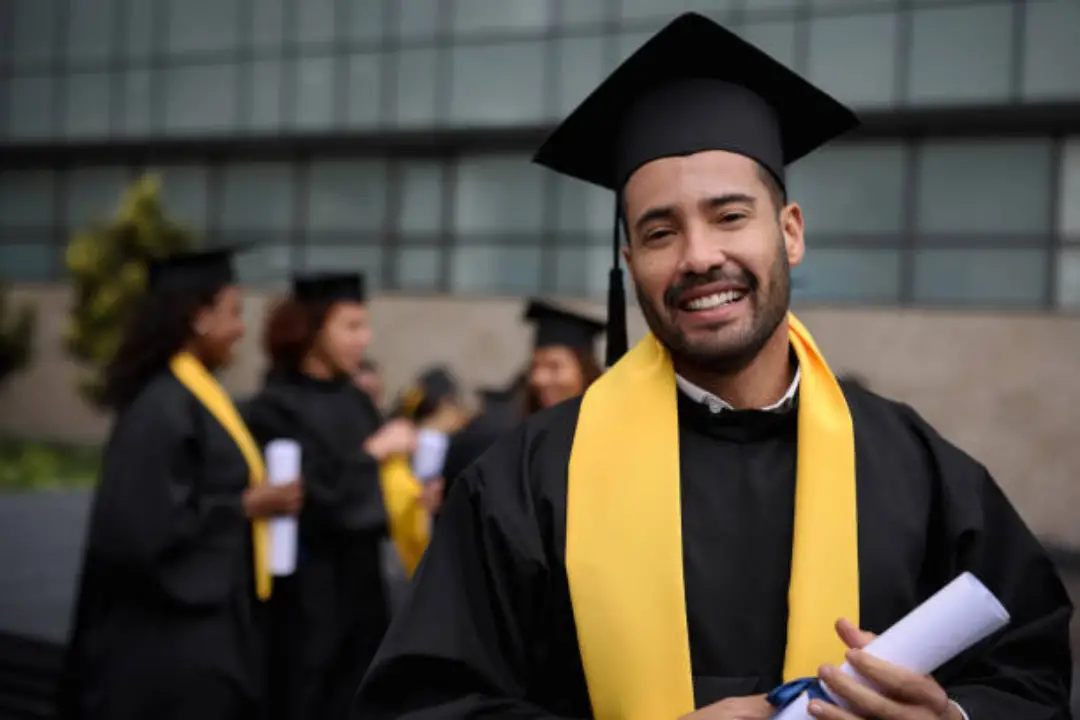
I walked across the stage in my polyester gown, the tassel on my cap swinging with each step. The podium felt both smaller and more imposing than I’d expected. I placed my notecards on the surface, looked out at the sea of faces—classmates, families, teachers, administration—and made a decision.
I didn’t look at my notes.
I took a breath deep enough that I felt it in my toes.
“My mother has been picking up your trash for years,” I said clearly, my voice amplified by the microphone into something that felt both mine and not mine.
The room shifted. The whispers stopped. The casual chatting in back rows ceased. Suddenly I had everyone’s complete attention in a way I’d never experienced.
“So today,” I continued, my voice steady despite my heart hammering so hard I could feel it in my throat, “I’m here to return something you all threw away.”
The silence that fell was heavy, uncomfortable, the kind that makes people want to fidget.
“You threw away kindness,” I said, letting each word land with deliberate weight. “You threw away basic human respect. You threw away the fundamental idea that someone’s worth as a person isn’t defined by what they do for work.”
I paused, then turned slightly to find my mother’s face in the crowd. Her hands had risen to cover her mouth. Her eyes were already wet.
“My mother wakes up at four-thirty every morning, before most of you have even thought about hitting snooze,” I said. “She works in all weather—rain, snow, summer heat that makes asphalt soft. She does work that keeps this town functioning, work that most people refuse to even see, let alone acknowledge or respect.”
My voice cracked slightly. I swallowed and pushed through.
“When I was five, my father died in a construction accident. My mother was a college student studying to improve public health systems. She had plans. She had dreams. She had a future that looked nothing like what she got.”
I could see people in the audience shifting uncomfortably now. Good.
“She dropped out of school to support us. She took the only job that paid enough to keep a roof over our heads and food on the table. She sold her wedding ring—the last piece of my father she had—to pay bills that month.”
My mother was crying openly now, but she was also sitting straighter, her shoulders squared.
“For twelve years, I watched her leave before dawn and come home exhausted. For twelve years, she never complained. She just worked. And she told me every single morning to study hard, to build something better, to go somewhere better than this.”
I looked back at my classmates, at the faces I’d grown up with, faces that had laughed at me, dismissed me, reduced me to a punchline.
“You laughed at me,” I said quietly, but the microphone caught every word. “You called me Dumpster Kid. Trash Boy. You pinched your noses when I walked past. You made sure I sat alone at lunch. You filmed me and posted it online for entertainment.”
Some people had the decency to look ashamed. Others looked defiant. Most looked shocked that I was saying this out loud, here, now.
“But while you were laughing, I learned something you didn’t,” I continued. “I learned that the people society overlooks are often the ones holding that society together. I learned that dignity doesn’t come from your job title—it comes from how you treat people, especially people you think can’t do anything for you.”
I gripped the edges of the podium.
“I learned that my mother, who you dismissed as ‘the trash woman,’ has more integrity in her work-worn hands than most people have in their entire bodies. She shows up. She does the hard work. She doesn’t demand recognition or praise. She just keeps going because that’s what needs to be done.”
My voice was shaking now, but not with fear. With conviction.
“So when I leave Ridgewood—which I’m doing tomorrow, by the way—I’m taking with me the most important lesson this town taught me: that cruelty comes easy and costs nothing, but strength, real strength, looks like my mother going to work every day knowing that people looked down on her and doing it anyway because her son needed her to.”
I stepped back from the podium.
“That’s all I have to say,” I said. “Thank you.”
For a moment, nobody moved. The silence stretched so long I wondered if I’d miscalculated, if I’d just humiliated my mother in front of the entire town, if I’d made everything worse.
Then someone in the back row stood up. I couldn’t see who it was.
Then another person stood.
Then three more.
Then a wave of people rising to their feet, and suddenly the applause wasn’t polite anymore. It was thunderous, genuine, sustained. People were crying—not just my mother, but other parents, some teachers, random community members who’d seen my mother working for years and maybe never thought about what that meant.
I looked at my mother. She was standing too, tears streaming down her face, her hand pressed to her chest like she was trying to keep her heart from breaking through her ribs. She was smiling so wide it had to hurt.
The standing ovation lasted forty-seven seconds. I counted.
Afterward, as people filtered out of the auditorium clutching programs and searching for graduates to photograph, something extraordinary happened. Strangers approached my mother. Not me—her. They waited in line to talk to her, to shake her hand, to apologize for years of thoughtless dismissal.
An older woman hugged her and cried. “I’m sorry,” she kept saying. “I’m so sorry. I never thought. I just never thought.”
A man in a suit—someone’s father, I think—shook her hand formally. “Ma’am, your son is remarkable. You raised him right.”
My mother stood there stunned, like someone who’d spent years invisible and suddenly found herself not just seen but celebrated. Her hand kept going to her chest, patting where her heart was, like she needed to make sure this was real.
Three of my classmates apologized to me directly. It wasn’t all of them—it wasn’t even most of them—but it was something.
That night, we sat at our small kitchen table with takeout Chinese food—a rare splurge to celebrate. My mother kept reaching across the table to squeeze my hand, like she needed to confirm I was still there.
“I was always afraid I’d failed you,” she said quietly, her voice thick. “That you’d grow up ashamed of me, that I’d held you back, that you deserved better than what I could give.”
I squeezed her hand back, my throat tight with emotions I didn’t have words for.
“Mom,” I said carefully, “you taught me how to stand up when everyone else wants you to stay down. You taught me that dignity isn’t about what people think of you—it’s about what you think of yourself. You taught me the difference between what someone does and who someone is.”
She was crying again, but smiling through it.
“Even when no one else would stand with me,” I continued, “you did. Every single day. You stood with me by standing up yourself.”
She pulled me into a hug across the corner of the table, awkward and tight and perfect.
Life didn’t magically transform overnight. People don’t change that fast, and small towns have long memories for both good and bad. But something fundamental shifted in how people treated us after that speech. My mother got more waves on her routes. People said “thank you” when she passed. Small things, maybe, but they mattered.
The scholarship offers started arriving two weeks later. Four different universities, ranging from full tuition to stipends for living expenses. One letter specifically mentioned my graduation speech, saying it demonstrated “moral courage and articulate advocacy for underrepresented workers.”
I accepted an offer to study environmental engineering at Ohio State, with a focus on waste management systems and urban sustainability. It felt right somehow—taking the work people overlook, the systems people only notice when they fail, and making them better.
On my first day of college, my mother drove me to Columbus. We loaded my belongings—which fit easily in our old sedan—and she walked me to my dorm with the same fierce pride she’d carried my entire life.
Before she left, she hugged me the same way she had every morning before her shifts, her arms tight, her kiss on my forehead familiar and grounding.
“Go build something better, Ev,” she said, her voice steady despite the tears in her eyes. “Make them see what I’ve always known—that you were never trash. You were always treasure.”
I completed my degree in three and a half years, graduated with honors, and landed a position with a consulting firm that specialized in municipal waste systems. I worked on projects in six different states, redesigning collection routes, implementing recycling programs, finding ways to make essential but invisible work more efficient and respected.
Five years after my graduation speech, I returned to Ridgewood.
The city had hired my firm to design and implement a comprehensive recycling and waste reduction program. When I arrived for the initial site assessment, I saw my mother’s truck parked outside the municipal facility.
She didn’t know I was coming—I’d wanted to surprise her.
I found her in the break room, drinking coffee from a thermos she’d had since I was in middle school. When she saw me, her face went through shock, joy, disbelief, and pride in rapid succession.
“Ev?” She stood so fast her chair scraped. “What are you doing here?”
“Working,” I said, unable to stop grinning. “I’m the lead engineer on the new waste management project.”
She covered her mouth with both hands, tears already falling.
“You came back.”
“I came back,” I confirmed, crossing the room to hug her. “Someone once told me to build something better. Figured I’d start at home.”
The project took eighteen months. We redesigned collection routes for efficiency, implemented a three-stream recycling system, created educational programs for schools, and—this was my favorite part—worked with the city to increase wages and benefits for all sanitation workers.
My mother was there for the ribbon-cutting ceremony. The mayor asked her to say a few words. She kept it short, like always, but what she said mattered.
“My son taught me something,” she told the small crowd. “He taught me that the work we do matters, even when people pretend it doesn’t. So to everyone who does the work others won’t—thank you. You’re not invisible. Not anymore.”
The applause was genuine.
Later, standing in the parking lot as the sun set orange and gold over the facility, my mother looked at the new trucks, the updated equipment, the signs explaining the recycling program in terms anyone could understand.
“You really did build something better,” she said softly.
I shook my head. “We did. You built me. I just built on that foundation.”
Some things people throw away don’t stay in the trash. Sometimes they come back transformed, stronger, refined by the pressure that was supposed to break them.
My name is Evan Miller, and I grew up as the son of the town’s sanitation worker—a label that once felt like a brand but now feels like an honor.
Because she taught me that the measure of a person isn’t what they do for work.
It’s whether they do that work with dignity.
It’s whether they stand up, even when everyone else wants them to stay down.
It’s whether they teach their children to see past the labels others assign and recognize the humanity underneath.
And this time, when I walk down the streets of Ridgewood, no one laughs.
They wave.
They say thank you.
They see not what my mother does, but who she is.
And that makes all the difference.

Ethan Blake is a skilled Creative Content Specialist with a talent for crafting engaging and thought-provoking narratives. With a strong background in storytelling and digital content creation, Ethan brings a unique perspective to his role at TheArchivists, where he curates and produces captivating content for a global audience.
Ethan holds a degree in Communications from Zurich University, where he developed his expertise in storytelling, media strategy, and audience engagement. Known for his ability to blend creativity with analytical precision, he excels at creating content that not only entertains but also connects deeply with readers.
At TheArchivists, Ethan specializes in uncovering compelling stories that reflect a wide range of human experiences. His work is celebrated for its authenticity, creativity, and ability to spark meaningful conversations, earning him recognition among peers and readers alike.
Passionate about the art of storytelling, Ethan enjoys exploring themes of culture, history, and personal growth, aiming to inspire and inform with every piece he creates. Dedicated to making a lasting impact, Ethan continues to push boundaries in the ever-evolving world of digital content.