The Foundation
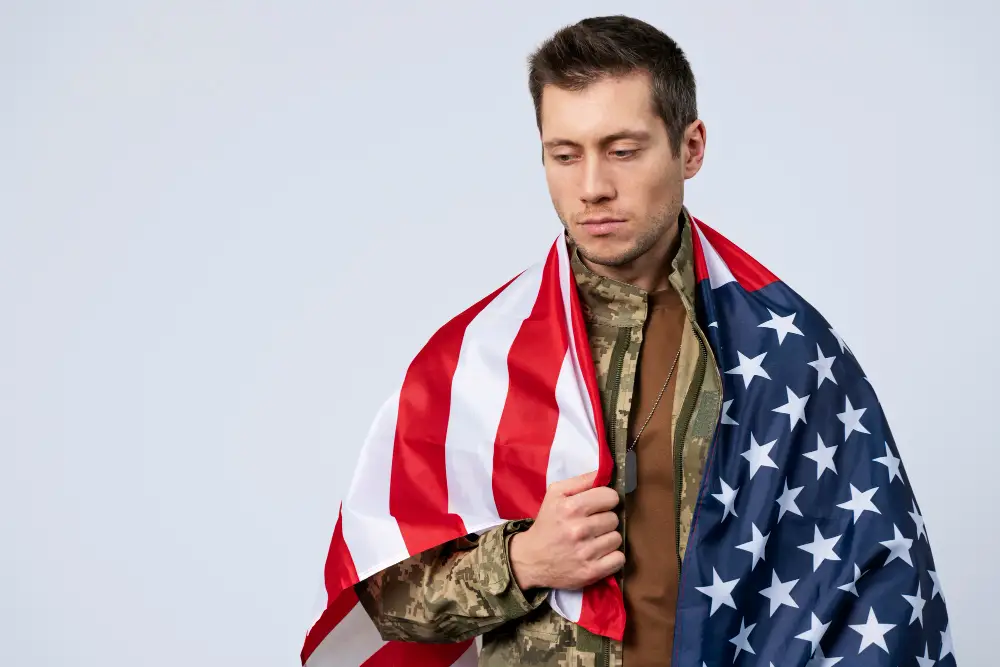
I dragged my duffel bag up the stairs, desperate for my first sleep in eighteen months. But my father and brother stood on the porch, holding beers like it was a party. Dad looked me dead in the eye and said I was homeless. I didn’t scream. I just smiled. When they asked what was so funny, I told them the truth: that house they thought they sold was actually the one thing they never understood.
My name is Meline Lee. I’m thirty-one, a Staff Sergeant in the United States Marine Corps, and until about ten minutes ago, I thought I was standing on firm ground. The cab driver had let me out at the curb, taking his tip with a nod more sympathetic than grateful. I’d been awake for nearly twenty-four hours, navigating military transport from Okinawa to Seattle, then commercial to Nashville, and finally the long drive into Pine Hollow, Tennessee.
I gripped my green duffel bag. It was heavy, but the weight felt good, real. It was the only thing anchoring me as I stared at the structure I’d called home for five years. The modest two-story Victorian with peeling white paint and wraparound porch—I’d bought it with my reenlistment bonus and a loan that took six months of paperwork. It was mine. Every creaky floorboard, every drafty window, every square inch.
But as I dragged my bag up the concrete path, the picture didn’t look right. The front door looked barred. Curtains drawn tight on a humid Tuesday afternoon. The real anomaly was the welcoming committee.
My father, Dale Lee, leaned against the porch railing, arms crossed—a defensive posture I recognized from a thousand bad childhood memories. Beside him, sitting on the top step with legs sprawled out, was my younger brother, Trent.
Trent held a sweating can of cheap beer. He looked up with a smirk that made my stomach turn. The cat that had eaten the canary and sold the birdcage for scrap.
“Hey, Dad,” I said, voice rasping from dry airplane air. “I didn’t expect a party.”
Dale didn’t smile. Didn’t move to hug me. Just stared with a look combining pity and hard resolve.
“Hey, Maddie,” Trent chimed in, taking a loud slurp. “Welcome back to the good old US of A.”
I ignored Trent. Something was wrong. My internal radar, honed by years of threat assessment, was screaming. This was an ambush.
“Where are my keys?” I asked.
Dale shifted weight. “You don’t need keys, Meline.”
I frowned, stepping onto the first wooden step. “What are you talking about? I just want to go inside, shower, and sleep for twelve hours. Move.”
“I’m serious,” Dale said, voice flat. “You don’t live here anymore.”
I froze. My hand tightened on the bag strap until knuckles turned white. “I paid the mortgage last week. I have the bank notification.”
“Yeah, about that.” Trent chuckled, crushing his empty can. “Banks are slow. But the deed? That’s done.”
Dale stepped forward, blocking my path. “Listen to me, Meline. You are homeless.”
The words hung like a physical blow. You are homeless. I didn’t scream. I didn’t drop my bag. My training took over. When you’re hit, you don’t panic. You assess damage, identify the enemy, execute a countermeasure.
I stood perfectly still. My eyes scanned their faces. Dale looked defiant—the look of a man who’d convinced himself he was doing the righteous thing. Trent looked giddy, like this was a hilarious prank.
“You sold my house,” I stated.
“We had to,” Dale said, voice rising with rehearsed momentum. “You don’t know what’s been happening here. You’ve been off playing soldier on a tropical island while we’ve been drowning.”
Playing soldier. The insult bounced off without leaving a scratch.
“Trent got into some trouble,” Dale continued. “Bad trouble. Scary people. We needed liquid cash fast.”
“So you sold my house,” I repeated, voice dropping an octave.
“It’s just a building!” Dale shouted, face flushing. “Family is flesh and blood. Family makes sacrifices. That’s what we do. You weren’t even using it.”
Trent nodded vigorously. “Dad saved my life, Sis. He stepped up. He used that power of attorney you left him, and he handled business like a man.”
“You used the power of attorney,” I said softly.
The power of attorney. I’d signed it three years ago before my first deployment—a standard administrative measure for handling mail, renewing registration, dealing with minor repairs if a pipe burst. Maintenance, not liquidation.
“It was legal,” Trent sneered. “Graham said it was watertight. Dad signed the papers. The money hit the account, and I paid off the sharks. We even made a little profit. Dad’s holding your cut.”
My cut. “Who’s Graham?”
“Graham Rusk,” Dale said, puffing out his chest. “A real estate professional. He found a buyer in two days. Cash offer. Closed in four days.”
Four days. They’d practically given it away, stripped my equity, fed it to whatever wolves Trent had invited.
Then a strange sensation washed over me. A cold, hard knot in my chest rapidly unraveled into something surprisingly light. I looked at Dale sweating in guilt and self-righteousness. I looked at Trent basking in unearned salvation.
They thought they’d won. They thought they’d ambushed me with a fait accompli I’d have to accept because family is family.
I looked at them, and I smiled.
It wasn’t a happy smile. It was the smile of a sniper who’s adjusted for windage and knows with absolute certainty the target is already down.
Dale flinched, taking a half-step back. Trent’s smirk vanished.
“What?” Dale snapped, voice cracking. “What is that look?”
I didn’t answer immediately. I pulled out my phone, held it in my hand, feeling the weight.
“You think I’m in shock,” I said, voice conversational, almost pleasant. “You think I’m standing here trying to process betrayal?” I took a step up. Dale didn’t block me this time. He shrank. “You think you’re the heroes? You think because you had a piece of paper saying ‘Power of Attorney,’ you had the power of God?”
“Stop it,” Dale whispered. “You’re scaring me. Stop smiling like that.”
“What are you laughing at?” Trent demanded, voice lacking earlier bravado. “You’re homeless. We have the money. It’s over.”
I let out a short, sharp laugh. “I’m smiling because you two idiots are celebrating a victory in a war you don’t even know you’ve already lost.”
I looked at the house one last time. Peaceful, deceptive.
“I’m smiling,” I whispered, “because the house you just sold, the one you signed over to strangers—that house is not what you think it is.”
Dale stared, mouth slightly open. “What does that mean?”
“It means,” I said, turning my back and walking down the steps, picking up my duffel with fluid motion, “you didn’t sell my house. You sold your own funeral plots.”
“Where are you going?” Dale shouted. “Maddie, come back here! You don’t have anywhere to go!”
I didn’t look back. They were right about one thing: I was technically homeless. But I wasn’t helpless.
To understand why they were already doomed, I have to take you back three months—to a humid night in Okinawa, to a cramped barracks room, to a single email notification that caused the floor to drop out from under my world.
The air in Okinawa doesn’t feel like air. It’s thick, humid soup. For three months, my life had been rhythmic sweat, discipline, exhaustion. I was a Staff Sergeant—my days consumed by Marines’ needs, nights staring at ceilings smelling of industrial cleaner and boot polish.
To stay grounded, I’d call home every Tuesday and Friday. These calls were my anchor, the invisible tether to the white Victorian. I’d close my eyes, listening to Dale complain about football or gas prices, mentally walking through my house. Imagining sunlight hitting dust motes in the hallway, the third step’s creak. It was meditation, how I remembered who I was without a uniform.
But as weeks dragged on, the tether frayed. Dale, who usually loved to talk for forty minutes, began cutting calls short. Breathless, distracted, nervous energy I hadn’t heard since Mom died.
“Gotta go, someone’s at the door,” he’d say, hanging up before I could say goodbye.
Then came background noises. During late August, I heard voices—loud, aggressive men’s voices.
“Who’s that, Dad?” I’d asked, sitting up, grip tightening on the phone.
“Nobody, just the TV,” he’d lied. I knew his television. These voices had depth. They were in the room.
Questions changed. “When does direct deposit hit?” “Are you getting hazardous duty pay?”
Then the bomb dropped. “Trent’s staying here for a bit,” Dale said, voice dropping to a murmur.
My stomach turned. Trent wasn’t evil, but he was a Category 5 hurricane of bad decisions. Gambling problem he called an “investment strategy,” history of borrowing money that vanished into black holes.
“Dad, listen,” I said, voice switching to sergeant. “Don’t give him money. Don’t sign anything. If he’s in trouble, tell him to call me.”
“He’s fine, Maddie,” Dale snapped, defensive. “He’s your brother. Family helps family.”
That phrase. The weapon Dale used to silence logic.
The silence grew heavier. I texted, called—no answer. Just hollow ringing, voicemail box full.
Then came the text. Three days before I was scheduled to rotate back. No hello, no safe travels. Six words.
Call me before you come back.
Not a request. A warning, a barrier. I tried calling. Straight to voicemail. Trent’s phone was disconnected.
That night, humidity broke into violent thunderstorm. I couldn’t sleep. I checked personal email, clearing junk. There it was, stuck between protein powder promotion and veterans’ newsletter. Generic automated subject line I almost deleted.
Property Activity Notice: Pine Hollow.
My heart hammered. I opened it. Third-party title monitoring service I’d signed up for years ago and forgotten.
ALERT: TITLE TRANSFER PENDING. PROPERTY: 402 MAPLE STREET, PINE HOLLOW, TN. STATUS: PROCESSING. GRANTOR: MELINE LEE BY ATTORNEY IN FACT. GRANTEE: AARON CALDWELL…
The rest was cut off. By Attorney In Fact. That meant the Power of Attorney. Someone was signing my name. Processing. Pending. Happening right now. While I sat here in uniform seven thousand miles away, someone was selling the roof over my head.
I didn’t scream. Cold, clinical clarity washed over me. This was an attack.
I grabbed my phone, dialed Dale. Rang and rang. I could picture him watching the phone light up, choosing not to answer. I could picture Trent telling him to let it ring.
I checked the timestamp. Two days ago. Processing meant the deed hadn’t been recorded yet. Or maybe it had and the system was lagging. I needed eyes on target.
I didn’t wait. I threw on uniform, laced boots with speed from muscle memory and rage. I marched across base in soaking rain to the legal assistance office.
I was first through the door. Young Corporal looked up, startled by my wet appearance and intense eyes.
“I need to speak to a Legal Assistance Attorney,” I said. “Now.”
“Do you have an appointment, Staff Sergeant?”
“I don’t have an appointment,” I said, leaning over the counter. “I have a felony in progress.”
Five minutes later, I sat in a small office across from a civilian attorney, Mr. Henderson. Tired-looking man with coffee stains on his tie. I laid it out: the Power of Attorney, the text, the email, the silence.
“You signed a General Durable Power of Attorney?” he asked.
“Yes. Three years ago. For administrative maintenance.”
Henderson sighed, leaning back. “Staff Sergeant, a General Durable Power of Attorney is a blank check. If your father has that document, he can legally do almost anything you can do. He can access bank accounts. Take out loans. Sell real estate.”
Blood drained from my face. “So there’s nothing I can do?”
Henderson held up a hand. “On the surface, the act might be legal because you gave him authority. However,” he leaned forward, voice dropping, sharper, “fiduciary duty. That’s the key phrase. An agent acting under POA has legal obligation to act in the principal’s best interest. Your best interest, not his, not your brother’s.”
He looked me dead in the eye. “If he’s selling your primary residence while you’re deployed without consent, using proceeds to pay off his or your brother’s debts, that’s breach of fiduciary duty. That’s fraud. That’s theft.”
He pulled a fresh legal pad toward him. “If we can prove the money didn’t go to you or your benefit, the transaction is tainted. But I need you to understand what you’re starting here.”
“What am I starting?”
Henderson stopped writing. “If this is simple misunderstanding, we fix it. But if this is what it looks like—abuse of POA to liquidate a deployed service member’s assets—you’re not filing a complaint about a bad real estate deal.” He paused. “You’re initiating a criminal investigation. This stops being a family matter the moment we file. You’ll be going to war with your father. Are you ready?”
I thought about the text. Call me before you come back. I thought about Trent staying in my room. “They sold my home while I was serving my country,” I said, voice steady. “They declared war on me first. I’m just returning fire.”
Henderson nodded once. “Then let’s get to work.”
That was the moment I stopped being a daughter and started being a plaintiff. But I didn’t know about Graham Rusk. I didn’t know about the fake notary. And I didn’t know the house held a secret that would turn their quick cash grab into a prison sentence.
Henderson gave me a weapon, but it wasn’t a rifle. It was a checklist. “Go to County Register of Deeds website,” he’d instructed. “Request everything. The deed, closing disclosure, wire instructions. Don’t email your father. You’re gathering intelligence.”
I walked back to barracks in rain. I didn’t feel like a daughter. I felt like a case officer building a dossier.
Internet connection was sluggish. I sat at my desk, wet uniform dripping, and navigated the clunky interface of Pine Hollow County Register of Deeds. I filled out forms, uploaded military ID scan, attached original POA, proving I had standing. I submitted the request. Then the waiting began.
For forty-eight hours, I went through motions. PT. Commands at my squad. Chow tasting like cardboard. But my mind was entirely inside my laptop, waiting for a ping.
On the third night, 2:00 a.m., the email arrived. Large file. Subject: RECORDS REQUEST 2024-899.
I opened it. Fifty-page PDF. I sat in the dark, blue screen light illuminating my face. It was like reading an autopsy report for a body still breathing.
First page: Warranty Deed. There it was. Grantor: Meline Lee. Below my name, in looped, shaky script I’d known my entire life—my father’s handwriting: Dale Lee, Attorney in Fact.
I stared at that signature. He’d signed my report cards with that hand. Now he’d signed away my sanctuary.
I scrolled. Dates. Timeline was terrifying. Listing agreement signed just six days prior to sale. In Pine Hollow’s market, houses sat for weeks. This wasn’t a sale. It was liquidation. Fire sale.
Buyer’s name: Aaron Caldwell. Unknown. But the name appearing everywhere on transaction coordination documents, expedited service fees: Graham Rusk. Listing agent. Transaction coordinator. Even listed as consultant for buyer. In normal transactions, that’s conflict of interest so bright it burns your retinas.
I kept scrolling for the why. Then I found the Closing Disclosure—the document breaking down every cent. My mortgage balance: roughly $120,000. House sold for $200,000. Under market value, but still left significant equity. Roughly $70,000 should have been waiting for me.
My eyes traced line items. Wire transfer instruction: Wire to account ending in 4492.
I froze. I knew that account—the joint checking Dale used for household expenses. But there was a second disbursement: Payable to T. Lee Holdings: $40,000.
I stopped breathing. T. Lee. Trent. My brother didn’t have a holding company. He had a gambling addiction and talent for debt. They’d split my life up. Dale took a slice. But the bulk—the equity I’d sweated and bled for—had been funneled directly to Trent under guise of creditor payoff.
They’d conspired. This was premeditated. Documents showed flurry of activity—rushing title, waiving cooling-off period. They were terrified I’d come home early. Racing against my deployment schedule.
I closed the laptop. Hands shaking. Not from fear, but rage so cold it felt like hypothermia.
I needed to hear his voice. I couldn’t call from my number. I downloaded a calling app generating random local numbers—a burner line.
I dialed his landline. Mid-afternoon Tennessee. He’d be in his recliner watching game shows. Phone rang twice.
“Hello?” Dale’s voice was cheerful, relaxed. Voice of a man with no cares, who’d just paid debts with someone else’s money.
I didn’t say anything. Just listened to background—familiar refrigerator hum, TV sounds, sounds of my home.
“Who is this?” Dale asked, sounding annoyed but casual.
“Dad,” I said.
Silence. Immediate vacuum. I heard his breath hitch.
“Maddie?” Voice squeaked, like a child caught. “Why are you calling from this number? Is everything okay?”
Pretending. Concerned father routine.
“I’m fine,” I said, voice terrifyingly level. “Just doing final paperwork check before I fly out.”
“Oh. Right. Good.” He cleared his throat. “When are you coming back exactly? We were thinking… Trent and I could pick you up.”
He wanted to control arrival. Intercept me before I got to the house.
“Dad,” I asked, dropping pretense. “Is there anything you want to tell me?”
“About what?” Pitch went up. Same tone he used when I was ten and he broke Mom’s favorite vase and blamed the cat.
“About the house,” I said.
Another silence. Heavy, thick with panic.
“The house is fine, Maddie,” he stammered. “It’s… the roof is good. Trent mowed the lawn. Everything’s waiting for you.”
Lies. Pure, unadulterated lies. Standing in a house he’d already sold, telling me it was waiting. Gaslighting me from seven thousand miles away.
“Did you sell my house, Dad?” I asked.
The question hung there. I waited. I wanted him to say it. But all I heard was breathing—shallow, rapid.
I didn’t wait for excuses. I didn’t scream. I simply pressed the red button. Call ended.
I sat listening to rain. Connection broken, but path clear. I opened airline website. Original flight: four days away. Too long. That gave them time to move money, disappear. I booked new ticket—departing in six hours. Cost me a thousand dollars in change fees, eating into my last savings. But I didn’t care.
I didn’t text. I didn’t email. I wanted them to think they’d weathered the storm. I wanted Dale to tell Trent, “She suspects something, but she’s still in Japan. We have time.” I wanted them to relax. Open those beers on the porch.
I packed my bag. Folded uniforms with precision. Took the file—fifty pages of evidence—saved it to a thumb drive. Emailed copies to Henderson and a cloud account they could never access.
I was coming home, but not to sleep. The flight would be fourteen hours of hell, but I needed the time to memorize every name, date, dollar amount. By the time I stepped onto that porch, I wouldn’t just be Meline Lee the daughter. I’d be prosecutor, judge, and executioner.
And they wouldn’t see me coming until my shadow fell over their celebration.
The confrontation on the porch had reached a stalemate. I’d dropped the bomb—”You sold your own funeral plots”—and walked away. But I hadn’t gone far. Just to the sidewalk, creating physical distance mirroring the emotional chasm.
Dale still clutched the railing, face confused and defiant. Trent had moved from smugness to aggression, standing up, crushing his beer can.
“You can’t just say that and walk off!” Trent shouted, voice echoing down the quiet suburban street. “You’re just jealous because we made a smart move!”
I turned slowly. Didn’t raise my voice. Didn’t need to. The rage was so condensed it felt heavy in my chest, like a lead vest.
“Who notarized it?” I asked.
The question caught them off guard. Trent blinked. “What?”
“The deed,” I clarified, stepping back toward the porch stairs. “A deed requires a notary public to witness the signature. Dad signed for me. Who witnessed it?”
Dale shifted weight, looking at shoes. “It was handled. Part of the package.”
“Part of the package,” I repeated. “A mobile notary. Someone who came to the house?”
“Graham took care of it,” Trent snapped. “Why do you care about paperwork? It’s done. Money’s in the bank.”
“Who’s the legal representative?” I pressed. “Which title company held escrow?”
Dale waved dismissively. “It was streamlined. Graham said we didn’t need to bloat costs with lawyers. It was a Direct Family Facilitated Transfer. Very modern.”
My stomach churned. Direct Family Facilitated Transfer. That wasn’t a legal term. That was gibberish designed to hide a crime.
Before I could respond, the front door opened. The latch clicking was like a gunshot. Dale jumped. Trent spun around.
A woman stepped out. About my age, maybe older. Yoga pants and oversized sweatshirt reading Nashville Music City. Hair in messy bun, holding ceramic tea mug. She looked tired, normal, completely out of place in this family war zone.
This was Aaron Caldwell. The grantee.
She looked at Dale, at Trent, finally at me. Saw the duffel bag. The uniform boots. The tension.
“Is everything okay?” she asked, voice hesitant. “I heard shouting.”
Dale immediately put on fake, jovial smile. “Oh, hey Aaron. Everything’s fine. Just a little family reunion. My daughter Meline, just back from overseas. A little… overwrought. Jetlag.”
Trying to dismiss me. Paint me as the hysterical soldier who needed a nap.
I looked directly at Aaron. Didn’t glare. Looked with professional appraisal of someone assessing a civilian in a combat zone.
“I’m Meline Lee,” I said, voice calm and clear. “And I’m the owner of this house.”
Aaron’s face paled. She tightened grip on mug. “Excuse me?” She looked back at Dale. “You told me she knew. You said she was relocating permanently to Japan and wanted to liquidate.”
Dale laughed—nervous, hacking. “She does. She did. She’s just having cold feet. Sentimental value, right, sweetie?”
I stepped up onto the porch. Dale tried to block me, but I moved around with fluid sidestep leaving him stumbling. I stood three feet from Aaron.
“I didn’t know this house was for sale until three days ago,” I told her. “I didn’t sign the deed. I didn’t authorize the sale. And I’m certainly not relocating to Japan.”
Aaron looked terrified. She looked from me to Dale, realization dawning. She wasn’t a villain. She was just a woman who thought she’d bought a home.
“But we have keys,” she stammered. “We moved in yesterday. My husband’s at work. We paid cash.”
“How long did the process take?” I asked gently.
“Four days. From viewing to closing.”
“And who handled paperwork?”
“Mr. Rusk. Graham Rusk.”
I nodded. “Did you have your own lawyer review the title? Did you have a real estate attorney look at the Power of Attorney document?”
Aaron shook her head. “Graham said it wasn’t necessary. He said since it was expedited family sale, bringing in lawyers would slow down emergency funding your father needed. He said he was doing us a favor by cutting closing costs.”
Sympathy hit me. They’d played her just as hard. Used Dale’s “emergency” to guilt her into rushing, used cost-saving lies to keep her from getting legal advice.
“Listen to me, Aaron,” I said, lowering my voice. “I’m not here to throw your furniture on the street today. I’m not here to scream at you.”
I reached into my duffel’s side pocket and pulled out a folded manila envelope. Inside were copies of documents I’d pulled from the registry—the fake timeline, weird disbursement, irregularities Henderson had highlighted.
“If this transaction has failure points—and it has many—then you’re not the owner. You’re a victim of fraud, just like me.”
She hesitated, then took the envelope. Hands shaking. “What does this mean?”
“It means you need a lawyer,” I said. “Not Graham Rusk. Not anyone Graham recommends. You need a real, independent real estate attorney. Tonight.”
Dale lunged forward. “Don’t listen to her! She’s trying to scare you. The deal’s done. Papers are filed!”
I turned on Dale and Trent. Sympathy vanished. Cold rage returned.
“You think the papers are filed?” I asked. “You think because you signed ‘Dale Lee’ on a dotted line, it’s over?”
“It is over!” Trent yelled. “We have the money! You can’t undo it!”
I looked at Trent. So pathetic in his triumph. He thought money was all that mattered. Didn’t understand that a transaction built on fraud isn’t a transaction—it’s a crime scene.
But there was something else. Something Henderson had found at the end of our meeting—a detail about the original deed from when I bought the house five years ago. A clause I’d insisted on because I was young, single, and paranoid about liability.
I looked at them. Then back at Aaron, clutching the envelope like a shield.
“You’re right about one thing, Dad,” I said. “You sold the house. You took the money.” I picked up my bag. “But you made a mistake. A big one.”
“What mistake?” Dale asked, voice trembling.
I smiled that same unnerving smile. “You checked the Power of Attorney. You checked bank accounts. But you never checked the original title structure of this property.” I leaned in, whispering the final blow. “This house isn’t just under my name, Dad. It’s held in a Living Trust. The Meline Lee Revocable Trust. And the Power of Attorney you have? It grants authority over Meline Lee, the individual. It doesn’t grant authority over the Trust.”
Dale’s eyes went wide. He didn’t understand legal nuance, but he understood the tone.
“You sold something you never had the keys to,” I said. “And that house? It’s been legally locked the entire time.”
I turned and walked down the steps, leaving them in stunned silence. Aaron was dialing her phone before I reached the street. Dale looked like he was about to faint. Trent just stood there, mouth open, crushed beer can dripping onto his shoe.
I walked toward the motel on the edge of town. I had nowhere to sleep, but I’d never felt more awake. The first shot had been fired. Now I just had to watch them bleed.
Three months later, I sat in a courtroom that smelled of floor wax and anxiety. Judge Eleanor Vance sat behind the bench like granite carved into human form. Evan stood at plaintiff’s table looking immaculate. My mother sat behind him, handkerchief ready.
I sat at defense table with Sarah, my attorney from the base legal office. Behind me sat a woman in a pinstriped suit—not my family, but Rowan Pike from my new employer. She’d heard about the case, wanted to see justice served for a veteran.
“Mr. Martin,” Judge Vance began. “We’re here on Emergency Motion to Stay Foreclosure coupled with Cross-Motion for Sanctions Alleging Fraud.”
My lawyer, Noah Klein, stood. He didn’t pace. Just adjusted his tie and placed a single document on the judge’s podium.
“Your Honor, we’ve spent days discussing fraud, forgery, deceit. But the legal reality is actually quite boring.” He looked at Dale and Trent. “The property at 402 Maple Street was never eligible for sale. It’s held in the Meline Lee Revocable Trust. Section Four, Paragraph Two explicitly states that while the primary beneficiary is on active military duty, no transfer may occur without notarized consent of the Trust Protector.”
Noah pointed to me. “Ms. Lee was in Okinawa.” He pointed to the empty witness box. “The Trust Protector, Sergeant Major Williams, was in Florida. Neither signed anything. Therefore, Dale Lee didn’t sell a house. He sold a fiction. He attempted to convey a title he didn’t possess the keys to unlock.”
Judge Vance looked at the document. “Is this accurate?”
The public defender stood, defeated. “The Trust language is clear, Your Honor.”
Judge Vance nodded. “Then as a matter of property law, the deed recorded September 25th is void ab initio. A nullity. Title reverts immediately to the Trust.”
I let out a breath I’d been holding since that porch.
Detective Lena Hart stood from the gallery and walked through the gate. She held a manila envelope—the partnership agreement between Trent and Graham Rusk I’d received at the motel.
“Your Honor,” Hart said, “while the civil matter is resolved, the State moves to enter evidence regarding criminal culpability.” She handed the agreement to the bailiff.
“We’ve established the notarization was forged using a stolen stamp,” Hart said, voice hard. “We have testimony from Sloan Rusk regarding systematic targeting of deployed service members. But until last night, defense argued Trent Lee was a desperate young man acting under duress.” Hart turned and looked at Trent. “This document, dated May 12th, proves otherwise. It’s a profit-sharing agreement signed two months before Meline Lee deployed. It outlines a strategy to harass and manipulate Dale Lee into liquidating the asset.”
Dale let out a sound that was half-gasp, half-sob. He turned to Trent.
“May?” Dale whispered. “You told me the loan sharks came in August.”
Trent didn’t look at him. Stared straight ahead, face a mask of stone.
“There were no loan sharks, Mr. Lee,” Hart said gently. “Your son invented a crisis to force you to sell your daughter’s home so he could collect a 50% commission from a predator.”
Dale put his head on the table and wept. Not the crying of a man caught. The sound of a father realizing his son had been cannibalizing him for months.
Judge Vance banged her gavel. “Order. The court rules as follows: The deed is canceled. Ownership of 402 Maple Street is restored to the Meline Lee Revocable Trust.” She turned to Aaron and Miles Caldwell. “The court orders title insurance to immediately disburse full purchase price of $200,000 to Mr. and Mrs. Caldwell. Furthermore, restitution judgment against Trent Lee and Graham Rusk for all legal fees.”
Then she turned to my family.
“Dale Lee, stand up.”
My father stood. Small, shrunken.
“You committed forgery. You stole an identity. You betrayed fiduciary duty to your daughter. However, you were also the victim of significant psychological manipulation.” She paused. “I’m sentencing you to five years probation with conditions: mandatory financial responsibility course and court-ordered family counseling. You’re financially liable for the $12,000 you personally spent. You will pay your daughter back. Even if it takes the rest of your life.”
Dale nodded, unable to speak.
“Trent Lee, stand up.”
Trent stood. Didn’t slouch. Looked like a cornered rat.
“This court finds evidence of conspiracy and elder abuse compelling,” the judge said, voice dropping an octave. “You didn’t just steal a house. You engineered a tragedy. You’re remanded to custody pending full criminal trial for racketeering, grand larceny, and identity theft. Bail is denied.”
Two officers moved in behind Trent. The sound of handcuffs ratcheting shut echoed.
“Wait!” Trent shouted, struggling. “I have money! The Alpha Node account!”
“The money’s gone, Trent,” Hart said. “The SEC shut down Alpha Node this morning. It’s zero.”
Trent screamed as they dragged him out—raw, ugly. Dale didn’t look up. Just covered his ears.
“And Graham Rusk?” the judge asked.
Hart checked her phone. “Atlanta police just picked him up at Hartsfield-Jackson Airport, Your Honor. Trying to board a flight to Belize. We have extradition paperwork ready.”
The gavel banged one last time. “Case closed.”
I walked out into bright Tennessee sunshine. Aaron and Miles were waiting by the steps.
“So it’s really over?” she asked.
“It’s over,” I said. “You’ll get your check in a few days.”
Aaron stepped forward and hugged me—awkward, brief, genuine. “Thank you for not making me a casualty.”
I watched them walk away, hand in hand, ready to start over.
Then Dale was standing there, holding a plastic bag with his effects. Court had released him, but he looked like a prisoner kicked out of jail.
“Maddie,” he said.
I turned to face him. Didn’t feel anger anymore. The anger had burned out, leaving only cold, hard clarity.
“I’m sorry,” he said. “I know that word doesn’t mean anything.”
“No,” I said. “It doesn’t.”
“Where do I go?”
“The house? You can’t stay at the house, Dad.”
He looked up, startled. “But I have nowhere else.”
“I know,” I said. “But you sold that house. You stood on that porch and told me I was homeless. You broke the seal.”
I reached into my pocket and pulled out a card for a short-term rental efficiency. I’d paid the first month’s rent.
“You can stay here for thirty days. You have your pension. You have probation. You have to figure the rest out.”
“Maddie, please,” he begged. “I’m your father.”
I looked him in the eye. “No. You were my father. Now you’re just a man who owes me $12,000.”
I turned and walked to my rental car. Didn’t look back. I knew he was watching, standing alone on courthouse steps, realizing “family” wasn’t a magic word that erased consequences.
I drove to Maple Street. Sun was setting as I pulled into the driveway. The “SOLD” sign was gone. Aaron and Miles had moved their boxes out, leaving the house empty.
I walked up the gravel path. The crunch of my boot sounded different this time. Not the sound of a weary soldier returning to an ambush. The sound of a commander inspecting a secured position.
I stepped onto the porch. The spot where Dale had leaned, where Trent had sat drinking beer—just wood now. Their ghosts were gone. I took the key from my pocket. The original key I’d carried to Okinawa and back. I slid it into the lock. It turned with a heavy, satisfying click.
The door swung open. The house was silent. Air stale, smelling faintly of cleaning supplies Aaron had used. I stepped across the threshold and closed the door behind me. I locked it.
I leaned my back against the wood and slid down until I was sitting on the floor of the empty foyer.
Dale had asked why I laughed that day on the porch. Why I smiled when he told me I was homeless. He thought I was crazy. In shock. But he didn’t understand.
I looked around at the walls I’d painted, the stairs I’d sanded, the home I’d bought with money earned in deserts and jungles. I closed my eyes and finally finished the sentence I’d started three days ago.
Because that house really was a fortress. It was a vault. A legal and emotional panic room designed by a twenty-six-year-old woman who knew, deep down, that the people supposed to protect her were the ones she needed protection from. It was property locked not just by a Trust, but by my own survival instinct. I’d built a wall they couldn’t climb, a door they couldn’t force, and a life they couldn’t sell.
I wasn’t homeless. I was the only one who knew where the true foundation lay.
I opened my eyes. The house was empty. My family was gone. And for the first time in my life, I was completely, beautifully safe.

Lila Hart is a dedicated Digital Archivist and Research Specialist with a keen eye for preserving and curating meaningful content. At TheArchivists, she specializes in organizing and managing digital archives, ensuring that valuable stories and historical moments are accessible for generations to come.
Lila earned her degree in History and Archival Studies from the University of Edinburgh, where she cultivated her passion for documenting the past and preserving cultural heritage. Her expertise lies in combining traditional archival techniques with modern digital tools, allowing her to create comprehensive and engaging collections that resonate with audiences worldwide.
At TheArchivists, Lila is known for her meticulous attention to detail and her ability to uncover hidden gems within extensive archives. Her work is praised for its depth, authenticity, and contribution to the preservation of knowledge in the digital age.
Driven by a commitment to preserving stories that matter, Lila is passionate about exploring the intersection of history and technology. Her goal is to ensure that every piece of content she handles reflects the richness of human experiences and remains a source of inspiration for years to come.