The Day I Vanished: How Reclaiming My Boundaries Changed Everything
My name is Mia. I’m 22 years old, and for most of my life, I believed that being a good daughter meant never saying no. That love was measured in sacrifice. That family meant access—to your time, your space, your entire existence. I believed all of this until one ordinary Tuesday night shattered every assumption I’d been living by.
What happened that evening would set off a chain of events that forced me to choose between the person I was raised to be and the person I desperately needed to become. This is the story of how I learned that sometimes the most loving thing you can do is draw a line in the sand, even when—especially when—the people you love refuse to see it.
The Night Everything Changed
I remember dragging myself up the stairs to my apartment, my backpack heavy with textbooks I hadn’t opened and the weight of a day that felt longer than it should have been. My psychology professor had gone overtime discussing attachment theory and boundary formation, concepts that felt academic and distant as they echoed in the lecture hall. I had no idea how immediately, how viscerally relevant those concepts would become in just a few minutes.
All I wanted was the simple pleasure of being alone. I’d been fantasizing about it all day—the sound of my own footsteps in my own space, instant ramen that I didn’t have to share or justify, and the kind of silence that wraps around you like a blanket. The silence that says: this space is yours, and yours alone.
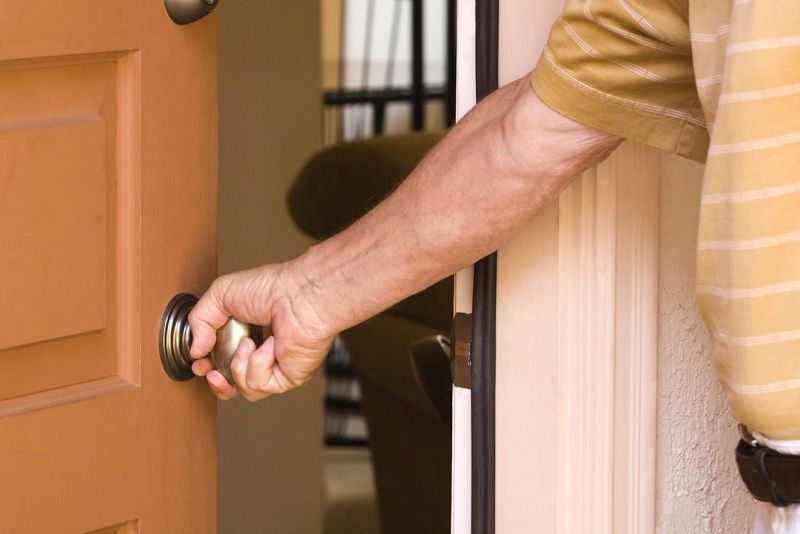
I swiped my key card. The lock clicked. I pushed open the door.
And then I froze.
The lights were blazing—every single one, the way someone who doesn’t pay the electric bill might leave them. The television was on, tuned to one of those home renovation shows I’d never watched in my life. And there, sprawled across my couch like they’d just returned from their own living room, were my parents.
My mother’s shoes sat neatly by the door, my father’s kicked off carelessly near the coffee table. There were snacks—my snacks—laid out like appetizers at a party I hadn’t been invited to. In my own home.
My mom looked up, and her face split into this enormous, delighted smile. “Surprise!” she sang out, her voice carrying that particular brightness that meant she expected me to be thrilled.
My dad lifted one hand in a casual wave, not even bothering to sit up properly. His expression held that same maddening neutrality it always did—not quite apologetic, not quite defiant, just… there.
And then I saw it. Sitting on my kitchen counter like a trophy, like evidence at a crime scene, like the answer to every question I’d been too afraid to ask: my spare key.
“How did you get in here?” The words came out flat, mechanical. I already knew the answer, but I needed to hear her say it. I needed the confirmation that what I suspected—what I’d been suspecting for weeks—was real.
My mom held up the key, dangling it between her fingers like it was the most natural thing in the world. “You gave it to us when you moved in, sweetie. Remember? For emergencies.” She smiled wider, as if that explained everything. “Besides, it’s not breaking in. We’re family.”
That sentence hit me differently than it might have six months ago, a year ago. It landed with the weight of all the times I’d found things moved in my apartment. The laundry that somehow folded itself while I was at work. The groceries that appeared in my fridge, items I never bought but that my mother thought I should have. The way my books seemed to migrate on my shelves, reorganized according to some system that wasn’t mine. The spice rack that refused to stay where I put it because it “looked better” by the stove.
Every strange moment suddenly had an explanation. Every time I’d walked into my apartment and felt like something was off, like the air had been disturbed by someone else’s presence—I hadn’t been imagining it. They had been there. In my space. Touching my things. Living a parallel version of my life without my knowledge or consent.
And the truly devastating part? According to my mother’s logic, this was love. This was care. This was what family did.
The History We Carried
To understand how we got here, you have to understand what happened six years ago, when I was sixteen and my world collapsed in the space of a single phone call.
My father—my real father, not the man sitting on my couch—died of a sudden heart attack on a Wednesday afternoon. He’d been at work, laughing with a colleague one moment, and gone the next. No warning. No chance to prepare. No goodbye.
My mother didn’t handle it well. How could she? They’d been together since high school, married at twenty, built a life that revolved entirely around each other and me. When he died, she didn’t just lose her husband. She lost her entire identity, her future, her sense of safety in the world.
And I became her project.
At first, it was understandable. The grief counselor said it was normal—the hypervigilance, the need to know where I was at all times, the panic if I came home fifteen minutes late. “She’s terrified of losing you too,” the counselor explained. “Give her time.”
So I gave her time. Months. Years. I endured the tracking apps on my phone that she checked obsessively. I answered the calls that came every few hours: “Where are you? Who are you with? When will you be home?” I accepted the surprise visits to my friend’s houses, my after-school activities, anywhere I might be without her direct supervision.
When I turned eighteen and told her I wanted to go to the local state university so I could stay close, she cried with relief. When I said I wanted to live on campus for the “college experience,” she looked betrayed for weeks. We compromised—I’d live at home for freshman year, then get my own place nearby for sophomore year.
Getting that first apartment felt like victory. My own key. My own lease. My own name on the mailbox.
I should have known better.
My mother insisted on a spare key “for emergencies.” What if I locked myself out? What if there was a fire and she needed to get in? What if something happened to me and she couldn’t reach me? The questions were endless, the scenarios increasingly catastrophic, until finally, exhausted, I handed over the key.
“Just for emergencies,” I said.
“Of course,” she agreed. “Just for emergencies.”
But somewhere along the way, the definition of “emergency” expanded. It stretched and morphed until it covered everything. I’m worried about you became an emergency. I wanted to make sure you’re eating became an emergency. I was in the neighborhood became an emergency.
And by the time she remarried—to Tom, the man now waving lazily from my couch—the pattern was so established that he simply absorbed it as normal. This was how things worked in our family. Boundaries weren’t walls; they were more like suggestions that could be overridden by the magic word: family.
The Unraveling
That night, I didn’t explode. I didn’t scream or cry or demand they leave. Part of me desperately wanted to—wanted to channel all the fury and violation I felt into something dramatic and cathartic. But years of conditioning had taught me that emotional reactions were “overreactions.” That setting boundaries was “pushing them away.” That wanting space meant I didn’t love them enough.
So instead, I smiled. I asked how long they’d been there. I listened to my mother explain how she’d brought over a casserole because she “knew” I wasn’t eating properly. I watched my stepfather channel-surf through my streaming accounts like he was settling in for the evening. I played the role I’d been trained to play: the grateful daughter, the good girl, the one who understood that this was just how love looked in our family.
But inside, something had shifted. Something had broken, or maybe something had finally healed enough to recognize the damage.
I kept smiling through dinner—the casserole I didn’t want, eaten at the table where I’d planned to study. I kept smiling through my mother’s stories about her day, through her casual mentions of “next time I visit” as if this was an established routine rather than a violation. I kept smiling until they finally left, my mother hugging me tight and whispering, “We just love you so much, sweetie. We want to make sure you’re okay.”
The door closed behind them. The lock clicked. And I stood there in my apartment that didn’t feel like mine anymore, surrounded by the evidence of their presence—the reorganized kitchen, the laundry they’d folded “wrong” because it wasn’t my system, the smell of my mother’s perfume lingering in the air.
I walked to the kitchen counter and picked up the spare key. They’d left it there. Of course they had. They didn’t need to take it with them. They’d just make a copy. Or they’d come by when I was at class and pick it up. Or they’d use some other key I didn’t even know existed.
That’s when I understood: this wasn’t going to stop. Not with conversations or boundaries or heartfelt explanations about personal space. Because in their minds, there was no invasion. There was no violation. There was only love, expressed in the language they understood—presence, involvement, constant contact.
And I had two choices: accept this as my life forever, or do something I’d never done before.
Stop negotiating. Stop explaining. Stop trying to make them understand something they were fundamentally unwilling to see.
Just… leave.
The Plan
Over the next two weeks, I moved through my life like an actor in a play, hitting all my marks while a different reality unfolded backstage. I went to class. I came home. I answered my mother’s calls with the same frequency and warmth I always had. I smiled when she mentioned stopping by. I never changed my routine, never gave any indication that anything had changed.
But everything had changed.
I started apartment hunting with a private browser, looking at places across town. Places my mother wouldn’t think to look. Places that required credit checks and applications in my name only—no co-signers, no emergency contacts with spare keys.
I found it on a Wednesday: a small one-bedroom in a secured building with key-card access and a doorman named Marcus who took his job seriously. The building had security cameras. Visitors had to be announced. There was no way to just “stop by.”
It was perfect.
I applied immediately, using my work contact instead of my cell number. I listed my best friend Sarah as my emergency contact, making her promise not to reveal my new address to anyone. “Not even to be nice,” I told her. “Not even if they seem really worried.”
Sarah, who’d witnessed years of my mother’s “visits,” understood immediately. “I’ve got you,” she said.
The apartment was mine within three days.
Then came the logistics. I couldn’t hire movers—too obvious, too easy to trace. I couldn’t pack during the day—my mother had a habit of dropping by at random times. So I packed at night, after midnight, when I knew they were asleep. One box at a time, hidden in my closet. Essentials only at first, then slowly everything else.
I transferred my utilities to the new address using my work email. I arranged for mail forwarding to a PO box. I updated my address with the university, my bank, my employer—everywhere except my family’s contact information. As far as they knew, I still lived in apartment 3B on Maple Street.
I told no one except Sarah. Not my other friends, not my coworkers, not my professors. Every person who knew was a potential leak, a way for my mother to extract information with the right combination of worry and manipulation.
Moving day was a Sunday. I chose it specifically because my mother had mentioned a church event that would keep her busy all afternoon. I rented a van, and Sarah recruited two of her brothers who didn’t know me and wouldn’t recognize my family. We moved everything in four hours.
I cleaned the old apartment until it gleamed. I left nothing behind except the furniture that came with the place and a single envelope on the kitchen counter containing my old spare key and a note that said simply: “Thank you for everything. I need some space. I’ll call when I’m ready. Love, Mia.”
Then I turned in my keys to the building manager, got in my car, and drove to my new life.
The Silence
I turned off my phone before I even left the old apartment’s parking lot. I’d spent two weeks preparing for this moment, but I hadn’t fully grasped how it would feel—the weightlessness mixed with guilt, the freedom tangled with fear.
For the first time in years, no one knew where I was.
I spent that first night in my new apartment sitting on the floor, surrounded by boxes I was too overwhelmed to unpack, eating pizza straight from the box, and crying. Not sad tears, exactly. Relief, maybe. Or grief for all the years I’d spent believing I had no right to this—to a space that was completely, utterly, mine.
I slept that night with my phone still off, knowing that when I turned it on, there would be consequences. But I needed these hours. I needed to exist in a bubble where I was just Mia, not anybody’s daughter, not anybody’s project, just… me.
When I finally powered on my phone the next afternoon—Monday, nearly twenty-four hours after I’d moved—it immediately began vibrating with notifications. Texts. Voicemails. Missed calls. Dozens of them, the number growing as the phone synced with the network.
I watched them pile up, feeling strangely detached, like I was observing someone else’s crisis.
Mom (17 missed calls)
Tom (5 missed calls)
Unknown Number (3 missed calls)
The texts started worried:
“Sweetie, haven’t heard from you today, is everything okay?”
Then confused:
“Mia, please call me back, I’m getting worried.”
Then panicked:
“MIA WHERE ARE YOU?? I went to your apartment and you’re gone! All your stuff is GONE! What happened?? Are you okay?? PLEASE CALL ME!”
And finally, the one that made my stomach drop:
“I’ve called the police. They’re looking for you. Please tell me you’re safe.”
That’s when my phone rang with an unknown number, and against my better judgment, I answered.
“Is this Mia Collins?” a calm, professional voice asked.
“Yes,” I said quietly.
“This is Officer Ramirez with the city police department. Your mother filed a missing person report. She’s very worried about you. Are you safe?”
The Reckoning
I’d expected anger. I’d expected guilt trips and accusations and emotional manipulation. What I hadn’t expected was the police sitting in my new living room, taking a statement while my mother sobbed on speaker phone in the background.
“I’m fine,” I told Officer Ramirez for the third time. “I moved. I’m an adult. I don’t need to tell my parents where I live.”
“She understands that,” Ramirez said patiently. He was older, maybe in his fifties, with kind eyes that had probably seen every family drama imaginable. “But you can understand their concern. You disappeared without warning. Your apartment was empty. Your phone was off. From their perspective, something might have happened to you.”
From their perspective. Those three words contained everything wrong with the situation and everything that would make it nearly impossible to fix.
“Nothing happened to me,” I said, keeping my voice steady. “Something happened to my boundaries. Repeatedly. I asked them to stop entering my apartment without permission. They didn’t stop. So I moved to a place where they can’t do that anymore.”
Officer Ramirez’s expression shifted slightly—a flicker of understanding, maybe even sympathy. “These are family matters,” he said carefully. “I can’t get involved in family disputes. But I need to confirm for the record that you’re safe, you left of your own free will, and you’re not in danger.”
“Yes to all of that.”
“And you’re aware your mother has been trying to reach you?”
“Yes.”
“Will you contact her to let her know you’re alright?”
I hesitated. This was the moment I’d been dreading—the moment where my clean break became complicated, where the door I’d closed got forced open again.
“I’ll send a text,” I finally said. “But I’m not giving her my address, and I’m not ready to talk yet.”
Ramirez nodded slowly. “That’s your right. You’re an adult. But I’d encourage you to communicate, even briefly, to ease her worry. Whatever happened between you, she’s genuinely frightened.”
After he left, I sat with my phone for a long time, crafting and deleting messages. Everything sounded either too harsh or too soft, too defensive or too apologetic. Finally, I settled on:
“I’m safe. I moved because I needed space and privacy. I’m not in danger. I need time. Please respect that.”
I sent it to both my mom and Tom, then silenced my phone as the responses immediately started flooding in.
The Aftermath
The next few weeks were some of the hardest of my life, and also some of the most liberating.
My mother’s texts ranged from devastated (“How could you do this to me?”) to angry (“After everything I’ve done for you, this is how you treat me?”) to bargaining (“Just give me your address, I promise I won’t use it unless it’s an emergency”). Tom’s messages were shorter, more bewildered than angry: “We just wanted to help. We love you.”
I responded sporadically, keeping my messages brief and factual. “I need space. This isn’t negotiable. I’ll reach out when I’m ready.” I repeated variations of this message so many times it became a mantra.
Sarah became my lifeline during this period. When I second-guessed myself—which was often—she reminded me what life had looked like before. “Remember when you found your underwear drawer reorganized?” she’d say. “Remember when she threw out your groceries because they were ‘expired’ when they weren’t? Remember when you couldn’t have a single private conversation in your own home?”
I did remember. And yet, the guilt was crushing. Because everything my mother said in her messages was also true: she had done a lot for me. She had raised me, supported me, loved me in the only way she knew how. And now I’d cut her off, disappeared, made her worry to the point of calling the police.
What kind of daughter did that make me?
I started seeing a therapist—Dr. Chen, a woman in her sixties who specialized in family dynamics. In our third session, I asked her the question that had been eating at me: “Am I being selfish? Am I overreacting?”
Dr. Chen leaned back in her chair, considering. “Let me ask you something. If a friend told you their partner tracked their location at all times, entered their home without permission, and told them they had no right to privacy because ‘we’re family,’ what would you tell them?”
“That’s different,” I said automatically. “That’s abuse.”
“Is it?” she asked gently. “Or is it just easier to see abusive patterns when they’re romantic rather than familial?”
That session broke something open in me. I started to see the situation not through the lens of “difficult family dynamics” but through the lens of control, violation, and the systematic dismantling of my autonomy. The fact that it came wrapped in love didn’t make it less harmful. If anything, it made it more insidious.
The Boundary Line
Six weeks after I moved, I agreed to meet my mother for coffee. Neutral territory, public place, time limit established in advance.
She looked smaller than I remembered, or maybe I’d just gotten bigger. She stood when I walked into the café, her face a mixture of relief and uncertainty, like she wasn’t sure if I’d allow her to hug me.
I let her hug me. But I didn’t melt into it the way I used to.
We sat. She ordered her usual vanilla latte. I ordered black coffee, something I’d never drunk around her because she’d always criticized it as “too harsh.”
“You look different,” she said finally.
“I am different.”
Silence stretched between us. She was waiting for me to explain, to apologize, to make this okay. I was done making things okay.
“I love you,” I said, and I meant it. “But the way you’ve been treating me isn’t love. It’s control. And I can’t live like that anymore.”
Her eyes filled with tears. “I was just trying to help. After your father died, I… I couldn’t lose you too. Don’t you understand that?”
“I do understand,” I said. “And I’m sorry for what you went through. But your trauma doesn’t give you the right to violate my boundaries.”
“Boundaries,” she repeated, and the word sounded bitter in her mouth. “Is that what this is about? You needed ‘boundaries’ so badly you had to disappear and make me think something terrible had happened?”
This was the crux of it. In her mind, my moving without telling her was the violation. My need for privacy was the problem. The years of unwanted intrusion didn’t register because in her framework, family meant unlimited access.
“Yes,” I said simply. “I needed boundaries so badly that every other method of establishing them had failed. You weren’t listening when I asked nicely. So I stopped asking.”
We talked for another hour. Not a resolution, but a beginning—or maybe an ending that needed to happen before any new beginning could start. I told her what I needed: no surprise visits, no tracking apps, no entering my home without explicit permission. If she wanted to see me, she could call and ask. If I wanted to share my location, I would.
She listened, but I could see her struggling with every word. This wasn’t the relationship she wanted, where her daughter needed her constant presence. But slowly, reluctantly, she nodded.
“I can try,” she said. “But you have to meet me halfway. You have to actually communicate with me. You can’t just disappear.”
“I won’t,” I promised. “As long as you respect my boundaries.”
We left it there, unsteady but honest.
What I Learned
It’s been four months now since I moved into my apartment with the security cameras and the doorman named Marcus who still greets me every morning. My relationship with my mother is fragile, tentative, but it’s also more honest than it’s ever been.
She slips sometimes. She’ll call three times in a row if I don’t answer immediately. She’ll suggest “stopping by” with a casual tone that doesn’t match the weight of what she’s asking. But now I have a choice. I can say no. I can enforce the boundary without feeling like a terrible person for doing it.
Tom, interestingly, adjusted faster than my mother. He sent me a short email about a month after our coffee meeting: “I’m sorry we made you feel like you couldn’t be honest with us. That must have been really hard. Your mom is working on it, and so am I.” It wasn’t perfect, but it was something.
I’ve learned that setting boundaries doesn’t mean you don’t love someone. It means you love yourself enough to exist as a separate person. I’ve learned that family isn’t a password that unlocks every door—it’s a relationship that, like all relationships, requires respect, consent, and the recognition that the other person is autonomous.
I’ve also learned that sometimes the most loving thing you can do is disappoint someone. Because the alternative—living your entire life according to someone else’s needs while your own slowly suffocate—isn’t love. It’s extinction.
My new apartment is still small. I still eat too much instant ramen. But when I come home now, the lights are off unless I left them on. My books stay where I put them. My spice rack is organized according to my own chaotic system that makes sense only to me.
And when my mother visits—which she does now, but only after calling first and getting my explicit yes—she sits on my couch as a guest, not as someone who owns the space. She drinks the tea I make her. She tells me about her week. And when it’s time to leave, she leaves.
Last week, as she was putting on her coat, she looked around my apartment with this expression I couldn’t quite read.
“What?” I asked.
“It’s very you,” she said finally. “I can see you here. I couldn’t before.”
I didn’t ask what she meant by “before”—whether she meant my old apartment that she’d invaded so thoroughly that it stopped being mine, or some metaphorical before where she couldn’t see me as a separate person. It didn’t matter. What mattered was that moment of recognition.
“Thank you,” I said.
She hugged me at the door. “I’m trying,” she whispered.
“I know,” I said. “So am I.”
The door closed behind her—not slammed, not locked with fear, just closed. The natural boundary between one person’s space and another’s.
And I was alone, the way I’d wanted to be that Tuesday night four months ago. But this time, it didn’t feel like victory or escape. It just felt like home.
My name is Mia. I’m 22 years old. And I finally live in a space that’s mine—not because I changed the locks, but because I changed the rules about who gets to define what love looks like.
Sometimes the people who love you most need you to show them how. And sometimes, the only way to show them is to disappear long enough for them to understand what it feels like when you’re truly gone.
Then, and only then, can you come back on your own terms.
THE END

Adrian Hawthorne is a celebrated author and dedicated archivist who finds inspiration in the hidden stories of the past. Educated at Oxford, he now works at the National Archives, where preserving history fuels his evocative writing. Balancing archival precision with creative storytelling, Adrian founded the Hawthorne Institute of Literary Arts to mentor emerging writers and honor the timeless art of narrative.