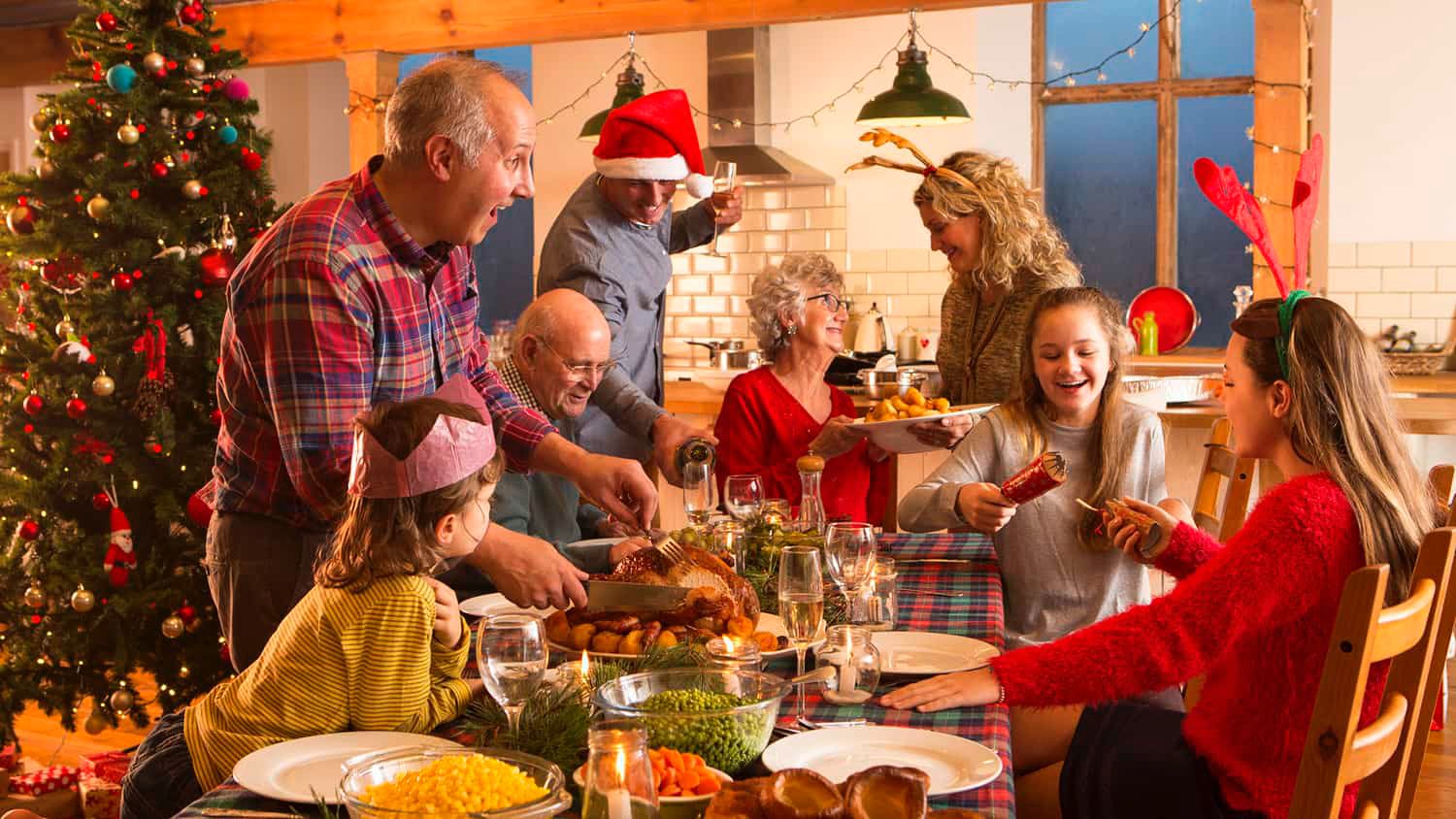
The Christmas Dinner That Changed Everything
My finger hovered over my phone screen, and I realized—strangely—that I was holding my breath.
A stupid habit. A childish reflex. The kind of thing you do when you’re waiting for impact.
The photo had been posted less than a minute ago, but already I could feel something shifting inside me. Something fundamental. Something that once broken, couldn’t be unbroken. My hands started trembling—not the dramatic kind you see in movies, but the real kind, where your body tries to reject something poisonous it’s just absorbed.
I didn’t cry. Not yet.
Instead, I made a phone call that would change everything.
“Denny’s, this is Carmen.”
Carmen’s voice was brisk, warm, familiar. She was our head chef—one of those women who could command a kitchen with a single look and still remember exactly how you took your coffee.
“Carmen,” I said. And hearing my own voice—flat, detached—scared me more than whatever had just happened. “It’s Ava.”
A pause. “Hey, boss. Everything okay?”
My throat tightened. “Cancel my Christmas order.”
Silence. Then, carefully, “What?”
“Cancel it,” I repeated, my voice steadier now. “Don’t deliver anything to my parents’ house. Not a single tray. Not a single dessert. Nothing.”
“Ava…” Carmen’s voice dropped, cautious. “Honey, everything is almost ready. We’ve been prepping for days. The prime rib is resting. The glaze is done. We’re about to start packing—”
“I know.” I stared at my phone screen, at something I couldn’t unsee. “I’m sorry. I’ll cover the cost. Just don’t send it.”
There was a long moment where Carmen didn’t speak. I imagined her standing in the kitchen, phone pressed to her ear, surrounded by the smell of rosemary and roasting meat, trying to make sense of why her manager was blowing up a three-thousand-two-hundred-dollar order on Christmas Eve.
Finally she said, quietly, “Okay, Ava. Okay.”
And just like that, I ended three decades of being nothing more than my family’s personal bank account.
If you’d met me out in the world, you probably wouldn’t guess any of this.
You’d see a woman who runs a restaurant with calm authority, who handles stress like she was built for it, who knows how to smile at customers while a dozen disasters unfold behind her. You’d see someone competent. Put together. Responsible.
Most people read “responsible” as “strong.”
But responsible is often just another word for “used to carrying what no one else will.”
My name is Ava Ashford. I’m thirty-two years old, and I manage Denny’s downtown—an upscale place with warm lighting and linen napkins, the kind of restaurant where people celebrate anniversaries and promotions and pretend the price tag doesn’t make them flinch. It’s a job that consumes my life, eats my weekends, and keeps me up at night worrying about food costs and labor percentages.
But it pays well enough that I became exactly what my family needed me to be.
A crutch.
For the past year, I’d been sending my parents one thousand dollars every month to help with their mortgage after my dad decided he was “done” and took early retirement at fifty-eight. It wasn’t framed as a request. It was framed as reality.
“We’re struggling,” my mother had said over the phone the first time, her voice carrying that trembling edge she used when she wanted sympathy. “You know your father’s health isn’t what it used to be. And the payment’s gone up. We’re not asking for much, Ava. Just until we get back on our feet.”
Not asking for much.
Just asking for twelve thousand dollars a year, indefinitely, from the child they barely remembered to include in family photos.
Meanwhile, my older brother Colin contributed nothing. My younger sister Olivia contributed nothing. Not money. Not time. Not even attention. They showed up for dinners, accepted praise, let my parents babysit their problems, then vanished back into their busy, important lives.
Colin was a pharmaceutical sales rep with a McMansion in the suburbs, a picture-perfect wife named Jennifer, and two kids who attended private school. Olivia was engaged to Jason, a corporate lawyer, and spent her days planning a wedding that had already cost more than I’d paid for my college education.
And I? I paid for everything else.
Because I always had.
Growing up, Colin and Olivia were the sun and moon in our family orbit. They were celebrated, defended, cushioned from consequence. Colin was athletic and charming, the kind of boy who could talk his way out of trouble with a smile. Olivia was pretty and vivacious, the daughter who made my mother proud to show off.
I was the practical one. The quiet one. The one who didn’t need as much. The one who could “handle it.”
“Ava doesn’t mind,” my mother would say when she asked me to give up something—my room when Colin’s friends stayed over, my birthday dinner when Olivia had a dance recital, my college fund when Colin’s business idea needed seed money.
“Ava’s easy.”
Easy. As if I were a setting on a dishwasher.
By the time I was old enough to recognize the pattern, it was already stitched into my bones. If something needed to be done, I did it. If something needed to be paid for, I figured it out. If someone needed emotional labor, I provided it without complaint.
And if I ever protested, if I ever tried to say, “What about me?” I was met with confusion, as if I’d spoken a foreign language. Or worse—disappointment. As if I’d revealed myself to be selfish. Ungrateful. Not the daughter they’d raised me to be.
So I stopped protesting.
I learned to swallow it. To make myself smaller. To take up less space. To need less. To be less.
Until I was practically invisible.
The Christmas dinner disaster didn’t actually start with that phone call to Carmen, or even with whatever I’d seen on my phone.
It started three weeks earlier, at my parents’ wooden dining table.
The five of us had gathered for Sunday dinner—a monthly tradition my mother insisted on, though “tradition” made it sound voluntary. Colin was there with Jennifer and the kids. Olivia came with Jason. I came alone, as always.
We were halfway through dessert when my mother cleared her throat in that particular way that meant an announcement was coming.
“So,” she said brightly, “your father and I have been talking about Christmas.”
My father nodded, dabbing his mouth with a napkin. He’d gotten heavier since retirement, softer around the middle, but he still carried himself with the authority of a man who expected to be listened to.
“We want to do something special this year,” my mother continued. “Really special. The whole family together, a proper feast. Like the Christmases we used to have when you were all small.”
The Christmases she remembered were apparently very different from the ones I’d lived through, but I said nothing.
“We’re thinking a traditional spread,” she went on, her eyes lighting up the way they did when she was planning something. “Prime rib, roasted vegetables, all the trimmings. Maybe some of those little appetizers. And a proper dessert course. Several desserts, actually.”
“That sounds lovely,” Jennifer said diplomatically. She was good at that—saying the right thing without committing to anything.
“The thing is,” my father interjected, “we can’t really afford to do it properly. Not the way we want to.”
A silence fell over the table. I felt it coming like a storm you can smell on the wind.
“Ava,” my mother said, turning to me with that smile, “you work at that fancy restaurant. You could arrange something, couldn’t you?”
I blinked. “Arrange something?”
“You know, order the food from your place. Get us one of those catered Christmas dinners. Wouldn’t that be wonderful?”
My mouth opened. Closed. “Mom, those dinners are expensive. Really expensive.”
“Oh, but surely you get a discount, working there?”
“A small one, but—”
“And you’ve been doing so well lately,” my father added. “Your mother tells me you got promoted to general manager last year.”
“That was two years ago, Dad.”
“Well, either way. You’re in a position to help family. That’s what family does, right? We help each other.”
I looked around the table. Colin was studying his plate with sudden fascination. Olivia was checking her phone. Jennifer looked uncomfortable but said nothing. Jason was Jason—detached, bored, probably thinking about billable hours.
“How much are we talking about?” I asked quietly.
My mother waved a hand. “Oh, I don’t know. Whatever’s reasonable. We trust your judgment, sweetheart.”
That should have been my first warning.
The next day, I sat down with Carmen and worked out the numbers.
A Christmas dinner for twelve people, done properly, with the quality my parents expected from Denny’s, would run about three thousand dollars. With my employee discount, I could get it down to thirty-two hundred.
I stared at the quote for a long time.
Thirty-two hundred dollars.
I thought about the monthly thousand I was already sending. I thought about the loan I’d given Colin five years ago that he’d never paid back. I thought about the three hundred I’d sent Olivia last month when she needed help with her wedding deposit.
I thought about my own apartment—small, barely furnished, because I could never seem to save enough to buy the couch I wanted or replace my dying car.
And then I thought about my mother’s face at that table, the expectation in her eyes. The assumption that I would say yes. Because I always said yes.
So I called her back and said yes.
Her delight was effusive. “Oh, Ava, thank you! This is going to be perfect. Absolutely perfect. Everyone will be so impressed.”
Everyone will be so impressed.
Not “you’re so generous.” Not “we appreciate this.” Everyone will be impressed.
As if the point of my sacrifice was to make them look good.
The three weeks between that dinner and Christmas Eve crawled by in a blur of work stress and growing resentment.
I picked up extra shifts to cover the cost. I skipped lunches. I wore the same three outfits on rotation because I couldn’t afford to buy anything new. My phone buzzed constantly with updates from my mother—could we add this dish, could we include that appetizer, could we make sure the desserts were gluten-free because Jason’s sister had a sensitivity.
Each request chipped away at me a little more.
But I kept saying yes. I kept accommodating. I kept making it work.
Because that’s what I did.
On Christmas Eve morning, Carmen and her team started the final prep. I stopped by the restaurant to check on everything, to make sure it was perfect. The prime rib looked magnificent. The sides were gorgeous. The desserts were works of art.
Thirty-two hundred dollars of food, prepared with love and skill by a team who’d given up part of their Christmas Eve for this.
I took a photo of the spread and texted it to my mother.
Her response came quickly: “Looks good! Can’t wait. See you at 5!”
Not “thank you.” Not “this is amazing.”
Just “looks good.”
I should have known then. Should have felt the first crack forming.
But I didn’t.
Not until later that afternoon, when I was sitting in my apartment, preparing to drive over to my parents’ house, and my phone buzzed with a notification.
My mother had posted a photo to Facebook.
I opened it, expecting to see something innocuous. Maybe the table set for dinner. Maybe the Christmas tree.
Instead, I saw my entire family gathered in the living room. The tree glittered in the corner. My mother wore her velvet sweater, head tilted just so. My father smiled the way he did when he believed the world was watching. Colin stood tall with Jennifer and their two kids pressed close like a glossy holiday card. Olivia nestled into Jason, one hand deliberately placed so her engagement ring caught the light.
Everyone looked warm. Wanted. Loved.
Everyone except me.
Because I wasn’t in the photo.
I scrolled down to the caption, my heart starting to pound.
“Only the most beloved and dear people to me. So blessed to have my family together this Christmas! ❤️”
I stared at those words. Read them again. Again.
Only the most beloved and dear people.
The comment section was already filling up. Neighbors, friends, distant relatives all chiming in with holiday wishes.
And then, Aunt Joyce: “Beautiful family! Where’s Ava?”
I held my breath.
My mother’s response appeared almost instantly, as if she’d been waiting for someone to ask.
“Forget her. Nobody would notice her absence anyway.”
The world went very quiet.
Not numb, exactly. More like crystallized. Like thirty years of being overlooked had been compressed into a single, sharp point that finally pierced skin.
I read my mother’s words one more time, my hands beginning to shake.
Forget her.
Nobody would notice her absence anyway.
I wasn’t forgotten. I was forgettable. Unnoticeable. Unimportant.
And she’d said it publicly. For everyone to see. While I was literally in the process of making Christmas dinner happen for them.
Thirty-two hundred dollars.
Twelve thousand a year in mortgage help.
Three decades of being the easy one, the reliable one, the one who didn’t need anything.
And I was nobody. I wouldn’t be noticed. I should be forgotten.
Something inside me snapped.
Not dramatically. Not loudly. Just a clean, final break, like a bone that’s been cracked for years finally giving way.
I opened my contacts. Found Carmen’s number.
And I made the call.
After I hung up with Carmen, I sat in my apartment for a long time, staring at nothing.
My phone started buzzing. First one call from my mother. Then another. Then texts.
“Where are you?”
“The food was supposed to be here an hour ago.”
“Ava, call me back. This isn’t funny.”
“AVA. Call me NOW.”
I turned my phone face-down and let it buzz against the table like an angry insect.
Around six-thirty, Colin called. I didn’t answer.
At seven, Olivia tried. Then Jennifer. Then my father.
I sat in the silence of my apartment and felt something I hadn’t felt in years.
Peace.
Finally, at eight o’clock, I turned my phone back over and opened a new message to my mother.
I typed carefully, deleting and rewriting several times before I got it right.
“I saw your Facebook post. I saw your comment about forgetting me. So I did what you wanted—I made myself forgettable. I canceled the $3,200 Christmas dinner I paid for. I’m also canceling the $1,000 monthly payments. I’m done being the family ATM. I’m done being invisible. Don’t contact me again until you’re ready to apologize and treat me like I matter.”
I hit send before I could second-guess myself.
The response was immediate. My phone exploded with calls, texts, voicemails.
I blocked them all.
That night, I slept better than I had in months.
Christmas morning, I woke up alone in my apartment, made myself coffee, and sat by my small, un-decorated window watching the snow fall.
My phone—on a new temporary number—had exactly three messages.
One from Carmen: “I’m proud of you, boss. Merry Christmas.”
One from my coworker Madison: “Heard what happened. You’re a badass. Want to get drinks tomorrow?”
And one from Aunt Joyce: “I saw everything. Your mother deleted her post but I got screenshots. I’m so sorry, honey. You deserved better. My door is always open if you need family who actually acts like it.”
I cried then. Not from sadness, but from relief.
For the first time in my life, I’d chosen myself.
The fallout took weeks to fully unfold.
My mother tried every tactic in her playbook. Anger first—how dare I humiliate them, ruin Christmas, be so selfish. Then guilt—how could I do this to family, didn’t I care about them, what would people think. Then bargaining—if I’d just apologize and explain it was a misunderstanding, they could move past this.
I responded to none of it.
Colin sent a long text calling me immature and vindictive. Olivia called me dramatic. My father said I was overreacting to a joke.
A joke.
The word that had dismissed my pain my entire life.
I blocked them all and got a new phone number.
But three months later, something changed.
I was at the restaurant, going over inventory, when Madison poked her head into my office.
“Ava? There’s someone here to see you. Says she’s your aunt?”
Aunt Joyce stood in the lobby, looking older than I remembered but warm. Real.
“I won’t take much of your time,” she said. “I just wanted to tell you something in person.”
We sat at a corner table. She ordered tea. I waited.
“Your mother is furious with me,” Joyce said finally. “I told her exactly what I thought of how she’s treated you. Told the whole family, actually. Christmas dinner that year turned into quite the argument.”
I blinked. “You didn’t have to do that.”
“Yes, I did. Someone needed to.” She reached across the table and squeezed my hand. “You deserved better, Ava. You always did. And I’m sorry I didn’t speak up sooner.”
My throat tightened. “Thank you.”
“Your mother’s not ready to admit she was wrong. Maybe she never will be. But I want you to know—you did the right thing. Setting boundaries isn’t cruel. It’s necessary.”
After she left, I sat at that table for a long time, feeling something settle in my chest.
Validation. From someone who’d been there. Who’d seen it.
I wasn’t crazy. I wasn’t overreacting.
I was just done being treated like I didn’t matter.
Six months after that Christmas, I got a letter in the mail.
My mother’s handwriting on the envelope. I almost threw it away unopened.
But something made me read it.
It was short. Stiff. But it was something.
“Ava, I’ve been thinking about what happened. Your Aunt Joyce said some things that were hard to hear. I don’t know if I’m ready to say I was wrong about everything, but I can say I’m sorry for what I wrote on Facebook. That was cruel. You didn’t deserve that. If you’re willing, I’d like to talk. No expectations. Just talk. -Mom”
I read it three times.
It wasn’t everything. It wasn’t even close to enough.
But it was a start.
I didn’t respond immediately. I let myself sit with it. Feel it. Decide what I wanted.
And then, two weeks later, I called her.
The conversation was awkward. Painful. Full of long silences and careful words. She cried. I didn’t. She tried to explain herself, justify her words, minimize the hurt.
But she also said “I’m sorry” four times.
And she listened when I told her how I’d felt all those years. Really listened.
We didn’t fix everything that day. We didn’t fix anything, really.
But we started talking.
A year later, I had Christmas dinner at Aunt Joyce’s house.
My mother and father came. So did Colin and Olivia, though Colin barely spoke to me and Olivia spent most of the evening on her phone.
But we were in the same room. We were trying.
And this time, when Aunt Joyce took a family photo, I was in it.
Afterwards, my mother pulled me aside.
“I know I can’t undo the past,” she said quietly. “And I know ‘sorry’ doesn’t fix everything. But I want you to know—I see you now. I see what I missed. What I took for granted. And I’m trying to do better.”
I nodded. “I know. Thank you.”
“I cancelled the monthly payment assumption,” she added. “Your father and I worked it out ourselves. You don’t owe us anything.”
Something in my chest loosened. “I appreciate that.”
She hesitated, then hugged me. It was brief, awkward, but real.
“I’m proud of you, Ava. For standing up for yourself. Even though it meant standing up to me.”
I didn’t cry. But I held on a little longer than I meant to.
These days, I still manage Denny’s. I still work too much and stress about food costs.
But I also have a new couch. A reliable car. Savings in my bank account.
And boundaries.
My family and I are rebuilding. Slowly. Carefully. With honesty instead of obligation.
Some days are harder than others. Some conversations still sting. Some patterns still try to reassert themselves.
But when they do, I remember that Christmas Eve. The moment I chose myself.
And I remember that being easy isn’t the same as being loved.
That being reliable isn’t the same as being valued.
That being family doesn’t mean accepting cruelty.
I’m not invisible anymore.
I’m not forgettable.
I’m just Ava. Learning, finally, that I matter too.
THE END

Lila Hart is a dedicated Digital Archivist and Research Specialist with a keen eye for preserving and curating meaningful content. At TheArchivists, she specializes in organizing and managing digital archives, ensuring that valuable stories and historical moments are accessible for generations to come.
Lila earned her degree in History and Archival Studies from the University of Edinburgh, where she cultivated her passion for documenting the past and preserving cultural heritage. Her expertise lies in combining traditional archival techniques with modern digital tools, allowing her to create comprehensive and engaging collections that resonate with audiences worldwide.
At TheArchivists, Lila is known for her meticulous attention to detail and her ability to uncover hidden gems within extensive archives. Her work is praised for its depth, authenticity, and contribution to the preservation of knowledge in the digital age.
Driven by a commitment to preserving stories that matter, Lila is passionate about exploring the intersection of history and technology. Her goal is to ensure that every piece of content she handles reflects the richness of human experiences and remains a source of inspiration for years to come.