The Harvest
My brother drove three hours to my farm and slapped a court order on my dinner table like a death sentence. He told me I owed the family and would be evicted in thirty days while my mother stood behind him, cold as ice. But at 9:00 in the morning, just as the county assessor pulled up, a black SUV turned into the drive. The woman stepped out, looked right at me, and the assessor froze.
“Wait,” he said. “She is my client.”
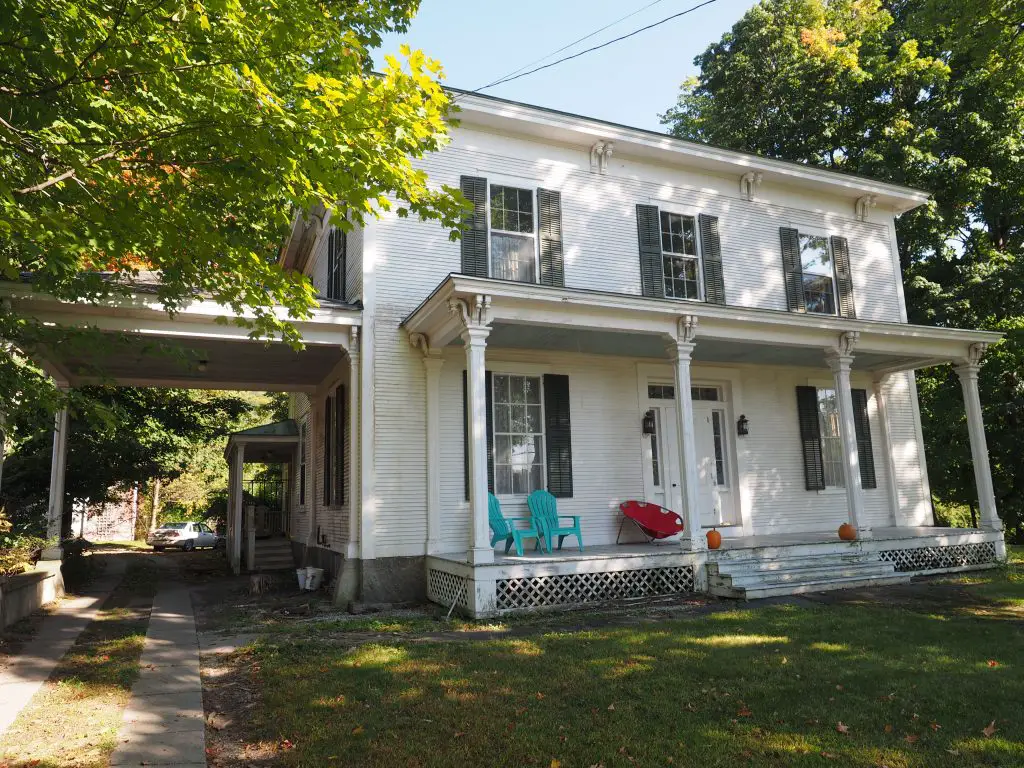
My name is Daisy Martin, and I was exactly three bites into my buttered toast when the invasion began. The kitchen of my farmhouse was usually a sanctuary of silence at 7:00 in the morning—a functional silence broken only by the hum of the commercial refrigerator and the low whistle of wind coming off the valley. But that morning, the peace shattered with the distinctive thud of a car door slamming, followed by the crunch of expensive leather shoes on gravel.
I didn’t have to look out the window to know who it was. The aggressive cadence gave them away. The front door swung open without warning. They didn’t knock. They never knocked.
Evan walked in first, my brother, wearing a navy suit that likely cost more than my pickup truck. Behind him came my mother, Diane, clutching a designer handbag with her signature expression of long-suffering martyrdom. Trailing in the rear was Aunt Gloria, there to witness the carnage.
They didn’t say hello. Evan simply marched to the heavy oak table where I sat, pulled a thick sheath of documents from his briefcase, and dropped them onto the wood. The sound was heavy, final.
“It’s over, Daisy,” Evan said, his courtroom voice smooth and practiced. “We’re done waiting.”
I looked at the documents: Notice of Foreclosure, Seizure of Assets, Motion to Liquidate. I took another bite of my toast, chewed slowly, and looked up at him.
“Good morning to you, too, Evan. Mom, Gloria, would anyone like coffee?”
“Stop playing the victim,” Evan snapped, leaning in. “This failing farm is going to be auctioned off to satisfy the family debt. You’ve hidden out here playing farmer for six years, draining resources, contributing nothing. You’ve evaded reality long enough.”
My mother stepped forward. “We’re doing this for you, Daisy,” she said, her voice cold and devoid of warmth. “You’re thirty-four years old. You’re drowning in a business that doesn’t work. Losing everything is the only way you’ll learn to grow up.”
“A hard reset?” I repeated, my voice flat.
“We’re calling it a mercy killing,” Evan said, tapping the papers. “I’ve filed the motion. The court granted a preliminary review based on outstanding obligations you owe to the estate.”
“What obligations? Evan, I bought this land with money Dad gave me. The deed is in my name. I’ve never asked you for a cent.”
“Dad gave you a loan,” Evan corrected, eyes narrowing. “A loan from the family trust. You’ve never repaid it. Since you have no liquidity and this place is clearly barely functional, we’re calling in the collateral.”
“I never signed a loan agreement,” I said, keeping my voice steady. “Dad gave me that seed money as a gift. He told me to build something real.”
“Dad was soft,” Evan sneered. He flipped to the third page and spun it so I could see. “And as for not signing anything, your memory must be as poor as your business sense.”
There, at the bottom of a document titled Acknowledgement of Family Debt and Collateral Agreement, was a signature: Daisy Martin.
I stared at it. It was a good forgery—better than good, it was perfect. The loop of the ‘D’, the sharp cross of the ‘T’. It was my signature. But as I leaned closer, studying the ink, I saw the faintest artifacting around the edges. It was subtle, something a layman would miss, but I’d spent six years inspecting microscopic pests on leaves. It was identical to the signature I’d used at Northbridge Strategy Group seven years ago.
“This is fascinating,” I said, looking up. “Where did you find this?”
“In the files,” Evan said too quickly. “You signed it five years ago when you needed cash for irrigation repairs. Don’t insult my intelligence by pretending you forgot.”
“I see,” I said. I didn’t argue. I just nodded. “So that’s it. You’re taking the farm.”
“The county assessor is coming on Friday,” Evan announced, sensing victory. “Nine in the morning. He’s going to conduct a full valuation. Once he establishes the base value, we’ll proceed to auction within thirty days. I’ve already lined up buyers interested in the land value. They’ll likely bulldoze this junk, but that’s not my concern.”
“Friday,” I said. “Nine in the morning.”
“And don’t try anything stupid, Daisy. No locking gates, no hiding assets. Caleb Mercer is a serious man.”
I stood up. “Okay. Friday at 9:00.”
Evan blinked, clearly disappointed by the lack of a scene. He wanted tears. He wanted me to beg.
“You’re taking this surprisingly well,” he said, eyes searching my face for a crack.
“What choice do I have?” I asked. “You’re the lawyer, Evan. You have the paperwork.”
They left. As Evan drove away, I watched the dust settle. Only then did I allow my shoulders to drop. The silence returned, but it had changed. It was no longer the silence of peace. It was the silence of a held breath before a plunge.
I went to my bedroom closet, pulled up the loose floorboard, and retrieved the fireproof safe bolted to the subfloor. Left to 24, right to 10, left to 56. The heavy door clicked open.
Inside was a thick manila envelope and a black USB drive. I took out the envelope. The handwriting was bold and clear: For Daisy, when you are ready.
My father had given it to me two weeks before his heart stopped. He’d known the wolves would come one day, and that those wolves would share my last name. I opened the flap: the letter, bank transfer records, and the original notarized gift deed that Evan didn’t know existed.
And the USB drive. It contained audio files, emails, and documents I’d quietly collected over two years.
I wasn’t the victim they thought I was. I wasn’t the failing farmer scratching out a living. They saw plastic and dirt because that’s what I wanted them to see. They didn’t know what was growing inside those greenhouses. They didn’t know about the climate control systems rivaling university laboratories. They didn’t know the rusting shipping containers housed a sterile, high-speed cold chain facility processing some of the most expensive organic matter on the East Coast.
I reached for my phone and dialed a number I’d memorized but never saved.
“This is Rowan.” A sharp, professional female voice.
“It’s happening,” I said. “They just left. They filed for foreclosure.”
“Timeline?”
“Friday, 9 in the morning. The county assessor is coming for valuation.”
“That’s tight. We have a shipment Thursday night. Do you want me to divert it?”
“No,” I said, looking out at the greenhouses. “Keep the schedule. Double the volume for Thursday pickup. I want inventory levels at maximum capacity.”
“And the other matter?”
“Bring the contract. The full binder. And bring the historicals. Evan’s bringing the assessor to appraise a failing farm. I need you to show them what this place is actually worth.”
“I’ll be there,” Rowan said, her voice carrying dark amusement. “I’ve been waiting to meet your brother.”
“He’s a shark,” I said. “But he forgot that sharks suffocate on land.”
I hung up and looked at the empty kitchen. The threat of eviction hung over the room like a physical weight, but for the first time in six years, I didn’t feel the need to hide.
To understand the silence of my farm today, you have to understand the noise I left behind six years ago. I’d spent four years at Northbridge Strategy Group writing marketing copy for products I didn’t care about. When I told my family I’d resigned and bought the old Miller property, the reaction was visceral. Evan laughed. My mother set her silverware down with a sharp clatter and told me I was throwing away a pension to “play in the dirt.”
My father, Frank, was the only one who didn’t speak immediately. Later that night, as I was packing, he showed up with a check. His fingers were rough, a reminder that before he was a suburban dad, he’d been a man who worked with his hands.
“Make it real, Daisy,” he’d said. “Don’t play at this. Make it real. Let the work decide.”
For the first eighteen months, the work decided I was wrong. It was brutal. I’d romanticized farming. The reality was mud, cold, and exhaustion. I planted heritage corn and heirloom peppers. The corn got fungal blight. The peppers were eaten by aphids. I barely made enough at farmers markets to cover gas.
But then I remembered the data. I was a data analyst who happened to be covered in mud. I looked at the numbers. The traditional model—high volume, low margin, dependent on weather—was a suicide pact for a solo operator. I couldn’t compete with industrial giants.
So I stopped. I stopped trying to feed the town and decided to feed the few.
I spent four months researching. I realized there was a gap in the market: ultra-specific lab-grade aromatics and garnish greens for Michelin-starred kitchens. These chefs didn’t want truckloads of corn. They wanted specific strains of lemon verbena that only grew in certain humidity ranges. They wanted wasabi arugula harvested at exactly three inches, delivered within four hours with zero bruising.
I pivoted hard. I stopped farming fields. I let the back forty go to meadow, which fueled gossip that I’d given up. Instead, I focused on infrastructure. I bought used shipping containers and a derelict greenhouse frame. I rebuilt them myself, learning to weld from YouTube. I installed hospital-grade air filtration and water purification.
It was no longer a farm. It was a biological laboratory. I grew micro-orchids for desserts. I grew Japanese shiso pepper that retailed for eighty dollars a pound.
I became obsessive. I worked eighteen-hour days. I had no social life. I spoke to no one but my plants and, eventually, buyers.
And that was the key: the silence. I didn’t post pictures on Instagram. I didn’t invite the local paper. Publicity was a liability. I approached my first client—a sous chef at a resort—with a cooler of samples and a binder of data. He tasted a single sorrel leaf, looked at my temperature logs, and signed a standing order.
Word spread through back channels. I became a ghost in the industry. I was the supplier you called when you needed perfection.
My family knew none of this. They visited twice a year, looked at overgrown fields, and shook their heads. They saw opaque greenhouse plastic and assumed I was hiding sad tomatoes. I never corrected them. When Evan asked how things were going, I’d shrug: “It’s a struggle. Keeps the lights on.”
Then two years ago, Dad died. Massive coronary. After the funeral, I saw the shift in my mother and Evan. Grief didn’t soften them—it sharpened them. They began talking about “consolidating assets” and “trimming the fat.”
I realized Dad had been the dam holding back their greed. With him gone, I was exposed.
I went back to the farm and prepared. I locked every document away. I moved my office into the processing container behind a steel door with a biometric lock. I became a phantom on my own land.
But inside the perimeter, behind plastic walls and steel doors, I was running a precision engine. The farm looked silent because efficiency doesn’t make noise.
My calendar wasn’t empty—it was booked six weeks in advance. I had a waiting list of restaurants that would kill to get on my rotation. I stood in my operation surrounded by cooling fans and nutrient drips, and I wasn’t lonely. I was solitary. There’s a difference.
I’d built this. And my family thought they were coming to take away dirt. They had no idea they were walking into a fortress.
Friday morning arrived with a sky so clear it looked like blue glass. I stood on the porch at 8:30, holding coffee, when Evan’s silver sedan pulled up. He was early, of course. He wore a charcoal three-piece suit, Italian leather shoes. My mother and Aunt Gloria climbed from the backseat, dressed in funeral casual.
“You’re early,” I said.
“We wanted to do a preliminary sweep,” Evan said, adjusting his cuffs. “Make sure you haven’t stripped the copper wiring.”
At exactly 9:00, a white county sedan turned off the main road. Caleb Mercer stepped out—fifty-five, meticulous, utterly immune to charm. He wore a windbreaker with the county seal and carried a battle-worn clipboard.
“Mr. Mercer,” Evan boomed, extending a hand. “Evan Martin. Thank you for coming. We’re eager to get this valuation processed for liquidation.”
Caleb looked at Evan’s hand, shook it briefly. “Mr. Martin, I’m here to perform a tax assessment pursuant to court order. I’m not here to discuss liquidation timelines.”
“Of course,” Evan said. “I just wanted context. It’s a simple case. Distressed agricultural asset, non-operational for years. Significant dilapidation. Land value minus demolition costs, essentially.”
Caleb stopped walking. “I will determine what I’m looking at, Mr. Martin. That’s why the county pays me.” He turned to me. “You’re the owner of record?”
“I am,” I said.
“I need access to all structures, utility mains, and the pump house.”
“The facility is unlocked. But I’ll need you to put on boot covers before entering the greenhouses. We maintain a sterile environment.”
Evan laughed. “Sterile environment? Mr. Mercer, my sister likes to play pretend. It’s just plastic tunnels and dirt.”
Caleb looked at Evan, then at me. “If the operator requests biosecurity protocols, I follow them. Standard procedure.” He opened his trunk and took out plastic boot covers.
We walked to Greenhouse 1. From outside, it looked standard. But as we stepped into the airlock—a vestibule with positive pressure fans—the atmosphere changed. The inner door slid open with a pneumatic hiss.
We stepped inside, and the world shifted to a warm, humid, violet-lit cathedral of green. The silence was replaced by the rhythmic thrum of nutrient pumps and whisper of circulation fans.
Rows of hydroponic troughs stretched two hundred feet, floating on waist-high racks. No dirt. No weeds. Only a sea of perfect plants: red-veined sorrel, micro-basil, growing in rockwool cubes, roots dangling into nutrient mist.
Caleb Mercer stopped three feet inside. He didn’t speak. He looked at the ceiling where retractable thermal screens adjusted automatically. He looked at the white epoxy floor, spotless. He looked at sensors measuring humidity, temperature, CO2. He wrote on his clipboard. He wrote for a long time.
“Well,” Evan said, voice echoing. “It’s neat. I’ll give you that. But let’s be honest, Mr. Mercer. These are temporary structures, depreciating assets. They don’t add real value.”
Caleb ignored him. He walked to the main control panel—a touchscreen displaying nutrient uptake rates. “This is a Hoogendoorn climate computer,” Caleb said.
“Yes,” I replied. “iSii version 4, integrated with irrigation units.”
Caleb nodded. “I’ve only seen these at university research centers. You’re running a fully automated loop?”
“95% automated. We manually calibrate pH sensors twice a week.”
“Wait,” Evan interrupted, waving his hand. “Computer loops. Who cares? It’s a thermostat. Let’s not overcomplicate this. We’re talking about land value. Comps in this area are four thousand dollars an acre for grazing.”
Caleb turned slowly. “Mr. Martin, I don’t know what kind of law you practice, but in my line of work, we don’t price a semiconductor factory as a storage shed. This is not grazing land. This is a high-intensity controlled environment agriculture facility.”
“It’s a greenhouse!” Evan sputtered. “It’s plastic!”
“It’s infrastructure,” Caleb corrected. “And judging by that conduit, there’s a significant power upgrade. Did you pull permits for three-phase?”
“Yes,” I said. “Two years ago. 400 amps.”
“400 amps,” Caleb repeated, writing. “And the water? You’re pulling heavy from the well.”
“Dedicated line with filtration in the next shed.”
“Let’s see it.”
We moved to the processing shed—the shipping containers Evan had mocked as “rusty boxes.” I punched the code. The heavy steel door swung open. Inside, forty degrees. Walls lined with food-grade PVC. Stainless steel tables gleaming under LED lights. The blast chiller hummed. On the far wall, the reverse osmosis water filtration system—chrome and tubes costing more than Evan’s car—silently purified aquifer water.
My mother wrapped her cardigan tighter. “It’s freezing. It smells like a hospital.”
“It’s a packing facility, Mrs. Martin,” Caleb said, walking around the filtration unit, inspecting serial plates. “Commercial grade, NSF certified.” He turned to Evan. “You listed this property as ‘non-operational’ and ‘dilapidated.'”
Evan loosened his tie, sweating despite the cold. “Well, ‘operational’ is subjective. Just because lights are on doesn’t mean it’s a business. There’s no revenue. It’s a hobby. An expensive, wasteful hobby that drained the family trust.”
“I’m not seeing a hobby,” Caleb said. “I’m seeing capital investment in the mid-six figures. If this equipment is paid for, the asset value pushes this well out of standard foreclosure bracket.”
“It’s all debt!” Evan insisted, voice rising. “She bought this on credit. That’s why we’re here—to sell it and pay creditors.”
“That’s bankruptcy court,” Caleb said calmly. “My job is to say what it’s worth, and it’s worth a hell of a lot more than four thousand an acre.” He turned to me. “Ms. Martin, to finalize Business Enterprise Value—which I now must do—I need operating permits, water withdrawal logs, and customer contracts.”
“Contracts?” Evan scoffed. “She sells baggies of lettuce at farmers markets for five dollars. There are no contracts.”
“I need to verify revenue stream,” Caleb insisted. “Do you have a ledger?”
“I do,” I said.
“I demand to see it.” Evan stepped between me and the assessor. “As representative of the primary creditor, I have a right to audit immediately. If there’s money hidden, it belongs to the estate.”
“You don’t have a right to anything, Evan,” I said steadily. “You’re the plaintiff. You’re suing me. You don’t get to rifle through my proprietary data.”
“I’m your brother!” he shouted, mask slipping. “And I’m executor of the trust you stole from. Show me the books!”
“Mr. Martin, step back,” Caleb warned, voice dropping an octave. “This is an assessment, not a deposition.”
“She’s defrauding the court!” Evan pointed a shaking finger. “She’s sitting on hidden assets. This proves bad faith.”
“The only thing this proves,” I said, “is you didn’t do your due diligence.”
“I want those records!” Evan lunged toward the office door.
“Evan, stop!” Mom cried.
He rattled the locked handle, turning back with a face twisted by rage. “Open it. Now.”
“No,” I said.
“Mr. Mercer, order her!”
“I don’t have that authority,” Caleb said, looking at Evan with open disgust. “But I’ll note your behavior in my report.”
Then we heard it: heavy tires on gravel. We turned toward the open loading dock. A black SUV, sleek and polished, rolled into the yard. It pulled right up to the loading ramp, blocking sunlight. The engine cut. The driver’s door opened.
A woman stepped out. She was tall, wearing a tailored charcoal suit that made Evan’s look like a costume. Her hair was pulled back in a severe bun. She carried a thick leather portfolio. She looked straight at Evan—the look a biologist gives a specimen in a jar.
“Who is this?” Evan demanded, voice wavering. “We’re in the middle of a legal proceeding.”
Rowan Pike walked up the ramp, heels clicking like a gavel. She stopped three feet from Evan.
“Actually,” she said, voice cool as glass, “I believe you’re trespassing on my supply chain.” She turned to me. “Daisy. I hope I’m not late.”
“Right on time,” I said.
Caleb stepped forward, squinting. He looked at the woman, then at the logo on her file. He froze.
“Wait,” Caleb said. “Ms. Pike?”
Rowan turned, expression softening into professional recognition. “Mr. Mercer. Good to see you. I trust you received the tax remittance for the downtown hotel property?”
“I… yes. Last week,” Caleb stammered. He looked from Rowan to me. “You… you know Ms. Martin?”
“Know her?” Rowan raised an eyebrow. “She’s the most critical vendor in our portfolio.” She turned to Evan. “I’m Rowan Pike, Director of Procurement for Marrow and Slate Hospitality. I’m here to inspect my inventory. So if you’d kindly step away from the loading dock, you’re blocking my workflow.”
Evan’s mouth opened but no sound came. The trap had sprung. The silence was absolute.
Rowan stood there, breath puffing in the cold air, looking at my brother with bored annoyance. She didn’t look like she’d driven three hours. She looked like she’d stepped from a Manhattan boardroom.
“Marrow and Slate,” Evan repeated. “The hotel group.”
“Hospitality group,” Rowan corrected. “We own twelve properties across the tri-state area. Perhaps you’ve dined with us.” She turned to Caleb. “Mr. Mercer, I didn’t expect to see you in the field. I assume the county received our adjustment filing for the distribution center?”
Caleb was staring wide-eyed. “Ms. Pike. Yes, I… I signed off on the tax abatement for your logistical hub last week. You’re the signatory on Marrow and Slate holdings.”
“I am,” Rowan said.
Caleb looked at me. Then Rowan. Then the machinery around us. Color drained from his face. “You’re a client. Marrow and Slate is one of the largest property taxpayers in the district.”
“We are,” Rowan agreed. “And Daisy Martin is one of our largest suppliers. So you can imagine my concern when I arrive for a scheduled audit and find a strange man screaming at my lead vendor, threatening to seize my inventory.” She turned to Evan. “Who are you again?”
Evan straightened his tie. “I’m Evan Martin, attorney for the estate. This is a family matter. We’re executing foreclosure on a non-performing asset to satisfy debt. This farm is insolvent.”
Rowan laughed—short, sharp, humorless. “Insolvent.” She walked past him and came to stand beside me. She extended a hand and I shook it firmly.
“Good morning, Daisy. The Afilla sample you sent Tuesday had a Brix rating of 14. Chef Eleanor is demanding we lock in the entire harvest for the winter menu.”
“I can allocate 60% to Eleanor,” I replied professionally. “But I’ve promised the rest to Ritz-Carlton unless you want to renegotiate exclusivity.”
“We’ll talk numbers,” Rowan said. “But first, I need to verify cold chain logs for last quarter. We can’t have legal disputes interrupting premium garnish supply.”
Evan made a choking sound. “Exclusivity clause? Ritz-Carlton? What are you talking about? She grows lettuce!”
Caleb stepped forward. “This is not a farm,” he said, voice frantic. “This is a Tier 1 commercial distribution node.” He turned to me. “When you said contracts, you meant commercial supply agreements with national chains?”
“I did,” I said. “Multi-year agreements with penalty clauses for interruption.”
“I need to see them,” Caleb said. “Now. This changes everything. If this land generates commercial revenue at that scale, I can’t appraise it as agricultural. The valuation methodology is completely different.”
“No!” Evan shouted, stepping between us, confidence brittle. “You don’t look at anything. This is a trick. She brought her friend to play-act. There’s no way this junk heap supplies Marrow and Slate.”
Rowan sighed. She reached into her portfolio and pulled out a thick document bound in heavy blue paper. She slapped it onto the steel table. The sound echoed like a gunshot.
“This,” Rowan said, “is the Master Procurement Agreement between Marrow and Slate Hospitality and Martin Agritech LLC. Binding contract for specialty aromatics and hydroponic greens. Three-year term.” She flipped to the signature page. “Signed by me, notarized, currently active.”
Caleb moved to the table. Evan tried to block him but Caleb walked around. The assessor bent over the document, finger running down the page. “The monthly retainer,” Caleb read aloud, voice shaking. “$12,000 base plus unit costs per crate.”
“That’s just the base,” Rowan corrected. “That reserves greenhouse space. Actual product billing is separate.”
“12,000 a month,” Caleb whispered. “That’s 144,000 a year just for reservation.”
“And that’s one client,” I added calmly. “I have three others on similar terms.”
Evan’s face went ash-colored. He began doing math. If I was pulling half a million yearly minimum, then the debt he claimed—fifty or sixty thousand—would look ridiculous. If the farm generated that cash flow, the business valuation wasn’t $50,000. It was likely millions.
“This is impossible,” Evan stammered. “You drive a ten-year-old truck. You dress like a laborer.”
“It’s called reinvestment, Evan,” I said. “I put money into the business. Unlike you, I don’t wear my net worth on my wrist.”
My mother spoke for the first time. Her voice was small, trembling. “Daisy, you… you’re rich?”
“I’m successful, Mother,” I said. “There’s a difference. I built something real. Something you and Evan were ready to bulldoze because you were too arrogant to ask a single question.”
“But the debt,” Diane whispered. “The family debt. If the farm is worth this much…”
“If the farm is worth this much,” Caleb interrupted, straightening, “then foreclosure for disputed five-figure debt is grossly inappropriate. A judge would never grant seizure on an asset with this equity. He’d order a lien at best.” Caleb turned to Evan, expression no longer mild but furious. “You told me this was distressed. You filed claiming property was abandoned and failing. You’ve wasted county resources and potentially committed perjury on the Affidavit of Condition.” He pulled his phone out. “I’m calling the district supervisor. I can’t complete this alone. I need a commercial forensic accountant and industrial zoning specialist.”
“Don’t make that call,” Evan hissed. “We can settle—”
“I’m making the call,” Caleb said, walking toward the exit. “And I’m putting a hold on the valuation report. This auction isn’t happening in thirty days. It’s not happening at all until we untangle this.”
Rowan watched Caleb leave, then turned a cool smile on Evan. “You really should have done your homework. Just one quarterly order from Daisy is worth more than your entire law practice’s gross annual revenue. Mr. Martin, I looked you up on the way here. You handle slip-and-fall cases. Daisy handles food security for a hundred-million-dollar hospitality empire.” She leaned closer. “You’re standing in a gold mine holding a shovel and complaining about the dirt.”
Evan looked at the binder. At me. For the first time, I saw genuine fear.
“Mom,” Evan said, turning to Diane. “We need to go. Regroup.”
But Mom wasn’t moving. She stared at the machinery, at the lights, at the scale of what she’d been told was failure. “You lied to me,” she said to Evan quietly. “You said she was starving.”
“She was hiding it!” Evan snapped. “How was I supposed to know?”
“You’re a lawyer,” I said. “You were supposed to check.”
Rowan picked up the binder and handed it to me. “I believe you’ll need this for the next part. I brought the rest of the historicals in the car.”
Evan grabbed his mother’s arm. “We’re leaving. Now.”
“Not yet,” I said. “We’re not done.”
“I’m done with this charade!” Evan spat. “You think because you have one fancy client you’re safe? I still have the debt instrument. I still have your signature. You owe the family $750,000. I’ll drag this through court until you’re bankrupt from legal fees.”
“Seven hundred thousand?” Rowan asked, raising an eyebrow. “Is that all?” She looked at me. “If you need a bridge loan to make this pest go away, Marrow and Slate has a vendor support program. We could advance you that against next year’s harvest by close of business today.”
Evan froze. Blood left his face completely. His greatest weapon—financial pressure—had just been neutralized in two sentences.
“I don’t think that’ll be necessary,” I said, opening my binder to the section I’d prepared. “Because I don’t actually owe the money, and I think Evan knows that.” I looked at my brother. “Right, Evan?”
He didn’t answer. He was watching Caleb walk back in, phone in hand.
“Supervisor is on the way,” Caleb announced. “And he’s bringing the county sheriff.”
Evan flinched. “The sheriff?”
“Because,” Caleb said, staring at Evan with cold judgment, “when an officer of the court files fraudulent property description to accelerate seizure, it’s a crime. And I want a witness for what happens next.”
The air shifted. It was no longer a business dispute. It was a crime scene, and Evan was holding the smoking gun.
I reached into my fleece pocket and felt the rough texture of the manila envelope. I pulled it out. The paper was soft and creased, but the handwriting unmistakable.
“Do you recognize this?” I asked.
Evan looked. He blinked. “That’s Dad’s handwriting.”
“He gave this to me the day he wrote the check for the land,” I said. “I’ve kept it in a fireproof safe for six years.”
I opened the flap and pulled out the yellow legal pad sheet. I read aloud:
“Daisy, this check is not a loan. It is a seed. I worked forty years in a job I tolerated so you could do work you love. Don’t pay me back. Pay it forward. Build something that makes you happy. If it fails, you’re still my daughter. If it succeeds, it’s all yours. Make it real.“
I lowered the paper. Silence was absolute.
“It’s a gift letter,” I said. “A clear statement of intent. There is no loan. There never was.”
Evan’s face was pale but he shook his head. “That could be anything. It’s just a note. It doesn’t supersede the debt agreement you signed.”
“The debt agreement I didn’t sign,” I corrected.
“You can’t prove that!” Evan shouted, voice cracking. “It’s your word against the document.”
“Actually,” I said, “sometimes they do.”
I pulled out the black USB drive. I held it up, catching morning sun. “Dad left voicemail messages. He was bad at texting. He liked to talk.”
I walked to the portable speaker we used in the shed. I plugged in the USB. “This is from the month I bought the irrigation system—the same month you claim I signed a loan modification.”
I pressed play. Static hissed, then a voice filled the yard. Warm, gravelly, painfully familiar.
“Hey, Daisy-girl. Just calling to see how the pipes are holding up. Stop worrying about the money. The money I gave you is gone, okay? It’s an investment in you, not the dirt. I don’t want it back. I just want to taste those tomatoes before I kick the bucket. Keep building. Love you, kiddo.“
The recording clicked off. Nobody moved. My father’s voice, so full of life, hung in the air—stark contrast to his son’s cold greed. I saw my mother in the backseat, hands over her face, shoulders shaking. Evan stood frozen, mouth slightly open, looking gut-punched.
Caleb cleared his throat. “Mr. Martin, I’m going to need copies of that letter and audio file.”
“Why?” Evan whispered.
“Because I have to attach them to my report. This is no longer just valuation dispute. This is evidence of material misrepresentation.” Caleb took back his clipboard. “I’m flagging this for immediate fraud review. Mr. Martin, I strongly suggest you retain counsel. If you filed foreclosure based on debt you knew was fictitious, you’re facing Bar Association sanctions and possibly the DA.”
Evan took a step back. He looked at the house, the greenhouses, at me. Arrogance was gone, replaced by terrified realization he’d bet his entire life on this bluff and lost.
“You set me up,” Evan pointed a shaking finger. “You let me walk into this.”
“I invited you for coffee,” I said. “You brought the court order.”
The back door flew open. My mother stumbled out, walking straight toward me, face streaked with tears, makeup ruined. “Daisy, please. Stop this.”
“I didn’t start it, Mom.”
“He’s your brother!” she wailed, grabbing my arm. “He made a mistake. You can’t let police get involved. It’ll destroy the family.”
“The family?” I looked down at her hands gripping my sleeve. “The family that told everyone I was a failure? That planned to sell my home for a bad investment?”
“We were desperate!” she cried. “You have so much now. You have millions. Why do you have to be so cruel?”
“Shame you?” I stepped back, breaking her grip. “You shamed me for six years. You told neighbors I was crazy. You told family I was on welfare. You let me eat Christmas dinner alone because I wasn’t successful enough. You watched me struggle and laughed.” I pointed at the house. “I built this alone. When I was cold, you weren’t here. When the crop failed, you weren’t here. Now that it’s worth four million, suddenly we’re family?”
“We’re your blood,” she sobbed.
“Blood is biological accident,” I said. “Loyalty is a choice. And you chose Evan.”
Evan had seen enough. “Get in the car, Mom!” he yelled. “We’re leaving.”
“Evan, talk to her!” Diane pleaded.
“It’s over!” Evan screamed. “Get in the car!”
He grabbed her arm and practically threw her in the backseat. He scrambled into the driver’s seat and gunned the engine. The car lurched backward, tires spinning. In his haste, his briefcase, set on the roof while signing Caleb’s form, slid off. It hit the ground with a heavy thud, spilling open.
Evan didn’t stop. He threw the car into drive and sped out, leaving a dust cloud and his dignity behind.
I walked to the fallen briefcase. Papers scattered across the driveway. I knelt and picked up a thick document from a blue folder. Letter of Intent: Exclusive Option to Purchase. Parties: Apex Horizon Holdings and Sunray Logistics Group.
I scanned the first page. An agreement to sell the Martin property for $1.2 million, contingent on senior water rights. The date stopped my heart. Three months ago. Evan had sold my farm before filing foreclosure. He’d been planning this for a quarter year while I ate Sunday dinner at their house.
“Mr. Mercer,” I said, handing it to him. “I think you should see this.”
Caleb read the header, eyes narrowed. “This is intent to sell an asset he didn’t own. This proves premeditation. Combined with forged debt and false affidavit?” He looked up, expression grim. “It’s conspiracy to commit real estate fraud. Since he used mail for foreclosure notice, it might be federal.”
I looked at dust clouds settling on the horizon. “He wanted to sell the water,” I whispered.
“Well,” Rowan said, arm around my shoulders. “He’s going to be in hot water now.”
Three months later, I sat in a courtroom that smelled of floor wax and anxiety. Judge Eleanor Vance sat behind the bench like granite carved into human form. Evan stood at plaintiff’s table looking immaculate in navy suit. My mother sat behind him, handkerchief ready.
I sat at defense table with Sarah, my Chicago attorney. Behind me sat Rowan Pike in a pinstriped suit, and Caleb Mercer, arms crossed, looking at Evan with bureaucratic disdain.
“Mr. Martin,” Judge Vance began, peering over reading glasses. “We’re here on Emergency Motion to Stay Foreclosure coupled with Cross-Motion for Sanctions Alleging Fraud. These are serious accusations. I assume you have very good explanation.”
Evan stood, buttoning jacket. “Your Honor, it’s simple. The defendant, my sister, owes the Family Trust $750,000. Five years old. We’ve been patient. But the Estate faces liquidity issues, so we were forced to liquidate collateral—the farm—to recover principal.” He paused, sadness creeping into his voice. “We take no pleasure. Daisy has struggled for years. The farm’s been failing. We’re simply closing books on a bad loan.”
“And do you have evidence of this loan?” the Judge asked.
“I do, Your Honor.” Evan handed a folder to the bailiff. “Exhibit A is the Familial Debt Guarantee signed by defendant five years ago.”
The Judge looked at it, then at me. “Ms. Martin, do you deny signing this?”
I stood, legs steady, fear replaced by cold clarity. “I do, Your Honor. I never borrowed money from the Trust. Initial capital was a gift from my late father.”
“A gift?” Evan scoffed.
“Your Honor,” Sarah interjected smoothly. “Defense Exhibit B contains a notarized affidavit from Arthur Sterling, certified Forensic Document Examiner.”
The Judge picked up the report. The room went silent as she read. I watched Evan’s rigid back.
“According to this expert,” Judge Vance read aloud, voice flat, “the signature is a digital fabrication. 99% match to an employment document dated two years prior to alleged loan. Pixelation suggests scan-and-paste manipulation.” She lowered the paper. “Mr. Martin, care to explain why your sister’s signature has digital artifacts consistent with forgery?”
“Expert opinions vary, Your Honor,” Evan stammered, veneer cracking. “We maintain the document’s genuine. Perhaps copy quality is poor.”
“We also have Exhibit C,” Sarah continued. “Handwritten letter from the late Frank Martin stating explicitly the funds were a seed, not a loan. And Exhibit D, a digital audio file from defendant’s archives.”
Sarah nodded to the clerk, who pressed play. My father’s voice filled the courtroom, ghostly and warm.
“The money I gave you is gone, okay? It’s an investment in you. I don’t want it back.“
Evan closed his eyes. In the gallery, I heard my mother’s sharp intake of breath.
“That establishes intent,” Judge Vance said. “The funds were a gift. There is no debt. Therefore, no default.”
“Even if it was a gift,” Evan pivoted desperately, “the farm is failing! The Estate has equitable interest in protecting land from tax seizure.”
“Stewards?” The Judge picked up another document. “Mr. Martin, in your affidavit, you described property as ‘dilapidated,’ ‘non-operational,’ having ‘negligible commercial value.’ Is that correct?”
“It’s a matter of perspective,” Evan said, sweating. “Just plastic sheds.”
“Mr. Mercer’s report,” the Judge read, “values the property at $4,800,000. He describes it as ‘Tier 1 High-Intensity Agricultural Facility’ with commercial-grade cold chain infrastructure and senior water rights. He notes property generated gross revenue in mid-seven figures last fiscal year.”
The Judge removed her glasses. “Mr. Martin, did you visit the property before filing your affidavit?”
“I… yes, but—”
“And did you miss the four-million-dollar factory sitting on the land? Or did you lie to this court to expedite seizure?”
“I didn’t know!” Evan cried. “She hid it!”
“She hid it?” Rowan Pike’s voice cut in from the gallery. She stood without permission, simply commanding the room.
“Your Honor, my name is Rowan Pike. I’m Director of Procurement for Marrow and Slate Hospitality. We’re the defendant’s primary client.”
“Ms. Pike, do you have standing here?”
“I have a contract,” Rowan said, holding up the blue binder. “We’ve been doing business with Ms. Martin for four years. We signed with her precisely because she’s the most transparent, reliable, solvent operator in the region. The idea this is a ‘failing farm’ is not just a lie. It’s a joke.” Rowan looked at Evan with withering glare. “If Mr. Martin had bothered to ask a single question instead of assuming his sister was incompetent, he’d know that.”
Evan was sinking, drowning.
“Your Honor,” Sarah said, delivering the final blow. “We have one last exhibit. Exhibit E. A document found in plaintiff’s possession three days ago.”
She handed the Letter of Intent to the Judge—the contract to sell my farm Evan had dropped in the driveway.
Judge Vance read it. Her face hardened into pure judicial fury. “This is a sales contract dated three months ago. Between Apex Horizon Holdings—your shell company, Mr. Martin—and a third-party developer.” She looked up. “You attempted to sell property you didn’t own. You fabricated debt to create foreclosure pretext. You lied on sworn affidavit about property condition. And you intended to pocket the difference.”
“It was a contingency!” Evan squeaked. “Just exploring options!”
“It was fraud,” Judge Vance said. She slammed the file shut. The sound echoed like a gunshot. “Plaintiff’s motion for foreclosure is denied with prejudice. Cross-motion for dismissal is granted. Furthermore, I’m granting defense’s request for permanent restraining order. Mr. Martin, you’re barred from coming within five hundred yards of defendant or her property.”
She wasn’t done.
“Given the egregious evidence—forged signature, false affidavit, predatory intent—I’m referring this entire file to the District Attorney for investigation into real estate fraud. And I’m sending formal complaint to the State Bar Association regarding your fitness to practice law.”
Evan grabbed the table edge to steady himself. His career was over. His reputation incinerated.
“But the family!” my mother wailed from the gallery. She stood, tears streaming. “Your Honor, please. He’s my son. You can’t ruin him like this!”
Judge Vance looked at my mother. No pity in her eyes, only fatigue. “Madam, this is a court of law. We adjudicate facts, not feelings. Your son attempted to use this court as a weapon against his own sister. If that’s how your family operates, I suggest you seek counseling, not legal remedy.”
She banged the gavel. “Case dismissed. Court is adjourned.”
Evan signed acknowledgement forms with shaking hands. He gathered papers messily and hurried toward the exit. He looked small. My mother remained standing. As I gathered my things, I turned to look at her. For the first time, she wasn’t looking at me with judgment. She was looking with shock. She was seeing the woman in work boots who’d just commanded high-powered lawyers and executives.
She took a step toward me. “Daisy…”
I didn’t step back. Just stood there.
“You have millions,” she whispered. “You built all that.”
“I did,” I said.
“And you never told us,” she said, accusation creeping back. “You let us think…”
“I let you think what you wanted,” I said. “Because it was easier for you to believe I was a failure than to accept I didn’t need you.”
“I’m your mother,” she said, voice cracking.
“Then be a mother,” I said. “Go help Evan. He’s going to need a good criminal defense attorney, and I suspect he’ll need a loan.”
I turned my back. “Goodbye, Diane.”
I walked out of the courtroom past Evan arguing with the bailiff, past Aunt Gloria hiding in the bathroom, into bright, clear sunshine where Rowan and Caleb waited.
Rowan held up a hand for a high-five. I slapped it hard.
“Drinks?” she asked.
“Coffee,” I said. “And a pen. We have a contract to renew.”
Three hours later, I was back at the farm. The sun was setting, casting golden shadows across the valley. The greenhouses glowed, vents opening to catch evening breeze. I sat at my kitchen table where Evan had slapped down the foreclosure notice days ago. The wood still held that memory, but I was scrubbing it clean with new ones.
Rowan sat across from me, shark suit replaced by jeans. Between us lay the new contract.
“Five years,” Rowan said, tapping paper. “Exclusive rights to shiso and micro-wasabi, first right of refusal on new experimental crops, and 20% price adjustment to reflect market reality.”
“You’re generous,” I mused.
“I’m protecting my supply chain,” she said, grinning. “I can’t have my star grower distracted by lawsuits. I need you focused on chlorophyll.”
I picked up the pen—a cheap ballpoint, not a gold fountain pen like Evan’s. The pen of a worker. I signed my name: Daisy Martin. This time, I made sure to put the tiny, invisible dot inside the loop of the ‘Y’, just in case.
“Done,” I said, sliding the paper across.
“Done,” Rowan said, putting the contract in her bag. “Now, if you’ll excuse me, I have a three-hour drive back, and I believe you have a harvest to supervise.”
I walked her to her car. We shook hands—firm, equal grip.
“You know,” Rowan said, leaning out the window, “they’re going to try to come back when the money runs out. When Evan gets disbarred, they’ll come knocking.”
“Let them knock,” I said, looking at the heavy steel gate I’d installed. “The locks on this place are industrial grade. And so am I.”
She laughed and drove away, taillights fading into dusk.
I stood on the porch, listening to the silence. It wasn’t the silence of loneliness anymore. It was the silence of peace. I went inside. I locked the front door. I slid the deadbolt home with a heavy, satisfying thunk. I wasn’t locking myself in. I was locking them out.
I walked to the fridge. The foreclosure notice I’d pinned there was gone. In its place, I pinned the first page of the new Marrow and Slate contract. I made tea, sat by the window, and watched my greenhouses hum with life in the darkness.
My father was right. I had made it real. And the world had answered.

Lila Hart is a dedicated Digital Archivist and Research Specialist with a keen eye for preserving and curating meaningful content. At TheArchivists, she specializes in organizing and managing digital archives, ensuring that valuable stories and historical moments are accessible for generations to come.
Lila earned her degree in History and Archival Studies from the University of Edinburgh, where she cultivated her passion for documenting the past and preserving cultural heritage. Her expertise lies in combining traditional archival techniques with modern digital tools, allowing her to create comprehensive and engaging collections that resonate with audiences worldwide.
At TheArchivists, Lila is known for her meticulous attention to detail and her ability to uncover hidden gems within extensive archives. Her work is praised for its depth, authenticity, and contribution to the preservation of knowledge in the digital age.
Driven by a commitment to preserving stories that matter, Lila is passionate about exploring the intersection of history and technology. Her goal is to ensure that every piece of content she handles reflects the richness of human experiences and remains a source of inspiration for years to come.