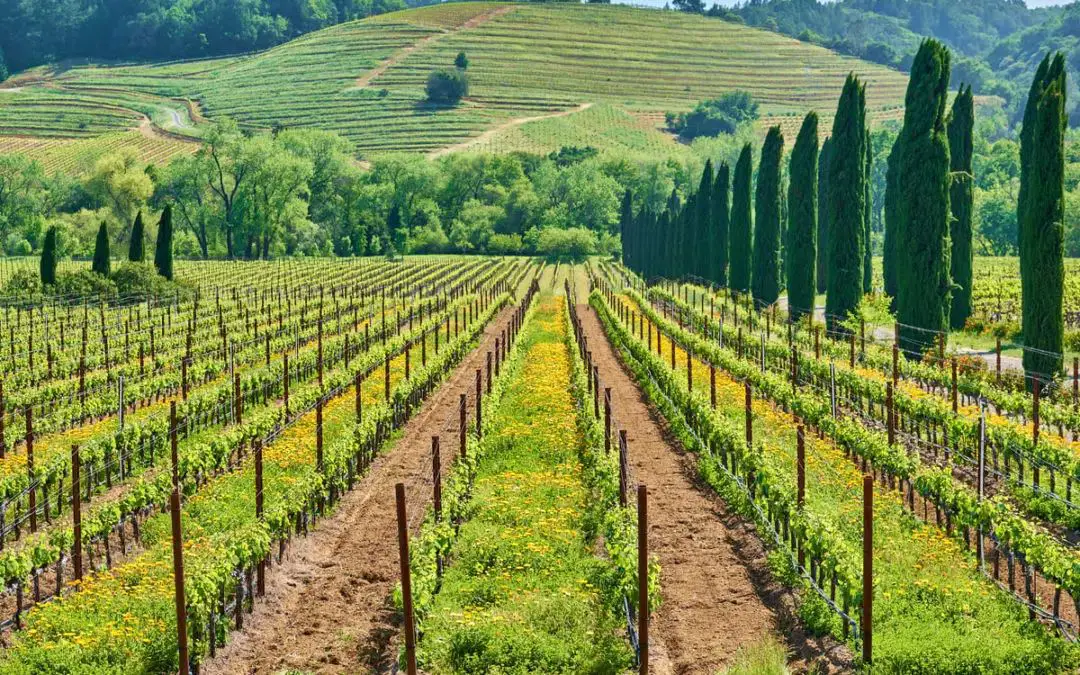
THE HIDDEN VINEYARD
There are seasons in life when we imagine the storms are behind us, when we think we’ve finally reached the soft, golden years we’ve earned through sweat, heartbreak, and a thousand tiny decisions that no one else ever saw. I thought I was entering that season when I remarried at sixty. I had no idea that the most dangerous battle of my life was about to begin—or that a secret I’d been carefully guarding would become the only thing standing between me and complete ruin.
Part One: The Woman Before
My name is Eleanor Hart, though for most of my life, people just called me Elle—a name that somehow managed to sound softer than I ever truly was. The truth is, I’ve never been particularly soft, not in the ways people expected women of my generation to be. I didn’t bake cookies for school fundraisers with a permanent smile plastered on my face. I didn’t defer to male opinions in business meetings. I didn’t wait for permission to chase the impossible dream that eventually became my entire life.
I bought my first scraggly stretch of land in Aldercrest Valley in 1990, when people were still politely patting women on the head while reminding us that real estate and vineyards were “serious business.” The valley itself was beautiful in that raw, unfinished way that requires vision to appreciate—rolling hills that turned golden in summer, morning fog that clung to the ground like a living thing, soil that experts said was decent but not exceptional. Everyone told me I was making a mistake.
I was a single mother with a stubborn chin and a terrifyingly fragile bank balance. My daughter, Sophie, was twelve years old and confused about why we were leaving the comfortable suburban life she’d always known for what she called “a big empty field with broken dirt.” My ex-husband had remarried quickly, moved to Denver, and sent child support checks that were always two weeks late and fifty dollars short. My parents had passed years before, and I had no safety net, no wealthy relatives, no inheritance waiting in the wings.
Banks didn’t just doubt me; they dismissed me outright. The first loan officer I met with actually laughed—not cruelly, but with that patronizing chuckle that said he thought I was adorable for trying. “Mrs. Hart,” he’d said, leaning back in his leather chair, “vineyard operations require substantial capital, agricultural expertise, and frankly, physical strength. Have you considered something more… manageable? Perhaps a small boutique? Or consulting work?”
I’d walked out of that bank with my application crumpled in my purse and tears of rage burning behind my eyes. But I didn’t quit. I couldn’t. Something about that land had grabbed hold of my heart the moment I’d seen it, and I’d learned early in life that when something grabs your heart that completely, you either chase it or spend the rest of your life wondering what if.
Friends whispered. Family worried. “She’ll lose the land.” “She’ll sell it in a year.” “She doesn’t know what she’s doing.” “What about Sophie?” “How will she afford it?” “This is just a midlife crisis.” The whispers followed me everywhere—at Sophie’s school events, at the grocery store, at the few social gatherings I still attended. I became that woman, the reckless one, the one who’d lost her mind and was dragging her daughter down with her.
But I found a smaller bank willing to take a chance. I worked three jobs—administrative assistant during the day, bookkeeping at night, weekend shifts at a wine shop where I absorbed everything I could about viticulture, fermentation, tannins, and terroir. I planted my first vines myself, on my knees in the dirt, hands blistered and back screaming. Sophie helped on weekends, initially resentful but gradually becoming curious, then invested. We were building something together, even if she didn’t fully understand it yet.
The vines grew. Slowly. Stubbornly. Lovingly.
So did I.
Those early years were brutally hard in ways I couldn’t have anticipated. Vineyards aren’t like other crops—they require years of investment before producing anything sellable. I lived on rice and beans. I wore the same three outfits in rotation until they were threadbare. I learned to fix everything myself because I couldn’t afford contractors. Irrigation systems. Trellising. Pest management. I bought used equipment and rebuilt it in my garage. I studied agricultural extension reports until my eyes burned. I attended every viticulture workshop within driving distance, often the only woman in rooms full of men who assumed I was someone’s wife tagging along.
When my first harvest finally came, four years after planting, I cried. The grapes weren’t perfect—far from it—but they were mine. I’d kept them alive. I’d coaxed them into existence through drought, unexpected frost, pest infestations, and my own bone-deep exhaustion. That first vintage was small, rough around the edges, but I sold every bottle at the local farmers market. People came back. They told friends. Word spread slowly, the way reputation builds when it’s genuine.
I built Hartstone Estate inch by inch, bottle by bottle, sacrifice by sacrifice. I learned how to negotiate with men who thought my competence was a party trick. I learned how to fix irrigation lines in the dark, how to read soil pH and mineral content, how to pray silently to weather patterns while pretending I had everything under control. I learned when to be steel and when to be silk, when to stand my ground and when to strategically retreat. I learned that being underestimated was sometimes an advantage—people revealed their strategies when they didn’t consider you a real competitor.
The vineyard expanded. Five acres became ten. Ten became twenty-five. I purchased adjacent parcels when they became available, sometimes scraping together down payments by selling equipment or taking on consulting work. Sophie graduated high school, went to college on scholarships I’d fought tooth and nail to help her secure, and eventually built her own life in Portland. She visited often, proud of what we’d created together, though she’d chosen a different path—urban planning, policy work, a career that suited her analytical mind and passion for social justice.
By my sixtieth birthday, I owned nearly two hundred acres of producing vineyard land, a stone winery that glowed warm at sunset, a tasting room that filled every weekend, and a brand that critics actually knew. Hartstone Estate wines had won regional awards. We’d been featured in wine magazines. Sommeliers in San Francisco and Seattle carried our bottles. I employed fifteen people full-time, more during harvest. I’d done it. Against every odd, despite every dismissal, through every setback and heartbreak—I’d built something magnificent.
And a quiet loneliness that crept in around evening shadows.
Success had come at a price. Relationships had fallen away over the years—friends I’d lost touch with during the grinding early period, romantic interests who couldn’t handle my ambition or the demands of the vineyard, social connections that withered from neglect. I worked constantly. Even when I wasn’t physically at the vineyard, my mind was there, calculating, planning, worrying. At sixty, I had everything I’d dreamed of professionally and almost nothing personally.
My daughter worried. “Mom, when’s the last time you went on an actual vacation? When’s the last time you did something that wasn’t about the vineyard?” She was right, but I didn’t know how to be anyone except the woman who’d built Hartstone. The estate had become my identity, my purpose, my child in many ways. Walking away from it, even temporarily, felt like abandoning something precious.
That loneliness is how Charles Bennett entered my story.
Part Two: The Gentle Stranger
I met Charles at a charity gala in late spring, one of those wine-country fundraisers where everyone wore their success like carefully tailored armor. I almost hadn’t attended—galas weren’t really my scene, and I had a thousand tasks waiting at the vineyard—but my marketing director had insisted. “Networking, Elle. Visibility. You can’t build a premium brand from your tasting room alone.”
Tall. Calm. Silver hair that looked distinguished rather than old. Soft laugh that seemed genuinely amused by the world. Widower, he mentioned within the first ten minutes, his wife having passed three years earlier from cancer. Gentle hands that wrapped around a wine glass like it meant something to him. He was tasting through our reserve Pinot Noir when we first spoke, and the care with which he approached it caught my attention.
“This is exceptional work,” he said, and something about the way he said it felt different from typical wine-snob flattery. “The balance between fruit and earth—that’s so difficult to achieve. You can taste the terroir, the specific place this comes from. Whoever made this understands patience.”
“I made it,” I said, probably too defensively. I was used to people assuming the winemaker was a man, that I was perhaps the owner’s wife or a tasting room manager.
His eyes lit up with genuine interest. “Then you understand patience in ways most people don’t. Would you tell me about your process?”
We talked for an hour. Then two. He listened when I spoke—or at least he performed listening so beautifully that I didn’t notice the difference. He asked intelligent questions about my farming practices, my barrel aging decisions, my thoughts on climate change’s effects on viticulture. He shared his own story—a retired financial consultant, two adult children, recently relocated to the valley seeking peace and slower rhythms after years in San Francisco’s intensity.
By the end of the night, we were laughing like old friends. He had that quality some people possess of making you feel like you’re the most fascinating person in the room, like every word you say matters profoundly. It had been years since anyone made me feel seen that way.
Within months, he had become part of my routine. Sunday morning coffee on the terrace overlooking the vines. Wednesday dinners at the small Italian place in town. Long walks through the vineyard rows where he’d ask about specific varietals, growth patterns, harvest decisions. He integrated himself into my life so smoothly I barely noticed it happening. It felt natural, easy, comfortable in ways my previous relationships never had.
He told me he loved the land, loved how hard I’d worked, loved my independence. He said he’d never met a woman so capable, so visionary, so impressively self-made. He talked about his own life with appropriate vulnerability—his regrets about prioritizing work over family during his marriage, his determination to live more intentionally now, his admiration for people who built things with their own hands rather than just managing money.
He said “love” a lot.
I wanted to believe every syllable.
Sophie met him six months into our relationship. She was cautiously optimistic but asked pointed questions I deflected. “What exactly did he do in finance? Why did he really move here? Have you met his children?” I reassured her that I was being careful, that I wasn’t some naive romantic, that I’d built an entire business on reading people and situations correctly.
“You built a business on reading soil and weather and market trends,” she’d countered. “People are different. Especially people who want something from you.”
But Charles didn’t seem to want anything. He had his own money from his consulting career, or so he said. He never asked about the vineyard’s finances. He paid for dinners. He respected my need to work long hours. He supported my business decisions without trying to insert himself into operations. When I mentioned needing to refinance some equipment loans, he offered encouraging words but never suggested he’d help financially. He maintained appropriate boundaries.
Looking back now, I realize how calculated that performance was. How perfectly calibrated to appeal to a woman who’d spent her life fighting for independence and respect. He never pushed too hard, never revealed his hand too early, never gave me reason to question his motives. He was patient in ways that should have terrified me.
We married in September, eighteen months after meeting, in a simple ceremony at the vineyard chapel I’d built for events. Fifty guests, mostly my people—employees, longtime customers, a few remaining friends, Sophie and her partner. Charles’s children attended—Daniel, thirty-eight, an attorney in Los Angeles, and Rebecca, thirty-five, working in commercial real estate in San Diego. They were cordial but distant, which I attributed to grief over their mother and discomfort with their father remarrying.
I should have recognized their appraising eyes. The way they photographed everything. How they asked pointed questions about the property that seemed innocent but weren’t.
The wedding was beautiful. The vows were touching. Charles cried as he promised to honor and cherish me, to support my dreams, to build a life together based on respect and partnership. I meant every word of my own vows. I believed we were beginning something genuine.
And then the ceremony ended. The guests left. The sunset faded.
And the masks began to slip.
Part Three: The Revealed Faces
It started small. Comments that seemed innocent but carried weight.
The day after the wedding, Charles asked if we should “sit down and organize our finances now that we’re married.” When I suggested we keep things separate as we’d discussed, he smiled but something flickered in his eyes. “Of course, of course. I just thought, for estate planning purposes…”
Daniel visited a week later, supposedly to “get to know me better.” Over coffee, he casually mentioned that his father seemed “more relaxed now that his financial future was secure.” When I asked what he meant, he backtracked smoothly. “Oh, just that he’s been worried about retirement funds, you know how it is. But now that you two are married, he can relax.”
Rebecca called frequently, always with questions about the vineyard’s operations, market value, production capacity. “I’m just so interested in what you’ve built, Eleanor! Dad talks about it constantly. It must be worth quite a lot now, with land values in wine country being what they are.”
Charles himself became different. Small things at first. He started referring to the estate as “ours” instead of “yours.” He’d tell people we met, “We own Hartstone Estate,” with casual possessiveness. When I corrected him gently, he’d laugh. “Well, we’re married now, Elle. What’s yours is ours, right? That’s what marriage means.”
But he never applied that logic in reverse. His accounts remained his. His investment properties—which I was learning about slowly, piece by piece—were never described as “ours.”
One evening, three weeks after the wedding, I overheard a phone call. Charles was in his study—the room that had been my office, that he’d gradually taken over—speaking with Daniel. I’d come upstairs to ask about dinner plans and heard his voice through the partially open door.
“…just need to be patient. She’s attached to the property obviously, but once we have joint ownership established, we can start talking about development potential. Rebecca’s running the numbers on what it would sell for if we subdivided… No, she’s not suspicious. She trusts me. That’s the whole point… Look, I’ve been laying groundwork for eighteen months. This isn’t amateur hour…”
My blood turned to ice. I stood frozen in the hallway, hand still raised to knock, as my new husband discussed dismantling my life’s work with his son like it was a business transaction.
“…worth at least fifteen million as-is, probably twenty-five if we develop. Split three ways after taxes, that’s still a substantial… Daniel, I understand your concerns, but I know what I’m doing. Women her age, they want companionship, someone to share the burden with. She practically handed me the keys already by marrying me. California’s a community property state…”
I backed away silently, my heart hammering so violently I thought it might crack my ribs. I walked downstairs carefully, calmly, my mind racing through thirty years of hard-won business instincts and survival skills. I poured a glass of my own Pinot Noir—the 2019 reserve that had won gold at the International Wine Competition—and sat on the terrace as sunset painted the vines copper and gold.
Everything clicked into place with horrible clarity. The timeline of our relationship. His interest in the vineyard’s operations. His children’s probing questions. The way he’d relocated to wine country just months before we met—not seeking peace, but seeking opportunity. The financial consultant background that probably meant he knew exactly how to identify vulnerable targets and exploit community property laws.
I’d been played. Expertly, patiently, completely played.
But here’s what Charles Bennett didn’t know, what none of them knew, what I had protected more carefully than anything else in my entire life:
Part Four: The Truth They Didn’t Know
The vineyard estate wasn’t “ours.”
It wasn’t even legally mine anymore, not in the way they thought.
Six years earlier, after a frighteningly close brush with a lawsuit from a distributor, my attorney had strongly recommended I restructure my assets for protection. “You’ve built something valuable, Elle. That makes you a target. One serious lawsuit, one bad accident on the property, one liability claim—and you could lose everything.”
I’d spent months working with attorneys and financial advisors to create an irrevocable trust. Hartstone Estate, the land, the business, the assets—all of it was transferred into the Eleanor Hart Irrevocable Trust. I was the trustee and primary beneficiary during my lifetime, with Sophie as the contingent beneficiary and successor trustee. But legally, I didn’t own it personally anymore. The trust did.
More importantly, the trust documents explicitly stated that the assets were separate property, established and funded entirely before any future marriage. They were protected from community property claims. Protected from creditors. Protected from anyone who might try to claim them through marriage or litigation.
I’d done this not because I was planning to remarry, but because I was terrified of losing everything I’d built to circumstances beyond my control. Because I’d spent thirty years watching other people—other women especially—get destroyed by divorces, lawsuits, medical bankruptcies, or simply by trusting the wrong people.
The irony was breathtaking. Charles had married me thinking he was securing access to a fifteen-million-dollar property. He’d performed affection and respect and partnership, all while planning to claim half my assets through California’s community property laws and then pressure me into selling.
But there was nothing to claim. Our marriage gave him exactly zero legal rights to Hartstone Estate.
I sat on that terrace for two hours as night fell, drinking my wine, thinking through my options with the same methodical care I applied to harvest decisions.
I could confront him immediately. Make a scene. Throw him out. File for divorce right away.
Or I could be strategic.
Part Five: The Counter Play
I chose strategy.
The next morning, I acted normally. Made coffee. Kissed Charles goodbye as he headed into town for his supposed “meeting with an old colleague.” Went to work at the vineyard like any other day. But my mind was spinning through possibilities.
I called my attorney from the vineyard office, the one who’d helped establish the trust. “Margaret, I need you to review my trust documents and confirm something. If I were to divorce right now, would my new husband have any claim to the estate?”
There was a significant pause. “Elle, is everything okay?”
“Just answer the question, please.”
“Absolutely none. The trust was established years before your marriage, funded entirely with separate property, and the documents explicitly state the intent to keep those assets separate from any community property. Why? What’s happened?”
“I’ll explain later. I need you to prepare divorce papers. Draft them but don’t file yet. I want them ready to go.”
Over the following weeks, I became a detective in my own home. I documented everything. Charles’s conversations with his children—I installed a voice recorder in his study. His computer activity—I hired a forensic IT specialist who recovered deleted emails outlining their plan in explicit detail. Their scheme was even more elaborate than I’d initially understood.
The plan was to establish community property claims, then systematically pressure me into selling by creating marital conflict, suggesting I was “too old” to manage the vineyard alone, maybe even questioning my competence. Rebecca had already been in contact with developers interested in converting vineyard land to luxury residential estates. Daniel had researched elder law and conservatorship proceedings, apparently as a backup plan if I proved difficult to manipulate.
They’d planned to destroy me, psychologically and legally, to get their hands on my life’s work.
I felt rage unlike anything I’d ever experienced. But I channeled it into planning rather than explosion.
I also discovered that Charles’s financial situation was far more precarious than he’d presented. The “successful consulting career” had ended badly, with a client dispute and allegations of mismanagement. His “investment properties” were heavily mortgaged and barely breaking even. He wasn’t financially comfortable—he was desperate. This hadn’t just been greed. It had been necessity disguised as romance.
Somehow that made it worse.
Part Six: The Confrontation
I chose Thanksgiving for the revelation. Deliberately.
Charles’s children were visiting for the holiday, staying in the guest house on the property. The three of them had spent the week making increasingly bold comments about “the estate’s potential” and “maximizing asset value” and “thinking about the future.” They thought they were being subtle. They weren’t.
Thanksgiving dinner was elaborate—I’d cooked for two days, preparing all the traditional dishes. Turkey, stuffing, three kinds of potatoes, roasted vegetables, pies. I set the dining room table with my best china, the pieces I’d collected over years from estate sales because I couldn’t afford new. I poured generous glasses of my finest vintage, the 2016 Cabernet that sold for $150 a bottle.
We sat down to eat, the four of us, and they were in high spirits. Charles kept touching my hand, playing the devoted husband. Daniel and Rebecca were animated, clearly excited about whatever timeline they’d established for their plan.
I let them eat. Let them drink. Let them relax into false security.
Then, as I served dessert, I said calmly, “I need to tell you all something important.”
Charles smiled indulgently. “Of course, darling. What is it?”
“I know about your plan. All of it.”
The table went silent. The color drained from Charles’s face.
“I know about the development scheme. I know about the subdividing plans. I know about your financial situation, Charles—the real one. I know about the conservatorship research, Daniel. I know about the developer contacts, Rebecca. I know everything.”
Rebecca tried to recover first. “Eleanor, I don’t know what you think—”
“I have recordings,” I continued, my voice steady and cold as winter frost. “I have emails. I have documentation of every conversation, every plan, every manipulation. I’ve had a forensic accountant review Charles’s real financial situation. I know this marriage was a con from the beginning.”
Charles’s mask shattered. The gentle, loving husband vanished, replaced by someone I’d never actually met. “You spied on me? In my own home?”
“Your home?” I laughed, and it sounded harsh even to my own ears. “This has never been your home, Charles. You’ve never contributed a single dollar to this property. You moved into MY home under false pretenses.”
Daniel leaned forward, and I saw calculation in his eyes. “Whatever you think you know, this is still California. Community property laws mean—”
“Mean nothing,” I interrupted. “Because I don’t own this estate. Not personally.”
The confusion on their faces was almost comical.
“Six years ago, I transferred everything into an irrevocable trust. The land, the business, the assets—none of it is personally mine in the way you think. It’s all protected trust property, established and funded long before this marriage. Your entire scheme was based on a false premise.”
I pulled out the trust documents I’d brought down from my safe and slid them across the table. “My attorney says hello, by the way. She’s already prepared divorce papers. She’s also prepared a restraining order if necessary, and she’s quite interested in the possibility of filing fraud charges.”
Charles stared at the documents like they were written in a foreign language. His hands were trembling. “You can’t… we’re married. I have rights.”
“You have the right to leave. Tonight. I want you out of my home within the hour.”
“Dad bought into this marriage in good faith!” Rebecca’s voice was shrill now, the polished real estate professional vanishing. “You led him on! You can’t just—”
“I can, and I am. Your father is a con artist who targeted me specifically and deliberately. The only question now is whether I pursue criminal charges.”
The next hour was chaos. Shouting. Threats. Charles tried several tactics—tears, anger, bargaining, denial. His children circled between defending him and trying to negotiate some kind of settlement. I stood firm, my attorney on speakerphone, two of my vineyard workers who also happened to be very large men standing quietly in the doorway.
By midnight, Charles Bennett was gone. His children followed, their rental car spraying gravel as they fled down the driveway.
I stood on my terrace again, alone again, and felt something I hadn’t expected.
Relief.
Part Seven: The Aftermath
The divorce was finalized within six months. Charles contested nothing—my attorney made clear that the alternative was fraud charges and a very public trial that would destroy whatever reputation he had left. He slunk away with nothing, because there had never been anything for him to take.
Daniel sent one threatening letter about defamation. My attorney’s response letter, detailing exactly what evidence we had and how we’d use it in court, ended that quickly.
Rebecca actually called me months later, her voice small and ashamed. “I’m sorry,” she said. “My dad… we thought… I didn’t realize how hard you’d worked for everything. How much the estate meant to you.” I thanked her for the apology but didn’t offer forgiveness. Some betrayals don’t earn that.
Sophie visited more after that, worried about me, checking to make sure I was okay. But I was more than okay. I was free. Free of the loneliness that had made me vulnerable, free of the fantasy that I needed someone to complete my life, free of the man who’d tried to steal everything.
The vineyard thrived. Without the distraction of a relationship, without the constant low-level stress of Charles’s presence even before I knew what he was, I poured myself back into the work I loved. We had our best harvest in years that fall. My team seemed lighter, happier—several later admitted they’d never liked Charles but hadn’t felt comfortable saying so.
I hired a new assistant winemaker, a talented young woman from Oregon who reminded me of myself at thirty. I started a mentorship program for women in viticulture, passing along the hard-won lessons I’d learned. I traveled to wine conferences and industry events, finally comfortable going alone, no longer seeing solo attendance as some kind of failure.
The story of what happened spread through the valley’s wine community—these things always do, despite non-disclosure agreements and sealed divorce records. People whispered, but this time the whispers were different. This time they said: “Did you hear about Elle Hart? Someone tried to con her out of her estate and she destroyed them.” “Never underestimate Eleanor Hart.” “She’s tougher than anyone realized.”
I liked these whispers better.
One evening, almost exactly a year after that Thanksgiving confrontation, I sat on my terrace with a glass of wine—a new vintage, a new beginning. The vines stretched out before me in perfect rows, heavy with ripening fruit. The stone winery glowed in the sunset. The life I’d built, protected, and defended surrounded me like a fortress made of earth and determination.
I thought about what I’d learned. That loneliness is painful but not fatal. That my worth wasn’t determined by having a partner. That the instincts I’d honed building a business should have been applied more carefully to building a relationship. That trust is precious and should be earned slowly, not granted quickly just because someone says the words you want to hear.
I thought about the secret that had saved me—not just the legal structure of the trust, but the deeper truth behind it. That I’d never stopped protecting what I’d built. That some part of me had always known the world was full of people who’d take rather than earn. That my hard-won independence was worth more than any fantasy of partnership.
Sophie arrived for dinner that evening, now visiting almost every week. We cooked together in the kitchen that smelled of garlic and rosemary, talking about her work, my latest vineyard challenges, the life she was building in Portland. At one point, she hugged me unexpectedly.
“I’m proud of you, Mom. Not just for building all this, but for protecting it. For protecting yourself.”
“I learned from the best teacher,” I said.
“Who’s that?”
“Experience. The most brutal and most effective teacher there is.”
We ate on the terrace as stars emerged overhead. The valley spread below us, other vineyards’ lights twinkling in the distance, a whole community of dreamers and builders and stubborn fools who’d planted vines and hoped for the best.
I’d started with nothing but hope and stubbornness. I’d built an empire through sweat and sacrifice. I’d been targeted by someone who saw me as a mark, a vulnerable older woman easily manipulated. And I’d survived because I’d never stopped being the fighter who bought that first scraggly piece of land against all advice.
The vineyard wasn’t just land and vines and buildings. It was proof that a woman could build something magnificent alone. It was proof that independence and preparedness weren’t paranoia—they were wisdom. It was proof that the best protection against betrayal is never becoming so desperate for connection that you ignore warning signs.
That night, after Sophie left, I walked through the vineyard alone. The vines whispered in the breeze, leaves rustling like secrets being shared. I touched the rough bark of a forty-year-old vine I’d planted myself, felt the solid earth beneath my feet, breathed air that smelled of grapes and possibility.
I had built this kingdom.
And I would never let anyone take it from me again.
Some battles are won with strength. Some are won with knowledge. Some are won simply by never giving up, never giving in, never surrendering the truth of who you are and what you’ve earned.
I remarried at sixty, and discovered that the man I’d trusted was a con artist. But I survived because I’d spent a lifetime learning to trust myself first—my instincts, my preparation, my unwillingness to be anyone’s victim.
The vineyard stood. The estate endured. And so did I.
THE END

Lila Hart is a dedicated Digital Archivist and Research Specialist with a keen eye for preserving and curating meaningful content. At TheArchivists, she specializes in organizing and managing digital archives, ensuring that valuable stories and historical moments are accessible for generations to come.
Lila earned her degree in History and Archival Studies from the University of Edinburgh, where she cultivated her passion for documenting the past and preserving cultural heritage. Her expertise lies in combining traditional archival techniques with modern digital tools, allowing her to create comprehensive and engaging collections that resonate with audiences worldwide.
At TheArchivists, Lila is known for her meticulous attention to detail and her ability to uncover hidden gems within extensive archives. Her work is praised for its depth, authenticity, and contribution to the preservation of knowledge in the digital age.
Driven by a commitment to preserving stories that matter, Lila is passionate about exploring the intersection of history and technology. Her goal is to ensure that every piece of content she handles reflects the richness of human experiences and remains a source of inspiration for years to come.