The Empty Chair
The morning air hung heavy with moisture, the kind that settles into your bones and makes you feel older than you are. I stood at the bedroom window, watching the city wake up beneath a blanket of gray clouds, and tried to remember the last time my son had called just to hear my voice.
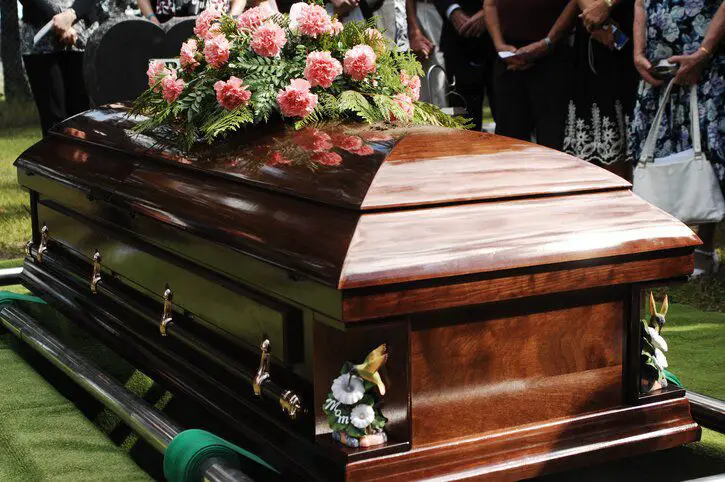
The black dress waited on the bed behind me, pressed and proper, a costume for the performance I would give today. In a few hours, I would stand beside a mahogany casket and say goodbye to the only man who had ever truly known me. The only man who had ever stayed.
My phone sat silent on the nightstand.
I picked it up, thumb hovering over Thomas’s name in my contacts, then set it back down. Some conversations are better left unstarted, some disappointments better left unconfirmed. Hope, I had learned, could be more painful than certainty.
The shower ran hot enough to redden my skin, but I couldn’t seem to get warm.
By the time the car arrived, the drizzle had started—not quite rain, not quite mist, just enough to make the world look like it was crying politely. The driver opened my door without meeting my eyes, and I was grateful. I didn’t want to see pity today. Pity was for people who didn’t see it coming.
But I should have. God knows I should have.
The funeral home smelled of roses and lilies and something else underneath—furniture polish, maybe, or the particular staleness of rooms that saw too much grief. People were already gathering, faces I recognized from Christmas cards and charity galas, from Richard’s office and the clubs he frequented. They touched my arm and murmured words that evaporated before they could land.
Jennifer appeared at my elbow like a shadow, her eyes already red-rimmed. She had loved Richard in her way—not romantically, but with the fierce loyalty of someone who had witnessed his better angels up close for twenty years.
“Is he coming?” she asked quietly.
I didn’t need to ask who she meant.
“He said he’d try,” I answered, which was the kind of lie that tasted like ashes but went down easier than the truth.
The cemetery was worse.
The grass was that impossible, offensive shade of green that only comes after days of rain, glossy and bright like the earth didn’t understand that today required something more somber. The tent they’d erected over the gravesite flapped softly in the breeze, and chairs sat in neat rows on artificial turf that covered the mud.
There were exactly forty-seven chairs. I had counted them twice while the funeral director fussed with the flower arrangements.
Forty-six of them filled slowly as people arrived. One stayed empty.
It sat in the front row, second from the left, exactly where Thomas would have sat if he had cared enough to be there. Someone had printed programs with his name listed under “Immediate Family,” and they sat in a stack on a small table near the entrance, advertising his absence to everyone who picked one up.
The pastor was a kind man with white hair and gentle hands who had never met Richard but spoke about him like he had. He used words like “devoted” and “steadfast” and “loving father,” and each one landed like a small stone in my chest.
I kept my spine straight, my hands folded, my face composed. I had learned this posture over four and a half decades of standing beside a man who never bent, who never showed weakness in public, who believed that grace under pressure was the only currency that mattered in the end.
Richard would have been proud of how well I was holding together.
He would have been devastated by why I needed to.
The rain picked up halfway through the service, drumming against the tent with increasing urgency, and I wondered if the universe was as angry as I was. Jennifer stood close enough that our shoulders touched, and I felt her trembling—whether from cold or grief or fury on my behalf, I couldn’t tell.
At one point, I saw her pull out her phone, check it quickly, then put it away with her jaw clenched so tight I could see the muscle jumping.
No message. No call. No last-minute miracle.
When they lowered the casket, I dropped a single white rose onto the polished wood and thought about all the times Richard had asked about Thomas, worried about Thomas, made excuses for Thomas. All the times I had smoothed things over, playing mediator between a father who expected too much and a son who delivered too little.
“He’ll mature,” I used to say. “He’s still finding himself.”
Richard would look at me with those sharp gray eyes and say, “He’s thirty-eight, Eleanor. When does the finding stop and the being begin?”
I never had a good answer. I always thought there was more time.
The penthouse felt too large when I returned, too quiet despite the twenty or thirty people who had followed me back for the reception. They moved through the rooms in subdued clusters, speaking in lowered voices, balancing plates of food they weren’t really eating.
The caterers had done their job well. The bar was stocked, the canapes arranged artfully, the coffee hot and strong. It all felt absurd—throwing a party to mark the end of someone’s existence, making small talk over shrimp cocktails while the guest of honor decomposed in the ground.
But this was what people did. This was the ritual. And rituals, I had learned, were often the only things holding us together when everything else fell apart.
I stood near the windows overlooking Lake Michigan, watching the water churn gray and restless beneath the low clouds. Richard had loved this view. He used to stand here in the mornings with his coffee, planning his day, building his empire one decision at a time.
He had started with nothing—a borrowed dock, a second-hand boat, and a willingness to work harder than anyone else. By the time I met him, he had three boats and a reputation for being ruthlessly fair. By the time we married, he had a small fleet. By the time Thomas was born, he had built Mitchell Shipping into something that moved goods across three continents.
And through it all, he had been faithful. Present. Steady as the tides he navigated.
I had given him forty-five years, three miscarriages, one living son, and every ounce of support a woman could offer. I had moved when his business required it, entertained when his reputation demanded it, stayed quiet when my own dreams whispered that there might have been another life somewhere else.
I had never regretted it. Not once.
Until today, standing at a funeral where his only child couldn’t be bothered to attend.
“Mrs. Mitchell?”
I turned to find Douglas Harrington, Richard’s attorney for the past twenty years, standing with a glass of scotch and an expression of careful neutrality. He was a small man with an impressive mind and a gift for reading rooms.
“The will reading is scheduled for tomorrow at ten,” he said quietly. “I assume Thomas will be there?”
I took a sip of my wine before answering. “He said he would try.”
Douglas’s eyebrows rose fractionally. “Try?”
“His wife’s birthday is today. Apparently, it’s quite the celebration.”
The silence that followed was eloquent. Douglas had been there when Richard wrote the will six months ago, when the cancer diagnosis made planning unavoidable. He knew exactly what was at stake.
“I see,” he said finally. “Well. Tomorrow should be… interesting.”
Thomas arrived at 6:27 p.m.
I know the exact time because I was looking at the Cartier watch Richard had given me for our fortieth anniversary when the elevator chimed. Twenty-four hours after the notification of his father’s death, nine hours after the funeral ended, he finally graced us with his presence.
The elevator doors opened, and there he was—my son, my only child, the boy I had rocked through nightmares and cheered at school plays and defended against Richard’s disappointed silences. Six feet two inches of tailored suit and perfect hair and absolutely no shame.
Victoria clung to his arm like an accessory, all gleaming teeth and strategic curves poured into a dress that probably cost more than Jennifer made in a month. She was twenty-nine to Thomas’s forty-two, his second wife, and she looked at the world like it was a store window full of things she deserved.
The remaining guests turned as one, and I watched the realization dawn across their faces. He hadn’t been there. He had missed his own father’s funeral.
“Mother,” Thomas said, crossing the room with his hand extended like we were at a business function. He kissed my cheek with the warmth of someone pecking a distant aunt. “Sorry we couldn’t make it earlier. Victoria’s party had been planned for months, you understand. These venues book up so far in advance, and we had two hundred guests, and—”
“Your father was buried today,” I said quietly.
Thomas’s smile flickered. “I know. And I’m sorry about that. But surely you can understand—Victoria only turns thirty once. It was important to her.”
Victoria nodded enthusiastically, apparently missing the part where she was supposed to pretend to be sad. “It was at the Drake! We had an ice sculpture and everything. It was just magical.”
Jennifer made a sound like she was choking on broken glass.
I looked at my son—really looked at him—and saw a stranger wearing a familiar face. This man had Richard’s height, Richard’s features, Richard’s last name, but none of his substance. He was hollow where Richard had been solid, shallow where Richard had been deep.
And I had enabled it. Every excuse I had made, every time I had begged Richard to be more patient, every check I had written to cover Thomas’s mistakes—I had helped create this.
“The will reading is tomorrow,” I said evenly. “Ten a.m. at Harrington’s office. Be there.”
Thomas’s expression shifted to something calculating. “Actually, we were hoping to fly to Aspen tonight. Victoria’s never seen it in winter, and the jet’s already fueled. Can’t we do this next week? It’s just paperwork, right?”
The room had gone silent. Everyone was watching now, not even pretending to look away.
“It’s not paperwork,” I said, and my voice could have cut diamonds. “It’s your father.”
For the first time, Thomas looked uncertain. He glanced at Victoria, who was studying a Ming vase on the side table with the focused intensity of an appraiser, then back at me.
“Fine,” he muttered. “We’ll reschedule Aspen.”
“How generous of you.”
He blinked, clearly unsure if I was being sarcastic. That he couldn’t tell said everything.
They stayed for exactly twelve minutes. Long enough to grab two plates of food, take three selfies in front of the lake view—Victoria insisted the light was “perfect”—and ask Jennifer when the estate would be “settled” so they could “start planning.”
Planning what, Victoria didn’t specify, but I saw her eyes catalog every painting, every sculpture, every visible asset in the room.
When the elevator doors finally closed behind them, the tension broke like a fever.
“Jesus Christ,” someone muttered.
“On his father’s funeral day,” someone else whispered.
Jennifer appeared at my side with a fresh glass of wine. Her hands were shaking. “Mrs. Mitchell, I am so sorry. If there’s anything—”
“There is,” I said calmly. “Call Douglas. Tell him I need to see him tonight. At his office. Tell him it’s urgent.”
She nodded and pulled out her phone immediately, stepping away to make the call.
I turned back to the window and watched the city lights begin to wink on across the skyline. Richard used to say that empires weren’t built on hope—they were built on decisive action at crucial moments.
Tonight felt like a crucial moment.
By ten p.m., the last guests had left. The caterers had cleaned up, folding up their tables and portable bars with practiced efficiency. Jennifer stayed until I insisted she go home, pressing both her hands in mine and promising I would be all right.
I wasn’t sure that was true, but I said it anyway.
The penthouse felt cavernous in the silence. Our housekeeper had left everything pristine—cushions fluffed, surfaces gleaming, no evidence that fifty people had just marked the passing of a giant.
I poured myself a scotch from Richard’s collection—a thirty-year-old Macallan he’d been saving for retirement. We’d planned to open it when he finally sold the company, when we could travel without his phone ringing every twenty minutes, when time was finally ours alone.
Cancer had other plans.
I took my drink to his study, the room that had always been his sanctuary. Oak paneling, leather chairs, walls lined with books he’d actually read. His desk still held his reading glasses, folded next to a biography of Churchill he’d been halfway through when the diagnosis came.
I stood there for a long moment, breathing in the faint scent of his cologne that still lingered in the air, then walked to the wall behind his desk where his portrait hung—a formal oil painting commissioned for his sixtieth birthday.
The artist had captured something essential in Richard’s eyes: that combination of wisdom and stubbornness, that sense of a man who knew exactly who he was and refused to apologize for it.
My fingers found the hidden latch behind the frame’s left corner, the one that only Richard and I knew about. The portrait swung forward on silent hinges, revealing a wall safe with a digital keypad.
I entered the code—our wedding date—and the door clicked open.
Inside was exactly what I expected: property deeds, insurance policies, account numbers for assets that existed beyond the knowledge of even Douglas Harrington. Richard had been meticulous about protecting what he’d built, creating layers of security that would take forensic accountants months to fully unravel.
But there was something else too. An envelope with my name written in Richard’s distinctive handwriting, placed on top of everything else like he’d known I would come here first.
My hands trembled as I picked it up. The paper was heavy, expensive, the kind Richard used for important correspondence. The flap was sealed with wax—an affectation he’d always loved—pressed with his signet ring.
I carried it back to his desk and sat in his chair, the leather still shaped to his body. Then I broke the seal and pulled out three pages of his neat, slanting script.
My dearest Eleanor,
If you’re reading this, then I’m gone, and you’re sitting in my chair trying to figure out what to do next. I know you. You’re wearing that expression you get when you’re thinking hard—the one where you press your tongue against your back teeth and your left eyebrow pulls down just slightly.
I love that expression. I’ve loved it for forty-five years.
I need to talk to you about Thomas. I know this is hard to discuss now, when I’m no longer there to share the weight of it, but some things need to be said clearly.
Our son is not a bad person, Eleanor. He’s just a weak one. And weakness, left unchecked, becomes something worse than evil—it becomes parasitic. It drains the strength from everyone around it while producing nothing of value itself.
I’ve seen it in business a thousand times. Men who inherit positions they never earned, wealth they never built, respect they never commanded. They coast for a while on their father’s name, but eventually, the rot shows through. They destroy in years what took generations to build.
You’ve protected him. I know you have. You’ve made excuses when I was too harsh, smoothed over his failures, cushioned every fall. You did it out of love, out of hope that one more chance would be the one where he finally became the man we wanted him to be.
It won’t happen, my love. Not unless he’s forced to find his own strength.
The will I’ve written is going to hurt him. More than that—it’s going to enrage him. He will come to you, crying or threatening or both, and he will demand that you fix it. That you give him what he thinks he deserves.
Don’t.
I’ve left him something, but not the empire. Not the fortune. Those require wisdom and discipline he doesn’t possess. Giving him a billion dollars would be like giving a child a loaded gun—something terrible would happen, and he would blame everyone but himself when it did.
Instead, I’ve given him the only thing that might save him: necessity. The need to build something himself, to prove himself worthy not of my name but of his own respect.
This is where I need you to be strong, Eleanor. Stronger than you’ve ever been. Because I’m asking you to do the hardest thing a mother can do—I’m asking you to let him fall. Completely. All the way to the bottom. And then I’m asking you to let him climb out on his own, or not climb out at all.
You have the power to override this. You have the authority to give him everything I’m withholding. You could write a check tomorrow and restore him to the life he expects.
Don’t.
Not because I want to punish him, but because I want to save him. And the only person who can save Thomas now is Thomas himself.
I’ve made provisions for you. More than enough for ten lifetimes. The penthouse is yours, fully paid. The house in Oak Park is yours. The villa in Provence is yours. You’ll want for nothing. I’ve seen to that.
The company will go to the employees through a trust—the people who actually built it alongside me. They’ve earned it.
The charitable foundation will go to Jennifer. She has the heart and the mind to do real good with it.
And Thomas will get exactly $1 and a choice: build something worthy of the Mitchell name, or spend the rest of his life explaining why he couldn’t.
I’m sorry, my love. I’m sorry to leave you with this burden, with this decision, with the anger he will direct at you when he understands what I’ve done.
But I trust you. I have always trusted you. You are the strongest person I’ve ever known, and the only one I would trust with this.
Love him. But love him enough to let him become a man.
Yours always, Richard
I read it three times before the words fully penetrated. Then I sat back in his chair and stared at the ceiling, letting the magnitude of what he was asking settle over me like a weight.
One dollar.
After everything. After the lifestyle Thomas had lived, the expectations he’d built, the plans he and Victoria were probably already making. One dollar.
The company worth $1.2 billion to the employees. The charitable foundation worth hundreds of millions to Jennifer. The properties and investments that would keep me comfortable forever.
And Thomas—his only son, his only child—got a dollar and a choice.
It was brilliant. It was cruel. It was the most loving thing Richard could have done.
And it was going to destroy my relationship with my son.
I poured another scotch and stood at the window, watching the lake absorb the city lights, turning them into liquid gold. Somewhere out there, Thomas and Victoria were probably on their way to Aspen anyway, having decided that ten a.m. was more of a suggestion than a requirement.
My phone buzzed. A text from Jennifer: Douglas will see you now. His office. He’s waiting.
I grabbed my coat.
Douglas’s office was in one of those old buildings in the Loop that had been there since before the Depression, all marble floors and brass fixtures and the kind of solid craftsmanship they didn’t bother with anymore. His practice occupied the entire fourteenth floor, and his personal office had a view of the Chicago River that probably added twenty percent to his billings.
He met me at the elevator himself, unusual for someone of his stature, and ushered me into his private conference room. There was coffee waiting, and files spread across the table with Richard’s name on them.
“Eleanor,” he said gently, “I’m so sorry for your loss. Richard was a remarkable man.”
“He was,” I agreed, sitting down. “And he’s left me in a remarkable situation.”
Douglas settled into his chair and folded his hands. “You’ve spoken to him somehow.”
“He left me a letter. In his safe. He explained his intentions.”
“Ah.” Douglas nodded slowly. “Then you know what’s coming tomorrow.”
“I need to know my options, Douglas. All of them. What can I do, and what can’t I do?”
He pulled one of the files toward him and flipped it open, adjusting his reading glasses. “Legally, Richard’s will is ironclad. I wrote it that way at his specific instruction. The assets are distributed as he directed, with very few discretionary provisions.”
“But?” I prompted, because there was always a but.
“But you are the executor. You have authority to interpret certain aspects of the distribution. The charitable foundation, for example—Richard named Jennifer as director, but you could override that. The employee trust has some flexibility in its structure. And…” He paused. “Your personal inheritance gives you significant leverage.”
“Explain.”
“Richard left you everything that isn’t specifically designated otherwise. The properties, the personal investments, the collection, the liquid assets in your joint accounts. Conservatively, that’s worth about $400 million. Potentially more, depending on valuations.”
I absorbed that. $400 million. More money than I could spend in three lifetimes.
“And Thomas?”
“Receives $1 and a formal letter from Richard explaining why. The letter is sealed. It’s to be read after the will is presented.”
“Can I override it?”
Douglas met my eyes steadily. “You can do anything you want, Eleanor. You could write Thomas a check tonight for $50 million, and there’s not a court in the world that could stop you. It’s your money.”
“That’s not what I’m asking.”
“I know.” He leaned back in his chair. “You’re asking if you should. And that’s not a legal question. That’s a moral one.”
We sat in silence for a moment. From fourteen floors up, the city looked clean and organized, all those messy human lives reduced to patterns of light.
“He’s going to be devastated,” I said quietly.
“Yes.”
“He’s going to hate me.”
“Probably.”
“He’s going to say terrible things. Do terrible things. He might never speak to me again.”
“That’s possible,” Douglas agreed. “But Eleanor? Richard knew that. He knew it, and he did it anyway because he believed it was the only way to save Thomas from himself. And he trusted you to see it through.”
“Or,” I said slowly, “I could give Thomas what he expects. I could be the loving mother who protects her child. I could let him have a comfortable life and pretend tomorrow’s meeting went differently.”
“You could,” Douglas acknowledged. “Richard gave you that power deliberately. He wanted you to have the choice he couldn’t make—the choice between protecting Thomas from pain and protecting him from himself.”
I stood and walked to the window, looking down at the river cutting through the city like a dark vein.
“What would you do?” I asked.
“I can’t answer that, Eleanor.”
“But you knew Richard. You knew what he was trying to accomplish.”
Douglas was quiet for a long moment. Then: “I knew him. And I think he believed that the worst thing a parent can do is rob their child of the chance to become someone real. Someone who earned their place through their own efforts. Someone who can look in the mirror and feel pride instead of entitlement.”
“By giving him nothing.”
“By giving him the opportunity to build something.”
I turned back to face him. “Set up the meeting exactly as Richard planned. No changes. No softening. Exactly as he wrote it.”
Douglas nodded slowly. “You’re sure?”
“No,” I admitted. “But Richard was. And if I’m going to betray someone, it won’t be him.”
I didn’t sleep that night either. I lay in the bed I’d shared with Richard for forty-five years, staring at the ceiling, running scenarios through my mind. How Thomas would react. What he would say. Whether there was any chance he would understand.
Probably not. Almost certainly not.
But there was something else nagging at me, something Victoria had said at the reception that I couldn’t quite let go of. Something about planning, about timing, about knowing exactly when to make a move.
At three a.m., I got up and went back to Richard’s study. This time, I opened his desk drawers systematically, looking for something I wasn’t sure I would find.
In the bottom drawer, hidden under a stack of old financial reports, I found it: a folder marked “Private” in Richard’s handwriting.
Inside were emails. Printed out, highlighted, annotated in Richard’s precise script.
Emails from Thomas to Victoria, discussing Richard’s cancer diagnosis. Discussing his deteriorating condition. Discussing, in clinical detail, what they would do when he died.
There was a spreadsheet. Victoria had made a spreadsheet.
Mitchell Estate Assets – Projected Inheritance
It listed everything. The company valuation. The properties. The collection. The investments. Down to the estimated value of Richard’s wine cellar.
At the bottom, in Victoria’s handwriting: Total estimated inheritance: $1.2B. Suggest immediate liquidation of business assets, maximum cash position. Can discuss post-closing investment strategy.
There was more. Text messages Thomas had sent to Victoria during Richard’s final weeks in hospice:
“How much longer do you think? The nurse said maybe days.”
“Can we still make Ibiza in August?”
“Should we tell Mom about the plans or wait until after?”
I sat there in the dark, reading my son’s excited speculation about his father’s death, his careful calculations about converting grief into wealth, and I felt something cold and final settle in my chest.
Richard had known. That’s why he’d put these in his desk. He’d known, and he’d still tried to save Thomas anyway.
The last page in the folder was a note in Richard’s handwriting, dated two weeks before he died:
Eleanor – In case you ever doubt the choice I’m asking you to make, I’m leaving you this. I’ve known for a while. I hired a forensic accountant when Thomas started asking detailed questions about the company’s liquidity six months ago. He’s been planning this with Victoria since before I was even diagnosed. They’ve been waiting for me to die the way some people wait for a bus.
Save him anyway. Not because he deserves it, but because you deserve a son who does.
– R
I closed the folder and put it back exactly where I’d found it. Then I went back to bed and stared at the ceiling until dawn broke gray and cold over the lake.
Tomorrow, I would let Thomas fall.
And then we would see if he knew how to fly.
The morning of the will reading arrived clear and cold, one of those December days where the sun shines but provides no warmth. I dressed carefully—a dark gray suit, pearls, the armor of a woman who had attended a thousand business meetings beside her husband.
Jennifer met me in the lobby of Douglas’s building, carrying two coffees and looking like she hadn’t slept either.
“He’s going to be awful,” she said quietly. “You know that, right?”
“I know.”
“Do you want me to stay? I can wait outside. Moral support.”
I squeezed her hand. “No. But thank you. This is something I need to do alone.”
The elevator rose smoothly to the fourteenth floor. Douglas met us in reception, exchanged a meaningful look with Jennifer, then led me to the large conference room where these things were done.
Thomas and Victoria were already there, seated on one side of the massive mahogany table. They looked rested, tanned—I realized they must have gone to Aspen after all, flown there and back overnight. Because missing the will reading genuinely hadn’t occurred to them as a possibility.
Victoria wore diamonds. To her father-in-law’s will reading, she wore diamonds.
“Mother,” Thomas said, standing with exaggerated politeness. “We’re sorry we’re a bit rushed. We have a flight to Saint Barts at two. I hope this won’t take long.”
I sat down across from them without answering.
Douglas took his place at the head of the table and opened the file. “Thank you all for coming. We’re here for the reading of Richard Mitchell’s last will and testament. The document was prepared by this firm on June third of this year, witnessed and notarized according to Illinois state law, and determined to be the valid expression of Mr. Mitchell’s final wishes.”
He began to read. The legal language washed over the room like fog—whereases and heretofores and provisions thereof. Victoria’s eyes glazed over almost immediately.
But Thomas was listening. I watched his face as Douglas worked through the preliminaries, watched him lean forward slightly when they got to the asset descriptions, watched his pupils dilate when Douglas read out the company valuation.
$1.2 billion. Exactly what Victoria’s spreadsheet had predicted.
Then Douglas began reading the distributions.
“To my beloved wife, Eleanor Mitchell, I leave the following…”
The list was long. The penthouse. The Oak Park house. The villa in Provence. The investment accounts. The collection. The personal assets.
Thomas was nodding along, clearly doing math in his head, calculating what would be left.
“The Mitchell Shipping Company, along with all its subsidiaries, assets, and holdings, valued at approximately $1.2 billion, I leave to…”
Thomas sat forward. Victoria’s hand crept toward his on the table.
“…to the Mitchell Employee Ownership Trust, to be distributed among all current employees according to years of service and position, managed by a board of directors elected by the employees themselves.”
Silence.
Thomas blinked. “I’m sorry, what?”
Douglas continued reading as if Thomas hadn’t spoken. “The Mitchell Charitable Foundation, with its current endowment of $340 million, I leave to Jennifer Hayes, with full discretionary authority to direct its efforts according to her judgment.”
“Wait,” Thomas said, his voice rising. “Wait, wait, wait. What about—”
“To my son, Thomas Richard Mitchell,” Douglas read clearly, “I leave the sum of $1, along with this letter.”
He slid a sealed envelope across the table. Thomas stared at it like it was a snake.
“One dollar?” Victoria’s voice was shrill. “One dollar? That’s insane. That’s— He can’t do that. This is a joke, right? Tell me this is a joke.”
“The will is entirely legal and binding,” Douglas said calmly. “Mr. Mitchell was of sound mind when it was drafted, and it was his explicit wish—”
“SOUND MIND?” Thomas exploded out of his chair. “He was dying! He was on morphine! He was—”
“He drafted this six months before he died,” Douglas interrupted, still calm. “When he was ambulatory and lucid. We have video of the signing, witnessed by three independent attorneys. There is no ambiguity here.”
Thomas turned to me, and I saw the calculation in his eyes. The same calculation I’d seen when he was eight years old and broke a neighbor’s window, trying to figure out who to blame.
“Mother. You have to fix this. You’re the executor. You can override this insanity.”
“I could,” I said quietly.
Hope flared in his face. “Exactly. So we’ll just—”
“But I won’t.”
The hope died. Something uglier replaced it.
“What?”
“Your father made his wishes clear. I’m going to honor them.”
“This is because I missed the funeral,” Thomas said, his voice hardening. “Because of Victoria’s birthday. That’s what this is about.”
“This has nothing to do with the funeral, Thomas.”
“Then what? What did I do that was so terrible? I’m his son! His only child! And he leaves me one dollar while the company goes to his fucking employees?”
“Read the letter,” I said.
“I don’t need to read—”
“READ IT.”
The command in my voice shocked him. Shocked me too, if I’m honest. But it worked. He grabbed the envelope, tore it open, and started reading.
I watched his face change as he read. Confusion first, then anger, then something that might have been shame before it was buried under rage.
When he finished, he looked up at me with eyes that belonged to a stranger.
“You knew about this. He talked to you about it.”
“Not until after he died.”
“Liar. You’re both—” His voice cracked. “You’re both trying to destroy me. Because I’m not him. Because I didn’t want to spend my life on boats and docks and—”
“Because you spent last night searching for the most expensive villa in Saint Barts while your father was being laid in the ground,” I said quietly.
His face went pale.
“Because you made spreadsheets calculating his death. Because you and Victoria have been treating his terminal illness like a business opportunity. Because you forgot, somewhere along the way, that love is supposed to mean something.”
Victoria stood up, her face twisted with fury. “You bitter, jealous old woman. You can’t stand that he found someone young and beautiful. That he’s happy. So you’re punishing us—”
“Sit down,” I said, and something in my voice made her do it.
I stood, gathering my coat and bag. “Your father left you something more valuable than money, Thomas. He left you a chance. A chance to build something of your own. A chance to become someone who earns respect instead of expecting it. A chance to look at yourself in the mirror and feel proud instead of entitled.”
“I don’t need his chances!” Thomas shouted. “I need what’s mine!”
“Nothing is yours,” I said quietly. “That’s the point. That’s the entire point.”
I walked toward the door, then stopped and turned back.
“But I’m your mother. And I love you. So I’m going to tell you this once: You have two choices. You can spend the next year fighting this will, hiring lawyers, burning through whatever money you have saved, making a spectacle of yourself and destroying whatever reputation the Mitchell name still has. You’ll lose, because your father was thorough, but you can try.”
“Or?” Thomas said bitterly.
“Or you can build something. Start something. Prove that you’re more than just Richard Mitchell’s disappointing son. Prove it to yourself, if no one else.”
“On one dollar.”
“Your father started on less.”
“He had a boat!”
“He borrowed it. And he paid it back. With interest. By working eighteen hour days for two years.” I looked at him—really looked at him—trying to see the boy I’d raised somewhere inside this angry, entitled man. “You have advantages he never had. Education. Connections. A famous name. The only thing you’re missing is his hunger. His drive. His willingness to sacrifice for something bigger than his own comfort.”
“I can’t believe you’re doing this,” Thomas said quietly. “I can’t believe my own mother is doing this to me.”
“I’m doing it for you,” I said. “Someday, maybe you’ll understand that.”
I left then, walked out of that conference room and back to the elevator. Behind me, I could hear Victoria’s voice rising in fury, and Thomas’s voice joining hers, and Douglas’s calm legal monotone trying to restore order.
The elevator doors closed on all of it.

Ethan Blake is a skilled Creative Content Specialist with a talent for crafting engaging and thought-provoking narratives. With a strong background in storytelling and digital content creation, Ethan brings a unique perspective to his role at TheArchivists, where he curates and produces captivating content for a global audience.
Ethan holds a degree in Communications from Zurich University, where he developed his expertise in storytelling, media strategy, and audience engagement. Known for his ability to blend creativity with analytical precision, he excels at creating content that not only entertains but also connects deeply with readers.
At TheArchivists, Ethan specializes in uncovering compelling stories that reflect a wide range of human experiences. His work is celebrated for its authenticity, creativity, and ability to spark meaningful conversations, earning him recognition among peers and readers alike.
Passionate about the art of storytelling, Ethan enjoys exploring themes of culture, history, and personal growth, aiming to inspire and inform with every piece he creates. Dedicated to making a lasting impact, Ethan continues to push boundaries in the ever-evolving world of digital content.