The Corner Where I Disappeared
For most of my marriage, I thought being quiet was the price of being safe. I thought being hidden was just what wives like me did. I didn’t know that one night—one room—one man walking toward me was about to end everything I had built my life around.
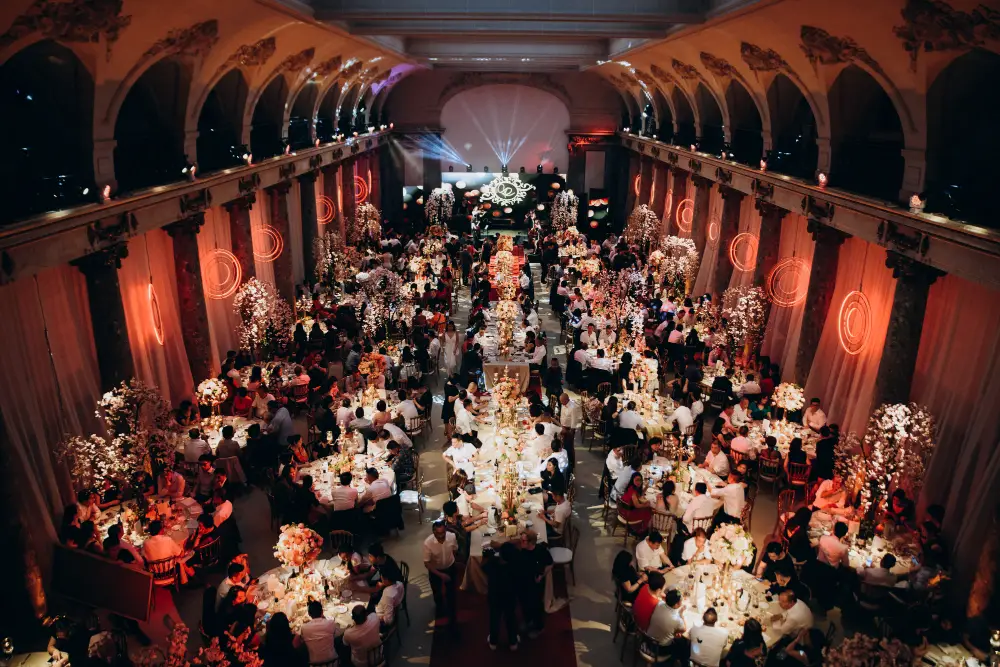
The ballroom glittered with calculated opulence, the kind that whispered wealth rather than shouted it. Crystal chandeliers refracted light across imported marble floors, casting geometric patterns that shifted with each movement of the well-dressed crowd.
I stood near the coat check area, a calculated distance from the main floor, watching Black women in designer gowns drift past like expensive sailboats, navigating waters I was no longer permitted to enter.
My name is Naomi Taylor, and I am fifty-three years old. My dress was beautiful—I had made certain of that—but Kenneth had barely glanced at it when I emerged from our bedroom three hours earlier. He had simply checked his Rolex, muttered something about traffic on Lakeshore Drive, and headed for the car.
Now he was somewhere in that sea of networking conversations, his hand probably resting on someone’s shoulder with practiced familiarity, his laugh pitched at that particular frequency he reserved for people he considered useful to his crumbling empire.
I had learned to read those calibrations over twenty-three years of marriage. Kenneth navigated social hierarchies the way surgeons navigate anatomy—with precision, purpose, and absolutely no room for error.
“You can wait by the coat check,” he had said when we arrived at the Drake Hotel, not turning to look at me. Never suggestions with Kenneth. Instructions delivered with the certainty of someone who had never been meaningfully challenged.
“I need to make some connections tonight. Important people will be here. The kind of people who can save what I’ve built. You understand?”
I understood. I always understood. Understanding had become my primary function somewhere around year seven of our marriage, when I had stopped trying to stand beside him at events like this and started accepting my assigned positions in margins and corners and shadowed alcoves.
The invisible wife. The woman who existed in tax documents and holiday cards and the background of photographs, but rarely in the actual moments that mattered.
I had not always been this woman. There had been a time when I filled rooms with my presence, when professors at Howard University sought my perspectives on urban policy and economic development, when my senior thesis on generational wealth accumulation in Black communities had been recommended for publication.
There had been a time when a different man had looked at me and seen not an accessory to be positioned strategically, but a partner whose mind matched his own in ambition and scope.
But that was thirty years ago, in a version of my life that felt like it had happened to someone else entirely.
I touched the silver locket at my throat without thinking, my fingers finding the small clasp I had opened and closed ten thousand times over thirty years. Inside was a photograph so small and worn that the features had begun to fade. But I could still see the face of the man who had given it to me the summer after graduation.
“So you remember,” he had said, fastening it around my neck with trembling hands. “So you never forget that someone saw you exactly as you are and loved every bit of it.”
I had not taken it off since that day—even when Kenneth gave me the diamond necklace that was supposed to replace it, even when he commented that silver was cheap and unbecoming for a woman of my position.
This locket was the only thing I owned that Kenneth had not purchased, controlled, or approved. It was the only piece of my former self that remained.
Across the ballroom, I could see Kenneth working the room with increasing desperation. His advertising firm was hemorrhaging clients. The mansion in Hyde Park that we could no longer afford to maintain. The Mercedes that was leased, not owned. Everything about Kenneth’s life was performance now—smoke and mirrors designed to conceal collapse.
This gala was his Hail Mary, his last attempt to forge connections with Morrison Industries, the company that represented his best chance at a contract large enough to keep creditors at bay.
The energy in the room shifted suddenly, conversations dropping to murmurs as heads turned toward the main entrance.
A man had entered the ballroom, and even from my position near the coat check, I could feel the gravitational pull of his presence. He was tall, impeccably dressed in a tailored tuxedo, and he moved with the quiet confidence that only comes from authentic power rather than its desperate imitation.
But it was not his appearance that made my breath catch. It was the way he carried himself—the slight tilt of his head when someone approached him, the economical grace of his movements, the quality of attention he gave to each person who spoke to him.
I knew these things because I had studied them thirty years ago. Had memorized every gesture and expression of the only man I had ever loved with my whole heart before fear and pressure and family interference had torn us apart.
“That’s Julian Hartwell,” someone whispered behind me. “The new CEO of Morrison Industries. They say he’s worth over two billion now.”
Julian. The name hit me like physical contact, like hands on my shoulders spinning me backward through three decades to a humid dormitory room at Howard, where we had planned our entire future on notebook paper and dreams.
Julian Hartwell, who had been Julian Blackwood when I knew him, before he dropped his father’s name and built his own legacy from pure will and brilliance.
Julian, who had held me while I cried about the miscarriage that stole our child at twelve weeks. Julian, who had asked me to marry him with a ring he had saved six months to afford.
Julian, whose father had summoned me to his office and explained in clinical detail exactly why a girl from Detroit with a schoolteacher mother and an assembly-line worker father would destroy his son’s chances at the kind of success the Blackwood family expected.
I had left Julian because Charles Blackwood had made it clear that staying would mean watching the man I loved lose his trust fund, his business school acceptance, his entire future. And I had been twenty-two and scared and pregnant with a child I would lose three weeks later, grieving alone because I had already walked away from the only person who would have held me through that pain.
Kenneth had been the safe choice. The practical choice. The choice that made sense to my mother, who wanted me to have security. Kenneth, who had never made my pulse race, but who had also never made me feel like I was gambling my entire existence on something as unreliable as love.
Now, watching Julian scan the ballroom with those same dark eyes that had once looked at me like I contained entire universes, I felt the full weight of what I had traded away.
Julian was moving through the crowd now, and I watched Kenneth position himself strategically in his path, his smile wide and predatory. I could not hear their conversation, but I could read the dynamic. Kenneth leaning in, voice pitched to carry conviction he did not possess. Julian accepting the handshake with polite reserve, his attention clearly elsewhere.
Then Julian’s eyes swept the room once more, and the world stopped turning.
His gaze found mine across fifty feet of crowded ballroom, and I watched every carefully maintained expression on his face crumble into pure shock. His lips parted. His hand went slack in Kenneth’s grip.
For one infinite moment, he was twenty-five again, looking at me across the Howard campus quad with love so intense it made my chest ache to remember it.
Then he was moving—walking directly toward me as if Kenneth had ceased to exist, as if the hundred other people in that ballroom were merely obstacles between him and something he had been searching for across thirty years.
Kenneth’s voice rose behind him, confused and then irritated as his carefully positioned networking opportunity walked away mid-sentence.
But Julian did not pause or turn back. He navigated the crowd with single-minded focus, his eyes never leaving mine.
When he reached me, Julian stopped an arm’s length away—close enough that I could see the fine lines at the corners of his eyes, the silver in his hair, close enough to see that his hands were shaking slightly, just as they had shaken when he fastened this locket around my neck thirty summers ago.
We stared at each other in silence.
“Naomi,” he said finally, my name in his mouth like a prayer he had been saying in secret for three decades. “Oh my God, Naomi.”
I tried to speak and found that my throat had closed around words that were too large to force past the constriction. Instead, I just nodded and felt thirty years of carefully maintained composure start to crack.
Julian lifted his hands as if to reach for me, then seemed to remember where we were and lowered them again, his fingers curling into fists at his sides.
“I’ve been searching for you,” he said, his voice breaking. “For thirty years. I hired investigators. I checked every social media platform. I looked for you at every Howard reunion. I never stopped looking. I never stopped hoping that someday I would walk into a room and you would be there.”
Behind us, I heard Kenneth’s sharp intake of breath—the sound of him finally understanding who I must be in relation to this billionaire CEO who had just ignored him completely.
“I thought you hated me,” I whispered. “When I left. When I wouldn’t answer your calls.”
Julian shook his head, tears gathering in his eyes. “Never. Not for one single day. I understood why you left. My father—I know what he said to you. I found the letter after he died. I know he promised to destroy me if you stayed. I know that you left because you loved me too much to let that happen.”
The truth of it settled over me like a weight I had been carrying without acknowledging its presence.
“I lost the baby,” I said, the words emerging without permission. “Three weeks after I left. I was alone in my apartment and I lost our baby, and I didn’t have anyone to call because I had already cut you out of my life.”
Julian’s face crumpled, and this time he did reach for me—his hands taking mine and holding them as if they were precious things that might break.
“Oh, Naomi. Oh, God. I’m so sorry. I should have fought harder. I should have told my father to go to hell and married you anyway.”
“You were twenty-three,” I interrupted gently. “And your father was Charles Blackwood. He would have done exactly what he threatened.”
“He would have tried,” Julian said fiercely. “But maybe I would have survived it. Maybe we both would have. Maybe we would have built something real together instead of spending thirty years apart.”
He looked down at our joined hands. “I married someone else. Five years after you left. Catherine was appropriate. The kind of woman my father approved of. And I tried to love her the way I loved you. I really did try. But she knew. She always knew that I was still looking for you in every crowded room. We divorced seven years ago.”
I understood that particular brand of compromised marriage more intimately than Julian could possibly know.
“Who is this?” Kenneth demanded, his voice loud enough to cut through the ambient noise. “Naomi, what the hell is going on?”
Julian turned slowly to face my husband, and I watched him assess Kenneth with comprehensive evaluation. “I’m Julian Hartwell. And you must be Naomi’s husband. I apologize for monopolizing her attention. We knew each other a very long time ago.”
Kenneth’s eyes narrowed. “You went to Howard with her. That was thirty years ago. Ancient history.”
“Some things don’t become ancient history just because time passes,” Julian replied quietly.
Then he turned back to me, effectively ending the conversation. “Will you have dinner with me tomorrow night? I have three decades of catching up to do, and I don’t want to wait any longer.”
It was not a request I could reasonably accept. I was married. I was standing in a ballroom full of people who knew both Kenneth and me.
The old Naomi—the one who had learned to make herself small and quiet—would have smiled politely and declined.
But I was so tired. Tired of making myself small. Tired of managing Kenneth’s ego. Tired of standing in corners while life happened to other people.
“Yes,” I said, my voice steady and clear. “I would love to have dinner with you tomorrow night.”
The words hung in the air, impossible to take back.
Julian’s face transformed—joy and relief chasing across his features. Kenneth made a sound that might have been protest or rage, but I did not turn to look at him.
I kept my eyes on Julian, on the man who had spent thirty years searching for me, and felt something shift fundamentally in my chest.
“I’ll send a car for you,” Julian said. “Seven o’clock.”
“Seven is perfect.”
He lifted my hand to his lips and pressed a kiss to my knuckles that I felt all the way to my bones. “Tomorrow. Until tomorrow, Naomi.”
He released my hands and walked away. I watched him stop briefly to speak with executives, then leave early because staying in the same room with me when we could not really talk was more than he could endure.
Kenneth grabbed my arm roughly, his fingers digging into my bicep. “What the hell was that? Do you have any idea what you just did? Julian Hartwell is the most important connection I could possibly make, and you just—why didn’t you tell me you had some college romance with him?”
I looked at my husband’s furious face and felt absolutely nothing. No fear. No instinct to apologize. No desire to explain.
Twenty-three years of conditioning had evaporated in the fifteen minutes since Julian walked across that ballroom.
“You never asked about my past,” I said calmly, pulling my arm from his grip. “In twenty-three years of marriage, you never once asked me about who I was before you. You never asked about my time at Howard, or my family, or what I wanted from life. You told me what to wear and where to stand and how to be invisible. But you never actually wanted to know me, Kenneth.”
“So no, I never told you about Julian because you never cared enough to ask.”
Kenneth’s face went from red to purple. “You’re having dinner with him. You’re actually going to have dinner with him tomorrow night. Do you know how that’s going to look?”
I smiled, and it felt like the first genuine expression my face had made in years. “I don’t care what people will say, Kenneth. For the first time in twenty-three years, I genuinely do not care what anyone thinks except me.”
I walked away from him, moving through the ballroom toward the exit. I did not turn around. I simply walked to the coat check, retrieved my wrap, and stepped out into the cool Chicago night.
The valet brought a taxi, and I gave the driver my mother’s address on the South Side—not our Hyde Park mansion, but the small house where I had not visited in months because Kenneth found my family embarrassing.
Mama was still awake, sitting in her front room with her Bible and a cup of tea. She looked up when I knocked, and her face transformed from surprise to concern.
“Naomi. Baby, what’s wrong?”
I meant to explain calmly. Instead, I collapsed into her arms and cried for the first time in more than a decade—great heaving sobs that came from somewhere deep in my chest.
Mama held me without asking questions, just stroking my hair and patting my back in pure comfort.
“Tell me,” she said finally. “Tell me everything.”
So I did. I told her about seeing Julian at the gala, about the thirty years we had spent apart, about his father’s threats and my decision to leave and the baby we had lost. I told her about Kenneth’s reaction, about walking away from him, about agreeing to have dinner with a man who was not my husband but who had never stopped searching for me.
Mama listened to all of it without interruption. When I finished, she took both of my hands in hers.
“I never liked Kenneth,” she said bluntly. “Never trusted him. But you were so hurt after losing that baby. After leaving Julian. And Kenneth seemed safe. I wanted you taken care of, baby. So I kept my mouth shut when you married him, even though everything in me said it was wrong. That’s on me.”
Her eyes went fierce. “But if Julian Hartwell—the man you actually loved, the man who actually saw you—has come back into your life, that’s not coincidence. That’s providence. I think you should do whatever makes you remember who you are. I think you should choose joy over security, because security without joy is just a different kind of death.”
I stayed at Mama’s house that night, sleeping in my old bedroom. My phone rang seventeen times—Kenneth calling, texting, leaving increasingly frantic voicemails. I did not answer.
In the morning, Mama made breakfast and told me stories about my father. How he had wanted to go to college but could not afford it. How he had made her promise before he died that she would make sure I got my education and never settled for less than I deserved.
“You settled for Kenneth,” Mama said quietly. “I know why you did it. But it’s not too late to choose differently.”
I went home around noon. Kenneth was in his study on the phone. When he saw me, he ended the call abruptly.
“Where the hell have you been? I’ve been calling you all night.”
“I stayed at my mother’s house,” I said calmly. “I needed space to think.”
“To think about what? About having dinner with your ex-boyfriend?”
“I’m having dinner with Julian tonight. You can accept that or not. But either way, it’s happening.”
Kenneth’s face cycled through several expressions before settling on something calculating. “What if I told you that having dinner with him would ruin me? That I’m in negotiations with Morrison Industries for a contract that could save everything—”
“I would say that your business problems are not my responsibility to solve by making myself smaller,” I interrupted. “I would say that I have spent twenty-three years sacrificing what I wanted for what you needed, and I’m done.”
The words hung between us, irreversible and clarifying.
“If you have dinner with him,” Kenneth said slowly, “I will consider it grounds for divorce.”
I smiled. “Then I guess you should call your lawyer.”
I spent the rest of the day going through closets, pulling out things that were actually mine. My degree from Howard. Photographs from college. Letters from Julian that I had saved despite knowing I should have destroyed them.
At six o’clock, I dressed in a deep burgundy dress I had bought years ago and never worn because Kenneth said it was too bold. I fastened Julian’s locket around my throat.
The car arrived at precisely seven. Kenneth was nowhere to be seen. I did not leave him a note. I simply got into the car and let the driver take me wherever Julian had planned.
We ended up at a small restaurant in Bronzeville. Julian was waiting at a private table in the back. He stood when I entered with wonder and disbelief and joy so intense it hurt to witness.
“You came,” he said, as if he had not quite believed I would.
“I told you I would.”
We sat down across from each other, and for a long moment we just looked. Thirty years collapsed into the space between us.
“Tell me everything,” he said finally. “Tell me about the last thirty years.”
So I told him about the miscarriage and the grief that had nearly destroyed me. About Kenneth’s proposal, which had seemed practical and safe. About the slow erosion of myself over two decades of marriage to a man who valued status over substance. About standing in corners at parties while my husband networked with people who did not even know my name.
Julian listened without interruption, his face growing progressively more furious on my behalf. When I finished, he reached across the table and took my hand.
“I’m going to say something, and I need you to hear it without feeling pressured. Leave him tonight. Come stay at my place—separate quarters, no expectations. Or I’ll get you a hotel suite, an apartment, whatever you need to feel safe while you figure out what comes next. But Naomi, you don’t have to go back to that house. You don’t have to spend one more night with a man who treats you like furniture.”
The offer was tempting in a way that terrified me. Walking away meant admitting I had wasted decades. But it also meant freedom.
“I don’t have money,” I said quietly. “Everything is in Kenneth’s name. He gives me a monthly allowance. I haven’t worked in twenty years.”
Julian’s jaw tightened. “That’s financial abuse. You know that, right? I can’t take money from you. That would just be trading one form of dependence for another.”
“It would be a loan if that makes you more comfortable. Or a job. I need someone I can trust to help with the foundation I’m starting. Urban economic development in Black communities. Sound familiar?”
I stared at him. “I still have your senior thesis, Naomi. I’ve read it probably fifty times over the years. Your insights are just as relevant now as they were thirty years ago.”
We talked for hours. About his business, about his marriage to Catherine and his divorce, about the ways he had tried to make it work with a woman who was not me and failed. About my mother who was fierce and living in the same South Side house. About his father’s death and the letter Charles Blackwood had left detailing every manipulation he had used to drive us apart.
The restaurant was closing when we finally left. Julian walked me to the car, and at the door he hesitated.
“Can I see you again tomorrow?”
“Yes. Tomorrow.”
He lifted my hand to his lips again, that old-fashioned gesture that made me feel cherished. Then he opened the car door and helped me inside.
The house was dark when I returned. Kenneth was sitting on the edge of our bed, still dressed.
“You stayed out until midnight,” he said flatly. “With him.”
“We were talking.”
“You expect me to believe that you spent five hours just talking?”
“I don’t expect you to believe anything, Kenneth. I’m simply telling you the truth.”
“The truth is that you’re destroying my last chance to save this business,” Kenneth said, voice rising. “You think a billionaire is going to want a fifty-three-year-old woman with no money and no prospects?”
The casual cruelty should have hurt. But I had spent an evening being treated like I mattered, and I could not go back to accepting Kenneth’s assessment of my worth.
“I think Julian sees me as a person rather than as a liability. And I think that’s more than you’ve ever done.”
I slept in the guest room that night, locking the door. In the morning, Kenneth had left early. There was a note on the kitchen counter: We need to talk about this situation before it gets out of hand. I’ll be home at 6.
I called a locksmith and had the locks changed on the guest room. I called a lawyer my mother recommended. I explained my situation, and the lawyer explained my rights. In Illinois, I was entitled to half of everything accumulated during the marriage.
“But you need to document everything,” the lawyer said. “Every instance of financial control. It will matter when we file.”
I spent the afternoon writing—documenting twenty-three years of microaggressions and casual cruelties.
Julian called at three. “How are you?”
“I’m documenting my marriage for divorce proceedings. So better than I’ve been in twenty-three years.”
He laughed. “Want company? I can bring dinner and moral support.”
“Kenneth will be home at six. He left a note saying we need to talk.”
“Do you want me there for that conversation?”
The idea was tempting, but this was my marriage to end, my autonomy to reclaim. “Not tonight. But tomorrow. Can I take you up on that job offer and maybe the apartment?”
“Absolutely. I’ll have everything ready by tomorrow afternoon.”
When Kenneth arrived home at six, I was waiting in the living room with my documentation and my lawyer on speed dial.
“I want a divorce,” I said before he could speak. “I’ve already consulted with an attorney. I’m entitled to half of everything, and I’m taking it.”
Kenneth’s face went through several colors. “You can’t be serious. You’re throwing away twenty-three years of marriage for some fantasy reunion—”
“I’m not throwing anything away. I’m reclaiming the twenty-three years I wasted being invisible.”
Kenneth tried several tactics—pleading, threatening, negotiating. But I was done. I was done making myself smaller to make room for his ego.
I left that night, taking only what I could fit in two suitcases. Julian had a car waiting to take me to the apartment he had arranged in the South Loop. It was comfortable and clean, and most importantly, mine.
I stood in the center of the empty living room and felt space expand around me—felt the possibility of choosing how to fill it without needing to consider anyone else’s preferences.
Over the next three months, I rebuilt my life piece by piece. The divorce proceedings were ugly. Kenneth fought every asset division. But the lawyer was tenacious, and we settled eventually. I walked away with enough money to feel secure for the first time—on my own terms.
The job with Julian’s foundation was perfect—urban economic development in Black communities, exactly the work I had wanted to do when I graduated from Howard. I worked with Julian, but not for him. Partnership rather than hierarchy.
We did not rush into romance. We had spent three decades apart and we needed time to learn who we had become. Julian courted me properly—with dinners and conversations and respect for my need to establish independence before tangling my life with anyone else’s.
Six months after I left Kenneth, Julian and I went back to Howard for our reunion. We walked across the same quad where we had fallen in love—older now, but somehow more ourselves.
A year after leaving Kenneth, Julian asked me to marry him for the second time. We were in his office at the foundation, working late on a proposal.
He stopped mid-sentence and said, “Marry me—not because you need me or because I can provide security. Marry me because we’re better together than apart. Because I want to spend whatever time we have left building something that matters with the only person I’ve ever truly loved.”
I said yes without hesitation. Not because I needed him to complete me, but because I had learned finally that love and independence were not opposites. That I could choose partnership from a position of strength.
We married in a small ceremony at my mother’s church. Mama cried through the entire service—tears of relief that her daughter had finally chosen joy over security.
We danced to Etta James and Julian whispered, “I’ve been waiting thirty years for this dance.”
“It was worth the wait,” I replied. And I meant it.
Kenneth attended our wedding uninvited, showed up drunk and bitter, tried to make a scene. Security removed him before he could do more than embarrass himself.
We spent our honeymoon traveling to places we had dreamed of visiting as college students without money—Paris, Barcelona, the Amalfi coast. We walked through museums holding hands like teenagers, laughing at how strange it felt to finally be living a life we had only imagined.
My mother died peacefully two years after Julian and I remarried. Her last words to me were, “You chose right this time, baby. Your daddy would be proud.”
Now, five years after that gala where Julian walked across a ballroom to find me, I am fifty-eight years old and happier than I have ever been. I wake up every morning next to a man who sees me, who values my mind, who treats me as an equal partner. I run programs that matter. I have friendships built on genuine connection. I have my own money, my own space, my own autonomous existence.
Sometimes people ask if I regret the twenty-three years I spent with Kenneth. And the truth is complicated. Yes, I regret the pain. I regret making myself small. But I also understand that the woman I am now was forged in part by surviving that marriage. I am stronger for having endured it, more certain of what I will and will not accept.
Julian and I talk sometimes about the road not taken—about what would have happened if I had been brave enough to stay with him thirty years ago. Would we have made it? Would our love have survived poverty and struggle?
We will never know. All we have is this. The second chance we were given. And that is enough. More than enough. It is everything.
This is my life now. Not perfect, but mine. Chosen deliberately rather than accepted passively. Built on partnership rather than control. Grounded in mutual respect rather than systematic diminishment.
And if I could go back and tell my twenty-two-year-old self anything, it would be this: You deserve to be seen. You deserve to be valued. You deserve love that makes you more yourself rather than less.
I chose joy. Finally, after thirty years of choosing security and safety and fear, I chose joy. And I would make that choice a thousand times over.
This is how I found my way back to myself and to the man who never stopped searching for me. I hope that if you are standing in a corner at some party—invisible and diminished—you will remember that it is never too late to choose differently. It is never too late to walk away from someone who makes you small and toward someone who sees you whole.
You deserve to be chosen. You deserve to be seen. And when you find it—or when it finds you across thirty years and a crowded ballroom—I hope you will be brave enough to reach for it with both hands and never let go.

Lila Hart is a dedicated Digital Archivist and Research Specialist with a keen eye for preserving and curating meaningful content. At TheArchivists, she specializes in organizing and managing digital archives, ensuring that valuable stories and historical moments are accessible for generations to come.
Lila earned her degree in History and Archival Studies from the University of Edinburgh, where she cultivated her passion for documenting the past and preserving cultural heritage. Her expertise lies in combining traditional archival techniques with modern digital tools, allowing her to create comprehensive and engaging collections that resonate with audiences worldwide.
At TheArchivists, Lila is known for her meticulous attention to detail and her ability to uncover hidden gems within extensive archives. Her work is praised for its depth, authenticity, and contribution to the preservation of knowledge in the digital age.
Driven by a commitment to preserving stories that matter, Lila is passionate about exploring the intersection of history and technology. Her goal is to ensure that every piece of content she handles reflects the richness of human experiences and remains a source of inspiration for years to come.