I wasn’t trying to eavesdrop. I was simply walking past the kitchen on my way to refill my tea, moving carefully in my slippers across the hardwood floor of the house I’d helped buy but no longer felt was mine. The chipped mug in my hand—one they’d relegated to me after I broke a glass from their wedding set—held the last cold sip of chamomile from an hour ago.
Paige stood near the island, phone pressed to her ear, pacing barefoot across the tile in that agitated way she had, one hand slicing through the air as she complained to whoever was on the other end. She never noticed she did that, the hand gestures that grew more emphatic as her grievances multiplied.
“It’s like her room stinks,” she said, her voice carrying that particular tone of disgust mixed with exasperation. “You know that nursing home smell? Heavy, like old fabric and something medicinal. I can’t even describe it properly, but it’s there.”
She laughed then—a short, clipped sound I didn’t recognize as belonging to my daughter.
“It’s seeping into the hallway now. I’ve sprayed the whole downstairs twice this week, but it’s like it clings to everything. The curtains, the carpets, everything.”
I stopped walking. The mug wobbled in my hand, tea threatening to spill. I steadied it with my other palm, both hands suddenly shaking in a way that had nothing to do with my age or the stroke I’d had two years ago.
I stood just outside the doorway, not hiding exactly, just frozen. Paige didn’t look over, didn’t lower her voice, didn’t seem to register my presence even though I was clearly visible if she’d bothered to glance in my direction.
My heart didn’t race with the revelation. It slowed, each beat heavy and distinct, like something inside me was shutting down one system at a time to conserve energy for survival.
I backed away quietly, the soles of my slippers making no sound, and returned to the small room they called the guest room—the room I’d been living in for the past three years since my husband James died and I sold my condo to help with their down payment. I closed the door softly behind me, not to hide from what I’d heard but to protect something that had been peeled open too quickly, exposed to air before it was ready.
The tea had gone completely cold. I set the mug on the dresser, next to the bottle of vitamins I took each morning and the framed photograph of Paige at seven years old, grinning with her two front teeth missing, her small arms wrapped around my waist.
I picked up the photo and studied that little face—the one that used to beg me to sing one more lullaby before bed, the one who cried when I left for my night shifts at Memorial Hospital, the one who would run to me in the mornings with paint-stained fingers and whispered secrets about the fairies she was certain lived in our garden.
Now that same person walked past me in the hallway without touching my arm, thanked me for folding her laundry like I was a helpful neighbor rather than her mother, discussed my future in folders I wasn’t meant to see.
My name is Loretta Dean. I’m seventy-seven years old, and I spent forty-two years as a nurse at Memorial Hospital, bringing babies into the world and holding the hands of those leaving it. People trusted me with their lives, their last words, their first breaths. I helped young mothers through difficult deliveries and sat with families during their darkest hours, offering whatever comfort I could in those liminal spaces between life and death.
Now I needed permission to adjust the thermostat in the house I’d helped purchase.
Three years ago, I had the stroke—nothing catastrophic, just enough to make walking unsteady for a few weeks and mornings uncertain. Paige had called immediately, her voice tight with a concern that felt more like panic about logistics than genuine worry about my wellbeing.
“You shouldn’t be alone, Mom,” she’d said. “You’ll stay with us, just until things settle down and we see how you recover.”
I remember thinking how kind that sounded, how generous. I remember a time when I never needed anyone’s permission to exist in my own space, to make my own decisions, to be respected simply because I’d earned that respect through decades of competent living.
Now I asked before opening windows or making tea past nine in the evening or taking a bath when someone else might need the bathroom.
I sat in the armchair by the window, still holding the photograph, and looked out at the garden. The roses I’d planted that first spring were starting to fade, their petals dried at the edges, brittle from too much sun and not enough water. No one had maintained them after Paige moved my gardening tools to the garage and suggested I “take it easy” rather than exerting myself with yard work.
Still there. Still trying to bloom. Just like me.
For three years, I’d been shrinking. Getting smaller and quieter and less demanding, folding myself into corners, apologizing for taking up space, for breathing too loudly, for existing in ways that required acknowledgment.
That night, I couldn’t sleep. I lay in the narrow bed—not my bed, just a bed I was allowed to use—and stared at the ceiling, thinking about the pink linen dress hanging in the back of my closet. I’d bought it five years ago as a retirement gift to myself: soft collar, delicate pleats, mother-of-pearl buttons down the front. I’d imagined wearing it to Sunday brunches with friends, to afternoon concerts, to all the leisurely activities I’d told myself I’d finally have time for after four decades of night shifts.
I’d never worn it once. The brunches never happened. The friends either passed away or moved to be closer to their own children. And I—I’d moved into Paige’s guest room with a suitcase and a promise that it was temporary, just until I got back on my feet.
I’d sold my condo to help with their down payment. Small place, south-facing windows, quiet street—the kind of space I’d imagined aging into with grace and independence. The money had made the difference between Paige and Mason getting this house or settling for something smaller, farther from Mason’s office, in a less desirable school district.
At first, it felt like we were building something together. A shared home where three generations could support each other. I baked muffins for the children’s breakfast, watched Tyler and Zoe when Paige had important meetings, paid the utility bills without being asked because I wanted to contribute.
Then, gradually, my boxes were moved to the garage. My favorite reading chair was removed from the living room because it “didn’t match the aesthetic.” My name disappeared from the WiFi password Post-it note stuck to the refrigerator.
I became background noise. The folded towels that appeared clean in the linen closet. The hot meals that materialized on difficult evenings. The reliable childcare that required no appointment or payment.
“Mom, can you get the kids today?” Paige would say, already halfway out the door, phone in hand, not waiting for my answer because my answer was always yes. “Mason has that big presentation and I’ve got the budget review meeting.”
Tyler was fifteen now, all awkward height and shy smiles. He used to crawl into my lap for stories, his small hand patting my cheek when I did different voices for different characters. Now he mumbled “Hey, Grandma” without looking up from his phone, earbuds permanently attached to his ears like modern-day security blankets.
Zoe was twelve, hovering in that delicate space between childhood and adolescence. Last year she’d still asked me to braid her hair before school, her small body leaning against mine as I worked the strands into plaits. Now she closed her bedroom door when I walked past, and I’d overheard her telling a friend on the phone, “I can’t have anyone over right now. My grandma’s staying with us. It’s complicated.”
It wasn’t complicated when I’d paid for her summer camp. It wasn’t complicated when I’d stayed up all night helping her build a volcano for the science fair, my arthritic hands carefully painting papier-mâché while she slept.
The next morning, I found myself pulling out the pink linen dress. I held it up to the window, watching how the fabric caught the early light, still pristine after years of waiting. On impulse, I put it on.
It fit differently than it would have five years ago—my body had changed, shrinking in some places, softening in others. But it still looked lovely. I’d chosen well.
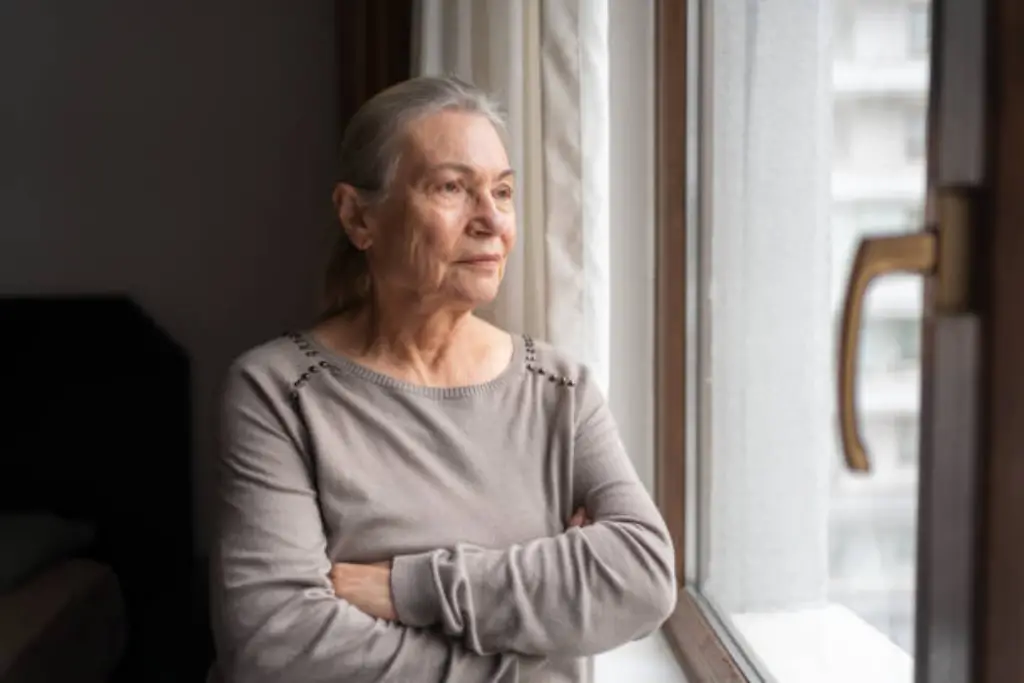
I stood before the small mirror on the back of the door, studying my reflection: gray hair cut short for practicality, lines around my eyes and mouth that mapped seven decades of smiles and sorrows, hands spotted with age but still steady and strong.
I looked like what I was—an old woman in a pretty dress. But something shifted inside me as I stood there, some spark that had been dimming flickered back to life with unexpected intensity.
I remembered who I was. Not just Paige’s mother or the children’s grandmother or the convenient unpaid help. I was Loretta Dean. I had delivered hundreds of babies, comforted countless dying patients, loved a good man fiercely for thirty years before cancer took him. I had raised a daughter alone while working night shifts, had built a home, had saved enough to retire with dignity.
And somehow, I’d let them take that dignity from me piece by piece until I barely recognized the woman I’d become.
I sat on the edge of the bed, still wearing the dress, and reached for the small notebook I kept in my nightstand. I began making a list—not a diary entry, but an inventory of what I still owned, what I still controlled, what nobody could take from me unless I allowed it.
At the top: my name. My memories. My choices. My legal rights.
That last one made me pause. I opened the drawer where I kept important documents and pulled out the folder marked “Property Title—Whitmore Drive.” I hadn’t looked at it in over a year, but it was still there, every page bearing my name.
This house—the one Paige thought of as hers—was legally mine. My name on the deed, my savings in the foundation, my credit history that had made the mortgage possible when Paige and Mason’s young careers couldn’t qualify them alone.
I’d let Paige believe it was her house because it seemed simpler, kinder. I’d wanted her to feel secure, settled, successful. But in trying to give her everything, I’d allowed her to believe I had nothing—no power, no options, no worth beyond what I could provide.
I carefully returned the title to its folder and closed the drawer.
Not yet. But soon.
First, I needed information. I needed to understand exactly what my options were. And I needed to do it carefully, quietly, before anyone realized I was planning an escape.
The next morning, I dressed in slacks and a cardigan, applied a touch of lipstick and mascara for the first time in months, and called a taxi. When Paige found me in the foyer with my purse, surprise registered on her face.
“Where are you going?” she asked, already mentally rearranging her day to accommodate whatever inconvenience my outing might cause.
“I have an appointment,” I said simply.
“With who? Do you need a ride?”
“No, thank you. I’ve arranged transportation.”
The confusion on her face might have been amusing if it wasn’t so sad—the idea that I might have a life, needs, or plans that existed independently of her knowledge or approval was clearly foreign to her.
The taxi arrived and I left without further explanation, enjoying that small taste of autonomy.
My first stop was Raymond Teague’s law office. He’d been handling my legal matters for thirty years—drafted my will, managed James’s estate, helped me through various life transitions. His office hadn’t changed: same leather chairs, same oak desk, same diplomas on wood-paneled walls.
Raymond himself had aged gracefully into his seventies, his hair completely silver now, but his eyes still sharp behind wire-rimmed glasses.
“Loretta Dean,” he said, rising to shake my hand. “It’s been too long.”
“I need to understand my legal position,” I said once we were seated. “Regarding the house on Whitmore Drive.”
He nodded slowly, opening a drawer to extract a thick file. “I wondered when you’d come asking about that.”
Over the next hour, Raymond explained what I already suspected: the house was entirely mine. Paige had never completed the deed transfer we’d vaguely discussed years ago. As the sole owner, I had full legal authority to sell it, transfer it, or continue living in it.
“There’s something else you should know,” he said, sliding an appraisal across his desk. “I took the liberty of having the property assessed. Given current market conditions, it’s worth considerably more than you might realize.”
I looked at the number and felt my breath catch. Enough to buy my freedom several times over.
“What are my options?” I asked.
“Several,” he replied. “You could sell outright, create a trust with specific conditions, establish a life estate—it depends on what outcome you’re hoping for.”
I thought about Paige’s folder in her office, the one I’d discovered a week ago when looking for stamps in her desk drawer. The folder labeled “Estate Planning” with my life insurance information, annotated will, brochures for assisted living facilities, notes about “Medicaid conversion” and “power of attorney.”
“I want to protect myself,” I said carefully. “And I want to live somewhere I’m actually wanted, not just tolerated.”
Raymond removed his glasses, polishing them thoughtfully. “Then let’s discuss your options in detail.”
By the time I left his office, I had a plan. A real, concrete, actionable plan.
My second stop was less expected. Dr. Elaine Foster had been my colleague at Memorial for nearly thirty years. We’d started as young nurses together, worked countless night shifts side by side, seen each other through marriages and childbirth and James’s death. She’d returned to school for her doctorate in her fifties, specializing in geriatric care, while I’d stayed on the hospital floor until retirement.
When she showed up at my door—Paige’s door, the house I owned—two days later, I was genuinely surprised.
“Loretta Dean,” she said, wrapping me in a hug that smelled of jasmine and antiseptic in the most comforting way. “You’re a difficult woman to track down these days.”
“How did you find me?”
“Your old neighbor, Mrs. Patel, gave me the address when I stopped by your condo building.” She glanced around the pristine foyer with its carefully curated decor. “Nice place.”
“It’s Paige’s,” I said automatically, then corrected myself. “Well, technically it’s mine. But it’s complicated.”
Elaine raised an eyebrow. “Sounds like we need tea.”
Over chamomile and the lemon cookies I’d baked that morning—which the family wouldn’t eat because they were “cutting carbs”—I told Elaine everything. The overheard phone conversation, the folders, the way I’d become invisible in my own home.
She listened with the same focused attention she’d always brought to patient care, not interrupting, letting me find my own words for feelings I’d been suppressing for years.
When I finished, she set down her cup and met my eyes directly. “I’ve been wanting to tell you about a place I found. It’s called Horizon Gardens.”
She pulled out her phone, scrolling through photos of charming cottage-style units arranged around a central courtyard, gardens bursting with vegetables and flowers, a sunny community room where residents gathered around tables.
“It’s a co-op for seniors,” she explained. “Not like those depressing institutions they call ‘assisted living.’ Everyone has their own space—real apartments, some even small houses—but there are shared gardens, activities, community. It’s for people who want independence but also connection.”
She showed me more photos: a woman tending tomatoes in a raised bed, two men playing chess on a patio, someone painting at an easel in the art room.
“I joined their board last year,” Elaine continued. “We help match people with units when they become available. It’s not charity—everyone pays their own way—but we keep costs reasonable through the cooperative structure.”
I studied the images, feeling a pull of longing so intense it was almost physical.
“A one-bedroom unit just opened up,” she said quietly. “Private patio. South-facing windows. Just like your old condo.”
She gave me a meaningful look. “It has your name written all over it, Loretta.”
“I don’t know,” I started, and she held up a hand.
“You don’t have to decide today. But I want you to see it. To know there’s an option if you want it. You don’t have to disappear into someone else’s life. You don’t have to shrink until there’s nothing left.”
Before I could respond, we heard Paige’s key in the lock. She appeared in the kitchen doorway, surprise and something else—discomfort?—crossing her face when she saw Elaine.
“Oh. Hello.”
The polite but cool tone, the slight stiffening of her posture. My past life—my separate identity—invading her carefully controlled domain unsettled her.
After Elaine left, pressing her card into my hand and making me promise to call, Paige busied herself with unnecessary tasks in the kitchen.
“I didn’t know you had friends visiting,” she said, not quite meeting my eyes.
“It was a surprise.”
“And those?” She gestured to the small pot of basil and three perfect tomatoes Elaine had brought from her garden.
“Just a gift.”
Paige frowned slightly. “Where will you put them? The kitchen windowsill is full.”
Full with her herbs, the ones she never used, slowly dying from neglect.
“Don’t worry,” I said, picking up the plants. “I’ll find a place for them.”
That night, I added Elaine’s card to my growing collection of documents under the bed, next to Raymond’s business card and my copy of the property title. Pieces of an escape plan, slowly taking shape.
The next week passed in a blur of quiet preparation. More visits to Raymond’s office, supposedly for “physical therapy” that Paige never questioned. An application to Horizon Gardens, filled out in my careful handwriting. A visit to the co-op itself, where I met Margot Washington at the front desk and toured Unit 8—a small but perfect space with that south-facing window I’d longed for.
“If you’re serious,” Margot had said quietly, “I can hold it for twenty-four hours.”
“Yes,” I’d said before I could doubt myself. “I’d like that very much.”
I paid the deposit from my savings account—the one Paige didn’t know about, the one I’d maintained separately all these years as a hedge against disaster. It wasn’t a large sum, but it was enough. Combined with what Raymond said I could get for the house, it would be more than enough.
Meanwhile, I started sorting my belongings. Not packing—not yet—just organizing. Box by box, I separated what mattered from what didn’t. Photographs. James’s mother’s silver tea service. My mother’s quilt. Books I treasured. The kinds of things that made a place a home rather than just a room.
I was careful. Quiet. I moved these boxes under my bed, into the back of my closet, places no one looked because no one really paid attention to my space anymore.
And then came the opportunity I’d been waiting for.
“We’re going to Asheville this weekend,” Paige announced over dinner. “There’s a conference, and Mason has a client meeting in Charlotte on the way back. The kids have a soccer tournament.”
She didn’t ask if I wanted to come. Didn’t even seem to consider it.
“You’ll be okay here alone?” she asked, as an afterthought.
“I’ll be fine,” I assured her.
I was better than fine. I was ready.
They left early Friday morning in a chaos of bags and shouted instructions and last-minute searches for soccer cleats and phone chargers. The door slammed behind them and silence filled the house like a presence, like a held breath finally released.
I waited thirty minutes, drinking tea, making certain they weren’t coming back for something forgotten.
Then I made my calls.
By ten o’clock, Elaine had arrived with Margot and Harold from Horizon Gardens. They came in an unmarked van, moving with quiet efficiency, asking where things should go, handling my possessions with care.
“Are you sure about the timing?” Elaine asked gently. “Wouldn’t it be better to talk to them first?”
“I’ve already said everything that needed saying,” I replied. “The rest is just details.”
It took three hours to load everything I was taking: seventeen boxes, two suitcases, the tomato plants I’d been secretly maintaining behind the garden shed. Not everything—just what mattered. Just what was truly mine.
I left the house neat. Wiped down counters, straightened cushions, closed cabinet doors. I knew Paige hated mess, and I wasn’t trying to punish her. I was simply leaving.
On the kitchen counter, I placed a folded note, handwritten on cream stationery:
The house has been placed in a trust. You have six months to decide whether to purchase it at a fair price or find other living arrangements. Raymond Teague has all the details. I’ve moved to a place where I’m welcome. Please don’t contact me until you’re ready to treat me with the respect I deserve.
— Mom
I didn’t leave my new address or phone number. Raymond had those, and he would share them when—if—Paige approached me with something other than management strategies and patronizing concern.
Then I walked out the front door, locked it behind me with the key that was rightfully mine, and got into Margot’s car.
I didn’t look back. Not even once.
By evening, I was settled into Unit 8 at Horizon Gardens, my reading chair by the south-facing window, James’s bookshelf against the wall, my mother’s quilt spread across the bed.
Margot and Harold had helped arrange everything. Elaine had stocked my kitchen with essentials. The tomatoes sat on my private patio, already looking healthier in their new location.
I made myself a cup of tea—my own tea, in my own kitchen, in my own home—and sat in my chair watching the sun set through my window.
For the first time in three years, I wasn’t waiting for permission to exist.
I was simply existing. And it felt like breathing after nearly drowning.
The phone started ringing Sunday evening. First Paige’s number, then Mason’s, then even the children’s phones flashing across my screen. I let them all go to voicemail, not out of cruelty but out of necessity. I needed this boundary. Needed them to understand that access to me was no longer automatic or on their terms.
The messages varied: shock, anger, pleading, accusation.
“How could you do this to us?”
“This is completely irresponsible at your age.”
“Please call us back, Mom. We’re worried.”
“You’ve put us in an impossible position.”
By Monday morning, the tone had shifted slightly—less accusatory, more concerned.
“Just let us know you’re okay.”
“The kids are upset.”
That one tugged at my heart, but I held firm. Tyler and Zoe would be fine. Better than fine, eventually.
I spent my first week at Horizon Gardens settling in, meeting neighbors, learning the rhythms of the community. Harold showed me the garden committee’s plots. Georgia Wilson invited me to join the book club. Beverly Chen taught me basic tai chi moves in the courtyard each morning.
I was Loretta again—not someone’s mother or grandmother or burden, just Loretta. A person with interests and skills and something to contribute.
Then came the text from Tyler, from a number I didn’t recognize:
Grandma, it’s Tyler. Mom doesn’t know I’m texting. Where are you? Are you okay?
My heart squeezed. I typed back carefully:
I’m fine, sweetheart. I’ve moved to my own place. I’ll explain everything when things settle down.
Mom is freaking out. Dad keeps calling lawyers.
I’m sorry for the disruption. This isn’t about punishing anyone. It’s about me needing to be somewhere I’m respected.
A long pause, then:
Can I see you?
Yes, but let’s give it a week or two. I promise I’ll contact you soon.
Okay. I miss you.
I miss you too, sweetheart. More than you know.
The knock came ten days after I’d moved out. Three firm raps that carried determination and barely controlled anger.
I’d been expecting it. I’d rehearsed what I would say, how I would hold my ground without cruelty.
Still, my hands shook slightly as I opened the door.
Paige stood on my small porch, arms crossed, her face set in hard lines. Behind her, Mason waited by their car, a reluctant participant.
“May I come in?” she asked, formal and cold.
I stepped aside. “Of course.”
She entered, her eyes sweeping my new home with quick, assessing glances—looking, I suspected, for evidence of inadequacy. Proof that I couldn’t possibly manage on my own.
Instead, she saw fresh flowers on the table, my paintings arranged on the walls, books organized on shelves, the space small but clearly cared for, clearly mine.
“So this is where you disappeared to,” she said, still standing, refusing the comfort of a seat.
“This is where I moved,” I corrected gently. “I didn’t disappear. I left a note.”
What followed was difficult—accusations and counter-accusations, hurt feelings on both sides, years of resentment spilling out in that small living room. She called me irresponsible. I reminded her of the folders I’d found, the plans made without my knowledge or consent.
“I needed my own life,” I said finally. “Not the one you were planning for me.”
Eventually, exhausted, she sat. We talked for two hours—really talked, maybe for the first time in years.
“I didn’t see you,” she admitted finally, her anger giving way to something more vulnerable. “I was so busy managing everything that I stopped seeing the person in front of me.”
“And I should have spoken up sooner,” I acknowledged. “Instead of letting resentment build.”
It wasn’t a perfect reconciliation. Some hurts were too deep for one conversation to heal. But it was a beginning.
She left with a tentative promise to bring the children for a visit, and an agreement to work with Raymond on purchasing the house through the trust.
Six months passed. Paige and Mason bought the house at a fair price. Tyler and Zoe became regular visitors, arriving with homework questions and requests for cookies, slowly rebuilding relationships that had frayed.
On Thanksgiving, they came as my guests—not the other way around. I hosted dinner in the community room at Horizon Gardens, introducing my family to my new friends, showing them the life I’d built.
Paige cornered me in the kitchen while I was checking the turkey.
“I’m proud of you, Mom,” she said quietly. “For standing up for yourself. For not just accepting what we’d decided was best.”
I hugged her then, really hugged her, feeling her relax into my embrace the way she used to as a child.
“I’m proud of you too,” I said. “For being willing to see me differently. To let me be myself.”
That evening, I wore the pink linen dress. Harold asked me to dance when the music started playing. Tyler brought me a plate of dessert without being asked. Zoe showed me pictures on her phone of the scarf she’d been knitting—using the patterns I’d taught her during her visits.
Standing in that room filled with people who valued me, wearing a dress that finally had its moment, I felt something I hadn’t felt in years: completely, authentically present in my own life.
I was seventy-seven years old. I’d survived loss and illness, had been diminished and dismissed, had nearly lost myself in someone else’s story.
But I’d found my way back. Not to who I used to be—that woman was gone, changed by time and experience—but to someone new. Someone who knew her worth and wouldn’t accept less than she deserved.
The lavender I’d planted on my patio bloomed that spring, filling the air with sweetness. Not masking anything. Just being exactly what it was meant to be.
Just like me.

Sophia Rivers is an experienced News Content Editor with a sharp eye for detail and a passion for delivering accurate and engaging news stories. At TheArchivists, she specializes in curating, editing, and presenting news content that informs and resonates with a global audience.
Sophia holds a degree in Journalism from the University of Toronto, where she developed her skills in news reporting, media ethics, and digital journalism. Her expertise lies in identifying key stories, crafting compelling narratives, and ensuring journalistic integrity in every piece she edits.
Known for her precision and dedication to the truth, Sophia thrives in the fast-paced world of news editing. At TheArchivists, she focuses on producing high-quality news content that keeps readers informed while maintaining a balanced and insightful perspective.
With a commitment to delivering impactful journalism, Sophia is passionate about bringing clarity to complex issues and amplifying voices that matter. Her work reflects her belief in the power of news to shape conversations and inspire change.