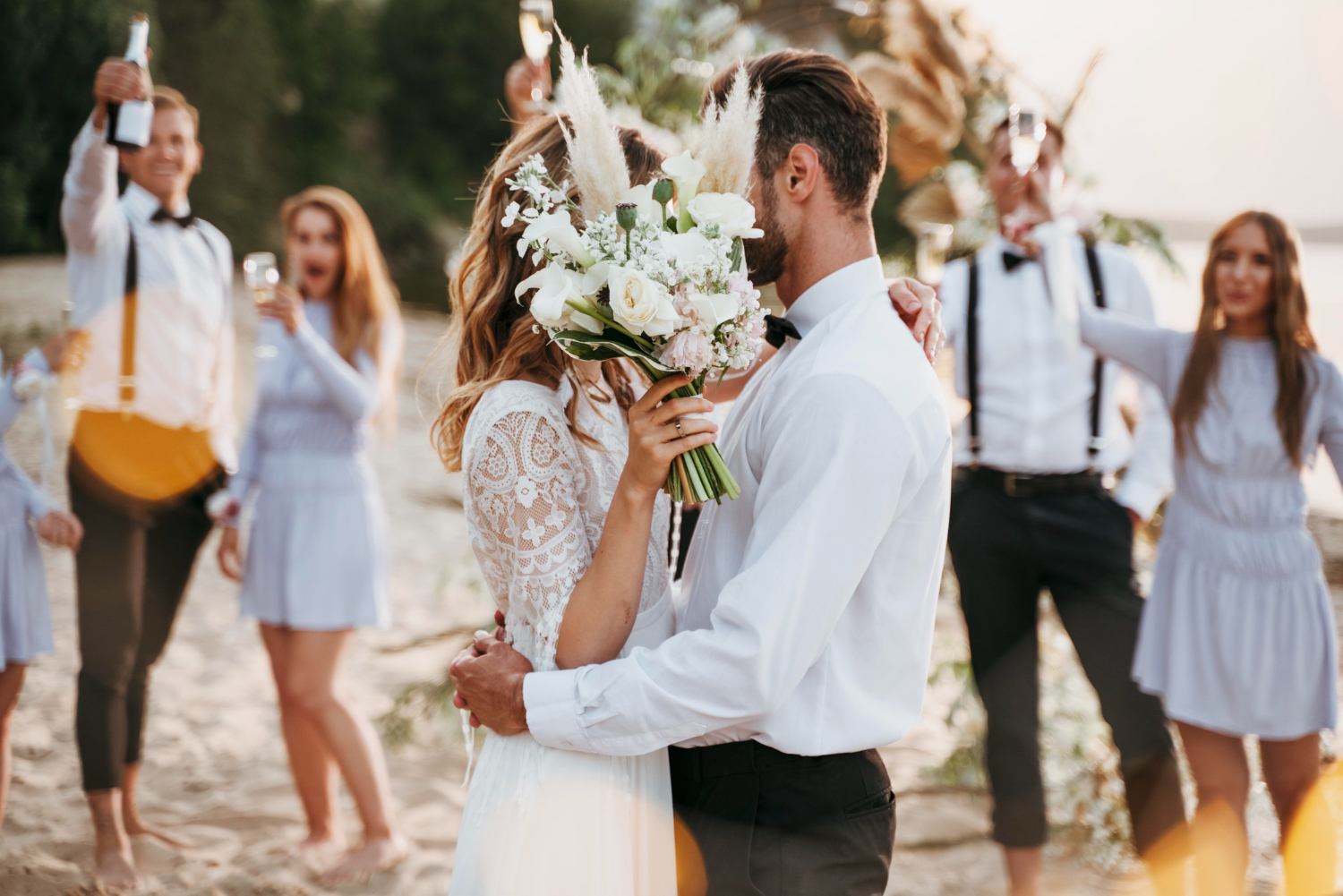
On my wedding day, as I stood in front of the floor-length mirror in the bridal suite adjusting the delicate lace sleeves of my white dress, my phone buzzed against the vanity table with a message that would shatter the illusion I’d been living in for twenty-eight years.
I’m sorry, Valentina, but Gabriela’s birthday party is more important. Get someone else to walk you down the aisle.
The words from my father hit me like a physical blow, each one landing with precise cruelty. My sister had deliberately planned her thirtieth birthday celebration on my wedding day—a date she’d known about for eight months, a date circled on family calendars and mentioned in countless conversations. As I stared at the screen, my hands trembling so badly the phone nearly slipped from my grip, something fundamental shifted inside me. Not surprise exactly, because some part of me had been waiting for exactly this betrayal, but a clarifying anger that burned away years of hoping things would be different.
My best friend Sofia picked up the phone from where I’d dropped it on the vanity and read the message aloud to my bridesmaids. The room—moments ago filled with laughter and champagne toasts and the cheerful chaos of getting ready—fell into stunned silence. Everyone knew about my family dynamics, about how my parents had spent my entire life prioritizing my sister over me in ways both subtle and devastatingly obvious, but this felt like a new low even by their standards.
“That absolute bastard,” Sofia said quietly, her voice shaking with fury on my behalf. “On your wedding day. Your actual wedding day.”
“Call Antonio,” I said, surprised by how steady my voice sounded despite the tears threatening to spill and the way my chest felt like someone had reached inside and squeezed. “Tell him it’s time.”
Sofia’s eyes widened. “You’re sure? Once you do this, there’s no going back.”
“I’ve never been more sure of anything in my life.”
What my family didn’t know—what they’d never bothered to learn because they’d never bothered to truly see me—was that I had been preparing for exactly this moment. I’d seen the betrayal coming from the instant I announced my engagement nine months ago and watched the hatred flash across Gabriela’s eyes, quick and venomous before she covered it with a tight smile.
My name is Valentina Quiroz, and I’ve spent my entire life as the invisible daughter in a family where favoritism wasn’t just obvious—it was weaponized with surgical precision. My parents, Roberto and Camila Quiroz, owned a successful chain of upscale restaurants throughout the city, establishments that had built their reputation over three generations. Gabriela worked as their operations manager, positioned as the heir apparent, while I had chosen a completely different path as an architect, deliberately carving out my own identity separate from the family business and the constant comparisons that came with it.
When I met Alejandro at an art exhibition three years ago, everything changed. He was a graphic designer with kind eyes, an easy laugh, and hands that created beautiful things. For the first time in my life, I felt truly seen—not as the disappointing daughter, not as Gabriela’s lesser sister, but as myself. He didn’t compare me to anyone. He didn’t diminish my accomplishments or suggest I should be more like someone else. He simply loved me for exactly who I was, with an uncomplicated devotion I hadn’t known existed.
His proposal six months ago had been perfect in its thoughtfulness. He’d arranged a rooftop dinner overlooking the city, surrounded by candles and my own architectural drawings spread out like a path leading to where he knelt with the ring. When I told my family about the engagement, their reactions told me everything I needed to know about what was coming.
“Who would want to marry you?” Gabriela had muttered, thinking I couldn’t hear, but I’d developed sensitive hearing over the years from straining to catch the comments meant to wound without direct confrontation.
My father had offered perfunctory congratulations before immediately turning the conversation to restaurant business. My mother had smiled and said all the right things, but her eyes kept darting to Gabriela’s face, monitoring her reaction, always more concerned with managing my sister’s feelings than acknowledging mine.
That night, walking home alone through streets illuminated by streetlights and the glow from restaurant windows, because my parents had stayed behind to discuss expansion plans with Gabriela, I made a decision. This wedding would be different. This time, there would be consequences.
In the months leading up to my wedding, I watched my sister’s machinations with a clarity I’d never possessed before. I saw her book the same elegant event venue for her birthday party after casually asking where my reception would be held. I noticed the family group chat messages about her celebration—detailed discussions about catering, decorations, gift registries—that pointedly excluded me despite me being part of the chat. I listened to my parents’ increasingly evasive answers whenever I asked if they were coming to my wedding.
“We’ll see, mija,” my father would say, using the endearment that felt increasingly hollow. “There’s a lot happening that weekend.”
The “lot happening” was my sister’s party, of course. A party she’d specifically scheduled for my wedding day, banking on the fact that our parents would choose her celebration over mine, just as they’d chosen her dance recitals over my academic awards, her breakups over my achievements, her bad days over my good ones for my entire life.
But I’d also been making my own preparations, ones that went far beyond selecting flowers and tasting cakes and arguing with vendors about chair covers. Six months before the wedding, I’d reached out to Antonio Vázquez, my late grandfather’s closest friend and the executor of his estate. Antonio was a distinguished lawyer in his seventies, a man whose quiet authority and genuine warmth had always made me feel valued in a way my own father never had.
“Valentina,” Antonio had said when we met for coffee at a quiet café downtown, his weathered face creasing with genuine warmth. “Your grandfather always said you were the strong one, the one who actually understood what mattered. I think it’s time you knew the whole truth about your family’s finances.”
What he revealed that day changed everything. My grandfather, Federico Quiroz, had never fully transferred ownership of the restaurant empire to my father, despite what everyone in the family believed. He’d kept sixty percent of the shares in a trust, carefully structured and legally unassailable, waiting for the right moment to activate it.
“He wanted you to have it on your wedding day,” Antonio explained, sliding legal documents across the table between our coffee cups. “He knew your father’s weaknesses, knew about the favoritism toward Gabriela. He watched it happen for years and it broke his heart. This was his way of protecting you and ensuring the family legacy went to someone who would honor it, someone who’d built something on their own merits rather than just expecting inheritance.”
“Why me?” I’d asked, overwhelmed by the enormity of what he was describing. “I’m not even in the restaurant business.”
“Because you’re the only one who built something on your own,” Antonio said firmly. “You didn’t rely on the family name or expect everything handed to you. You studied, you worked, you created your own success. Federico respected that. He loved that about you. He used to say you reminded him of himself at your age—hungry to prove yourself, unwilling to coast on family reputation.”
Together, Antonio and I had spent months preparing in secret. We reviewed financial statements that revealed troubling patterns of mismanagement. We consulted with lawyers to ensure every legal detail was ironclad. We planned every aspect of what would happen when the truth came out, anticipating objections and preparing responses. By the time my wedding day arrived, I was ready for my father’s betrayal—and ready to respond to it in a way that would finally, definitively, change the power dynamics that had governed my entire life.
Sofia squeezed my hand as we waited in the bridal suite after calling Antonio. “Are you scared?” she asked quietly.
“Terrified,” I admitted, touching the envelope Antonio had given me the night before. Inside was a letter from my grandfather, written years ago but feeling as fresh as if he’d written it yesterday. In it, Federico had written about watching me grow up in a family that never fully appreciated me, about his regret at not intervening sooner, about his hope that this gift would give me the power to reshape my own destiny. “But I’m more tired of being scared than I am scared of what comes next.”
When Antonio arrived at the suite, distinguished and dignified in his tailored suit, tears filled his eyes. “You look exactly like your grandmother did on her wedding day,” he said softly, his voice thick with emotion. “Federico would be so proud of you, mija. So incredibly proud.”
I showed him my father’s text message. His jaw tightened, his expression shifting from gentle nostalgia to barely contained anger. “Then it’s time they learned the truth. All of it.”
Walking down the aisle on Antonio’s arm, I felt the surprised whispers ripple through the assembled guests like wind through grass. Many had expected to see my father, had been told he’d be giving me away. Some probably thought his absence was a last-minute emergency, something unavoidable. None of them knew they were about to witness something much more significant than a simple wedding ceremony.
The venue was beautiful—a historic estate with gardens and Spanish colonial architecture, the kind of place I’d dreamed of as a little girl. White flowers everywhere, string quartet playing softly, late afternoon sunlight filtering through ancient oak trees. Alejandro waited for me at the altar, his eyes shining with love and understanding. He knew everything—about my family, about the inheritance, about what was coming during the reception. His unwavering support had given me the courage to see this through.
The ceremony itself was beautiful, filled with personal vows and genuine emotion. For those thirty minutes, I allowed myself to simply be a bride marrying the man she loved, surrounded by people who genuinely cared about us. Alejandro promised to always see me, to always choose me, to build a family with me where no one would ever feel invisible. I promised to bring him into my complicated world and trust him to help me navigate it. We exchanged rings and kissed while our friends cheered, and for that perfect moment, nothing else mattered.
But I knew what was coming.
The reception was held in the estate gardens, string lights twinkling overhead as dusk settled and guests enjoyed dinner and drinks. I’d deliberately kept the tone elegant but unpretentious—this was about celebration, not showing off wealth or competing with my family’s restaurant empire. Real flowers instead of elaborate arrangements. Local wine instead of expensive imports. Food that was delicious rather than pretentious. When Antonio stood to give his speech after dinner, I felt my heart begin to race, adrenaline flooding my system.
“Good evening, everyone,” Antonio began, his voice carrying easily across the space, commanding attention without demanding it. “I’m honored to be here representing not just myself, but a man who loved Valentina more than anything in this world—her grandfather, Federico Quiroz.”
The crowd quieted, sensing something important was coming. The remaining conversations died away. Silverware stopped clinking.
“Many of you knew Federico as a successful restaurateur and businessman,” Antonio continued. “What you may not know is that he was also a man of profound wisdom who understood family dynamics better than most. He understood what it meant to be valued, and what it cost when you weren’t.” Antonio pulled an envelope from his jacket—cream-colored paper, my grandfather’s handwriting visible even from where I sat. “He asked me to deliver this to Valentina on her wedding day, knowing it would be a moment when she might need his support most.”
My hands shook as I took the envelope. Inside was a letter in my grandfather’s distinctive handwriting—strong, clear strokes that reflected his personality—along with legal documents bearing official seals and signatures.
“Should I read it aloud?” I asked Antonio quietly, though I already knew the answer.
“I think your grandfather would want that,” he replied. “He never liked secrets.”
I unfolded the letter, my voice wavering at first but growing stronger as I read:
My dearest Valentina,
If you’re reading this, it means your wedding day has arrived and I am no longer there to walk you down the aisle myself—something I always imagined doing with great pride. But knowing your father as I do, knowing the patterns I watched develop over decades, I suspect he may have found a way to disappoint you on this most important day.
Several guests gasped at the bluntness of the words, the direct confrontation of painful truth.
You have always been special to me, not just because you’re my granddaughter, but because you possess a strength and independence that reminds me of myself at your age, of the person I was before success and comfort made me cautious. I’ve watched over the years as your father prioritized Gabriela over you, making decisions that hurt you while favoring her. It broke my heart every single time, and I confronted him about it more than once, but he couldn’t—or wouldn’t—change.
What your father doesn’t know—what I made absolutely certain he never knew—is that the restaurant empire he believes he owns is not entirely his. When I officially retired and “transferred” the business to him fifteen years ago, I actually retained sixty percent ownership in a carefully structured trust. That trust, my dear girl, has always been in your name.
I paused, letting the words sink in. Around the garden, I could see shocked expressions, people leaning toward each other to whisper, the ripple of reaction spreading outward.
As of this moment, Valentina, you are the majority shareholder in Quiroz Restaurant Group. The full legal details are in the documents Antonio will provide. You now have the power to make decisions about the company’s future, including operational strategy, expansion plans, and yes—who remains in management positions.
I know this is an enormous responsibility, perhaps one you never wanted. But I also know you’re more than capable of handling it. You’ve built a successful career on your own merits, without relying on the family name or expecting handouts or trading on connections. That’s exactly the kind of person who should control this legacy.
Use this power wisely, my dear. Use it to protect yourself, to build the life you deserve, and perhaps to teach your family that actions have consequences, that years of neglect and favoritism can’t simply be overlooked. But most of all, use it to be happy. Choose yourself, Valentina. You’ve spent your whole life trying to earn love that should have been freely given. Stop trying. Take what’s yours and build something beautiful.
All my love, always, Abuelo Federico
The silence after I finished reading was deafening. Then my phone began buzzing insistently—my father calling, no doubt having heard from someone at Gabriela’s party about what was happening at my wedding. The timing would have been funny if it weren’t so predictable.
I declined the call and turned to Antonio. “It’s all legal? Completely binding?”
“Completely,” he confirmed, pulling out additional folders. “I have all the paperwork here. Your grandfather planned this meticulously with multiple lawyers over the course of five years. He updated it annually, always ensuring the language was clear and unassailable. As of this moment, you control the majority stake in Quiroz Restaurant Group, including all properties, assets, and operational decisions. They can challenge it if they want, but they won’t win.”
Alejandro squeezed my hand under the table. “What do you want to do?” he asked quietly, his voice steady, grounding me.
“Exactly what my grandfather wanted,” I replied, looking around at our friends, at the people who’d shown up for us, who’d celebrated with us without conditions or favoritism. “Enjoy my wedding without my family’s drama ruining it.”
And that’s exactly what we did. For the rest of the evening, I danced with my husband—my husband—laughed with genuine friends, and celebrated the beginning of my new life. My phone continued buzzing with calls and increasingly frantic texts from my father and sister, but I ignored them all, eventually turning it off completely. They’d had my whole life to prioritize me. Tonight was mine. Tomorrow could be theirs to panic through.
The honeymoon in Greece was everything a honeymoon should be—lazy mornings tangled in white sheets, ancient ruins that put modern problems in perspective, crystal-clear water the color of Alejandro’s eyes, food that tasted like sunshine, and each other. Alejandro had insisted we go completely off-grid for at least the first week, and I’d agreed gratefully. Whatever chaos was happening back home could wait. I’d spent twenty-eight years managing other people’s emotions. I could take two weeks for myself.
But reality has a way of catching up with you. When we finally checked our messages on day eight, lounging by the hotel pool with Greek coffee and pastries, I had over two hundred texts and nearly a hundred missed calls. My father demanded I call him immediately, his messages escalating from confusion to anger to something approaching desperation. Gabriela alternated between threats and attempts at reconciliation, her texts ranging from “You’ll regret this” to “Can we please just talk?” Even my mother, who usually stayed silent during family conflicts, preferring to pretend everything was fine, had left several voicemails begging me to “think about the family.”
“Your mother makes it sound like you’re the one who’s been unreasonable,” Alejandro observed, scrolling through some of the messages with increasing disbelief. “Like you somehow created this situation.”
“That’s always been the pattern,” I replied, sipping my coffee and watching tourists splash in the pool. “Gabriela and my father create the problem, I react to protect myself, and somehow I’m the one expected to fix it by accepting less than I deserve and pretending nothing happened.”
Antonio had sent daily updates on the legal situation, bless him. My father had immediately attempted to challenge the will, claiming my grandfather wasn’t of sound mind when he created the trust, that he’d been manipulated or confused. But Antonio had prepared for that possibility—the documents included medical certifications from multiple doctors confirming Federico’s complete mental competency, dated throughout the five years before his death. There were also video recordings of my grandfather explaining his reasoning, clear-eyed and articulate, impossible to dismiss.
“They’re scheduled to meet with you three days after you return,” Antonio’s latest message read. “Your father, Gabriela, and the senior executives. I’ve prepared all the financial documents you’ll need to review beforehand. Trust me, Valentina—you’re going to want to see what I found.”
The financial analysis Antonio had prepared was damning. In the five years since my grandfather’s official retirement, profits had declined by thirty-two percent while operating costs had somehow increased. Market share had eroded as competitors introduced innovative concepts while Quiroz restaurants remained stuck in traditions that no longer resonated with changing demographics. Most concerning, my father had been using business capital to fund a lifestyle that far exceeded the company’s actual performance—luxury cars expensed to the business, “market research trips” that were really family vacations, artwork and club memberships charged to company accounts.
“He’s been living like the business is thriving when it’s actually struggling,” I explained to Alejandro as we reviewed the reports on our last day in Greece, the Mediterranean sunset painting the sky in shades of rose and gold. “If this continues for another few years, there might not be anything left to inherit. My grandfather didn’t just give me the business—he gave me the responsibility of saving it.”
The morning of the meeting, back home in the city, I dressed carefully in a tailored navy suit that projected confidence and authority—my armor for the battle ahead. Alejandro offered to come with me, but I declined. This was something I needed to do alone, needed to prove to myself I could handle.
The executive conference room at the flagship restaurant felt different now that I knew I owned the majority stake. The space was elegant—dark wood, leather chairs, photographs of the restaurant’s history lining the walls. My father sat at the head of the table, the position he’d always occupied, flanked by Gabriela and three senior executives who’d been with the company for decades.
“Valentina,” my father began, his voice tight with barely controlled anger. “This whole situation is absurd. Your grandfather clearly wasn’t thinking straight when he created that trust. I’ve been running this business for twenty years—”
“Into the ground,” I interrupted calmly, taking my seat—not beside him, but at the opposite end of the table, the symbolic importance not lost on anyone. “Antonio, would you please distribute the financial analysis?”
As the executives reviewed the documents, I watched the color drain from Gabriela’s face. As operations manager, she knew exactly what the numbers revealed—and how bad it looked that she’d allowed this to happen, that she’d either been complicit or incompetent.
“Profits down thirty-two percent over five years,” I stated calmly, methodically. “Operating costs up forty percent in the same period. Customer satisfaction scores declining for four consecutive years, with increasingly negative reviews mentioning outdated concepts and inconsistent quality. Three of your top five competitors have surpassed you in market share. Our once-legendary reputation is becoming simply a memory of former glory.” I paused, meeting each person’s eyes in turn. “Would anyone like to explain how this represents successful management?”
“The restaurant industry is changing,” my father blustered, but his usual commanding presence had faltered. “It’s harder than it used to be, more competitive—”
“It’s harder for businesses that refuse to innovate,” I countered. “Your competitors are thriving because they’ve adapted to changing consumer preferences—sustainable sourcing, diverse cuisines, experiential dining, social media presence. You’ve simply tried to maintain status quo while the world moved on around you, convinced that past success guaranteed future results.”
One of the executives, a silver-haired man named Carlos who’d been friends with my grandfather and occasionally slipped me knowing looks at family events, spoke up. “She’s right, Roberto. I’ve been saying for years that we need to modernize our concepts, update our menus, invest in our properties, train staff differently. You’ve resisted every suggestion, insisting that your father’s approach was the only approach.”
“Because those suggestions would have cost money we didn’t have!” my father snapped, his composure cracking.
“You didn’t have money because you were spending it on other things,” I replied evenly, sliding another document across the table. “Like the luxury car you bought last year that was expensed to the business as a ‘company vehicle’ despite being used exclusively for personal purposes. The family vacation to Europe categorized as a ‘market research trip’ despite no documented research outcomes. The country club membership, the private boxes at sporting events, the artwork for your personal home—all charged to company accounts and justified as business expenses.”
The executives exchanged uncomfortable glances. This was clearly news to them, or at least news they’d chosen not to examine too closely.
“Those were legitimate business expenses,” Gabriela insisted, but her voice lacked conviction, her usual confidence evaporated.
“Really?” I pulled out yet another folder, this one thicker. “Then you won’t mind if we review them with the company’s accountants and lawyers? Because I’ve already had an independent audit completed. Would you like to know what they found?”
The room fell into tense silence. My father’s face had gone pale, then red, cycling through shades of emotion.
“I thought not,” I continued, keeping my voice measured, professional. “Here’s what’s going to happen. I’m assuming operational control of Quiroz Restaurant Group, effective immediately. We’re going to conduct a complete restructuring—concept updates, menu revisions, property renovations, staff training programs, marketing overhauls. Everything that should have happened years ago.”
I slid contracts across the table to both my father and Gabriela.
“These outline your new roles, responsibilities, and compensation packages. Dad, you’ll transition to an advisory role with appropriate compensation—which is substantially less than what you’re currently taking from the business, but still generous given the circumstances. Gabriela, you’ll remain in operations, but under strict oversight and with clear performance metrics tied to actual company improvement. Both positions are contingent on your cooperation with the restructuring.”
I paused, letting them process.
“You have until tomorrow morning to decide whether to accept these terms or seek employment elsewhere. But understand this—with or without you, I’m moving forward. My grandfather trusted me with his legacy, and I’m not going to let it collapse because of mismanagement and favoritism. This company employs over three hundred people who depend on us for their livelihoods. They deserve better than what you’ve been providing.”
My father’s face had turned an alarming shade of red. “You can’t do this. I’m your father—”
“A fact you seem to remember only when it serves your interests,” I interrupted, my voice hardening. “You weren’t my father on my wedding day. You chose to be Gabriela’s father instead, as you’ve always chosen. That’s your prerogative. But choices have consequences. You taught me that, actually, every time you chose her over me. I learned the lesson well.”
That night, after the meeting that left everyone shaken, my mother called. Not texted—called, which was unusual enough to make me answer despite my exhaustion.
“Valentina, please, we need to talk,” she said, her voice heavy with an emotion I couldn’t quite identify. “There are things you don’t know. Things that might help you understand your father’s behavior. Not excuse it,” she added quickly, “but understand it.”
We met the following morning at a neutral café, a quiet place where neither of us would feel at a disadvantage. When I arrived, I barely recognized her. My mother had always been impeccably put together—perfect hair, perfect makeup, perfect clothes—but the woman sitting across from me looked exhausted, diminished, older than her fifty-four years.
“Thank you for coming,” she began, her hands trembling around her coffee cup. “I know I don’t deserve your time after missing your wedding, after years of standing by while your father hurt you—”
“You don’t,” I agreed, not unkindly. “But I’m here anyway. What’s so important that it couldn’t wait?”
She took a deep breath, seemed to gather her courage. “Gabriela isn’t your father’s biological daughter.”
The words hung in the air between us. I sat back in my chair, my mind racing to reprocess twenty-eight years of family dynamics through this entirely new lens.
“She’s the daughter of your father’s younger brother, Miguel,” my mother continued, the words spilling out now like a dam had broken. “He died in a motorcycle accident when his girlfriend was six months pregnant with Gabriela. The girlfriend—Elena was her name—couldn’t handle being a single mother. She was only nineteen, grieving, terrified, with no family support. She came to your father begging for help, and he… he couldn’t say no to anything connected to Miguel.”
I processed this information slowly, carefully. “So Dad adopted her?”
“Legally, yes. Your father and I had been married for three years and couldn’t have children. We’d been trying, going through tests, starting to consider our options. When Elena showed up with a newborn baby and nowhere to go, your father saw it as fate. He legally adopted Gabriela, and Elena signed away her parental rights. We raised her as ours.” My mother’s voice cracked. “Then, two years later, against all medical odds, I got pregnant with you.”
“And Dad started favoring Gabriela because she was actually his niece? Because she was blood in a way that mattered to him?”
“Because he felt guilty,” my mother corrected, tears spilling down her carefully made-up face, leaving mascara tracks. “Miguel was his baby brother, only seventeen when he died. Your father had always been protective of him, felt responsible for him. When he couldn’t save Miguel, he transferred all that protective energy to Gabriela. He felt he owed it to his brother to make sure Gabriela never wanted for anything, never felt like she was second-best or adopted or anything less than completely his.”
“So instead, he made me feel that way,” I said flatly, the old hurt mixing with this new information. “He made his actual daughter feel like she was second-best because he was busy compensating for his dead brother’s child.”
“Yes,” my mother admitted, the word barely audible. “And I let him. God help me, I let him because I thought it was temporary, that he’d balance out once the grief wasn’t so fresh, once you were older. But the pattern became entrenched, became the foundation of our family dynamic, and by the time I realized how much damage it was doing, I didn’t know how to change it without revealing the truth about Gabriela’s parentage.”
“Does she know?” I asked, trying to imagine my sister’s reaction to this information.
“No. We’ve never told her. Your father is terrified that if she finds out, she’ll feel like she doesn’t belong, like she’s not really part of the family, like his love for her is somehow less legitimate because it’s not biological.”
I sat with this information for a long moment, watching other café patrons go about their normal mornings, unaware of the family drama unfolding in the corner booth. “This explains things,” I finally said. “It provides context. But it doesn’t excuse the wedding. It doesn’t excuse twenty-eight years of making me feel invisible. Understanding why someone hurts you doesn’t make it hurt less.”
“I know,” my mother whispered. “I’m not asking for forgiveness. I don’t deserve it. I just thought you should know the whole truth before you make any final decisions about the company, about the family. Whatever you choose, Valentina, I’ll support you. It’s far too late, but I’ll support you.”
That evening, I told Alejandro everything over dinner in our apartment. We’d moved into a place with a home office space where my architectural drawings and restaurant financial reports could coexist—a physical representation of my two worlds merging.
“Does knowing about Gabriela change anything for you?” he asked carefully, always giving me space to process my own emotions.
“It explains things,” I admitted, echoing what I’d told my mother. “It makes my father’s behavior make a twisted kind of sense. But it doesn’t excuse it. His guilt over his brother doesn’t justify making me feel worthless for my entire childhood. And it definitely doesn’t justify missing my wedding.”
“So what do you want to do?”
I thought about my grandfather’s letter, about his wish that I use this power wisely, that I choose happiness. “I think it’s time everyone knew the truth. All the truths. The secrets have poisoned our family for decades. Maybe honesty—real, complete honesty—will give us a chance to rebuild something better. Or maybe it won’t. But at least we’ll know we tried.”
The next day, I arranged a family dinner at my house—neutral territory where I had control. My father arrived first, subdued in a way I’d never seen him, his usual commanding presence diminished. Gabriela came next, her bravado replaced by something that looked almost like fear, like she’d finally realized the consequences of her actions. My mother was last, carrying wine like a peace offering she knew was inadequate.
“Thank you for coming,” I began once everyone was seated around our dining table. “There are things that need to be said, truths that need to come out. Mom, I think you should be the one to tell Gabriela about her parentage.”
My mother paled. “Valentina, I don’t know if this is the right time—”
“There will never be a right time,” I interrupted gently but firmly. “But the secrets have to end. They’ve hurt all of us for too long. They’ve twisted us into people we shouldn’t have become.”
Over the next hour, my mother revealed the truth about Gabriela’s parentage, her voice shaking but determined. I watched my sister’s face cycle through shock, denial, anger, hurt, and finally a devastating sadness that made her look younger, more vulnerable than I’d ever seen her.
“Is this true?” Gabriela asked my father when Mom finished, her voice breaking. “You’re not actually my father?”
“I am your father,” my father insisted fiercely, leaning forward with an intensity that seemed to fill the room. “Maybe not by blood, but in every way that matters. I chose you, Gabriela. From the moment you were born, from the moment I held you, you were mine. You were my brother’s gift to me, and I loved you with everything I had.”
“Then why didn’t you tell me?” she demanded, tears streaming down her face. “Why let me live my whole life not knowing who I really was? Why lie to me?”
“Because I was afraid,” my father admitted, and for the first time in my life, I heard real vulnerability in his voice. “Afraid you’d feel like you didn’t belong. Afraid you’d go looking for Elena, or that you’d love me less knowing I wasn’t your biological father. Afraid I’d lose you the way I lost Miguel.”
“So instead you made Valentina pay for your fear,” Gabriela said quietly, turning to look at me with an expression I couldn’t quite read. “You were so busy trying to prove to me that I belonged, so busy overcompensating, that you pushed her out. You made her invisible while making sure I could never be overlooked.”
It was the first time I’d ever heard my sister truly acknowledge the favoritism, truly take responsibility for her role in accepting and even encouraging it.
“I’m sorry,” my father said, looking at me with tears in his eyes that I’d seen him cry maybe twice in my entire life. “To both of you. Gabriela, I’m sorry I wasn’t honest with you, that I let fear govern my choices. And Valentina, I’m sorry I made you feel like you had to compete for my love, like you were somehow less important. You never should have felt that way. You’re my daughter—my biological daughter—and I failed you in every way a father can fail a child.”
The apology didn’t erase twenty-eight years of hurt, didn’t suddenly make everything okay. But it was a start, a crack in the wall we’d built between us. We spent the rest of the evening talking—really talking—for the first time in longer than I could remember. Gabriela and I began to understand each other, to see how we’d both been shaped by our father’s guilt and fear, how we’d both been damaged by family dynamics neither of us had created. My father confronted his own failures with a honesty I’d never seen from him.
“I still can’t forgive you for missing my wedding,” I told him honestly as the evening wound down. “That hurt too much, cut too deep. But I’m willing to work toward rebuilding our relationship if you’re genuinely committed to changing, to being different going forward.”
“I am,” he promised, his voice thick with emotion. “Whatever it takes, however long it takes. I’ll prove it to you.”
The months that followed were intense and transformative. I threw myself into restructuring Quiroz Restaurant Group, bringing in consultants to help modernize concepts while preserving the core values my grandfather had built the business on. Some changes were cosmetic—updated interiors that honored the history while feeling current, refreshed menus that balanced traditional favorites with innovative options, better training for staff that emphasized genuine hospitality over rote service. Others were more fundamental—new management practices that valued efficiency without sacrificing quality, improved work-life balance policies for employees who’d been working unsustainable hours, community outreach programs that made the restaurants genuine neighborhood gathering places.
My father transitioned into his advisory role with surprising grace. Without the pressure of being in charge, without having to prove himself, he seemed to relax, to rediscover the passion that had drawn him to the restaurant business in the first place. He shared stories from the early days, introduced me to long-time vendors and partners, offered advice when I asked for it but didn’t try to override my decisions. Slowly, tentatively, we began to build a new relationship based on mutual respect rather than disappointed expectations.
Gabriela threw herself into therapy and emerged with clearer understanding of her own identity and her role in our family’s dysfunction. She began searching for information about her biological mother, Elena, and with my mother’s help, eventually located her living in Arizona with a new family. The reunion was emotional and complicated, but ultimately healing. She remained close to our parents while building a new relationship with Elena, expanding her understanding of family rather than replacing one with another.
As for me, I discovered I loved the restaurant business in ways I’d never anticipated. The combination of creativity, strategy, and community connection appealed to the architect in me—designing spaces and experiences, building something that served a purpose while bringing people together. I spent months redesigning the flagship location, creating a space that honored my grandfather’s legacy while looking firmly toward the future. When it reopened to rave reviews and lines around the block, when food critics praised the balance of tradition and innovation, I felt pride I’d never experienced before.
Alejandro and I settled into married life in the apartment that felt increasingly like home. He supported my work while pursuing his own design projects, and together we created a partnership based on genuine equality and mutual respect—everything my parents’ marriage had lacked.
One Sunday evening, about a year after my wedding, the whole family gathered at our place for dinner. It had become a weekly tradition, something I’d instituted as part of our healing process. As I watched my father help Alejandro in the kitchen while my mother and Gabriela set the table, I marveled at how far we’d come.
“What are you thinking about?” Gabriela asked, catching me watching them.
“About Dad’s text message,” I admitted. “The one he sent on my wedding day. How much it hurt. How angry I was.”
“And now?”
“Now I’m grateful,” I said honestly. “Not for the hurt—that was real and it mattered. But for what came after. If Dad had walked me down the aisle, if everything had gone as planned, we might still be living in all those patterns and secrets. Maybe it took that kind of betrayal to force us to confront the truth, to finally change.”
Gabriela nodded slowly. “I think about it too. About how I deliberately planned my party for your wedding day, thinking I needed to compete with you for Dad’s attention when really I already had more than my share. It’s hard to look back at that person and recognize myself.”
“We were both shaped by a family dynamic that wasn’t healthy for either of us,” I replied. “The important thing is that we’re building something better now.”
That evening, as we sat around the dinner table, my father stood with his wine glass. “I’d like to make a toast,” he announced. “A year ago, I made the worst mistake of my life. I let fear and old patterns dictate my choices, and I hurt the people I love most. Valentina, you could have destroyed this family with the power your grandfather gave you. Instead, you used it to heal us, to force us to confront truths we’d been avoiding for decades. You’re stronger and wiser than I ever was, and I’m proud—so incredibly proud—to be your father.”
“To Valentina,” everyone echoed, raising their glasses.
“And to Grandfather Federico,” I added, my voice thick with emotion. “Who knew exactly what this family needed, even when we didn’t. Who loved me enough to give me not just an inheritance, but the power to save myself.”
Walking into our bedroom later that night, Alejandro’s arm around my waist, I thought about how my wedding day had started—with a devastating text message and the shattering of illusions I’d clung to my entire life. It had felt like an ending, like the final confirmation that I would never be enough for my family.
But it had actually been a beginning. The beginning of honesty, of boundaries, of choosing myself instead of desperately seeking approval that was never freely given. My father had refused to walk me down the aisle, and in doing so, he’d inadvertently given me exactly what I needed—the final push to step into the power and inheritance my grandfather had prepared for me, to become the person I was always meant to be.
The sweetest revenge, I’d learned, wasn’t destruction or cruelty or proving people wrong. It was building something better than anyone imagined possible, healing wounds that seemed unhealable, and then extending grace—not because it was easy or because it was earned, but because I chose to. Because I could.
My grandfather’s gift wasn’t just the business. It was the freedom to choose my own path, the power to set my own terms, and the security to extend forgiveness when I was ready—not when it was demanded. And that gift, more valuable than any inheritance, had transformed not just my life but my entire family’s future.
As I drifted off to sleep in my husband’s arms, in the home we’d built together, I smiled thinking about that text message. My father thought he was choosing between his daughters. He didn’t realize he was choosing between the past and the future—and that by choosing wrong, he’d accidentally chosen right in ways he never intended.

Adrian Hawthorne is a celebrated author and dedicated archivist who finds inspiration in the hidden stories of the past. Educated at Oxford, he now works at the National Archives, where preserving history fuels his evocative writing. Balancing archival precision with creative storytelling, Adrian founded the Hawthorne Institute of Literary Arts to mentor emerging writers and honor the timeless art of narrative.