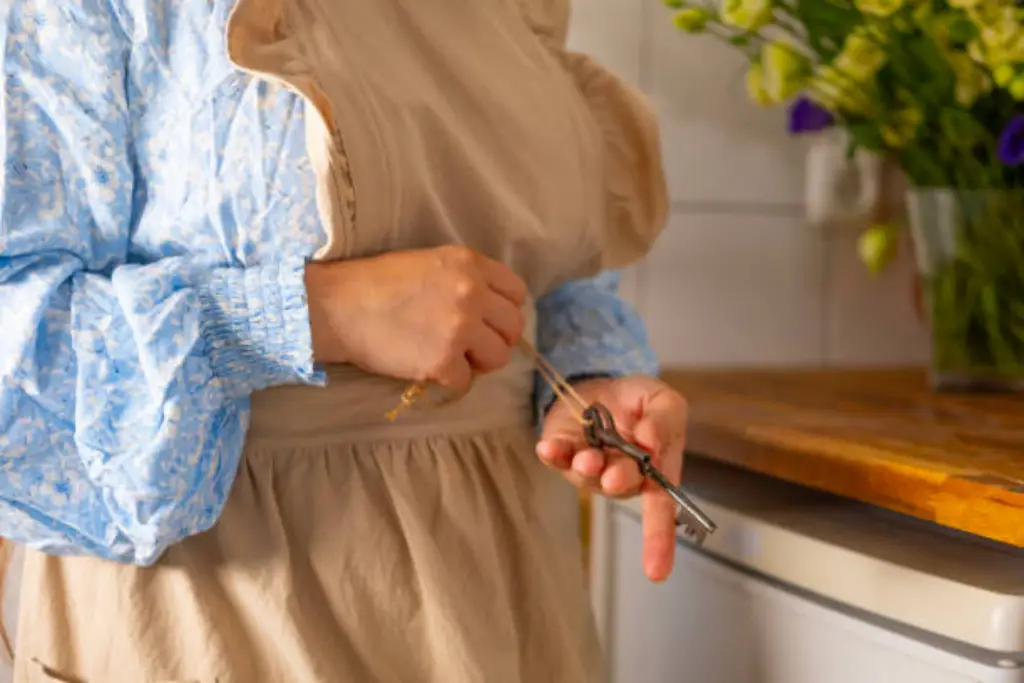
The first thing my mother-in-law did after the funeral wasn’t hug me. She walked past me like I was furniture, stopped at the flower arrangement near the fellowship hall entrance, and said in a voice that carried across the room, “Those lilies are going to stain the carpet.”
I stood there holding a stack of paper plates someone had pressed into my hands, watching grief transform into housekeeping in real time. The room smelled like baked ham, burned coffee, and a dozen competing perfumes trying to be respectful. People spoke in hushed tones, the kind of careful quiet you use around sleeping infants, as if sorrow might wake up angry and cause a scene.
My husband’s name was Ethan Hale. He was forty-two years old when his heart stopped on a Tuesday morning that had started like every other Tuesday—with him whistling while he tied his work boots and me shouting up the stairs at our kids to find their backpacks. By noon he was gone, collapsed in a hospital corridor while changing a ceiling tile, dead before the paramedics could get him onto a gurney. By Sunday afternoon we were eating funeral potatoes under fluorescent lights while strangers told me how sorry they were, their eyes sliding away from mine like they were afraid grief might be contagious.
Ethan’s mother, Marlene Hale, had always spoken like someone reading from a script she’d memorized decades ago. She could be pleasant when it served her purposes, but it was a practiced pleasantness, the kind you deploy at the bank or the pharmacy when you want something processed quickly. Her hair was shellacked into submission with enough hairspray to survive a Category 3 hurricane. Her lipstick never bled outside the lines. If a chair sat crooked at a table, she noticed and adjusted it. If someone’s heart sat crooked in their chest, she adjusted the conversation until everything looked straight again from the outside.
At the table nearest the coffee urn, Ethan’s older brother Troy was laughing too loudly with two friends from his insurance office, the kind of laughter that had sharp edges, like a fork scraping across a plate. Ethan’s younger sister Paige sat hunched over her phone with her arms crossed, staring at the screen like it was a door she desperately wanted to walk through.
My name is Nora Hale, and I was thirty-nine years old when I learned that some families treat death like a vacancy sign—an opportunity waiting to be seized.
The service itself had been dignified in that careful way church services manage, even when everyone knows the person in the casket died too young. The pastor told stories about Ethan fixing broken porch steps for elderly neighbors without being asked, about how he kept extra gloves in his truck during winter because someone always forgot theirs. The congregation nodded with recognition. Our children—Sam, sixteen, and Lila, thirteen—sat on either side of me like bookends, their spines rigid, their faces pale and suddenly too old for their ages.
Sam didn’t cry during the service. He didn’t cry at the graveside either, just stared straight ahead with his jaw locked tight, like he was holding his breath underwater, waiting for permission to surface. Lila cried quietly, tears sliding down her freckled cheeks without sound, her hand gripping my sleeve so tightly I could feel her fingernails through the fabric, as if I might evaporate if she let go.
Marlene cried in the front row, but her crying came in measured bursts, perfectly timed with the hymns and the eulogy. She dabbed at her eyes with embroidered tissues, took deep controlled breaths, and maintained her composure with the discipline of someone who’d never allowed emotions to smudge her makeup.
After the graveside prayer, she kissed Ethan’s casket as it was lowered into the frozen ground, then turned to me with eyes that were dry and calculating. “We need to talk soon, Nora,” she said. Not “I’m so sorry for your loss.” Not “How are you holding up?” Not “What do the children need?” Just that clinical statement delivered like an appointment reminder.
I thought she meant the normal post-death logistics: sorting through Ethan’s tools, returning borrowed items to neighbors, deciding who wanted his old fishing rods and camping gear. I thought she meant sharing memories and photographs. I thought she meant family.
I thought wrong.
In the days immediately after Ethan died, our house became a place where other people’s hands appeared everywhere, leaving traces of sympathy that felt both comforting and invasive. Someone from Ethan’s work dropped off lasagna in a disposable aluminum pan. Someone from my book club brought a gallon of sweet tea and a bag of paper cups. Someone I barely knew from the gym mailed a check with a sticky note that said simply, “For whatever you need.”
Our front porch began to look like a small, quiet buffet of grief—casserole dishes stacked on the wooden bench, foil-wrapped plates balanced on the railing, Tupperware containers with masking tape labels indicating contents and reheating instructions.
The house itself felt different, like it was listening. The floorboards popped at night in places they’d never popped before. The kitchen faucet developed a drip that kept time like a metronome—once every few minutes, a slow stubborn sound that matched the rhythm of my circular thoughts. The porch light, an old brass fixture Ethan had kept promising to replace, flickered whenever the wind picked up, as if it couldn’t decide whether to stay lit or surrender to darkness.
I moved through those early days doing the normal things because normal things were the only anchors keeping me from floating away completely. I packed school lunches, even though my hands shook so badly the sandwiches came out crooked. I washed clothes, separating darks from lights the way Ethan had taught me when we first moved in together. I walked from room to room collecting stray socks and empty water bottles, creating the illusion of order in a life that had become fundamentally disordered.
I kept finding Ethan everywhere in those small, devastating ways that grief ambushes you—a smudge from his fingerprints on the refrigerator door handle, the permanent dent in his favorite armchair cushion where he’d sat every evening, the smell of sawdust still clinging to the shirts in his closet. His coffee mug sat in the dish drainer, and I couldn’t bring myself to put it away in the cabinet because putting it away felt like admitting he wouldn’t need it tomorrow morning.
Ethan had worked as a maintenance supervisor at County General Hospital for nearly twenty years. He fixed things—heating systems that quit in January, elevators that stuck between floors, doors that wouldn’t latch properly. He liked the tangible satisfaction of making broken things behave again. “Most problems,” he used to say while sorting through his toolbox, “are just screws that backed themselves out. You find the loose one, tighten it down, and the whole thing settles.”
It was his philosophy for everything: marriage, parenting, household repairs, life itself. Stay calm. Identify the problem. Apply the right tool. Don’t force what needs finesse.
On Tuesday mornings, he woke at five-thirty without an alarm, brewed coffee in our ancient Mr. Coffee machine, and always left a filled mug on the counter for me even when he had to be out the door by six. He liked routines because routines made the unpredictable parts of life feel manageable. The kids teased him mercilessly about it—how he ate the same breakfast every weekday, how he checked the weather at exactly the same time each evening, how he maintained spreadsheets for household expenses and vacation planning.
I had loved him for it. That steadiness. That predictability. That absolute certainty that Ethan would come home at the end of every shift and ask how my day had been while unlacing his work boots.
The day he died, that routine shattered in a way my body still couldn’t fully process or accept.
He’d been in one of the older hospital corridors, up on a ladder replacing a water-stained ceiling tile, when he collapsed. That’s what they told me later—the shift supervisor, the head of HR, the doctor who’d tried to save him. A cardiac event. Sudden and catastrophic. A nurse doing her rounds found him on the floor. They performed CPR immediately. They did everything possible.
The phone call came from a number I didn’t recognize. A woman’s voice, professional but gentle, asked if I was sitting down. I wasn’t. I was standing in the library where I worked part-time, shelving returned books in the mystery section, and her question made my knees buckle so abruptly I had to grip the shelf.
By the time I reached the hospital, there was nothing left to do but sign forms and answer questions I could barely comprehend. The words “sudden cardiac event” floated through the administrative office like helium balloons released at a funeral. The hospital administrator, a man I’d met twice at staff picnics, shook my hand and said Ethan had been a valued employee, a real asset to the team. A social worker in a cardigan covered with cheerful buttons gave me pamphlets with glossy covers full of advice about grief counseling and financial planning.
I drove home with my hands at ten and two on the steering wheel, eyes fixed on the road, feeling like I was transporting something impossibly heavy in my chest—an object that didn’t fit inside my ribcage but had somehow wedged itself there anyway. When I pulled into our driveway, the porch light was flickering in the late afternoon wind, and I had the brief, ridiculous thought that Ethan would come out, squint up at it with that particular expression he got when evaluating a problem, and add “fix porch light” to his mental to-do list.
He didn’t come out. He would never come out again.
That evening, I sat at our kitchen table with Sam and Lila and told them their father was dead. The kitchen clock ticked. The refrigerator hummed its eternal song. I watched my children transform into different people right in front of me, aging years in seconds.
Sam stood up so violently his chair tipped backward and clattered against the floor. He walked out the back door without a word and didn’t return for almost an hour. When he came back, his eyes were red but dry, and he wouldn’t meet my gaze. Lila crawled into my lap the way she used to when she was small and couldn’t sleep during thunderstorms, and she sobbed until her whole body shook and my shirt was soaked through. I held her and stared at the kitchen counter where Ethan had left a small crescent of coffee in his mug that morning, evidence of a life interrupted mid-sentence.
A person becomes a widow in an instant. Being a mother in the aftermath is slower, more complex—it’s a thousand small decisions made with a cracked heart and trembling hands.
On the third day after Ethan died, Marlene arrived at our house with Troy and Paige in tow. They didn’t call first to ask if this was a good time. They didn’t knock and wait to be invited in like guests. Marlene walked through the front door with a key—Ethan’s spare key that she’d somehow acquired—as if his death had transferred ownership of our home to her by default.
“Hello, Nora,” she said, her voice smooth as polished stone. “We brought lunch. You need to keep your strength up.”
Troy carried two grocery bags filled with deli sandwiches and potato salad from the supermarket. Paige followed with a pie in a plastic container, holding it like a shield between herself and the awkwardness of grief.
I thanked them automatically because that’s what you do when people bring food, even when the food sticks in your throat and your mouth tastes like ashes. Gratitude is easier than honesty.
Marlene set the bags on the counter with practiced efficiency, surveyed the kitchen with sharp eyes, and sighed dramatically. “You haven’t changed the water in those flowers,” she observed, gesturing toward a vase of wilting carnations someone from church had delivered. “They’ll rot and smell.”
“I’ve been a little busy,” I said, trying to keep my voice level.
She waved a dismissive hand. “Of course, of course. You’ve been through a trauma. That’s precisely why we’re here—to make sure things are handled correctly during this difficult time.”
Troy opened the refrigerator without asking permission, scanning the contents like a health inspector looking for violations. Paige stationed herself near the hallway, her eyes darting from room to room with an expression that managed to be both bored and intensely calculating.
“Handled correctly,” I repeated carefully, something cold beginning to form in my stomach. “What things?”
Marlene pulled out a kitchen chair and sat down with the air of someone settling in for an important business meeting. She folded her hands on the table and leaned forward slightly. “Ethan’s accounts. The house. Insurance policies. We need to understand the full financial picture and make sure everything is managed responsibly going forward.”
I blinked, trying to process what I was hearing. “What’s happening right now is that I’m trying to keep my children from completely falling apart.”
“Yes, yes, of course,” Marlene said, not unkindly, but as if she were brushing aside a minor detail. “And proper financial management makes everything easier, doesn’t it? Ethan would want his affairs handled competently.”
The sentence landed with a thud. Ethan would want. It was Marlene’s favorite rhetorical weapon, deployed whenever she wanted to manipulate someone into compliance. Ethan would want you to visit more often. Ethan would want you to cook the roast properly. Ethan would want you to be reasonable.
Troy sat down across from me and arranged his face into what he probably thought was a sympathetic expression. “Mom’s just worried about you, Nora. We all are. We don’t want you making major decisions while you’re emotional and not thinking clearly.”
“Emotional,” I repeated flatly. “My husband died eight days ago.”
Paige spoke up for the first time, her voice carrying the bored impatience of someone forced to state the obvious. “It’s not personal. It’s just practical. This is how these situations work.”
Marlene nodded approvingly. “Exactly. Now, Ethan always talked about the house being ‘in the family.’ His father helped build that back porch, remember? The Hale name has deep roots in this property. And regarding Ethan’s life insurance…” She paused delicately. “We need to see the policy documents. For the children’s benefit, naturally.”
My stomach dropped. “For the children’s benefit,” I said slowly, “meaning what, exactly?”
Marlene’s smile was small and sharp. “Meaning we should consider establishing a family trust. Troy has experience with financial instruments—he can manage the paperwork. That way the funds are properly protected. And regarding the house…” She glanced around our kitchen as if mentally appraising it. “Well, the house should remain connected to Ethan’s bloodline. His legacy.”
I stared at her, my heart beginning to pound. “I am Ethan’s family. Sam and Lila are his legacy.”
Marlene’s eyes flashed briefly before her expression smoothed over again. “Of course you are, dear. But you’re still young. You’ll move on eventually—it’s natural. People remarry. New people enter the picture. We’ve all seen it happen.” Her gaze drifted toward the hallway leading to our bedroom, as if she could already envision strangers hanging their clothes in Ethan’s closet.
Something in me went very, very still.
In a normal world, a widow receives casseroles and sympathy cards. In Marlene’s world, apparently, a widow was a temporary placeholder—a caretaker managing assets until the “real” family could step in and take control.
I stood up slowly. “You need to leave.”
Troy raised his hands in a placating gesture that made me want to throw something. “Whoa, Nora. We’re not attacking you here. We’re trying to help—”
“It feels like an attack,” I interrupted, surprised by how steady my voice sounded. “You walked into my house uninvited and immediately started discussing my finances and my home as if I’m just a guest in my own life.”
Marlene’s mouth tightened into a thin line. “Nora, don’t make this ugly. We’re trying to protect Ethan’s legacy. Surely you can understand that.”
“Ethan’s legacy,” I said, my voice rising slightly, “is upstairs in their bedrooms trying to figure out how to keep breathing. His legacy is in Sam’s eyes when he looks at the empty chair at dinner. His legacy is in Lila’s nightmares. His legacy is the way he taught our son to change a tire and made our daughter pancakes shaped like dinosaurs even when she pretended she was too old for them. That’s his legacy. Not a property deed.”
Paige actually rolled her eyes. “This is exactly why Mom thought we should have a lawyer present for this conversation.”
I felt heat climbing up my neck, anger cutting through the fog of grief. “Get out,” I said again, louder this time.
Marlene stood, the chair legs scraping against the floor with an ugly sound. “Fine,” she said crisply, collecting her purse. “But this isn’t over. We have rights here, Nora. We will be involved in decisions affecting our grandchildren.”
“You have feelings,” I corrected, the words coming from somewhere deep and true. “Rights are different.”
Troy stood as well, his face hardening into something uglier. “You don’t want to try to handle this alone, Nora. You have no idea what you’re doing. Mom can make things very difficult if you force her hand.”
Marlene turned at the doorway, looking directly at me with cold eyes. “Ethan would be ashamed of you right now,” she said softly, each word a carefully aimed dart.
Some sentences are designed to hook into old wounds and rip them open again. That was one of them. For a moment I felt like I was twenty-six again, hearing Marlene tell Ethan’s father that I wasn’t “quite the right fit” for their family, that I came from “limited background,” that Ethan could “do better” if he was patient.
Then I caught sight of Sam standing in the hallway, watching with sharp, intelligent eyes that had seen and understood everything, and Lila clutching her sweatshirt like armor, and the moment of weakness passed.
“I don’t care,” I said, and meant it. “Not today. Not about that.”
They left. The door closed. The house exhaled. The porch light flickered in the wind like a nervous heartbeat.
That night, I sat on the living room floor with my children and made grilled cheese sandwiches because I couldn’t think of anything else, and we ate them in silence that felt fragile and precious. Sam didn’t say much, but he didn’t leave the room either. Lila kept wiping her eyes with the hem of her shirt, pretending she wasn’t crying. The television stayed dark. We held the silence together like something that might break if we moved too quickly.
After the kids went to bed, I opened Ethan’s desk drawer, the one where he kept his carefully organized files and his eternal lists. Ethan had loved lists the way some people love poetry. He made lists for vacation packing, lists for hardware store trips, lists for home improvement projects that would take years to complete. The desk drawer smelled faintly of pencil shavings and the coffee he’d spilled once and never quite cleaned up completely.
On top of the folders was a small black notebook with “IMPORTANT” written on the cover in Ethan’s neat block letters.
I opened it with shaking hands.
The first page said: “If anything happens to me.”
Below that, in Ethan’s familiar handwriting, was a list of names and phone numbers: an attorney named Patrick Morrow, our insurance agent, our bank officer, the hospital’s HR department.
And then, at the bottom of the page, underlined twice: “Marlene will try to take it. Don’t let her.”
I stared at those words until my vision blurred with tears.
Ethan had known. He had known his mother’s hunger for control the way you know the taste of water. He had known his brother’s talent for turning other people’s pain into personal opportunity. He had known that I would be too exhausted, too grief-stricken, too conditioned to be polite, to fight back effectively if I didn’t have something concrete to hold onto.
So he’d left me this. Instructions. Permission. A battle plan written in the careful hand of a man who fixed broken things for a living.
I closed the notebook and set it on the table like a small, solid anchor in a storm.
The next morning, I called Patrick Morrow.
Patrick Morrow’s law office occupied the second floor above a florist shop and across the street from a diner that perpetually smelled like bacon and burnt coffee. When I walked in, the receptionist—a kind-faced woman in her fifties—offered me water and a box of tissues without making it into a dramatic gesture.
Patrick himself was in his late fifties with graying temples and eyes that managed to be both kind and analytically sharp. He shook my hand firmly and said, “I’m so sorry about Ethan. He was a genuinely good man.”
I sat in the chair across from his desk feeling like I was sitting for an examination I hadn’t studied for and might fail catastrophically.
“Ethan left me instructions,” I said, sliding the black notebook across the desk. “He wrote this. The part about Marlene.”
Patrick read the line and something shifted in his expression—not surprise exactly, but a kind of weary recognition. He set the notebook down carefully. “Ethan updated his estate documents last year,” he said. “After…” He paused, checking my face to see if I already knew the story.
I didn’t.
“After Marlene tried to convince him to refinance the house in her name,” Patrick continued gently. “She told him it would be ‘more efficient for tax purposes’ and would ‘protect the family legacy.’ Ethan came to see me immediately. He wanted to make absolutely certain you and the children were protected.”
I swallowed hard. “Protected from his own mother.”
Patrick nodded once, slowly. “Yes.”
He opened a file folder and extracted several documents. “Here’s the situation, and most of it’s good news. The house is titled in both your names as joint tenants with right of survivorship. That’s crucial. It means when Ethan died, his interest in the property automatically transferred to you. The house doesn’t go through probate. It doesn’t become ‘family property’ subject to claims. It’s simply yours now, free and clear.”
My breath left me in a shaky rush. “So Marlene can’t—”
“She can complain,” Patrick interrupted. “She can posture and threaten and make noise. But she cannot take the house. That’s legally impossible given how the deed is structured.”
“What about insurance?” I asked, because my heart was still racing and I needed to understand the full picture.
Patrick slid another document toward me. “Ethan had a standard life insurance policy through the hospital—about two hundred thousand. You’re listed as the primary beneficiary, with the children as contingent. That’s straightforward.” He paused. “But Ethan also had a private life insurance policy. A substantial one.”
I looked at him, confused. Ethan had been careful with money, almost frugal. We drove a ten-year-old SUV. We took camping vacations instead of cruises. We argued about whether name-brand cereal was worth the extra two dollars. A second insurance policy didn’t fit the mental picture I had of our finances.
“How substantial?” I asked, my voice coming out smaller than I intended.
Patrick glanced down at the paperwork, then back at me. “Five million dollars.”
The number hung in the air between us like a physical object. I blinked, certain I’d misheard.
“Five million,” he repeated. “Ethan took out the policy two years ago. The premiums were paid from a separate account he opened specifically for this purpose, an account you didn’t have access to.”
“Why wouldn’t he tell me?” I whispered.
Patrick’s expression softened. “He wrote you a letter explaining. He gave it to me for safekeeping, to be delivered after his death.” He reached into the folder again and extracted a sealed envelope with my name written on it in Ethan’s handwriting.
I took it with hands that trembled slightly. The envelope was heavier than it should have been, as if it contained more than just paper and ink.
“I’ll give you a moment,” Patrick said quietly, and stepped out of his office.
I sat alone in the leather chair and opened the letter. Ethan’s words filled the page in his neat, methodical script:
Nora—
If you’re reading this, it means I didn’t make it home. I’m so sorry. I promised you fifty years together, and apparently I’m not good at keeping that particular promise.
I know you. I know you’ll want to keep the peace with my mother. I know you’ll feel guilty about having money when I’m in the ground. I know you’ll think you owe something to my family because they’re loud about what they “sacrificed” for me.
You don’t owe them anything.
I love my mother the way you love a storm cellar—you respect what it is, you keep it stocked with supplies, but you don’t build your living room inside it.
Troy will try to manipulate you into setting up a “family trust” with him as trustee. He’ll say it’s for the kids’ benefit. It’s not. It’s for him.
Paige will act indifferent until money gets mentioned, then she’ll suddenly care very much.
Marlene will talk about “legacy” and “family heritage.” My legacy is you. My legacy is Sam learning to be kind and Lila learning to be strong. My legacy is the life we built together with our own hands.
Use this money to keep our house standing. Use it to give the kids stability and time to grieve without financial panic. Use it to buy yourself space to heal without being chased.
If they come at you—and they will—don’t fight dirty. Fight calm. Fight legal. Fight like you’re repairing a broken door. Identify the problem. Apply the right tool. Tighten the screws. Don’t yell at the door.
And if you ever feel completely alone, look at the porch light. I never fixed it because I secretly liked the way it flickered in the wind. It reminded me we were still here, still standing, still home.
Stay there. Keep standing.
I love you more than I knew how to say when I was alive.
Always,
Ethan
By the time I finished reading, my face was wet with tears that fell quietly, steadily, like rain on a roof. Patrick returned and sat down, giving me space to collect myself.
“Ethan was very thorough,” Patrick said softly.
I nodded, unable to speak yet.
“What do I do now?” I finally managed.
Patrick leaned forward, all business again. “First, we file the insurance claims. Second, we secure your financial accounts to prevent unauthorized access. Third, we prepare for escalation, because based on everything you’ve told me, Marlene is going to increase pressure when she realizes you’re not capitulating.”
He said it like a weather forecast—not dramatic, just factually true.
That afternoon, I drove home in a daze, Ethan’s letter folded in my purse like a talisman. When I pulled into our driveway, Marlene’s car was already there, parked like she owned the place.
My stomach clenched, but I got out, walked up the porch steps, and noticed the porch light flickering in the daylight—just visible if you looked closely, a tiny tremor in the bulb.
Still here, it seemed to say. Still standing.
Marlene had let herself in again. She was sitting at our kitchen table with Troy, who had a laptop open and spreadsheets displayed on the screen. Paige leaned against the counter, examining her manicure.
“We’ve been doing some research,” Marlene announced as I entered. “Financial planning for widows can be complex, so we’re helping you create a roadmap.”
I set my purse down slowly and looked at the laptop screen. Property records. Tax documents. Bank routing numbers.
“Research on my finances,” I said carefully, “without my permission.”
Troy smiled like a salesman closing a deal. “Just preliminary work, Nora. We want to be prepared to help when you’re ready to make decisions.”
“I met with Ethan’s attorney today,” I said, watching their faces.
The smile slipped from Troy’s face. Paige’s head came up sharply. Marlene’s expression went very still.
“Why would you do that without discussing it with us first?” Marlene asked, her voice tight.
“Because Ethan told me to,” I said simply, and pulled out the black notebook. I didn’t show them the letter—that was mine—but I let them see the list, the instructions, the final underlined directive.
Marlene’s face flushed. “Ethan was grieving his father when he made those documents. He wasn’t thinking rationally. He was emotional and—”
I laughed, a short sharp sound. “Ethan was the clearest-thinking person I’ve ever known.”
“Did he have a life insurance policy?” Marlene asked bluntly, abandoning pretense.
There it was. The real question. Not how I was sleeping, not whether the children needed counseling, not if I needed help with meals or laundry or basic survival. Just: was there money, and could she access it?
“That’s between me and my attorney,” I said.
“So there is one,” Troy said, eyes lighting up.
“I’m not discussing it with you.”
Marlene stood abruptly. “Nora, don’t be selfish about this. Ethan’s entire family lost him. We have rights too—”
“You lost your son,” I interrupted, my voice staying steady through sheer force of will. “I lost my husband. My children lost their father. Those are all true and all painful. But none of that gives you a claim on my home or my financial affairs.”
Marlene’s voice rose. “We put Ethan through school. We helped him get his first job. We—”
“You told him trade school was beneath him,” I said quietly, because I remembered Ethan’s stories word for word. “He paid his own way working nights at the grocery store, took out loans, lived in a basement apartment that smelled like mildew because you refused to help. You told him it would ‘build character.'”
Paige made a small choking sound that might have been suppressed laughter.
Marlene’s face went red. “You’re rewriting history—”
“I’m remembering it accurately,” I said. “Now please leave my house.”
Troy stood, trying one last strategy. “We can do this the easy way or the hard way, Nora. Easy way: set up a trust, put Mom’s name on the deed as a safeguard, keep everything in the family. You still live here—we’re not throwing you out. We’re just protecting Ethan’s legacy.”
The threat was quiet but unmistakable, like a knife wrapped in velvet.
I met his eyes without flinching. “This is my house. You need to leave. Now.”
Marlene took a step toward me, her voice dropping to something more dangerous than shouting. “If you cut us out, we will fight you legally. We’ll file for grandparent visitation rights. We’ll contest anything we can contest. We’ll make sure everyone knows what Ethan would have wanted, and it wasn’t this.”
Something clicked into place inside me, like a lock engaging.
“Then I’ll see you in court,” I said, and my voice didn’t shake at all.
They left. The house settled into silence. The porch light flickered.
And somewhere, I thought I could almost hear Ethan’s voice saying: Good. That’s exactly right.
The legal assault began two weeks later with a certified letter from an attorney named Henry Kline, who wrote in the kind of dense legal prose designed to intimidate rather than inform. The letter was full of phrases like “rightful interest,” “equitable distribution,” and “familial legacy.” It suggested I was “vulnerable to undue influence due to acute grief.” It proposed that Marlene be appointed “co-trustee” over any funds designated for the children. It even hinted that the house, while legally mine, had “ancestral significance” that should be honored through some kind of shared ownership arrangement.
Patrick read it and sighed. “Standard intimidation tactics. They’re hoping you panic and give them something just to make it stop.”
“I am panicking,” I admitted. My sleep had become fragmented, full of anxiety dreams where I lost the house, lost the children, lost everything Ethan had tried to protect.
“Panicking is human,” Patrick said. “Responding strategically is what matters.”
He drafted a response that was brief and unambiguous: The residence at 447 Oak Street is Nora Hale’s sole property by right of survivorship. Insurance proceeds pass outside probate to designated beneficiaries. No trust will be established with Marlene Hale or Troy Hale as trustee or co-trustee. Further harassment will be documented and may result in legal action.
When that letter was sent, Marlene changed tactics and filed for court-ordered grandparent visitation.
It was a move that looked reasonable on paper—what monster would deny a grandmother time with her grieving grandchildren?—but it was really about leverage. If she could get court-ordered access to Sam and Lila, she could interrogate them about finances, influence their thinking, create division.
The children had always had a complicated relationship with their grandmother. Marlene liked them when they performed correctly—when Lila sat up straight and smiled prettily, when Sam was quiet and deferential. She tolerated them when they were messy or loud or simply acting like children.
Ethan had always run interference, redirecting conversations, making excuses to leave early, teaching the kids to be polite but not vulnerable. Without him, Marlene’s attention focused on me and the children like a magnifying glass focusing sunlight.
Patrick asked me to document everything: dates, phone calls, text messages, visits, threats. It felt awful to turn grief into evidence, but the world had already turned my life into paperwork, so I was just playing the same game.
Meanwhile, ordinary life continued with surreal normalcy. Sam had a driver’s test. Lila had a science project. I went back to work at the library because insurance money takes time to process and bills don’t pause for grief. I checked out romance novels for elderly couples and helped children find dinosaur books, holding myself together with caffeine and the routine of alphabetizing returned books.
People in town treated me like I might shatter at any moment, speaking softly, touching my shoulder, asking how the kids were “holding up.” I learned to answer with carefully vague pleasantries that meant nothing. “We’re taking it day by day.” “The community has been so supportive.” “We’re managing.”
The only person who didn’t treat me like glass was Mrs. Alvarez, our neighbor across the street. She was in her mid-sixties with steel-gray hair always pulled into a no-nonsense bun and hands that were perpetually busy with some task. She’d lived in the neighborhood for thirty years, had watched children grow up and move away and return with their own children. She had the quiet authority of someone who had seen enough of life to be unimpressed by drama.
The afternoon the visitation paperwork arrived, I sat on the porch steps staring at the manila envelope, unable to make myself open it.
Mrs. Alvarez walked over without being invited, sat down beside me with a small grunt, and said, “They’re doing it, then.”
I looked at her. “How did you know?”
She shrugged. “I’ve seen your mother-in-law’s car driving by slowly, multiple times. And because people like her always escalate. They don’t know how to lose quietly.”
My voice came out raw. “I don’t know if I can fight this and parent and work and just… keep breathing.”
Mrs. Alvarez patted my knee firmly. “You already are. You’re doing it every single day you get out of bed.”
We sat in silence while a mail truck drove past and somewhere a dog barked and a lawn mower started up. The world kept turning, indifferent to personal catastrophes.
“I miss him so much it physically hurts,” I whispered.
“I know you do,” Mrs. Alvarez said simply. “He was one of the good ones.”
The visitation hearing was scheduled for late October.
Patrick told me not to worry excessively. “Family courts don’t like being weaponized. Your mother-in-law’s case is legally weak.”
But I worried anyway, because I’d seen Marlene manipulate teachers, church committees, homeowners associations. She didn’t need to be right—she just needed to sound right long enough to get what she wanted.
The night before the hearing, Sam came into the kitchen while I was making school lunches. He stood in the doorway, tall and thin, shoulders tense with something he needed to say.
“I don’t want to see Grandma anymore,” he said abruptly.
I looked up. “You don’t have to. We’ll tell Patrick—”
“It’s not just that,” he interrupted, voice rough. “She’s been texting me.”
My stomach dropped. “What?”
He pulled out his phone and showed me the messages. They were careful, syrupy, laced with manipulation:
I know your mom is overwhelmed right now. Your dad would want you with family who understands. Tell me if you need anything—we can help you get that car you wanted. Your mom shouldn’t be making big financial decisions alone.
My hands shook as I scrolled through them. Marlene was going around me, trying to get inside my son’s head, trying to turn him into her spy.
“I blocked her number,” Sam said. “But I thought you should know.”
“Thank you for telling me,” I managed. “I’m so sorry she did that.”
He shrugged, but his jaw was clenched tight. “I just… I hate her,” he said quietly, and the quietness was more frightening than if he’d shouted.
I hugged him, this boy who was trying so hard to be strong, and thought about Ethan’s letter: Fight calm. Fight legal. Tighten the screws.
This was one of those screws.
At the hearing, Marlene arrived in a navy suit and pearls, looking every inch the concerned grandmother. Troy sat behind her wearing a confident smile. Paige hadn’t bothered to come.
Marlene’s attorney argued that she had a “profound bond” with her grandchildren and that my grief had rendered me “emotionally unstable.” He suggested the children needed “consistent access to extended family for stability.”
When Patrick stood to respond, he was calm and methodical. He presented the text messages Marlene had sent to Sam. He showed the earlier threatening letter. He outlined how Marlene had demanded access to finances within days of Ethan’s death.
Then the judge looked at me. “Mrs. Hale, do you believe court-ordered visitation with the petitioner would be in your children’s best interests at this time?”
I took a breath and spoke clearly. “No, Your Honor. Because this isn’t about love or family connection. This is about control and financial access. My children have lost their father. They need adults who make them feel safe. Their grandmother has used them to pressure me, has contacted my son without my permission to gather information, and has threatened legal action to force financial arrangements. That’s not care. That’s manipulation.”
The judge studied Marlene for a long moment, then said, “Mrs. Hale Senior, do you understand that your communications with your grandson were inappropriate?”
Marlene’s voice stayed controlled. “I was trying to help. Nora is overwhelmed and not making sound decisions—”
“Being overwhelmed does not equal incompetence,” the judge interrupted. “And your actions appear strategic rather than supportive.”
The petition was denied. The judge advised Marlene to pursue “healthy family communication” outside the court system and warned that further harassment would be taken seriously.
Marlene walked out without looking at me. Troy brushed past with his jaw clenched.
In the hallway, Mrs. Alvarez was waiting with Sam and Lila. She’d insisted on coming “as a character witness and snack provider.” Lila ran to me and wrapped her arms around my waist. Sam stood close, eyes scanning the corridor like he was standing guard.
“It’s okay,” I told them. “We’re okay.”
We weren’t okay in the wholehearted way people mean when they say that word. But we were okay in the way a house is okay after a storm: still standing, needing repairs, but fundamentally intact.
The insurance claim processed a month later. When Patrick called with the news, I sat in my car in the library parking lot and cried until I couldn’t breathe properly—not from happiness, but from the impossible weight of proof that Ethan had loved us enough to plan for his own absence.
With the first transfer of funds, I paid off our mortgage. I paid the remaining medical bills from Ethan’s final hospital visit. I replaced the roof that had been leaking. I fixed the kitchen faucet. And finally, reluctantly, I replaced the flickering porch light.
I almost couldn’t do it. That fixture had been Ethan’s favorite imperfection, his reminder that we were still there, still home. But flickering also meant fragile, uncertain, barely holding on. I wanted something steady now.
I kept the old brass fixture in the garage, though. Some reminders are too heavy to discard.
Marlene didn’t stop. She shifted from direct confrontation to whisper campaigns. Rumors began circulating: Nora’s unstable. Nora’s spending recklessly. Nora’s keeping the children from their family. Nora’s planning to sell and disappear.
I heard it from coworkers, from other parents at school events, from the woman at the grocery store who’d always been friendly and suddenly wasn’t.
One afternoon, Troy cornered me in the hardware store parking lot, leaning against my car like he owned it.
“You’re making Mom look bad in the community,” he said.
“She’s doing that herself,” I replied.
He laughed bitterly. “You think you’ve won. You think that money makes you untouchable.”
“Move away from my car.”
“You know what you are?” he continued, leaning closer. “You’re temporary. This house is Hale property. Mom’s going to make sure it ends up with the right people eventually.”
“The right people are already living in it,” I said. “Now move, or I’m calling the police.”
He stepped back, surprised by my tone. “You wouldn’t—”
“Try me,” I said calmly, and got in my car with my hands steady on the wheel even though my heart was hammering.
That night I told Sam and Lila the truth in simple terms. “Grandma is trying to control things that don’t belong to her. Dad knew she would. He made sure we’d be protected.”
Lila’s eyes widened. “Why would she do that?”
“Because she’s scared,” I said honestly. “And she confuses control with love.”
Sam’s jaw tightened. “Dad knew,” he said. It wasn’t a question.
“He did.”
“Then we’re not going back to her,” Sam said decisively.
“No,” I agreed. “We’re not.”
Months passed. The sharpest edges of grief slowly dulled—not because the loss became smaller, but because we developed calluses around it. The house became less of a museum and less of a battlefield. It became home again.
Sam got his driver’s license and started working part-time at an auto repair shop. He liked fixing things, just like Ethan. Sometimes I’d watch him come home with grease on his hands and feel proud and heartbroken simultaneously.
Lila joined the art club and painted compulsively—always houses, always with one window lit.
We planted Ethan’s tomatoes in spring. We made tacos on Tuesdays even though it hurt. We built new routines around the hole in our lives.
Marlene’s final legal move came almost a year after Ethan died: a probate claim asserting that Ethan had verbally promised her a share of his insurance and that the private policy had been “fraudulently concealed.” She demanded an accounting and that funds be placed in escrow pending “equitable distribution.”
“It’s nonsense,” Patrick said. “But it will cost time and energy. That’s what she’s buying.”
“Let’s finish it,” I said.
At the final hearing, Marlene’s lawyer talked about “family expectations” and “moral obligations” and “tradition.” Patrick calmly presented beneficiary forms, policy documents, Ethan’s will, his letters—everything neat and organized, exactly as Ethan would have wanted.
The judge was unimpressed with Marlene’s case. “You gave him life, Mrs. Hale,” she said. “You don’t own the remainder of it.”
The claim was dismissed. We walked out into autumn sunlight.
Marlene stopped on the courthouse steps. “Nora,” she said quietly.
I turned.
“You’ve won,” she said bitterly.
“This wasn’t a competition,” I replied.
“He was my son,” she said, and there was real pain in her voice beneath the anger.
“I know. He loved you. He just didn’t trust you with us.”
She flinched. “I want pictures. Of Ethan, of them growing up. I don’t have enough.”
It wasn’t an apology. But it was human.
“I can give you copies,” I said. “In an album.”
She nodded stiffly and walked away.
I made the album over several weeks, printing photos from our life together. The last thing I added was a note: These are our memories. Handle them gently.
I left it on her porch without ringing the bell.
On the anniversary of Ethan’s death, Sam and Lila and I went to the cemetery with coffee because Ethan would have laughed at a ceremony without coffee. We told him about our year—the victories, the losses, the ordinary miracles of staying standing.
That spring, I planted wildflowers in the backyard in a small patch Ethan had always called “future garden space.” The seeds were tiny as pepper. Sam and Lila helped me press them into the soil.
“Will they grow?” Lila asked.
“Yes,” I said. “That’s what they do.”
The house stood solid behind us, porch light burning steady. No flicker now. Just constant, reliable light saying: someone lives here. Someone is home.
In the kitchen later, Sam helped Lila chop vegetables while I started the stove. The ordinary sounds of life—running water, knife on cutting board, the soft hum of the refrigerator—filled the space where silence used to be.
I stood in the doorway watching my children and felt grief shift inside me, making room for something else alongside it. Not replacement. Not forgetting.
Continuation.
Ethan had built us a foundation with careful planning and deep love. He’d given us tools to protect ourselves and permission to keep living. That was the real inheritance—not money, but the absolute certainty that we deserved to stay, to build, to become whoever we needed to become.
That was the legacy Marlene had tried to claim as property.
It was never hers.
It was always ours.
And we were keeping it.

Sophia Rivers is an experienced News Content Editor with a sharp eye for detail and a passion for delivering accurate and engaging news stories. At TheArchivists, she specializes in curating, editing, and presenting news content that informs and resonates with a global audience.
Sophia holds a degree in Journalism from the University of Toronto, where she developed her skills in news reporting, media ethics, and digital journalism. Her expertise lies in identifying key stories, crafting compelling narratives, and ensuring journalistic integrity in every piece she edits.
Known for her precision and dedication to the truth, Sophia thrives in the fast-paced world of news editing. At TheArchivists, she focuses on producing high-quality news content that keeps readers informed while maintaining a balanced and insightful perspective.
With a commitment to delivering impactful journalism, Sophia is passionate about bringing clarity to complex issues and amplifying voices that matter. Her work reflects her belief in the power of news to shape conversations and inspire change.