The Christmas I Stopped Playing Nice
Helen Whitmore stood at the head of the table like she owned not just the room, but everyone in it.
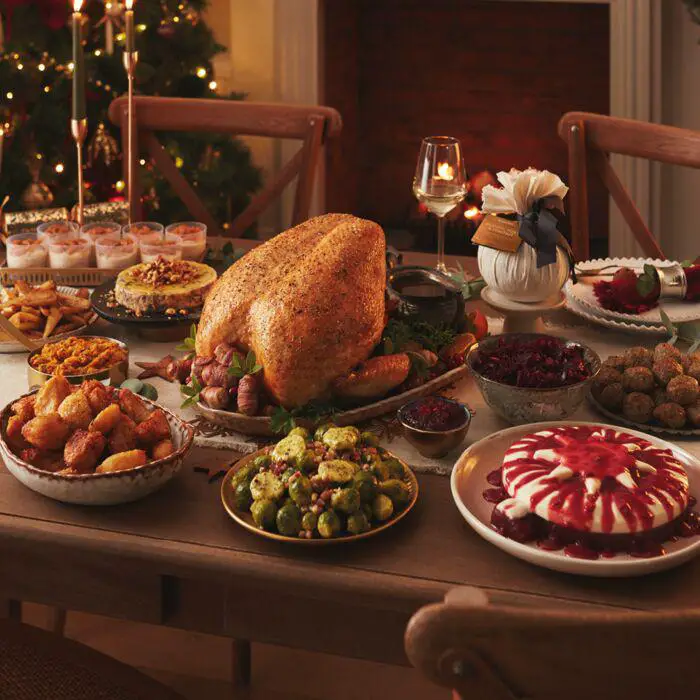
Crystal glasses caught the candlelight, throwing fractured rainbows across the pristine white tablecloth. Thirty pairs of eyes watched her, some with genuine affection, others with the careful attention you give to people who remember slights and reward loyalty. Everything was arranged for her favorite holiday tradition: a “perfect” family dinner with an audience large enough to appreciate her performance.
The dining room itself was a masterpiece of calculated elegance—twelve-foot ceilings, crown molding that probably cost more than my car, a chandelier that Helen loved to mention was “an authentic Victorian piece, shipped from England.” The kind of room designed to make certain people feel elevated and others feel small.
I’d been feeling small in this room for seven years.
But tonight would be different.
Helen wore burgundy—her power color, she called it—with pearls at her throat and that smile she reserved for moments when she was about to say something that would hurt while appearing gracious. I’d learned to read that smile the way sailors read storm clouds.
She raised her wine glass—Bordeaux, naturally, nothing pedestrian like California Cabernet—and the room fell silent with Pavlovian obedience.
“Before we begin our meal,” Helen said, her voice carrying that particular blend of warmth and authority that made people lean in, “I want to introduce someone very special.”
She gestured to the blonde woman beside her, positioned like a prized possession, like someone who’d earned the right to sit in the inner circle. The woman was beautiful in that specific way Helen approved of: tasteful highlights, conservative dress that still managed to show off an enviable figure, makeup that looked natural but had probably taken an hour, jewelry that whispered “old money” rather than shouted “new rich.”
Everything I wasn’t, in other words.
“This is Chloe Morrison,” Helen continued, her smile widening. “Some of you may remember her mother, Patricia, from the country club. Chloe just finished her MBA at Wharton, and she’s starting a position at Whitmore Industries next month.”
Whitmore Industries. The family business. The empire Helen’s late husband had built and that she now ruled with an iron fist wrapped in cashmere.
“I know she’ll be a perfect match for Liam,” Helen said, pausing just long enough for the words to register, for people to start exchanging glances. “After the divorce, of course.”
The divorce.
Said so casually, so matter-of-factly, as if my marriage was already over, already decided, already nothing more than paperwork waiting to be filed.
My husband—Liam, the man I’d loved for seven years, married for four, built a life with despite his mother’s constant undermining—didn’t laugh. Didn’t protest. Didn’t defend me or our marriage or even basic human decency.
He just lowered his gaze, silent, staring at his plate like the pattern on the china was suddenly fascinating. His jaw was tight. His hands, usually so confident, were clenched around his napkin.
He looked like a man who already knew his lines, who’d been rehearsing this scene, who’d agreed to this performance and was now just waiting for his cue.
And that was the moment I stopped pretending I was confused.
Eight weeks earlier, I would have sworn my marriage was solid.
Not perfect—no marriage is perfect—but solid. Real. Built on something stronger than romance and passion. We’d weathered his mother’s disapproval from day one. We’d survived my miscarriage two years ago. We’d navigated career changes and financial stress and the ordinary grinding wear of two people learning to share a life.
Seven years together, four years married. The kind of steady, adult love you’re supposed to be able to trust.
I’d explained away the late nights. Liam was working toward a promotion—his mother had been pushing him to take on more responsibility at Whitmore Industries, to “prove himself worthy of the family legacy.” Of course he’d be staying late, networking, taking on extra projects.
I’d explained away the “work calls” taken in another room, his voice dropping to a murmur, his face turned away. Privacy was natural. Everyone needed space.
I’d explained away the sudden obsession with the gym. He was getting older—thirty-five now—and wanted to stay healthy. That was admirable, wasn’t it? Better than letting himself go.
I’d explained away the new cologne I didn’t recognize. Maybe it was a gift from a client. Maybe he’d just decided to try something different.
I’d explained away everything because the alternative was too terrible to consider.
Until one Sunday morning in October.
I was making coffee—the expensive organic blend Helen had given us with the pointed comment that “good coffee is worth investing in, unlike some things”—when Liam’s phone lit up on the counter. He was in the shower, and I wasn’t trying to snoop, wasn’t the kind of wife who checked phones and emails.
But the message preview was right there, impossible to miss:
Chloe: Can’t wait to meet your whole family properly… P said for now we’re just friends
P.
The nickname only Helen’s inner circle used. Patricia. Penelope. But mostly, Helen herself—her maiden name was Pemberton, and her closest friends had called her “P” since college.
My hands went cold around my coffee mug.
I stared at that message until the screen went dark, my mind racing through possibilities, explanations, innocent interpretations. But that phrase—”meet your whole family properly”—implied she’d already met them improperly, casually, as someone being slowly introduced rather than suddenly presented.
And “P said for now we’re just friends” meant Helen knew. Was involved. Was orchestrating something.
I didn’t cry and explode the way I might have at twenty-five. I didn’t storm into the bathroom and throw the phone at him or demand explanations he’d find ways to spin and deflect.
I got quiet.
I took notes.
I became the kind of observer I’d been trained to be in my previous life, before I’d met Liam, before I’d let myself be convinced that being his wife was career enough.
Because here’s what Helen never knew about me: before I became Mrs. Liam Whitmore, before I became the daughter-in-law who could never quite measure up, I’d been a forensic accountant. I’d worked for firms that tracked financial fraud, that untangled complex schemes, that followed paper trails through labyrinths of shell companies and hidden accounts.
I knew how to find things people wanted to hide.
So I checked dates. I reviewed our paperwork—all of it, every document we’d signed since getting married. I went through our shared accounts and matched every “small” expense to a timeline. Dinners I’d thought were business meetings. Hotel stays I’d thought were conferences. Gifts I’d thought were for clients.
I built a case the way I’d once built cases for clients paying me six figures to uncover embezzlement and tax fraud.
And I confirmed one detail Helen loved to brag about at her gatherings, usually when she’d had just enough wine to let her resentment show through the polish.
The “big house.”
The four-bedroom colonial in the nice suburb, the one with the two-car garage and the yard and the kitchen that had been renovated with granite countertops and stainless steel appliances. The house Helen loved to tour visitors through while pointing out all the “improvements” she’d suggested, all the furniture she’d helped select, all the ways she’d shaped it into something worthy of the Whitmore name.
It was in my name. Solely, completely, legally mine.
Because when we’d bought it four years ago, I’d been the one with good credit. Liam had been recovering from some bad investments—mistakes he’d made trying to prove himself to his mother, trying to show he could grow the family wealth the way his father had.
I’d qualified for the mortgage. I’d made the down payment from my savings. I’d signed all the documents.
And somehow, over the years, we’d all started pretending it was “our” house in a way that erased my ownership. Helen referred to it as “Liam’s place.” Relatives asked Liam about maintenance and renovations as if I didn’t exist. Even Liam, when talking to his friends, called it “my house” rather than “our house” or, God forbid, “her house.”
But the deed didn’t lie. The mortgage statement didn’t lie. The property tax bills that came in my name alone didn’t lie.
The house was mine.
And that was going to matter more than Helen could possibly imagine.
Back at that Christmas table, Helen had seated me at the far end—as far from her and Liam and Chloe as possible while still technically being present. Like background decor. Like a guest who hadn’t quite earned their invitation.
Chloe was positioned directly across from Liam, their place settings almost perfectly aligned so they could make easy eye contact, so every conversation could naturally include both of them while excluding me by simple geography.
Throughout dinner—seven courses, because Helen believed excess was elegance—every conversation somehow circled back to Chloe.
Her education. “Wharton, you know. Not just any business school. The business school.”
Her values. “Raised properly, with an understanding of legacy and responsibility.”
Her future. “Such potential. The kind of woman who elevates everyone around her.”
The implications were clear even to the guests who didn’t know about the message on Liam’s phone, who didn’t know about the affair that was apparently an open secret in Helen’s circle. They could see what was being arranged, what performance they were being asked to witness.
Some looked uncomfortable. Some looked intrigued by the drama. A few—Helen’s closest friends, the ones who’d never quite accepted me—looked satisfied.
Even dessert came with a pointed moment. Helen brought out her cherished family recipe—a chocolate torte that was apparently legendary, that she made only for “very special occasions.” She served it herself, making a show of cutting perfect slices and presenting them on her mother’s Limoges plates.
She gave Chloe the first slice.
“For family,” Helen said warmly, her hand briefly touching Chloe’s shoulder with an affection she’d never once shown me.
I’d asked for that recipe for eight years. Every Christmas, every birthday, every family gathering. Always the same response: “It’s a family recipe, dear. Perhaps someday.”
Someday when I’d proven myself worthy. Someday when I’d earned my place. Someday that was clearly never coming because I’d already been replaced.
Then came the toast.
Helen stood again, glass raised, and the room fell silent. This was it. The public performance. The moment she’d been building toward all evening.
“I want to thank you all for being here tonight,” she began, her voice warm and gracious and utterly false. “Family is everything. Legacy is everything. And I’m so grateful to be surrounded by people who understand what truly matters.”
She looked at Chloe, then at Liam, her meaning clear.
“To new beginnings,” Helen said, raising her glass higher. “And to the courage to pursue what we really want, even when it’s difficult.”
The room held its breath, waiting to see if I’d crack. If I’d cry. If I’d make a scene that would let them all feel sorry for me while secretly judging me for being emotional, for not handling things with grace.
I didn’t.
Instead, I smiled—genuinely smiled, because what I was about to do felt better than any tears could.
I stood up, my chair scraping slightly against the hardwood floor. Every eye turned to me. Helen’s expression flickered—surprise, maybe, or concern that I was about to do something that would disrupt her careful staging.
I picked up my wine glass. Held it steady. Looked directly at Chloe with the kind of pleasant curiosity you might use asking about someone’s job or hobbies.
“Chloe,” I said, my voice carrying clearly in the sudden silence, “when exactly did your relationship with my husband begin?”
The question landed like a grenade in a china shop.
Liam froze so completely his wine glass stopped midair, burgundy liquid trembling but not spilling. His face went pale, then flushed, then pale again. His mouth opened slightly, then closed. No words came out.
Chloe’s practiced smile—the one that had been so confident all evening, so sure of her place and her future—vanished. Her eyes went wide, flicking to Helen, then to Liam, then back to me like a trapped animal looking for escape routes.
“I… what?” she managed. “We’re not… I don’t…”
“Oh, I’m sorry,” I said, tilting my head with false confusion. “I just thought, since Helen’s introducing you as my husband’s future wife and seating you like you’re already family, that you must have some kind of relationship. Unless this is all just theoretical? Just planning?”
The word “planning” hit Helen like a slap. Her face tightened, her gracious hostess mask slipping for just a moment to reveal something harder, colder.
“Emma,” she said, my name sharp in her mouth. “This is hardly the time—”
“For honesty?” I interrupted, still smiling. “I disagree. I think this is exactly the time.”
I reached into my clutch—the small black evening bag I’d brought, the one Helen had complimented earlier because it was Chanel, because expensive things were the only things she respected.
I pulled out a folded piece of paper.
“Since we’re all family here,” I said, “and since Helen values honesty and legacy so much, I thought I’d share some dates.”
I unfolded the paper slowly, deliberately, letting the tension build.
“October 15th,” I read. “Dinner at Le Bernardin. Charged to the joint credit card as a business meeting. Except Le Bernardin doesn’t have private dining rooms for business meetings. It has romantic tables for two.”
Liam’s face had gone from pale to gray.
“October 22nd. Weekend at the Marriott Harbor Resort. Also charged as business. Except Whitmore Industries has no contracts or clients in that area.”
Chloe had stopped looking trapped and started looking sick.
“November 3rd. Tiffany & Co. A bracelet. Charged as a client gift. Except it was delivered to an address that matches Chloe’s apartment.”
I looked up from my paper, my smile never wavering. “Should I continue? I have three more pages. Very detailed. Dates, times, expenses, text messages from Liam’s cloud backup that sync to our shared iPad. The one he apparently forgot about.”
The room was so quiet I could hear the candles flickering.
Helen had gone rigid, her face a mask of controlled fury. This wasn’t how her evening was supposed to go. This wasn’t the script. I was supposed to be humiliated, to leave quietly, to make her son’s transition to his new, more suitable wife as smooth as possible.
“How dare you,” Helen started, her voice shaking slightly. “In my home—”
“Let’s talk about homes,” I said pleasantly. “Since that seems to be on everyone’s mind tonight. Chloe, has Liam told you where you’ll be living? After the divorce, once everything’s ‘finalized’?”
Chloe looked at Liam, clearly lost. “The… the house. Your house. We talked about it. Your mother said—”
“My house,” I interrupted gently. “Not his house. Mine. Solely mine. My name on the deed. My name on the mortgage. My down payment. My credit that qualified us for the loan when his credit was too damaged from failed investments.”
I turned to Helen, whose face had gone from fury to calculation to something that looked almost like fear.
“Did you not tell her?” I asked. “Did you not mention that little detail in all your planning? That the ‘big house’ you love to show off, the one you redecorated and tour and treat like family property, legally belongs to me and only me?”
“That’s community property,” Helen said quickly. “In a divorce, it would be split—”
“Except we have a prenup,” I said. “Remember? The one you insisted on. The one your lawyers drew up to protect the Whitmore family assets from me, the unsuitable wife who might try to take advantage of your son.”
I pulled another paper from my clutch. “The prenup that specifies any property purchased in one spouse’s name alone, with their funds alone, remains separate property. You were so worried I’d go after Whitmore money that you made sure I couldn’t touch any of it in a divorce.”
I smiled at her, and this time it wasn’t pleasant or fake. It was genuine satisfaction.
“You protected him from me so thoroughly that you forgot to protect him from himself. The house is mine. And according to your ironclad prenup, he has no claim to it.”
Liam finally found his voice. “Emma, please. This isn’t—we can talk about this privately. This doesn’t have to be—”
“Public?” I finished. “Like your mother introducing your mistress as your future wife in front of thirty people? Like her seating me at the far end of the table like I’m already gone? Like her serving your girlfriend the family recipe she’s denied me for eight years?”
I looked around the room, at all the faces watching this drama unfold. Some looked horrified. Some looked fascinated. Helen’s closest friends looked like they’d just watched their champion lose a fight they’d been certain she’d win.
“Here’s what’s going to happen,” I said, my voice steady and clear. “I’m going to leave this lovely dinner. I’m going to go home—to MY home—and I’m going to change the locks. Tomorrow, I’m going to file for divorce, citing adultery, which even your prenup acknowledges as grounds for an at-fault divorce that voids some of its provisions.”
I pulled out one more paper. “This is a list of every expense Liam charged to our joint accounts for his affair. Seventeen thousand dollars over eight weeks. I’ll be seeking full reimbursement, plus my legal fees.”
Liam looked like he might be sick.
“But here’s the best part,” I said, turning back to Helen. “Your son is welcome to marry Chloe. I’m sure they’ll be very happy. They can live in her apartment, or maybe you’ll buy them something suitable. But they won’t be living in my house. And if Liam doesn’t move out voluntarily within 48 hours, I’ll have him legally evicted.”
“You can’t do this,” Helen said, but her voice had lost its authority. “You’re being vindictive. Emotional. This is—”
“Legal,” I said. “Everything I’ve done, everything I’m planning to do, is completely legal. You might want to ask your lawyers. Oh wait—they’re the ones who wrote that prenup. They’ll tell you I’m right.”
I set down my wine glass, untouched, and picked up my clutch.
“Chloe,” I said, looking at the woman who’d thought she was inheriting my life, “a word of advice. Always read the paperwork. Always know what you’re walking into. And never, ever trust a man whose mother picks out his girlfriends.”
I walked toward the door, my heels clicking against Helen’s precious hardwood floors. As I passed Liam, I stopped.
“You could have just asked for a divorce,” I said quietly, just for him. “You could have been honest. We could have handled this like adults. But you let your mother turn it into theater. You let her humiliate me in front of thirty people. You sat there silent while she served your mistress your family’s cherished dessert.”
His eyes were wet. “Emma, I—”
“Save it,” I said. “Tell it to your lawyer. You’re going to need a good one.”
I walked out of Helen Whitmore’s dining room, out of her perfect house, out of the life I’d spent seven years trying to fit into. Behind me, I heard voices rising—Helen’s sharp commands, Liam’s protests, Chloe’s confused questions, guests murmuring and exclaiming.
But I didn’t look back.
The night air was cold and sharp, December in full force. I stood on Helen’s driveway—her circular, perfectly maintained, shows-the-money driveway—and took a deep breath.
My hands were shaking. Not from fear or sadness, but from adrenaline. From the strange exhilaration of finally, finally standing up for myself after years of being made to feel small.
My phone buzzed. A text from my best friend Sarah, who I’d told about tonight:
Sarah: How’d it go? Do I need to bring ice cream and trashy movies?
I typed back: Bring champagne instead. I’m celebrating.
Three dots appeared, then: TELL ME EVERYTHING.
Tomorrow, I texted. Tonight I’m going home and changing the locks.
Which is exactly what I did.
I drove to my house—MY house—the one I’d spent four years pretending was “ours” when it had always been mine. I’d already arranged for a locksmith to meet me there, paid him extra for the late-night call.
By midnight, every lock was changed. Every key Liam had was now useless. I’d also called my lawyer from the car, left a message that I’d be in her office first thing Monday morning with documentation she’d need to file paperwork.
I walked through the house in the silence, seeing it differently now. Not as the place where my marriage had died, but as the place where my new life would begin.
The guest room would make a good home office. I’d need a proper workspace if I was going to restart my career in forensic accounting. I’d already gotten calls from former colleagues, word traveling fast through professional networks. Apparently, people remembered me, remembered my work, were interested in what I’d been doing for the last few years.
The master bedroom felt too big for one person, but I’d get used to it. Or maybe I’d redecorate. Make it mine in a way it had never been, not even when Liam and I were happy.
Around 2 AM, someone started banging on the door.
Liam’s voice, muffled but clearly distressed: “Emma! Please! Open the door! We need to talk!”
I looked at the door, thought about all the times I’d opened it when he’d forgotten his keys, when he’d come home late, when he’d needed something from me.
I picked up my phone and texted him instead: Speak to my lawyer. You have 48 hours to collect your belongings. Schedule it through her office.
The banging continued for ten more minutes. Then stopped.
Then my phone started ringing. Liam. Then Helen. Then Liam again. Then numbers I didn’t recognize—probably relatives or friends trying to intervene.
I turned off my phone and went to bed.
The divorce took four months.
Liam tried to fight the at-fault designation, but my documentation was ironclad. His lawyer—one of Helen’s expensive corporate attorneys who clearly wasn’t used to handling messy personal cases—tried every angle. They claimed the text messages were misinterpreted. That the expenses could be explained. That I was being vindictive and unreasonable.
My lawyer—a sharp woman named Patricia Chen who specialized in high-conflict divorces—presented everything with clinical precision. The text messages. The expense reports. The hotel receipts. The timeline that showed the affair had started long before I’d discovered it.
And the prenup that Helen had insisted on, the one that was supposed to protect the Whitmore family fortune, ended up protecting me instead. Everything I’d brought into the marriage, everything in my name alone, remained mine. Everything we’d acquired together was split according to actual financial contribution, and I’d kept meticulous records.
The house was mine. My car was mine. Half the joint accounts—plus the $17,000 reimbursement for affair expenses—was mine. And I walked away with zero obligations to Liam or his family.
Helen tried to weaponize social connections, spreading stories about how I’d “trapped” her son, how I’d been “planning this all along,” how I was “money-hungry” despite literally walking away from access to the Whitmore fortune.
But enough people had been at that Christmas dinner. Enough people had seen her introduce Chloe as Liam’s future wife. Enough people had witnessed the humiliation she’d intended for me. And enough people had been quietly uncomfortable with Helen’s controlling behavior for years, waiting for someone to finally stand up to her.
The narrative didn’t stick.
Instead, I became “the wife who fought back.” The one who’d documented everything, played the long game, and won. Other women started reaching out—friends of friends, acquaintances, strangers who’d heard the story—asking for advice about their own situations, their own documentation, their own escape plans.
I started consulting on divorce cases, helping other forensic accountants track financial abuse and hidden assets. My old firm offered me a position—senior analyst, better title and pay than I’d left with. I took it.
Six months after the divorce was finalized, I ran into Chloe at a coffee shop downtown.
She looked different. Smaller somehow. Less glossy. The confidence that had radiated from her at Helen’s Christmas dinner had dimmed to something more uncertain.
She saw me at the same moment I saw her. For a second, I thought she might pretend not to recognize me or rush out to avoid conversation. Instead, she walked over to my table.
“Emma,” she said. “Can I… would you mind if I sat down?”
I gestured to the empty chair. “Sure.”
She sat carefully, her designer handbag—probably a gift from Liam or Helen—clutched in her lap like armor.
“I wanted to apologize,” she said. “For my part in… everything. I knew he was married. I knew it was wrong. But his mother was so convincing, and he kept saying the marriage was already over, that you two were basically just roommates, that the divorce was practically filed.”
“It’s a common story,” I said, not unkindly.
“I should have known better.” Chloe looked down at her hands. “And I should tell you—Liam and I aren’t together anymore. We lasted about three months after your divorce was final. Turns out when you build a relationship on secrets and lies, it doesn’t magically become honest and healthy just because the affair is over.”
“I could have told you that,” I said.
“Yeah.” She smiled weakly. “You did, actually. At that dinner. I just didn’t listen.”
We sat in silence for a moment. Then Chloe said, “Helen still texts me sometimes. Asking if I’d consider giving Liam another chance. Like we’re puzzle pieces that should fit just because she wants us to.”
“Are you going to?”
“God, no.” Chloe laughed, sounding more genuine than I’d ever heard her. “I’m actually moving. New job, new city, new everything. Turns out being Helen Whitmore’s project is exhausting.”
“It is,” I agreed. “Good luck with the fresh start.”
“You too,” Chloe said, standing to leave. “Though from what I hear, you don’t need luck. You’re doing great.”
After she left, I sat with my coffee and thought about that Christmas dinner. About Helen’s confident smile. About Liam’s silence. About the moment I’d decided to stop being small and start being myself.
It had been terrifying and exhilarating and completely worth it.
A year after the divorce, I got an invitation in the mail.
A wedding invitation.
Liam was getting married. Not to Chloe—someone else, someone I’d never heard of, someone Helen had probably vetted and approved and molded into her vision of the perfect daughter-in-law.
The invitation was addressed to me and a plus-one. Whether it was Liam’s attempt at showing he’d moved on gracefully or Helen’s attempt at proving she’d won something, I couldn’t tell.
I RSVP’d no and donated the fancy invitation to my shredder.
That same week, I closed on a new house. Smaller than the colonial I’d sold—I didn’t need four bedrooms for one person—but modern, bright, with a home office that had built-in bookshelves and a window overlooking a garden I actually wanted to maintain.
Mine. Completely, undeniably, legally mine. Not because someone had failed to read paperwork or because a prenup had backfired, but because I’d earned it with my work, bought it with my money, chosen it for my life.
Sarah helped me move in, directing movers and unpacking boxes and making jokes about my obsessive labeling system.
“You know what this place needs?” she said, standing in the middle of my new living room.
“Don’t say a housewarming party.”
“I was going to say a housewarming party.”
I laughed. “Fine. Small. Just people I actually like.”
“So not the Whitmores.”
“Definitely not the Whitmores.”
The party happened two weeks later. Twenty people—real friends, colleagues, my brother and his family, Sarah and her wife. We drank wine, ate takeout pizza, and toasted to new beginnings.
No one mentioned Liam. No one brought up the divorce. No one pitied me or asked if I was lonely or suggested maybe I should try dating again soon.
They just celebrated with me. For me. The life I’d built from the ashes of a marriage that had never really been mine.
Late that night, after everyone had left and I was cleaning up paper plates and plastic cups, my phone buzzed.
A text from an unknown number: This is Liam. I know you probably don’t want to hear from me. But I wanted to say I’m sorry. For everything. You deserved better. – L
I stared at the message for a long time.
Part of me wanted to respond—to say something cutting or clever or final. To have the last word.
But I realized I didn’t need to.
The last word had been that Christmas dinner, when I’d stood up with my documentation and my courage and said everything that needed saying. Anything after that was just noise.
I deleted the message without responding and blocked the number.
Then I poured myself one last glass of wine, stood on my new back patio, and looked up at the stars—the same stars that had been there during all those years with Liam, but that I’d been too busy trying to be the right kind of wife to really notice.
“To me,” I whispered, raising my glass to the night sky. “To choosing myself. To never being small again.”
And somewhere in the darkness, I could almost hear my younger self—the forensic accountant who’d had dreams and ambitions and plans before love had derailed them—whisper back:
Welcome home.
THE END

Adrian Hawthorne is a celebrated author and dedicated archivist who finds inspiration in the hidden stories of the past. Educated at Oxford, he now works at the National Archives, where preserving history fuels his evocative writing. Balancing archival precision with creative storytelling, Adrian founded the Hawthorne Institute of Literary Arts to mentor emerging writers and honor the timeless art of narrative.