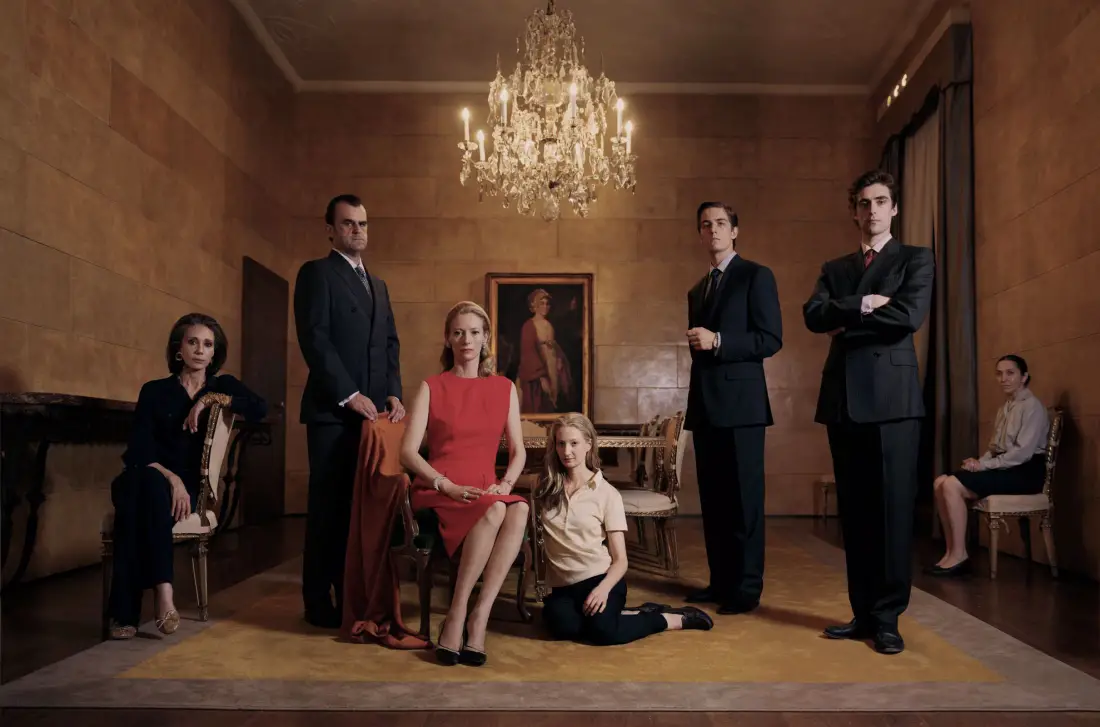
The Architecture of Erasure
I learned how to shrink the way some people learn to breathe.
It wasn’t a conscious decision made over coffee one morning. There was no single, dramatic moment where I looked in the mirror and said, “I will become smaller starting today.” Instead, it was a slow, agonizing erosion—five years of marriage to Leonardo “Leo” Sterling-Aguilar sanding me down until I fit neatly into the cracks of his gilded, terrifyingly perfect life.
Speak softer. Ask for less. Smile on cue. Don’t ruin the brand. Don’t embarrass the firm. Don’t take up oxygen in a room that Leo already owned.
We lived in a sprawling colonial estate in Greenwich, Connecticut—a fortress of limestone and ivy where the lawns were manicured more often than the residents. To the elite of the Gold Coast, I was the “Bookstore Girl,” the quaint little charity case Leo had rescued from a dusty shop in Soho. They saw a modern fairytale; I saw a high-security cage.
Leo didn’t hit me. Not with his hands. That would have been too messy, too liable to leave marks that could be photographed. He hit me with tone. He hit me with silence. He hit me with the way he could look right through me at a dinner party, as if I were a piece of inherited furniture he had long ago outgrown but was too polite to throw in the trash.
I remember the day I signed the first document. It was three months into our marriage.
We were in his study, a room that smelled of aged leather and ungodly amounts of money. The walls were lined with law books he’d never read and first editions he’d never opened—props in the theater of success. He slid a thick stack of papers across the mahogany desk, the sound crisp and final.
“What is this?” I asked, reaching for my reading glasses.
Leo laughed—a soft, patronizing sound that felt like a pat on the head. He took the glasses from my hand and set them aside, as if they were toys I was too young to play with.
“Just standard restructuring for the estate, baby,” he said, flashing that smile—the one that had melted my knees when he first walked into my bookstore wearing a cashmere coat and carrying a first edition of Gabriel García Márquez like it was the most natural thing in the world.
“It protects you. In case something happens to me, I want to make sure the firm can’t touch our personal assets. It’s for your safety.”
“Should I read it?” I asked, my hand hovering over the pages.
His face shifted. The warmth evaporated like water on hot stone, replaced by a cold, wounded look that I would come to know intimately—the look that said I had hurt him, disappointed him, revealed myself to be less than he’d hoped.
“Do you not trust me, Maria? I have a team of lawyers costing me five thousand dollars an hour to protect us, and you think you’re going to find a typo? You think your high school education is going to catch something that Harvard Law Review missed?”
I shrank. I felt foolish. I felt small. The words “high school education” landed like a slap, a reminder that I was playing in a league I didn’t understand.
“No, Leo. I trust you.”
I signed.
I didn’t know it then, but I had just signed a waiver granting him power of attorney over “all future inheritances, known and unknown.” I had signed away ghosts I didn’t even know existed.
That was the beginning. Over five years, there were dozens of moments like that. Renovations that weren’t renovations. Tax shelters that were trapdoors. Joint ventures that were solo theft. I signed them all because I was the “Bookstore Girl” and he was the Titan of Logistics. I signed because I was grateful to be loved.
Or so I thought.
The Anniversary of a Lie
The erosion culminated on the Saturday night Leo insisted we celebrate our fifth anniversary “in a big way.”
“It’s a milestone, Maria,” he said, adjusting his cufflinks in the mirror of our bedroom, not looking at me, never looking at me unless I was performing incorrectly.
“Five years. We need to make a statement.”
I was sitting on the edge of our bed—a bed that cost more than my parents had made in a decade—watching him prepare himself like an actor backstage. “I thought we could go to that little Italian place in the Village. Where we had our first date. Just wine and pasta. No photographers. Just us.”
Leo turned around. The look in his eyes wasn’t anger; it was pity. Pure, undiluted pity for a creature who couldn’t understand simple things.
“We aren’t college kids anymore, Maria. I manage four billion dollars in logistics assets across seventeen countries. My reputation is a currency that trades every single day. This gala isn’t a party; it’s a performance. And I need my leading lady to actually show up.”
So, I showed up.
The house glowed with warm light and money. Caterers in white gloves moved like ghosts through the hallways, carrying trays of food that cost more per bite than most people spent on dinner. The air smelled of expensive lilies, roasted duck, and the metallic tang of ambition. Leo’s world filled the rooms—partners, clients, senators, “friends” who laughed too loudly and spoke in numbers like they were the only language worth knowing.
I wore a cream-colored dress I’d found at a boutique in Soho. I thought it was elegant. I thought it was simple and timeless and appropriate for a woman hosting an anniversary celebration.
But as I descended the grand staircase, I saw the other women. They were draped in tailored crimson, shimmering gold, crisp white with embroidery that looked like it had been stitched by angels working overtime. They wore diamonds that could fund a school district, rubies that could house the homeless, emeralds that could change lives.
I didn’t look like the hostess. I looked like the help who’d gotten confused about her station.
Grace Aguilar, Leo’s mother, made sure I understood my place immediately.
Grace was a woman made of steel and hairspray and inherited cruelty. She drifted over to me near the piano, her wine glass held like a weapon, her smile sharp enough to draw blood.
“You look… functional, Maria,” she murmured, her voice low enough that only I could hear the venom, loud enough that I’d never forget it.
“I liked the simplicity of it, Grace,” I said, forcing a smile that hurt my face, that made my cheeks ache with the effort of pretending.
She tilted her head, scanning me from head to toe like an appraiser examining a piece of furniture destined for the trash heap.
“Simplicity is for the poor, darling. For people who can’t afford complexity. In this room, simplicity looks like incompetence. It looks like you stopped trying. It looks like you’ve given up.” She patted my cheek—two sharp taps that stung. “But then again, Leo knew what he was buying when he took you out of that dusty little shop. You were a project. I just suppose some projects… fail. Some materials just can’t be refined.”
She glided away, leaving the scent of Chanel No. 5 and humiliation in her wake.
I swallowed the insult. I had become an expert at swallowing poison and calling it nutrition, at digesting cruelty and pretending it was love.
Twenty minutes later, Leo found me in the kitchen. He was flushed with the high of being admired, of being the center of attention, of being exactly who he believed he was meant to be. He looked magnificent in his custom charcoal suit, his hair perfectly coiffed, his watch catching the light.
“Maria,” he said, his voice light and pleasant, the tone he used when asking me to do something beneath him. “Can you help pass drinks? The servers are slammed in the West Wing, and we’re running behind schedule.”
I stared at him, waiting for the punchline, waiting for him to laugh and say he was joking.
“Leo, you hired twenty servers. Professional servers. I am your wife. It’s our anniversary.”
His smile tightened. The mask slipped just a fraction, revealing something cold and calculating underneath.
“Don’t be difficult, Maria. Not tonight. The Senator is thirsty, and it looks good if the hostess is… serviceable. Humble. It plays well for the brand. It shows we’re not pretentious.”
The brand. Always the brand. Everything in Leo’s world was content for an invisible audience that was always watching, always judging, always keeping score.
“You want me to serve drinks at my own anniversary party?”
“I want you to be useful,” he snapped, then smoothed his tie, reset his face, became Leo the Charming again. “Just for twenty minutes. Don’t embarrass me in front of these people.”
There it was. The leash. Guilt disguised as duty, control disguised as partnership.
So, I picked up a silver tray.
I walked through my own home, offering champagne to people who barely looked at me. I was invisible. A ghost in a cream dress haunting rooms filled with the living.
“Champagne?” I asked a group of men near the French doors.
They took the glasses without breaking eye contact with each other. I was furniture. I was wallpaper. I was the background noise of wealth.
I moved toward the back window, near the heavy velvet curtains, seeking a moment of silence, a moment to breathe. That was when I saw Leo standing with Roger Vance.
Roger was Leo’s personal attorney and “fixer.” A man with a shark’s smile and a suit that cost more than my father made in a year. A man whose eyes had never held warmth, only calculation. They were huddled close, heads bowed, voices low.
I paused, hidden by a large fern and the shadows of the drapes.
“The timeline is set,” Roger was saying, his voice a low growl. “As soon as the clock strikes midnight, the electronic transfer initiates. The ‘Audit Strategy’ is foolproof. She won’t see it coming.”
“And the deed?” Leo asked. He sounded calm. Bored, almost. Like they were discussing lunch plans.
“Transferred yesterday. Backdated to look like she signed it six months ago. The forensic guys said her signature is easy to replicate. It’s a simple loop with that ridiculous flourish she does.”
My heart stopped. The tray in my hands felt like it weighed a thousand pounds.
“What about the claim?” Leo asked, taking a sip of his drink, swirling the amber liquid. “If she lawyers up?”
Roger snorted—a wet, ugly sound. “Lawyers take money, Leo. By tomorrow morning, Maria won’t have access to a debit card, let alone a retainer fee. She’s isolated. She has no family. She has no assets. We’re stripping the carcass clean before she even knows she’s dead.”
Leo nodded, a look of satisfaction spreading across his face.
“Good. I’m tired of pretending, Roger. Five years of playing the ‘Prince Charming’ role to a shop girl with dreams above her station… it’s exhausting. It’s beneath me. I need a merger, not a marriage. I need an equal, not a project.”
“Does she suspect anything?”
“Maria?” Leo laughed, and the sound was like glass breaking. “She trusts me like a golden retriever. She thinks this party is for her. She thinks I love her. She has no idea she’s attending her own funeral.”
They clinked glasses and walked away, laughing about something else, already moving on to the next transaction.
I stood frozen. The room spun. The jazz music warped into a chaotic screech, every note wrong, every rhythm off.
Stripping the carcass clean.
Her own funeral.
It wasn’t just an affair. It wasn’t just a divorce. It was an annihilation. A systematic erasure of my entire existence.
The Public Execution
I should have run. I should have dropped the tray and fled into the night, called a cab, disappeared. But shock does strange things to the body. It roots you to the floor. It makes you watch your own execution with strange, detached clarity.
I set the tray down on a side table, my hands trembling so violently the glasses rattled like teeth chattering. I needed air. I needed to think. I needed to understand what I’d just heard.
But before I could move, the sound came.
Ting. Ting. Ting.
A spoon tapping against crystal. Sharp. Deliberate. Authoritative.
The conversation in the ballroom died instantly, like someone had cut the power. Two hundred faces turned toward the center of the room.
Leo stood there under the massive crystal chandelier, glowing with charisma, backlit like a saint in a Renaissance painting. He raised his hand, silencing the band with a gesture.
“May I have everyone’s attention?” he announced. His voice was warm, projecting to the back of the room without effort, without a microphone. The voice of a man who knew he was always listened to.
My stomach dropped. I knew, with a sickening certainty, what was coming.
I stepped into the doorway of the ballroom, visible but not centered. Leo saw me.
For a moment, our eyes locked. I looked for the man I had married—the man who bought me flowers every Friday, the man who whispered promises in the dark, the man who said I was the only real thing in his fake world.
He wasn’t there. He had never been there.
In his place was a calculator in a suit. A predator who had finally grown tired of playing with his food.
“I need to say something important,” Leo said, his eyes still fixed on me like a spotlight. “Something I should have said a long time ago. I’ve been pretending for far too long, and I can’t do it anymore.”
A hush spread through the crowd like a virus. People smiled, expecting a romantic declaration. A renewal of vows. A surprise gift. Some grand gesture of love.
Leo took a breath, staging the moment perfectly, letting the anticipation build.
“Maria,” he said, his voice crisp and clear. “I want a divorce.”
The silence that followed was absolute. It sucked the air out of the room, out of the building, out of the entire universe.
Then, a few nervous chuckles. People thought it was a joke. A roast. Some kind of performance art.
“I’m not joking,” Leo said, his voice hardening, sharp edges emerging. “I am sorry to do this in front of our friends and partners, but I can no longer carry the dead weight of this marriage. I can no longer pretend that this is working.”
He began to walk toward me, the crowd parting like the Red Sea, everyone suddenly desperate to not be in the blast radius.
“I married you thinking you would grow,” he said, loud enough for the waiters in the kitchen to hear, loud enough for the parking valets outside to hear. “I thought I could mold you. I thought I could take the girl out of the bookstore and make her a woman of substance, a woman worthy of this life. But I failed. Or rather, you failed. You are still… small. Still ordinary. Still hopelessly provincial.”
Tears pricked my eyes, hot and humiliating, blurring my vision.
“You’re comfortable being invisible,” Leo continued, closing the distance, his shoes clicking on the marble floor like a countdown. “You’re comfortable serving drinks while I build an empire. You’re comfortable being furniture. I need a partner, Maria. Not a servant. Not a pet. Not a charity case.”
Roger Vance stepped forward from the crowd, holding a thick black folder like a death certificate. He looked like an executioner at a medieval beheading.
“We have prepared the necessary filings,” Roger announced to the room, as if this were a board meeting, as if my life was just another item on an agenda. “Due to the pre-nuptial agreements and the recent asset restructuring—which Maria signed willingly and repeatedly over the past five years—the separation is effective immediately. The property is in Leonardo’s name. The accounts are in the Sterling-Aguilar Holding Company. The vehicles are registered to the business.”
“How?” I whispered, my voice cracking. “We… we built this together.”
Leo stopped inches from my face. He smelled of expensive scotch and betrayal and something else—victory.
“You signed what I put in front of you,” he whispered, low and cruel, just for me. “Did you ever read a single line, Maria? Or were you just so happy to be Mrs. Aguilar, so grateful that someone like me would marry someone like you, that you signed your life away one page at a time?”
He grabbed my arm—firmly, painfully, his fingers digging into the soft flesh above my elbow.
“It’s time for you to go.”
“This is my house,” I said, the first spark of anger cutting through the grief and shock. “I live here. This is my home.”
“Check the deed,” Leo said loudly, playing to the audience, making sure everyone heard him. “It’s my house. It has always been my house. You were just a guest who overstayed her welcome. You were an experiment that failed.”
He began to drag me toward the foyer, my feet stumbling on the marble. The guests watched in silence. Two hundred of the most powerful people in New York, and not one of them said a word. Not one of them stood up. Not one of them questioned this public cruelty. They were predators, and they knew better than to interfere when a lion was culling the herd.
Grace stood by the fireplace, sipping her wine, a look of bored satisfaction on her face, as if she were watching a play she’d already seen.
Leo opened the massive oak front doors, letting in the cold November air.
“Goodbye, Maria,” he said, preparing to shove me onto the limestone steps, to throw me out into the night like garbage.
But he stopped.
Because the driveway wasn’t empty.
The Arrival of the Ghost
Three black armored Escalades were idling in the circular driveway, their engines humming with a low, menacing vibration. The headlights cut through the darkness, blinding us for a moment, turning the night into day.
Leo hesitated, his grip on my arm loosening slightly.
“Who the hell is this? Roger, did you schedule security?”
The doors of the lead vehicle opened in perfect synchronization. Security guards—men who looked like they were carved out of granite and dressed in black suits that couldn’t quite hide the weapons underneath—stepped out and took positions around the vehicles.
Then, the center car door opened.
A cane emerged first—ebony wood topped with solid silver carved into the shape of a ship’s anchor.
Then, a man.
He was in his late seventies, but he stood with a posture that defied age, that denied time’s authority. He wore a suit that was tailored with a precision that made Leo’s expensive clothes look like Halloween costumes. His hair was white, swept back like a lion’s mane. His face was lined with decades of hard decisions, of victories and losses that had shaped him into something formidable.
He walked up the steps, ignoring Leo completely, as if he didn’t exist, as if he was too insignificant to acknowledge.
He stopped in front of me.
He looked at my face—my tear-streaked cheeks, my trembling chin, my dark eyes that I’d always thought were unremarkable. His expression softened, crumbling from iron into something heartbreakingly human, something vulnerable.
“My girl,” he whispered. His voice was gravel and velvet, rough and gentle. “There you are. Finally.”
I blinked, confusion shaking my head. “I… I don’t know you.”
He reached out a hand, hovering near my face but not touching, as if afraid I might break, might disappear like smoke.
“You have her eyes. You have Catalina’s eyes. Her exact eyes. I’ve been looking for those eyes for thirty years.”
My breath hitched. “Catalina? My mother?”
“My daughter,” the man said, and his voice broke on the word. “My stubborn, brilliant, beautiful runaway daughter who I loved and lost because I was too proud to bend, too rigid to listen.”
A gasp rippled through the guests standing in the foyer behind Leo, spreading like a contagion.
“Who are you?” Leo demanded, trying to regain control of his stage, trying to reassert his authority. “This is private property. You’re trespassing. Get off my land before I call the police.”
The older man turned his gaze to Leo slowly, deliberately. The warmth vanished instantly, replaced by a coldness so absolute it felt like the temperature dropped twenty degrees. The air itself seemed to freeze.
“Your land?” the man repeated, his voice quiet but carrying more menace than any shout.
He stepped past me, entering the foyer. He slammed his cane onto the marble floor. The sound echoed like a gunshot, like a gavel, like a declaration of war.
“I am Arthur Sterling,” he announced, his voice filling the massive space.
The name hit the room like a bomb. Like a grenade rolled into a crowded space.
Arthur Sterling. The Shipping King. The Port Master. The man who owned the docks, the ships, the supply chains that fed entire continents. The man whose logistics empire made Leo’s company look like a child’s lemonade stand. Leo had worshipped Arthur Sterling for his entire career. He had a biography of him on his nightstand, highlighted and annotated. He quoted him in meetings.
“Mr… Mr. Sterling?” Leo stammered, his arrogance evaporating like morning dew under a blowtorch. “I… I’m honored. I didn’t know you were… I mean, I’ve followed your work for years. I’m a huge admirer.”
“You didn’t know I was Maria’s grandfather,” Arthur finished, his voice cutting.
Leo went pale. Actually pale. The blood drained from his face. “What?”
“My daughter, Catalina, left my home thirty years ago,” Arthur said, his voice projecting to the rafters, to every corner of the room, making sure everyone heard. “We fought. I was a tyrant. A controlling father who thought he knew best. She wanted freedom. She wanted to make her own choices, her own mistakes. She changed her name to Torres and disappeared into the city. I spent half my life looking for her, hiring investigators, following false leads. I found her death certificate six months ago. Cancer. She died alone because I was too proud to find her while she was alive.”
Arthur’s voice cracked, but he pushed through. “And then… I found her daughter. I found you, Maria.”
He turned back to me, his eyes glistening.
“I have been watching you, Maria. For months. I wanted to approach you sooner, to introduce myself, to bring you home. But then… my security team found something interesting. Something that made me wait, made me watch, made me investigate.”
A young woman stepped out of the second car. She was in her thirties, wearing a perfectly tailored suit, carrying a leather portfolio. She walked up the steps with the confidence of someone who had never lost a case.
“This is Sofia Ibarra,” Arthur said. “My lead forensic attorney. The woman who solves problems that other lawyers say are impossible.”
Sofia opened the portfolio. She didn’t look at Leo. She looked at the crowd, at the witnesses, making sure they were all paying attention.
“We ran a comprehensive audit on Leonardo Aguilar,” Sofia said, her voice crisp and dangerous, every word a bullet. “And we found that he didn’t marry Maria by accident. He didn’t fall in love with a bookstore girl. It was calculated. It was planned.”
She pulled out a document and held it up for everyone to see.
“This is an internal memo from Aguilar Logistics, dated six years ago. Five months before Leo ever walked into Maria’s bookstore. Subject: ‘The Santillán-Sterling Trust Investigation.'”
Leo lunged forward, his face twisted. “That’s confidential! You can’t—”
One of Arthur’s guards stepped in, blocking Leo with a massive arm that looked like it was made of concrete. Leo bounced off it like a child.
Sofia continued, unbothered, her voice never wavering. “Leo knew about your lineage before you did, Maria. He knew that your mother had left a trust fund in your name—a trust established by Arthur Sterling before Catalina disappeared, a trust that activates upon your marriage or upon confirmation of Catalina’s death. A trust worth four billion dollars.”
My knees gave out. Arthur caught me, his arm strong and steady, holding me up.
“Four… billion?” I whispered. The number was incomprehensible. Impossible.
“He married you to get close to the money,” Arthur said, his voice hard now, glaring at Leo with pure hatred. “He spent five years isolating you, gaslighting you, making you feel small, making you doubt yourself, destroying your confidence and your sense of self-worth—all so that you would sign whatever he put in front of you without question. He was transferring your inheritance into his shell companies, dollar by dollar, page by page, signature by signature.”
“Lies!” Leo screamed, sweat beading on his forehead, running down his temples. “You can’t prove any of that! This is extortion! This is—”
“We can prove it,” another voice said, calm and authoritative.
From the third car, more men emerged. But these weren’t private security. The letters on their windbreakers were yellow and bold, impossible to miss.
FBI.
Roger Vance dropped the black folder he was holding. It hit the floor with a thud that seemed to echo forever.
“Leonardo Aguilar,” the lead agent said, stepping into the foyer, his badge held high. “You are under arrest for wire fraud, grand larceny, money laundering, conspiracy to commit fraud, and identity theft. You have the right to remain silent…”
The ballroom erupted. Guests were screaming, pulling out phones, scrambling to get away from Leo as if failure was contagious, as if his crimes might somehow contaminate them by proximity.
Leo backed up, looking for an exit, his eyes wild. “Maria! Maria, listen to me! It’s not what it looks like! It was for us! I was investing it! I was going to tell you! We’re partners!”
I stood up straight, pulling away from Arthur’s support. I wiped the tears from my cheeks with the back of my hand.
I looked at the husband who had just tried to throw me away like trash, who had publicly humiliated me, who had stolen five years of my life.
“For us?” I asked, my voice cutting through the chaos like a knife.
Leo nodded frantically, desperately. “Yes! Yes, exactly! We’re partners, remember? We’re a team! You and me against the world!”
I walked up to him slowly. The FBI agents paused, letting me have the moment, understanding that some things needed to be said.
“You told everyone tonight that I was comfortable being invisible,” I said softly, my voice steady now, no longer shaking. “You said I was small. You said I was ordinary. You said I was a failed project.”
“I was just… I was just playing the game, baby. You know how these people are. You know I love you. I’ve always loved you.”
I leaned in close, so only he could hear, my lips near his ear.
“You didn’t shrink me, Leo,” I whispered. “You compressed me. And do you know what happens when you compress something combustible for five years? When you apply pressure to something volatile?”
I stepped back, met his eyes one final time.
“It explodes.”
I nodded to the agents. “Take him.”
They moved in, handcuffs clicking, rights being read. Leo was still screaming my name as they dragged him toward the door, his expensive shoes scraping on the marble he’d been so proud of.
Grace stood frozen by the fireplace, her wine glass slipping from her fingers and shattering on the floor. The sound seemed to break the spell.
The guests began to flee.
The Aftermath & The Awakening
The weeks following the gala were a blur of depositions, headlines, and a new reality that didn’t feel real. My face was on the cover of newspapers. “The Bookstore Heiress” they called me. “The Four Billion Dollar Cinderella.”
I moved into Arthur’s estate in the Hamptons—a sanctuary of glass and sea and silence. It was quiet. Safe. The kind of place where you could hear yourself think for the first time in years.
But safety wasn’t what I needed. I needed answers. I needed to understand exactly what had been done to me, exactly what I had signed, exactly how I had been dismantled piece by piece.
I spent days in Arthur’s library with Sofia Ibarra, going through the “marriage” I had survived. It was an autopsy of betrayal, each document another cut.
“Here,” Sofia said one afternoon, pointing to a document with tabs and highlights. “The ‘renovation’ of the kitchen you signed off on? That was actually a deed transfer. You thought you were approving new appliances. You were actually transferring the title of the house entirely to Leo.”
She flipped to another page. “The ‘charity donation’ you signed for his mother’s foundation? That emptied your mother’s emergency savings account—money Catalina had hidden away for you. He found it and drained it.”
Every page was a knife. But I forced myself to look. I forced myself to understand every legal term, every financial loop, every trick. I stopped crying and started studying.
Arthur gave me space, but he was always there. We walked on the beach in the mornings, the cold Atlantic wind whipping around us.
“I see her in you,” he told me one day, watching the waves crash. “Catalina. She was fierce. Stubborn. She refused to be what I wanted her to be. You have that fire, Maria. You just forgot how to use it. He made you forget.”
“I didn’t forget,” I said, my voice rough. “I buried it to survive. I suffocated it because he made me believe it was ugly.”
“Well,” Arthur said, handing me a file. “It’s time to dig it up. It’s time to let it breathe again.”
The file was for the Sterling Foundation—a philanthropic empire worth billions, funding everything from literacy programs to housing initiatives.
“I’m too old to run it,” Arthur said. “And frankly, I’m too grumpy. Too out of touch. It needs a woman who knows what it’s like to be invisible, to be dismissed, to be underestimated. It needs you.”
I looked at the file. Billions of dollars in assets. Thousands of employees. Programs in fifty countries.
“I don’t know how to run a foundation, Grandfather. I don’t have an MBA. I don’t have experience with—”
“Then learn,” he said, cutting me off. “You learned how to survive a wolf in your own bed. You learned how to sign away four billion dollars and still stand upright. You can learn how to sign a grant check. And more importantly, you already know what matters. You know what it’s like to need help and have no one offer it.”
The Trial
The trial of Leonardo Aguilar and Roger Vance began six months later in federal court in Manhattan.
The press called it “The Gold Coast Swindle.” “The Billion Dollar Betrayal.” “The Marriage Fraud of the Century.” The courtroom was packed every single day—journalists, curious onlookers, law students studying the case.
Leo tried to play the victim. His defense attorney—a different one, since no one wanted to touch the case at first—argued that I was incompetent, that I had verbally agreed to let him manage the money because I “couldn’t handle basic math” and “didn’t understand business.”
Grace Aguilar sat in the front row every day, looking pale and aged. The government had seized the Greenwich estate, the cars, the art collection, the offshore accounts. She was living in a rental apartment in New Jersey, working as a receptionist. She tried to catch my eye every single day. I never looked at her. Not once.
Finally, they called me to the stand.
Leo’s new lawyer was a pit bull, a woman with a sharp suit and sharper questions.
“Mrs. Aguilar,” she sneered, standing too close, invading my space. “You claim you didn’t know what you were signing. Are you admitting that you are negligent? That you are, frankly, not bright enough to read a contract? That you’re exactly the incompetent woman my client says you are?”
I leaned into the microphone. I wore a navy suit that Sofia had helped me pick out—tailored to perfection, powerful, professional. I didn’t look like the background anymore.
“I am admitting that I trusted my husband,” I said, my voice steady and clear. “I am admitting that when you love someone—when you believe someone loves you—you don’t look for a knife in their hand. You don’t read every document expecting to find your own execution order hidden in the fine print.”
I turned to look at Leo. He looked small in his orange jumpsuit, sitting between two marshals. The charisma was gone. The polish was gone. He was just a thief with a bad haircut and worse morals.
“But I read the contracts now,” I continued, my voice getting stronger. “I read every single line of the forensic audit. I studied every transfer, every shell company, every forged signature. I know exactly where the money went. I know about the offshore accounts in the Caymans. I know about the bribes paid to the notary to backdate documents. I know about the fake charity he used to launder funds. I know everything. And I understand it all.”
I paused, letting the silence hang, letting the jury absorb this.
“My husband wanted a partner,” I said, looking at the jury now. “He wanted someone who understood the business, someone sophisticated, someone worthy of his empire. Well, I understand it now. I understand business, I understand law, I understand finance. And I understand that fraud is not a business strategy. It’s a crime. And he committed it against the person who loved him most.”
The jury deliberated for four hours.
Guilty on all counts.
Leo was sentenced to twenty years in federal prison. Roger Vance got fifteen.
As the bailiffs led Leo away in chains, he stopped and looked at me one last time. His eyes were wide, desperate, pleading.
“Maria,” he mouthed silently. “I’m sorry.”
I didn’t smile. I didn’t frown. I didn’t give him anything.
I just watched him go.
The Reclamation
A year later.
I walked into the “Little Italy” restaurant in the Village. The place where Leo and I had our first date a lifetime ago.
It looked exactly the same. Red checkered tablecloths. Candlelight. The smell of garlic and basil and tomatoes. But everything had changed.
I wasn’t waiting for a date. I was meeting a board of directors.
I sat at the head of the table—the Sterling Foundation’s executive team. Sofia sat to my right, now serving as general counsel.
“The literacy program for girls in the Bronx is fully funded for the next five years,” Sofia said, reviewing her notes. “And the legal aid fund for victims of financial abuse is up and running. We’ve already helped two hundred women escape exploitative relationships.”
“Good,” I said, making notes. “Double the budget for the legal aid. Triple it. I want every woman who signs a paper to know exactly what it says. I want pro bono lawyers available 24/7. I want workshops in every borough.”
As we finished our meeting, I saw a woman standing by the door, hesitant, afraid to approach.
It was Grace.
She looked frail. Diminished. Her clothes were off the rack from Target. Her hair was gray at the roots. She waited until the board members left before approaching me.
“Maria,” she said, her voice shaking. “May I… may I speak with you?”
“Grace,” I acknowledged, gathering my papers, not inviting her to sit.
“I… I’m struggling, Maria. I know I have no right to ask, but… Leo left me with nothing. The feds took the pension. The house. Everything. I’m working at a dentist’s office. I can barely make rent. I’m… I’m asking for help. For old times’ sake. I was your mother-in-law. That has to mean something.”
I looked at the woman who had called me “functional” with such disdain. The woman who had watched her son humiliate me and sipped her wine with satisfaction.
I reached into my bag and pulled out a business card.
“This is the number for a job placement agency I fund,” I said, handing it to her. “They specialize in helping people rebuild after financial disasters. They’re very good. They have connections with restaurants, hotels, retail stores.”
Grace’s face went white. “You can’t be serious.”
“I am completely serious,” I said. “Work is honorable, Grace. Being ‘functional’ isn’t so bad. It builds character. It teaches humility. You said it yourself—simplicity is clarifying.”
Her hands trembled as she took the card.
“There’s one more thing,” I said. “The Sterling Foundation is funding a series of programs about elder financial abuse. I’d like you to speak at some of them. Tell your story. How you enabled your son’s crimes. How you looked the other way while he destroyed someone. How you learned to do better.”
I gathered my coat. “If you do that—if you actually help people—we can talk about more substantial assistance. But I need to see change, Grace. Real change. Not just apologies.”
I walked past her, out the door, and into the busy New York street.
My driver opened the door of the black sedan.
“Where to, Ms. Sterling?” he asked.
I looked up at the sky. The city was loud, chaotic, beautiful, and completely mine.
“The bookstore,” I said. “The one in Soho. I want to buy it. All of it. I’m turning it into a foundation literacy center.”
I settled into the seat. I took a deep breath. My lungs filled completely, expanding without restriction, without compression, without fear.
I had spent five years holding my breath, making myself small, apologizing for existing.
Now, finally, I was exhaling.
And the sound was like thunder.
THE END

Lila Hart is a dedicated Digital Archivist and Research Specialist with a keen eye for preserving and curating meaningful content. At TheArchivists, she specializes in organizing and managing digital archives, ensuring that valuable stories and historical moments are accessible for generations to come.
Lila earned her degree in History and Archival Studies from the University of Edinburgh, where she cultivated her passion for documenting the past and preserving cultural heritage. Her expertise lies in combining traditional archival techniques with modern digital tools, allowing her to create comprehensive and engaging collections that resonate with audiences worldwide.
At TheArchivists, Lila is known for her meticulous attention to detail and her ability to uncover hidden gems within extensive archives. Her work is praised for its depth, authenticity, and contribution to the preservation of knowledge in the digital age.
Driven by a commitment to preserving stories that matter, Lila is passionate about exploring the intersection of history and technology. Her goal is to ensure that every piece of content she handles reflects the richness of human experiences and remains a source of inspiration for years to come.