The Night My Husband Called Me a Peasant
The crystal chandelier above our table at L’Ermitage cast sharp glints off Mark Thorne’s brand-new Rolex. He’d spent the entire appetizer course—delicate wagyu carpaccio he barely touched—adjusting his cuff, making sure the waiter, sommelier, and presumably everyone within eyeshot could see light dancing off the gold casing.
Mark looked different tonight. Spine straighter, chin tilted at an angle that bordered on permanent sneer. Two days ago, he’d been officially named Regional Director of Sterling Global Logistics. To him, this wasn’t just a job title—it was a coronation. He believed he’d finally ascended to the pantheon of “greats,” leaving commoners behind.
“Elena,” he said, swirling vintage Bordeaux that cost more than our first month’s rent ten years ago. He didn’t look at me—he looked at his reflection in the wine. “We need to talk about the future. About the optics of our lives.”
I smiled softly, the way I always did. I was wearing a simple navy dress I’d had for four years, hair tied back in a practical bun. To anyone looking, I was the supportive, slightly dowdy wife of a rising corporate star—the woman who stayed in shadows so he could shine. “The future looks bright, Mark. You’ve worked hard for this. We’ve both sacrificed a lot.”
“I have worked hard,” he said, voice dropping into cold, transactional tone that made fine wine taste like vinegar. “Which is why I’ve realized certain parts of my life are no longer… compatible with my new station. A man in my position needs a partner who’s an asset, not a liability.”
He didn’t reach for my hand. Didn’t offer gentle lead-in. Instead, he reached into his bespoke leather briefcase and slid a thick white envelope across the pristine linen.
I didn’t need to open it. I knew the weight of divorce papers. I’d seen them in legal departments for years, though usually under very different circumstances.
“Mark?” I whispered, forcing tremor into my voice, playing the shocked victim he expected. “What is this?”
“Don’t make a scene, Elena. Look at yourself. Then look at me.” He gestured with a gold-ringed hand to his tailored Italian suit, then to my plain appearance. “I’m going to be moving in circles with senators, CEOs, international investors. I need a woman who commands a room, a woman with certain… pedigree. Not a woman who spends afternoons volunteering at public libraries, smelling of lemon floor wax and old paper.”
I looked down at the envelope. “We’ve been married twelve years, Mark. I supported you through your MBA. I stayed home to raise Leo. I was there when you were just a junior clerk crying in bathrooms because you were afraid of being fired.”
Mark laughed—sharp, metallic sound cutting through soft jazz. “Supported me? You lived off me. You’re a freeloader, Elena. Let’s be honest—everything in our house, the car you drive, the very bread you eat was bought with my sweat. You’ve had a free ride in a kingdom I built from nothing. But now? You’re beneath my class. I’m King now, and a King doesn’t stay with a peasant. It ruins the brand.”
The words hit me, but not with pain he intended. They hit with profound irony so deep I almost choked.
A King doesn’t stay with a peasant.
“So you want everything?” I asked quietly, eyes fixed on the restaurant’s gold crown logo.
“I’m keeping the house. The cars. My lawyer drafted a very modest settlement—enough for a small apartment in suburbs and vocational training. You’ll need to learn how to actually work for living. The ‘Mrs. Thorne’ scholarship is officially over.”
I picked up the fountain pen he’d placed on the envelope. A Montblanc—another gift I’d subtly arranged through a “corporate incentive” program he didn’t know I controlled.
“If you want to calculate everything fairly, Mark… we will calculate everything fairly. Every single cent.”
He smirked, thinking I was talking about a few extra thousand in alimony. “Sign it, Elena. Save yourself the embarrassment of a trial you can’t afford. You don’t have stomach for a fight, and you certainly don’t have resources.”
I signed.
I didn’t sign because I was defeated. I signed because I was bored of the game. I’d been the silent architect of his life for over a decade, and I realized I’d built a throne for a man too small to sit in it.
As ink dried, I realized tonight wasn’t just the end of my marriage. It was the beginning of his nightmare.
When I returned home to pack, I wasn’t greeted by silence. Barbara Thorne, Mark’s mother, was already there, standing in the foyer of our Greenwich estate, holding a cardboard box and looking at my antique Ming Dynasty vase with looter’s eyes.
“Oh, Elena,” she said, voice dripping with fake sympathy that didn’t reach her cold, calculating eyes. “It’s for the best, really. A woman like you… you were always a bit of a drag on Mark’s potential. He needs a high-flyer. Someone with… let’s call it ‘social velocity.'”
“Hello, Barbara,” I said, walking past her toward stairs. “I see you didn’t waste time.”
“Don’t bother going up,” she barked, true nature surfacing now that the “supportive mother-in-law” mask was no longer required. “I’ve already packed your clothes. They’re in the garage. Mostly polyester and cotton, I noticed. Quite fitting for your next chapter. And don’t think you’re taking silver or Waterford crystal. Everything in this house was bought with Thorne money. We’ve worked too hard for this legacy to let a stranger walk away with heirlooms.”
She followed me into the living room, where my seven-year-old son Leo sat on the sofa, looking confused and frightened, clutching his stuffed lion.
“Leo, honey, go get your shoes,” I said, heart breaking for the only person in this house I actually cared about.
“He’s staying here,” Barbara snapped, stepping between me and my son. “Mark and I discussed it. A child of his status shouldn’t be living in cramped apartments with mothers who don’t even have careers. Leo belongs to the family that can provide for him. He’s a Thorne. He’s royalty in the making, and we won’t have him raised in the ‘common’ world.”
I felt a surge of cold, white-hot fury—the kind that usually results in empires falling and stock markets crashing. But I kept my face neutral, marble mask. I knelt in front of Leo.
“Leo, listen to me,” I whispered, ignoring Barbara’s indignant huff. “Mommy has to go prepare a new place for us. It’s like a secret mission. I need you to stay here for just a little while and play this game with me. Can you do that?”
Leo looked at his grandmother, then back at me, lip trembling. “Is it a game where we win, Mommy? Grandma says you’re going away because you’re ‘obsolete.'”
“We always win, Leo,” I said, kissing his forehead and feeling heat of my anger settle into cold, calculated plan. “And remember, lions don’t listen to opinions of sheep.”
I stood and faced Barbara. “You want the house? You want the ‘Thorne’ legacy? Fine. Take it. Take every stick of furniture. But remember this moment, Barbara. Remember the air in this room right now. Because it’s the most expensive thing you’ve ever breathed.”
“Oh, please,” Barbara rolled her eyes, clutching pearls. “What are you going to do? Sue us? With what? You don’t even have a savings account. Mark says you don’t even know how to use an ATM without help.”
Mark walked in then, looking every bit the corporate conqueror. He didn’t even look at Leo. He looked at the room, calculating resale value of the life we’d shared. He reached into his pocket and threw a twenty-dollar bill onto the floor at my feet.
“For the taxi, Elena. I’m not a monster. I want you to get to your new life safely. Maybe buy yourself a burger on the way. You look a bit… depleted.”
I looked at the bill on the floor. Didn’t pick it up. Didn’t even acknowledge it.
“Keep the receipt, Mark,” I said, voice calm as a frozen lake. “You’re going to need it to prove your expenses to the court. Every single penny counts when you’re facing a deficit.”
I walked out of the house. The house I’d secretly bought through shell company—Aegis Properties—eight years ago to ensure we always had an appreciating asset. I walked away from the Range Rover and Tesla I’d leased through a holding corporation. I walked out of the life I’d carefully curated to make Mark feel like a “King.”
I didn’t call a taxi. A black Mercedes-Maybach was waiting around the corner, three blocks away, shielded by afternoon shadows.
The driver stepped out, posture perfect, and bowed. “Good evening, Madam Chairwoman. It’s good to have you back. Where to?”
“To the Vanguard Tower,” I said, the “Peasant” persona falling away like discarded skin. “And call Samantha. Tell her the ‘Domestic Experiment’ has reached its conclusion. It’s time for the Architect to reclaim the board.”
For the next month, I lived in a penthouse suite atop Vanguard Tower that Mark didn’t even know existed. Space of glass and steel, looking down on the city like an eagle’s nest.
While I worked, I watched Mark’s life unfold through daily reports my intelligence team sent to my encrypted tablet. He was living the Regional Director dream with reckless abandon of a lottery winner. He bought a Porsche 911 on high-interest loan, convinced his new salary could cover anything. He began dating a twenty-four-year-old marketing assistant named Tiffany, a girl who looked like she was made of filters and borrowed ambitions. He took her to expensive dinners at The Grill using his corporate expense account—my corporate expense account.
He was so busy being “King” that he didn’t notice tectonic plates shifting beneath his feet.
He didn’t notice when Vanguard Holdings—the parent company that owned 100% of Sterling Global Logistics—underwent “routine” massive restructuring. He didn’t notice when the board of directors was quietly purged and replaced with my most loyal associates.
Meanwhile, I spent my days at Pearson & Specter law firm. I wasn’t there as a desperate divorcee looking for handouts. I was there as the majority client of the most powerful legal firm on the East Coast.
“He’s asking for blood, Elena,” Samantha, my lead attorney and a woman who could make sharks flinch, told me during our final prep session. “Mark filed a motion for zero alimony and sole custody. He’s citing your ‘lack of financial stability’ and ‘documented mental distress.’ He even has a statement from Barbara claiming you’re ‘unfit’ because you don’t have stable residence.”
“Let him build his case,” I said, sipping rare oolong tea and looking out at the skyline. “The higher he builds his mountain of lies, the more spectacular the landslide when I pull the foundation.”
“His lawyer, Mr. Sterling—nephew of the man Mark thinks is his boss—is being incredibly arrogant,” Samantha added. “He thinks this is career-making win. Thinks he’s rescuing a successful man from parasitic wife.”
I smiled. It wasn’t kind. “Mark thinks he’s playing checkers. Thinks he’s winning because he took a few of my pieces. He doesn’t realize I own the board, the table, and the building we’re sitting in.”
The night before the hearing, Mark sent me a text. Last communication he’d ever send from a position of perceived power.
Mark: “Tomorrow is the day you lose your son and the last bit of your dignity, Elena. I told you that you weren’t in my class. You should have just taken the settlement and disappeared into suburbs. Now, you’ll leave with nothing but clothes on your back. See you in court, Peasant.”
I didn’t reply. I simply forwarded the message to the “Exhibit B” folder.
I spent that evening looking at old photos of Leo. I thought about the twelve years I’d spent hiding my light so Mark wouldn’t feel diminished. I’d played the “Peasant” role because I wanted to believe he loved the woman, not the wealth. I wanted to see if his character was as strong as the empire I was building for us.
I had my answer. And tomorrow, the world would see him for exactly what he was: a freeloader in a bespoke suit.
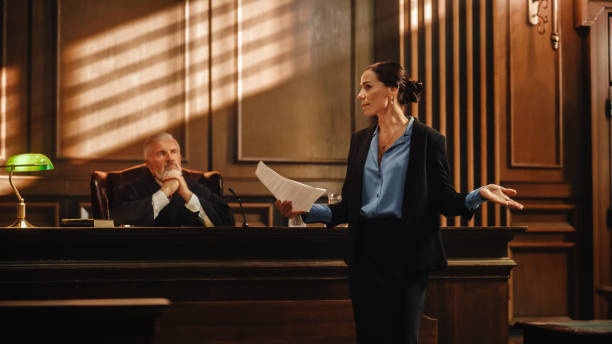
The courtroom was quiet, filled only with muffled sounds of papers shuffling and distant, rhythmic hum of ventilation. Mark sat at the plaintiff’s table, looking like a man who’d already won. His suit was sharp charcoal gray, hair perfectly gelled into a helmet of corporate confidence. Barbara sat behind him in the gallery, wearing a hat that looked like a structural marvel, whispering to friends about “justice finally being served.”
Mark’s lawyer, Mr. Sterling, stood up. A man who clearly loved the sound of his own voice, projecting it with practiced vibrato of a theater actor.
“Your Honor,” Sterling began, pacing the floor with theatrical gravity. “This is a tragic, yet simple case. It’s the story of a man, Mark Thorne, who has reached the pinnacle of his career through sheer grit, talent, and determination. He’s a Regional Director at a global firm. He’s the provider. The respondent, Elena, has not held a job in over a decade. She has no assets, no income, and frankly, no ability to provide the lifestyle that young Leo Thorne deserves. She’s a ghost in her own life, a woman who lived off the brilliance of her husband and now seeks to punish him for his success.”
Mark nodded solemnly, dabbing at his eyes as if grieving for my supposed poverty. Barbara let out theatrical sniffle from the pews.
“We’re asking for complete and total dismissal of alimony,” Sterling continued, voice rising. “And we’re asking for sole physical and legal custody. We believe it’s in the child’s best interest to remain in the family home—a home my client paid for with his own blood and toil—rather than being dragged into the uncertainty of the respondent’s meager, unstable existence. She’s a squatter in the life Mark built.”
The judge, formidable woman named Justice Halloway, looked at me. “Mrs. Thorne, does your counsel wish to respond?”
Samantha stood up. She didn’t pace. Didn’t shout. Didn’t even look at Mark. She simply placed a thick, black leather folder on the evidence table. Thud. The sound echoed in the silent room like a heartbeat.
“Your Honor,” Samantha said, voice like velvet-wrapped razor. “We agree that financial stability is paramount for Leo’s upbringing. However, we disagree fundamentally with Mr. Sterling’s description of the marital assets. And the ‘Thorne’ legacy.”
Mark’s lawyer smirked, leaning back in his chair. “Oh? And what assets would those be? The minivan with the rusted fender? The grocery coupons she’s been hoarding?”
“I’d like to direct the court’s attention to Exhibit A,” Samantha said, opening the black folder.
Sterling picked up the copy placed before him. He opened the first page with flourish, smirk still firmly in place. “What is this? A list of—”
He stopped.
The silence that followed was absolute. Sterling’s eyes scanned the page once. Twice. He flipped to the second page. Then the third. His hands began to tremble, paper rattling in the quiet room.
The smirk didn’t just fade—it evaporated, leaving behind a face the color of bleached bone. He looked at Stock Ownership Certificates. He looked at bank statements from Swiss offshore trusts. He looked at Articles of Incorporation for Vanguard Holdings, the fifty-billion-dollar parent company of Sterling Global Logistics.
“Mr. Sterling?” the judge prompted, brow furrowed. “Is there an issue?”
Sterling started to sweat, perspiration rolling down his temple. He looked at Mark, then back at papers, voice a strangled whisper. “Th-th-this… there must be a mistake. This says… this says Vanguard Holdings is privately held entity owned ninety-two percent by… Elena Thorne.”
Mark jumped up, yanking documents from his lawyer’s hands. “What the hell is this? You’re talking nonsense! Sterling Global Logistics is a trillion-dollar corporation! She’s just a lousy housewife!”
He scrambled through pages, breathing coming in ragged, panicked gasps. He found his own name. His own employment contract. He found the signature at the bottom of his promotion letter—not the CEO’s signature, but the signature of the Chairwoman of the Board.
“Your Honor,” Samantha said, voice cutting through Mark’s panicked breathing. “My client didn’t live off Mr. Thorne’s income. In fact, it was my client’s corporation that approved Mr. Thorne’s promotion to Regional Director. She’s quite literally his boss’s boss’s boss. She didn’t just ‘live’ in the house—her holding company, Aegis, owns the deed. She didn’t just ‘use’ the cars—she owns the leasing company. Elena Thorne didn’t just build the ‘castle’ Mark refers to—she owns the land, the air rights, and the company that forged his ‘crown.’ He was never the King. He was merely a tenant.”
Mark looked at me. I sat there, perfectly still, finally letting the “Peasant” mask fall. I looked him in the eye and let him see the Architect. The woman who’d managed global portfolios while he was taking selfies in office elevators.
“You called me a freeloader, Mark,” I said, voice quiet but filling every corner of the courtroom. “But for twelve years, I have been paying for your ego. I let you believe you were the hero of this story because I wanted to see if you were a man of character. But the moment you got a little power, you tried to take my son. You tried to ruin the only person who actually believed in you. You didn’t fail me, Mark. You failed the test.”
The judge leaned forward, staring at documents with intense focus. “Mr. Sterling, is the respondent’s claim of ownership over the petitioner’s employer and all listed marital assets accurate?”
Sterling couldn’t even speak. He just nodded, hands shaking so violently papers fell to the floor.
Mark slumped into his chair, face ghostly. He looked at the gold Rolex on his wrist. For the first time, he realized it wasn’t a symbol of his success. It was a GPS-tracked asset owned by the woman he’d just called a peasant.
Barbara stood up in the gallery, her royal hat finally falling off her head, screaming, “This is a lie! She’s a witch! Mark, do something!” But Mark didn’t move. He was staring at the black folder as if it were his own gravestone.
The fallout was swifter and more brutal than Mark could have imagined in his worst nightmares.
Because Mark had been so convinced of his own impending greatness and my supposed “parasitic” nature, he’d insisted on a very specific prenuptial agreement years ago. He’d hired a cut-rate lawyer to draft a document stating “separate assets remain separate” and that “any wealth generated by individual business ventures is not community property.” He’d done this to protect his “future millions” from me, the “simple library volunteer.”
Now, that very agreement was a noose around his neck, tightening with every word the judge spoke.
“Since the petitioner insisted on absolute separation of assets,” Justice Halloway ruled, voice echoing with finality of a guillotine, “and since forensic evidence shows that the family home, vehicles, offshore accounts, and parent corporation of his own employer were acquired through respondent’s premarital and independent business holdings… the petitioner is entitled to exactly what he brought into the marriage.”
Which was a suitcase of polyester clothes, a collection of comic books, and a 2008 sedan that had long since been sold for scrap.
But I wasn’t done. The Architect doesn’t just clear the site—she ensures the old structure can never be rebuilt.
As we stood outside the courtroom in the marble hallway, Mark was a ghost of a man. He looked like he’d aged twenty years in two hours. Barbara was hovering near him, her “royal” hat tilted askew, looking like she wanted to disappear into floorboards. She tried to catch my eye, expression shifting back to that nauseating “supportive” mask.
“Elena… surely we can talk about this? We’re family! I was just trying to help Mark be his best self! We all make mistakes in divorce heat!”
I pulled my phone out of my bag. I didn’t look at Mark. Didn’t look at Barbara. I looked at the screen of my encrypted device.
“What are you doing?” Mark whispered, voice trembling with new, profound fear.
“I’m sending an email to the Board of Sterling Global,” I said, fingers dancing over glass. “You were promoted to Regional Director based on the belief that you had integrity to lead our Pacific Northwest division. But today’s proceedings—your attempts at fraud, witness tampering with Barbara, and blatant lies regarding marital assets—have shown shocking lack of character. Conduct unbecoming of an officer of Vanguard.”
I hit Send.
Mark’s phone buzzed in his pocket almost instantly. It was synchronized notification from the corporate server.
Access Denied. Account Suspended. Remote Wipe Initiated.
“You’re firing me?” he gasped, reaching for the wall to steady himself. “Elena, I have nothing else! That job is my entire life!”
“I’m not firing you, Mark,” I said, finally looking at him with cold detachment of a stranger. “The Chairwoman is. You were a freeloader in my life, and you were a freeloader in my company. You took credit for stability I provided and built a throne on a foundation of shifting sand. You should have focused more on the work and less on the Rolex.”
Barbara rushed forward, trying to grab my arm, voice a shrill, desperate whine. “Elena! You can’t do this! We have nowhere to go! Think of your son! Leo needs his home!”
I pulled my arm back as if I’d touched something diseased. “Family? You told me my son’s blood was superior to mine. You tried to steal a child from his mother because you thought she was poor. You aren’t royalty, Barbara. You’re just a woman who liked the taste of my money. And Leo is coming home with me. To my real home.”
I turned to Samantha. “Make sure the eviction notice for the Greenwich estate is served by five PM. Change the codes. If a single piece of my silver is missing, file a theft report. I want them out. Today.”
“Elena, please!” Mark cried out as I walked toward the elevator. “I have no money! The Porsche is leased! My bank accounts are tied to corporate payroll!”
“You have twenty dollars, Mark,” I said, without looking back as elevator doors began to close. “Take a taxi. I’m sure you’ll find your ‘social velocity’ somewhere in the city.”
Three months later.
I stood on the tarmac of the private airfield, wind whipping my hair. I wasn’t wearing a bun anymore. It was down, flowing, a dark mane that caught evening sunlight. I was wearing a suit that cost more than Mark’s entire “Thorne” legacy.
Leo was running toward the jet, backpack bouncing, face radiant with happiness I hadn’t seen in years. “Mommy! Are we going to the island for real this time? The one with the turtles?”
“For real, Leo,” I laughed, catching him in a hug and feeling solid reality of him. “And no one is ever going to tell you that you don’t belong there. You’re a lion, remember?”
My phone buzzed. Email from an unknown, burner address.
Mark: “Elena, please. I’m living in a studio apartment in the industrial district. I can’t get a job in logistics. Every firm I apply to says my ‘reputation’ precedes them. Barbara is sick, and we can’t afford private clinic. I’m starving. Please, just give me a reference. For Leo’s sake, don’t let his father rot.”
I didn’t feel a sting of guilt. Didn’t feel a surge of triumph. I simply felt… finished. I deleted the email and blocked the sender.
I’d been a freeloader once—I’d lived off the hope that Mark was a good man. I’d fed his ego and starved my own ambition for over a decade just to see if he was worth the throne I was building for him. I’d treated our marriage as a “Domestic Experiment,” hoping he would prove my cynicism wrong.
He hadn’t.
Mark was right about one thing that night at L’Ermitage: A King doesn’t stay with a peasant. But he’d had the roles tragically reversed. He was the peasant who found a crown in the mud and thought he was born to wear it. He didn’t realize the woman standing silently beside him was the one who’d placed it there, and the one who could take it back with a single signature.
I walked up the stairs of the private jet. Marcus, the flight attendant, bowed deeply. “Welcome back, Madam Chairwoman. The flight to Necker is ready. The champagne is chilled.”
“Thank you, Marcus. Let’s leave this city behind.”
As the plane lifted off, I looked down at the sprawling grid of the city. It looked so small from up here, like a child’s toy. Mark’s world, Mark’s ego, Mark’s tiny, borrowed glory—all of it disappeared into the white blanket of clouds.
I used to be afraid my light would be too much for him, that my success would make him feel small. Now, I realized some people are simply meant to live in shadows.
I sat back in hand-stitched leather and opened a book—not a ledger, but poetry. The “Domestic Experiment” was over. The Architect was home. And for the first time in twelve years, the kingdom was exactly as it should be: peaceful, powerful, and entirely mine.
Looking back, I realized Mark had taught me something valuable. He’d shown me that sometimes love isn’t about supporting someone’s dreams—it’s about discovering whether they deserve the empire you’re willing to build for them. He’d called me a peasant in a moment when he felt powerful, revealing that his love was conditional on my perceived weakness.
But real kings—and queens—are made in moments of absolute power, when they choose mercy over vengeance, wisdom over wrath. I could have destroyed him completely. Instead, I simply removed the illusion that had been propping him up and let him face the reality of who he actually was.
The plane banked toward the setting sun, carrying us toward a future where Leo would grow up understanding that true nobility comes from character, not titles, and that the only crowns worth wearing are the ones you forge yourself.
As for Mark? He was finally living the life he’d earned—not the one he’d borrowed from me.

Sophia Rivers is an experienced News Content Editor with a sharp eye for detail and a passion for delivering accurate and engaging news stories. At TheArchivists, she specializes in curating, editing, and presenting news content that informs and resonates with a global audience.
Sophia holds a degree in Journalism from the University of Toronto, where she developed her skills in news reporting, media ethics, and digital journalism. Her expertise lies in identifying key stories, crafting compelling narratives, and ensuring journalistic integrity in every piece she edits.
Known for her precision and dedication to the truth, Sophia thrives in the fast-paced world of news editing. At TheArchivists, she focuses on producing high-quality news content that keeps readers informed while maintaining a balanced and insightful perspective.
With a commitment to delivering impactful journalism, Sophia is passionate about bringing clarity to complex issues and amplifying voices that matter. Her work reflects her belief in the power of news to shape conversations and inspire change.