The One-Way Ticket
My name is Robert Sullivan. I’m sixty-four years old, I live on the South Side of Chicago in a neighborhood where everyone knows everyone’s business, and I’ve learned the hard way that a smile can be a mask—especially when it comes from someone who knows every soft spot in your heart.
Three days ago, my son showed up at my door with something I hadn’t seen in months: genuine enthusiasm. Or what looked like it, anyway.
Michael pulled up in his BMW—the new one, black and gleaming even in Chicago’s perpetual gray winter light—and knocked instead of using the key I’d given him years ago. That should have been my first clue. He used to just walk in, call out “Dad, you home?” and head straight for the fridge like he still lived here.
But this time he knocked. Waited. Stood on the porch with a glossy envelope in one hand and a smile I wanted desperately to believe.
“Dad,” he said when I opened the door, his voice bright and warm like we talked every day instead of every few months. “I have something for you.”
He pulled me into a hug—the kind that lasted just a second too long, like he was trying to convince both of us it was real. I hugged him back, breathing in his expensive cologne and wondering when he’d gotten so far away from the kid who used to smell like grass stains and cheap body spray.
“Come in, come in,” I said, stepping aside. “You want coffee? I just made a pot.”
“Can’t stay long,” he said, already moving toward the kitchen like he owned the place. Which, I suppose, he thought he would soon enough. “But I wanted to give you this in person.”
He set the glossy envelope on my kitchen table—the same table where I’d helped him with homework, where we’d eaten countless dinners after his mother died, where we’d sat in silence sometimes because grief doesn’t always have words.
“What is this?” I asked, picking it up. It was heavy, expensive paper. The kind that comes from travel agencies that cater to people with more money than I’d ever seen.
“Open it,” Michael said, that smile still plastered across his face. “Clare and I have been talking, and we realized you never take time for yourself. You’re always working, always busy. You need to breathe for once. No stress. No routines. Just sea air and relaxation.”
I opened the envelope slowly, my hands—rougher than they used to be, marked by years of construction work—pulling out what looked like a boarding pass, an itinerary, a collection of papers that spelled out something I’d never imagined for myself.
A cruise. Two weeks in the Caribbean. Leaving in three days.
“Michael,” I started, my throat tight. “This is too much. I can’t—”
“You can and you will,” he interrupted, his hand on my shoulder, squeezing in that way that was supposed to be affectionate but felt more like emphasis. Like making sure I understood this wasn’t a suggestion. “Dad, you’ve been alone in this house for five years since Mom died. You work yourself to the bone at the construction site. You never go anywhere, never do anything for yourself. This is our gift to you. Please. Just take it.”
I wanted to believe him so badly that I didn’t question how suddenly he’d remembered I existed. Didn’t ask why, after months of minimal contact, he’d suddenly decided I deserved a two-week luxury cruise. Didn’t wonder about the timing—right after I’d mentioned, casually, over our last stilted phone call, that I’d finally finished paying off the house and had started putting money into savings.
I just said thank you. Hugged him again. Told him I’d call before I left.
He was gone in ten minutes, leaving behind the smell of his cologne and a glossy promise of paradise that I tucked into my bedroom drawer like a secret treasure.
The morning I was supposed to leave, I woke up at 5 AM out of habit. Construction starts early, and even though I’d taken time off for this trip, my body didn’t know any other way to be.
I made coffee. Checked my bags for the third time. Looked at myself in the mirror and saw an old man trying to figure out how to be on vacation.
The taxi was coming at 8 AM. My flight to Miami—where the cruise ship was docked—left at noon. I had everything organized, everything packed, everything ready.
Except my medicine.
I’d forgotten my blood pressure pills in the bathroom cabinet, and at sixty-four with a history of hypertension, that wasn’t something I could leave behind for two weeks.
I went back inside quietly, letting myself in with the key I’d almost left on the kitchen counter. The house was dim, the early morning light barely filtering through the curtains. I moved through the familiar space—past the living room where Michael and I used to watch Bears games, past the kitchen where I’d taught him to make his mother’s spaghetti sauce, toward the bathroom at the end of the hall.
And that’s when I heard his voice.
Michael’s voice. Coming from my living room. Low, calm, not the voice he uses when he calls me “Dad.”
I froze in the hallway, my hand on the bathroom doorknob, every instinct telling me to keep walking, to get my pills and leave, to not hear what I was about to hear.
But I couldn’t move.
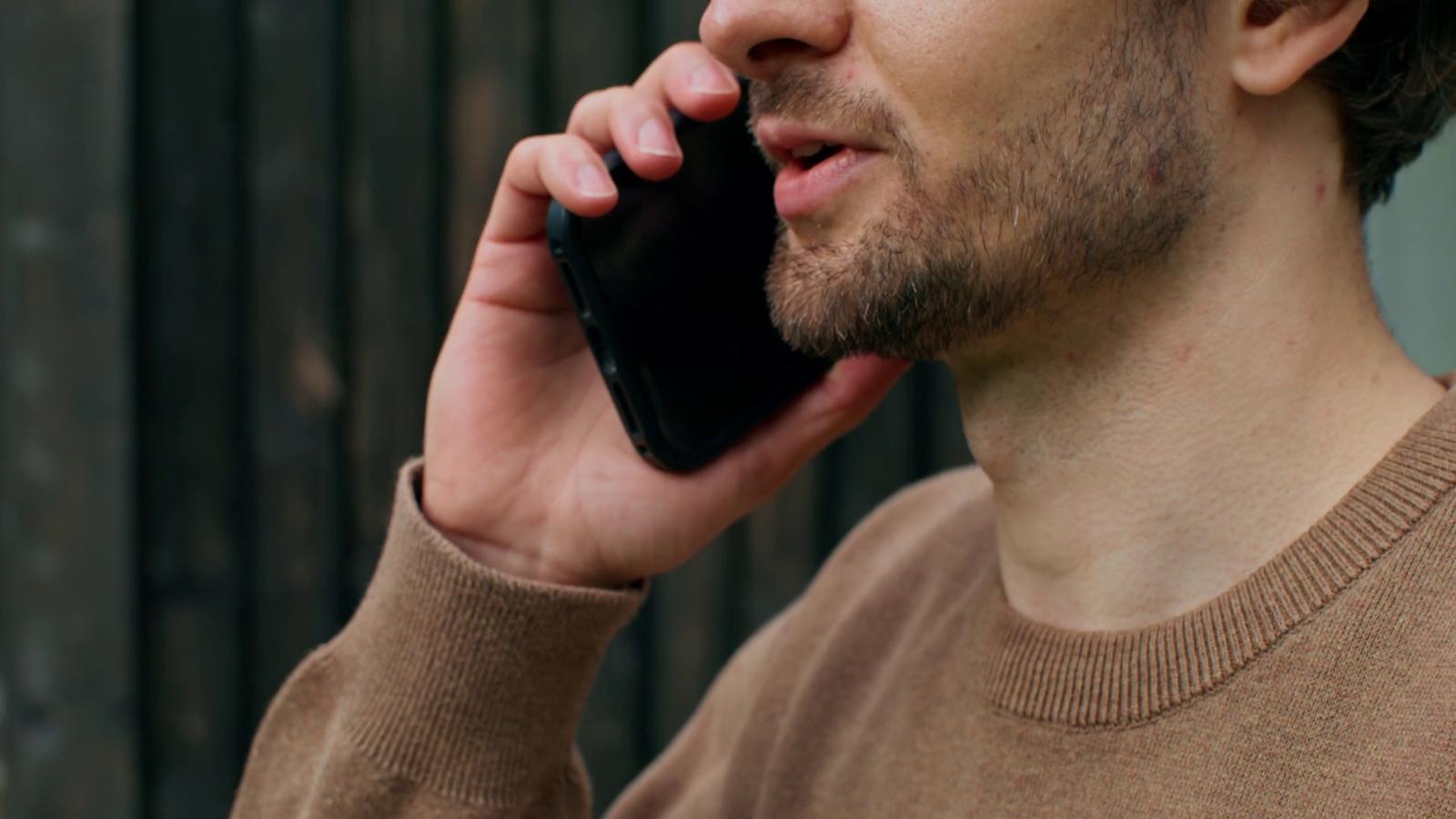
“Don’t worry,” Michael said into his phone—I could see the blue glow of the screen from where I stood, hidden by the angle of the hallway. “It’s one-way. Once he’s out there, it’ll be easy to make it look like a simple fall. People won’t ask questions. An older guy, a railing, a little motion… it happens all the time on these cruises.”
A pause. Someone responding on the other end.
“The house will be mine as soon as the death certificate is processed,” he continued, his voice so casual it made my stomach turn. “And his savings—it’s enough to cover the down payment on the lake house Clare wants. Plus, once we liquidate everything else… we’re talking close to half a million, easy.”
My hand tightened around the doorknob until my knuckles went white. For a second I couldn’t breathe. Couldn’t think. Couldn’t process that my son—my only child, the boy I’d raised alone after his mother’s death, the kid I’d worked double shifts to put through college—was planning my murder.
Planning it like a business transaction. Like I was a problem to be solved, an asset to be liquidated, a simple obstacle between him and money.
“Yeah, I hired someone,” Michael said, his voice dropping lower. “Professional. He’ll be on the ship. Just needs the right moment. Open ocean, elderly passenger, tragic accident. Insurance won’t even blink.”
Another pause.
“No, he doesn’t suspect anything. He’s thrilled about the trip. Practically cried when I gave him the tickets. It’s pathetic, really, how grateful he was.”
That word—pathetic—hit me like a physical blow.
I backed away from the bathroom, my pills forgotten, my hands shaking so badly I had to press them against my legs to keep them still. I moved through my own house like a ghost, like I was already dead and haunting the spaces where I’d raised a son who wanted me gone.
I made it to the front door, stepped outside into the cold Chicago morning, and closed the door softly behind me like I’d never been there. Like I hadn’t just heard my son planning my death with the same tone he’d use to discuss a business deal.
The taxi pulled up three minutes later. The driver—a young guy with headphones around his neck—asked if I was excited about my trip.
“Yeah,” I said, my voice somehow steady. “Can’t wait.”
In the taxi to the airport, Chicago slid past the window in gray winter light. Buildings I’d helped construct with my own hands. Streets where Michael had learned to ride a bike. Parks where we’d thrown a football, back when he still wanted to spend time with his old man.
My brain kept flipping through memories like a deck of cards, shuffling and reshuffling, trying to find the moment where everything went wrong.
Michael at twelve, crying in my arms after his mother’s funeral, asking if I was going to leave him too.
Michael at eighteen, hugging me at his high school graduation, saying “Thanks for everything, Dad. I wouldn’t be here without you.”
Michael at twenty-five, standing in my living room with Clare, telling me they were engaged, promising he’d “always take care of me.”
I swallowed every sound trying to crawl up my throat and told myself one sentence on repeat: Alright… if that’s what you want.
But there was something else underneath that thought. Something harder, colder, more calculating than I’d ever let myself be before.
If that’s what you want… you’re going to regret this.
The ship was massive—a floating city of white lights and vacation laughter, gleaming against the Miami port like a promise of everything I’d never had time for. Families rushed past with rolling suitcases and overexcited children. Couples held hands and took selfies. Everyone looked like they belonged in this world of leisure and indulgence.
I looked like exactly what I was: an older man in sensible clothes, carrying one modest suitcase, trying to figure out where the hell to go.
The attendant at check-in scanned my boarding pass and smiled that professional smile that never quite reaches the eyes. “First cruise, Mr. Sullivan?”
“Yeah,” I said, returning the smile. The lie tasted like pennies. “My son insisted. Said I needed a break.”
“How thoughtful,” she said, handing me my room key. “You’re on Deck 8, cabin 847. The ship departs at 6 PM. Enjoy your voyage.”
I took the key—a plastic card with the ship’s logo, my ticket to two weeks of paradise or two weeks of dodging a hired killer—and made my way through the crowds toward the elevators.
My cabin was small but clean. A queen bed, a tiny bathroom, a porthole window that looked out at the ocean. I set down my suitcase and pulled out the folder Michael had given me, opening it again even though I’d already memorized every detail.
One ticket. Departure information. Shore excursion options. Dining reservations. Entertainment schedules.
But no return ticket. No return flight. No itinerary for getting home.
Just a neat little absence that suddenly screamed louder than any argument we’d ever had.
I sat on the bed and stared at that folder for a long time, my construction-scarred hands holding papers that represented my son’s best attempt at making my death look like an accident.
Then I picked up my phone and called him.
He answered on the third ring, his voice warm and fake. “Dad! You make it to the ship okay?”
“Yeah, I’m here,” I said softly, keeping my voice steady. “It’s beautiful. Really beautiful. But hey, can you forward me the return information? I only see the one-way ticket in the folder.”
There was a pause. Tiny, maybe half a second, but it was there. The pause of someone caught off-guard, recalculating.
“Dad,” he laughed, and the sound was so practiced it made my skin crawl. “Relax. The travel agency handles all those details on their end. You don’t need to worry about anything. Just enjoy the trip… and hey, be careful near the railings, okay? You know how those decks can be. Last thing we need is you getting dizzy or something.”
The warning was so blatant it was almost funny. Almost.
“Right,” I said. “Thanks for the concern.”
“Love you, Dad,” he said, still using that warm, fake voice.
“Love you too,” I lied, and ended the call.
That night, I couldn’t sleep. I lay in my cabin listening to the low hum of the ship’s engines, feeling the gentle rock of the ocean beneath me, and thinking about what comes next.
By morning, I had a plan.
I went to guest services, playing the role I’d decided to inhabit for this trip: the slightly confused older man, grateful but a little overwhelmed by the complexity of modern travel.
“Excuse me,” I said to the agent—a young woman with a name tag that read “Jessica”—”I’m a little confused about my itinerary. My son booked this for me, but I don’t see anything scheduled for my trip home.”
Jessica smiled patiently and typed something into her computer. Her smile faded slightly as she scrolled. “Mr. Sullivan… I’m not seeing any return arrangements in our system. Did your son book the return flight separately?”
“I’m not sure,” I said, letting my voice wobble just slightly. “He said the agency would handle everything. I’m sorry, I’m not very good with computers and all this modern booking stuff.”
“That’s okay,” she said kindly. “Let me see what I can do. When do you need to be back in Chicago?”
“Two weeks from today,” I said. “I have… obligations. Family things.”
The irony of calling my need to stay alive a “family thing” wasn’t lost on me.
Jessica worked her magic, found me a return flight, and forty minutes later I had a printed receipt tucked into my wallet. Proof that I had a way home. Proof that I wasn’t supposed to die on this ship.
I paid for it myself—money from the savings account Michael thought he’d be inheriting soon—and felt something shift inside me from shock to strategy.
If Michael wanted to play this game, I’d play it better.
At lunch that day, I sat alone at a table near the window, watching the endless blue of the Caribbean stretch in all directions. The dining room was full of people laughing, eating, enjoying their vacations without the weight of knowing someone wanted them dead.
A man approached my table—older than me, maybe seventy, with kind eyes and a weathered face that suggested he’d seen his share of trouble.
“Mind if I join you?” he asked. “All the other tables seem to have groups, and I’m flying solo on this trip.”
“Please,” I said, gesturing to the empty chair.
He sat down and studied my face like he could read the truth between my words. “You don’t look like you’re relaxing,” he said after a moment.
I tried to shrug it off, to smile and deflect, but something about his directness made that impossible.
“Family stuff,” I said vaguely.
“Family stuff is usually the worst stuff,” he replied. He extended his hand. “Carl Brennan. Retired detective, Chicago PD.”
I shook his hand, my mind racing. A retired detective. Sitting at my table. Like the universe had decided to throw me a lifeline.
“Robert Sullivan,” I said. “South Side.”
“No kidding,” Carl said, his eyes brightening. “I worked the South Side for twenty years. What brings you on a cruise by yourself?”
“My son,” I said carefully. “Said I needed a break.”
Carl’s expression shifted—subtle, but there. The look of someone who’d interviewed enough people to know when a story had holes.
“And do you? Need a break?”
I looked at him, this stranger who’d worked murder cases and domestic violence and probably every variation of family betrayal Chicago had to offer, and made a decision.
“Can I trust you?” I asked quietly.
“Depends,” Carl said. “But if you’re in trouble, yeah. You can trust me.”
So I told him. Not everything—not the exact words I’d overheard, not the specific details that would make it impossible to deny what was happening. But enough. Enough about the one-way ticket, the concern about railings, the son who’d been distant for months suddenly eager to send me on a luxury cruise.
Carl listened without interrupting, his face growing more serious with every sentence.
When I finished, he leaned back in his chair and was quiet for a long moment.
“You buy your own return ticket?” he asked finally.
“This morning. Guest services helped me.”
“Good. That’s evidence of intent to return. Makes it harder to argue you were suicidal or reckless.” He leaned forward. “Listen, Robert. I don’t know what your son’s planning, but if you noticed the one-way ticket, if you’re suspicious enough to tell a stranger about it, then your instincts are telling you something. And in my experience, those instincts are usually right.”
“So what do I do?”
“You watch,” Carl said. “You document. You don’t take any unnecessary risks. And if you need someone to notice things with you, you’re not alone.”
By sunset on the second day, I’d noticed the man.
He was on the pool deck when I went for a walk—tall, fit, maybe forty, wearing sunglasses and a polo shirt that looked expensive. Nothing obviously threatening. Just another passenger.
Except he kept watching me.
Not the casual glance of a bored passenger people-watching, but the steady attention of someone waiting for a moment. When I moved toward the railing to look at the ocean, he moved closer. When I sat down, he found a chair with a sightline to mine. When I looked back, he looked away just a fraction too fast.
I found Carl at the bar an hour later and told him.
“Describe him,” Carl said, his detective instincts kicking in immediately.
I did. Height, build, the expensive casual clothes, the way he moved like someone comfortable with physical confrontation.
“I’ll keep an eye out,” Carl said. “In the meantime, don’t go anywhere alone. Stay in public spaces. Keep your cabin door locked and use the security latch.”
“You think Michael actually hired someone?”
“I think you need to act like he did,” Carl said. “Better to be paranoid and alive than trusting and dead.”
That night was the captain’s gala—one of those cruise traditions where everyone dresses up and pretends this floating hotel is somehow more elegant than it actually is. I’d packed one good suit—dark green, a little out of date but clean and well-maintained. I put it on, adjusted my tie in the mirror, and caught my reflection.
An older man trying to look like he still belonged in rooms like this. Trying to look like he wasn’t being hunted.
The ballroom was full of music and champagne and people pretending nothing bad ever happens on beautiful ships. I stood near the edge of the crowd, sipping water, watching.
And watching me, from across the room, was the man from the pool deck.
He’d cleaned up—dark blazer, dress shirt, looking respectable and normal and dangerous. Our eyes met for a second, and he smiled. Not warmly. Just acknowledgment.
Carl’s voice brushed my ear, quiet enough that only I could hear. “He’s here. And he’s waiting for you to go back to your cabin.”
“What do I do?”
“We wait him out. Stay public. Stay visible. Make it impossible for him to get you alone.”
We stayed at the gala until nearly midnight, Carl and I, nursing drinks and making small talk and never letting the man out of our peripheral vision. He stayed too, always at a distance, always watching.
Finally, I couldn’t take it anymore.
“I need to go back to my cabin,” I said. “I can’t stay in public forever.”
“Then we go together,” Carl said. “And we make sure he sees us.”
We left the ballroom openly, loudly discussing breakfast plans for the next morning. Carl walked me to my deck, chatted in the hallway outside my door, made it clear I wasn’t alone.
The man didn’t follow. Not that night.
But the next morning, when I went to grab coffee from the café near the pool deck, he was there again. Closer this time. Close enough that when I turned suddenly, I almost bumped into him.
“Sorry,” he said, his voice pleasant, unremarkable. “Didn’t mean to crowd you.”
“No problem,” I said, my heart racing.
He smiled and walked away. But as he passed, I saw it—the edge of something in his jacket pocket. Something that glinted metal in the morning sun.
I spent the next three days in a state of hypervigilance that was exhausting beyond anything I’d experienced. Every sound was a threat. Every person in my peripheral vision was potentially dangerous. Every moment alone felt like borrowed time.
Carl stayed close, playing the role of new friend, fellow traveler, casual companion. But I could see the way his eyes moved, the way he positioned himself between me and potential threats, the way his body language screamed “trained professional” to anyone paying attention.
On the fifth day, we docked at Grand Cayman. I’d booked a shore excursion—a snorkeling trip—before I knew what Michael was planning. Now it felt like a trap.
“Don’t go,” Carl said when I mentioned it.
“If I don’t, I look paranoid. I look like I’m hiding. That might push him to act more aggressively.”
“Or it might keep you alive.”
“Carl, I can’t live like this for two weeks. I need to draw him out. Make him show his hand.”
“That’s a terrible idea.”
“You got a better one?”
He didn’t.
So I went on the excursion—but Carl came too, buying a last-minute spot on the boat, positioning himself as my new cruise buddy who didn’t want to snorkel alone.
The man came too. Of course he did.
We anchored at a reef, and everyone jumped in—tourists in rented equipment, excited about seeing fish and coral and the underwater world that seems so magical when you’re not worried about being murdered in it.
I stayed on the boat, claiming my back was bothering me, that I’d just enjoy the sun. Carl stayed too, sitting close, reading a book with the kind of attention that suggested he wasn’t really reading at all.
The man was in the water for twenty minutes. When he climbed back on the boat, water streaming off his wetsuit, he didn’t look frustrated or disappointed. He looked patient. Like he had all the time in the world.
That night, I got a text from Michael.
Michael: How’s the trip, Dad? You being careful out there?
I stared at that message for a long time before responding.
Me: It’s beautiful. Really beautiful. I’m being very careful.
Michael: Good. Love you.
Me: Love you too.
Three lies in four lines of text.
On the seventh night—exactly one week into the cruise—I made a decision.
“I’m tired of waiting,” I told Carl. “I’m tired of looking over my shoulder. I need to end this.”
“How?”
“By giving him what he wants. Or making him think I’m giving him what he wants.”
Carl’s eyes narrowed. “You want to set a trap.”
“I want to catch him in the act. Get evidence. Then go to ship security with proof that someone is trying to kill me.”
“That’s dangerous.”
“So is doing nothing.”
We planned it carefully. That night, I left the evening show early, making a point of telling several people I wasn’t feeling well, that I was heading back to my cabin to rest. Carl stayed behind, visible and accounted for, giving me an alibi of sorts.
I walked back to my cabin slowly, obviously, like a man who was tired and dizzy and potentially vulnerable. I went inside, turned on the lights, and waited.
For twenty minutes, nothing happened.
Then I heard it—the soft electronic beep of a keycard being used on my door.
My door. Which I’d locked. Which should only open to my keycard.
But it opened.
And the man stepped inside, wearing a dark blazer now, his face calm and professional. He saw me standing there, very much awake and alert, and his expression flickered—surprise, then calculation.
“Wrong room,” he said smoothly, starting to back out.
“No,” I said, my voice steady. “I don’t think so. I think you have a keycard that opens my door. I think my son gave it to you. And I think you’ve been waiting for the right moment to make my death look like an accident.”
His expression went flat. “You’re paranoid, old man. I made a mistake—”
“Then why did you press 8 in the elevator without looking at the buttons?” I said. “Why have you been following me for a week? Why did you smile when you saw me alone?”
The man’s hand moved toward his jacket pocket—the pocket where I’d seen the glint of metal days ago.
And that’s when Carl stepped out of the bathroom, where he’d been hiding, his phone held high and recording.
“Chicago PD, retired,” Carl said calmly. “And you just broke into this man’s cabin with what I’m guessing is a keycard you shouldn’t have. Want to explain that?”
The man looked between us, calculating odds, weighing options. Then he did something I didn’t expect.
He laughed.
“You got me,” he said, raising his hands in a gesture of surrender that looked almost mocking. “Yeah, your kid hired me. Paid me twenty grand to make you disappear. Promised another twenty when you were confirmed dead.”
“You’re admitting this?” I asked, my voice shaking despite my attempt to stay calm.
“Why not?” he said. “You’re recording anyway. And honestly, I’m impressed you figured it out. Most marks don’t.”
“Most marks?” Carl repeated.
“This isn’t my first job. Won’t be my last. Though I gotta say, your kid’s an amateur. He didn’t think through any of the logistics, didn’t cover his tracks, didn’t consider you might be smarter than he gave you credit for.” The man smiled. “Want to know the really funny part? He called me yesterday asking when it would happen. Getting impatient. Like murder has a schedule.”
“Ship security is on their way,” Carl said, though I hadn’t seen him call anyone.
“Good,” the man said. “I’ll tell them everything. Your kid’s going down, and I might get a reduced sentence for cooperating. Win-win.”
He sat down on my bed, casual and relaxed, like we were all friends having a chat instead of a potential murderer confessing to attempted homicide.
Five minutes later, ship security arrived, followed by personnel from the ship’s legal department. Carl explained everything, showed them the recording, provided his credentials as a retired detective. The man—whose name, we later learned, was Marcus Webb—confirmed every detail with the kind of bored professionalism that suggested this was just business to him.
They arrested him. Took statements from Carl and me. Contacted the FBI, since we were in international waters. Started the legal process that would eventually see Marcus charged with conspiracy to commit murder.
And they helped me place a call to the Chicago Police Department.
To report my son.
The rest of the cruise was surreal. I should have been relieved, but instead I felt hollowed out. Numb. I walked the decks and ate meals and watched the ocean slide past, and all I could think about was Michael at twelve, crying at his mother’s funeral.
Carl stayed close, not out of professional obligation anymore, but out of something that felt like friendship. Or maybe just recognition—one person who’d seen the worst of human nature understanding another person going through the same revelation.
When we docked back in Miami two weeks after we’d left, there were police waiting. They interviewed me again, took my statement, assured me that Michael was already in custody based on Marcus Webb’s testimony and the phone records they’d subpoenaed.
I flew home to Chicago—on the return ticket I’d bought myself—and walked into my house alone.
Everything was exactly as I’d left it. The kitchen table where Michael had given me the envelope. The living room where I’d heard him planning my death. The bedroom where I’d packed for a trip I wasn’t supposed to return from.
I sat at that kitchen table for a long time, looking at nothing, feeling nothing, trying to understand how I’d raised someone capable of this.
The trial took eight months. Michael pleaded not guilty, claimed Marcus Webb was lying, insisted he’d only bought me a one-way ticket because he thought the cruise line would handle the return automatically. His lawyer painted me as paranoid, confused, a lonely old man who’d misunderstood a generous gift.
But the evidence was damning. The phone records showing calls between Michael and Marcus. The financial records showing the twenty-thousand-dollar payment. Marcus’s testimony about the plans, the keycard, the instructions to make it look like an accident.
And the recording Carl had made, where Marcus confirmed everything.
Michael was convicted of conspiracy to commit murder. Sentenced to twenty-five years.
Clare divorced him before the trial ended. Said she didn’t know, hadn’t been part of it, couldn’t believe the man she’d married was capable of something like this. I don’t know if I believe her. Don’t know if it matters.
I sold my house—the house Michael had wanted so badly he’d been willing to kill me for it—and moved to a smaller place in a different neighborhood. Somewhere without memories of raising a son who’d grown into a stranger I didn’t recognize.
Carl and I stay in touch. We meet for coffee sometimes, two old men who survived something that should have killed us, talking about nothing and everything.
And sometimes, late at night, I think about that moment in the elevator. The man stepping inside, pressing 8 without hesitation, the keycard tucked against his cuff. The moment when I saw my death approaching and decided I wasn’t going to let it catch me.
I think about Michael in prison, living with the consequences of his choices. I don’t visit. Don’t write. Don’t send money for his commissary account, though his lawyer contacted me suggesting it would be “the kind thing to do.”
The kind thing to do.
I’d spent sixty-four years doing the kind thing. Raising my son alone. Working myself to exhaustion to give him opportunities. Being patient and generous and forgiving.
And in return, he’d bought me a one-way ticket to my own murder.
So no. I don’t do the kind thing anymore. I do the smart thing. The safe thing. The thing that keeps me alive.
And I sleep fine at night knowing my son is alive too—just living with the regret I promised him he’d feel.
THE END

Lila Hart is a dedicated Digital Archivist and Research Specialist with a keen eye for preserving and curating meaningful content. At TheArchivists, she specializes in organizing and managing digital archives, ensuring that valuable stories and historical moments are accessible for generations to come.
Lila earned her degree in History and Archival Studies from the University of Edinburgh, where she cultivated her passion for documenting the past and preserving cultural heritage. Her expertise lies in combining traditional archival techniques with modern digital tools, allowing her to create comprehensive and engaging collections that resonate with audiences worldwide.
At TheArchivists, Lila is known for her meticulous attention to detail and her ability to uncover hidden gems within extensive archives. Her work is praised for its depth, authenticity, and contribution to the preservation of knowledge in the digital age.
Driven by a commitment to preserving stories that matter, Lila is passionate about exploring the intersection of history and technology. Her goal is to ensure that every piece of content she handles reflects the richness of human experiences and remains a source of inspiration for years to come.