Stop Spending My Money
The sound of the bank statement hitting the granite countertop sounded like a gunshot in our silent kitchen. Outside, the rain was hammering down on our suburban Atlanta home, but the storm inside was much worse.
“Look at this, Sarah. Just look at it,” Mark hissed, his face flushing that dangerous shade of red I had come to dread over the last two years. “Target? Again? What could you possibly need at Target that costs eighty dollars?”
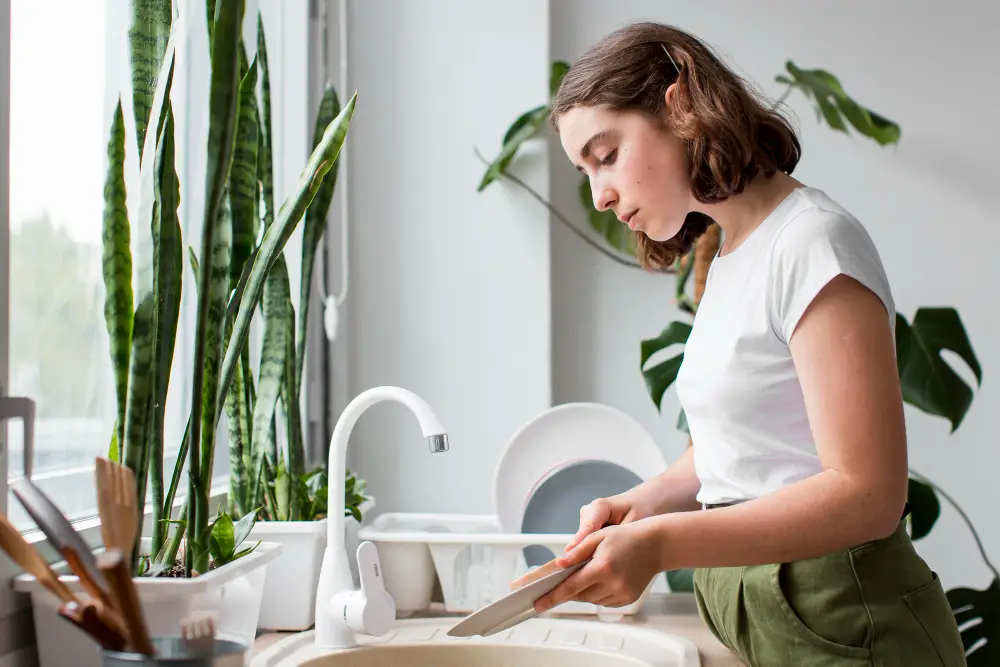
I swallowed hard, clutching the dish towel like a lifeline. “Mark, it was diapers. And laundry detergent. And new socks for Leo because he outgrew his old ones. It’s for the house.”
“It’s always ‘for the house,’ isn’t it?” he sneered, stepping closer.
From the dining room table, my mother-in-law, Mrs. Patterson, let out a sharp, dry laugh. “I told you, Mark. Some women just don’t understand the value of a dollar because they’ve never had to earn one. High maintenance.”
My stomach twisted. I used to work. I used to be a graphic designer before we agreed—we agreed—that daycare was too expensive and I should stay home with the kids. Now, that sacrifice was being weaponized against me.
“I am not high maintenance,” I said, my voice shaking. “I am keeping this family running.”
Mark slammed his hand on the counter. “You are draining me dry! Do you know how hard the pressure is at the firm right now? Here is the new rule. You ask before you spend a single cent. I am done subsidizing your little shopping sprees.”
Then he said the words that broke something inside me forever.
“Stop spending my money like it’s yours, Sarah. It’s my money. You’re just a guest in this house living off my check.”
Mrs. Patterson hummed in approval. “Finally setting boundaries. Good for you, son.”
I looked at him. The man I married seven years ago. The man I promised to build a life with. He didn’t see a partner anymore. He saw a leech.
I felt a cold calm wash over me. I gently placed the dish towel on the counter. I didn’t scream. I didn’t cry. Not yet.
“A guest?” I whispered. “Okay.”
“Where are you going?” Mark demanded as I walked past him toward the hallway closet.
“Guests don’t have to do the laundry,” I said, grabbing my raincoat and my purse. “Guests don’t cook dinner. And guests certainly don’t stay where they aren’t wanted.”
“Oh, stop the drama,” Mrs. Patterson called out. “She won’t make it past the driveway. She has nowhere to go.”
Mark crossed his arms, a smug look on his face. “Go ahead. Walk out. You’ll be back in an hour when you realize you can’t buy gas without me.”
I grabbed my keys. I checked my wallet—I had exactly forty dollars in cash that I had saved from my birthday money.
“Don’t wait up,” I said.
I walked out into the pouring rain, the door slamming shut behind me, muting their voices. But as I started the engine, the reality hit me. I had no job, no savings, and I had just left my children behind in that toxic house.
The silence inside the car was deafening, broken only by the rhythmic slapping of the windshield wipers. I was driving on I-285, the perimeter highway that circles Atlanta, just driving in loops. My body went into autopilot while my mind was stuck back in that kitchen, replaying Mark’s voice.
“Stop spending my money like it’s yours.”
The words didn’t just hurt; they burned. They dismantled seven years of marriage, two childbirths, thousands of cooked meals, reducing it all to a transactional relationship where I was in the red.
I looked down at the fuel gauge. The orange light had just flickered on. Low fuel.
Even the car was mocking me. I pulled off at the next exit and steered into the parking lot of a twenty-four-hour diner. The neon sign buzzed and flickered against the rain-slicked asphalt.
I killed the engine and just sat there. My phone lit up. It was Mark.
Where are you? Dinner isn’t going to make itself. Mom is hungry.
I let out a sound that was half-laugh, half-sob. He didn’t even realize I was gone. Not really. He thought I was running an errand. The idea that I had actually left—that I had removed myself from his equation—hadn’t even crossed his mind.
I ignored the text.
Seven years ago, I was Sarah the Graphic Designer. I worked at a boutique agency in Midtown. I had my own 401(k), my own lease, my own life. Then came the “Agreement.”
We were looking at childcare costs in Atlanta. The numbers were staggering.
“It doesn’t make sense, Sarah,” Mark had said. “If you work, seventy percent of your paycheck goes to daycare. I’ll take care of everything. My salary can cover us. We’re a team. I earn the money; you manage the life. It’s equal.”
Equal.
I believed him. So I resigned. I packed up my portfolio, my Wacom tablet, and my identity, and I put them in a box in the attic.
The shift didn’t happen overnight. It was a slow, agonizing erosion. First, it was the “allowance.” Then, the questions started.
“Why did the grocery bill go up ten dollars this week?”
“Do you really need that brand of shampoo?”
Slowly, the “we” turned into “me” and “you.” The joint account became “his” account. And I became the employee who was constantly under performance review.
My phone buzzed again.
Mark: Stop acting like a child. If you’re not back in 20 minutes, I’m locking the deadbolt.
Mrs. Patterson: He’s really upset, Sarah. Just come back and apologize.
Apologize.
I looked at my wallet again. Forty dollars. If I went back now, I would be admitting defeat. I would be signing a contract that said, “Yes, you are right. I am helpless without you.”
But if I didn’t go back… then what?
Then I thought of Leo asking that morning, “Mommy, why is Daddy yelling?” I had lied. I told him Daddy was just tired.
But Leo is six now. He’s absorbing everything. He’s learning how to be a man from Mark. He’s learning that men control, and women submit.
If I went back tonight, I wasn’t just failing myself. I was failing them.
I grabbed my purse and ran toward the diner. Inside, it was warm and smelled of grease and coffee. A waitress with tired eyes and a name tag that read “Brenda” walked over with a pot of coffee.
“You look like you need the whole pot, honey,” she said. “Menu?”
“Just some toast, please. And the coffee.” I was mentally calculating. Coffee is three dollars. Toast is two. Tip is two. That leaves me with thirty-three.
I wrapped my hands around the hot mug. I couldn’t call my parents; they passed away three years ago. I couldn’t call my sister in California; she was struggling through her own divorce. I was isolated.
I opened my banking app. Access Denied.
He had done it. In thirty minutes since I left, he had changed the password. The digital door was slammed in my face.
Then, I remembered the laptop.
When I quit my job, I had kept my old MacBook Pro. It was seven years old, heavy and slow. But it was mine. Mark had told me to throw it out. I had hidden it in the spare tire well of the minivan, wrapped in a towel, along with a backup hard drive of my old portfolio.
Brenda came back to refill my coffee. “Rough night?”
“My husband,” I started. “He cut off my cards.”
Brenda didn’t look surprised. “Power move. My ex did that. Thought it would make me crawl back.”
“Did you?” I asked, breathless.
“Once,” Brenda said, looking me dead in the eye. “And he did it again. And again. Until I realized that being broke and free is better than being rich and in a cage. You got kids?”
“Two.”
“Then you got a reason to fight,” she said. “Don’t let ’em see you crawl. You figure it out.”
She walked away, leaving the check. She hadn’t charged me for the coffee. Just the toast. Two dollars.
I left a five-dollar bill. It was reckless spending, Mark would say. But it was gratitude.
I walked back out to the car and opened the trunk. There it was. My silver MacBook, wrapped in a beach towel that smelled like rubber and dust.
I climbed into the back seat and plugged it into the car charger. I held my breath and pressed the power button.
Nothing.
“Please,” I whispered.
I waited. Then, the familiar chime sounded. The gray apple logo appeared.
I burst into tears. Real, ugly, heaving sobs. It was such a small thing, but it felt like a heartbeat. My heartbeat.
I tethered the laptop to my phone’s hotspot and opened my email. I searched for “Jessica”—my old boss who told me six years ago, “If you ever want to come back, the door is open.”
I started typing.
Subject: Hello from Sarah
Hi Jess, I know it’s been a lifetime. I’m reaching out because I’m looking for work. Anything. Freelance, contract, remote. I know my portfolio is dated, but my eye is still good. Please let me know if you know anyone hiring. Best, Sarah.
I hit send before I could talk myself out of it.
Then I looked at the time. 11:30 PM. I couldn’t sleep in the car. I used Google Maps to find the cheapest motel nearby. The “Rest-Ezz Inn” was three miles away. $39.99 a night.
It would take every cent I had left. I would have zero dollars for gas. Zero dollars for food tomorrow.
If I spent this money, I was burning the bridge.
My phone rang. It was Mark calling. I stared at his face on the screen—a photo from our honeymoon in Hawaii.
I let it ring until it went to voicemail.
Then a text from Mrs. Patterson: You are being incredibly selfish. Mark says if you aren’t home by midnight, don’t bother coming back at all.
That was the ultimatum. The line in the sand.
I started the car. I didn’t turn left toward the highway that led home. I turned right toward the Rest-Ezz Inn.
The motel was grim. The clerk didn’t even look up. “Room for one?”
“Yes. One night.”
“Forty-two fifty with tax.”
I froze. I had thirty-three dollars left after the diner.
“I only have thirty-three in cash.”
The clerk looked up. He took in my wet hair, my shaking hands, the desperation radiating off me.
He sighed. “Thirty dollars. Cash. Room 104.”
“Thank you,” I breathed.
The room was small, with a lumpy mattress and sticky carpet. But as I locked the door and slid the chain into place, I felt something I hadn’t felt in years.
I was safe.
I sat on the edge of the bed and opened the laptop. I needed to update my resume. I checked my phone one last time.
Mark had sent a voice memo. I pressed play.
“Sarah, pick up the phone. This is ridiculous. Look, come home, we’ll talk about the budget in the morning. I’ll transfer fifty dollars to your account so you can get gas. The kids are asking for you.”
The tone wasn’t angry anymore. It was patronizing. He thought fifty dollars was enough to buy my compliance.
I looked at the blank Word document titled “Resume.”
I typed my name at the top. Sarah Jenkins. Not Sarah the Mom. Not Sarah the Wife. Just Sarah.
I didn’t reply to Mark. I turned the phone completely off.
For the first time in a long time, the silence wasn’t scary. It was an empty canvas.
I started typing. Summary of Qualifications: Experienced Graphic Designer with a focus on branding and visual identity…
I wrote until the sun started to peek through the thin curtains. I was hungry, I was broke, and I was terrified.
But I had survived the night.
I stood up, walked to the tiny bathroom mirror, and splashed cold water on my face.
“Stop spending my money,” I whispered, mimicking Mark’s voice.
“Fine,” I said back to myself. “I’ll make my own.”
Eleven AM came too fast. The clerk knocked. “Check out time.”
I gathered my things and drove to the nearest gas station. I found three quarters, a dime, and the five-dollar bill I’d saved. “Five dollars and eighty-five cents on pump four, please.”
I pumped the gas. Barely a gallon and a half. Just enough to get me to a library with free Wi-Fi.
I drove to a public library three miles away and set up my “office” at a wooden table in the back corner. I plugged in my laptop and turned my phone back on.
The device vibrated violently. Thirty-four missed calls. Forty-two text messages.
Most were from Mark. One was from the school.
Mrs. Jenkins, this is Franklin Elementary. Leo was crying in class today. He said you weren’t there this morning. Please call us.
My heart shattered. I wanted to rush to him. But I couldn’t. I literally couldn’t drive there. I needed leverage. I needed a plan.
I opened my email.
There, at the top, was a reply from Jessica.
Sarah! The timing is insane. I have a client—a local bakery chain—who needs a complete rebrand pitch deck by tomorrow morning. If you can take the raw assets and turn around a presentation by 5:00 PM today, I can pay you a rush fee of $600. Can you do it?
Six hundred dollars.
It wasn’t a fortune. But to me, it was everything. It was a tank of gas. It was a week at the motel. It was freedom.
But the deadline. 5:00 PM. It was already noon. I had five hours to do a job that usually took two days.
I typed: I’m on it. Send the files.
My phone rang. It was Mark.
I took a deep breath and answered.
“Sarah? Are you done with this tantrum?”
“I’m not having a tantrum, Mark. I’m not coming back until things change.”
“Change?” He laughed. “Sarah, look at your bank account. Oh wait, you can’t. Because you have nothing. You are driving my car, wearing clothes I paid for, using a phone on my plan. You have zero leverage here.”
“I’m working on that,” I said.
“Working? Your little hobby?” He scoffed. “Here is the reality check. I just got off the phone with the school. I told them that you are having a mental health crisis and that I will be handling all pick-ups. You are not to step foot on that campus.”
My world spun. “You did what?”
“I’m protecting my children. You abandoned them last night. That looks great in family court. If you don’t come home by 6:00 PM, I am filing for emergency custody tomorrow morning.”
“You wouldn’t.”
“Try me. Stop spending my patience like it’s yours. Come home.”
The line went dead.
Every instinct screamed at me to run to the car, drive to the school, beg. All I had to do was submit.
But then I looked at the laptop screen. Jessica had sent the files.
I had a choice. I could go be a victim, or I could be a provider.
I wiped my eyes. I put my phone on “Do Not Disturb.”
“I am not having a crisis,” I whispered. “I am working.”
I opened Adobe Illustrator. The interface had changed in six years, but the muscle memory was still there. I worked like a woman possessed. My stomach ached with hunger, but I ignored it. I drank lukewarm water from the fountain.
One PM passed. Two PM. Three PM.
The stress was physical. Every few minutes, the fear would hit me—Mark is picking them up. They are confused. I had to shove the thoughts into a box and lock it tight. I poured that pain into the work.
4:45 PM.
I exported the PDF. It was beautiful. The best work I had ever done, fueled by pure desperation.
I attached the file. I hit send at 4:58 PM.
I sat back, hands shaking. Now, the waiting.
I turned off “Do Not Disturb.” The phone flooded with missed calls. And a voicemail from Leo’s iPad.
“Mommy? Grandma says you went on a vacation. Are you coming back for dinner? I saved you a chicken nugget.”
I broke. I put my head on the table and wept silently. I am a bad mother.
Ding.
A notification from PayPal.
Jessica sent you $600.00 USD.
And then a text: “Sarah. This is incredible. The client loves it. They want the full branding package. It’s a $3,000 contract. Can we talk tomorrow?”
I stared at the number. $600.
It wasn’t millions. But it was mine. I had earned it with my brain, my hands, my talent. Mark hadn’t given it to me. He couldn’t take it away.
I transferred the money to a new checking account I’d opened that morning.
I stood up. I felt different. Taller.
I walked out and called Mark.
He answered on the first ring. “I see you’re not in the driveway. You’ve made your choice. I’m calling my lawyer.”
“Go ahead,” I said. My voice was ice cold. “And while you’re at it, tell him that I have retained my own counsel.”
“You have no money,” he laughed.
“I have money. And I have a job. And I am not abandoning my children. I am escaping an abusive environment. I will be at the school tomorrow morning with the police if you try to stop me. You don’t own them. And you definitely don’t own me.”
Silence.
“I’ll see you in court, Mark. Or we can do this like adults. You let me speak to Leo and Mia tonight, or I make sure every person in your law firm knows exactly why your wife walked out.”
Mark cared about his reputation more than anything.
“Fine,” he hissed. “I’ll put Leo on.”
When I heard my son’s voice, I didn’t cry. I smiled. “Hi, baby. Mommy is working hard on a big project. I love you so much. I’ll see you very soon.”
I hung up. I got in the minivan. I drove to the gas station and filled the tank all the way to the top.
I wasn’t going home. I was going to war.
Three months later, I sat on the floor of my new apartment—”cozy,” the listing had called it—assembling a bookshelf. The smell of sawdust filled the air. I had painted an accent wall a deep, vibrant teal. Mark would have hated it.
My phone buzzed. Payment Received: $3,200 – Studio 4 Design.
I was no longer just “Sarah.” I was Sarah Jenkins, owner of SJ Creative. The work with Jessica had snowballed. I was working sixteen-hour days, but I had never felt more alive.
Mark’s black SUV pulled into the parking lot below. It was drop-off day.
I walked down to meet them. Mark got out. He looked tired. His shirt was wrinkled. He had gained weight.
The back door opened, and Leo and Mia burst out.
“Mommy!” Mia shrieked, launching herself into my arms.
I looked up at Mark over their heads.
“Here are their bags,” he said, handing me two backpacks.
Mark shifted on his feet. He glanced at my apartment balcony. “So. You’re really staying here? It’s small.”
“It’s mine,” I said simply. “And the rent is paid.”
“Sarah,” he started. “This is ridiculous. The house is a disaster. Mom left last week. She couldn’t handle the laundry and cooking. Maybe you come back. We fire the nanny I hired—she’s incompetent—and we try again. I’ll increase the household allowance.”
I stared at him. He still didn’t get it. He thought this was a negotiation about price.
I handed Mia her backpack. “Go on up, guys. The door is unlocked. I got pizza.”
They cheered and ran up the stairs.
I turned back to Mark.
“I don’t want an allowance, Mark. I make my own money now.”
“But the family. You’re breaking it apart.”
“I didn’t break it. I outgrew it. You wanted a dependent. You wanted someone to control. But I’m not small anymore.”
“You’re struggling,” he scoffed, pointing at the apartment. “You’re living in a dump.”
“I have peace. I sleep through the night. I don’t dread the sound of the garage door opening. You can keep the big house. It was never a home. It was just a display case.”
Mark’s face hardened. “Fine. But don’t expect a dime more than the court mandates.”
“I don’t want your money. Keep it. Spend it on therapy.”
I turned and walked toward the stairs.
“Sarah!” he called out. “You’ll fail! You’ll be back begging in six months!”
I walked up the stairs, the sound of his voice fading with every step. I walked into my apartment and closed the door. I locked the deadbolt.
Inside, the kids were already opening the pizza box, laughing. The teal wall looked beautiful in the evening light.
“Mommy,” Leo asked. “Are you happy?”
I looked around my tiny kingdom. I had $3,200 in the bank. I had a deadline tomorrow. I had a court date next month. It wasn’t perfect. It was hard.
But I looked at the debit card sitting on the counter. My name. My account.
“Yes, baby,” I said, pulling him close. “I’m happy.”
Eighteen months later, I stood in the title company’s office, my hand cramping from signing my name a hundred times. Sarah Jenkins. Sarah Jenkins.
“Congratulations,” the title agent said, handing me a heavy brass key. “You are a homeowner.”
I walked out to my car, clutching that key like it was the Holy Grail. I sat in the driver’s seat and just screamed. A primal, loud, joyous scream.
I owned it. Me. Not “us.” Not Mark. Me.
The house was a 1920s bungalow with peeling yellow paint and an overgrown yard. It needed a new roof, new plumbing, and a miracle. But the light streamed in through the original bay windows, warm and golden.
I drove straight there. I sat on the floor of the empty living room with a bottle of cheap champagne and a pizza. I toasted the peeling wallpaper.
“We’re going to be okay,” I whispered to the walls.
Two weeks later, it was Mark’s turn to drop off the kids. I had texted him the new address.
Mark: What is this address? Did you move to a trailer park?
Me: Just drop them off at the driveway.
I was waiting on the porch. I had spent fourteen days scrubbing, painting, and sweating. The yellow paint was still peeling, but the yard was mowed. The porch swing I’d found at a thrift store was hung.
Mark’s Porsche rolled slowly down the street. He got out and looked at the house with disgust.
“What is this? You’re renting a haunted house?”
“I’m not renting,” I said. “I bought it.”
Mark stopped dead. “You bought it? With what money? You have no credit. You have no job.”
“I have excellent credit. And I have a very good job. I own my own agency, Mark. I have three employees now. Didn’t I mention that?”
I hadn’t.
Mark’s face went pale. The narrative he had built—where I was the helpless ex-wife who needed him—was crumbling.
“You can’t afford this. The maintenance alone—”
“It’s a thirty-year architectural shingle roof. Scheduled to be replaced next week. Paid in cash.”
Leo and Mia ran past him, up the stairs. “Mom! Is this it? Is this the house?”
“This is it, baby!” I opened the door. “Go pick your rooms!”
They shrieked and ran inside.
Mark stood on the lawn, looking smaller than I had ever seen him.
“You’re making a mistake,” he said, but his voice lacked its usual bite. “You’re overextending yourself. You’ll be bankrupt in a year.”
I walked down the steps and stood face-to-face with him.
“You spent seven years telling me I was bad with money. You told me I was irresponsible. You told me I was a child.”
I pointed to the house.
“I bought that house with money I earned while raising your children, fighting your lawyers, and healing from your abuse. I didn’t ask you for a cent. So, respectfully, get off my property.”
Mark opened his mouth to argue. But he looked at my eyes and saw nothing there for him. No fear. No love. No anger.
Just indifference.
He turned and walked back to his Porsche. I watched him drive away until the taillights disappeared.
Then I turned back to my house. My imperfect, peeling, drafty, beautiful house.
“Mom!” Mia yelled from the upstairs window. “There’s a fireplace in my room!”
“I’m coming!” I yelled back.
I walked inside and closed the door. I turned the deadbolt.
Click.
It was the most beautiful sound in the world.
Five years have passed since that night in the rain when I left with forty dollars.
We are sitting at the dining room table in the house on Oakwood Lane. The walls are painted a warm sage green. The kitchen has been renovated with butcher block and open shelves, filled with mismatched mugs and art projects.
The table is full.
There’s Leo, now thirteen, complaining about his math homework but secretly proud of his spot on the varsity soccer team. There’s Mia, ten, sketching in a notebook—she wants to be a designer, “like Mom.”
There’s Brenda, the waitress from the diner. We stayed in touch. She comes every Thanksgiving. She brings the pie.
There’s Jessica, who gave me that first chance.
And there is David. He’s not a lawyer. He’s a high school English teacher I met at the library three years ago. He drives a Honda Civic. He splits the bill on dates. He asks me about my day and actually listens to the answer.
We are laughing about something Leo said. The house smells of roasted turkey and woodsmoke from the fireplace.
My phone buzzes on the counter.
Mark Patterson sent $400.00 – Child Support.
It’s late. It’s always late. And it’s less than the court ordered.
Years ago, that notification would have ruined my day.
Now?
I swipe it away without even unlocking the phone.
I look at the table. I look at the faces of the people who love me. I look at the home I built from the ashes of a life I was told I couldn’t survive without.
“Sarah?” David touches my hand. “You okay?”
I smile, and it reaches all the way to my eyes.
“Yeah,” I say, picking up my wine glass. “I’m just really, really rich.”
And I wasn’t talking about money.

Lila Hart is a dedicated Digital Archivist and Research Specialist with a keen eye for preserving and curating meaningful content. At TheArchivists, she specializes in organizing and managing digital archives, ensuring that valuable stories and historical moments are accessible for generations to come.
Lila earned her degree in History and Archival Studies from the University of Edinburgh, where she cultivated her passion for documenting the past and preserving cultural heritage. Her expertise lies in combining traditional archival techniques with modern digital tools, allowing her to create comprehensive and engaging collections that resonate with audiences worldwide.
At TheArchivists, Lila is known for her meticulous attention to detail and her ability to uncover hidden gems within extensive archives. Her work is praised for its depth, authenticity, and contribution to the preservation of knowledge in the digital age.
Driven by a commitment to preserving stories that matter, Lila is passionate about exploring the intersection of history and technology. Her goal is to ensure that every piece of content she handles reflects the richness of human experiences and remains a source of inspiration for years to come.