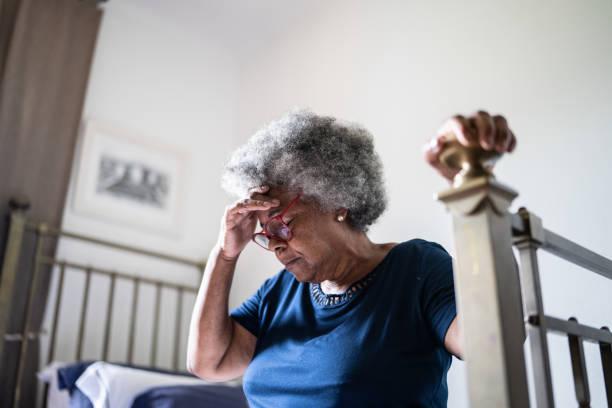
The Architecture of Collapse
Some decisions announce themselves with thunder. Others arrive in the space between one breath and the next, so quiet you almost miss the moment everything changes. This is the story of how a single sentence over Christmas dinner became the catalyst for a reckoning five years in the making—and how the people who thought they knew me best discovered they’d never really seen me at all.
The thing about being underestimated is that it gives you a peculiar kind of power. People relax around you. They speak freely, plan openly, make assumptions that would frighten them if they understood the full scope of what you’re capable of. For five years, I’d been systematically underestimated by the people who should have known me best. And in the end, that underestimation would cost them everything they’d taken for granted.
But I’m getting ahead of myself. Let me start where it actually began—not with the ending, but with the careful construction of a life that looked nothing like what it actually was.
My name is Ayana. I’m thirty-one years old, originally from Lagos, Nigeria, and I’ve been living in Atlanta, Georgia for six years. I came to the United States on a work visa after completing my MBA, recruited by a mid-sized financial consulting firm that specialized in international markets. The opportunity was everything I’d worked toward—a chance to build a career on my own terms, to prove myself in a competitive field, to create financial security that felt impossible back home.
The plan was simple: work hard, save aggressively, build a foundation. Eventually, I’d bring my family over—my mother Bernice, my younger sister Chioma, and my brother Brad. We’d build something together in this new country, pooling our resources and opportunities the way families are supposed to.
That was the plan, anyway.
In year two of my American journey, the opportunity arose. My company offered to sponsor green cards for high-performing employees. The process was lengthy and expensive, but I qualified. While my application processed, I accelerated my timeline for bringing my family over, using my savings to sponsor their visitor visas with the intention of adjusting their status once they arrived.
My mother came first, followed quickly by Chioma and Brad. The reunion was emotional—we’d been apart for nearly three years by then, communicating through grainy video calls and carefully budgeted international phone cards. Having them here, in my small one-bedroom apartment in Midtown Atlanta, felt like the beginning of everything I’d been working toward.
That first month was beautiful. We cooked Nigerian food that made the entire apartment building smell like home. We explored the city together—the endless highways that still amazed them, the shopping centers that seemed to sell everything, the casual abundance that America wore so effortlessly. My mother cried the first time we went to a grocery store and saw the produce section, the meat counter, the aisles that stretched forever.
“You’ve done so well,” she told me, gripping my arm. “Look at what you’ve built here.”
I should have paid closer attention to that word: built. As if the life I’d created had simply materialized, rather than being constructed through seventy-hour work weeks and strategic sacrifices I never mentioned aloud.
Within three months, my one-bedroom apartment became unbearably cramped. Four adults sharing one bathroom, one kitchen, one small living space—the friction was inevitable. We needed more room.
I found a three-bedroom house for rent in a decent neighborhood—not wealthy, but safe, with good schools nearby in case we ever needed them. The rent was substantial: $2,100 a month, not including utilities. But my salary could handle it, especially with the promotion I’d just received. Senior Analyst. A title that came with a raise and more responsibility.
We signed a year lease. My name went on the paperwork because I was the only one with established credit and verifiable income. My mother, Chioma, and Brad were still navigating their new reality—learning the systems, understanding how America worked, figuring out their next steps.
The house had a layout that made sense: the master bedroom for my mother, one bedroom for Chioma, one for Brad, and I took the converted sunroom—smaller than the others, but with large windows and enough space for a bed and my work setup. It wasn’t ideal, but it was temporary. We were family. We’d make it work.
That was three years ago.
In those three years, the narrative of our household calcified into something I barely recognized.
My mother, who’d worked as a schoolteacher in Lagos, didn’t look for employment in Atlanta. “The system here is too complicated,” she said. “I’m too old to start over. I’ll manage the home instead.”
Chioma, who had a degree in business administration, took a part-time job at a clothing store in the mall. The hours were flexible, the pay was minimum wage, and she spent most of her earnings on herself—clothes, makeup, weekend outings with friends she’d made.
Brad, the youngest at twenty-three, announced he was going to be an “influencer.” He set up a YouTube channel and a Twitch stream, investing in expensive equipment—camera, microphone, lighting, editing software—all purchased with my credit card with promises to “pay me back when it takes off.”
It never took off. His streams averaged six viewers, three of whom were family members he’d guilted into watching.
Meanwhile, I worked. Not the nine-to-five “office job” they’d decided I had, but the reality of a senior analyst position at a firm that dealt with international markets: conference calls at 6 a.m. because London was five hours ahead, emergency meetings at 10 p.m. because Hong Kong was twelve hours ahead, weekend analysis sessions when markets shifted unexpectedly.
I managed portfolios worth millions of dollars. I advised executives on market entry strategies, risk assessment, investment timing. I’d built a reputation as someone who could read patterns others missed, who could synthesize complex data into actionable insights, who could be trusted with high-stakes decisions.
But at home, I was just Ayana. The one with the “desk job.” The one who “pushed papers.” The one whose work was so unremarkable it didn’t merit conversation at dinner.
My mother introduced me to people from church as “my daughter who works in an office.” Not “my daughter who’s a senior financial analyst.” Not “my daughter who manages international investment portfolios.” Just… office work. Generic. Dismissible.
Chioma once asked, with genuine confusion, “What do you even do all day? Like, what does ‘analyst’ mean?” When I tried to explain, her eyes glazed over. “Sounds boring,” she concluded, and returned to scrolling through Instagram.
Brad never asked at all. As far as he was concerned, my job was whatever generated the money that paid for his internet connection.
And perhaps I enabled this. Perhaps I should have corrected them more forcefully, insisted they understand the scope and value of what I did. But there’s a particular exhaustion that comes from constantly having to justify yourself to people who’ve decided your worth in advance. After a while, it was easier to just let them think what they wanted.
As long as the bills got paid, what did it matter?
Except it did matter. Because their perception of my work as trivial translated directly into their treatment of me.
The financial arrangement of our household was supposed to be temporary. Initially, the plan was for everyone to contribute proportionally once they got on their feet. My mother would handle the home, Chioma would pay a portion of utilities once she was working full-time, Brad would contribute when his “influencer career” became viable.
But “temporary” stretched from months into years, and somewhere along the way, contribution became expectation.
I paid the rent. All of it. Every month. The $2,100 that kept a roof over four people’s heads came from my account, automatically drafted on the first of each month.
I paid the utilities. The electric bill that climbed every summer when my mother refused to let the thermostat rise above 68 degrees because “it’s too hot otherwise.” The water bill that reflected four people’s daily showers. The gas for heating through Atlanta’s brief but bitter winters.
I paid for the internet. Not the basic package that would have sufficed for email and casual browsing, but the premium high-speed plan Brad “needed” for streaming. $120 per month for bandwidth he used to broadcast to single-digit viewership.
I paid for groceries. The weekly shopping trips where my mother filled two carts with ingredients for elaborate Nigerian dishes, imported items from the African market that cost three times what they would have in Lagos, the specific brands Chioma preferred because American food “tasted different.”
I paid for health insurance. The family plan that covered all four of us, deducted from my paycheck every two weeks. My mother bragged about this at church, telling other Nigerian immigrants that “my daughter takes care of us properly,” as if it were a reflection of her successful parenting rather than my financial burden.
I paid for car insurance. We had one car—my car, a modest Honda Civic I’d bought used—but everyone used it. The insurance premium reflected multiple drivers.
I paid for the small indulgences that added up: the subscription services Brad insisted he needed for “research,” the weekend outings Chioma wanted to take, the gifts my mother sent back to family in Nigeria to maintain appearances.
And I did this while saving for my own future, paying down my student loans, contributing to my 401(k), maintaining an emergency fund that no one else knew about because I’d learned early that mentioning savings only invited requests to dip into them.
On paper, Bernice was the “head of household.” She made decisions about meals, about how the house should be organized, about social obligations and family politics. She held court in the living room, receiving visitors from church, offering advice to other Nigerian mothers, presenting herself as the matriarch who’d successfully established her family in America.
But in reality, in the cold arithmetic of bills and accounts and credit scores, I was the person keeping every single system running.
And somehow, they’d convinced themselves—and tried to convince me—that this was simply how things should be. That my salary existed to fund their comfort. That my “office job” was a communal resource rather than the result of my individual effort and skill.
The warning signs were always there. I just chose not to see them clearly.
The way conversations stopped when I entered rooms. The way plans were made without consulting me, then presented as facts I was expected to accommodate. The way my space gradually shrank—my converted sunroom becoming a dumping ground for everyone else’s overflow, my belongings pushed aside to make room for their things.
The way they spoke about me to others, always with that edge of condescension: “Ayana works so hard at her little office job.” “She’s good with numbers.” “She’s very focused on her career.”
Little. Good with. Focused on. Never: brilliant. Never: accomplished. Never: the reason we have anything.
I told myself it was cultural. That Nigerian families operated differently, that collective responsibility was expected, that I was being too American in my thinking about independence and boundaries.
But deep down, I knew the truth: they didn’t respect me. Not really. They respected what I provided, but they didn’t respect me.
And I let them get away with it because some part of me still craved their approval. Still wanted to be the good daughter, the responsible sister, the one who held everything together.
Until Christmas dinner, when that illusion shattered completely.
We’d celebrated American-style, as we had for the past three years. A turkey I’d ordered and paid for, sides I’d helped prepare despite working a half-day on Christmas Eve to close out year-end reports. The house was decorated with lights and a tree—Brad’s one contribution was hanging ornaments, which he’d complained about for an hour.
My mother sat at the head of the table, as always. Chioma and her new boyfriend Marcus sat together, playing the happy couple. Brad was on his phone between bites, probably checking his stream analytics. And I was there, present but peripheral, the way I’d always been.
We were halfway through dinner when Chioma made her announcement.
“Marcus and I are getting married,” she said, beaming and flashing a modest ring I hadn’t noticed before.
The table erupted in excitement. My mother actually shrieked with joy. Brad offered congratulations through a mouthful of stuffing. I smiled and said all the appropriate things, asking about plans and dates and venues.
Then Chioma added, almost as an afterthought, “We’re going to move in here after the wedding. Just until we save enough for our own place.”
I felt something cold settle in my chest, but I kept my expression neutral. “The house is pretty full already,” I said carefully.
“That’s what I told her,” my mother interjected, smiling at me with an expression I couldn’t quite read. “But we figured it out.”
Here it came. I could feel it approaching like weather.
“You need to move out,” my mother announced, still holding that smile. “So your sister and her husband can have your room.”
She said it the way you’d announce dessert was ready. Casual. Expected. A simple logistical solution to a simple logistical problem.
I was still chewing my turkey. I finished swallowing, took a sip of water, and looked at her. Really looked at her—this woman who’d raised me, who’d taught me to work hard and honor family, who was now telling me to vacate the home I’d been paying for so that someone else could have my space.
I didn’t raise my voice. I didn’t plead or argue or list all the reasons this was absurd.
I just said one word, soft and almost curious: “Really?”
My mother’s smile didn’t waver. “It makes sense. Chioma needs the space for when they start a family. And you’re alone—you don’t need as much room. You can find a small apartment somewhere. It’ll be easier for you anyway, less commute to work.”
Chioma jumped in, excited and oblivious. “Plus, you’re so independent! You’ll probably love having your own place. No family drama, no sharing a bathroom, just your own space!”
Brad nodded, still scrolling his phone. “Yeah, and we can convert your room into a proper streaming studio. The lighting in there is way better than mine.”
They’d planned this. The three of them, maybe over days or weeks, had discussed my displacement like it was a home improvement project. They’d decided my fate, divided up my space, and wrapped it in language of inevitability.
“When were you thinking?” I asked, still calm.
“Well, the wedding is in March,” Chioma said. “So maybe by February? That gives you two months to find something.”
Two months. They were giving me two months to vacate the house I’d been paying for, for people who’d contributed nothing to its maintenance.
I looked around the table at three faces that showed no shame, no uncertainty, no awareness that they were asking for something completely unreasonable.
My mother, serene in her authority.
Chioma, bright with excitement for her future.
Brad, distracted and indifferent, already planning his room upgrade.
And in that moment, something inside me shifted. Not broke—that would imply something fragile shattering under pressure. This was different. This was a door closing, quietly and completely, on a version of myself I’d been performing for years.
“Okay,” I said softly.
The relief in the room was palpable. They’d expected resistance. My easy agreement threw them briefly, but they recovered quickly, already moving on to other topics.
I finished my Christmas dinner in silence while they chattered about wedding plans and room configurations and how much easier things would be once I was gone.
Maybe she’d forgotten something small, I thought as I mechanically ate my turkey.
Like the fact that I was the one keeping that house standing.
That night, I lay in my bed in the converted sunroom—my room that would soon become Brad’s streaming studio—and stared at the ceiling while their voices drifted from the living room.
They weren’t whispering. They weren’t worried.
They were planning like they’d already won.
I heard Chioma giggling about where Marcus would set up his gaming computer. I heard Brad saying he’d finally have proper space for his equipment. I heard my mother’s voice, warm with satisfaction: “She’ll calm down. She always does. By tomorrow she’ll cover everything and apologize for making it awkward.”
She’ll calm down.
She always does.
Those words echoed in my head with the weight of prophecy. Because they were right, weren’t they? I always calmed down. I always adjusted. I always made room, made concessions, made it work.
I’d spent five years absorbing their assumptions and adjusting my life to fit their needs. And they’d learned to expect it.
But they’d made one critical miscalculation.
They assumed that because I’d never drawn a hard line before, I never would. They confused my patience with powerlessness, my generosity with gullibility, my silence with agreement.
They forgot whose name was on the lease.
They forgot whose card was saved on every utility account.
They forgot whose credit score made the house possible.
They forgot that in America—this country they still didn’t fully understand—the person connected to the paperwork is the person with control. No matter who sits at the head of the table. No matter who claims the title of “head of household.”
I didn’t sleep that night. I lay awake running calculations, considering scenarios, mapping outcomes with the same analytical precision I used at work.
By 3 a.m., I had a plan.
By 4 a.m., I’d started executing it.
The next morning—December 26th, while the house still smelled like holiday leftovers and everyone else slept off the dinner I’d paid for—I moved quietly.
I packed my essentials first. Clothes, toiletries, important documents, my laptop. I worked methodically, room by room, taking only what was mine. The noise of the zipper on my suitcase sounded loud in the predawn silence, but no one stirred.
I loaded my car in multiple trips, careful not to slam the trunk. The neighborhood was still dark, Christmas lights from other houses casting colored shadows on the frost-covered cars.
By 7 a.m., I was done. My room—their future streaming studio—was empty except for the furniture that had come with the house.
I didn’t leave a note on the counter. No explanation, no goodbye, no list of grievances. What would be the point? They’d already demonstrated that my perspective didn’t matter.
I stood in the doorway and looked back one last time. From the outside, through the front window, the house looked warm and safe. The Christmas lights were still blinking on their timer. The wreath my mother had hung on the door swayed slightly in the morning breeze. A picture of “family” anyone would believe.
They had no idea what I’d taken with me.
Not just my belongings. Not just my physical presence.
The numbers.
I drove to a hotel in Buckhead—a nice one, the kind with room service and a business center. I checked in, went to my room, opened my laptop, and started making calls.
First call: the landlord. “Hi, this is Ayana Okonkwo. I’m calling to give my notice on the property at [address]. Yes, I understand there are sixty days required. I’ll honor that, of course. I’m prepared to pay through February. Yes, I’m the sole leaseholder. No, the other occupants are not authorized to sign a new lease. Yes, I’m certain. Thank you.”
Second call: the internet provider. “I need to cancel service effective at the end of my billing cycle. Account number is [number]. Yes, I’m sure. No, I don’t need to transfer it. Complete cancellation.”
Third call: the electric company. Similar conversation, similar outcome.
Fourth call: the gas company. Same.
Fifth call: my health insurance provider. “I need to remove dependent coverage effective at the end of this month. Yes, I understand they’ll need to find their own coverage. No, there’s no qualifying life event—I’m just choosing to remove them.”
I made these calls systematically, professionally, with the calm efficiency of someone who’d spent years managing complex logistics. Each call took less than fifteen minutes.
By noon, I’d dismantled the entire infrastructure that had kept that house functional.
Then I went further.
I changed my mailing address to a P.O. box. I updated my direct deposit information to route my paychecks to a new account at a different bank—one my family didn’t know existed. I changed my phone number and didn’t share it.
I spent the afternoon at a different hotel, this one in Virginia Highland, where I’d actually been searching for apartments online for the past month. I’d known, on some level, that this moment was coming. I’d prepared for it the way I prepared for everything: with research, planning, and cold pragmatism.
I found a one-bedroom apartment in a beautiful complex with a gym, a pool, and a business center. The rent was $1,400—$700 less than I’d been paying for the house. I submitted my application, provided my excellent credit score and proof of income, and was approved within hours.
I could move in immediately.
That evening, I transferred my belongings from my car to my new apartment. It was smaller than the house, yes, but it was mine. Completely, entirely mine. No one else’s clutter. No one else’s expectations. No one else’s decisions about my space.
I stood in the center of my empty living room and felt something I hadn’t felt in five years: peace.
My phone had been buzzing periodically throughout the day. I’d silenced it during my call marathon, but now I looked.
Three missed calls from my mother.
Seven text messages from Chioma.
Two from Brad.
I opened the texts without responding.
From my mother: “Where are you? Your room is empty. Call me immediately.”
From Chioma: “Mom said you took all your stuff?? What’s going on? Call us!”
From Brad: “Did you move out already? That was fast lol. Can I start using your room now?”
I turned my phone off and spent my first night in my new apartment sleeping better than I had in years.
The next morning, I woke up to my phone vibrating continuously. Forty-three missed calls. Dozens of text messages.
I made coffee in my new kitchen—compact but efficient—and read through the messages while I waited for the sun to rise.
The progression was predictable.
Day 1 (December 26th):
- Confusion. Where was I? What was happening?
Day 2 (December 27th):
- Concern. Was I okay? Had something happened?
Day 3 (December 28th):
- Irritation. This was childish. I needed to come back and talk about it.
Day 4 (December 29th):
- Anger. How dare I disappear without explanation? How dare I abandon the family?
Day 5 (December 30th):
- Panic. The internet stopped working. Why wasn’t I answering my phone?
I watched the messages pile up like data points, tracking the gradual realization that I wasn’t coming back. That this wasn’t a tantrum or a dramatic gesture. That I’d actually left.
But they still didn’t understand the full scope of what I’d done.
That understanding arrived with the January bills.
I wasn’t there to witness it, but my imagination filled in the details easily enough.
The first of the month arrived. The rent, which had been automatically drafted from my account for three years, didn’t process. Because I’d closed that account and opened a new one they couldn’t access.
The landlord sent a notice: payment required immediately or eviction proceedings would begin.
My mother called my phone seventy-nine times that day. Seventy-nine calls I didn’t answer.
She tried to explain to the landlord that there was a misunderstanding, that I’d be back, that this would be resolved. The landlord, who’d dealt with enough family drama to recognize it, calmly explained that only the person on the lease could authorize payment, and since I’d given notice, the property would need to be vacated by the end of February.
The utilities followed suit. Internet disconnected. Electric service ended. Gas service terminated.
The house they’d been so confident about redistributing suddenly became very cold and very dark.
I learned all of this later, from the voicemails I eventually listened to. The progression from confusion to panic to rage was documented in my mother’s increasingly frantic messages.
“Call me back right now. We need to talk about this rent situation.”
“The landlord says you canceled everything. This is ridiculous. You’re being childish.”
“How could you do this to your family? To your sister?”
“We took care of you! We raised you! This is how you repay us?”
“You’re selfish and ungrateful. You’ve destroyed this family.”
The most revealing message came from Chioma, about a week into January:
“I can’t believe you’d do this over one room. ONE ROOM. We were just trying to make things work for everyone. Why are you being so dramatic? Marcus and I might have to postpone the wedding now because we can’t save money if we have to find our own place. You’ve ruined everything. I hope you’re happy.”
Not: “I’m sorry we didn’t consider your feelings.”
Not: “I understand now that we took advantage of you.”
Not: “Can we talk about how to make this right?”
Just: “You’ve ruined everything.”
As if I were the one who’d broken an unspoken contract, rather than the one who’d finally stopped honoring a one-sided arrangement.
I didn’t respond to any of them. What would be the point? They’d shown me exactly who they were and what they valued. And it wasn’t me—it was what I provided.
Instead, I focused on building my new life.
My one-bedroom apartment transformed quickly into a space that felt like mine in ways the house never had. I bought new furniture—not expensive pieces, but things I chose myself. I decorated with art that reflected my taste. I set up my workspace exactly how I wanted it, with a proper desk and ergonomic chair and multiple monitors for the complex financial modeling I did.
I threw myself into work with renewed energy. Without the constant drain of family drama and financial burden, I found I had capacity I hadn’t realized I’d lost. My performance reviews had always been strong, but in the months after leaving, they became exceptional.
I took on additional projects. I volunteered for the difficult accounts no one else wanted. I stayed late not because I had to, but because I could—because my time was my own now, to invest as I chose.
My manager noticed. “You seem different lately,” she said during a one-on-one meeting. “More focused. More… present.”
“I made some changes in my personal life,” I said carefully. “It’s freed up a lot of mental energy.”
She nodded knowingly. She was a Black woman in her forties who’d climbed to the top of our firm through similar discipline. “Family can be complicated,” she said. “Sometimes the most important boundary is the one you set with the people who think they have unlimited access to you.”
That conversation led to an opportunity I hadn’t expected: a promotion. Associate Director, with a substantial raise and equity in the firm. The kind of advancement that usually took years longer.
“We’ve been impressed with your work,” my manager explained. “You have the analytical skills and the strategic thinking we look for in leadership. And frankly, you have a quality that’s rare: you can make hard decisions without second-guessing yourself.”
If only she knew about the hardest decision I’d made three months earlier.
I accepted the promotion. With the raise, I was able to increase my savings rate even further. I maxed out my 401(k). I invested in index funds. I even opened a brokerage account to play with individual stocks—using the analytical skills from my day job to build a small but growing portfolio.
For the first time in my adult life in America, my money was mine. All of it. To save, to spend, to invest, to grow.
The freedom was intoxicating.
I made new friends—colleagues from work, people from a professional networking group I joined, other Nigerian immigrants I met through a different, healthier social circle. People who understood boundaries, who respected independence, who saw relationships as reciprocal rather than extractive.
I started dating again. Cautiously, with the lessons I’d learned firmly in mind. I watched for red flags: people who expected too much too soon, who had too many financial emergencies, who couldn’t seem to manage their own lives.
I learned that I had a type I needed to avoid: people who saw my competence and stability as an invitation to lean rather than as something to appreciate and match.
Through all of this, the phone calls and messages from my family continued. They decreased in frequency as the months passed, but they never stopped entirely.
My mother, oscillating between rage and guilt: “How can you abandon your own family? What would your father say?” (My father had passed when I was young, a convenient ghost to invoke when she wanted to shame me.)
Chioma, increasingly resentful: “I had to move back in with Marcus’s parents. His mom hates me. This is all your fault.”
Brad, surprisingly pragmatic: “So like, when are you going to start helping again? This situation is really inconvenient.”
Inconvenient. As if the problem was poor timing rather than fundamental dysfunction.
I blocked their numbers eventually. Not out of anger, but out of self-preservation. Every message was an attempt to pull me back into a pattern I’d finally escaped. And I was done being pulled.
Six months after I left, I received a letter forwarded from my old address. It was from my mother, handwritten on floral stationery she’d always favored.
“Dear Ayana,” it began, “I am writing because you will not answer your phone. I want you to know that I forgive you for what you did. I understand that you were upset about the room situation. But it has been six months now, and it is time to put this behind us and be a family again. Your sister needs help with her wedding expenses, and Brad needs a new computer for his work. We can talk about how you can support them while also keeping your own place, if you feel you need independence. Please call me so we can work this out.”
I read the letter three times, each time more amazed by what it revealed.
She forgave me. As if I were the one who’d done something wrong.
She understood I was upset. As if this were about a single incident rather than years of systemic exploitation.
It was time to move on. Because enough time had passed that I should be over it, should be willing to resume my role as the family ATM.
And most tellingly: she outlined exactly how I could help—financially supporting Chioma and Brad—while maintaining just enough independence to keep me happy. A compromise, in her mind. A way to restore the dynamic that had worked so well for them.
Not a word of apology. Not a recognition of what they’d taken. Not an acknowledgment that their request had been unreasonable or their treatment of me had been wrong.
Just: let’s go back to how things were, because that was working fine for us.
I didn’t respond to the letter. I filed it away with all the other messages—a documentation of exactly why I’d made the choice I did.
A year after I moved out, I learned through a mutual acquaintance that my family had moved back to a smaller apartment, split multiple ways. My mother worked part-time now at a grocery store. Chioma and Marcus had married in a small ceremony and were struggling to make ends meet. Brad had abandoned his streaming dreams and taken a job in customer service.
They were fine. Not comfortable, not living the lifestyle they’d grown accustomed to on my dime, but surviving. Learning to manage their own lives with their own resources.
“Your mom asks about you sometimes,” the acquaintance told me carefully. “She says she doesn’t understand what went wrong.”
I nodded. “I’m not surprised.”
“Do you think you’ll ever reconcile?”
I considered the question seriously. Not the knee-jerk “family is family” response I’d have given years ago, but an honest assessment.
“I don’t know,” I said finally. “They’d have to fundamentally change how they see me. Not as a resource to be managed, but as a person with my own needs and boundaries. And I don’t think they’re capable of that change. They still think I’m the problem.”
Two years after I moved out, I bought my first property—a small condo in a nice part of Atlanta. Not a rental this time, but mine. My name on the deed, my money for the down payment, my credit carrying the mortgage.
I stood in the empty living room of my new home and felt the same sense of peace I’d felt that first night in my apartment. This was mine. Built by my work, secured by my discipline, a tangible symbol of what I could create when I wasn’t pouring my resources into a bottomless well of other people’s needs.
I thought about sending a photo to my family, a small proof of what I’d accomplished without them.
But I didn’t. Because I didn’t need their validation anymore. The life I was building wasn’t for their approval or their pride. It was simply, entirely, mine.
Three years after I moved out—just last month—I received one final message. It came from a number I didn’t recognize, so it got through my blocks.
“This is Chioma. I’m using a friend’s phone because you blocked mine. I know you don’t want to talk to us. I just wanted you to know that Mom is sick. She has diabetes and high blood pressure. She can’t afford good treatment with the insurance she has now. I know you’re doing well. We see your social media sometimes. I’m not asking you to come back or anything. But if you wanted to help with her medical expenses, it would mean a lot. You’re still family, even if you don’t act like it.”
I stared at that message for a long time.
Part of me felt the old pull—the guilt, the sense of obligation, the voice that said family helps family no matter what.
But I’d learned to question that voice. To ask: whose definition of family? And whose definition of help?
They’d taught me that family meant unlimited access to my resources without reciprocity. They’d taught me that help was one-directional, always flowing from me to them, never the reverse.
They’d taught me that my boundaries were selfish and my needs were negotiable.
And when I’d finally asserted that none of that was true, they’d called me ungrateful and cruel.
Now they were reaching out again, not to rebuild a relationship but to request funds. Not to acknowledge what they’d done wrong but to remind me of my obligations.
The manipulation was almost beautiful in its clarity.
I didn’t respond to that message either.
Instead, I drafted a careful, final reply that I ultimately didn’t send, but writing it helped me clarify my own thoughts:
“You are not entitled to my money simply because we share DNA. Family is built through mutual respect and support, not one-sided extraction. For years, I supported all of you financially while you treated my work as trivial and my contributions as expected. When I needed basic consideration—keeping the home I was paying for—you responded by demanding I leave. You taught me that my value to you was purely financial. So now, when you reach out again asking for money, you’ve confirmed exactly what I learned.

Lila Hart is a dedicated Digital Archivist and Research Specialist with a keen eye for preserving and curating meaningful content. At TheArchivists, she specializes in organizing and managing digital archives, ensuring that valuable stories and historical moments are accessible for generations to come.
Lila earned her degree in History and Archival Studies from the University of Edinburgh, where she cultivated her passion for documenting the past and preserving cultural heritage. Her expertise lies in combining traditional archival techniques with modern digital tools, allowing her to create comprehensive and engaging collections that resonate with audiences worldwide.
At TheArchivists, Lila is known for her meticulous attention to detail and her ability to uncover hidden gems within extensive archives. Her work is praised for its depth, authenticity, and contribution to the preservation of knowledge in the digital age.
Driven by a commitment to preserving stories that matter, Lila is passionate about exploring the intersection of history and technology. Her goal is to ensure that every piece of content she handles reflects the richness of human experiences and remains a source of inspiration for years to come.