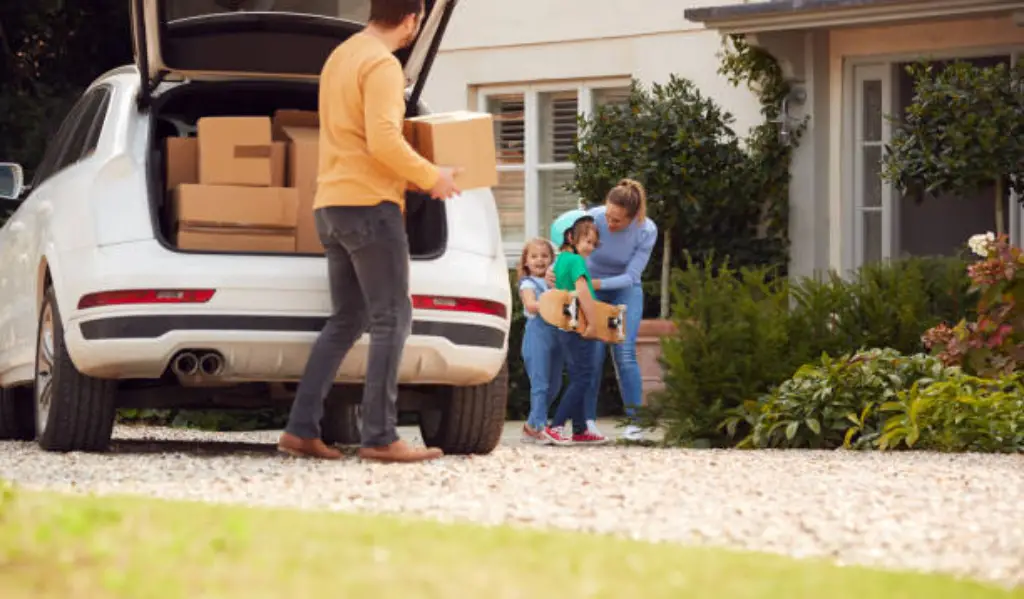
My name is Kyle Brennan. I’m thirty-three years old, a senior accountant at a mid-sized firm in Portland, and I know exactly where every dollar goes—both mine and my clients’. For the last decade, most of my dollars have gone to the same place: funding my younger sister’s life and subsidizing my parents’ vision of what family loyalty should look like.
Not in the warm, generous “big brother helping out” way that people imagine when they hear about siblings supporting each other. More like I’d become the quiet emergency fund everyone forgot to thank, the reliable backup plan they never bothered to treat like an actual person with his own life and his own child to raise. I kept telling myself it was temporary—one more bill, one more “just this once,” and maybe my parents would finally look at me the way they looked at Amber. Maybe they’d notice my son Jake the way they noticed her three kids. Maybe I’d stop feeling invisible in my own family.
Jake is nine years old. He’s gentle, a little shy, the kind of kid who holds doors open for strangers and says “excuse me” even when no one’s listening. He has sandy hair that never quite stays combed, freckles across his nose, and a habit of adjusting his glasses when he’s nervous—which is often, because anxiety runs in both sides of his family tree. His mother left when he was two, and it’s been just the two of us ever since, navigating life in a small two-bedroom apartment with mismatched furniture and a fridge covered in his drawings.
Jake doesn’t ask for much. He doesn’t demand the latest gaming console or expensive sneakers or elaborate birthday parties. He just wants to feel included, to be seen as part of the family the way his cousins are. And every time we visit my parents’ house, I watch him shrink a little more when he realizes he’s being treated like an afterthought while Amber’s children—Madison, Harper, and Connor—are celebrated like champions for achievements that range from legitimate to completely manufactured.
So when Amber called in late December, her voice bright with performative pride, announcing that all three of her kids had straight A’s on their report cards, I did what I always do. I said, “That’s amazing, Amber. You must be so proud,” and I swallowed the part of me that wanted to ask why I was already bracing for the inevitable financial request that would follow this announcement like thunder after lightning.
My father didn’t even pretend to frame it as a request. He called that evening and talked like the decision had already been made in a meeting I wasn’t invited to attend. “The kids deserve something special,” he said, his voice carrying that particular blend of excitement and pride that he reserved exclusively for Amber’s children, like their grades were his personal victory rather than the result of expensive tutors and a mother who had unlimited time to hover over homework because she’d never held a steady job.
“Something educational but fun,” he continued, already delegating. “Maybe those new tablets the kids are talking about? You’re good with technology, Kyle. You’ll know what to get.”
There it was—the assumption dressed up as a compliment. You’re good with this, so obviously you’ll handle it. Not “Would you be willing to help?” or “We’d like to contribute but need your expertise.” Just the expectation that I would research, purchase, wrap, and deliver expensive gifts for children who already had more than Jake could dream of, funded by money I’d been saving for something else entirely.
“Dad, those tablets are pretty expensive,” I said carefully, already knowing how this conversation would end but trying anyway. “Maybe something a little more modest—”
“They earned it,” he interrupted, his tone brooking no discussion. “Straight A’s across the board. That’s real achievement. We want to encourage that kind of excellence.”
We want to encourage. As if this was a collaborative family decision. As if anyone had asked what I wanted or what I could reasonably afford or whether my own child might benefit from even a fraction of this enthusiasm and investment.
I hung up and sat at my kitchen table, the one Jake and I had found at a thrift store and refinished together, and I did the math I always do. Three tablets at $329 each. Protective cases because Amber would insist her children needed them. Expedited shipping because my father had mentioned this late and the celebration was scheduled for New Year’s morning. By the time I factored in everything they’d expect—because there’s always something extra, always an upgrade that seems “reasonable” once you’re already committed—I was looking at close to $1,200.
That money was supposed to go toward Jake’s class trip to the science museum and planetarium, an overnight excursion he’d been talking about for months with the kind of careful hope kids develop when they’ve learned not to expect too much. The permission slip sat on our refrigerator, deadline approaching, and Jake checked it every morning like he was afraid it might disappear if he didn’t keep watch.
I pulled the money from savings anyway, telling myself the museum trip could wait another few months, that family came first, because that’s what they’d trained me to believe through years of subtle and not-so-subtle conditioning. That being a good son and a good brother meant sacrificing my own priorities, my own child’s happiness, to maintain the illusion of family harmony.
By midnight I was at my kitchen table surrounded by silver wrapping paper and ribbon, assembling three identical gifts with slight variations Amber had specified: the purple case for Madison because purple is her favorite color, the blue case for Harper because he’s really into ocean themes right now, the black case for Connor because anything else would be “babyish” for a twelve-year-old. I wrapped each one carefully, added elaborate bows, wrote their names on gift tags in my neatest handwriting because presentation mattered to my mother, who would photograph everything for social media proof of our picture-perfect family.
Jake wandered out of his bedroom around 12:30, rubbing sleep from his eyes. “Dad? Why are you still up?”
“Just finishing some presents for your cousins,” I said, forcing brightness into my voice. “Big celebration tomorrow.”
He nodded slowly, then asked in that small voice that always breaks my heart: “Do you think there will be a present for me too?”
I pulled him into a hug to avoid answering honestly. “We’ll see what’s under the tree, buddy. But remember, the important thing is spending time together as a family.”
Even as the words left my mouth, I hated myself for the lie—for teaching him to expect so little, for preparing him to be grateful for scraps.
New Year’s morning arrived cold and gray. We drove to my parents’ house in my aging SUV, Jake quiet in the passenger seat, wearing the button-up shirt and khakis I’d bought specifically for family gatherings because my mother had once commented that he “looked too casual” in his regular clothes. The roads were mostly empty, Portland still sleeping off whatever celebrations had carried into the early morning hours.
My parents live in a neighborhood that’s several tax brackets above mine—a sprawling ranch-style house with professionally maintained landscaping and a three-car garage. Amber’s minivan was already there, parked prominently in the circular driveway like she’d staked her claim to the best spot. Through the front windows I could see lights blazing and movement inside, the shadow-play of a celebration already in progress.
We let ourselves in—no need to knock, my mother always said, though that open-door policy seemed to apply unevenly depending on which child was arriving—and the scene hit me like a wave: the living room looked like a magazine spread, Christmas tree still lit and surrounded by mountains of gifts in coordinated wrapping paper. My mother must have spent hours staging it, arranging packages by size and color for maximum visual impact.
Amber’s kids were already tearing into presents, their shrieks of delight echoing off the vaulted ceilings. Madison was holding up a designer sweater, Harper had some kind of gaming headset, Connor was examining what looked like a very expensive pair of sneakers. My parents watched from the sofa with expressions of pure satisfaction, my mother filming on her phone, my father beaming like this was the culmination of all his parenting dreams.
“Kyle! Finally!” my mother called out, pausing her recording. “We were waiting for you to hand out your gifts. The kids have been so excited.”
The kids meaning Amber’s kids, of course. Not Jake, who had quietly positioned himself near the fireplace, trying to make himself small and unobtrusive, a skill he’d perfected over years of these gatherings.
I carried in the three silver-wrapped packages and set them under the tree. “These are for Madison, Harper, and Connor,” I announced, and the effect was immediate. The kids abandoned whatever they’d been focused on and descended on the packages like sharks sensing blood in water.
Paper shredded. Ribbon flew. Within seconds they’d torn through my careful wrapping to reveal the tablets, and the screams that followed were deafening—pure, unfiltered acquisitive joy. Madison was already powering hers on. Harper was demanding to know if it had the game he wanted pre-installed. Connor was checking specifications against whatever he’d researched, nodding approval like a consumer advocate verifying quality.
“Oh, Kyle, you shouldn’t have!” Amber said, but her smile was wide and her tone carried no actual protest. “These are so generous. Say thank you, kids.”
“Thanks, Uncle Kyle!” they chorused, mechanical and simultaneous, their attention already returned to their new devices.
My father leaned back in his recliner, satisfied. “Now that’s how you reward real achievement. Those grades didn’t come easy.”
My mother was filming again, narrating for her social media audience: “So blessed to have family that celebrates success together. These are the moments that matter.”
I stood there feeling hollowed out, watching my son watch his cousins, and I knew what he was thinking because I could read it on his face: When do I get to be celebrated like that? What do I have to do to matter?
Then my mother’s voice cut through the chaos: “Oh! Jake, honey, there’s something for you too. Under the tree, in the back.”
Every head turned. Jake’s eyes went wide, that careful hope blooming across his face as he moved toward the tree. He searched among the remaining packages—mostly gifts from my parents to Amber and her husband, some extended family contributions, expensive wine and gourmet food baskets—until he found it.
A package in plain brown paper. No ribbon. No bow. No decorative tag with his name written in calligraphy. Just his name in pencil on a piece of masking tape.
He carried it back to his spot by the fireplace and sat down cross-legged, handling the package like it might break, like it was precious despite its humble presentation. I felt my stomach tighten with premonition, some instinct warning me that whatever was in that package was going to hurt.
Jake peeled back the brown paper carefully, trying not to tear it, and revealed a spiral-bound notebook. Not a nice journal with leather binding or a specialty notebook for artists or writers. Just a standard wide-ruled spiral notebook, the kind you buy in bulk during back-to-school sales for ninety-nine cents each.
But that wasn’t the worst part.
The cover was bent and creased, worn at the corners like it had been shoved in and out of a backpack many times. And when Jake opened it, I could see that the first fifteen or twenty pages had been torn out, leaving jagged paper edges along the wire spiral. The remaining pages bore the ghostly impressions of someone else’s handwriting pressed through from removed sheets—math problems, maybe, or vocabulary lists.
It was a used notebook. Someone had filled it partially, ripped out the used pages, and given my son the leftovers.
Jake’s hands froze on the cover. He stared down at the torn edges, at the remnants of someone else’s schoolwork, and I watched his face cycle through confusion, hurt, and then that terrible understanding kids develop when they realize they’re being treated differently and there’s nothing they can do about it.
His eyes lifted to mine, and the question in them nearly destroyed me: “Dad… did I do something wrong?”
Before I could breathe, before I could formulate any response that wouldn’t sound like the hollow reassurance it would be, my father leaned forward in his recliner. And he smirked.
Not a smile. A smirk—that particular expression of amusement mixed with contempt that I’d seen directed at me my entire life but had never, until this moment, seen aimed at my child.
“Your kid doesn’t get the good stuff,” he said, speaking directly to me but loud enough for everyone to hear, including Jake. “He’s not the one we show off. Not like his cousins here.”
The room went quiet. Not the comfortable quiet of a peaceful moment, but the buzzing silence that follows something so shocking that everyone’s brain needs a moment to process what just happened. Amber’s eyes widened. My mother’s phone lowered slowly. Even the kids looked up from their tablets, sensing something significant in the adult tension.
I felt something in my chest go very cold and very clear, like water flash-freezing into ice. All the years of swallowed anger, all the times I’d absorbed disrespect and told myself it was fine, all the financial bleeding and emotional diminishment I’d accepted as the price of family connection—all of it crystallized into a single point of absolute clarity.
I didn’t argue. I didn’t raise my voice. I didn’t beg anyone to care about my son or explain why this was cruel or appeal to some better nature I no longer believed they possessed.
I simply stood up, walked to where Madison sat transfixed by her new tablet, and gently took it from her hands. She yelped in protest, but I was already moving to Harper, lifting the tablet from his grip while he sputtered confusion. Connor tried to hold onto his, but I was an adult and he was twelve, and physics won.
“Kyle, what the hell are you doing?” Amber’s voice rose to a shriek.
I didn’t answer. I collected the protective cases still in their packaging. I gathered the discarded wrapping paper and ribbons because I’d paid for those too and I wasn’t leaving anything behind. I carried the entire pile out the front door, my family’s voices rising behind me in a cacophony of outrage and disbelief.
I loaded everything into my SUV with mechanical efficiency, arranging the boxes in the cargo area like I was organizing an inventory audit. Then I walked back inside one final time, took Jake’s hand—he was still sitting by the fireplace clutching that used notebook like it might explain something if he held it long enough—and guided him toward the door.
My mother found her voice: “Kyle, you’re being completely unreasonable. Those gifts were for the children—”
“The children you actually care about,” I said, and my voice was steady in a way that surprised me. “Jake is not included in that category. You’ve made that very clear.”
My father stood up from his recliner, face reddening: “You watch your tone in my house—”
“Your house that I helped save from foreclosure three years ago,” I said, each word deliberate. “Your house where my kid gets handed garbage while you shower his cousins with expensive gifts I paid for. We’re done here.”
I took Jake’s hand and we walked out. Behind us, Amber was crying, my mother was calling my name with increasing desperation, and my father was shouting something about respect and gratitude. I closed the door on all of it.
In the car, Jake sat very still, the used notebook on his lap. After several minutes of silence, he asked quietly: “Are we in trouble?”
“No, buddy,” I said, my hands tight on the steering wheel. “We’re finally doing the right thing.”
Back at our apartment, I helped Jake out of his dress clothes and into comfortable sweatpants and his favorite hoodie. I made us hot chocolate—the good kind with real cocoa and marshmallows, not the instant packets I usually relied on. We sat on our worn sofa and I pulled him close.
“I’m sorry,” I said into his hair. “I’m sorry I let them treat you like that. I’m sorry I kept thinking things would get better if I just tried harder or gave more. You deserved better than that, and from now on, I’m going to make sure you get it.”
Jake was quiet for a long moment, then: “The notebook was kind of mean, wasn’t it? It wasn’t just me being sensitive?”
My heart broke all over again. “It was incredibly mean,” I confirmed. “And cruel. And completely unacceptable. You are not sensitive for being hurt by that. Anyone would be hurt by that.”
He nodded against my shoulder, and I felt his small body relax slightly, the validation allowing him to trust his own perception of what had happened.
My phone had been buzzing continuously, but I’d ignored it. Now I pulled it out and saw the family group chat exploding with messages:
Amber: “You STOLE from my children on NEW YEAR’S DAY!!!” Mom: “Kyle, please come back so we can discuss this like adults” Dad: “This is the most disrespectful thing you’ve ever done” Amber: “My kids are CRYING. You traumatized them!” Mom: “Think about what you’re teaching Jake about family”
I stared at that last message for a long moment. What I was teaching Jake about family was that he didn’t have to accept mistreatment just because it came from relatives. That his worth wasn’t determined by whether other people chose to see it. That sometimes the healthiest thing you can do is walk away from people who diminish you.
I typed four words and hit send: “Gifts retrieved. We’re done.”
Then I muted the group chat.
That evening, after Jake fell asleep, I opened my laptop and did something I should have done years ago: I opened my bank records and started documenting everything I’d covered for my family over the past decade. Every transfer to Amber when she claimed she couldn’t make rent. Every utility bill I’d paid during my parents’ “temporary cash flow issues.” Every birthday party and graduation celebration and holiday gift I’d funded. Every emergency car repair and medical co-pay and insurance premium that had somehow become my responsibility.
The numbers were staggering. Somewhere north of $60,000 over ten years, possibly more because some of the early stuff predated my current banking system and I’d paid in cash or checks I hadn’t photocopied.
Then I opened a second document and listed every recurring charge I was quietly maintaining for them: Amber’s car insurance that I’d added to my multi-car policy three years ago because she couldn’t afford her own. My parents’ supplemental health insurance that I paid because they claimed Medicare wasn’t enough. The family phone plan that I covered for everyone because it was “easier to keep it together.” Streaming services they all used but I paid for. Even the monthly pest control at my parents’ house because they’d asked me to “handle it” two years ago and I’d never stopped.
One by one, I started making calls and canceling services, removing people from policies, closing accounts. Each confirmation email that hit my inbox felt like releasing a weight I’d been carrying for so long I’d forgotten what it felt like to stand up straight.
When the last one came through—Amber’s car insurance policy termination notice—my phone immediately lit up on the table with an incoming call. I let it go to voicemail. Then a text appeared:
Amber: “Why did my insurance just cancel??”
I stared at the message, then typed: “Because I’m done paying for your life while you teach your kids to look down on mine.”
I didn’t wait for a response. I opened my contacts and blocked her number, then my parents’ numbers. Not out of anger—I was past anger by then—but out of simple self-preservation. I’d given them a decade and $60,000 and endless emotional labor, and in return I’d gotten contempt and the message that my child was disposable.
The following morning, Jake and I drove to the science museum. I paid for the planetarium show, the dinosaur exhibit, the hands-on physics demonstrations—all the things he’d been quietly hoping to see on the school trip I’d cancelled to buy tablets for kids who already had everything. We spent six hours there, just the two of us, and I watched him light up with curiosity and joy in a way I hadn’t seen in months.
“This is the best day ever,” he said while we ate overpriced museum cafeteria pizza. “Even better than if I’d gone with my class.”
“Why’s that?” I asked.
“Because you’re here,” he said simply. “We never get to do stuff like this, just us.”
And I realized that in all my attempts to be the good son and good brother, I’d been neglecting the most important role I had: being a present, attentive father to the child who actually loved me without conditions or expectations.
Over the following weeks, my family made various attempts to restore the previous dynamic. My mother left tearful voicemails about how I was tearing the family apart over a misunderstanding. Amber sent long text messages from new numbers, alternating between guilt-tripping and threatening legal action over the “stolen” tablets. My father left a message informing me I was written out of the will, as if I’d ever expected to inherit anything anyway.
I didn’t engage with any of it. I’d learned from my accounting work that you can’t audit your way to a different set of numbers—the books either balance or they don’t, and my family’s books had been unbalanced for a decade. I’d been the one making up the difference, and they’d grown comfortable with an arrangement where I gave everything and received nothing, not even basic respect for my child.
Three months later, my mother showed up at my apartment unannounced. I almost didn’t answer, but Jake was at a friend’s house and I was curious what she thought she could say that would make any of this okay.
She looked older than I remembered, worn down in a way that seemed to have happened suddenly. “Can I come in?” she asked, and her voice lacked its usual confidence.
I let her in but didn’t offer coffee or any of the other hospitality rituals she’d trained me to perform. We sat in my living room, her on the thrift-store chair, me on the sofa maintaining distance.
“Your father and I are having financial difficulties,” she began, and I actually laughed—short and humorless.
“You’re here to ask for money,” I said. “After what happened at New Year’s.”
“I’m here to explain that we didn’t mean—” she started, but I held up my hand.
“Mom, I’m going to stop you there. I’ve done the math. Over the past decade, I’ve given you and Amber over sixty thousand dollars. I’ve paid for insurance and utilities and phones and gifts and emergencies both real and manufactured. I did all of that while raising Jake alone on a single income, and what I got in return was watching my child be handed literal garbage while his cousins got tablets I couldn’t afford but bought anyway.”
Her face crumpled. “We always appreciated—”
“You never appreciated it,” I said quietly. “You expected it. There’s a difference. Appreciation requires acknowledgment. You treated my support like weather—something that just happens without anyone being responsible for it.”
“We’re family,” she said, and hearing her play that card after everything felt almost insulting.
“Family doesn’t give one grandchild a used notebook while showering the others with expensive electronics,” I replied. “Family doesn’t teach children that some people matter and others don’t based on whose parent is more financially useful.”
She was crying now, but I felt nothing—not satisfaction, not guilt, just a distant sadness for the relationship we’d never actually had beneath the performance.
“I can’t help you anymore,” I said. “I won’t. I have my own child to raise, and I’m done sacrificing his wellbeing for people who don’t even see him as fully human.”
She left shortly after, and I never heard from her again. My father sent one email months later, formal and cold, informing me of a family funeral I wasn’t invited to attend. I didn’t respond.
Amber tried a few more times, her approach evolving from anger to bargaining to eventually a kind of confused hurt, as if she genuinely couldn’t understand why I wouldn’t just resume my role as the family ATM. I never answered.
The silence that followed was both painful and liberating. Painful because losing your family of origin—even a dysfunctional one—creates a particular kind of grief. Liberating because for the first time in my adult life, my time and money and emotional energy belonged to me and Jake.
I started saving aggressively, building the emergency fund I’d drained years ago for other people’s emergencies. I opened a college savings account for Jake and watched it grow month by month instead of being redirected to Amber’s rent or my parents’ mysterious financial shortfalls. I said yes when Jake asked for the school trip or the summer camp or the decent winter coat instead of calculating whether I could afford it after covering everyone else’s needs first.
Most importantly, I started being present—not physically present the way I’d always been, but emotionally available in a way I hadn’t realized I’d lost. We had movie nights and weekend adventures and long conversations where Jake told me about his worries and dreams without fear of being dismissed. I watched him grow more confident, more willing to take up space, less anxious about whether he deserved the attention he was receiving.
Two years later, Jake made honor roll for the first time. When he brought home the certificate, he looked at me with careful hope and asked, “Are you proud?”
“So proud,” I said, pulling him into a hug. “You worked really hard.”
“Do I get a tablet now?” he asked, and there was something in his tone—not quite joking, not quite serious—that told me he was testing whether I’d learned anything from what happened.
“No,” I said, and watched his face fall slightly before I continued: “You get something better. You get to pick any restaurant you want for a celebration dinner, and then we’re going to that gaming convention you’ve been talking about. The one with the early-bird passes that just went on sale.”
His eyes went wide. “Really? But those are expensive—”
“You’re worth it,” I said firmly. “You’ve always been worth it. I just had to stop letting other people convince me otherwise.”
We went to the convention, spent a weekend in a hotel eating room service and attending panels and playing demos of unreleased games. It cost less than one of those tablets I’d bought for kids who never thanked me, and the joy on Jake’s face was worth exponentially more.
On the drive home, Jake said quietly, “I’m glad we don’t see Grandma and Grandpa anymore.”
I glanced at him, surprised. “Yeah?”
“They made you sad,” he said with the clarity children sometimes have. “And they made me feel like I wasn’t good enough. Now we’re both happier.”
He was right. The weight I’d been carrying—the constant anxiety about the next request, the exhaustion of being simultaneously essential and invisible, the pain of watching my child be treated as less-than—all of it had lifted. What remained was lighter, cleaner, more honest.
I still think about that New Year’s Day sometimes, about the used notebook and my father’s smirk and the moment I finally stopped performing the role they’d assigned me. I don’t regret taking those tablets back. I don’t regret cutting financial ties. I don’t even regret the lost relationship, because I’ve learned that some connections cost more than they’re worth, and no amount of shared DNA obligates you to accept mistreatment.
What I regret is the years I wasted trying to earn love from people who were never going to give it, the birthday parties and holidays I spent feeling hollow while pretending everything was fine, the lesson I was teaching Jake through my silence: that his worth was negotiable and his feelings didn’t matter as much as keeping peace with people who didn’t value him.
The ending isn’t dramatic or satisfying in the way stories usually end. My family didn’t have a revelation and apologize. We didn’t reconcile and learn to appreciate each other. They just faded from my life like smoke, and eventually I stopped looking for them in the empty spaces they left behind.
Instead, the real ending is quieter and more profound: it’s Jake and me building a life where his accomplishments matter, where our small family of two is enough, where we don’t measure our worth by whether other people choose to see it. It’s me learning that the most important legacy I can leave isn’t money in a college fund—though I’m building that too—but the example of what it looks like to value yourself enough to walk away from people who don’t.
And it’s the understanding, hard-won and precious, that family isn’t defined by who shares your blood or your last name. It’s defined by who shows up, who sees you clearly, who celebrates your existence without requiring you to earn it through endless sacrifice.
By that measure, Jake and I have always been a complete family. It just took me thirty-three years and one used notebook to finally understand it.

Sophia Rivers is an experienced News Content Editor with a sharp eye for detail and a passion for delivering accurate and engaging news stories. At TheArchivists, she specializes in curating, editing, and presenting news content that informs and resonates with a global audience.
Sophia holds a degree in Journalism from the University of Toronto, where she developed her skills in news reporting, media ethics, and digital journalism. Her expertise lies in identifying key stories, crafting compelling narratives, and ensuring journalistic integrity in every piece she edits.
Known for her precision and dedication to the truth, Sophia thrives in the fast-paced world of news editing. At TheArchivists, she focuses on producing high-quality news content that keeps readers informed while maintaining a balanced and insightful perspective.
With a commitment to delivering impactful journalism, Sophia is passionate about bringing clarity to complex issues and amplifying voices that matter. Her work reflects her belief in the power of news to shape conversations and inspire change.