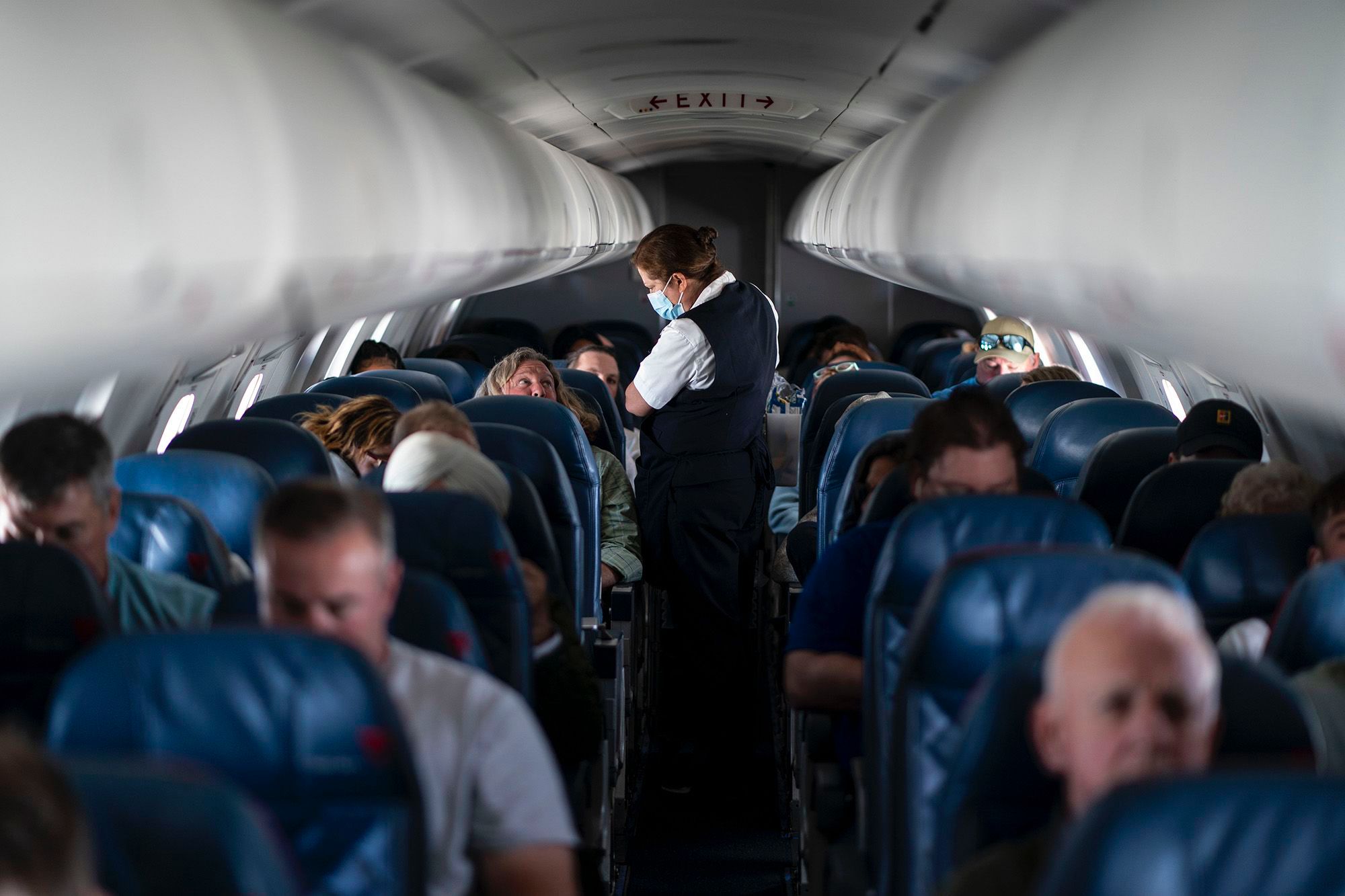
The Owner’s Flight
Victoria’s fingers snapped.
The sound was sharp, violent, tearing through the hushed, expensive acoustics of the First Class lounge at JFK Terminal 5. The kind of sound that demanded immediate attention, that treated everyone within earshot as service staff waiting for orders.
“Alex,” she said, not looking at me, her eyes fixed on her phone screen where she was scrolling through photos of herself at last week’s charity gala. “Put down that ridiculous coffee and move my Louis Vuitton trunks to the gate immediately. I don’t trust these union porters. They scuff things on purpose. Heaven knows I can’t have my gowns arriving damaged.”
I was sitting three seats away, laptop open, reviewing the quarterly financial reports that had come through overnight. Numbers that told a story Victoria would never understand because she’d never bothered to look beyond the surface of anything.
She turned to the stranger sitting next to her—a woman in expensive athleisure who’d been minding her own business—and flashed that conspiratorial, fake smile I’d seen a thousand times.
“My stepson,” Victoria said, gesturing vaguely in my direction like I was furniture. “He’s used to manual labor. It keeps him humble. His father always said he had the hands of a mechanic, not a manager. Good for building character, you know? Can’t have young men getting soft.”
The woman looked uncomfortable, clearly not wanting to be pulled into whatever family dynamic this was. She mumbled something polite and returned to her magazine.
I didn’t flinch. Didn’t argue. Didn’t give Victoria the reaction she wanted.
I had spent fifteen years perfecting the art of being invisible. Of letting her think she’d won. Of enduring her casual cruelty with the kind of patience that came from knowing something she didn’t.
I slowly closed my laptop, the screen going dark on the spreadsheet that showed AeroVance Airlines’ first profitable quarter in three years. The turnaround I’d engineered. The restructuring I’d overseen. The deals I’d negotiated at 2 AM in conference rooms while Victoria was at spa retreats posting Instagram stories about self-care.
Inside that laptop’s hard drive lay board meeting minutes, stock transfer documents, and a single notarized certificate dated this morning—the one that finalized the transfer of 51% of AeroVance’s controlling stock into a trust under my name. The inheritance my father had left me, held in suspension until I turned thirty, which had happened exactly fourteen hours ago at midnight.
As of 12:01 AM today, I owned the airline Victoria was about to board.
She didn’t know because I hadn’t told her. Because after fifteen years of being treated like the help, I’d learned the value of strategic silence.
I hoisted her three heavy trunks—Louis Vuitton, as advertised, filled with gala gowns she’d wear once and photograph extensively. They were heavier than they should be, probably packed with shoes and accessories and the portable humidifier she claimed was essential for her skin.
Victoria watched me struggle slightly with the weight, a smirk playing on her lips. She was enjoying this. The sight of me—six feet tall, broad-shouldered from the rowing I’d done in college, capable of so much more—hauling her baggage like a bellhop.
She saw a servant. A stepson who’d never quite measured up to her standards. A reminder of my father’s first marriage, the one before Victoria, the one to my mother who’d died when I was eight and left my father vulnerable to exactly this kind of woman.
Victoria didn’t see that the muscles lifting these bags were the same ones that had carried the weight of a failing company for six months. That while she’d been burning through my father’s life insurance money on cosmetic procedures and designer wardrobes, I’d been in the office at dawn working with department heads to prevent layoffs, renegotiating fuel contracts, implementing the cost-saving measures that had saved AeroVance from bankruptcy.
She didn’t see me at all. She never had.
We walked to the gate—Gate 42, Terminal 5, AeroVance Flight 1847 to London Heathrow. A route I knew intimately because I’d been the one to advocate for its expansion, to argue for better aircraft on this particular run, to personally select the crew after reviewing performance metrics.
Victoria bypassed the long line of passengers waiting to board—families with children, business travelers in wrinkled suits, the economy of modern air travel. She marched straight to the priority counter, her heels clicking authoritatively on the polished floor.
The gate agent was a woman named Brenda Chen—forty-two, single mother of two, ten years with AeroVance, consistently high performance reviews. I knew because I’d read her file three months ago when I’d been reviewing staffing for this route.
Brenda forced a professional smile as Victoria approached, the kind of smile that said she’d dealt with entitled passengers before and would deal with them again.
“Welcome aboard, Mrs. Vance,” she said, scanning Victoria’s boarding pass. First Class, Seat 2A. The best seat in the cabin, the one I’d upgraded her to myself using my employee privileges, back when I still thought small acts of generosity might soften her.
Victoria didn’t respond. Didn’t say thank you. Didn’t acknowledge Brenda as a human being providing a service. She simply gestured for me to follow with her bags, like I was a porter she’d hired.
I stepped up to the scanner next, my own boarding pass ready on my phone. Economy seat 38B. Middle seat, all the way in the back, next to the lavatories. Victoria had booked it that way deliberately when I’d asked to join her London trip, citing “character building” and “not getting entitled.”
I held my phone under the red laser.
BEEP.
But it wasn’t the normal confirmation tone—the single, standard beep that said “passenger cleared for boarding.” This was different. A triple-tone chime, low and melodic, almost musical. A sound I’d only heard a handful of times.
On Brenda’s screen, I knew what was appearing because I’d programmed it myself with IT three months ago: a bright red banner that flashed across her terminal in unmistakable capital letters.
CODE: RED-ALPHA-ONE. OWNER ON BOARD. PROTOCOL ZEUS ACTIVE.
Brenda’s eyes went wide. Her hand, which had been reaching for the standard “welcome aboard” spiel, froze mid-air. She gasped—actually gasped—her other hand instinctively reaching for the intercom button that would alert the entire aircraft that the Chairman of the Board was boarding.
I caught her eye and slowly, deliberately, put a single finger to my lips.
Silence.
Brenda understood immediately. She was smart, had been with the company long enough to understand when discretion was required. But I could see the gears turning in her head, the cognitive dissonance of what she was seeing:
The owner of the airline. The person whose signature was on her paychecks. The chairman whose face was in the employee newsletter every month, standing in boardrooms and shaking hands with executives. That person was standing in front of her in jeans and a blazer, carrying expensive luggage for a woman who’d just been incredibly rude to him.
A bead of sweat formed on Brenda’s forehead as the terrifying reality of the situation became clear: she’d just watched a passenger—Mrs. Vance—treat the airline’s owner like a servant, and that same passenger was currently boarding the aircraft completely unaware of what she’d done.
“Mr. Vance,” Brenda whispered, her voice barely audible. “Does she—”
I shook my head once. No.
Brenda swallowed hard. “Do you need me to—”
Another head shake. Not yet.
“Your seat assignment, sir. It’s… it’s incorrect. You’re showing in 38B.”
“I know,” I said quietly. “Leave it.”
“But sir, we have Protocol Zeus active. The crew will be expecting—”
“I’ll handle the crew. Just… let it play out.”
Brenda nodded, her professionalism overriding her obvious confusion and concern. “Yes, sir. Have a… have a good flight, sir.”
Victoria, already ten feet down the jetway, turned back impatiently. “Alex! Must you chat? Some of us have schedules.”
I picked up her bags again and followed.
The aircraft was an Airbus A350-900, one of the newer additions to our fleet. I knew because I’d signed off on the purchase eighteen months ago, back when I’d still been officially just “Director of Fleet Operations” and secretly being groomed by the board to take over when my inheritance activated.
The cabin smelled new—leather and that particular airplane cleaning solution, expensive and intentional. First Class was pristine: pods arranged in a 1-2-1 configuration, each one a private suite with doors, lie-flat beds, personal monitors, mood lighting.
Victoria settled into 2A without acknowledgment to the flight attendant who welcomed her aboard. She immediately began arranging her things—iPad, phone, expensive water bottle, eye mask, noise-canceling headphones.
I stood there with her bags.
“Well?” she said without looking up. “Put them in the overhead. Carefully. If anything shifts, you’re replacing it.”
The flight attendant—his name tag said “Marcus”—looked at me with sympathy. He’d probably seen this dynamic a hundred times: entitled passengers treating companions like staff.
What he didn’t know yet was that in approximately thirty seconds, his phone would receive an alert about Protocol Zeus being active, and everything he thought he understood about this flight would change.
I loaded Victoria’s bags into the overhead compartment, making sure everything was secure. Then I started walking toward the back of the plane.
“Where’s he sitting?” I heard Victoria ask Marcus, her tone suggesting she wanted to make sure I was far enough away to not be an embarrassment.
“Economy, ma’am. Seat 38B.”
“Perfect,” Victoria said. “He needs to understand how most people travel. Builds character.”
I walked through Business Class—ten rows of comfortable but not excessive seating, currently filling with executives and frequent fliers. Through Premium Economy—the compromise section, better than coach but not quite business. And finally into Economy proper—the main cabin where most of AeroVance’s revenue was generated, where families and budget travelers and students filled every available seat.
38B was exactly as bad as I’d expected. Middle seat, second-to-last row, between a teenage boy wearing headphones and an older man who’d already fallen asleep. The lavatories were directly behind us, promising a symphony of flushes and door slams for the next seven hours.
I squeezed into my seat, my knees immediately protesting the lack of legroom. The teenager glanced at me, shrugged, and went back to his phone. The sleeping man snored softly.
This was how most people flew. How the vast majority of our passengers experienced AeroVance. Cramped, uncomfortable, tolerable but not enjoyable.
I’d known this intellectually, had seen the metrics and surveys and complaint data. But sitting here, trapped between strangers with my laptop bag barely fitting under the seat in front of me, I understood it viscerally.
This was the experience Victoria thought was “character building” for me but would never dream of experiencing herself.
The boarding process continued around me. Passengers filed past, looking for their seats, stuffing bags into overhead bins, settling in for the long flight. Children complained. Parents negotiated. Flight attendants smiled their professional smiles and offered assistance.
Fifteen minutes into boarding, I felt my phone buzz. A text from Marcus, the First Class flight attendant:
Marcus: Sir, I received the Zeus protocol alert. I’m confused. You’re showing in 38B but the system says you should be in the cockpit for captain’s greeting. What would you like me to do?
I typed back: Nothing yet. Proceed normally. I’ll come forward when I’m ready.
Marcus: Understood, sir. The captain is asking about your presence on board. She wants to know if she should make the standard announcement.
Me: Negative. Tell Captain Morrison to hold all announcements. I’ll brief her shortly.
Marcus: Yes, sir.
I put my phone away and looked around the economy cabin. It was almost full now, maybe eighty percent capacity. Good numbers for a midday London flight. Behind me, a mother was trying to calm a crying toddler. Across the aisle, a man was arguing with his wife about which bag went where.
Normal. This was normal air travel for most people.
The cabin door closed. The safety briefing began—flight attendants demonstrating seat belts and oxygen masks while passengers ignored them in favor of phones and magazines and last-minute texts.
The aircraft pushed back from the gate. The auxiliary power unit hummed to life. The engines began their characteristic whine as they spooled up.
We began taxiing toward the runway.
And then, as we approached the holding point, the aircraft stopped.
Not the normal paused-for-traffic stop, but a complete, deliberate stop. The engines went quiet. The movement ceased.
Around me, passengers began to look up, confused. The man next to me woke up. “Are we stopped?” he asked groggily.
“Seems like it,” I said.
A minute passed. Then two. People started pulling out their phones, checking for updates, murmuring to each other.
Then the PA system crackled to life, but it wasn’t the captain’s voice.
“Ladies and gentlemen, this is First Officer Chen. We have a brief delay before takeoff. The captain will be making an announcement momentarily. Please remain seated with your seatbelts fastened.”
More murmuring. More confusion.
My phone buzzed again.
Marcus: Sir, the captain is asking for you to come forward. She says it’s urgent.
Me: On my way.
I unbuckled and stood up, squeezing past the teenager and into the aisle. The other passengers watched me curiously—who was this guy being allowed to walk around during taxi?
I made my way forward through economy, through premium economy, through business class. As I walked, I saw flight attendants at their stations, all of them looking at me with expressions that ranged from confusion to dawning recognition as they checked their phones and saw the Zeus protocol alert.
When I reached First Class, the dynamic changed.
Victoria was in her pod, door closed, eye mask on, clearly trying to sleep through the delay. Marcus stood at his station near the galley, his eyes wide as I approached.
“Mr. Vance,” he whispered. “The captain is in the cockpit. She wants to speak with you.”
“I know. But first, I need to address something.”
I walked to Victoria’s pod and knocked on the door frame.
She pulled down her eye mask, annoyed. “What? Alex, why aren’t you in the back where you belong?”
“We need to talk,” I said calmly.
“We absolutely do not. I’m trying to rest. Go away.”
“Victoria, the aircraft isn’t moving because the captain has concerns about passenger behavior.”
She sat up, suddenly alert. “What passenger? Someone’s causing trouble? Have them removed. I will not have my flight delayed by—”
“You,” I said. “The passenger in question is you.”
Her face went blank with incomprehension. “Excuse me?”
Before I could respond, the cockpit door opened and Captain Sarah Morrison emerged. Fifty-two years old, twenty-five years with AeroVance, one of our most senior pilots. I’d met with her twice in fleet meetings, respected her immensely.
She walked past Victoria’s seat without looking at her and stopped in front of me. Then, in full view of the First Class cabin, she snapped to attention and rendered a crisp salute.
“Mr. Chairman,” she said formally. “Welcome aboard. I apologize for not greeting you properly at boarding, but I was unaware of your presence until the Zeus protocol activated.”
The First Class cabin went completely silent. Every passenger who’d been pretending not to pay attention was now staring openly.
Victoria’s face was a mask of confusion. “Chairman? Alex, what is she—”
I returned Captain Morrison’s salute—a gesture I’d learned from my father, who’d served in the Air Force before starting the airline. “At ease, Captain. The lack of greeting was intentional. I needed to observe something.”
“Sir, my First Officer informed me that there may have been an incident at boarding. Something involving inappropriate treatment of you by another passenger.”
“Not inappropriate,” I corrected. “Just… revealing.”
I turned to face Victoria fully. Her confusion was shifting to something else—the first glimmers of understanding, of a reality she didn’t want to accept.
“Victoria, you asked why the plane isn’t taking off. It’s because Captain Morrison and I share a policy about how passengers treat each other—and how they treat airline personnel—on our aircraft.”
“Your aircraft?” Victoria’s voice was small, uncertain.
“My aircraft,” I confirmed. “My airline, actually. As of midnight last night, I own 51% of AeroVance. Controlling interest. Chairman of the Board. The inheritance my father left me, the one you thought was tied up in trusts you could control. It activated on my thirtieth birthday. That was yesterday.”
I watched the color drain from her face as the pieces clicked into place. The laptop I’d been working on. The board meetings I’d been attending that she’d thought were just “helping out.” The late nights at the office she’d mocked as “playing manager.”
“The reason we’re stopped,” I continued, “is because Captain Morrison takes passenger conduct very seriously. And I take it seriously when someone treats another person the way you treated me in the lounge. The finger snapping. The dismissive comments. The assumption that I’m beneath you, that my only value is in carrying your bags.”
“Alex, I didn’t mean—”
“You meant exactly what you said. About me being used to manual labor. About my father saying I had the hands of a mechanic. About how this ‘keeps me humble.’ You’ve spent fifteen years telling me I’m not good enough, that I don’t belong in the world you married into. You’ve treated me like the help while spending the inheritance my father meant for me to use to rebuild his company.”
Victoria’s eyes darted around the cabin, suddenly aware that everyone was watching. “This is between family. You can’t just—”
“You’re right,” I said. “This is between family. Which is why I’m going to give you a choice.”
Captain Morrison stood at attention, clearly waiting for my call.
“You can stay on this aircraft,” I said. “But if you do, you’ll be moving to economy. Seat 38B, specifically. The one you booked for me because you thought it was character-building. You’ll experience the seven-hour flight to London in a middle seat with no legroom, next to the lavatories, in the section where most of our passengers—the ones who actually pay their own way—travel.”
Victoria’s mouth opened, but no sound came out.
“Or,” I continued, “you can get off my plane right now. We’ll retrieve your bags, and you can book a different airline. One where you can treat the staff and your family however you’d like. But you will not do it on AeroVance. Not anymore.”
“You can’t—” Victoria started.
“I absolutely can,” I interrupted. “This is my airline. These are my aircraft. These are my policies. And one of those policies, instituted by my father before he died and reinforced by me, is that we do not tolerate passengers who treat others with contempt and cruelty. Not our staff. Not other passengers. And certainly not family members who’ve spent years being diminished and dismissed.”
Captain Morrison cleared her throat. “Mr. Chairman, we’re currently holding at the taxiway. Air traffic control is asking for our status. What would you like me to tell them?”
I looked at Victoria. “Well? Are you staying in 38B, or are you deplaning?”
Her face went through several emotions—shock, anger, humiliation, and finally something that might have been fear. Fear that her comfortable life, her status, her access to the money and lifestyle she’d enjoyed since marrying my father, might actually have limits.
“This is humiliating,” she whispered.
“Yes,” I agreed. “It is. The question is whether you’re willing to endure that humiliation for seven hours in economy, or if you’d rather leave.”
She looked around the First Class cabin—at the other passengers watching, at Marcus standing nearby, at Captain Morrison waiting for instructions. She was trapped in a situation where she had no control, no leverage, no way to snap her fingers and make people do what she wanted.
“I’ll take economy,” she finally said, her voice barely audible.
“Excuse me?” I said, making her repeat it louder.
“I said I’ll take economy.” Her voice was stronger now, angry but accepting.
I nodded to Marcus. “Please move Mrs. Vance’s bags from the overhead compartment to storage. She’ll be relocating to seat 38B.”
“Yes, sir,” Marcus said, barely concealing a smile.
Victoria stood up, gathering her things with shaking hands—the iPad, the phone, the water bottle, all the accessories that had seemed so important twenty minutes ago. She didn’t look at me as she moved past, didn’t say anything, just walked toward the back of the plane with as much dignity as she could muster while the entire First Class cabin watched her go.
When she was gone, Captain Morrison turned to me. “Sir, should I make the standard chairman announcement to the cabin?”
“No,” I said. “Let’s keep this quiet. I’ll be sitting in First Class for the remainder of the flight, but there’s no need to alert everyone. I’d prefer to keep a low profile.”
“Understood, sir. And… if I may say so, that was handled with remarkable restraint.”
“Thank you, Captain. My father always said that power is most effective when it’s exercised with precision rather than force.”
“Wise man, your father.”
“He was,” I agreed. “He also said that how we treat people when we think no one important is watching tells us everything we need to know about character.”
Captain Morrison smiled. “I’ll get us back in the taxi sequence. We should be airborne in fifteen minutes.”
She returned to the cockpit. Marcus approached me, still trying to suppress a grin.
“Mr. Vance, may I show you to a different seat? We have 1A available—”
“Actually,” I said, “I’ll take 2A. It’s already configured how I like it.”
Victoria’s former seat. The best seat in First Class. The one she’d chosen because it was the most premium, the most private, the most exclusive.
It seemed fitting.
The flight to London was smooth. Peaceful, even. I worked on my laptop, reviewed documents, made notes for the board meeting I’d be attending the next day—my first official meeting as Chairman, where I’d be presenting the turnaround strategy that had saved the company.
About three hours into the flight, Marcus approached with a concerned expression.
“Sir, I thought you should know—Mrs. Vance has been quite upset. She’s been crying in 38B. Some of the passengers near her are concerned.”
“Is she causing a disturbance?”
“No, sir. Just… quietly emotional.”
I thought about that. About Victoria, who’d spent fifteen years being cruel in small ways, now experiencing a fraction of the humiliation she’d casually dealt out. About whether I should feel guilty for putting her in economy, for making her sit in a middle seat while I enjoyed the premium cabin she’d claimed for herself.
I didn’t feel guilty. I felt… clear. Like something that had been murky for years had finally been brought into focus.
“If she needs anything—water, tissues, whatever—make sure she gets it,” I told Marcus. “We’re not cruel here. We’re just fair.”
“Yes, sir. And sir? Speaking for the crew… thank you. We’ve all dealt with passengers like Mrs. Vance. It’s rare that we get to see someone stand up for us—and for themselves—the way you did.”
“You shouldn’t have to deal with people like that,” I said. “Not on my airline. We’re going to be implementing new policies about passenger conduct. If someone treats you or your colleagues with disrespect, you’ll have the authority to address it. Within reason, of course. But you won’t have to smile and take it anymore.”
Marcus’s eyes actually got misty. “That would mean a lot to all of us, sir.”
We landed at Heathrow on schedule. The passengers deplaned in the usual order—First Class first, then Business, then Premium Economy, then the main cabin.
I waited until Victoria appeared, walking with the economy passengers, her face puffy from crying, her earlier glamour completely gone. She saw me standing in the jetway with Captain Morrison, both of us there to observe the deplaning process.
She stopped in front of me, opened her mouth to say something, then closed it. What was there to say? She’d been caught. Exposed. Humiliated. And I’d done it all within the bounds of rules she’d never bothered to learn because she’d never expected them to apply to her.
“The car service is waiting for you,” I said neutrally. “I’ve arranged separate transportation for myself.”
“Alex—”
“When you get back to the States,” I interrupted, “we need to have a conversation about your living situation. The house you’re in—my father’s house—is part of the estate. We’ll need to discuss what’s fair and what’s not.”
“You’re throwing me out?” Her voice was small, scared.
“I’m establishing boundaries,” I corrected. “Something I should have done years ago. We’ll have that conversation when I’m back. For now, enjoy London.”
I walked past her, Captain Morrison falling into step beside me.
That evening, in my London hotel room, I received an email from the board secretary. The agenda for tomorrow’s meeting. My name at the top: Alexander Vance, Chairman and CEO.
Below that, a list of initiatives I’d be presenting. The fleet modernization program. The new passenger conduct policy. The staff training overhaul. The customer service improvements. All the things I’d been working on in the shadows, all the pieces I’d been putting in place while Victoria thought I was just playing at being important.
My phone rang. Helen, my father’s lawyer and the trustee who’d overseen my inheritance.
“I heard you had an interesting flight,” she said. I could hear the smile in her voice.
“News travels fast.”
“Captain Morrison is friends with me. She wanted to make sure I knew how you handled your first day as Chairman. She was impressed.”
“I just did what felt right.”
“That’s what your father would have said. He built this airline on the principle that how you treat people matters more than profit margins. Though he’d be pleased to see you’ve managed to do both—treat people well and turn a profit.”
“I learned from the best.”
“Your father would be proud, Alex. Not just of the business side. Of the person you’ve become. Of how you handled Victoria today. He always worried that she’d broken something in you, that fifteen years of her treatment had made you doubt yourself.”
“She tried,” I admitted. “But it turns out that when you spend fifteen years being underestimated, you get really good at proving people wrong.”
“What’s next?”
“Next? I be the chairman. I run the airline. I make the changes that need to be made. And I stop letting people treat me like I don’t belong in rooms where decisions get made.”
“And Victoria?”
“Victoria gets to decide what kind of person she wants to be going forward. If she can change, if she can treat people with respect, we’ll figure out a relationship that works. If she can’t…” I paused. “Then she’ll find out that inheritance money doesn’t last forever when you’re burning through it on designer bags and spa retreats.”
Helen laughed. “Your father really would be proud.”
Six months later, I was back on Flight 1847 to London. This time, I flew in the cockpit jump seat—a privilege of ownership I’d decided to exercise more often, wanting to understand every aspect of how our airline operated.
Captain Morrison was at the controls again. During cruise, when the workload was light, she glanced back at me.
“How’s the new passenger conduct policy working out?” she asked.
“Complaints are down forty percent,” I said. “Staff satisfaction is up twenty-three percent. And we’ve had to remove exactly eleven passengers from flights for violating the respect standards. Word is getting around that AeroVance doesn’t tolerate that behavior anymore.”
“Good. What about Mrs. Vance?”
“We reached an understanding. She’s living in a smaller house now—one she’s paying for herself with money from her divorce settlement. My father’s estate was more complicated than she thought. Turns out, his will had provisions she’d never bothered to read.”
“Is she still giving you trouble?”
“No. She’s actually been… quiet. I think having to sit in 38B for seven hours was more effective than any conversation we could have had. Sometimes people need to experience what they’ve been dealing out before they understand it.”
Morrison laughed. “That’s one way to put it.”
I looked out at the clouds below us, the Atlantic stretching endlessly, and thought about that flight six months ago. About Victoria’s fingers snapping. About walking through the aircraft carrying her bags. About the moment I’d stopped being invisible and started being exactly who I’d always been underneath.
“You know what the best part is?” I said.
“What’s that?”
“Every time I board one of our aircraft now, I see it differently. I see the passengers in economy and remember what that middle seat felt like. I see the flight attendants dealing with difficult passengers and remember Marcus’s face when I told him he wouldn’t have to just smile and take it anymore. I see the whole operation through the eyes of someone who was invisible, and it makes me a better chairman.”
“Your father chose well when he structured your inheritance the way he did,” Morrison said. “Waiting until you were thirty. Making sure you’d worked in the company first. Seen it from the ground up.”
“He knew what he was doing,” I agreed. “He knew I’d need to understand what it felt like to be underestimated before I’d truly appreciate the responsibility of leadership.”
“Think you’ll ever tell Victoria any of this?”
I considered that. “Maybe. Maybe someday I’ll tell her that the person she thought was beneath her—the stepson with mechanic’s hands—was exactly the person her husband had been grooming to save his airline. That every dismissive comment, every act of casual cruelty, was teaching me exactly how not to treat people. That she was, in her own terrible way, the perfect example of what leadership shouldn’t look like.”
“That’s generous,” Morrison said.
“It’s honest,” I corrected. “And if there’s one thing I learned from fifteen years of being invisible—it’s that honesty, delivered at the right moment, is the most powerful tool we have.”
The aircraft hummed around us, carrying hundreds of passengers to their destinations. Some in First Class, some in Business, most in Economy. All of them on my airline, all of them deserving the same basic respect regardless of what they’d paid for their tickets.
That’s what my father had built. That’s what I was going to maintain.
And that’s what Victoria had failed to understand until she found herself in seat 38B, finally experiencing what the rest of the world had always known: that dignity isn’t determined by where you sit, but by how you treat the people around you.
THE END

Lila Hart is a dedicated Digital Archivist and Research Specialist with a keen eye for preserving and curating meaningful content. At TheArchivists, she specializes in organizing and managing digital archives, ensuring that valuable stories and historical moments are accessible for generations to come.
Lila earned her degree in History and Archival Studies from the University of Edinburgh, where she cultivated her passion for documenting the past and preserving cultural heritage. Her expertise lies in combining traditional archival techniques with modern digital tools, allowing her to create comprehensive and engaging collections that resonate with audiences worldwide.
At TheArchivists, Lila is known for her meticulous attention to detail and her ability to uncover hidden gems within extensive archives. Her work is praised for its depth, authenticity, and contribution to the preservation of knowledge in the digital age.
Driven by a commitment to preserving stories that matter, Lila is passionate about exploring the intersection of history and technology. Her goal is to ensure that every piece of content she handles reflects the richness of human experiences and remains a source of inspiration for years to come.