This Christmas, my daughter-in-law looked me right in the eye across her spotless granite kitchen counter and said, “We’re doing Christmas at my mom’s this year. You can stay home and relax.” I didn’t argue. I didn’t plead. I didn’t remind her of the forty years I’d spent making Christmas magical for my family. I just smiled, wished them well, and booked a flight to Europe. When I posted my photos three days later, my phone nearly exploded with messages. Everyone kept asking the same question: Who was the man sitting next to me in front of that twinkling Christmas tree?
My name is Linda Dawson, and I’m sixty-seven years old. I live alone in the small ranch house in Boulder, Colorado that my husband Paul and I bought forty years ago when interest rates were criminal and our dreams were larger than our bank account. The walls are lined with photographs documenting a life I sometimes barely recognize as my own—young parents with a baby, family vacations to national parks we couldn’t really afford, graduations and weddings and grandchildren. The smell of cinnamon always seems to linger in my kitchen, especially around the holidays, a ghost of all the pies and cookies and memories baked into these walls.
Christmas has always been my favorite time of year, mostly because it used to bring my family together in ways that ordinary days couldn’t manage. There’s something about twinkling lights and the smell of pine that makes people softer, more willing to be present, more likely to say the things they mean instead of the things that are convenient.
Paul passed away eight years ago after a brief but brutal fight with pancreatic cancer that stole him from me in less than four months. Since then, my son Mark and his wife Hannah have been my primary family, my main connection to the world beyond my quiet neighborhood and my part-time job at the library. Every Christmas for the past eight years, I would drive to their house in the Denver suburbs, bringing my famous pecan pie, carefully wrapped gifts for my two grandchildren, and whatever energy I could muster to help Hannah with the decorations she never quite finished on time. It wasn’t perfect—Hannah had a way of making helpful suggestions feel like criticisms, and Mark had developed his father’s habit of disappearing into his phone during family gatherings—but it made me feel like I still belonged somewhere in the story of this family I’d created.
This year, though, something felt fundamentally different. Hannah had been increasingly distant for months, her texts shorter and less frequent, her invitations to family dinners conspicuously absent. Mark seemed to call less often, and when he did, the conversations felt performative, like he was checking items off a duty list rather than actually connecting with his mother. Still, I told myself the things we tell ourselves to avoid uncomfortable truths: families get busy, people grow and change, life happens, and I didn’t want to be the kind of mother who made her son feel guilty for living his own life.
The phone call came on a Tuesday afternoon, exactly one week before Christmas. I’d been in the middle of addressing Christmas cards—an increasingly obsolete tradition I stubbornly maintained—when my phone rang with Hannah’s name on the screen. My heart did that small leap of hope it always did when my family reached out, that pathetic optimism that this time would be different, that this time I’d hear warmth instead of obligation in their voices.
“Linda, I wanted to let you know that we’re spending Christmas at my mom’s house this year,” Hannah said without preamble, her voice holding that particular tone of polite distance that people use when they’ve rehearsed a difficult conversation. “She hasn’t been feeling well, and she asked if we could do the holiday at her place. It’ll be easier for everyone if we keep things simple. You can stay home and relax. I’m sure you understand.”
My hand holding the Christmas card—addressed to my college roommate who I exchanged exactly one letter with per year—froze mid-air. The pen dropped onto the table with a small clatter that seemed impossibly loud in the sudden stillness of my kitchen. “Oh,” I heard myself say, my voice sounding thin and distant even to my own ears. “I see. That sounds nice for your mom.”
“Great. I knew you’d understand. Mark will call you on Christmas Day,” Hannah said quickly, relief evident in her voice at my easy acceptance. “Have a good holiday.”
The line went dead before I could respond, before I could ask if perhaps I might come along, before I could suggest that surely there was room for one more person at her mother’s table, before I could say any of the desperate things that crowded into my throat and died there unspoken.
I sat at my kitchen table for a long time after that call, staring at the half-finished Christmas cards, at the decorations I’d already put up throughout the house—garlands draped carefully over the fireplace mantle, stockings hung with names embroidered in thread that had faded over decades, the seven-foot artificial tree twinkling cheerfully in the corner of the living room. For years, I had decorated early and extensively because when Mark and his family arrived, I wanted it to feel like coming home, wanted them to walk through my door and immediately be wrapped in Christmas magic and the unconditional love I’d always tried to provide.
Now, staring at those decorations, they just looked sad. Like a stage set for a play that had been canceled, like a party where the guest of honor never arrived.
That night, I made myself a cup of chamomile tea and pulled out old photo albums—the actual physical kind with pages that crinkle and photographs held in place by sticky corners that have mostly lost their stick. I flipped through images of Christmases past: Mark as a little boy in footie pajamas, his face illuminated by wonder as he opened presents. Paul in his favorite ugly Christmas sweater, carving turkey with exaggerated precision while I laughed at his running commentary. Hannah during her first Christmas with our family, smiling genuinely before whatever subtle shift had turned her from daughter-in-law into someone who found my presence optional.
My eyes stung with tears I refused to let fall. “It’s just one Christmas,” I whispered to the empty room, to the cat who’d wandered in and was watching me with those judgmental eyes cats have perfected. “It’s fine. You’re fine.”
But it wasn’t fine. It wasn’t just about being alone for Christmas. It was about being forgotten, about being the person your family includes out of obligation rather than desire, about reaching an age where people start making decisions about your life without bothering to consult you because they’ve decided you’re too old, too settled, too predictable to want anything different than what you’ve always had.
The next morning, Mark called. I could hear the guilt in his voice before he even spoke, could picture him standing in his garage or his office, wherever he’d gone to have this uncomfortable conversation away from Hannah’s hearing. “Mom, I hope you’re not upset about Christmas. You know how Hannah’s mom gets—she really wanted to host this year, and Hannah thought it would be easier to just do it there. It’s just one year. You understand, right?”
“Of course, sweetheart,” I said, speaking the words that mothers have been speaking for generations, the automatic responses that prioritize everyone else’s comfort over our own truth. “Don’t worry about me. I’ll be absolutely fine.”
“You’re the best, Mom,” he said, and I could hear the relief flooding his voice, the gratitude that I wasn’t going to make this difficult, wasn’t going to demand anything, wasn’t going to be a problem he needed to solve. “We’ll come visit right after New Year’s, I promise.”
When I hung up, I stood at my kitchen window watching snow fall gently over my backyard, coating the bird feeders and the dormant garden in pristine white. The neighborhood children were building a snowman in the yard across the street, their laughter carrying on the cold air, and I felt like a ghost in my own life—watching everyone else live while I existed in some parallel dimension where I was visible but not quite seen, present but not quite included.
That evening, as I sat by the fireplace with my elderly tabby cat purring on my lap and the lights from the Christmas tree casting warm patterns across the walls, I heard Paul’s voice in my memory as clearly as if he were sitting next to me: “You always take care of everyone else, Linda. When are you going to do something just for yourself? When are you going to be as important to you as everyone else is?”
It was something he’d said often during our marriage, particularly near the end when the cancer had stripped away all the polite pretenses and left only raw truth. He’d wanted me to promise that I wouldn’t spend the rest of my life being convenient, being accommodating, being the person who made everyone else’s life easier while my own grew smaller and quieter and less remarkable with each passing year.
I’d promised him. And then I’d spent eight years breaking that promise in small, daily ways.
But sitting there in the firelight, something shifted inside me—some combination of hurt and anger and sudden, startling clarity. A thought took root, fragile at first, then growing stronger: Maybe this year didn’t have to be about waiting for an invitation that would never come. Maybe I could give myself a different kind of Christmas, one filled with possibility instead of pity, with adventure instead of resignation, with the kind of joy that comes from choosing yourself instead of waiting to be chosen.
I closed my eyes and whispered to the empty room, to Paul’s memory, to whatever version of myself was brave enough to hear it: “Maybe it’s time to start living for me.”
What I didn’t know then was that this small decision, made in a moment of quiet rebellion against a lifetime of putting everyone else first, would lead to something extraordinary—a trip that would change not only my Christmas but the fundamental way I understood my own life and what it could still become.
The next morning, I woke up with that thought still buzzing in my head like electricity. I made myself coffee and opened my laptop at the kitchen table, feeling slightly ridiculous and completely exhilarated. I typed “Christmas trips for seniors” into the search bar, not really knowing what I was looking for but knowing I needed to look for something beyond the four walls that had started to feel less like home and more like a waiting room.
Dozens of results appeared: river cruises, package tours, group travel specifically designed for people “of a certain age”—that delicate euphemism for old. I scrolled through images of Christmas markets glowing with lights, snow-covered Alpine villages, cathedral concerts, and smiling travelers bundled in scarves and possibility.
Then I saw it: a ten-day Christmas tour through Germany, Austria, and Switzerland. Munich, Salzburg, Vienna, Zurich. Christmas markets and concerts, cathedral tours and mountain villages, cozy hotels and included meals. It departed in three days—December 22nd, landing me in Munich on the 23rd with Christmas Eve at a traditional German market.
My practical side immediately began calculating objections: it was expensive, it was short notice, I’d be traveling alone, what if something happened, what would people think, wasn’t I too old for spontaneous international travel?
But another voice, one I barely recognized as my own, whispered back: Who cares? Who cares what anyone thinks? You’ve spent sixty-seven years caring what everyone thinks, and where has it gotten you? Sitting alone in an empty house for Christmas because your family couldn’t be bothered to include you.
My hands were shaking as I clicked through to the booking page. The price made me wince—this was more than I’d spent on myself in the past five years combined—but I had the money. Paul’s life insurance and our savings had left me comfortable, and I’d been so careful, so frugal, so determined not to be a burden or seem wasteful. For what? So I could die with a healthy bank balance and a lifetime of experiences I’d been too cautious to have?
I filled out the form, entered my credit card information, and hovered over the “Book Now” button for a long moment, my heart hammering like I was about to do something dangerous instead of something wonderful. Then I clicked it.
Confirmation appeared on the screen: Booking confirmed. Welcome to Christmas in the Alps, Linda Dawson. Your adventure begins in 3 days.
I sat back in my chair and laughed out loud—a slightly manic sound that startled my cat off the counter. I’d done it. I’d actually done it. For the first time in eight years, for maybe the first time in my entire life, I’d done something completely spontaneous and entirely for myself without asking permission or seeking approval from anyone else.
The next three days passed in a blur of activity. I pulled Paul’s old suitcase from the basement—the leather one we’d used for our one trip to Europe forty years ago, worn now but still sturdy. I packed layers: sweaters, scarves, warm socks, my good winter coat. I tucked in Paul’s travel journal, its pages filled with his observations from that long-ago trip, and the gold locket he’d given me on our twentieth anniversary.
I told no one about my plans. Not Mark, not my neighbors, not the few friends who still occasionally called. It wasn’t out of spite—it was out of a deep need to keep this thing precious and untouchable, this fragile new sense of possibility that might shatter if exposed to anyone else’s opinions or concerns or well-meaning attempts to talk me out of it.
On the morning of December 22nd, I stood in my living room with my suitcase by the door, taking one last look at the Christmas decorations I’d leave behind. The tree lights blinked their steady rhythm, and for just a moment I felt a pang of something—not quite regret, but a recognition of how large this step felt, how far it was taking me from everything familiar and safe.
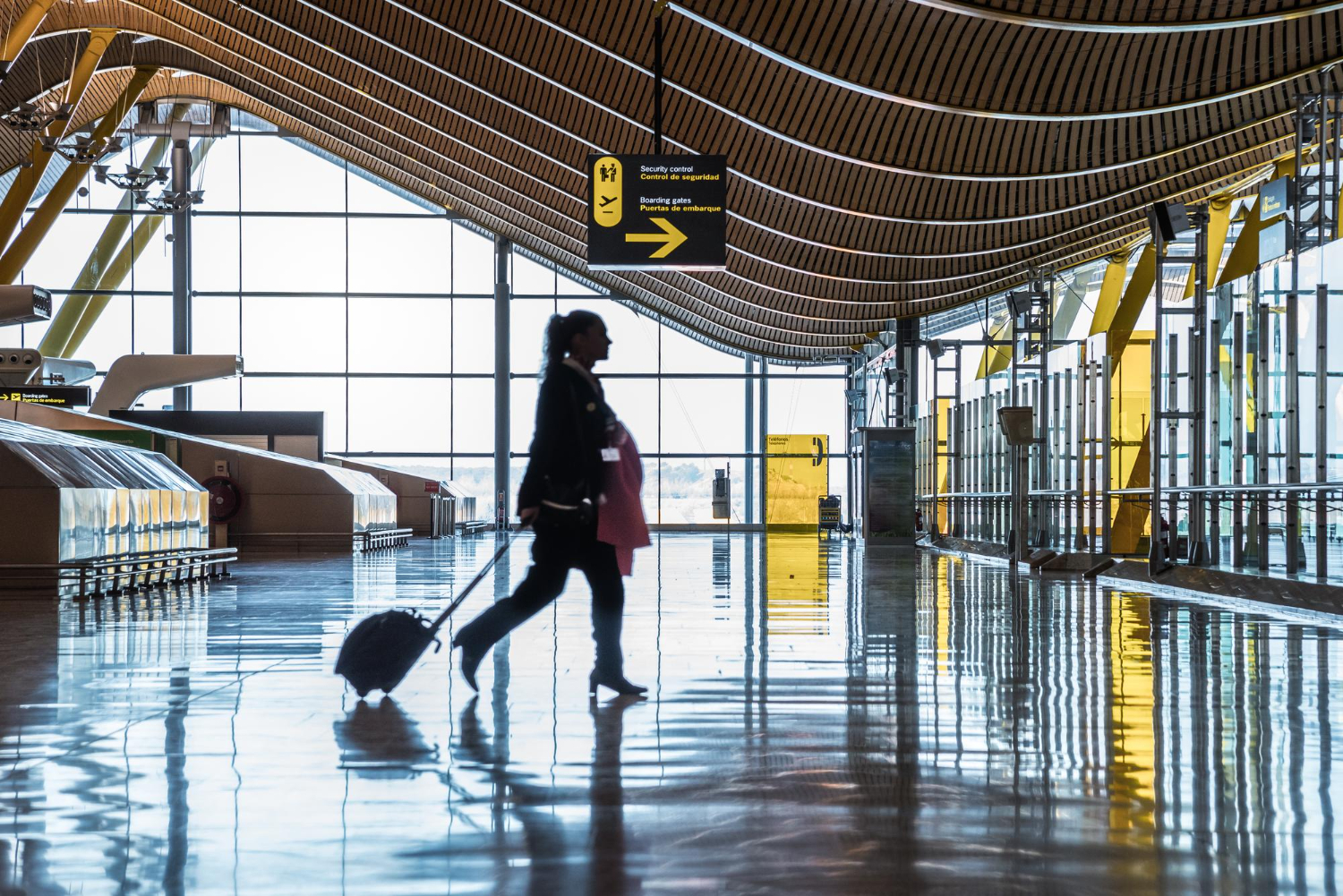
Then I thought about spending Christmas alone in this house, waiting for a phone call from my son that would last maybe ten minutes if I was lucky, and the pang dissolved into determination. I picked up my suitcase, locked the door behind me, and drove to the airport.
Denver International Airport on December 22nd was controlled chaos—families rushing to flights, children crying, people stressed and sharp-edged with holiday travel anxiety. I stood in the security line with my boarding pass clutched in my hand, surrounded by couples and families, and felt both terribly alone and strangely free. No one was waiting for me, but no one was weighing me down either.
When I finally reached my gate and found my seat on the plane—window seat, row 23, next to the wing—I let myself feel the full magnitude of what I was doing. I was sixty-seven years old, traveling to Europe alone at Christmas, and I had no idea what I was doing or who I would be when I came back.
“Excuse me, is this 23B?”
I looked up to see a man standing in the aisle—tall, silver-haired, with kind eyes behind wire-rimmed glasses and a gentle smile that made his whole face warm. He wore a well-worn cardigan over a button-down shirt and carried a worn leather messenger bag that suggested someone who valued function over fashion.
“Yes, that’s the middle seat,” I said, gathering my purse to give him room to sit.
“Thank you.” He settled in with the practiced efficiency of someone accustomed to travel, stowing his bag and buckling his seatbelt. Then he turned to me with that same warm smile. “Headed home or headed out?”
It was such a simple question, the kind strangers ask on airplanes to pass time, but my answer felt weighted with meaning. I smiled back and said, “Heading somewhere new.”
He chuckled, a low comfortable sound. “Good answer. Best kind of journey there is.”
As the plane taxied and then lifted into the Colorado sky, we began to talk. His name was David Monroe. He was a retired literature professor from Vermont, sixty-nine years old, traveling alone after losing his wife Eleanor to ovarian cancer three years ago. This was his third Christmas without her, and he’d finally decided that sitting alone in their house surrounded by memories was harder than facing the world without her.
“Eleanor always wanted to spend a winter in Europe,” he explained, his voice holding both sadness and warmth when he spoke her name. “We kept saying we’d do it when we retired, when we had time, when the timing was perfect. Turns out perfect timing is a myth we use to postpone living.”
I found myself telling him about Paul, about Mark and Hannah, about the phone call that had sent me on this impulsive journey. David listened with the focused attention of someone who actually heard what you were saying instead of just waiting for their turn to talk. When I finished, he didn’t offer platitudes or try to fix anything. He just said, “Sometimes the people who are supposed to love us forget to see us. But that doesn’t mean we’re invisible.”
By the time the plane touched down in Munich twenty hours later—after a layover in New York where we shared airport coffee and compared notes on what we hoped to see—it felt like I’d known David for years rather than hours. There was something comfortable about him, something steady and genuine that reminded me of Paul without making me feel like I was replacing anyone.
We learned we were both on the same tour group, registered for the same hotels and excursions. “What are the odds?” I said with a laugh as we collected our luggage.
David grinned. “Pretty good when you consider there aren’t that many Christmas tours for people our age. I think the universe might be trying to tell us something.”
“And what’s that?”
“That we’re not supposed to spend Christmas alone.”
That first night in Munich, jet-lagged and disoriented and more alive than I’d felt in years, I stood at my hotel room window looking out at the snow-covered city, its Christmas lights twinkling like earthbound stars. I pulled out my phone and, without overthinking it, took a photo of the view and posted it to Facebook with a simple caption: “Sometimes the best adventures happen when you stop waiting for permission.”
I turned off my phone before I could see any reactions, climbed into the impossibly comfortable bed, and slept better than I had in months.
The next morning—Christmas Eve—our tour group met in the hotel lobby. There were about twenty of us, mostly retirees, mostly solo travelers or couples, all of us looking slightly bewildered but excited. Our guide, a cheerful German woman named Greta, led us through the streets of Munich to the Christkindlmarkt at Marienplatz.
The market was everything I’d seen in photographs but more—wooden stalls glowing with lights, the smell of roasted almonds and glühwein, hand-carved ornaments and blown-glass angels, the sound of church bells and carousel music and people laughing in languages I didn’t understand. I bought a small wooden nutcracker for my mantle and a delicate glass ornament that caught the light like captured snow.
David appeared at my elbow with two steaming mugs. “Glühwein,” he announced. “Warm spiced wine. It’s traditional, and it’s excellent, and you look like you need to warm up.”
We sat on a bench near a carousel, watching children ride wooden horses while Christmas carols played through speakers hidden somewhere in the magical chaos. For a long time, we didn’t talk. We just existed together in that moment, two people who’d been lonely finding something like peace in each other’s company.
“I’m glad you’re here,” David said finally.
“So am I,” I replied. And I meant it with my whole heart.
That evening, the tour group attended Christmas Eve service at St. Peter’s Church—a soaring cathedral that made me feel small and significant at the same time, if that’s possible. The choir sang in German, their voices echoing off ancient stone, and I felt tears sliding down my face without embarrassment. These weren’t tears of sadness but of something else—release, maybe, or gratitude, or the simple overwhelming emotion that comes from experiencing something beautiful after a long time in the dark.
David handed me his handkerchief without comment, and I held his hand through the final hymn.
When we returned to the hotel that night, I finally turned on my phone. It immediately exploded with notifications—dozens of them, the screen lighting up over and over with messages, comments, and missed calls. My simple travel photo had apparently caused quite a stir.
Friends from church: “Linda! Where are you? This is wonderful!”
My neighbor: “Good for you! You deserve this!”
Old colleagues from the library: “I’m so proud of you for taking this trip!”
But it was the messages from my family that made my breath catch.
Mark: “Mom??? Where are you??? Is everything okay???”
Mark again: “Why didn’t you tell me you were traveling?”
Hannah: “Linda, is that Munich? Are you in Germany?”
Mark again: “Please call me. We’re worried.”
And then, a few hours later: “Mom, I saw you posted more photos. Who is that man? Are you with someone? Please call us back.”
I scrolled through the photos I’d posted without quite remembering doing so—apparently, I’d been sharing our adventures throughout the day. There was the Christmas market. The cathedral. And yes, there was one of David and me at a restaurant, both of us laughing at something, his hand on the table near mine, looking for all the world like two people enjoying each other’s company.
I sat on the edge of my hotel bed, staring at these frantic messages from family members who hadn’t bothered to include me in their Christmas plans but were suddenly very concerned about my whereabouts and companions. The old Linda would have called immediately, would have apologized for worrying them, would have explained and justified and made herself small again.
But I wasn’t the old Linda anymore. Or maybe I was becoming the Linda I was always meant to be if I’d just had the courage to claim her earlier.
I typed a simple response: “Having a wonderful Christmas in Europe. I’m safe and happy. We’ll talk when I get home. Merry Christmas.”
Then I turned off my phone again and went to sleep with a smile on my face.
Christmas Day in Salzburg was like something from a snow globe—the city draped in white, church bells ringing across the valley, the fortress on the hill presiding over it all like a benevolent guardian. Our tour group visited the Christmas market, toured Mozart’s birthplace, and spent the afternoon at a traditional Austrian restaurant where we ate schnitzel and drank local wine while a folk band played carols I recognized despite the unfamiliar language.
David sat across from me, and at some point during the meal, I realized I couldn’t remember the last time I’d felt this present, this engaged with the world, this interested in what came next. For years, my life had been about maintenance—maintaining the house, maintaining relationships, maintaining the appearance that I was fine when I was really just going through the motions.
“What are you thinking about?” David asked, catching my distracted expression.
“I’m thinking that I almost missed this,” I said honestly. “I almost spent Christmas alone feeling sorry for myself because my family couldn’t be bothered to include me. And instead, I’m here, in Salzburg, on Christmas Day, eating schnitzel with a literature professor from Vermont who makes me laugh. Life is very strange.”
“Strange and wonderful,” he agreed, raising his glass. “To unexpected Christmases and the courage to choose them.”
I clinked my glass against his. “To choosing ourselves.”
That night, back at the hotel, David and I sat in the lobby long after everyone else had gone to bed, talking about everything and nothing—our childhoods, our marriages, our regrets, our hopes for whatever years we had left. At some point, he told me something that made everything feel like it was meant to be.
“I should tell you something,” he said, his voice quiet in the empty lobby. “I recognized your name when I saw it on the tour roster. Your husband Paul—he was close friends with my brother Steven in the Navy. They served together. I met you once, maybe forty years ago, at a cookout at Steven’s house. You probably don’t remember.”
I stared at him, memory stirring. “Steven Monroe. Oh my God. The Fourth of July party. You had a daughter, I think. She played with Mark.”
David smiled. “That was us. Eleanor and I talked about what a lovely couple you and Paul made, how much you clearly loved each other. Paul talked about you constantly—about how you were the kindest person he’d ever known, how you made him want to be better. Steven told me when Paul got sick, but by then we’d lost touch. I’m so sorry I wasn’t there for you.”
Tears filled my eyes. “It feels like Paul sent you to find me when I needed it most.”
“Maybe he did,” David said softly. “Eleanor would have liked that thought. She always believed that people find each other when they’re supposed to.”
He reached across the small table between us and took my hand. “I’m glad I found you, Linda. Or that you found me. However this works.”
“Me too,” I whispered.
The rest of the trip passed in a dream—Vienna with its grand palaces and intimate coffee houses, the Austrian Alps where we took a cable car to a mountain peak and looked out at a world covered in perfect white, a New Year’s Eve dinner in Zurich where fireworks erupted over the lake and David kissed my cheek at midnight while I cried with joy I hadn’t known I was allowed to feel.
When it was time to fly home, I felt both eager and reluctant. Eager to see what my life might become with this new understanding of who I was and what I deserved. Reluctant to leave this bubble where everything felt possible and return to a world where people still expected me to be convenient and accommodating and small.
David must have seen something in my face as we waited for boarding because he said, “You don’t have to go back to being who you were before. That person is still you if you want her. But so is this version. You get to choose.”
“I’m afraid I’ll forget,” I admitted. “I’m afraid I’ll go home and slip back into old patterns and wake up one day having disappeared again.”
“Then we’ll remind each other,” he said simply. “I’d like to keep seeing you, Linda. If you’d like that too. Eleanor would never want me to spend the rest of my life alone and grieving. She’d want me to find someone to laugh with. And I think Paul would want the same for you.”
“I’d like that very much,” I said.
When I walked through my front door in Boulder on January 3rd, the Christmas decorations were still up, the tree lights still blinking. But the house didn’t feel empty anymore. It felt like the beginning of something instead of the end.
My answering machine was full—seventeen messages from Mark, four from Hannah, two from Mark’s kids wanting to know where Grandma was. I made myself a cup of tea and called my son back.
“Mom? Oh my God, Mom, where have you been? Why didn’t you answer your phone? We’ve been worried sick!”
“I was in Europe,” I said calmly. “I posted photos almost every day. You knew where I was.”
“But you just left without telling anyone! And who is that man in all your pictures? Are you seeing someone? Since when?”
“His name is David. He’s a friend. And I didn’t tell anyone because you told me to stay home for Christmas. So I found a different home to go to.”
There was a long pause. “Mom, I’m sorry. We should never have excluded you. Hannah feels terrible.”
“Does she? Or does she feel embarrassed that her friends saw my travel photos and asked questions?”
Another pause, longer this time. “That’s not fair.”
“Maybe not,” I agreed. “But it’s honest. Mark, I love you. You’re my son and I will always love you. But I’m not going to sit around waiting for you to remember I exist. I have a life to live, and I’m going to live it.”
“Are you saying you don’t want to see us anymore?”
“I’m saying I want to see you when you actually want to see me, not when you feel obligated. I’m saying I’m not going to be the grandmother who’s convenient and invisible and grateful for whatever scraps of attention you can spare.”
“Mom—”
“I’m done talking about this right now,” I said, suddenly tired. “Come visit next weekend if you want. I’ll make my pecan pie. But I need you to come because you miss me, not because you feel guilty.”
When I hung up, I felt lighter than I had in years.
Mark did come the following Saturday, bringing Hannah and the kids. Hannah apologized—awkwardly but sincerely—and I accepted it with grace because forgiveness isn’t the same as forgetting, and I could do both. We looked at photos from my trip, and I told them stories about the places I’d seen and the people I’d met. I showed them pictures of David, and when Hannah asked if he was special, I smiled and said, “Yes. He reminds me that I’m still allowed to want things for myself.”
Over the following months, David and I talked on the phone almost daily, visited each other twice, and planned another trip for spring—Italy this time, to see the gardens Eleanor had always wanted to visit. My relationship with my family improved, not because they changed dramatically but because I did. I stopped waiting for them to include me and started inviting them into the life I was actively building. And when they couldn’t make time, I filled that time with things that brought me joy instead of sitting in the silence feeling sorry for myself.
The following Christmas, when Hannah called to invite me to their house for the holiday, I smiled and said, “Thank you, but I’ve already made plans. David and I are spending Christmas in Vermont with his daughter’s family. But we’d love to see you all the weekend after New Year’s if you’re free.”
There was a stunned silence, and then Hannah laughed—a real laugh. “Good for you, Linda. Seriously. Good for you.”
“Thank you, dear,” I said. “I think so too.”
That Christmas in Vermont, surrounded by David’s family who welcomed me like I’d always belonged there, I thought about the woman I’d been two years ago—lonely, forgotten, waiting for an invitation that never came. And I thought about the woman I was now—loved, adventurous, choosing myself over and over again.
As I sat by the fireplace watching snow fall outside the windows while David’s grandchildren played with their new toys and his daughter asked me about my next trip plans, I understood something profound that I wished I’d learned decades earlier: home isn’t a place and it isn’t even people. Home is the peace you carry inside yourself, the certainty that you are enough exactly as you are, the courage to write your own story when everyone else has decided how yours should end.
My daughter-in-law had told me to stay home for Christmas thinking she was excluding me from their celebration. What she’d actually done was give me the greatest gift: permission to finally discover who I was when I wasn’t trying to belong to anyone else’s story.
I was Linda Dawson—not just someone’s mother or grandmother or widow. I was a woman who could book a trip on a whim, make friends with strangers, fall in love with life again at sixty-seven, and inspire others to do the same. I was a woman who’d spent decades making everyone else’s life beautiful and had finally learned to make my own life beautiful too.
The woman who’d been told to stay home had learned to fly. And she had discovered that the whole world was waiting to welcome her, arms open, heart ready, full of adventures she’d only just begun to imagine.

Adrian Hawthorne is a celebrated author and dedicated archivist who finds inspiration in the hidden stories of the past. Educated at Oxford, he now works at the National Archives, where preserving history fuels his evocative writing. Balancing archival precision with creative storytelling, Adrian founded the Hawthorne Institute of Literary Arts to mentor emerging writers and honor the timeless art of narrative.
Great story