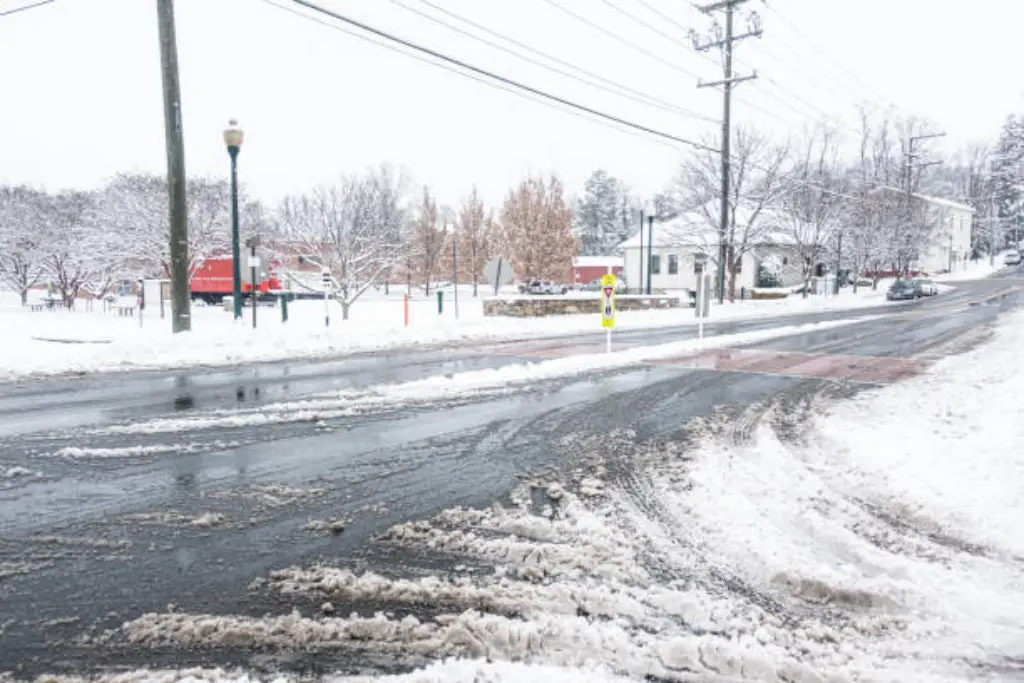
The power went out at exactly 2:17 a.m., and the silence that followed felt physical—like the whole neighborhood had inhaled and forgotten how to exhale. One second my furnace was cycling normally, the house humming with that steady suburban background noise you don’t notice until it vanishes. The next, the bedroom lights blinked twice and died. The refrigerator stopped mid-whir. Even the faint buzz of the streetlamp outside my window disappeared, leaving only the sound of wind dragging snow across the siding like fingernails on a chalkboard, relentless and cruel.
I lay in bed for maybe ten seconds, listening to that wind, feeling the house already starting to lose heat through the windows despite the storm glass and expensive insulation the HOA-approved contractor had installed three years ago. Then I threw off the covers and moved.
Outside, Minnesota was doing what Minnesota does best when it decides to remind you who’s actually in charge. The storm had been building all week, every forecast growing more dramatic, every meteorologist more apologetic about the numbers they were reporting. Meadowbrook Heights is the kind of suburban development where people file formal complaints about the incorrect shade of beige on someone’s exterior trim, but even the HOA email blasts had taken on an unusually nervous tone over the past forty-eight hours: secure patio furniture, stock emergency supplies, avoid unnecessary travel, check on elderly neighbors. The temperature outside read minus twelve degrees Fahrenheit and dropping steadily. Wind chill was already pushing minus thirty-five, the kind of cold that stops being an inconvenience and starts being a legitimate threat to human life.
My first thought wasn’t about my own pipes or my pantry or the extra blankets stacked in the hall closet. It was about Mrs. Patterson next door. She was seventy-eight years old, lived alone since her husband Gerald died from a heart attack last spring, and had the stubborn Midwestern pride of someone who’d raised four kids in an era when you didn’t ask for help unless you were actively bleeding. I’d heard her stories about the winters she’d survived in this same neighborhood back in the seventies and eighties, but those winters were different in ways that mattered. Back then, communities were warmer even when the temperatures weren’t. People checked on each other because they had to, because there was no other safety net. In modern Meadowbrook Heights, most people checked on their neighbors via Facebook posts and Ring camera footage, maintaining connection without actual contact.
I forced myself to focus on immediate priorities. I’d prepared for this storm like I was stocking a survivalist bunker—not out of paranoia, but because two summers ago a severe thunderstorm had knocked out power for four miserable days, and the HOA had treated my backup generator like a moral failing, like I’d installed a neon sign advertising my distrust of their perfect planned community. After that experience, I’d bought a Honda EU7000iS generator. It wasn’t cheap—nearly three thousand dollars—but it was reliable, properly rated for whole-house backup, and significantly quieter than cheaper models. More importantly, I’d done everything correctly: transfer switch professionally installed by my electrician buddy Marcus, all permits properly filed with the county, the entire setup designed so I wouldn’t backfeed electricity into the grid and accidentally electrocute some lineman trying to restore power in dangerous conditions. I was the kind of person who read instruction manuals cover to cover and labeled every circuit breaker with a label maker.
The HOA had still hated it, of course, because it represented something they couldn’t control, couldn’t regulate into conformity. They’d sent me an actual printed letter on official letterhead complaining about “visual impact on neighborhood aesthetics” and “potential noise disturbance to surrounding residents,” as if an emergency generator was a lawn flamingo I’d installed purely out of spite for community standards. They’d demanded it be stored completely out of sight unless actively in use during emergencies, so I’d obediently kept it in my garage, covered with a tarp, waiting for exactly this kind of night.
Now I needed it, and I wasn’t asking permission.
I pulled on thermal base layers, thick wool socks, insulated snow pants, and my heaviest winter coat—the kind of gear that makes you move like a padded action figure but keeps you alive in subzero temperatures. In the garage, the cold hit like a physical slap, stealing my breath despite all the layers. I rolled the generator into position near the vented corner I’d specifically cleared for it months ago, double-checked the exhaust direction to ensure carbon monoxide wouldn’t backdraft into the house, flipped the fuel valve open, adjusted the choke. I pulled the starter cord twice before the engine caught with that low, confident purr that filled the garage with reassuring noise and the sharp smell of gasoline. I stepped back inside and threw the transfer switch with hands already going numb. A heartbeat later, the furnace kicked on with a satisfying mechanical whoosh. Kitchen lights flickered back to life. The refrigerator resumed its familiar hum like nothing catastrophic had happened at all.
For a long moment I just stood in my hallway letting relief wash over me, warm air already beginning to push through the floor vents, the house coming back to life around me. Then my brain brought Mrs. Patterson back to the forefront, refusing to let me sit in relative comfort while she sat alone in the dark and cold. I could have told myself she’d probably be fine—she had quilts, she had that thick Minnesota blood, she’d survived worse. But the temperature was dropping fast, and “probably” isn’t good enough when someone’s actual life might be at stake.
I grabbed two heavy-duty extension cords from my garage storage and stepped back outside into the storm. The snow was already knee-deep in the areas where wind had piled it into drifts, and the wind itself hit me sideways with enough force to make me stagger, pelting my face with sharp ice crystals that found every microscopic gap in my scarf and stung like tiny needles. Mrs. Patterson’s porch light was dark. Her windows were completely black. The house looked like it had closed its eyes and gone to sleep, but not the peaceful kind—the kind where you’re not sure if it’s going to wake up.
I knocked hard on her front door, then louder, knowing older folks sometimes sleep deeply and through polite knocking. A faint beam of flashlight moved behind the curtain like a ghost, wavering and uncertain. The door opened just a crack, chain still engaged, and Mrs. Patterson’s face appeared in the thin slice of warmth—gray hair messy from sleep, cheeks pale, eyes wide with that particular fear that comes from being elderly and alone during an emergency. She held a flashlight like it was a lifeline, knuckles white around the handle.
“Frank?” Her voice came out rasped and uncertain. “What on earth are you doing outside in this weather?”
“Mrs. Patterson, the power’s out across the whole neighborhood. I’ve got my generator running at my place. Let me get you some heat and lights. You can’t sit here in the cold all night.”
Her eyes glistened immediately—not full sobbing, but the kind of tears older people get when they’re trying desperately hard not to cry, when they’re overwhelmed by unexpected kindness. “Oh, you’re such a dear boy,” she whispered, her voice shaking with emotion and cold. “I was sitting here in my chair wondering what I was going to do. I called the power company automated line. They said it could be days before they restore service in this area.”
Days. In cold like this, days wasn’t an inconvenience or a hardship. It was a countdown to hypothermia, to frozen pipes, to tragedy.
We moved quickly. I ran the extension cords from my garage to her living room, being careful with the path across both our yards so they wouldn’t create a tripping hazard buried under snow. I plugged in a small ceramic space heater and positioned it safely away from curtains, then connected a couple of table lamps so she wouldn’t have to rely solely on flashlights. When those lamps flickered on, Mrs. Patterson pressed one weathered hand to her chest like she’d been holding her breath for the past hour. I checked her kitchen next, running another cord to keep her refrigerator operational and charging her cell phone, which had dropped to critical battery. She insisted on making me tea using her gas stovetop—one of those old-fashioned ranges that doesn’t need electricity—and she looked so grateful, so desperate to offer something back, that I sat at her kitchen table in my still-wet coat while she poured hot water with hands that trembled slightly.
“You didn’t have to do this,” she said softly, setting a chipped mug in front of me with such care it might have been fine china.
“Yes, ma’am,” I said honestly. “I did.”
By the time I trudged back through the snow to my own house, it was approaching 4:00 a.m., and I felt that specific kind of exhaustion that comes from doing the right thing in terrible weather—physically tired but mentally satisfied, the kind of tired that lets you sleep well. I was peeling off my snow-caked pants in the entryway, thinking about maybe getting another hour of sleep before dawn, when I heard pounding on my front door. Not a knock—a bang. Aggressive, insistent, the kind that makes your stomach drop because you know it’s not bringing good news.
I swung the door open, already annoyed. Brenda Hartwell stood on my porch like she’d been waiting her entire life for this specific moment of confrontation.
She wore a designer parka with real fur trim around the hood that probably cost more than my monthly mortgage payment. Her hair was perfectly styled even at this ungodly hour in the middle of a blizzard, and her lips were pursed so tightly they looked painful. Brenda was fifty-two years old, HOA president for the past six years, and she treated Meadowbrook Heights like it was a corporate campus where she served as CEO, CFO, and judge of all things proper. I’d watched her reduce grown men to stammering apologies over mailbox placement and driveway stains.
“Do you have any idea what time it is?” she demanded, not bothering with pleasantries like “hello” or “are you okay.”
I blinked at her, still holding my wet gloves, trying to process why she was here. “Yeah, Brenda, it’s four in the morning during a blizzard. What’s wrong? Do you need help?”
She scoffed like I was pretending not to understand the obvious. “What’s wrong is the noise pollution you’re creating with that generator. It’s disturbing the entire neighborhood. People are trying to sleep.”
For several seconds I just stared at her, genuinely confused. Snow was blowing sideways across her expensive parka. The wind was howling loud enough that we had to raise our voices to hear each other. And she was here, on my porch, at four in the morning, complaining about noise.
“Brenda,” I said slowly, choosing my words carefully, “there’s a severe blizzard. The power is completely out. People need heat to survive. Mrs. Patterson is seventy-eight years old. Without—”
“I don’t care if there’s a blizzard or a hurricane or a nuclear winter,” she interrupted sharply. “The HOA bylaws clearly state that generators and other motorized equipment are not permitted to operate between the hours of ten p.m. and seven a.m. That is a noise ordinance violation. You are in direct violation of signed community standards.”
My hands clenched involuntarily at my sides. “Mrs. Patterson is alone next door. She’s elderly. Without heat in these temperatures, she could literally die. I’m running extension cords to her house right now to keep her warm.”
Brenda waved one manicured hand like I’d said something mildly inconvenient but ultimately irrelevant. “That’s very noble of you, very neighborly, but it doesn’t change the rules that everyone agreed to follow. Rules exist for a reason. You have exactly fifteen minutes to shut down that generator, or I will be forced to call the police and report this violation. And I will be filing formal paperwork for fines first thing tomorrow morning.”
I felt my temper spike, heat rising in my chest despite the freezing air. “Call the police then, Brenda. I’m absolutely sure they’ll love being pulled away from actual emergencies—accidents, stranded motorists, people in real danger—so you can complain about an HOA noise clause while people freeze to death in their homes.”
Her face reddened noticeably even in the dim light from my hallway. “Don’t you dare speak to me that way. I have the authority to place a lien on your property for repeated violations. This is your final warning, Frank. Final.”
She turned sharply and stalked off into the storm, her boots crunching over snow with the determined rhythm of someone marching in a parade, someone absolutely certain of their righteousness. As she walked away, I noticed something that made my stomach twist with anger: her house four doors down had a faint glow visible in the windows. She had power. Or backup power. Of course she did. Brenda wasn’t out here threatening me because she was cold or scared. She was out here because she was inconvenienced by noise while sitting in her warm, powered house.
I shut the door and stood in my entryway, chest heaving with frustrated anger. I pulled out my phone and checked the security camera feed I had pointing toward Mrs. Patterson’s house—her living room lights were still on, warm and steady. She was safe. I wasn’t shutting down the generator. Not for Brenda. Not for her fines or her threats or her power trip disguised as “maintaining community standards.”
Twenty minutes later, red and blue lights flashed through the falling snow, painting my living room walls in rotating colors. Even when you know you’re right, even when you’re absolutely certain you haven’t done anything wrong, the sight of police lights outside your home hits something primal in your nervous system. I opened the door before they could knock, refusing to look like someone hiding or guilty.
Two officers stood on my porch, snow already caked thick into their jackets despite the relatively short walk from their cruiser. The older one had ice clinging to his dark beard, and his eyes looked exhausted in a way that suggested he’d been awake since yesterday morning. His nametag read CHEN in block letters.
“Evening, sir,” he said, voice rough from cold and fatigue. “We received a noise complaint regarding a generator allegedly being operated in violation of HOA noise ordinances.”
“I know exactly who called,” I said flatly. “Come inside. It’s freezing and I’m not making you stand on my porch for this.”
They stepped inside gratefully, stomping snow off their boots onto my entry mat. I didn’t waste time with pleasantries or evasion. “Brenda Hartwell called. She’s the HOA president. Power went out around two this morning. It’s dangerously cold outside—minus twelve, wind chill worse. I’m running a generator to keep my heat on, and I’ve run extension cords next door to my neighbor Mrs. Patterson. She’s seventy-eight, lives alone.”
Officer Chen held up one hand, palm out. “Slow down, sir. First things first. Is the generator properly installed? Do you have a transfer switch?”
“Yes. Licensed electrician installed the whole system two years ago. Fully up to code. No backfeed into the power grid. I can show you permits if you need them.”
“That won’t be necessary right now,” Chen said, already sounding less concerned. “Where exactly is the generator located?”
“In my garage. Door closed to muffle noise.”
“Mind if we take a look?”
I led them through my house into the attached garage. The generator’s steady hum filled the space, muffled but audible, mechanical and reassuring. Chen pulled out his smartphone and opened what looked like a decibel meter app, holding it up at various distances from the unit. “At this distance, we’re reading about sixty-five decibels,” he said, showing his partner. “For context, that’s roughly equivalent to normal conversation volume or background music.”
The younger officer—Rodriguez, according to her nametag—visibly relaxed her posture. “That’s definitely not what I’d call a noise disturbance, especially during a blizzard when everyone’s windows are sealed tight and most people can’t hear anything over the wind anyway.”
“So can she actually fine me for this?” I asked, needing to know where I stood legally.
“HOA bylaws are a civil matter,” Chen explained, his tone professional but sympathetic. “We don’t enforce those. That’s between you and your HOA board. But I should tell you—the governor declared an official state of emergency about two hours ago. Any restrictions on emergency equipment use during a declared state of emergency are effectively unenforceable. We’re certainly not concerned with HOA noise complaints right now.”
“A state of emergency,” I repeated, the words landing with grim validation.
“Yeah,” Chen said, rubbing his gloved hands together. “This storm is significantly worse than initial predictions. We’ve got trees down all over the metro area. Power lines snapped. Accidents on every major highway. We’ve been responding nonstop since midnight.”
Rodriguez pulled off one glove and rubbed her forehead tiredly. “Can I ask you something, Frank? Do you happen to have any coffee available?”
The faint desperation in her voice hit me harder than her words. These officers had been out in this nightmare for hours, probably skipped meals, definitely skipped caffeine. “Of course. Come back inside.”
In my kitchen, warmth wrapped around all three of us like a blanket. I started a pot of coffee on my gas range—one of the few things that didn’t need electricity—grateful for old-fashioned reliability in a modern world. As the coffee brewed, filling my kitchen with that rich, familiar smell, Chen glanced down at the radio on his belt. His jaw tightened visibly.
“We just got another dispatch call,” he said quietly to Rodriguez, but I could hear him clearly. “Family with a newborn baby. No heat. Generator failed to start. They’re about two miles from here, but the roads are completely impassable.”
Chen’s eyes flicked to me, and I saw it before he said anything—the hesitation, the weight of asking a civilian for something significant during an emergency, the calculation of whether it was even appropriate to ask.
“Frank,” he said slowly, carefully, “I know this is a huge ask, and you’re already helping your neighbor, but is there any possible chance you’d be willing to let us borrow your generator for a few hours? Just long enough to get that family stabilized?”
I didn’t hesitate. “Yes. Absolutely.”
Rodriguez’s eyes widened slightly, like she’d genuinely expected me to refuse or negotiate conditions. “But Mrs. Patterson needs to stay warm,” I added immediately. “Either we figure out a way to keep her running off something else, or we bring her here to my house.”
“We can bring her here,” Rodriguez said quickly, almost eagerly. “We’ll help you move her. Whatever she needs—medications, essentials, her cat if she has one. We’ll make sure she’s comfortable.”
Chen let out a long breath like he’d been holding it since the dispatcher’s voice had crackled through his radio. “You’re absolutely sure about this?”
I nodded without hesitation. “A baby needs heat more than I do right now. I’ve got a fireplace. I’ve got blankets and sleeping bags. We’ll manage fine.”
For the next hour and a half, everything moved with the focused efficiency of people working against a life-threatening clock. We trudged through knee-deep snow back to Mrs. Patterson’s house, where I explained the situation as gently as I could. She was confused at first, worried about leaving her house unattended overnight, worried about her cat Mr. Whiskers, worried about being a burden.
“I can’t just leave Mr. Whiskers,” she said, voice trembling with distress. “He’s old. He gets scared in new places.”
“Then bring him,” I said firmly. “He can come rule my house for the night. I’m sure he’ll have opinions about the furniture arrangement.”
That got a faint, shaky laugh out of her, and I clung to that small sound like it meant we were all going to be okay. We gathered her medications carefully, warm clothes, her cat carrier with Mr. Whiskers meowing indignantly inside, and a small stack of photo albums she insisted on bringing because “you just never know what might happen.” Back at my place, I set her up in the guest bedroom with every extra quilt I owned while Rodriguez made absolutely sure she was comfortable, tucked in, warm enough. Mr. Whiskers inspected my entire hallway with the territorial suspicion of a tiny landlord, then settled onto my living room couch as if he’d always lived there and I was the interloper.
In the garage, Chen and I disconnected the generator from my transfer switch with careful, methodical precision despite our numb fingers, making sure everything was done safely. We loaded it into the back of their police cruiser with cargo straps and padding to prevent it from shifting during transport.
As we worked, Chen shook his head slowly. “I need to tell you something about your HOA president—Brenda Hartwell. She’s called our dispatch four times tonight. Four separate noise complaints about different addresses, all claiming generator violations. Every single one has been bogus. We’re stretched impossibly thin right now dealing with actual life-threatening emergencies, and she’s wasting our resources because she’s annoyed.”
My jaw clenched hard. “She’s doing this to other people? Not just me?”
Chen nodded grimly. “You’re not the only one with a generator running. But you’re the only one she physically confronted in person. If she calls again, my sergeant is planning to have a direct conversation with her about misuse of emergency services during a state of emergency. That can carry criminal penalties.”
“Good,” I said, meaning it. “Because she’s going to get someone seriously hurt with this crusade.”
Chen paused, looking at me with something that might have been respect. “Document everything she says to you. Every threat, every notice. Save emails, texts, take photos. If someone actually gets hurt because they were too afraid of her threats to run necessary equipment, that’s when this becomes something much more serious legally.”
He didn’t say the words “criminal charges,” but he didn’t need to. The weight of that possibility hung in the cold air between us.
They pulled away carefully with my generator secured in the back, taillights disappearing into the thick curtain of falling snow. I went back inside and checked on Mrs. Patterson one more time. She was wrapped in every quilt I owned, settled into my recliner, with Mr. Whiskers purring contentedly in her lap and the fireplace crackling with actual wood I’d stocked specifically for emergencies like this. It wasn’t as comfortable as forced-air heat, but it was absolutely livable. More than livable—it was safe.
“You’re a genuinely good man, Frank,” she said softly, looking up at me with eyes that had seen seven decades of people. “Your mother raised you exactly right.”
Around 7:15 a.m., just as the sky was starting to lighten from black to dark gray, my doorbell rang. I opened it to find a woman I recognized vaguely from the neighborhood—early thirties, frantic eyes, cheeks bright red from cold and fear.
“Are you Frank? The guy with the generator everyone’s talking about?”
“I’m Frank, but I should tell you the police borrowed my generator for a family with a newborn. It’s not here right now.”
Her face absolutely crumpled, hope dying in real time. “Oh God. Oh no. My father lives with me. He’s on oxygen—he has a concentrator. The battery backup is almost dead. Hospitals are on diversion status. We can’t get there in this storm, the roads are completely blocked—”
She didn’t finish the sentence because she didn’t need to. The implications were brutally clear.
“What kind of concentrator? Do you know the model?”
“It’s a Philips EverFlo. I don’t know the power requirements, I’m sorry, I should know that—”
“Hold on. Just give me two minutes.”
I ran to my home office and flipped open my laptop, which was still running on its battery backup. My hands moved fast, pulling up specifications and wattage requirements for that specific model. Three hundred fifty watts continuous draw. My chest unclenched slightly—that was manageable.
I sprinted to my garage and grabbed my portable power station—a Jackery Explorer 1000 I’d bought for camping trips and exactly this kind of emergency scenario. It was fully charged. Thank God, thank every deity, it was fully charged.
I hauled the heavy unit outside and followed the woman—Jennifer, she managed to gasp out between sobs—through the snow to her house three doors down. Inside, an older man sat slumped in a recliner, his lips faintly blue, his eyes half-lidded with exhaustion and oxygen deprivation. The concentrator beside him was beeping weakly, desperately, the alarm getting quieter as the battery died.
We plugged the Jackery into the concentrator. The machine hummed back to life immediately, no hesitation, no delay. Oxygen flowed. Within seconds, color started returning to the man’s face slowly, like watching a black-and-white photograph develop into color.
Jennifer started crying hard, her whole body shaking with sobs of relief. “I thought I was going to watch my dad suffocate. I thought he was going to die right in front of me and I couldn’t do anything.”
“He’s not,” I said firmly, putting conviction I didn’t entirely feel into my voice. “He’s okay now. You’re both going to be okay.”
Jennifer grabbed my sleeve and held on with both hands, like I might disappear if she let go. Then she said something that made my blood go absolutely cold. “The HOA president—Brenda—she called me at six this morning. Called my cell phone. Threatened to fine me a thousand dollars if I tried to run a generator. She said she’d been monitoring the neighborhood.”
“You don’t even have a generator,” I said, confused.
“I know. That’s what I told her. She said she didn’t care, that she was warning everyone preemptively. She’s going door to door, Frank. She’s threatening people who are terrified.”
I looked at the oxygen concentrator humming steadily, keeping this woman’s father alive, and I imagined Jennifer not knocking on my door because she was too afraid of HOA fines. I imagined her father not making it. The rage that filled me was cold and clarifying.
“Jennifer,” I said, keeping my voice as steady as I could manage, “if Brenda comes to your door, don’t answer it. If she calls again and threatens you, hang up and call the police immediately. We’re under a declared state of emergency. What she’s doing isn’t just wrong—it might actually be illegal.”
When I trudged back home through snow that had slowed but still fell in thick, lazy flakes, I heard shouting outside. Multiple voices. Angry. Escalating. I looked out my front window and saw Brenda Hartwell standing in the middle of our cul-de-sac, screaming at Tom Fitzgerald who lived at the end of the street.
Tom stood in his driveway, one leg replaced below the knee with a prosthetic after an industrial accident years ago, shoulders squared like someone who’d faced far worse than an HOA president with a clipboard and a superiority complex. A generator was running audibly in his open garage, steady and unapologetic.
Brenda’s voice carried clearly through my window, shrill with outrage. “I don’t care about your excuses! The rules are the rules! They apply to everyone equally! You are in direct violation and you will be fined!”
Tom’s response came back like a verbal punch. “My eight-year-old son has Type 1 diabetes! His insulin needs to stay refrigerated! Without constant refrigeration, it degrades! Without insulin, my son dies! Do you understand that concept? My child dies!”
“Then take him to a hospital!” Brenda shrieked back, her voice cracking.
Tom laughed—a sharp, humorless sound that cut through the wind. “Have you looked outside, Brenda? Nothing is moving! Ambulances can’t get through! Hospitals are on emergency diversion! We’re on our own!”
Something inside me snapped cleanly. I pulled on my coat and boots and stepped outside into the cold. Other neighbors were emerging too, drawn by the commotion, stepping onto porches and driveways in winter coats over pajamas.
I crossed my snow-covered yard without thinking, my boots crunching through the fresh powder. Tom’s driveway was already crowded with neighbors. Paul from three houses over stood trying unsuccessfully to de-escalate. Dave was there too—a big former high school football coach with a voice that could project across a stadium. A few other people hovered near their mailboxes in slippers and winter coats, watching with varying expressions of disbelief and anger.
Brenda stood planted in the middle of the street, feet shoulder-width apart, clipboard in one hand and phone in the other, her face flushed dark red with rage and cold. “The bylaws are absolutely clear! Generator operation is strictly prohibited between the hours of ten p.m. and seven a.m.! No exceptions!”
Tom’s jaw was clenched so hard I could see the muscle jumping. “My kid needs insulin to live. If you want to fine me for keeping my child alive, you can deliver that fine with an ambulance parked in my driveway picking up his body.”
I stepped forward, finding my voice. “Brenda, the governor declared a state of emergency. The police told me directly that HOA generator restrictions aren’t enforceable during an official emergency. You’re harassing people during a disaster.”
Her eyes narrowed to slits when she saw me. “You’re not a lawyer, Frank.”
“No, but Linda is,” Dave said suddenly.
That got everyone’s attention. Linda was Dave’s wife, served on the HOA board, was an actual attorney who practiced real estate law. A person Brenda normally treated with careful, calculated respect.
Tom took a step forward, and his voice dropped to something dangerous. “My son’s life is not HOA business. It’s not bylaw business. It’s survival.”
Paul physically put his body between Brenda and Tom, both palms out in a peacekeeping gesture. “Brenda, you need to stop. Right now. People are freezing. People have medical equipment keeping them alive. If you keep doing this, you’re going to get someone hurt or killed.”
Brenda’s face turned an even deeper shade of red. “You’ve always been soft, Paul. All of you. Standards matter. Rules matter. If we don’t enforce them, this neighborhood becomes chaos.”
That got several sharp, bitter laughs from the growing crowd of neighbors. Brenda didn’t like being laughed at—I could see it in the way her whole body stiffened.
Tom lifted his phone, screen glowing. “I want everyone to document this. I’m recording you threatening to fine me for keeping my diabetic child alive during a state of emergency.”
Other phones came up immediately. Paul. Dave. Jennifer, who’d followed me outside. Screens pointed at Brenda like accusatory spotlights. She looked around at the circle of phones, at the neighbors watching her with expressions ranging from anger to disgust, and for the first time the power dynamic shifted visibly in her face.
Instead of backing down like a reasonable person might, she doubled down with the stubbornness of someone who’s never been truly challenged.
“Fine,” she said, her voice sharp enough to cut. “Record whatever you want. Post it on your little social media accounts. I have the law on my side. Every single one of you signed those bylaws when you purchased your homes. You agreed to follow them.”
“And the state emergency supersedes them,” I said firmly.
“We’ll see about that,” Brenda hissed. She jabbed one finger toward Tom, then swept it across the rest of us. “One hour. All of you. Shut down your generators or face penalties.” Then she turned and stormed off through the snow, nearly slipping on a patch of ice but catching herself with what looked like pure spite.
The street stayed quiet after she left, everyone processing what had just happened. Tom let out a long breath that turned to white vapor. “Is she always like this?”
“Usually she saves the completely unhinged behavior for committee meetings,” Paul said dryly. “This is a new level.”
Dave rubbed his gloved hands together, breath steaming. “My wife Linda’s on the board with Brenda. I can tell you right now, Brenda hasn’t consulted any of the other board members about any of this. She’s going completely rogue.”
“Can she even issue fines alone?” Jennifer asked, hugging herself against the cold.
Dave shook his head definitively. “Linda says no. Fines require a board vote. Brenda’s just inventing authority she doesn’t have.”
I stepped forward, making a decision. “Look, my generator’s not here right now—police borrowed it for a family emergency. But I have a working fireplace and plenty of firewood. If anyone needs to warm up or charge phones or just get out of the cold for a while, my door’s open.”
Paul nodded immediately. “I’ve got a gas stove that’s working. If anyone can’t cook, needs hot food or water, come to my place.”
Tom lifted one hand. “My generator can handle additional extension cords. If you’ve got insulin, medical equipment, or you just need to keep your pipes from freezing, come talk to me. We’ll figure it out.”
Right there in the freezing cold, we traded phone numbers. Someone started a group text chain. Someone else promised to check on the Hendersons, an elderly couple at the far end of the development. Standing in that bitter wind with snow still falling, I felt something I genuinely hadn’t felt since moving into Meadowbrook Heights three years earlier: actual community. Not a set of rules enforced by threats, but people choosing to help each other because it was right.
Over the next forty hours, our neighborhood transformed in ways I don’t think any of us expected. Mrs. Patterson’s late husband had kept extensive camping equipment in their basement—Coleman lanterns, portable stoves, emergency thermal blankets. We redistributed supplies where they were needed most. Families with young children got lanterns. Houses with electric ranges got camp stoves. Elderly residents got thermal blankets and battery-powered radios.
When Officer Chen returned late the next afternoon with my generator, he looked significantly worse than when he’d borrowed it—eyes rimmed red from exhaustion, shoulders heavy with fatigue, uniform rumpled. “We got the baby’s family to a warming center,” he reported. “They’re safe, warm, fed. Thanks to you.”
“How’s the baby?” I asked.
“Perfect. Healthy. You probably saved that kid’s life.” He paused. “I need to tell you something else. Brenda Hartwell called our dispatch six more times after we took your generator. Six more bogus generator noise complaints about different addresses. We finally stopped responding. Our sergeant called her directly and told her in very clear terms that if she calls again with non-emergency complaints during a declared state of emergency, she’ll be charged with misuse of emergency services. That’s a criminal offense.”
He leaned closer, lowering his voice. “Frank, keep documenting everything. What she’s doing—if someone gets hurt because they were too scared of her threats to run necessary equipment, that could rise to reckless endangerment. Prosecutors take that kind of thing very seriously.”
That evening, Paul organized an impromptu community dinner. Twenty neighbors crowded into his living room under blankets and Coleman lantern light. People brought whatever food they had—casseroles, bread, frozen pizzas cooked just in time before the power went out. Kids sat cross-legged on the floor playing cards. Someone told jokes that were too loud and not quite funny enough but we all laughed anyway because laughter felt necessary.
Linda stood up near the fireplace, her posture professional even in casual clothes. “I want to address the situation with Brenda directly. The HOA board held an emergency email vote earlier today. Brenda’s authority as president has been temporarily suspended pending a formal meeting. Any fine notices she’s issued are void. She never had unilateral power to levy fines—that was never true.”
A collective exhale moved through the room like releasing pressure.
“What happens to her now?” Tom asked from where he sat with his son.
Linda’s expression stayed carefully neutral. “That depends on whether she continues escalating. If she steps down voluntarily, this can be handled internally through the HOA. If she keeps harassing residents during a declared emergency, we may need to pursue legal action. Either way, her time as president is over.”
People applauded—real applause that carried both anger at what had happened and relief that it was ending.
Power finally came back late Friday afternoon, forty-two hours after it went out. When the lights in my living room suddenly flickered back to life, I felt relief so intense my knees actually weakened. But the story was far from over.
Tom’s video—the one he’d recorded of Brenda screaming about bylaws while he talked about his diabetic son needing insulin—hit social media Friday night and exploded. “HOA President Threatens Residents During Blizzard Emergency” was exactly the kind of headline that made people furious across the political spectrum because it was simultaneously absurd and completely believable.
By Saturday morning, news vans were parked in our development. Reporters interviewed me, Mrs. Patterson, Jennifer, Tom, Paul, Dave. Mrs. Patterson didn’t hold back for the cameras. “I’ve lived through more winters than that woman has had professional haircuts,” she said tartly, looking directly into the camera lens. “If you think property bylaws matter more than human lives, you’re not fit to lead a lemonade stand, much less a homeowners association.”
The clip went viral within hours. Local news picked it up. Then state news. Then national websites. Brenda Hartwell’s name became a punchline, a cautionary tale, a symbol of petty tyranny taken too far.
The emergency HOA meeting the following week was held at the community center, and the room was absolutely packed. Usually these meetings drew maybe ten or fifteen residents total. Tonight there were over a hundred people crowding into a space designed for fifty. Brenda sat in the front row with an expensive-looking lawyer beside her, her face a mask of controlled fury.
Linda called the meeting to order and presented evidence calmly and methodically: police call logs showing repeated baseless complaints, written witness statements, video footage of Brenda shouting in the street, documented proof that she’d threatened fines she had no authority to impose.
Linda looked directly at me. “Frank Novik, would you please share your account of what happened?”
I told the story simply and chronologically. The power outage. Starting my generator. Checking on Mrs. Patterson. Running extension cords. Brenda’s 4:00 a.m. confrontation. Her explicit threat to call police. Police confirming that emergency conditions superseded HOA restrictions. Police asking to borrow my generator for a newborn. Brenda calling in repeated false complaints. Jennifer’s father’s oxygen concentrator. The street confrontation where Brenda threatened Tom while he explained about his son’s insulin.
When I finished, the room buzzed with barely suppressed anger. Hands shot up. Jennifer described thinking she might watch her father suffocate. Tom described his eight-year-old son’s terror when he overheard the argument about his insulin. Others spoke up—an elderly couple whose home temperature had dropped below forty degrees because they were too frightened of Brenda’s threats to run their generator, a family with toddlers forced into one room under every blanket they owned because they didn’t want to risk fines.
Each testimony landed like a physical blow. The cumulative weight was devastating.
Linda turned to Brenda with professional coldness. “Do you have anything to say in your defense?”
Brenda stood, shaking off her lawyer’s restraining hand on her arm. “I was enforcing the bylaws. That’s exactly what you elected me to do. Rules matter. Community standards matter. If we don’t maintain standards, property values decline.”
Linda’s voice stayed perfectly calm. “Even if enforcing those rules during a state of emergency puts residents’ lives at risk?”
“Nobody’s life was actually at risk,” Brenda said dismissively. “This is exaggeration for dramatic effect.”
The room erupted. People shouted. Tom stood up so fast his chair fell over. Linda had to bang her gavel repeatedly until the noise gradually subsided.
Jennifer stood up, her whole body shaking with fury. “My father is seventy-three years old. It was forty-two hours at negative twenty degrees. He would have died without Frank’s help. That’s not exaggeration. That’s medical fact.”
Brenda’s face twisted. “Your father would have been fine. People are more resilient than you think.”
The room went absolutely silent—the kind of silence that follows something unforgivable being said out loud.
Linda straightened to her full height. “Brenda Hartwell, your position as HOA president is terminated effective immediately. The board vote was unanimous. Furthermore, you are suspended from the board entirely pending the outcome of the county investigation into your conduct.”
Brenda’s lawyer started to protest, but Linda kept talking over him. “We will be cooperating fully with law enforcement regarding potential criminal charges. This meeting is adjourned.”
People applauded—loud, sustained applause that had nothing to do with politeness and everything to do with justice.
Three weeks later, the county prosecutor charged Brenda Hartwell with six counts of reckless endangerment and one count of misuse of emergency services. The charges were specifically tied to residents she’d threatened—Jennifer’s father, Tom’s family, Mrs. Patterson, and three others who’d come forward with their stories.
Brenda eventually took a plea deal after her lawyer apparently convinced her that a trial would be a public relations disaster. She pled guilty to three counts of reckless endangerment and the misuse charge. The judge sentenced her to two years of supervised probation, restitution payments to the residents she’d threatened, mandatory community service at a homeless shelter, and a ten-year ban from holding any HOA leadership position in the state.
“Perhaps,” the judge said during sentencing, his voice cold with disapproval, “this will teach you that rules are meant to protect people, not endanger them.”
Two months after that, Brenda and her husband quietly sold their house. The moving truck came early on a Tuesday morning and left by afternoon. The neighborhood watched from behind curtains, not celebrating exactly, but definitely witnessing the end of an era.
Paul was elected the new HOA president in a landslide, running on a platform of “common sense and actual community.” One of his first official acts was establishing community emergency supply boxes stationed around the neighborhood, stocked with basics and accessible to everyone. The HOA used reserve funds to purchase two large portable generators that could be borrowed by any resident during emergencies. We held a community workshop on generator safety led by a licensed electrician. Half the neighborhood showed up and took notes.
Mrs. Patterson lived for two more years after that winter, passing away peacefully in her sleep at eighty years old. The entire neighborhood attended her funeral—not out of obligation, but because she’d genuinely become the warm heart of Meadowbrook Heights in ways no bylaw could mandate. Her attorney contacted me afterward to inform me that she’d left me custody of Mr. Whiskers and a handwritten letter.
The letter was written in her careful, old-fashioned script, and reading it felt like hearing her voice one last time. She thanked me for bringing warmth to her final years, told me never to let the world turn me into someone who thinks rules matter more than people, told me she was proud of how the neighborhood had changed. The final line made me stare at the paper until the words blurred: “Don’t underestimate what one good decision can start.”
Mr. Whiskers still rules my house with an iron paw, demanding treats at precisely 6:00 a.m. like he’s conducting military roll call, napping on my lap whenever I sit down like I’m furniture that exists for his convenience.
And every time I perform routine maintenance on my generator—checking oil levels, running it for a few minutes to keep everything lubricated, testing the transfer switch—I think about that night. The fear. The bone-deep cold. The anger at Brenda’s callousness. The exhaustion on Officer Chen’s face when he asked to borrow my generator. The way my hand moved without any hesitation when I said yes.
At the time, it felt like such a simple choice: heat for a baby who needed it more than I did, safety for an elderly neighbor, common sense over petty power. I didn’t know it would spiral into viral videos, criminal charges, an HOA overhaul, and a neighborhood that finally started behaving like an actual community instead of a collection of strangers bound by property lines and bylaws.
But maybe that’s how the best changes always work. Maybe they don’t start with grand speeches and carefully planned initiatives. Maybe they start with one person deciding, in the middle of a freezing night, that somebody else’s life matters more than their own comfort.
The generator sits quietly in my garage now—maintained, ready, waiting. It’s not just emergency equipment anymore. It’s a reminder that bullies can be stopped, that authority without compassion is just tyranny with paperwork, that the system can actually work when enough people stand up together.
And that when the power goes out—whether it’s a blizzard or a different kind of storm—the right answer is almost never found in a bylaw binder. It’s found in the simple, stubborn act of helping your neighbor survive.

Adrian Hawthorne is a celebrated author and dedicated archivist who finds inspiration in the hidden stories of the past. Educated at Oxford, he now works at the National Archives, where preserving history fuels his evocative writing. Balancing archival precision with creative storytelling, Adrian founded the Hawthorne Institute of Literary Arts to mentor emerging writers and honor the timeless art of narrative.