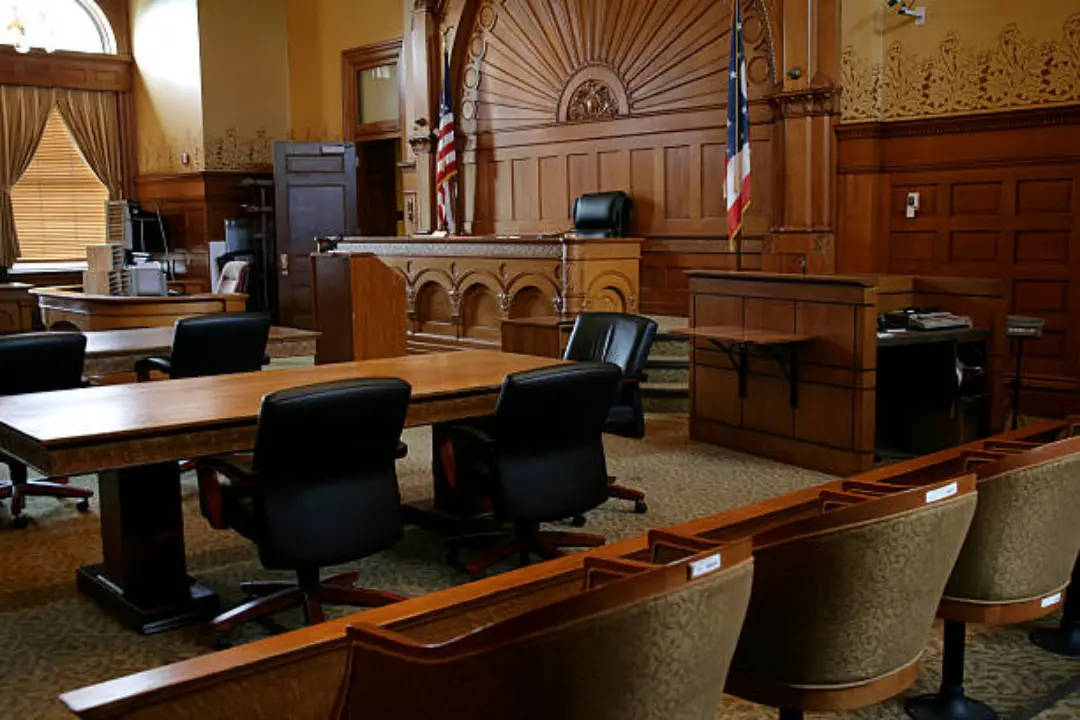
The courtroom smelled like old wood and nervous sweat, that particular combination of polished oak and human anxiety that permeates family court no matter how many times they clean it. I’d spent fifteen years of my professional life in rooms like this one, but I’d never sat at the defendant’s table before, never felt the weight of dozens of eyes cataloging my every reaction, never had to maintain perfect composure while someone I loved tried to destroy me.
My name is Rebecca Hayes. I’m thirty-nine years old, and I learned—in the most brutal way possible—that blood relation guarantees nothing about loyalty or truth.
My mother stood in the witness box with her shoulders squared and her chin lifted, wearing the navy dress she saved for important occasions and the expression she used when she wanted people to believe she was being “reasonable.” Her voice carried clearly through the packed courtroom, steady and confident, as she explained to the judge why I was an unfit mother.
“Your Honor, my daughter has always been unstable,” she said, and the word landed like a stone thrown through glass. “She can barely hold down a job. She’s been in and out of therapy for years. Frankly, I don’t believe she should have custody of my grandson at all.”
I sat perfectly still at the defense table, hands folded, wearing the same navy blazer and white blouse I’d worn a thousand times before—professional, understated, nothing that could be called dramatic or emotional. My dark hair was pulled back in the neat bun I’d maintained for fifteen years, controlled and precise. On my left hand, a pale band of skin showed where my wedding ring had lived for six years before I finally removed it six months ago when the divorce became final.
Across the aisle, my ex-husband Marcus sat with his expensive attorney, both of them radiating barely concealed satisfaction. Marcus wore a suit that fit too well for someone who claimed he was struggling financially, and his smile suggested he’d already won. They’d planned this carefully—timed it, rehearsed it, weaponized my own mother against me because they knew exactly what a mother’s testimony could do to a custody case.
Eight-year-old Tyler sat in the front row beside my sister Karen, his dark eyes wide with confusion that broke my heart. He wore the blue button-down shirt I’d ironed for him the night before, and his small hands were folded in his lap the way I’d taught him. He kept looking from his grandmother to me, trying to understand why the woman who made him cookies was saying these terrible things about his mother, why his father was smiling, why nobody was stopping it.
My mother’s testimony continued, gaining momentum as she warmed to her narrative. “She’s never been able to provide real stability,” she said, her voice carrying that particular tone of concerned authority that made people believe her. “She disappears for days at a time, claims she’s working, but I’ve never seen evidence of any steady employment.”
The words were carefully chosen, calculated to plant seeds of doubt. Days at a time. No steady employment. Claims she’s working. Each phrase designed to make me sound unreliable, secretive, possibly involved in something questionable.
“She lives in some tiny apartment downtown,” my mother continued, building her case with the confidence of someone who believed every word she was saying. “Drives an old car that’s barely running. She can barely afford Tyler’s school supplies, for heaven’s sake.”
I felt my pulse in my fingertips but kept my expression neutral. The part of me that was still a daughter wanted to stand up and shout that none of this was true. The part of me that was a mother wanted to run to Tyler and pull him out of this room where adults were weaponizing words against each other. But the part of me that had spent fifteen years in courtrooms knew better than to react emotionally. Timing matters. Truth matters. But only if you let it land correctly.
“Meanwhile,” my mother said, gesturing toward Marcus, “her ex-husband has a beautiful home in the suburbs, a stable income as a marketing executive, and the ability to provide the kind of life every child deserves.”
The left side of the gallery—Marcus’s side—was full. His parents sat in the front row, his cousin beside them, his new girlfriend who insisted she was “just a friend” in the row behind, two of his coworkers in pressed shirts who looked like they’d been coached on when to nod sympathetically. They formed a wall of support, a visual representation of stability and community.
My side was nearly empty. Three friends who’d taken time off work to be there, people who actually knew what I did and how hard I worked. They looked furious but powerless. You can’t interrupt testimony with the truth when you’re sitting in the gallery.
Judge Patricia Morrison sat behind the bench with the neutral expression required of her position. She was a colleague I’d known for over a decade, someone who understood the demands of our profession, but she gave no sign of recognition. She couldn’t. The law required impartiality, even when you were watching someone you respected being dismantled by lies.
My mother took the judge’s neutrality as permission and delivered her final strike. “Furthermore, Rebecca has always been extremely secretive about her so-called work.” The emphasis on so-called was deliberate, designed to sound suspicious. “She claims to have some important job, but she won’t tell us what she actually does. For all we know, she could be involved in something illegal, something that would put my grandson in danger.”
The courtroom buzzed with murmurs. Not loud, but enough to be felt. People love a secret. People love the implication that quiet means hiding something shameful.
Marcus’s attorney, James Crawford, rose immediately like a predator sensing wounded prey. “Your Honor,” he said smoothly, “the testimony clearly demonstrates that the child’s best interests would be served by awarding full custody to my client. The mother’s inability to provide basic stability, combined with her secretive behavior regarding her employment, raises serious concerns about her fitness as a parent.”
He sat down looking satisfied, as if he’d just closed a business deal rather than tried to separate a mother from her son.
I remained motionless, hands still folded, posture calm. It would have been easy to react emotionally—to cry, to defend myself, to stand up and shout the truth. And if I had, I knew exactly what would happen. My mother’s words would look true. Marcus would look reasonable. The judge would be forced to consider whether an emotional, defensive woman should have custody of a child.
So I waited. I let the ugly story they were telling hang in the air, confident that truth doesn’t need to shout to be powerful.
Judge Morrison looked down at her paperwork, then up at me. “Ms. Hayes,” she said, her voice measured and professional, “how do you respond to these allegations about your employment and your ability to provide for your son?”
I stood slowly, deliberately. “Your Honor,” I said, my voice calm and clear, “I’d like to call a witness to address those concerns.”
Marcus’s lawyer’s head snapped toward me, confused. “Your Honor,” Crawford said quickly, “we weren’t notified of any witnesses on the defendant’s list.”
“The witness wasn’t available until this morning,” I replied evenly, meeting his eyes without flinching. “But I believe his testimony will clarify any questions about my employment status and my ability to provide for my child.”
Judge Morrison held her gaze on me for a long beat, and I saw something flicker in her expression—not recognition, but interest. She nodded once. “Very well. Please call your witness.”
I walked to the courtroom doors and opened them. The man who entered commanded immediate attention without saying a word. He was tall, silver-haired, wearing an impeccable dark suit that spoke of authority earned rather than purchased. His posture was perfectly upright, his expression calm but powerful. People in the gallery straightened instinctively. Even the bailiff shifted his stance.
I turned back toward the bench, and for the first time that day, I allowed myself a small, controlled smile. “Your Honor, I’d like to call Chief Justice William Barrett to the stand.”
The gasp that rippled through the courtroom was audible. My mother’s confident expression crumbled into confusion, then shock, then something close to horror as her brain tried to process what was happening. Marcus’s smug smile faltered and died. His attorney’s hands started shuffling papers as if paper could somehow save him from what was coming.
Chief Justice William Barrett—not someone with an inflated title, not a local magistrate, but the actual Chief Justice of our State Supreme Court—walked to the witness stand with the calm authority of someone who’d never needed anyone’s approval. He was sworn in, took his seat, and looked directly at me with the professional respect of a colleague.
I moved to the front of the courtroom, and as I did, something shifted in my posture. The defensive stillness I’d maintained dropped away, replaced by the professional confidence I used every day in my real life. My voice changed too—still calm, but sharper now, more precise.
“Chief Justice Barrett,” I said clearly, “could you please identify me for the court?”
Barrett looked at me, then turned toward Judge Morrison. His voice was formal but warm. “You are the Honorable Rebecca Hayes, Associate Justice of the State Supreme Court, where you have served with distinction for the past eight years.”
The courtroom went absolutely silent. Not the tense silence of waiting for something to happen, but the stunned silence of people realizing they’d fundamentally misunderstood reality.
I could hear my mother’s sharp intake of breath, like someone had physically struck her. I saw Marcus’s attorney blink rapidly, his confident expression dissolving into confusion and panic. Tyler’s eyes went wide with wonder, staring at me like I’d suddenly transformed into someone he didn’t recognize.
I continued, my voice steady and professional. “Chief Justice Barrett, could you describe the nature of my work responsibilities?”
He didn’t hesitate. “Justice Hayes presides over some of our most complex civil and criminal cases. She sits on our appellate panel for death penalty cases, chairs our judicial ethics committee, and has authored landmark decisions regarding family law and child welfare. She handles cases that affect thousands of families across our state.”
The murmur that moved through the courtroom was different now—not agreement with accusations, but shock at revelation. My mother’s face had gone pale, all color draining away as the reality settled over her like ice water. Her mouth opened slightly, then closed, because there was nothing she could say that wouldn’t sound ridiculous now.
Tyler stared at me with a new understanding dawning in his expression. Suddenly, my late nights weren’t “disappearing.” My stacks of papers and thick briefs weren’t “secretive.” My long, quiet phone calls weren’t suspicious. They were work. Real work. Important work. Public work.
“One more question,” I said, and I couldn’t quite keep the edge out of my voice. “Could you please address the allegations about my financial stability?”
Barrett’s mouth curved into a slight smile, as if he knew exactly what I needed him to say and was pleased to deliver it. “Justice Hayes earns a salary of approximately one hundred ninety-five thousand dollars annually, plus benefits. She owns her downtown apartment—a penthouse, actually, which she purchased outright three years ago. She also maintains a vacation home in the mountains. All of her financial disclosure forms are part of the public record, as required for all sitting judges.”
The silence that followed was heavy enough to crush stone.
Marcus’s face drained of all color. His lawyer’s pen had stopped moving entirely, frozen mid-note. My mother looked like she might collapse, except she was gripping the witness box rail with white knuckles.
I turned to face Judge Morrison directly. “Your Honor,” I said, “I’d like to explain why my family was unaware of my position.”
Judge Morrison leaned forward slightly, her neutral expression showing the first hint of genuine interest. “Proceed.”
I took a breath and looked briefly at Tyler, whose eyes were still locked on me with a mixture of amazement and hurt that made my chest tighten. “Eight years ago, when I was confirmed to the State Supreme Court,” I began, choosing my words carefully, “I made a deliberate decision to keep my professional life separate from my personal relationships.”
Marcus stared at me as if he’d never seen me before, as if the woman he’d been married to for six years was a complete stranger.
“This wasn’t because I was ashamed of my work,” I continued. “It was because I wanted my son to have as normal a childhood as possible, without the scrutiny and pressure that comes with being a judge’s child. I didn’t want him treated differently in school, or judged by his mother’s position, or denied authentic friendships because people knew who his mother was.”
I looked at Tyler again, willing him to understand. “I chose to live modestly,” I said. “To drive a practical car. To shop at regular stores. To let him experience the value of humility and hard work rather than grow up entitled because of my professional position.”
Marcus’s jaw clenched as he realized—right there in that moment—that he’d spent six years married to a woman who held one of the highest legal positions in the state and never bothered to ask what she actually did with her days.
“The reason I’m often unavailable,” I continued, my voice growing stronger, “is because I’m presiding over complex cases that can last weeks or months. The reason I couldn’t always attend school events or family dinners is because I was writing decisions that affect thousands of families across our state. The reason I work late nights and weekends is because the law doesn’t pause for convenience.”
Chief Justice Barrett spoke up again, unprompted. “If I may add, Your Honor,” he said to Judge Morrison, “Justice Hayes has one of the finest legal minds I’ve encountered in thirty years on the bench. Her decisions have been upheld by federal courts. She’s been recognized nationally for her work in family law and child welfare. She’s authored opinions that are now taught in law schools across the country.”
I walked back to my table and stood behind it, gripping the edge. “Your Honor,” I said, and now my voice carried not just strength but righteous anger, “I’ve spent my entire career protecting children and families. I’ve written decisions that have removed children from abusive homes. That have ensured fair custody arrangements. That have put child welfare above all other considerations, including parental rights when necessary.”
My voice grew even stronger, not because I was performing, but because I was finally done letting other people define me in terms that suited their narratives. “The allegation that I am unfit to care for my own son is not only false—it’s insulting to every family I’ve protected and every child whose interests I’ve safeguarded from the bench.”
I turned slowly and looked directly at my mother, who couldn’t meet my eyes. “What’s particularly painful,” I said quietly, “is that these allegations come from people who never bothered to ask about my work, who never showed interest in my life beyond what they could see on the surface, who assumed the worst without seeking the truth.”
Marcus’s lawyer stood halfway up, flustered. “Your Honor, we had no knowledge of—”
“Of what?” I interrupted, my voice sharp as a blade. “Of the fact that your client was married to a sitting State Supreme Court justice for six years and never bothered to learn what she actually did? That he attended exactly zero work functions, never read a single one of my published opinions, never asked why I had stacks of legal briefs in my home office?”
Judge Morrison leaned forward, her eyes moving to Marcus. “Mr. Hayes,” she said directly to my ex-husband, “during your marriage to Ms. Hayes, were you aware of her profession?”
Marcus finally found his voice, though it came out weak and stammering. “She… she said she worked at the courthouse. I thought she was… I assumed she was a clerk or something administrative.”
The absurdity hung in the air like smoke. A clerk. As if I hadn’t spent nights drafting appellate opinions. As if I hadn’t been appointed by the governor and confirmed by the state senate. As if my entire professional life had been invisible because he’d never bothered to look.
I turned back to Judge Morrison. “Your Honor, I’d like to submit my judicial performance evaluations for the past eight years, my complete financial disclosure forms, and the custody evaluation report prepared by Dr. Sandra Williams, the court-appointed child psychologist who spent three months evaluating both myself and Mr. Hayes as parents.”
Judge Morrison reviewed the documents I’d prepared, taking her time. When she looked up, her expression had shifted from neutral to something harder. “Dr. Williams rated you as an exemplary parent with strong emotional bonds to your child and no concerns whatsoever regarding your ability to provide care, guidance, and support.”
My chest loosened slightly, not because I’d needed validation—I knew the truth—but because Tyler needed to hear that his mother wasn’t the villain they’d been painting.
I looked around the courtroom one final time. My mother still couldn’t meet my eyes. Karen was crying silently, her shoulders shaking with what might have been guilt or shame or just the shock of seeing her assumptions demolished. Marcus stared at the floor as if his expensive shoes could open up and swallow him. His parents looked stunned. His girlfriend looked mortified. His lawyer looked like he wanted to be anywhere else.
Tyler was staring at me with an expression that broke my heart and filled it at the same time—hurt that I’d kept this secret, amazed at what I actually was, confused about why I’d hidden it, and underneath it all, still looking at me like I was his mom and that mattered more than anything else.
I turned back to the judge. “Your Honor, I’ve dedicated my career to ensuring that children’s best interests come first in every case. I’ve seen what happens when parents use children as weapons. When families turn against each other for personal gain. When assumptions replace evidence and prejudice replaces truth.”
I kept my voice steady and clear. “I’m requesting full physical custody of my son with supervised visitation for the father pending completion of co-parenting classes and a thorough reevaluation by Dr. Williams. I’m also requesting that all future custody discussions be handled without the involvement of extended family members who have demonstrated a willingness to provide false testimony based on assumptions rather than facts.”
Judge Morrison’s expression hardened, not at me, but at what she’d witnessed. “Given the evidence presented today,” she said, her voice carrying the weight of judicial authority, “and given the deeply concerning testimony provided by the petitioner’s mother that has proven to be entirely false, I am granting full physical and legal custody to Justice Rebecca Hayes.”
The words washed over me like relief mixed with vindication.
“Visitation for the father will be supervised for the next six months,” Judge Morrison continued, “with the possibility of modification pending successful completion of court-ordered parenting classes and a follow-up evaluation. Furthermore, I’m ordering that Mrs. Eleanor Hayes—” she looked directly at my mother “—is prohibited from any unsupervised contact with the minor child pending a separate hearing to address her false testimony in these proceedings.”
My mother made a small sound, almost a gasp, but Judge Morrison wasn’t finished.
“It is deeply troubling to this court when family members provide testimony that is not only inaccurate but apparently made without any effort to verify the truth. This court takes false testimony very seriously, particularly in matters involving child welfare.”
The hearing ended the way court proceedings do—with papers shuffled, people standing, the bailiff announcing the next case as if my entire world hadn’t just been reshaped. But as people began to move, Tyler broke free from Karen’s hand and ran to me, wrapping his arms around my waist.
“Mom,” he whispered into my blazer, his voice muffled but clear, “why didn’t you tell me you were a judge?”
I knelt down so we were eye level, my hands on his small shoulders. “Because I wanted you to love me for being your mom,” I said softly, “not because of my job. I wanted you to have a normal childhood, sweetheart. I didn’t want people treating you differently because of what I do.”
Tyler’s face scrunched up in thought, processing this revelation. Then he grinned—actually grinned—and said, “I think it’s really cool. Does this mean you can send people to jail?”
I laughed quietly, genuinely, the first real laugh I’d felt in that courtroom. “Sometimes,” I admitted. “But mostly I help families figure out how to take care of each other better. I help make sure kids are safe and loved.”
“Like you take care of me,” Tyler said with the simple logic of an eight-year-old.
“Exactly like that.”
My mother approached hesitantly, her earlier confidence completely gone. Her eyes were wet, but tears don’t erase words spoken under oath. “Rebecca,” she said, her voice trembling, “I had no idea. I’m so sorry. I thought—”
I stood up, keeping Tyler close beside me. “Mom,” I said calmly, “you testified under oath that I was an unfit parent without knowing anything about my actual life. You didn’t ask questions. You made assumptions. And then you used those assumptions to try to take my child away from me.”
Her mouth trembled. “I thought I was helping. Marcus said you were struggling, that you were hiding things—”
“You believed him instead of me,” I said quietly but firmly. “You chose to trust the man who divorced your daughter over your own daughter. You were willing to destroy my relationship with my son based on assumptions and someone else’s agenda.”
Karen stepped closer too, her mascara streaked, her eyes red. “Becca, I’m sorry. I should have said something, I should have—”
I looked at my sister, the one who’d sat there beside Tyler while our mother dismantled me and said nothing. “You knew it felt wrong,” I said softly. “You just didn’t want to be the one Mom turned on next.”
Karen’s face crumpled, and she nodded because it was true.
Chief Justice Barrett approached respectfully, waiting until most people had cleared out. “Rebecca,” he said quietly, “I hope this experience doesn’t discourage you from your work.”
I shook my head. “If anything, it reminded me exactly why our work matters. Why truth matters. Why we can’t let assumptions and prejudice win.”
As Tyler and I walked out of the courthouse—his hand gripped tightly in mine—I felt something settle inside me that had been unsettled for months. Not just victory. Not just relief. Something deeper: the validation that comes from truth finally being heard, and the understanding that I’d been right to trust in it.
We walked past Marcus, who stood in the hallway looking shell-shocked. He didn’t try to stop us or speak. What could he say? That he’d been married to someone for six years and never bothered to actually know her?
In the months that followed, life found a new rhythm. Marcus completed his parenting classes and eventually earned unsupervised visitation. He never again questioned my ability to provide for our son—not because he suddenly respected me, but because he’d been exposed, and exposure changes behavior even when hearts don’t change.
My mother sent a letter. Handwritten, several pages, full of words like “misunderstanding” and “fear” and “family.” She wanted to explain, to justify, to be forgiven. I read it once, then filed it away unanswered. Some betrayals cut too deep because they reveal who someone truly is when they think they hold power over you.
But Tyler changed in a way that made everything worthwhile. He started telling his friends with pride, “My mom is a judge.” He asked questions about fairness and laws and why people lie in court. He wanted to understand the work I did, wanted to know how truth wins when everyone’s telling different stories.
One evening while we built a Lego tower on our living room floor—the penthouse my mother had called a “tiny apartment”—Tyler looked up at me with serious eyes. “Mom,” he said, “why do people say things that aren’t true?”
I thought about how to answer that honestly. “Sometimes people say untrue things because they believe them—they make assumptions and convince themselves those assumptions are facts. Sometimes people say untrue things because it helps them get what they want. And sometimes people say untrue things because they’re scared and truth feels dangerous.”
“Which was Grandma?” he asked.
I chose my words carefully. “I think Grandma believed some things that weren’t true because she never asked questions. She made assumptions, and then she let someone convince her those assumptions were right. And then she got scared about being wrong, so she doubled down instead of checking her facts.”
“That’s not very smart,” Tyler observed with childlike directness.
“No,” I agreed. “It’s not.”
“You’re smart,” he said. “You always check facts.”
I smiled and kissed the top of his head. “That’s my job, buddy. And it’s an important one.”
That day in court, I walked in feeling attacked and isolated. I walked out vindicated and stronger. Not because my achievements had suddenly changed—they’d been there all along. But because I’d finally let the truth speak for itself rather than trying to protect people from it.
Justice, it turns out, isn’t just something you serve from a bench. Sometimes it’s something you claim for yourself, standing in a courtroom with your dignity intact and your truth finally, finally heard.
And that, I taught my son, is worth more than any assumption, any easy lie, any comfortable narrative that people tell themselves to avoid looking at what’s real.
Truth doesn’t always win because it’s loud. It wins because it holds up under pressure. Just like the people who stand behind it.

Sophia Rivers is an experienced News Content Editor with a sharp eye for detail and a passion for delivering accurate and engaging news stories. At TheArchivists, she specializes in curating, editing, and presenting news content that informs and resonates with a global audience.
Sophia holds a degree in Journalism from the University of Toronto, where she developed her skills in news reporting, media ethics, and digital journalism. Her expertise lies in identifying key stories, crafting compelling narratives, and ensuring journalistic integrity in every piece she edits.
Known for her precision and dedication to the truth, Sophia thrives in the fast-paced world of news editing. At TheArchivists, she focuses on producing high-quality news content that keeps readers informed while maintaining a balanced and insightful perspective.
With a commitment to delivering impactful journalism, Sophia is passionate about bringing clarity to complex issues and amplifying voices that matter. Her work reflects her belief in the power of news to shape conversations and inspire change.