The Day I Kicked My Stepmother Off My Plane
“Madam, we cannot take off with disrespectful passengers.” The pilot’s words cut through the pressurized cabin air, sharper than the champagne bubbles she was demanding. She didn’t realize that in the sky, gravity isn’t the only law—ownership is.
But before we reached that altitude, we had to survive the ground.
The Centurion Lounge at JFK is a study in hushed acoustics and expensive textures. It smells of freshly ground espresso, aged leather, and the specific, metallic scent of anxiety that only the very wealthy emit when they’re afraid of being irrelevant.
I sat in a corner wingback chair, nursing black coffee that had gone cold ten minutes ago. My laptop was open, screen dimmed to a low glow, displaying Q3 revenue projections for AeroVance, a mid-sized carrier that had recently been making waves for its aggressive expansion into European markets.
Across from me, Victoria was making a scene.
My stepmother was a woman who believed volume was a substitute for validity. She was dressed in a Chanel tweed suit that cost more than my first car, accessorized with oversized sunglasses she refused to take off indoors. She was treating the lounge waiter like a serf who’d spilled mead on her boots.
“This chardonnay is oaky,” she snapped, pushing the glass away. “I asked for crisp. Do you understand the difference, or do you need a diagram?”
The waiter, a young man with infinite patience, apologized and retreated.
Victoria sighed—a dramatic exhalation that rattled her gold jewelry. She turned to the woman sitting next to her, a stranger trying desperately to read a Kindle.
“Good help is extinct,” Victoria confided loudly. Then her gaze snapped to me. The annoyance in her eyes sharpened into something more familiar: contempt.
She snapped her fingers. The sound echoed embarrassingly loud in the quiet lounge.
“Alex, put down that ridiculous coffee and move my Louis Vuitton trunks closer to the gate. I don’t trust these union porters. They scuff things on purpose.”
She turned back to the stranger, offering a conspiratorial, fake smile. “My stepson. He’s used to manual labor. It keeps him humble. His father always said he had the hands of a mechanic, not a manager.”
I didn’t flinch. Didn’t argue. I’d spent fifteen years perfecting the art of being invisible in plain sight.
I stood up slowly, closing my laptop. Inside the hard drive were deed transfers, board meeting minutes, and the single, notarized document that transferred fifty-one percent of AeroVance’s controlling stock into a trust under my name. A trust my father had set up three days before his heart attack, unbeknownst to his wife.
“Boarding is in ten minutes, Victoria,” I said, voice even. “Don’t get too comfortable.”
She laughed—a high, tinkling sound that grated like sandpaper. “I’m always comfortable, darling. That’s the difference between First Class and… wherever you’re sitting. Row 30? 40?”
“Thirty-four,” I corrected softly.
“Charming,” she sneered.
I walked over to the stack of luggage. It was heavy—three trunks filled with gala gowns and shoes for a weekend trip. I lifted them with practiced ease. Victoria watched me, a smirk playing on her lips, enjoying the sight of me hauling her baggage. She saw a servant. She didn’t see that the muscles used to lift these bags were the same ones that had carried the weight of a failing company on its back for six months while she spent the insurance money on cosmetic surgery.
We walked to the gate. The line for Priority Boarding was long, filled with Platinum members and business travelers. Victoria bypassed them all, marching straight to the counter.
The gate agent, a woman named Brenda with tired eyes, scanned Victoria’s pass.
“Welcome aboard, Mrs. Vance,” Brenda said, forcing a smile.
Victoria didn’t respond. She just gestured for me to follow.
I stepped up to the scanner. I held my phone under the red laser.
BEEP.
It wasn’t the normal confirmation tone. It was a triple-tone chime, low and melodic. On the agent’s screen, a red banner flashed. I knew exactly what it said: CODE: RED-ALPHA-ONE. OWNER ON BOARD.
Brenda’s eyes widened. She gasped, hand reaching for the intercom to make an announcement.
I caught her eye. I put a single finger to my lips. Silence.
Brenda froze. She looked at me—jeans, blazer, t-shirt—then at the screen. She swallowed hard and nodded, barely perceptible.
“Have a… a wonderful flight, sir,” she stammered, voice trembling.
Victoria was already halfway down the jet bridge, checking her reflection in her compact mirror. She missed the interaction entirely. Missed the tectonic shift that had just occurred beneath her stilettos.
The air in the jet bridge was cold and smelled of jet fuel. It was the smell of my childhood, of weekends spent in hangars watching Dad wrench on engines. To Victoria, it was just the smell of transit.
We reached the aircraft door. Victoria shoved past an elderly couple to get to the Priority lane. She turned to me, holding out her heavy carry-on.
“Stow this for me, Alex. Overhead bin, row 1A. Make sure it’s not crushing my hatbox.”
“I have my own bag, Victoria,” I said, hitching my backpack higher.
“Don’t be difficult,” she hissed. “You’re walking past my seat anyway to get to the cattle car. Make yourself useful.”
I took the bag. It was easier than arguing.
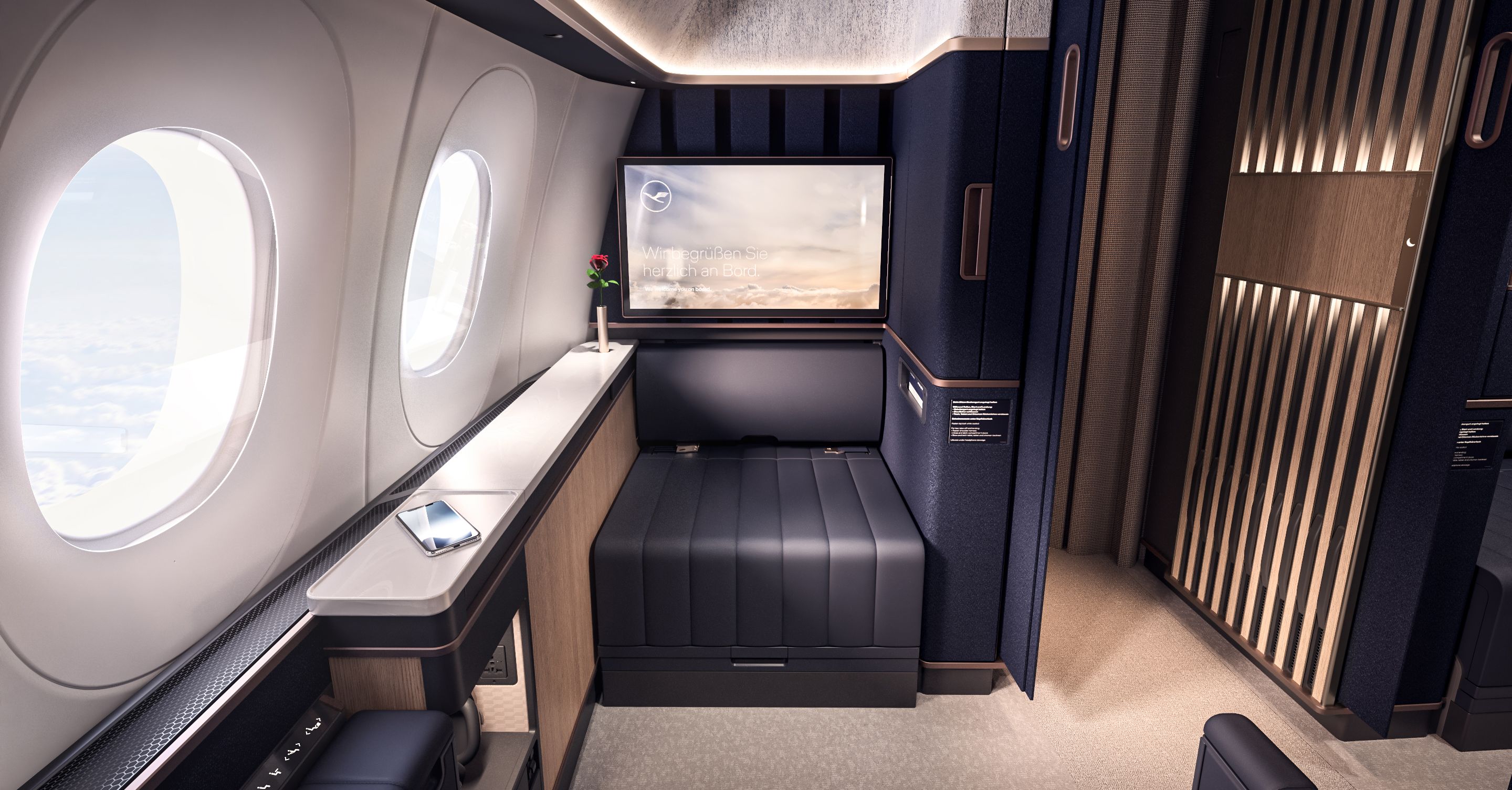
We stepped onto the plane. The First Class cabin of the AeroVance 787 was a sanctuary of cream leather and walnut trim. I knew it well—I’d approved the design specs myself two months ago.
Victoria flopped into Seat 1A, kicking off her heels immediately. She stretched her legs out, blocking the aisle.
“Row 34, seat B. Middle seat,” Victoria read from my ticket, which stuck out of my pocket, smirking as she accepted champagne from a flight attendant. “Fitting. You’ve always been stuck in the middle of nowhere, Alex. Neither successful enough to lead, nor poor enough to be interesting.”
She took a sip, grimacing. “This isn’t chilled enough. Fix it,” she barked at the flight attendant without looking at her.
I stowed her bag in the overhead bin. I looked at the flight attendant. Her nametag read Sarah. She looked harried, stressed by the demanding passenger in 1A before the doors were even closed.
Then Sarah looked at me. Her eyes dropped to the tablet in her hand, which listed the passenger manifest. I saw the moment she saw it. The color drained from her face.
Her hands started to shake. She looked like she was about to drop the tray.
I gave her a subtle nod, a small, reassuring smile that said, Do your job. I’m just a passenger right now.
“Go on,” Victoria shooed me away with her hand. “Go back to the zoo. And don’t come up here during the flight; I need my rest. If I need you, I’ll send one of the stewardesses.”
I walked away.
The walk to Row 34 was long. I passed Business Class pods, Premium Economy seats, and finally entered the main cabin. It was chaotic. Parents wrestled with strollers, people shoved oversized bags into bins, and the air was already warm with body heat.
I found my middle seat between a large man eating a tuna sandwich and a teenager listening to music so loud I could hear the snare drums.
I sat down. Buckled my belt. Closed my eyes.
I wasn’t sleeping—I was counting down. I was listening to the hum of the APU unit, feeling the vibrations of the hydraulic pumps. I was inspecting my asset from the inside out.
The plane pushed back from the gate. We taxied to the runway. The safety demonstration played on screens.
Victoria was probably on her second glass of champagne by now, oblivious to the world.
Then, abruptly, the engines cut from taxi-whine to low idle. The plane jerked to a halt on the tarmac.
The cabin lights flickered.
The Captain’s voice boomed over the intercom. But it wasn’t the usual “Flight attendants, prepare for takeoff” announcement. The tone was clipped, professional, and icy.
“Ladies and gentlemen, this is Captain Miller speaking. We are returning to the gate. We have a security issue involving a passenger in Seat 1A.”
A murmur went through the Economy cabin. People craned their necks.
I opened my eyes and unbuckled my seatbelt.
The walk back to the front felt different. The engines were idling, but the tension was high voltage.
As I pushed through the curtain separating Economy from First Class, I could hear her.
“This is unacceptable! Do you know who I am?” Victoria’s voice was a shrill weapon. “I know the CEO of this airline! I had dinner with the board of directors last Christmas!”
She was standing in the aisle, blocking Sarah’s path. Victoria was pointing a manicured finger in Sarah’s face.
“I demanded a refill ten minutes ago! And now we’re stopping? I will have your job for this. I will have you scrubbing toilets at LaGuardia!”
The cockpit door opened.
Captain Miller stepped out. He was a man of sixty, with silver hair and four gold stripes on his shoulders. He was a legend in the company—he’d flown with my father in the Air Force.
He ignored the irate passengers looking on from Business Class. He walked straight toward Seat 1A.
Victoria saw him and puffed up her chest, assuming he was coming to apologize. She smoothed her skirt, preparing to accept his groveling.
“Captain,” she said, voice dripping with entitlement. “Finally, someone with authority. I demand to know why we’ve stopped. And I want this flight attendant written up for—”
Miller didn’t even blink. Didn’t look at her. Didn’t stop at her seat.
He side-stepped her outstretched hand as if she were luggage left in the aisle.
Victoria froze, mouth open. “Excuse me? I am speaking to you!”
Miller walked past her, eyes locked on something behind her. He stopped at the partition where I was standing.
The cabin fell silent. Victoria turned around, confused, following the Captain’s gaze.
I stood there, hands in my pockets, leaning against the bulkhead.
Captain Miller snapped his heels together. He raised his hand and delivered a crisp, sharp salute. It wasn’t a casual wave. It was a gesture of supreme respect, forged in a history Victoria knew nothing about.
“Mr. Vance,” Miller said, voice deep and carrying through the silent cabin. “Welcome aboard, sir. We were not informed you were flying with us today. It is an honor.”
Victoria dropped her champagne flute. It didn’t break on the carpet, but the splash of liquid onto her Chanel shoes was audible.
She looked from the Captain to me, her brain stuttering, the gears grinding against the rust of her own arrogance.
“Mr… Vance?” she whispered. “But… his father is dead. Frank is dead.”
I stepped forward. I walked past the Captain, who nodded deferentially. I stopped directly in front of Victoria.
I was tall, but in that moment, I felt ten feet high. I looked down at her, my shadow falling over her face, eclipsing the reading light she’d been using to inspect her cuticles.
“Yes,” I said calmly. “Frank is dead. But his son is very much alive.”
“You?” She laughed—a nervous, jagged sound. “You’re nobody. You’re the help. You’re sitting in 34B!”
“I sit in 34B because I choose to,” I said. “I own 1A. I own 1B. In fact, Victoria, I own the seat you’re sitting in, the champagne you just spilled, and the wings holding us up.”
Victoria’s face flushed deep, mottled red. “This is a joke. Is this some kind of prank? Did you hack the system, Alex?”
She turned to Captain Miller. “Captain, arrest him! He’s an imposter. He’s my stepson, a do-nothing who lives off his father’s trust!”
Captain Miller stepped forward. His expression was stone.
“Madam,” Miller said, delivering the words with the weight of a gavel, “we cannot take off with disrespectful passengers.”
Victoria gasped. “Disrespectful? I am the widow of the founder!”
“And he is the owner,” Miller corrected. “And you have been verbally abusing my crew since you stepped foot in this lounge. I heard the report from the gate agent, and I heard you screaming at Sarah just now.”
Victoria sputtered, grasping for a lifeline. “I raised him! I am his mother! Alex, tell him to stop this nonsense. We have a gala to get to!”
I rested a hand on the headrest of seat 1A. The leather was cool under my palm.
“You didn’t raise me, Victoria,” I said quietly. “You tolerated me. You spent the years after Dad died trying to erase me from the family portraits.”
I leaned in closer, voice dropping so only she and nearby passengers could hear.
“You said earlier that I was used to manual labor. You were right. I built this airline back up from the debt you put it in. I worked the tarmac. I worked logistics. I know every bolt in this fuselage.”
I straightened up and pointed to the open cabin door, where the jet bridge was reconnecting.
“And part of my job is ensuring quality environment for my employees and customers. You are pollution, Victoria.”
“You can’t do this!” she shrieked, grabbing the armrests. “I have a ticket! I have rights!”
“I’m refunding your ticket,” I said. “Full price. I’m generous like that.”
I looked at the Captain.
“Captain Miller, remove this passenger. She is disrupting flight operations. And ban her from all future AeroVance flights.”
“With pleasure, sir,” Miller said.
He motioned to the door. Two Port Authority police officers, who’d been waiting on the jet bridge, stepped onto the plane.
Victoria saw the uniforms and went pale.
“No,” she whispered. “Alex, please. The gala… the press…”
“Get off my plane,” I said. “Now.”
The officers moved in. One took her arm. “Ma’am, you need to come with us.”
“Don’t touch me!” she screamed, thrashing. “I’ll sue! I’ll sue all of you!”
She was dragged down the aisle, heels skidding on carpet, dignity left somewhere back at the gate. As she passed Business Class, people pulled their legs in, avoiding contact with the radioactive fallout of her ego.
When the cabin door finally closed, shutting out her screams, heavy silence hung in the air.
I turned to Sarah, the flight attendant. She looked terrified she was next.
“Sarah,” I said gently. “Is there a family in Economy? Maybe with young kids?”
“Yes, sir,” she stammered. “Row 34. The ones you were sitting next to.”
“Go get them,” I said. “Upgrade them to Row 1. All of them. Comp their drinks.”
“And… and where will you sit, Mr. Vance?” she asked.
I looked at the empty, plush seat in 1A. It looked comfortable. It looked like power.
“I’ll take their row,” I said. “I have work to do, and the Wi-Fi is just as good in the back.”
I walked back down the aisle. As I crossed into Economy, a single person started clapping. Then another. Within seconds, the entire plane erupted in applause.
I didn’t wave. Didn’t bow. I just walked to Row 34, sat in the middle seat, and buckled my belt.
At thirty thousand feet, the world looks small. Problems that seem insurmountable on the ground become insignificant patterns of light and shadow.
I accepted a bottle of water from Sarah. She handed it to me with two hands—a gesture of reverence I hadn’t asked for.
“I’m sorry about the scene, Sarah,” I said quietly, cracking the seal. “It won’t happen again.”
Sarah smiled, and this time it was genuine warmth, stripped of customer-service veneer. “The crew is just glad to know who’s really flying the plane, sir. We’ve… we’ve heard stories about the board considering selling to the competition. It’s good to know it’s you.”
“I’m not selling,” I promised. “Tell the crew. Jobs are safe.”
She nodded and walked away, her step lighter.
I opened my laptop. I didn’t look at revenue projections this time. I opened the news feed.
It had only been an hour, but the internet moves faster than jet streams.
TRENDING: Airline Owner Evicts Entitled Stepmother Mid-Flight.
A passenger in 2A had filmed the entire encounter. The video already had two million views. The comments were a river of vindication.
“That pilot is a hero.” “The guy in the t-shirt OWNS the airline? Boss move.” “Look at her face when he salutes!”
I switched tabs to my email. There was a message from the Charity Gala committee.
Subject: Guest List Update.
Dear Mr. Vance, given the recent… publicity regarding Mrs. Victoria Vance, the board has decided to rescind her invitation to tonight’s event. We would be honored, however, if you would take her place at the head table.
I closed the laptop.
Down on the ground, in the rain-slicked reality of JFK, Victoria was likely standing amidst her Louis Vuitton trunks, watching her social currency devalue faster than Venezuelan currency. She wouldn’t just miss a flight; she would miss the season. In her world, being a pariah was a fate worse than death.
I leaned my head back against the seat. For years, I’d kept my head down. I’d worked in shadows, letting her insult me, letting her treat me like a loyal golden retriever she could kick whenever she pleased. I did it to keep peace. I did it because I thought that’s what my father would have wanted.
But my father was a mechanic. He fixed things. And sometimes, to fix a machine, you have to remove the broken part.
The bridge wasn’t just burned—I’d nuked it from orbit. And for the first time in my life, I felt weightless.
The plane began its descent.
My phone buzzed as we hit the tarmac. It was a voicemail from Mr. Henderson, my father’s old lawyer and executor of the trust.
I held the phone to my ear as the plane taxied.
“Alex, I just saw the news. I assume this means the… agreement… with Victoria is terminated? I should remind you of Clause 14B in your father’s will. It states that Victoria’s allowance is contingent upon her remaining a ‘member in good standing of the family estate’s primary transport and residence.’ Since you’ve effectively evicted her from the transport… well, legally, you can cut her off completely. Call me.”
I smiled. My father, the mechanic, had left a kill switch.
Six months later.
The boardroom of AeroVance HQ was a sleek expanse of glass and steel overlooking the runway. It was quiet, save for the scratch of my pen on final acquisition papers for the new Tokyo route.
I was no longer the “stepson in the background.” I was the face of the company. We’d rebranded. Stock was up forty percent. We were known as the airline that respected its crew.
My assistant, a sharp young man named David, walked in. He looked uncomfortable.
“Sir?”
“Yes, David?”
“There’s a… woman in the lobby. She doesn’t have an appointment. She says she’s your mother.”
I paused. I looked out the window at the tarmac where my planes were lined up like silver birds, engines roaring with departure promises.
“My mother died when I was six, David,” I said without turning around.
“Right. Sorry, sir. She says she’s Victoria Vance. She looks… well, she looks rough, sir. She’s asking for a job. She says she’s desperate.”
I set the pen down.
I thought about the Centurion Lounge. I thought about the snap of her fingers. I thought about the “manual labor” comment she’d intended as an insult, which had actually been my armor.
Victoria, begging for a job. The irony was so rich it was almost cloying.
I could have her escorted out. I could have security humiliate her the way she’d humiliated me.
But I wasn’t her.
I picked up the pen again—a heavy, manual tool.
“Tell her,” I said, voice steady, “that we are currently freezing hiring for administrative roles.”
David nodded, turning to leave.
“However,” I added, stopping him. “I hear the baggage handling department is looking for manual labor. The shift starts at four AM. It involves heavy lifting. If she’s willing to start at the bottom, she can fill out an application like everyone else.”
David blinked, then a small smile tugged at his mouth corner. “I’ll let her know, sir.”
“Oh, and David?”
“Yes, sir?”
“Make sure she knows the position comes with union membership. It keeps you humble.”
David left.
The months following Victoria’s very public ejection from my plane had been transformative—not just for me, but for the entire company culture. Word had spread quickly through the aviation industry about the CEO who’d chosen to sit in Economy while upgrading a family with small children to First Class.
It wasn’t a PR stunt. I genuinely preferred working from the back of the plane. The Wi-Fi was the same, the view was the same forty thousand feet up, and I could actually observe how my employees interacted with customers without the artificial deference that came with sitting in 1A.
But the gesture had resonated. Employee satisfaction scores hit all-time highs. Customer complaints dropped sixty percent. We started a program called “Executive Coach,” where senior management had to fly in regular seats once a quarter and file detailed reports on the passenger experience.
The viral video of Victoria’s removal had also brought unexpected benefits. Booking requests spiked thirty percent, with customers specifically requesting to fly AeroVance because they’d heard we “didn’t tolerate entitled passengers.” Travel bloggers wrote articles about our “no-nonsense approach to passenger behavior.”
More importantly, it had established clear cultural boundaries. Flight attendants felt empowered to report abusive passengers without fear of retaliation. Pilots knew they had backing from ownership when they made difficult calls about passenger removal.
The transformation wasn’t just professional—it was personal. For thirty years, I’d been Frank Vance’s son, then Frank Vance’s stepson after he remarried Victoria. I’d defined myself in relation to other people, always in their shadow.
Now I was simply Alex Vance, CEO of AeroVance. The company bore my name, my vision, my values.
Victoria’s fall from grace had been swift and complete. The charity circuit had dropped her immediately—no one wanted to associate with someone who’d been filmed screaming at service workers. Her country club membership had been “reviewed” and quietly terminated. The society friends who’d once competed for invitations to her dinner parties now crossed the street to avoid her.
According to the private investigator I’d hired to monitor potential security threats, she’d burned through her savings in three months. The designer clothes were sold. The Manhattan apartment was sublet. She’d moved to a studio in Queens and was working at a high-end department store, selling the same luxury goods she used to buy without checking prices.
The investigator’s reports were clinical, but I could read between the lines. Victoria was learning what the rest of the world had always known: that without money and status, she was just another middle-aged woman with few marketable skills and a reputation for being difficult to work with.
Part of me felt sympathy for her. She’d built her entire identity around being Mrs. Frank Vance, widow of the airline founder. When that was stripped away, there wasn’t much left underneath.
But a larger part of me felt justice. For every employee she’d screamed at, every service worker she’d humiliated, every person she’d treated as less than human because they didn’t have her wealth or status.
David returned, knocking softly on my office door.
“Sir? I spoke with Mrs. Vance.”
I looked up from the Tokyo route projections. “And?”
“She said she’d never done manual labor in her life. She asked if there were any positions in customer relations or hospitality management. Something more… suited to her background.”
I almost laughed. Even desperate and broke, Victoria couldn’t quite grasp that her “background” of spending other people’s money wasn’t actually a qualification for anything.
“What did you tell her?”
“I explained that all our management positions require starting in entry-level roles and working up through the ranks. I mentioned that you yourself had worked on the tarmac, in baggage handling, and in maintenance before taking over the company.”
“How did she react?”
David’s smile grew wider. “She said that was different because you were ‘family.’ Then she asked if there was some kind of… family discount for the application process.”
Now I did laugh—a real, genuine laugh that felt good in my chest.
“David, please have security escort Mrs. Vance from the building. And send a company-wide memo reminding all managers that nepotism and special treatment based on family connections are strictly prohibited. All hiring decisions must be based solely on qualifications and merit.”
“With pleasure, sir.”
After David left, I returned to the Tokyo route analysis, but my mind wandered to a conversation I’d had with Captain Miller the week before. He’d been preparing for retirement and had asked for a private meeting.
“You know, Alex,” he’d said, using the informal address I preferred from people who’d known my father, “Frank would be proud of who you’ve become. He always worried that Victoria would try to erase you from the company after he died.”
“Did he say that?”
“Not in so many words. But he made sure the trust was ironclad. He told me once that if anything happened to him, I should keep an eye on things. Make sure the airline stayed true to its values.”
“And what are those values?”
Miller had smiled. “That everyone who works hard deserves respect, regardless of their title or position. That customer service isn’t about kissing up to the wealthy—it’s about treating every passenger like they matter. And that real leadership means being willing to do any job in your company yourself.”
Those values had been my father’s legacy, but they’d also become my mission. Every policy change, every hiring decision, every strategic direction was filtered through that lens.
The intercom buzzed, interrupting my thoughts.
“Mr. Vance? Your two o’clock appointment is here. The documentary crew from Business Aviation Weekly?”
I’d forgotten about the interview. They were doing a feature on “The New Generation of Aviation Leaders,” focusing on executives under forty who were transforming the industry.
“Send them in, please.”
The crew consisted of a producer, cameraman, and interviewer—a sharp woman named Rebecca Chen who’d clearly done her homework.
“Mr. Vance, thank you for your time. I have to start with the obvious question—the viral video of you removing your stepmother from your own aircraft has over fifty million views now. Do you regret the very public nature of that confrontation?”
I thought about the question carefully. In media training, they teach you to deflect, to pivot to talking points, to never give them anything that could be used against you later.
But I was tired of being careful. Being authentic had worked better than any PR strategy I could have imagined.
“No, I don’t regret it,” I said. “I regret that it took me thirty years to stand up to that kind of behavior. I regret that other passengers and employees had to witness it. But I don’t regret making it clear that abuse of service workers isn’t tolerated on my aircraft.”
“Some critics have said you were needlessly cruel, that family disputes should be handled privately.”
“Abuse is abuse, regardless of the relationship. If a stranger had treated my flight attendant the way Victoria did, they would have been removed immediately. Being family doesn’t give you permission to dehumanize people.”
Rebecca nodded, making notes. “Tell me about the changes you’ve implemented since taking full control of AeroVance.”
For the next hour, we discussed the cultural transformation, the employee satisfaction programs, the customer service innovations. I found myself enjoying the conversation—it felt good to talk about the positive work we were doing instead of constantly defending the family drama.
“One final question,” Rebecca said as the cameraman adjusted for a closing shot. “What would you say to other business leaders who might be struggling with similar family dynamics in their companies?”
I looked directly into the camera.
“Family doesn’t mean enablement. Love doesn’t mean accepting abuse. And sometimes the most loving thing you can do is set firm boundaries, even when it costs you relationships.”
I paused, thinking about the empty chair at Christmas dinner, about the family photos Victoria had been removed from, about the bridge that could never be rebuilt.
“Success isn’t about keeping everyone happy,” I continued. “It’s about staying true to your values, even when it’s painful. Even when it’s lonely. Even when it means disappointing people you care about.”
The camera stopped rolling, and Rebecca smiled genuinely.
“That was perfect. Thank you for being so candid.”
After they left, I returned to the Tokyo route projections, but my concentration was broken by the sound of planes taking off outside my window.
Each departure reminded me of the journey that had brought me here—from the silent stepson carrying Victoria’s bags to the CEO setting company policy. The transformation hadn’t happened overnight. It had taken years of working in every department, learning every aspect of the business, proving myself through competence rather than inheritance.
Victoria had seen my willingness to work with my hands as a weakness, evidence that I wasn’t executive material. She’d never understood that knowing how to fix a hydraulic pump or load luggage efficiently wasn’t beneath a CEO’s dignity—it was essential training.
My father had learned that lesson in the Air Force, where officers who couldn’t relate to enlisted personnel were ineffective leaders. He’d passed that wisdom on to me, even if I hadn’t fully appreciated it until I inherited his company.
The intercom buzzed again.
“Mr. Vance? I have the union representative on line one. He wants to discuss the upcoming contract negotiations.”
I picked up the phone, grateful for the reminder that real work continued regardless of family drama or media attention.
“Hello, Jim. How are the kids?”
The conversation was productive—discussions about wage increases, benefit improvements, and safety protocols. These were the conversations that mattered, the ones that affected hundreds of families whose livelihood depended on AeroVance’s success.
By the time I hung up, the sun was setting over the airport, painting the sky in shades of orange and purple that made the departing aircraft look like birds flying into fire.
My phone buzzed with a text from an unknown number.
“I saw the interview online. I wanted to say I’m proud of how you’ve handled everything. You’ve become the man your father hoped you’d be. —Captain Miller”
I smiled, saved the number, and typed back: “Thank you. That means more than you know.”
As I gathered my papers and prepared to leave the office, I realized that the little boy who’d once been afraid of disappointing his stepmother had finally learned the difference between being loved and being useful.
Victoria had needed me to be small so she could feel large. But real love doesn’t require anyone to diminish themselves. Real family supports each other’s growth, celebrates each other’s success, and stands up for each other when it matters.
I locked the office door behind me and walked toward the elevator, past the wall of framed photos documenting AeroVance’s history. My father’s picture was there, standing beside the first plane he’d bought, grinning like a man who’d discovered he could actually fly.
Next to it was a new photo—me with the entire ground crew after we’d hit our safety milestone last month. I was wearing coveralls and steel-toed boots, because I’d been helping load cargo when the photographer arrived.
Victoria would have been mortified to see the CEO of an airline dressed like a mechanic. But that photo represented everything I’d learned about leadership: that respect is earned through action, not demanded through title; that knowing your business from the ground up isn’t optional; and that the most important conversations often happen on the tarmac, not in the boardroom.
As the elevator descended, I thought about the family I’d lost and the family I’d gained. The employees who trusted me with their careers. The passengers who chose to fly with us because they believed in our values. The industry colleagues who saw AeroVance as an example of how to do business with integrity.
The elevator opened on the ground floor, and I walked across the lobby toward the exit. Through the floor-to-ceiling windows, I could see my planes lined up on the tarmac—silver giants that would carry thousands of people safely to their destinations overnight.
Tomorrow there would be new challenges, new decisions, new opportunities to prove that treating people with respect wasn’t just good ethics—it was good business.
But tonight, for the first time in years, I was going home to an empty house without feeling lonely. Because I’d finally learned that being alone is different from being abandoned, and that sometimes the most important person to stand up to is the one in your own family.
My phone buzzed one last time as I reached my car. Another unknown number.
I almost deleted it without reading, assuming it was more interview requests or business inquiries.
But something made me look.
“Alex, it’s Victoria. I know you probably don’t want to hear from me, but I wanted you to know that I’m getting help. Real help. Therapy. I’m starting to understand some things about myself that I don’t like. I’m not asking for forgiveness or money or anything. I just wanted you to know that you were right. About everything. I hope someday I can become someone worthy of being called your family again.”
I stared at the message for a long time, watching planes take off in the distance.
Then I typed back: “People can change, Victoria. But only if they want to badly enough. I hope you find what you’re looking for.”
I put the phone away and drove toward home, the airport’s lights fading in my rearview mirror. Tomorrow would bring new challenges, new opportunities, new chances to prove that success wasn’t about who you’re related to—it was about who you choose to become.
And for the first time in thirty years, I was exactly who I wanted to be.

Sophia Rivers is an experienced News Content Editor with a sharp eye for detail and a passion for delivering accurate and engaging news stories. At TheArchivists, she specializes in curating, editing, and presenting news content that informs and resonates with a global audience.
Sophia holds a degree in Journalism from the University of Toronto, where she developed her skills in news reporting, media ethics, and digital journalism. Her expertise lies in identifying key stories, crafting compelling narratives, and ensuring journalistic integrity in every piece she edits.
Known for her precision and dedication to the truth, Sophia thrives in the fast-paced world of news editing. At TheArchivists, she focuses on producing high-quality news content that keeps readers informed while maintaining a balanced and insightful perspective.
With a commitment to delivering impactful journalism, Sophia is passionate about bringing clarity to complex issues and amplifying voices that matter. Her work reflects her belief in the power of news to shape conversations and inspire change.