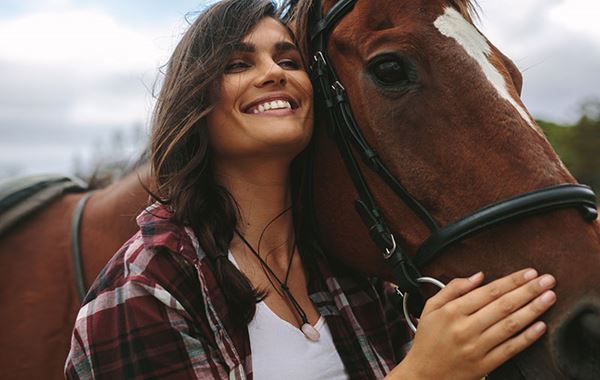
The Widow’s Challenge
The sun had barely crested the mesa when the challenge echoed across Dry Creek Valley like thunder. Word spread faster than wildfire through the sagebrush: The Widow Sterling was at it again.
Her name was Catherine, and she owned the finest piece of horseflesh this side of the Rio Grande—a black stallion named Tempest. Seventeen hands high, eyes like coal, and a spirit that had never been broken. Not by the twenty-five men who’d tried before me. Not by the silver-tongued horse traders from Kansas City.
I was the twenty-sixth.
I wasn’t there for the glory. My name is Jake Morrison, and truth be told, I was just a drifter running from the memories of a war that ended years ago but still raged in my head. I heard the offer at the general store: “Ride him for ten minutes without being thrown, and take fifty dollars gold. Fall, and you leave my ranch forever.”
I watched from the fence rail as a young buck in fancy chaps lasted exactly twelve seconds. Tempest didn’t just buck; he twisted with a violence that sent the boy sailing into the dirt. The crowd cheered the spectacle, but I felt a cold knot in my stomach. They saw a monster. I saw a creature that was terrified of being dominated.
Catherine stood on the porch, arms folded, her face hard as granite. She wasn’t cruel; she was testing us. She was looking for the man who could replace the husband she’d lost three winters ago.
I adjusted my worn-out hat and stepped off the fence. I didn’t have a whip. I didn’t have spurs. I just had a heavy heart and a feeling that maybe, just maybe, that horse and I were lonely in the exact same way.
“You next, cowboy?” she called out, her voice sharp.
“Yes, ma’am,” I said, unlatching the gate. “But I think your horse is tired of people shouting at him.”
I stepped inside. The gate clicked shut behind me. There was no going back.
The Language of Trust
The metal latch of the corral gate clicked shut behind me, and the sound was final, like a judge’s gavel coming down. For a second, that metallic clink was the only sound in the entire valley. Then the world exploded into noise.
The crowd at the fence started their murmuring, placing bets. “Give him twenty seconds,” one voice laughed. “That horse is going to stomp him into paste.”
I didn’t turn to look at them. My world had just shrunk down to a sixty-foot circle of packed earth and the twelve hundred pounds of black fury standing across from me.
Tempest stood on the far side of the corral, his sides heaving, his coat slick with sweat and dust. His head was high, ears pinned flat against his skull. He was looking at me with eyes that were wide and rimmed with white, rolling in their sockets.
I’ve seen that look before. I saw it in the mirror every morning for the first year after I came back from the war. It’s the look of a creature that expects pain because pain is the only language it has heard for a long time.
He snorted and pawed the ground. A cloud of red dust puffed up around his hooves. He was daring me to move, daring me to be like the others—to rush him, to yell, to try to dominate him with force.
But I didn’t move. I leaned back against the wooden rails of the fence, hooked my thumbs into my belt loops, and lowered my head just enough to break eye contact without losing sight of him. In the language of horses, staring is a threat. I needed him to know I wasn’t a predator.
Inside, though, my heart was hammering against my ribs like a trapped bird. I was terrified—not just of the physical pain, but that maybe the darkness inside this horse was too deep to reach, which would mean the darkness inside me was too deep, too.
“Hey! You gonna ride him or ask him to dance?” a man shouted from the fence, and laughter rippled through the crowd.
Tempest flinched at the noise. His muscles bunched tight as piano wire. He reared up slightly, front hooves striking the air.
“Easy,” I whispered. The word didn’t travel further than five feet. “I know. It’s loud out there. It’s loud in here, too.” I tapped my own chest.
I stayed frozen for five minutes. The sun beat down on the back of my neck. Sweat trickled down my spine, soaking my shirt. My legs started to cramp, but I forced my muscles to stay loose. Animals can smell tension, can smell the adrenaline of a man getting ready to fight.
Slowly, Tempest stopped pawing. He lowered his front legs, though his head remained high and alert. He blew air through his nostrils—a long, rattling exhalation.
Step one. He was acknowledging I was there, and he was confused why I hadn’t attacked yet.
Then I did something that made the crowd gasp. I slid down the fence rail until I was sitting in the dirt.
“He’s crazy,” a woman’s voice whispered. “The horse will kill him.”
Sitting down in a pen with a wild stallion is against every rule of self-preservation. You have no leverage, no speed. But that was the point. By sitting, I made myself small. I took away my height, my intimidation. I became just another lump in the landscape.
I picked up a handful of dry dirt and let it sift through my fingers, watching the dust motes dance in the sunlight. I focused on that falling dirt, ignoring the massive animal ten yards away.
Tempest took a step. I heard the crunch of gravel. I didn’t look up.
He took another step. He was curious. By doing absolutely nothing, I was creating a vacuum. His curiosity was starting to win the war against his fear.
“What is he doing?” someone muttered angrily. “This is a waste of time. Mrs. Sterling, get him out of there!”
“Quiet,” Catherine Sterling’s voice cut through the murmuring like a knife. “Let him be.”
Tempest was about fifteen feet away now, stretching his neck out, his nose quivering. But he was still conflicted, his back legs coiled and ready to spring away.
I decided to speak to him. Not the “good boy” nonsense people use on pets. I spoke to him like a man.
“They say you’re a killer,” I said, my voice low and gravelly. “They say you’ve got the devil in you. I heard ’em talking in town. Said you’re broken.”
Tempest’s ears flicked toward the sound of my voice. One ear forward, one ear back. He was listening.
“I know what that’s like,” I continued, staring at the dirt in my hands. “To have folks look at you and see something dangerous. To have ’em think you’re just waiting to hurt someone. It gets lonely, doesn’t it? Carrying all that anger around. It’s heavy. Heavier than any rider.”
The horse let out a long sigh. His head dropped a few inches. He chewed his lips—in the horse world, chewing is the universal sign of thinking, of processing, of relaxing.
I stood up slowly, unfolding my legs one at a time, keeping my movements fluid. Tempest jerked his head up, eyes widening. He took a quick step back, snorting.
“It’s alright,” I said, staying planted. “I’m just standing. I ain’t coming for you.”
Then I turned my back on him—the ultimate gesture of trust and insanity. I turned my back on a wild stallion and walked slowly toward the center of the corral. I was telling him: I don’t need to watch you. I trust you not to kill me.
I walked three steps. I stopped. I waited.
I felt the ground vibrate before I heard it. A soft thump-thump. He was following.
My heart leaped into my throat. I turned around slowly.
He was there. Ten feet away. Close enough that I could see the individual wiry hairs of his mane, the white scar tissue on his shoulder, the intelligence burning in those coal-black eyes.
But as I turned, my boot scraped on a loose rock—a sharp, grinding sound.
Tempest exploded. He spun on his hind legs, kicking out with a force that would have shattered my skull if I’d been two feet closer. The wind of his hooves brushed my face. The crowd screamed.
Tempest galloped to the far side of the corral, bucking and screaming, kicking the wooden rails with sounds like gunshots. Splinters flew into the air.
“Get out of there!” a man yelled. “He’s gone mad!”
I stood my ground. My knees were shaking, but I locked them. If I ran, I was prey. If I ran, I confirmed every fear he had.
“No!” I shouted, my voice cutting through the chaos. “I’m not leaving, Tempest. And I’m not fighting you. Get it out of your system.”
The stallion ran two laps around the perimeter, his tail flagged high like a war banner. Then, just as quickly as the storm started, it broke.
He stopped on the opposite side, chest heaving, sweat dripping from his belly. He turned and looked at me—the man who hadn’t run away, the man who hadn’t tried to hit him for his outburst.
I saw the change happen in real-time. The adrenaline faded from his eyes, replaced by deep, weary confusion. He had tried to scare me away, and I was still standing. He had shown me his worst, and I hadn’t punished him.
“You done?” I asked softly.
He dropped his head lower than before, almost to his knees. He licked his lips. He blinked slowly.
I started walking toward him. This time, I looked at his shoulder, approaching him from the side in an arc.
“That’s it,” I whispered. “That’s a good lad.”
The crowd had gone deathly silent. They were witnessing something they didn’t have words for.
I got within arm’s reach. I could smell him—musk, salt, hay, and the metallic tang of fear. I could feel the heat radiating off his black coat.
He flinched when I raised my hand. His skin rippled. But he didn’t move his feet. He was choosing to stay.
I let my hand hover inches from his neck. “It’s your choice,” I murmured. “Always your choice.”
And then he did it. He leaned in. Just an inch. But that inch bridged a canyon.
My palm made contact with his neck. His coat was hot and damp. I didn’t pat him—patting is jarring. I just laid my hand there, heavy and warm, willing my heart to sync with his.
I felt a tremor go through his massive body. Then, a release. He leaned his weight against my hand.
“There you are,” I whispered, my vision blurring as tears pricked my eyes. “There you are.”
I moved my hand slowly up his neck, scratching behind his ears. He groaned, a low rumbling sound of pleasure, and lowered his head until it was level with my chest.
I looked up past the horse’s mane, and my eyes locked with Catherine Sterling. She was gripping the fence rail so hard her knuckles were white. Her hat was tipped back, revealing a face stripped of its iron mask. Her mouth was slightly open, her eyes wide and shining.
In that look, I saw the ghost of her husband, the loneliness she hid behind her shotgun and her gold.
The Ride
I grabbed a handful of his thick, coarse mane. I put my left hand on his withers, testing my weight. He sidestepped, nervous.
“I know,” I soothed, moving with him. “I’m just a ghost, remember?”
I spent the next ten minutes putting weight on him, taking it off. Asking, then retreating. The crowd grew restless. “Ride him already!”
But I knew something they didn’t. You don’t ask a question until you know the answer is going to be yes.
Finally, Tempest stood still. He took a deep breath and braced his legs. He looked back at me with one dark eye. It wasn’t submission. It was permission.
I gripped his mane. I swung my leg up. For a split second, I was suspended in the air, completely at his mercy.
My leg cleared his back. I settled gently onto his spine.
The contact was electric. I could feel every muscle, every breath, every heartbeat. Tempest froze. He went rigid. His head shot up. He was remembering: Man on back. Fight. Buck. Kill.
I felt his hindquarters drop—the prelude to a massive buck.
“No,” I whispered, sliding my hands down his neck. I slumped my body, exhaling all the air in my lungs. I made myself heavy, limp, relaxed. I left my legs loose, dangling. I was telling him: I am not a threat.
The seconds ticked by. One. Two. Three.
The crowd was dead silent.
Slowly, incredibly, the tension leaked out of him. He raised his hindquarters back up. He straightened his neck. He flicked an ear back to listen to my breathing.
I nudged him gently with my knee. Walk?
He hesitated. Then he took a step forward.
A collective gasp went up from the fence, followed by a cheer that swelled into a roar.
We were moving. I wasn’t steering him. I didn’t have reins. I was just a passenger on a thousand pounds of redeemed darkness. We walked a circle. Then another.
“Time!” someone shouted. “That’s ten minutes! He did it!”
But I kept riding. The ten-minute mark was just an arbitrary line drawn by people who thought you could buy courage with gold coins.
I leaned forward. “You want to run, boy?” I whispered into his mane. “Show them who you are.”
I squeezed my legs.
And the world turned into a blur of speed and wind.
When Tempest launched himself forward, it was like a dam breaking. We hit the far turn of the corral, and I leaned, shifting my weight. Tempest felt the shift and banked around the corner, gravel spraying behind us. We came out of the turn like a slingshot.
The world blurred. I closed my eyes for just a second. In the darkness, I wasn’t in Dry Creek anymore. I was back in the war, in the chaos. But here, on this horse, the chaos was controlled. The pounding of his hooves drowned out the phantom sounds of gunfire.
I opened my eyes and let out a roar—a primal scream, a release of five years of poison.
We did three laps at a full gallop. Then, the test came.
A gust of wind caught a loose tarp covering hay bales. The blue plastic snapped loudly.
Tempest saw the blue monster. He locked his front legs, dropping from forty miles an hour to zero, and spun violently to the right.
This was the moment where physics usually wins. But because I was so relaxed, so fluid, I flowed with him. I slid sideways, hanging off his flank, my fingers tangled in his mane.
The crowd gasped.
Tempest froze, trembling, waiting for the blow.
I pulled myself back up. My heart was slamming, but I forced my breathing to slow.
I didn’t kick him. I didn’t yell. I leaned forward and stroked his neck.
“It’s just a tarp, buddy,” I said, my voice shaking but gentle. “It can’t hurt us.”
Tempest turned his head all the way around, his nose bumping my knee. He looked at me with profound confusion. You’re not mad?
“I’m not mad,” I whispered. “I’m scared of loud noises too.”
The tension drained out of him instantly. He let out a long, shuddering breath. We didn’t go back to a gallop. We circled in a slow, rocking-chair canter.
I looked toward the fence. Catherine was standing by the gate post, hands covering her mouth, tears on her cheeks.
I brought Tempest to the center of the corral and slid to the ground. My legs felt like jelly, and Tempest did something that made the crowd gasp again.
He nudged me with his head to steady me.
I wrapped my arms around his massive neck and wept. I cried for the boys I lost in the war, for the years I wasted, for the loneliness. And Tempest just stood there, steady as a mountain, holding me up.
The sound of the gate latch broke the spell. Catherine was walking toward us, slowly, reverently.
She stopped five feet away. “I haven’t seen him let anyone touch his ears since Michael died.”
“He just needed to know he had a choice,” I said. “He’s not mean, Catherine. He’s just defensive. He’s got a soft heart, buried under a lot of scar tissue.”
She looked at me, her grey eyes searching my face. “Takes one to know one, I suppose.”
She pulled out a heavy leather pouch. “Fifty dollars. Gold. As promised.”
I looked at the pouch. It was freedom—a train ticket to California, a few weeks of easy living. But then I felt Tempest’s warm breath on my neck. I looked at the rolling hills behind Catherine.
“I can’t take that, ma’am,” I said quietly.
“You earned it.”
“If I take that gold, it makes this a transaction. And it wasn’t business.”
“Then what was it?”
“It was a conversation,” I said. “And I reckon we’re not done talking yet.”
I turned to walk toward the gate.
“Wait!” Catherine’s voice rang out. “Don’t go. Please.”
I stopped.
“I don’t need a drifter who rides for gold,” she said. “I need a foreman. I need someone who knows the soul of this place. The job pays thirty a month. Room and board. The cabin by the creek needs a roof fixed, but it’s dry. And Tempest comes with the job. You’re the only one who can ride him.”
I stood there in the dust. I had spent five years running away from everything. I looked at the cabin in the distance, the woman who saw me as a man, the horse who had trusted me with his life.
I was tired of running.
“Does the cabin have a wood stove?” I asked.
Catherine smiled, and it was like the sun breaking through a winter storm. “It does. And I make a damn good beef stew on Sundays.”
“Alright then,” I said. “I guess I’m home.”
Years Later
The first few weeks were harder than the ride. Not the work—that was just sweat and muscle. The hard part was the quiet and the kindness.
But the peace held.
Tempest was my anchor. Every morning before sunrise, I’d walk to the barn. He’d be waiting, nickering a low greeting. We worked together, checking fence lines, moving cattle. The other ranch hands were wary at first, but slowly they saw the truth.
Catherine and I started with coffee on the porch. We talked about the cattle, then the weather, then the war. I told her about the friends I lost. She told me about Michael, about how consumption took him slowly.
“We’re a pair of broken toys, aren’t we?” she said one night.
“Maybe,” I said, looking at Tempest grazing under the moonlight. “Or maybe we’re just mended. Things are stronger where they break, if you glue ’em right.”
She reached out and rested her hand on my shoulder. “And what’s the glue, Jake?”
“Time,” I said. “And good company.”
Winter came hard. The blizzard of ’48 snowed us in for three weeks. During that time, I finally unpacked the bag by the door. I put my clothes in the dresser. I wasn’t going anywhere.
We were married in the spring, right there in the front yard. Just the preacher, the hands, and the horses. When the preacher asked for the ring, I realized I’d left it in my vest pocket on the porch rail.
But Tempest, standing loose nearby, nudged the vest, picked it up with his teeth, and dropped it at my feet.
The crowd roared with laughter. Catherine laughed—a sound so full of joy it chased away the last shadows.
“I think he approves,” she said, kissing me.
Years passed. We had good years and bad years. But we did it together.
Tempest lived to be twenty-eight years old. When he finally passed on a warm afternoon in July, I sat with him for six hours, his heavy head in my lap. Catherine sat beside me, holding my hand.
We buried him on the hill overlooking the valley, under a stone that said: Tempest – The Partner.
The Legacy
Now, forty years later, I sit on that same porch. My knees ache and I move slower than the young drifter who climbed that fence. Catherine is gone now too—passed peacefully three years ago.
My son runs the ranch now. My grandson rides a black gelding, a great-grandson of Tempest. I watch them in the corral. I see the way my grandson approaches a new colt—hand out, palm open, waiting. He doesn’t use ropes or force. He uses the method his grandfather taught him. The method a wild stallion taught a broken soldier.
People still ask about that day. The story has grown into legend. They say I wrestled the beast, that I whispered a magic word.
But the truth is simpler.
I learned that you can’t break a spirit without breaking yourself. I learned that the strongest thing a man can do isn’t to fight, but to listen.
I close my eyes and I can still feel it—the phantom sensation of that black coat under my fingers, the smell of dust and adrenaline, the moment the world stopped spinning and started making sense.
I wasn’t a hero. I was just a man who needed a friend, and I found one in the last place anyone looked.
If you’re reading this and you feel broken, like you’re too wild or too damaged for this world, remember Tempest. Remember the horse they said was the devil.
Maybe you’re not broken. Maybe you’re just waiting for the right hand to reach out, palm open, and offer you a choice instead of a fight.
And if you can’t find that hand, maybe you can be that hand for someone else.
That’s the cowboy way. That’s the only way.
THE END

Lila Hart is a dedicated Digital Archivist and Research Specialist with a keen eye for preserving and curating meaningful content. At TheArchivists, she specializes in organizing and managing digital archives, ensuring that valuable stories and historical moments are accessible for generations to come.
Lila earned her degree in History and Archival Studies from the University of Edinburgh, where she cultivated her passion for documenting the past and preserving cultural heritage. Her expertise lies in combining traditional archival techniques with modern digital tools, allowing her to create comprehensive and engaging collections that resonate with audiences worldwide.
At TheArchivists, Lila is known for her meticulous attention to detail and her ability to uncover hidden gems within extensive archives. Her work is praised for its depth, authenticity, and contribution to the preservation of knowledge in the digital age.
Driven by a commitment to preserving stories that matter, Lila is passionate about exploring the intersection of history and technology. Her goal is to ensure that every piece of content she handles reflects the richness of human experiences and remains a source of inspiration for years to come.
I could read anything written by Lila Hart.
I would like to read more if I can find it.
Well done Lila