My Mom Didn’t Even Bother to Pick Me Up at the Airport—After I Spent Ten Years Paying Off Her Two-Million-Dollar Debt
The plane touched down at Harry Reid International just after two in the afternoon, when the Nevada sun turns the tarmac into something that shimmers and lies. I’d been awake since four that morning, changing planes in Denver, drinking bad coffee from paper cups that tasted like the inside of someone’s glove compartment. My neck ached from sleeping against the window, and my mouth felt like I’d been chewing on cotton and regret.
But I was home. Or what used to pass for home before “home” became a concept that required wire transfers and late-night phone calls that always started with “I hate to ask, but…”
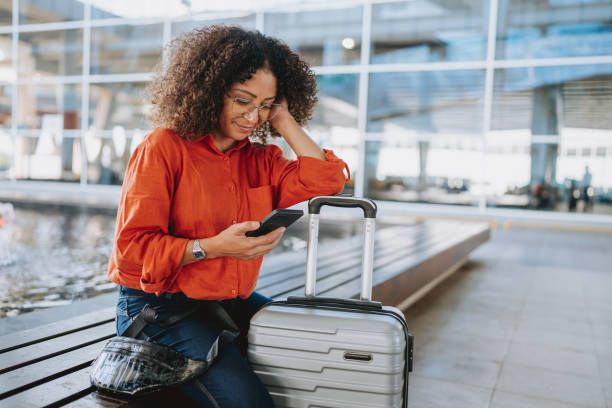
I stood at the arrivals curb with my suitcase handle cutting into my palm, watching the circus of reunion play out in real time. A grandmother in a velour tracksuit clutching a little boy who couldn’t have been more than four, spinning him around like he was made of light. A couple in their twenties falling into each other with the kind of kiss that makes airport security look away. A family of six coordinating luggage cart logistics with the precision of a military operation, everyone talking at once, everyone belonging to each other in that loud, uncomplicated way.
My phone stayed quiet.
No “Traffic’s crazy, be there in five.” No “I’m circling, can’t find parking.” Not even a thumbs-up emoji, that universal symbol of minimal effort that at least acknowledges your existence.
I checked the time. Then checked my messages. Then checked the tracking on my phone to make sure I was, in fact, where I’d said I’d be at the time I’d said I’d be there. Confirmation on all counts. I’d done my part.
The desert air hit different when you’ve been gone ten years. Dry and hot and somehow accusatory, like it remembered you left and wanted you to explain yourself. I pulled my hair back into something that might survive the heat and opened my phone again, not because I expected anything new, but because that’s what you do when you’re standing somewhere you don’t want to be, waiting for someone who isn’t coming.
Then Facebook lit up like it had been waiting for this exact moment to twist the knife.
A fresh photo—uploaded seven minutes ago, which meant it was basically happening in real time. My mom and my sister, shoulder-to-shoulder under the soft amber lighting of what looked like a resort bar. Some place nice. Some place with craft cocktails and appetizers that cost twenty dollars and come on rectangular plates. They wore matching sunglasses pushed up on their heads, their hair blown out in that expensive way that suggests a salon visit within the last three hours. Drinks raised in a toast to something I wasn’t part of. Smiles so wide they could’ve been selling something.
The caption was the kind of sweet that makes your teeth hurt and your stomach drop:
“Mom’s precious daughter.”
Not “daughters,” plural.
Daughter. Singular.
I blinked hard, like the desert air had dust in it, like maybe my contacts were acting up, like maybe if I just refreshed the page the universe would correct this obvious clerical error.
It didn’t.
I zoomed in on the background, looking for clues. The Venetian, maybe. Or the Bellagio. Somewhere on the Strip, at any rate, which was twenty minutes from the airport if you drove like a reasonable person, fifteen if you drove like you had somewhere important to be.
Like, for instance, picking up your other daughter.
Because ten years is a long time to be somebody’s solution.
Ten years of picking up extra shifts at the hospital where I worked as a surgical tech, saying no to weekends with friends, wiring money out of my own life until my bank app felt like a doorway I didn’t want to open. Ten years of watching my savings account perform some kind of reverse magic trick, where the number got smaller no matter how much I put in. Ten years of canceled vacations, declined promotions that would’ve required relocation, relationships that fizzled out when the guy realized I was married to a financial crisis that wore my mother’s face.
Ten years of telling myself it was temporary, that once the number hit zero we’d all breathe again. That we’d sit down over coffee—not the burnt gas station kind, but the fancy artisan stuff—and she’d thank me properly. That she’d acknowledge the sacrifice. That she’d see me not just as a solution, but as a daughter who’d given up a decade of her life to fix something she didn’t break.
And there I was, back in Nevada for the first time since I’d moved to Colorado to chase better pay and lower cost of living. Back in the state where I’d grown up, where I’d learned to drive, where my father had died seven months before the debt became my inheritance. Holding a suitcase that contained everything I’d need for a week I’d planned to spend rebuilding something I thought still existed.
I realized the welcome home wasn’t late.
It wasn’t coming.
I scrolled through the comments under that photo, my thumb moving on autopilot while my brain tried to catch up to what my gut already knew.
Heart emojis. Dozens of them. “You deserve it, Linda!” “Best mom ever!” “Precious duo!” “Mother-daughter goals!” “So beautiful together!”
Nobody in that thread knew the truth, and I didn’t correct them.
Not yet.
Because what would I even say? That the woman they were praising had spent ten years treating me like a human ATM? That my sister—precious, apparently—had contributed exactly nothing to the financial catastrophe that had defined my entire adult life? That while I was working double shifts and eating ramen in a studio apartment in Denver, they were apparently out here toasting each other under resort lighting?
Something inside me didn’t explode.
It didn’t shatter or crack or make any of those dramatic sounds that grief is supposed to make when it finally arrives.
It just went quiet—cold, careful, almost methodical. Like a pilot switching to instruments when the visibility drops. Like muscle memory taking over when your conscious mind is too overwhelmed to function.
I rolled my suitcase a few steps away from the curb, into the bright spill of the terminal doors where the air-conditioning hit my face like a slap. The contrast between outside and inside was so sharp it made my eyes water. Or maybe that was something else. Hard to tell.
I found a seat in the arrivals area—one of those hard plastic chairs bolted to the floor that’s specifically designed to discourage loitering—and opened my wallet. Stared at the card I’d been using for years. The one with both our names on it. The one I’d set up a decade ago when the lawyer explained that my mom’s debt was going to swallow her whole unless someone intervened.
A memory flashed so sharp I almost laughed, that kind of laugh that’s more bark than humor.
My mom used to say, “Family is who shows up.”
She’d said it when my dad was alive, when we still lived in that house in Austin with the magnolia tree in the front yard and the kitchen that always smelled like something baking. When our problems were small enough to talk over dinner. When “showing up” meant attending school plays and helping with homework and driving someone to soccer practice even though you were tired from work.
But over time, “family” became a word she used strategically.
She used it when she needed me quiet. When she needed me to send one more transfer. When she needed me to stop asking questions about where the money was actually going, because “family doesn’t interrogate family” and “you wouldn’t understand the pressure I’m under” and “after everything I’ve done for you, this is how you repay me?”
I looked back at the pickup lane through the sliding glass doors.
Cars pulled up in an endless rotation. People reunited in their small, private miracles. Trunk lids slammed. Lives continuing in clean little scenes, everyone moving forward while I sat in a plastic chair trying to figure out how I’d spent a decade moving backward.
My life wasn’t clean.
It was a decade of “almost fixed,” a decade of promises that always seemed to move the finish line farther away. A decade of “just one more payment” and “we’re so close” and “I can see the light at the end of the tunnel.”
The tunnel had no end.
It just kept going, and I kept sending money into the dark, hoping it would eventually lead somewhere that felt like resolution.
And that caption—”Mom’s precious daughter”—wasn’t just a social media post.
It was a confession, whether she meant it to be or not.
It told me everything I’d been trying not to know. That my sister was the daughter who showed up for cocktails and photo ops. I was the daughter who showed up with money. And in my mother’s mathematics, only one of those roles earned you the word “precious.”
I didn’t cry.
I didn’t text my mom to ask where she was, because the photo had already answered that question with the kind of clarity that doesn’t require follow-up.
Instead, I made one call.
Not to her. Not to my sister, who wouldn’t answer anyway, who’d long ago perfected the art of being unavailable whenever there was work to be done or consequences to face.
I called the people who could flip a switch without needing a family meeting or an emotional explanation or permission from anyone except the person whose name was on the account.
The bank’s fraud prevention line rang twice before a woman’s voice answered, professional and slightly wary in that way that suggests she’s heard some stories today and is braced for another one.
“Account services, this is Patricia speaking. May I have your account number?”
When she picked up, my voice surprised me.
Calm. Flat. Like I’d been practicing it on the long flight over the Rockies and down into the neon bowl of the Strip. Like I’d been rehearsing this conversation for ten years without realizing it.
“I need to report unauthorized use of my account,” I said. “And I need to cancel all cards associated with this account number immediately.”
There was a pause on the line—keyboard clicks, papers rustling, a professional tone shifting into something sharper, more focused.
“I see. Can you verify your identity for me? I’ll need your full legal name, date of birth, and the last four digits of your social security number.”
I gave her the information, one piece at a time, and watched my own hands stop shaking as if they finally had something honest to do. Something that wasn’t about sacrifice or obligation or that hollow feeling of pouring yourself into a hole that never fills.
“Thank you, Ms. Rodriguez. I’m showing a joint account opened in 2015 with monthly activity. Can you tell me what specifically triggered this fraud report?”
“The other person on the account has been using it without my knowledge or permission,” I said, and the lie came out smooth as ice because it wasn’t really a lie. She’d been using my money without my knowledge of where it actually went. Without my permission for it to fund resort bars and matching sunglasses while I stood alone at an airport she couldn’t be bothered to drive to.
“I see. And you’d like to remove this person’s access to the account?”
“I’d like to close the account entirely and open a new one. With only my name. I’d also like to dispute the charges from the last thirty days.”
More keyboard sounds. A longer pause. When Patricia came back, her voice had changed—less script, more human.
“Ms. Rodriguez, I’m looking at your account history. There are some significant transfers here over the past decade. Before I process this, I need to make sure you understand that closing this account and disputing charges will immediately lock all associated cards. Anyone attempting to use them will be declined. If those charges were genuinely fraudulent, the other party may face legal consequences.”
“I understand,” I said. And I did. Maybe for the first time in ten years, I understood exactly what I was doing and why.
“All right. I’m processing this now. You should see the cards deactivated within the next five to ten minutes. I’m also flagging the account for our fraud investigation team. They may reach out to you for additional information.”
“Thank you, Patricia.”
“Ms. Rodriguez?” She paused, and I could hear something in her voice that wasn’t in the script. “I hope everything works out for you.”
I ended the call and sat there in the hard plastic chair, watching travelers stream past with their purposeful strides and their destination faces. I felt hollowed out and filled up at the same time, like I’d finally set down a weight I’d been carrying so long I’d forgotten what my real posture felt like.
Ten minutes later—almost exactly ten minutes, like Patricia had timed it for maximum impact—my mom’s name lit up my screen like an alarm.
I let it ring. Once. Twice. Three times. Watched my mother’s contact photo flash on and off, her smiling face from some Christmas five years ago when she still pretended gratitude was a thing she felt.
On the fourth ring, I answered.
Her voice came through frantic, breathless, surrounded by noise like she was standing in a place she never expected consequences to reach. I could hear my sister in the background, her voice pitched high with confusion or maybe performance.
“They’re saying I committed fraud!” My mom was nearly shouting, that particular register of panic that demands you fix something immediately without asking too many questions. “My card just got declined—twice!—and when I called the bank they said the account was closed for suspicious activity! They’re saying I did something wrong! This has to be a mistake. You need to call them right now. Why is my card locked? Please help me!”
I stared at the sliding doors, at families disappearing into the parking garage, at my own reflection faint in the glass—a woman sitting alone with a suitcase and a phone and the first honest breath she’d taken in years.
“Where are you right now, Mom?”
“What? Why does that matter? I’m at—we’re having lunch, but that’s not the point! The point is something’s wrong with the account and you need to fix it!”
“What restaurant?”
“The Venetian, but—”
“The Venetian. Twenty minutes from the airport.”
The background noise on her end shifted. I could almost hear her recalibrating, searching for the angle that would work. The one that always worked.
“Honey, I don’t understand why you’re—”
“I landed two hours ago, Mom. You knew what time. I texted you last week. I confirmed yesterday. I sent you my flight information three days ago.”
Silence. Not the good kind. The kind that’s full of excuses being constructed and discarded in real time.
“Well, I thought—your sister wanted to—we were going to come get you after—”
“After what? After cocktails? After the photo shoot? After you finished celebrating your precious daughter?”
“Don’t be dramatic. We were going to—”
“You weren’t coming at all, were you?”
More silence. Longer this time. And then my sister’s voice, closer now, like she’d grabbed the phone.
“Oh my God, are you seriously doing this right now? Mom was going to pick you up. We just got sidetracked. Why are you always so—”
“Put Mom back on.”
“You’re being ridiculous. Just get an Uber like a normal person and stop—”
“Put. Mom. Back. On.”
My sister made a sound like a disgusted sigh, and then my mom was back, her voice smaller now, probing for weakness the way you might test ice before walking on it.
“Sweetheart, I’m sorry. I should have called. But this is fixable. We can come get you right now. Just call the bank back and explain there was a misunderstanding—”
“There wasn’t a misunderstanding, Mom. I closed the account. I canceled the cards. I reported the activity as unauthorized.”
The quality of the silence changed. Deepened. Became the kind of quiet that happens when someone’s entire understanding of reality shifts under their feet.
“You… what?”
“I closed the joint account. The one I opened ten years ago when you couldn’t get credit anywhere else. The one I’ve been funding with my own money while you told everyone it was yours. The one you’ve been using to play the generous mother while I worked sixty-hour weeks in Colorado.”
“You can’t do that. That’s—that’s illegal! That’s my money!”
And there it was. The thing she’d been pretending wasn’t true for a decade, finally said out loud where we could both hear it.
“It’s not your money, Mom. It never was. It was my account that I added you to. My credit. My income. My decade.”
I could hear her breathing hard, hear the ambient noise of the restaurant swelling around her like an audience to her humiliation.
“So what—you’re just going to leave me here? With a declined card? In public?”
“I don’t know, Mom. What were you going to do? Leave me at the airport? In public?”
“That’s different! I was coming to get you!”
“When?”
No answer.
“What time, Mom? What time were you planning to pick me up? Before dinner? Before you went back to the hotel? Or were you just going to text me eventually and hope I’d figured it out on my own?”
“You’re being unfair. You don’t understand the pressure—”
“I understand I spent ten years paying off a debt you told me was going to destroy your life. I understand you said if I just helped you through this one thing, you’d be okay. I understand I sent you three hundred thousand dollars over the course of a decade because you said you were drowning. And I understand that somehow, while you were drowning, you still had money for resort bars and matching sunglasses and captions about your precious daughter.”
“Your sister didn’t abandon me.”
The words came out sharp and meant to wound, a last-ditch weapon deployed by someone who’d run out of better options.
“Your sister didn’t pay your bills either, did she?”
Silence.
“Did she send you money, Mom? Even once? Even when she was working that marketing job in California pulling six figures?”
“She has her own expenses—”
“So did I. I just paid yours instead.”
I stood up from the plastic chair, pulling my suitcase behind me as I walked toward the rideshare pickup area. My legs felt strange, like I was learning to walk in a body that weighed less than it used to.
“I’m getting a hotel,” I said. “Not one on the Strip. Somewhere cheap. Somewhere I can actually afford now that I’m not funding your life.”
“You can’t just—we had plans! You’re supposed to stay with me!”
“Did I though? Because you never actually invited me, Mom. I told you I was coming, and you said okay. That’s not the same as a welcome.”
“So that’s it? You’re just going to abandon your mother? After everything I did for you?”
And there it was—the final card, the nuclear option. The debt I supposedly owed for being born, for being raised, for having the audacity to exist and require food and shelter and the basic maintenance of childhood.
“What did you do for me, Mom? Specifically. In the last ten years. What did you actually do besides take my money and then forget I existed unless you needed more?”
I could hear her crying now, or performing crying—I’d long since lost the ability to tell the difference.
“I raised you. I gave you everything. And this is how you repay me?”
“I did repay you. Three hundred thousand dollars worth. We’re even.”
“You’re going to regret this.”
“Maybe,” I said. “But probably not.”
I hung up before she could respond, before the guilt could sink its hooks back in, before the old programming could reboot and convince me I was the villain in a story where I’d only ever tried to be the hero.
The phone rang again immediately. I declined the call. It rang again. I declined it again. The third time, I blocked the number.
My sister texted me seven minutes later: “You’re a selfish bitch and I hope you know that.”
I blocked her too.
Then I stood at the rideshare pickup point and waited for a driver named Marcus in a silver Honda Civic to take me somewhere that wasn’t home but might eventually become something close enough.
And I realized the most important part of the story wasn’t what she’d done.
It was what I was about to do next—because this time, I wasn’t landing in Las Vegas to save her.
I was landing to finally stop.
The hotel I chose was forty-three dollars a night and smelled faintly of old carpet and industrial cleaning solution. It had a queen bed with a comforter that had seen some things, a TV bolted to the wall, and a view of the parking lot where a family was unloading a minivan with the organized chaos of people on a budget vacation.
It was perfect.
I lay on the bed fully clothed and stared at the ceiling, waiting for the regret to arrive. For the guilt to kick down the door and demand I call her back and apologize and fix this the way I’d been fixing everything for ten years.
It didn’t come.
What came instead was something quieter. Something that felt almost like relief, if relief could be heavy and complicated and tinged with the particular sadness of realizing your mother had never really seen you as anything more than a solution to problems she kept creating.
My phone buzzed. Not my mom—I’d blocked her—but a notification from the bank. A confirmation that my new account had been opened. My name only. My money only. My future, finally, only.
I opened my banking app and looked at the balance.
For the first time in ten years, the number wasn’t immediately spoken for. Wasn’t earmarked for someone else’s emergency. Wasn’t the countdown to the next crisis.
It was just mine.
I ordered pizza from a place that delivered to hotels and didn’t ask questions. I ate it sitting cross-legged on the bed watching a reality show about people who buy houses they can’t afford. I laughed at the irony. I cried a little too, the quiet kind that’s more release than breakdown.
And when I finally fell asleep around ten, I dreamed about a life where the people who were supposed to show up actually did.
Where family meant something other than obligation.
Where precious meant everyone, or it meant nothing at all.
THE END

Lila Hart is a dedicated Digital Archivist and Research Specialist with a keen eye for preserving and curating meaningful content. At TheArchivists, she specializes in organizing and managing digital archives, ensuring that valuable stories and historical moments are accessible for generations to come.
Lila earned her degree in History and Archival Studies from the University of Edinburgh, where she cultivated her passion for documenting the past and preserving cultural heritage. Her expertise lies in combining traditional archival techniques with modern digital tools, allowing her to create comprehensive and engaging collections that resonate with audiences worldwide.
At TheArchivists, Lila is known for her meticulous attention to detail and her ability to uncover hidden gems within extensive archives. Her work is praised for its depth, authenticity, and contribution to the preservation of knowledge in the digital age.
Driven by a commitment to preserving stories that matter, Lila is passionate about exploring the intersection of history and technology. Her goal is to ensure that every piece of content she handles reflects the richness of human experiences and remains a source of inspiration for years to come.