The One Who Got Away
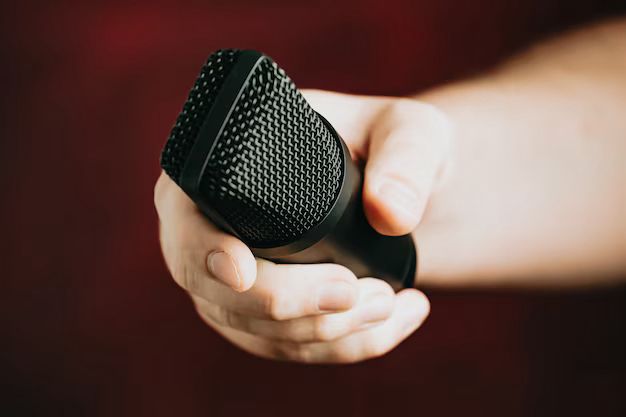
My husband grabbed the microphone at our 25th anniversary party. The whole family watched. “Let’s be honest,” he laughed, “I made the money, she just changed diapers. She is lucky I kept her.”
The hotel owner, a billionaire who had been watching from the shadows, stepped onto the stage. He snatched the mic from my husband and said: “She isn’t lucky. She is the one who got away. I’ve been waiting 25 years for you to make a mistake like this.”
I should have seen it coming.
Not the public humiliation specifically—though looking back, the signs were there in the way Eastston had started treating our anniversary party like a performance he was directing. But I should have seen that this moment, or something like it, was inevitable.
When you spend twenty-five years slowly disappearing from your own life, eventually someone notices you’re gone. Sometimes that someone is you. Sometimes it’s a man you loved before you learned to stop wanting things.
But I’m getting ahead of myself.
Let me start with the party, because that’s where everything broke open.
The Grand Meridian ballroom was spectacular in that calculated way expensive venues achieve—white lilies arranged in crystal vases on every table, chandeliers dripping light like captured stars, two hundred guests dressed in their best approximation of elegance. The kind of party that costs more than most people make in a year, thrown by a man who wanted everyone to know he could afford it.
My husband’s party. My husband’s guests. My husband’s celebration of a marriage I’d stopped recognizing somewhere around year twelve.
I’d spent three hours getting ready that afternoon, standing in our walk-in closet—his side organized by color and occasion, mine compressed into one corner—trying on and discarding dresses until I settled on a blue silk sheath that had cost too much and would be forgotten by tomorrow.
I’d done my makeup carefully, covering the fine lines that had appeared around my eyes and mouth, the evidence of decades spent smiling when I didn’t feel like it. I’d styled my hair the way Eastston preferred, swept up and elegant, nothing too casual or too young.
I’d made myself into the perfect accessory for his perfect evening.
And when I’d come downstairs, he’d glanced at me for exactly two seconds before returning to his phone. “You look fine,” he’d said. “We need to leave in ten minutes.”
Fine.
Twenty-five years, and I looked fine.
My name is Antoinette Crawford, and I used to be someone else entirely.
I was Antoinette Bishop at twenty-one—an architecture student at Columbia with a portfolio that made professors stop and reconsider their lesson plans. I was the girl who stayed up until three in the morning perfecting elevation drawings, who saw buildings as stories written in steel and glass, who believed that good design could change the way people experienced the world.
I was ambitious. Passionate. Certain that my life was going to be extraordinary.
I met Landon Blackwood in my senior year, at a gallery opening where student work was being shown alongside established architects. He was twenty-six, already making a name for himself in commercial development, already wealthy from a family that had built half of Manhattan’s skyline.
He stood in front of my thesis project—a mixed-use development that integrated green space into urban density—for so long I thought something was wrong with it.
“This is brilliant,” he’d said finally, turning to look at me with eyes that were genuinely interested, genuinely impressed. “The way you’ve solved the solar exposure problem while maintaining street-level engagement… have you thought about what you want to do after graduation?”
We’d talked for three hours. About architecture, about cities, about the responsibility of building spaces where people would live their lives. He’d treated my ideas like they mattered, like I was a colleague instead of a student, like my perspective was valuable.
We’d started dating two weeks later.
For eight months, I’d been happier than I’d known was possible. Landon was intense but kind, ambitious but thoughtful. He pushed me to be better, to think bigger, to not settle for easy solutions. We’d spend weekends sketching competing designs for imaginary projects, arguing about form and function, making love in his apartment with floor-to-ceiling windows that framed the city like a promise.
He’d talked about building something together. Not just a relationship, but a partnership—a firm where we could create buildings that mattered, that changed skylines and lives.
I’d believed him.
I’d believed in us.
And then I’d met Eastston Crawford at my roommate’s birthday party three weeks before graduation.
Eastston was handsome in an obvious way—square jaw, confident smile, the kind of presence that filled a room without trying. He was twenty-four, working in his father’s real estate investment firm, learning the business from the ground up.
He wasn’t Landon.
He didn’t understand architecture beyond whether it would sell. He didn’t ask about my thesis or my plans or my dreams. He asked me to dance, complimented my dress, made me laugh with stories about his ridiculous clients.
He was easy. Uncomplicated. He didn’t make me feel like I had to be brilliant all the time.
And when Landon had to fly to Dubai for three weeks on a project that couldn’t wait, Eastston was there. Available. Persistent. Charming in that all-American way that feels safe and predictable.
I told myself I was just having fun, that it didn’t mean anything, that Landon and I were solid.
But then Eastston proposed.
It was absurd—we’d known each other for two months. But he’d done it publicly, at a restaurant with his entire family present, his mother crying with joy, his father shaking his head with approval, everyone looking at me with such expectation that saying no felt impossible.
“I know it’s fast,” Eastston had said, holding my hand across the table while his family watched. “But I know what I want. And I want you. I want to build a life together, have a family, create something that lasts. Isn’t that what everyone wants?”
I’d thought about Landon in Dubai, about our complicated plans, about building a firm from nothing while the world expected us to fail.
I’d thought about how tired I was of being brilliant, of being challenged, of having to prove myself.
I’d thought about how easy it would be to just say yes, to let someone else make the decisions, to be taken care of instead of fighting for everything.
So I’d said yes.
And I’d called Landon the next day and told him it was over.
I’d heard his sharp intake of breath. The long silence. Finally: “Do you love him?”
I’d hesitated too long before saying, “Yes.”
“Liar,” he’d said softly. “But if this is what you want, Antoinette… I hope he deserves you.”
Then he’d hung up, and I’d cried for three hours, and then I’d dried my eyes and started planning a wedding to a man I barely knew.
The first five years of marriage were… acceptable.
Eastston’s father brought him into the investment side of the business, and he was good at it—identifying undervalued properties, negotiating deals, understanding market trends. We bought a nice house in Connecticut. We had Michael, then Sarah three years later. I stayed home because Eastston’s mother said that’s what good mothers did, and Eastston agreed, and I was too tired from sleepless nights to argue.
I told myself I’d go back to architecture once the kids were in school.
But then Eastston started his own development company. And he needed my help.
“Just look at these plans,” he’d say, spreading blueprints across our dining room table after the kids were asleep. “Tell me if they make sense. You have the eye for this stuff.”
So I’d look. And I’d see immediately what was wrong—the flow was awkward, the proportions were off, the space wasn’t being used efficiently.
“What if you moved this wall?” I’d suggest, sketching on a napkin. “And added windows here for cross-ventilation? You’d get better light and more usable square footage.”
He’d study my sketch. “That’s… actually brilliant. Can you draw that up properly?”
So I did.
Just that once.
Except it wasn’t just once.
It became every project. Every development. He’d bring me the plans, I’d fix them, I’d draw up the corrections, and he’d submit them under his company’s name.
“You don’t mind, do you?” he’d say. “It’s our company. What’s mine is yours.”
But it wasn’t our company. My name was nowhere on the paperwork. I had no title, no salary, no credit.
I was just the wife who was “really good at this stuff.”
And year by year, project by project, I redesigned his entire portfolio while he collected the fees and the reputation and the awards.
I told myself it didn’t matter. We were a team. His success was my success.
But somewhere around year fifteen, I stopped believing that.
By the time our twenty-fifth anniversary approached, I’d become a ghost in my own life.
The kids were grown—Michael was twenty-two, working in finance in Boston; Sarah was nineteen, finishing her junior year at Princeton. They came home for holidays, stayed in their childhood bedrooms for forty-eight hours of obligatory family time, then fled back to their real lives.
Eastston’s company had become one of the most successful development firms in the tri-state area. He was on boards. He gave speeches. He was profiled in business magazines.
And I was… the wife.
The woman who’d given up architecture to raise children who no longer needed raising.
The woman who’d spent two decades making her husband’s mediocre designs functional and beautiful while he took all the credit.
The woman who couldn’t remember the last time her husband had asked her opinion on anything that mattered.
When Eastston announced he’d booked the Grand Meridian for our anniversary party, I’d felt nothing. Not excitement, not gratitude—just a weary resignation that this was another performance where I’d play my assigned role.
“It’s going to be incredible,” he’d said, scrolling through his phone while I made dinner. “Two hundred guests. Top-shelf everything. I’m giving a speech.”
“That’s nice,” I’d said, stirring pasta sauce.
“You should get a new dress. Something elegant. This is important.”
Important to whom? I’d wanted to ask. But I’d just nodded and said, “Of course.”
The party began exactly as planned.
Guests arrived in waves—Eastston’s business partners, my former friends who’d drifted away when I stopped having anything interesting to say, our children and their polite smiles, my sister who’d flown in from California and kept giving me concerned looks I pretended not to see.
I stood beside Eastston during the receiving line, shaking hands, accepting congratulations, playing the role of the devoted wife so well that even I almost believed it.
“Twenty-five years!” people kept saying, as if duration was the same as success.
“You two look wonderful together,” they’d add, and I’d smile and say thank you while thinking about how we hadn’t had sex in eight months, how we hadn’t had a real conversation in longer than that, how we’d become roommates who occasionally appeared at the same events.
Michael hovered near the bar, already on his third drink, avoiding eye contact with his father. Sarah stayed with her college friends, laughing too loud at jokes that probably weren’t that funny. Neither of them looked happy to be here.
Neither did I.
Dinner was served—some elaborate meal I couldn’t taste. Toasts were made—Eastston’s brother rambling about “what a catch” Eastston was, my sister speaking carefully about “dedication” and “resilience” in a tone that suggested she was talking about survival more than love.
And then Eastston stood up, tapping his champagne glass with a knife until the room fell silent.
“Thank you all for celebrating twenty-five wonderful years with Antoinette and me,” he began, his voice warm and confident, practiced. The exact voice he used in board meetings, in negotiations, whenever he needed people to believe him.
It was the voice that used to make me proud to stand beside him.
Now it just made me tired.
“I’ve been thinking a lot about what makes a marriage work,” he continued, and a few people chuckled like they were already being coached on when to laugh. “And I think it comes down to knowing your roles. Understanding what each person brings to the partnership.”
Something cold slid into my stomach.
I knew that tone. I’d heard it before—in private moments when he’d explain why my opinions didn’t matter as much as his, why his work was more important than mine, why he made the decisions and I should just trust him.
But he wouldn’t. Not here. Not in front of two hundred people.
Would he?
“Let’s be honest,” he said, grinning now, confident in his performance. “I made the money. I built the business. I created this life.”
He gestured at the ballroom like it was his personal trophy case, like the chandeliers and lilies and expensive champagne were proof of his worth.
My chest felt tight. My hands were clenched in my lap so hard my rings were cutting into my fingers.
“Antoinette?” He turned to look at me, still smiling. “Well… she changed diapers.”
The laughter that followed wasn’t real. It was the kind of laughter that tastes like embarrassment, like secondhand shame, like people not knowing what else to do when someone says something that crosses a line.
My face burned. My vision blurred at the edges. Two hundred people were staring at me, and I couldn’t move, couldn’t breathe, couldn’t do anything except sit there while my husband reduced twenty-five years of my life to a punchline.
But Eastston wasn’t done.
He leaned into the microphone, enjoying the attention, the spotlight, the moment he’d orchestrated so carefully.
“She’s lucky I kept her,” he said.
And I heard my own breath crack.
I pushed my chair back—the legs scraping against the floor loud in the sudden silence—desperate to escape, to disappear, to be anywhere but here.
But before I could stand, a calm voice cut through the room.
“Excuse me.”
A man stepped out from the shadows near the stage.
Tall, silver-haired, wearing a perfectly tailored suit that probably cost more than my car. He moved with the kind of quiet authority that makes people step aside without being asked.
I recognized him before my mind fully processed who he was.
The way he held himself. The way his eyes found mine across the room. The way twenty-five years collapsed into nothing.
Landon Blackwood.
He walked toward the stage as if the room belonged to him—because it did. The Grand Meridian was his hotel. Part of a portfolio he’d built across three continents, a legacy of buildings that had changed skylines and won awards and proved that good architecture could be profitable.
He’d done everything we’d planned to do together.
Everything I’d given up.
Eastston’s smile faltered as Landon approached. “Can I help you?” he asked, trying to maintain control of his moment.
Landon reached for the microphone.
Eastston hesitated, confused but not yet alarmed. “I’m in the middle of—”
Landon took the microphone anyway, and something in his expression made Eastston’s hand drop.
“You’re in the middle of humiliating a remarkable woman,” Landon said, his voice quiet but lethal, the kind of quiet that makes everyone lean forward to listen. “And I won’t allow that in my hotel.”
The room went absolutely silent.
Eastston’s face tightened, color rising in his cheeks. “Who the hell are you?”
But Landon wasn’t looking at him.
He was looking at me.
Looking at me the way he had twenty-five years ago, at that gallery opening, when my architecture had mattered and my ideas had been valuable and I’d been someone who could change the world.
Looking at me like I was twenty-one again.
Like I wasn’t a wife or a prop or a punchline.
“She isn’t lucky,” he said into the microphone, and his voice carried to every corner of that glittering ballroom. “She’s the one who got away.”
My heart stopped.
“And I’ve been waiting twenty-five years for you to make a mistake like this.”
What happened next was chaos in slow motion.
Eastston’s face went from red to white. “This is my private event—”
“In my hotel,” Landon said calmly. “Which means I decide what happens here. And what’s going to happen is you’re going to sit down, and I’m going to have a conversation with Antoinette that’s twenty-five years overdue.”
“Antoinette,” Eastston said, turning to me, his voice sharp with warning. “We’re leaving.”
But I wasn’t moving.
I was staring at Landon, and he was staring back, and something I’d buried so deep I’d forgotten it existed was clawing its way to the surface.
“Mrs. Crawford?” Landon said, his voice softening just for me. “Would you join me on the terrace?”
I stood up.
My legs felt like water, but I stood.
Eastston grabbed my wrist. “Antoinette. Sit. Down.”
I looked at his hand on my wrist. Then at his face. Then I pulled away.
“No,” I said.
And I walked toward Landon Blackwood while two hundred people watched in absolute silence.
The terrace was private, accessed through a door hidden behind velvet curtains. Cool night air hit my face, and suddenly I could breathe again.
Landon led me to a small seating area overlooking the city—lights spreading out in every direction, the skyline we’d once talked about changing together.
“Sit,” he said gently. “Please.”
I sat. My hands were shaking so badly I had to clasp them together.
“I’m sorry,” Landon said, sitting across from me. “That was dramatic. But I couldn’t watch him do that to you.”
“You’ve been here the whole time?” My voice sounded strange.
“I own the hotel. I was in my office upstairs when I got a notification about the event in the ballroom. When I saw the name…” He paused. “I had to see if it was you.”
“So you just… watched?”
“I was going to leave. Let you have your evening. But then he started that speech, and I…” His jaw tightened. “I couldn’t.”
We sat in silence for a moment. The city hummed below us.
“Why are you really here, Landon?”
He reached into his jacket and pulled out a leather portfolio—worn, old, the edges soft with age.
He set it on the table between us, and my heart stopped again.
Because I knew what it was.
“Your senior thesis,” he said quietly. “Your sketches. Every design you ever showed me.”
I stared at the portfolio. “You kept them?”
“I kept everything.”
My hands were shaking harder now as I opened it. Inside were pages I hadn’t seen in twenty-five years—my elevation drawings, my detail work, my early experiments with form and space.
And underneath those, something else.
Plans. Recent plans. Buildings I’d never designed but that looked eerily like my work.
“What is this?” I asked.
“Eastston didn’t build his empire from nothing,” Landon said softly. “He built it from you.”
I looked up sharply.
“I’ve been watching his company for years. At first I was just… bitter. Checking in on the woman who left me to see if she was happy.” He smiled without humor. “But then I started noticing the designs. The way his buildings solved problems. The signatures—the natural light integration, the flow patterns, the green space solutions.”
He pulled out another sheet—one of Eastston’s award-winning developments.
“This is your work,” he said. “I’d recognize your hand anywhere. This isn’t his aesthetic. It’s yours.”
I stared at the plans, and something in my chest cracked open.
Because he was right.
Every building Eastston had taken credit for. Every award. Every profile in architectural magazines praising his “innovative approach” and “signature style.”
It was all mine.
“He’s been stealing from you for decades,” Landon said quietly. “And I can prove it.”
I didn’t go back to the party.
I called my sister from the terrace and asked her to get my purse from the ballroom. She appeared ten minutes later, white-faced.
“Eastston is furious,” she said. “He’s telling people you’re having some kind of breakdown.”
“I’m not,” I said. “For the first time in twenty-five years, I’m thinking clearly.”
I went home with her that night. Not to the house in Connecticut—to her hotel room, where we ordered room service and I told her everything.
About the designs. About the years of invisible labor. About being reduced to a punchline in front of two hundred people.
About Landon, and what I’d given up, and who I used to be before I decided it was easier to disappear.
“What are you going to do?” she asked finally.
“I don’t know yet,” I said. “But I’m not going back.”
The next morning, Eastston called. Seventeen times. I didn’t answer.
He showed up at my sister’s hotel at noon with his brother, a lawyer, and a briefcase full of papers.
“We need to talk,” he said when I opened the door. “This has gotten out of hand.”
“Has it?” I said calmly.
“You embarrassed me last night. You made a scene—”
“I made a scene? I sat there quietly while you humiliated me in front of everyone we know.”
“It was a joke, Antoinette. You’re being too sensitive.”
“A joke,” I repeated. “You told two hundred people that I contributed nothing to our marriage except childcare. That I was lucky you kept me. That was a joke?”
His brother stepped forward. “Look, Mrs. Crawford, we understand you’re upset. But walking out like that, with that man—”
“His name is Landon Blackwood,” I said. “And yes, I know who he is. I dated him before I met your brother.”
Eastston’s face darkened. “So this is what, some kind of revenge? Some ex-boyfriend shows up and you just—”
“No,” I said. “This is me realizing that you’ve been taking credit for my work for twenty-five years. This is me understanding that the ‘luck’ you referred to was entirely yours—because you never could have built your company without me.”
The lawyer cleared his throat. “Mrs. Crawford, I’d advise you to be very careful about making accusations—”
“It’s not an accusation. It’s a fact. Every single design your client has ever submitted came from my sketches. And I can prove it.”
Eastston went very still. “What are you talking about?”
“I kept copies. Every napkin sketch, every corrected plan, every idea you took from our dining room table and submitted as your own. I have them all.”
This was a lie. I didn’t have them—not yet. But Landon had started gathering evidence, and my sister was already scanning through old photos of our house, looking for shots of my work papers in the background.
We’d find something. We had to.
“This is insane,” Eastston said. “You’re my wife. What’s mine is yours—”
“Then what’s mine should be yours,” I interrupted. “But it’s not, is it? My name is on nothing. Not the company, not the projects, not the awards. I have no title, no salary, no credit. I have twenty-five years of invisible labor and a husband who thinks ‘she changed diapers’ is an adequate summary of my contribution.”
“I’m not doing this,” Eastston said. “You want to throw a tantrum? Fine. But you need to come home, we need to present a united front, and we need to fix this before it damages my reputation—”
“Your reputation?” I laughed—sharp, bitter. “Your reputation was built on my work. So yes, I suppose we should protect it.”
“Are you threatening me?”
“I’m telling you the truth. Finally.”
He stared at me for a long moment. Then he turned to his lawyer. “Draw up a non-disclosure agreement. Broad language. Cover everything.”
“Eastston—” his brother started.
“Do it.” He looked back at me. “You want credit? You want recognition? We can discuss that. But this stays private. You don’t talk to the press, you don’t talk to Blackwood, you don’t talk to anyone about our business.”
“Or what?” I asked.
“Or I’ll make sure you never work in architecture again. I have connections, Antoinette. I can make sure every firm in this city knows you’re unstable, vindictive, impossible to work with.”
And there it was.
The threat I’d been afraid of for twenty-five years.
The reason I’d stayed small, stayed quiet, stayed invisible.
The fear that if I pushed back, if I demanded more, I’d lose everything.
But standing there in my sister’s hotel room, looking at the man I’d given up my dreams for, I realized something:
I’d already lost everything.
I’d lost my career, my identity, my sense of self.
I’d lost twenty-five years to someone who saw me as lucky instead of essential.
What else was there to lose?
“No,” I said.
“No?” Eastston repeated, like he hadn’t heard correctly.
“No. I won’t sign anything. I won’t stay quiet. And I won’t come home.”
“Then you’ll have nothing,” he said. “I’ll make sure of it.”
“I already have nothing,” I said. “You made sure of that twenty-five years ago.”
I closed the door in his face.
Three weeks later, I sat in my new office.
Not “my” office in the sense that I used someone else’s space—my office, in a firm Landon had helped me establish, with my name on the door and my designs on the walls.
Bishop & Associates.
My maiden name. My company.
The phone rang—Landon’s private line.
“He’s filed an emergency claim,” Landon said without preamble. “He’s saying your new designs belong to him. And he’s telling people you’re not stable.”
“Of course he is.”
“Antoinette… this is going to get ugly.”
“It was always going to get ugly. At least now I’m fighting for something that matters.”
“The hearing is tomorrow. Are you ready?”
I looked at the stack of papers on my desk—the evidence we’d compiled, the testimony my sister had agreed to give, the analysis Landon’s team had prepared comparing my old student work to Eastston’s “signature style.”
“I’m ready,” I said.
The courthouse smelled like stone and cold air and the particular kind of fear that comes with high-stakes proceedings.
I wore my first real suit in twenty-five years—navy blue, perfectly tailored, bought with money I’d earned from my first independent commission. I carried my briefcase like it was the only solid thing left, because in many ways it was.
Eastston sat on the other side of the courtroom with a wall of expensive lawyers—his brother, two partners from a white-shoe firm, a jury consultant who’d been analyzing my social media.
He wore his “trustworthy” suit and his “concerned husband” expression.
He looked at me like I was a problem that needed to be handled.
I looked back and felt nothing except clarity.
The judge entered—Justice Marissa Holland, fifty-something, with sharp eyes and a reputation for not tolerating games.
“This is an emergency hearing regarding intellectual property claims,” she began. “Mr. Crawford has filed a motion seeking to enjoin his wife—” she paused, correcting herself, “—his soon-to-be-ex-wife, Mrs. Antoinette Crawford, from using certain designs he claims belong to his company. Mrs. Crawford is countersuing for recognition of her contributions to his business. Let’s begin.”
Eastston’s lead attorney stood—a man named Whitmore who probably charged more per hour than I used to make in a month.
“Your Honor, this is a simple case of marital property being misappropriated. Mrs. Crawford has stolen proprietary designs from her husband’s company and is attempting to use them in a competing venture. We’re seeking an immediate injunction—”
“Stolen?” I said, loud enough to interrupt.
Judge Holland looked at me. “Mrs. Crawford, you’ll have your turn.”
“Respectfully, Your Honor, I won’t sit here and listen to someone accuse me of stealing my own work.”
“Your own work?” Whitmore said, turning to me with theatrical skepticism. “Mrs. Crawford, you have no formal training beyond an undergraduate degree you never used. You’ve never held a professional position in architecture. You’ve been a homemaker for twenty-five years.”
“I had a degree from Columbia,” I said evenly. “And I’ve been designing every building my husband has ever taken credit for.”
The courtroom shifted—a ripple of interest, of surprise.
“That’s a serious allegation,” Judge Holland said. “Do you have evidence?”
“I do.”
I opened my briefcase and pulled out the portfolio Landon had saved—my student work, dated and documented. Then I added the stack of materials my sister and I had compiled—photographs, timeline analysis, expert testimony.
“May I approach the bench?”
Judge Holland nodded. I walked forward and handed her my evidence.
“These,” I said, steady enough to scare even myself, “are mine. My original designs from 1998. My thesis work. My signature approach to spatial flow, natural light integration, and sustainable density.”
I added another stack—printouts of Eastston’s award-winning projects.
“And these are my husband’s most celebrated buildings. You’ll notice they share every single design element from my student work. The proportions. The window placement. The circulation patterns. Because they are my work—I designed them on our dining room table while he took credit for them in board meetings.”
Judge Holland studied the papers carefully. Whitmore opened his mouth to object, but she held up one hand.
“I’d like to hear from Mrs. Crawford,” she said. “Without interruption.”
I took a breath and told the truth.
About meeting Eastston and giving up my career. About the first favor—just looking at plans, just offering a suggestion. About how it became every project, every design, every building.
About twenty-five years of invisible labor while my husband collected fees and awards and told people he’d built an empire.
About the anniversary party, where he reduced all of it to “she changed diapers” and said I was lucky he’d kept me.
About finally understanding that the luck was entirely his—because without me, he would have been just another mediocre developer with bad taste and worse spatial reasoning.
When I finished, the courtroom was silent.
Judge Holland set down the papers and looked at Eastston.
“Mr. Crawford, do you deny that your wife contributed designs to your company?”
Eastston shifted. “She helped sometimes. But it was collaborative—”
“Did you pay her?”
“We’re married. It’s our money—”
“Did you list her as an employee? Give her credit? Put her name on projects?”
“No, but—”
“Did you, in fact, tell two hundred people at your anniversary party that her contribution to your marriage was changing diapers while you built a business empire?”
Eastston’s lawyer whispered something to him. “That was taken out of context—”
“I have video,” I said. “Multiple guests recorded it.”
I pulled out my phone and handed it to the bailiff, who connected it to the courtroom’s display system.
And there, on a six-foot screen, was Eastston’s speech.
In full. Unedited. Undeniable.
“I made the money. I built the business. I created this life. Antoinette? Well… she changed diapers. She’s lucky I kept her.”
The audio was crystal clear. His smug expression was unmistakable.
Judge Holland watched without expression. When it ended, she looked at Eastston for a long moment.
“Mr. Crawford, I’m denying your motion for an injunction. Mrs. Crawford’s designs appear to be her own intellectual property, created by her and taken by you without credit or compensation.”
“Your Honor—” Whitmore started.
“I’m not finished. I’m also ordering a full forensic accounting of Mr. Crawford’s company to determine the extent of Mrs. Crawford’s contributions. And I’m strongly suggesting that you two settle this matter privately, because if Mrs. Crawford chooses to pursue this publicly, I suspect she has quite a case for a very large civil suit.”
She looked at me. “Mrs. Crawford, you’re free to continue your architectural practice without restriction. The restraining order Mr. Crawford sought is denied.”
I felt my knees go weak with relief.
“Thank you, Your Honor.”
She nodded. “Good luck. And for what it’s worth—your work is exceptional.”
Outside the courthouse, Landon was waiting.
“How did it go?” he asked.
I held up the court order. “I won.”
He smiled—genuinely, warmly, the way he used to when I’d solve a particularly difficult design problem.
“Of course you did.”
We stood on the courthouse steps while people streamed past us, and for the first time in twenty-five years, I felt like myself again.
Not Eastston’s wife.
Not someone’s mother.
Not a punchline or a background character or a woman who got lucky.
Just Antoinette Bishop, architect, with her whole career still ahead of her.
“What happens now?” Landon asked.
I looked at the city stretching out before us—buildings I could finally design openly, projects that would carry my name, a skyline I could actually change.
“Now?” I said. “Now I build something that matters.”
And for the first time in twenty-five years, I was certain I could.
THE END

Ethan Blake is a skilled Creative Content Specialist with a talent for crafting engaging and thought-provoking narratives. With a strong background in storytelling and digital content creation, Ethan brings a unique perspective to his role at TheArchivists, where he curates and produces captivating content for a global audience.
Ethan holds a degree in Communications from Zurich University, where he developed his expertise in storytelling, media strategy, and audience engagement. Known for his ability to blend creativity with analytical precision, he excels at creating content that not only entertains but also connects deeply with readers.
At TheArchivists, Ethan specializes in uncovering compelling stories that reflect a wide range of human experiences. His work is celebrated for its authenticity, creativity, and ability to spark meaningful conversations, earning him recognition among peers and readers alike.
Passionate about the art of storytelling, Ethan enjoys exploring themes of culture, history, and personal growth, aiming to inspire and inform with every piece he creates. Dedicated to making a lasting impact, Ethan continues to push boundaries in the ever-evolving world of digital content.