The Porsche Test
The vintage 1973 Porsche 911 Carrera RS sat in the center of the driveway like a coiled predator, its “Grand Prix White” paint gleaming under the Sterling estate’s floodlights. To most, it was a masterpiece of German engineering—a collector’s piece worth half a million dollars. To Julian Vance, it was a trophy. It was the physical evidence that he had successfully scaled the walls of one of the wealthiest families in the country.
“It’s more than just a car, Julian,” I said, handing him the keys on his and Sophie’s one-month wedding anniversary. “It’s a symbol of heritage. Of speed. Of knowing when to push and when to hold back. Take care of it, and it will take care of you.”
Julian flashed that million-dollar smile—the one that had charmed my daughter, Sophie, into believing he was a man of substance. His teeth were professionally whitened, his jawline sharp, his hair styled with the kind of casual precision that required an hour in front of the mirror. Everything about him was calculated to project success he hadn’t earned.
“I won’t let you down, Thomas. She’s in good hands.”
I watched them drive off into the twilight. Sophie was laughing, her hair whipping in the wind, her hand resting on Julian’s shoulder with the trusting affection of a woman who believed she’d found her forever. Julian’s hands were tight on the leather-wrapped steering wheel, his eyes not on his wife, but on the long, winding road of his own ambition.
I didn’t trust him. I had never trusted him.
I had built a multibillion-dollar shipping empire by reading the fine print in men’s souls. My father had taught me that lesson when I was twelve years old, watching him negotiate with dock workers who smiled to his face and stole from his warehouses at night. “Thomas,” he’d said, “a man’s character isn’t in his words. It’s in what he does when he thinks no one is watching.”
Julian Vance was a man made of footnotes—shallow, opportunistic, and entirely transactional. He had appeared in Sophie’s life eight months ago at a charity gala, introduced by a mutual acquaintance whose credentials I later discovered were fabricated. He worked in “venture capital,” a term so vague it could mean anything from legitimate investing to glorified gambling with other people’s money.
He had no family wealth. No pedigree. No accomplishments that couldn’t be explained by luck or the generosity of others. But he had charm, and charm—I had learned over decades—was the most dangerous asset a predator could possess.
The Porsche wasn’t just a gift. It was a test. It was a GPS-monitored, mechanically bugged litmus test for his character.
My head of security, Marcus Chen, had installed tracking devices in three separate locations within the vehicle. The GPS was standard, but we’d also embedded audio recording equipment in the dashboard and a secondary tracker in the chassis that would survive even if Julian discovered and disabled the primary system.
“You really think he’s going to fail?” my wife Eleanor had asked me the night before the presentation.
“I know he is,” I’d replied. “The only question is how spectacularly.”
Eleanor had been skeptical of Julian from the beginning. She was a federal judge before retiring to focus on our family foundation, and she had the instincts of someone who’d spent thirty years watching people lie under oath. “He looks at Sophie the way an appraiser looks at a painting,” she’d observed. “He’s calculating her value, not loving her soul.”
But Sophie was twenty-six, brilliant, and deeply in love with the idea of being in love. She had inherited her mother’s sharp mind and her father’s stubborn independence. When we’d expressed our concerns, she’d accused us of being controlling and elitist.
“Not everyone needs to come from old money to have value, Dad,” she’d said, her voice sharp with hurt. “You’re judging him because he’s not from your world.”
And perhaps she was right. Perhaps I was prejudiced. Perhaps Julian would prove me wrong.
But I was also a father. And I wasn’t going to leave my daughter’s future to chance.
The failure happened exactly thirty-two days later.
It was 11:45 PM on a Tuesday. I was in my study, the blue light of the security monitors reflecting in my reading glasses, when my phone vibrated. A high-priority alert from the Porsche’s onboard system.
The car had stopped on the shoulder of Highway 101. Mile marker 40.
I pulled up the tracking interface on my tablet. The vehicle had been stationary for four minutes. The audio feed was active, but there was only the sound of rain and wind. No voices. No engine.
Then, at 11:49 PM, the car began moving again. Fast. The speed climbed to seventy, then eighty miles per hour.
My phone rang. It was Sophie. I could hear the rain and traffic in the background before she even spoke.
Her voice wasn’t just crying; it was shattered.
“Dad… he… he left me.”
The words hit me like a physical blow. I stood up so fast my chair rolled backward and crashed into the bookshelf.
“Where are you, Sophie?” I asked, my blood turning to liquid nitrogen.
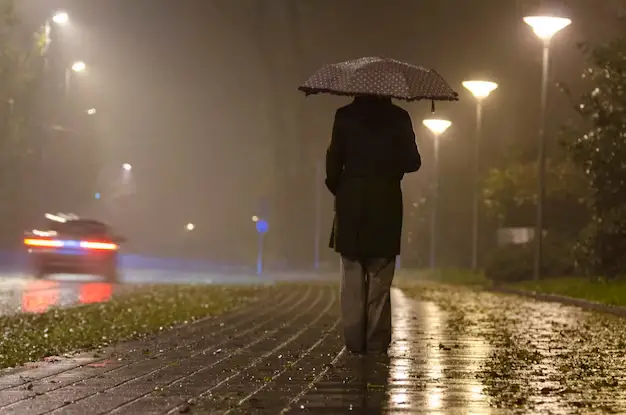
“Mile marker 40. Highway 101. It’s raining and it’s dark and—” Her voice broke into sobs.
“What happened? Where is Julian?”
“He said the car was too small. He said he had to go pick up someone else. A woman, Dad. She was waiting for him at the gas station three miles back. He told me to get out. He told me to catch a taxi in the rain.”
I heard the sound of passing trucks, the hiss of tires on wet asphalt. My daughter was standing on the side of a highway in the middle of the night because her husband had abandoned her.
“He just… he drove away. He didn’t even wait to make sure I was safe. He just left me here.”
I didn’t waste time with words of comfort. Those would come later. “Stay exactly where you are. Don’t move from that spot. I’m sending Marcus by road and a helicopter to the clearing near the ridge. Lock yourself in the emergency call box if there is one. Do not accept rides from anyone.”
“There’s a call box about fifty feet ahead,” she said, her teeth chattering. “I’m so cold, Dad.”
“I know, sweetheart. I’m coming. Marcus will be there in twenty minutes. I’m calling the state police right now.”
“No police,” she said quickly. “Please. I don’t want this to be public. I just want to go home.”
“Sophie—”
“Please, Dad. Just come get me.”
I ended the call and immediately dialed Marcus. He answered on the first ring.
“I’m already on my way,” Marcus said. “I saw the alert. I’m fifteen minutes out.”
“She’s at mile marker 40. Alone. In the rain. I want you to find my daughter, and then I want you to find that son of a bitch and bring me every piece of evidence we have on him.”
“Understood.”
I hung up and dialed Eleanor. “Julian left Sophie on the side of Highway 101. I’m going to the hospital. Meet me there.”
“The hospital?” Eleanor’s voice went sharp. “Is she hurt?”
“I don’t know yet. But she’s been standing in the rain. She’s in shock. I’m not taking any chances.”
I grabbed my coat and headed for the garage. My hands were shaking—not with fear, but with a rage I hadn’t felt in forty years. Not since a competitor had tried to sabotage one of my cargo ships and nearly killed twelve crew members.
This was different. This was my daughter.
As I drove through the rain toward Sterling Memorial Hospital, I kept replaying Sophie’s words: He told me to get out. He just drove away.
The Porsche’s GPS showed Julian heading south, toward the coast. Toward money. Toward whatever life he thought he could build without the weight of a wife who actually knew his worth.
He had made a catastrophic mistake. He thought he was trading up—discarding Sophie for freedom and a sports car he believed was his.
He didn’t understand that the car was never his. The life was never his. And now, the future he’d been planning was about to be repossessed.
Marcus found Sophie twenty-two minutes later. She was huddled inside the emergency call box, soaking wet, shivering so violently she could barely hold her phone. He wrapped her in thermal blankets and carried her to his vehicle.
I met them at the emergency entrance of Sterling Memorial—a wing I had donated five years prior after Eleanor’s mother had received exceptional care there during her final illness.
Sophie stumbled out of the car and into my arms. She smelled of rain and exhaust fumes and fear. Her lips were blue. Her eyes were unfocused.
“I’m so stupid,” she whispered. “I’m so stupid, Dad. You were right about him.”
“You’re not stupid,” I said, holding her so tightly I was afraid I might hurt her. “You’re trusting. And he exploited that. That’s not your fault.”
Eleanor arrived moments later, her face pale but composed. She immediately took charge, speaking to the head nurse, ensuring Sophie was taken to a private room, away from the chaos of the main emergency department.
The doctor, a woman named Dr. Patricia Reeves whom I had known for a decade, stepped out from behind the curtain after the initial examination. Her expression was grim.
“Thomas. Eleanor. Sophie is stable. Mild hypothermia, but nothing life-threatening. We’ve warmed her up and she’s responding well. However—” She paused, glancing at Sophie through the window, then back at us. “—we’ve done the standard blood work. Under the circumstances, we have to be extremely careful with her medication going forward.”
“Why?” I asked.
Dr. Reeves lowered her voice. “Because Sophie is six weeks pregnant.”
The world went silent. The beeping of the monitors, the hushed voices of nurses, the hum of fluorescent lights—it all faded into a dull roar in my ears.
Julian hadn’t just abandoned my daughter on a dark highway to pick up a mistress in a car I had bought him.
He had abandoned his unborn child.
I looked at Eleanor. She wasn’t crying. Eleanor was a woman of ice and strategy, forged in courtrooms where emotion was a liability. She was slowly twisting her emerald wedding ring—a gesture she only made when she was calculating the total destruction of an enemy.
“Does Sophie know?” Eleanor asked quietly.
“Not yet,” Dr. Reeves said. “I wanted to speak with you first. Given the circumstances—the stress, the exposure—we need to monitor her very closely over the next few days. The first trimester is critical.”
I walked to the window and looked at my daughter. She was lying in the hospital bed, staring at the ceiling, one hand resting unconsciously on her stomach. She didn’t know yet that her body was protecting a secret. A life that Julian had put in danger through his cruelty.
“Tell her,” I said. “She deserves to know. But give us a moment with her first.”
Dr. Reeves nodded and slipped away.
Eleanor and I entered the room together. Sophie looked at us with red-rimmed eyes.
“I’m sorry,” she said immediately. “I’m sorry I didn’t listen. I’m sorry I defended him. I’m sorry I—”
“Stop,” Eleanor said gently, sitting on the edge of the bed. “You have nothing to apologize for. You loved someone who didn’t deserve it. That’s not a crime. That’s not a failure. That’s being human.”
“He left me on the side of the road,” Sophie whispered. “Like I was trash. Like I didn’t matter.”
“You matter,” I said, my voice rough. “You matter more than he will ever understand. And he’s going to learn that lesson very, very soon.”
Sophie looked at me with a flicker of fear. “Dad, don’t do anything crazy. I just want to forget he exists.”
“Oh, sweetheart,” Eleanor said, taking her hand. “Your father isn’t going to do anything crazy. He’s going to do something perfectly legal, perfectly calculated, and absolutely devastating.”
I smiled at my wife. After thirty-four years of marriage, we operated like a surgical team. She knew exactly what I was thinking.
“But first,” Eleanor continued, “Dr. Reeves needs to speak with you. There’s something you need to know.”
When Dr. Reeves told Sophie she was pregnant, my daughter’s face went through a dozen emotions in five seconds: shock, fear, disbelief, and then—surprisingly—a fierce, protective determination.
“Is the baby okay?” she asked immediately.
“Right now, yes,” Dr. Reeves said. “But we need to monitor you. The exposure to cold, the stress—it could have complications. We’re going to keep you here overnight for observation.”
Sophie’s hand moved to her stomach again, this time consciously. “He doesn’t know,” she said quietly. “Julian doesn’t know.”
“And he doesn’t need to,” I said.
Sophie looked at me. “What are you going to do, Dad?”
I pulled a chair close to the bed and sat down. “I’m going to give your husband exactly what he wants. Freedom. The car. A chance to start over.”
“I don’t understand.”
“You will,” I said. “But right now, you need to rest. Let us handle Julian. You focus on taking care of yourself—and your baby.”
Sophie’s eyes filled with tears, but she nodded. “Okay.”
Eleanor stayed with her while I stepped out into the hallway. Marcus was waiting, tablet in hand.
“Report,” I said.
“Julian is currently at the Belmont Bay Resort. Presidential suite. He checked in two hours ago with a woman named Chloe Winters. Age twenty-three. Aspiring model. Instagram influencer. Fifteen thousand followers.”
“How did they meet?”
“DMs. She’s been commenting on his posts for three months. Lots of heart emojis. He’s been responding. The messages got progressively more intimate. They arranged to meet tonight.”
“And the Porsche?”
“Parked in valet. He posted a photo of it forty minutes ago. Caption: ‘New chapter. No limits.'”
I felt my jaw clench. “What else?”
“I pulled his financials. He’s been using the corporate credit card you gave him—the one attached to Sterling Holdings—to pay for dinners, hotels, gifts for Chloe. Over thirty thousand dollars in the last month alone.”
“Embezzlement,” I said softly.
“And fraud,” Marcus added. “He’s been selling proprietary information about Sterling Shipping routes to a competitor. Baltic Maritime. We have emails, wire transfers, everything.”
I took the tablet and scrolled through the evidence. It was all there. Julian wasn’t just a bad husband. He was a criminal.
“Beautiful,” I said. “Absolutely beautiful. He’s gift-wrapped his own destruction.”
“What do you want me to do?” Marcus asked.
I handed the tablet back. “For now? Nothing. Let him enjoy his night. Let him think he’s won. Tomorrow, we begin the lesson.”
The first rule of war is to let your enemy believe he is winning.
For the next forty-eight hours, we kept the hospital quiet. No one called Julian. No one answered his texts—vague, gaslighting messages like: Hope you got home okay. I had a business emergency. Don’t be dramatic.
He was emboldened by our silence. He thought we were reeling, or perhaps that Sophie hadn’t told us the full story out of shame. He posted more photos: champagne on the beach, sunset drives in the Porsche, Chloe draped over the hood in a bikini with the caption Life’s too short for anchors.
Sophie saw the posts. I watched her face harden with each one.
“I want to help,” she said from her hospital bed. “Whatever you’re planning, I want to be part of it.”
“You need to rest,” Eleanor said.
“I’ll rest after he pays,” Sophie replied. “Tell me the plan.”
So I did.
On Thursday morning, Eleanor took the lead. She called Julian from her private line. I sat beside her in the hospital room, listening on the speaker.
“Julian, darling,” Eleanor said, her voice honeyed and warm, perfectly masking the venom beneath.
“Eleanor! Hi,” Julian said, sounding slightly breathless. I could hear the roar of the Porsche’s engine in the background. He was driving. Probably with the top down, Chloe beside him, living his fantasy. “I was just about to call. Sophie and I had a little… misunderstanding the other night. I feel terrible.”
“Oh, don’t worry about that, dear. Young love always has its bumps,” Eleanor said, her face a mask of pleasant indifference. She was magnificent. “I’m calling because Thomas and I have been talking. We realized that the Porsche was a bit of a selfish gift. It doesn’t provide for your future.”
Julian slowed the car down. I could hear his interest piquing, the greed practically dripping through the phone. “Oh?”
“We’ve decided to transfer the deed of the North Hill estate into your name. It’s that forty-acre plot with the old winery up in the mountains. We want you and Sophie to have your own legacy. A place to raise a family. But we need to do the paperwork today because Thomas is flying to London tomorrow for business, and the lawyers need both signatures.”
There was a pause. I could almost hear the calculations in Julian’s mind. North Hill was worth fifteen million dollars. Prime real estate. Ocean views. Vineyards that produced award-winning wine.
“Today?” Julian asked, trying to sound casual but failing completely. “I… yes. Absolutely. Where do I go?”
“The estate itself,” Eleanor said. “The surveyor is there now doing the final measurements for the title transfer. Bring the Porsche—the title for the car is actually tied to the land holding for tax reasons. Some legal technicality Thomas’s attorneys insisted on. We’ll sign everything over in one go. Clean break. And Julian?”
“Yes, Eleanor?”
“Bring the car papers. We want this to be a clean transfer from our ownership to yours. A true anniversary gift. No strings.”
“I’ll be there in an hour,” Julian said, his voice thick with barely contained excitement.
He didn’t even ask about Sophie. Not once.
Eleanor ended the call and looked at me. “He took the bait.”
“Of course he did,” I said. “He thinks he’s finally getting what he deserves.”
“He is,” Sophie said from the bed, her voice cold. “Just not the way he expects.”
I signaled Marcus, who was standing by the door in his usual black suit, adjusting his earpiece.
“He’s on his way to North Hill,” I said.
“Estimated arrival ninety minutes,” Marcus confirmed. “And the mistress?”
“Our scouts confirmed Chloe is in the passenger seat. She’s been posting photos of the Porsche’s interior on Instagram for the last hour. Hashtag blessed. Hashtag luxury life.”
“Good,” I said, standing up. “Let her enjoy the leather. It’s the last comfortable seat she’ll ever sit in.”
Sophie smiled—a small, grim smile. “I want to come.”
“No,” I said firmly.
“Dad—”
“You’re six weeks pregnant and you spent last night in the hospital with hypothermia. You’re staying here where it’s safe. You can watch the whole thing on the monitors.”
Marcus pulled out his tablet. “We have six cameras positioned along the route. Audio and visual. You’ll see everything.”
Sophie hesitated, then nodded. “Okay. But I want a recording. All of it.”
“Done,” Marcus said.
Eleanor kissed Sophie’s forehead. “We’ll be back in a few hours. Rest.”
As we left the hospital, I felt a strange calm settle over me. I wasn’t angry anymore. I was focused. Precise. This wasn’t revenge. This was justice.
And justice, when executed properly, was a beautiful thing.
North Hill was the most isolated property we owned. It sat at the end of a six-mile private road that wound through dense forest and ended at a cliffside overlook with views of the Pacific Ocean. It was beautiful, desolate, and—most importantly—completely private.
The property had been in Eleanor’s family for three generations. Her grandfather had built the winery during Prohibition, using it as a cover for more profitable ventures. The main house had burned down in the 1970s and never been rebuilt. All that remained were the stone foundations, the vineyards, and the roads.
It was the perfect place for a lesson in humility.
As Julian sped toward what he thought was a multimillion-dollar windfall, the rain began to fall. A cold, grey October drizzle that turned the mountain roads into slick ribbons of slate.
He was driving into a bottle. And I was about to put the cork in.
I watched Julian’s progress on the tablet in the back of my armored SUV. The GPS dot was moving fast, carving through the switchbacks of the North Hill ascent with the confidence of someone who thought he owned the world.
Marcus was driving, his expression neutral but his eyes sharp in the rearview mirror. Eleanor sat beside me, perfectly still, watching the same screen.
“He’s pushing it,” Marcus observed. “Seventy-five in a fifty zone.”
“He thinks he’s invincible,” Eleanor said. “The car makes him feel powerful.”
“The car is a machine,” I replied. “It doesn’t grant power. It reveals character. And Julian’s character is about to be tested.”
Through the audio feed, we could hear Julian’s voice, loud and cocky over the sound of the engine.
“—telling you, Chloe, this is the big one. Fifteen million in property. I played it perfectly. The old man thinks I’m some kind of saint. Once the deed is in my name, I’ll refinance, pull out the equity, and we’re gone. Monaco. Dubai. Wherever you want.”
Chloe’s voice was high and breathy. “What about Sophie?”
Julian laughed. “What about her? She’ll get the divorce papers, I’ll give her some bullshit about irreconcilable differences, and she’ll cry to daddy. Meanwhile, I’ll be on a yacht.”
“You’re so bad,” Chloe giggled.
“I’m practical,” Julian corrected. “Love doesn’t pay the bills. And I didn’t marry into one of the richest families in America to stay poor.”
Marcus glanced at me in the mirror. “Want me to run him off the road now and save us the trouble?”
I smiled. “Tempting. But no. I want him to see it coming.”
Three miles from the summit, the road narrowed between a sheer rock face and a hundred-foot drop. This was the choke point—the place where the road was barely wide enough for two vehicles.
Julian rounded a blind curve and slammed on the brakes. The Porsche’s tires hissed against the wet asphalt, the ABS system pulsing to keep the car from spinning out of control.
A black Mercedes Sprinter van was parked sideways across the road, completely blocking both lanes.
Julian honged the horn—a sharp, entitled blast. “What the hell?”
He waited. No one moved. No one appeared. Just the van, silent and imposing, water streaming off its roof.
Julian opened his door, stepping out into the rain. His expensive suede loafers immediately soaked up the muddy water pooling on the asphalt.
“Hey!” Julian yelled. “Move the damn van! I have an appointment!”
Behind him, a second black SUV—mine—slid silently into view, blocking his retreat.
Julian turned, his face shifting from anger to confusion, then to a sudden, sharp fear. He recognized the vehicle. He recognized the Sterling crest on the door.
Marcus and three other men stepped out of the van. They were tall, broad-shouldered, and dressed in charcoal overcoats. They didn’t look like surveyors. They looked like an extraction team.
I stepped out of the SUV behind Julian, holding a black umbrella, the silk canopy shielding me from the rain. Eleanor emerged beside me, equally composed.
“Thomas!” Julian said, his voice jumping an octave. “Eleanor! You scared me! I thought… well, the van was blocking the road.”
I didn’t say anything. I just looked at the Porsche. Chloe was still inside, her face pressed against the window, her eyes wide with confusion.
“Get out of the car, Chloe,” Marcus said, opening the passenger door.
“What? No!” Julian protested, stepping forward. “Thomas, what is this? Eleanor said we were signing the deed.”
“There is no deed, Julian,” I said. My voice was low, carried by the wind and rain. “And there is no winery transfer. There is only mile marker 40.”
Julian froze. The color drained from his face so fast it was as if someone had pulled a plug. His mouth opened, closed, opened again.
“I… I can explain that,” he stammered. “Sophie was being hysterical. She wanted to get some air. She insisted on getting out. I was just trying to—”
“Stop,” I said. The word wasn’t loud, but it silenced him instantly. “I’ve heard the recordings, Julian. I’ve heard you tell this girl—” I gestured at Chloe, who was now standing in the rain, shivering in her designer sundress “—how you were going to discard my daughter. I’ve heard you mock the gift I gave you. I’ve heard you plan your escape to Monaco.”
Marcus reached into the Porsche and pulled the keys from the ignition. He then reached into Julian’s jacket pocket and took his smartphone.
“Hey! That’s my phone!” Julian reached for it, but one of Marcus’s men placed a heavy hand on his chest, stopping him cold.
“Everything you are wearing, everything you are driving, and everything you think you own, belongs to me,” I said. “The clothes on your back were a gift from my wife. The watch on your wrist was a wedding present. Even the shoes you’re standing in were paid for by a Sterling credit card.”
I gestured to Marcus.
Marcus unceremoniously dropped Julian’s phone into a puddle and crushed it under the heel of his boot. The screen shattered with a satisfying crunch.
“The Porsche is being repossessed,” I continued. “The suite at the Belmont Bay—your reservation was cancelled ten minutes ago. The villa in the city is being vacated as we speak. Your bank accounts—the joint ones with Sophie—have been frozen and the funds moved to a trust for her care. You have no money. You have no transportation. And as of five minutes ago, you have no job.”
Chloe scrambled out of the car, her high heels slipping on the mud. “Julian? What’s going on? Who is this old man?”
Julian didn’t answer her. He was staring at me, his mouth hanging open, his carefully constructed world crumbling around him like wet paper.
“You can’t do this,” he finally choked out. “I’m her husband! I have rights!”
“You have the right to remain silent,” Marcus quipped. “But I’d suggest you use your breath for walking.”
I looked at the long, dark road back down the mountain. Six miles to the main highway. No lights. No houses. Just mud and rain and the consequences of choices.
“It’s a long walk, Julian,” I said, stepping back toward my SUV. “About the same distance Sophie had to walk before Marcus found her. Except she was alone, terrified, and pregnant. You have Chloe. I’m sure she’ll be very supportive now that you’re a penniless hitchhiker.”
“Thomas! Please!” Julian lunged toward me, but the bodyguards blocked him instantly.
I got into the back seat. Marcus climbed into the driver’s seat of the Porsche. The engine roared to life—that glorious, air-cooled flat-six hum that represented everything Julian had wanted but never deserved.
“Wait!” Chloe shrieked. “My purse! My makeup is in there!”
Marcus tossed a small plastic bag out the window. It contained her lipstick and a compact mirror. “That’s all that belongs to you, lady.”
The Porsche roared to life. Marcus expertly reversed it, turned it around, and sped away down the mountain, the engine note echoing off the rocks. The Sprinter van followed.
I rolled down my window as my SUV began to move.
“One more thing, Julian,” I called out.
He was standing in the middle of the road, drenched, his suede jacket ruined, looking like a drowned rat.
“Don’t bother coming to the house. The locks were changed an hour ago. And if you ever step foot on Sterling property again, I won’t send Marcus. I’ll send the District Attorney with a file on the embezzlement I ‘discovered’ in your office this morning. Corporate fraud carries a seven-year minimum sentence.”
I rolled up the window.
The last thing I saw in the rearview mirror was Julian and Chloe standing in the rain, surrounded by nothing but the dark woods and the consequences of their own choices.
The walk took them four hours.
By the time Julian and Chloe reached the main highway, the rain had turned into a steady, freezing downpour. Julian’s five-thousand-dollar suit was a sodden, shapeless mess clinging to his frame like seaweed. Chloe’s makeup had run down her face in dark streaks, and she had lost a heel two miles back, forcing her to limp in agonizing, barefoot misery.
The “romance” had died somewhere around mile three.
The recordings from the hidden microphones we’d placed along the route—yes, I owned the woods too—were a symphony of bickering, blame, and the slow death of an alliance built on greed.
“You told me they were billionaires!” Chloe had screamed at mile marker two-point-seven. “You told me you were in charge! You told me we were going to Monaco!”
“Shut up, Chloe! I’m trying to think!”
“Think about what? You’re standing in the mud! You’re nobody! I’m leaving you the second I see a car!”
And she did. A long-haul trucker took pity on the shivering girl in the ruined dress at mile marker twelve. She climbed into the cab without even looking back at Julian.
Julian finally hitched a ride in the back of a pickup truck filled with damp hay bales. He arrived at the gates of the Sterling villa in the city at 4:00 AM, soaked, shivering, his teeth chattering so loud the gate camera picked up the sound.
He approached the keypad at the gate and punched in the code with trembling fingers.
BEEP. Red light. Access Denied.
He tried again. BEEP. Red light.
He grabbed the iron bars of the gate and shook them, his voice hoarse from screaming into the wind.
“Sophie! SOPHIE! Let me in! I’m sorry! Please!”
The gate didn’t open. Instead, a small thermal printer built into the intercom pillar whirred to life. A slip of yellow paper spat out into the rain.
Julian grabbed it with shaking hands.
NOTICE OF EVICTION AND SEIZURE Property of Sterling Holdings LLC Unauthorized entry will be prosecuted as criminal trespass Personal belongings of Julian Vance have been relocated to Salvation Army donation center, 4th Street
Julian collapsed against the bars, his legs giving out. He looked through the gates at the driveway.
The Porsche was parked there, gleaming under the security lights, looking as if it had never seen a drop of mud or rain.
“Sophie!” he howled. “Sophie, I’m sorry! Think of the baby! Let me in! I’m freezing!”
The front door of the villa opened.
Julian’s eyes lit up. He thought he’d won. He thought her heart had softened. He scrambled to his feet, pressing his face against the bars.
But it wasn’t Sophie who stepped out onto the porch.
It was me.
I walked down the steps slowly, my coat draped over my shoulders against the pre-dawn chill. I stopped ten feet from the gate, the iron bars between us like the bars of a cage.
“You’re trespassing, Julian,” I said.
“Thomas… please,” he gasped, clutching the bars with white-knuckled hands. “I’m dying. I’m freezing. I made a mistake, I know, but Sophie… she loves me. We’re starting a family. You can’t separate a man from his child. That’s… that’s illegal.”
I looked at him. Truly looked at him. He was a shell. The charm was gone, replaced by a desperate, ugly hunger. The mask had finally slipped completely.
“You have no family here,” I said.
“I have a son! Or a daughter!” Julian yelled, his voice cracking. “I have a right to be there! I’ll take you to court! I’ll tell the press how you’re treating the father of your grandchild! I’ll—”
I pulled a leather folder from my coat pocket. I opened it and held a document up to the security light so he could see it clearly.
“You want to talk about the baby, Julian? Let’s talk.”
Julian’s face went still. He pressed his forehead against the cold iron, his breath creating small clouds of mist. “Is she okay? Is the baby okay?”
I let a long, heavy silence hang in the air. I let the wind howl between us. I let the realization of what he had done at mile marker 40 sink into his bones like the cold rain.
“No, Julian,” I said finally, my voice a tomb. “They aren’t okay.”
Julian’s eyes went wide. His mouth opened. “What… what does that mean?”
“The doctors did everything they could,” I said, letting my voice break just slightly—a practiced, surgical crack. “But the stress… the hypothermia… the hours she spent wandering in the dark because her husband thought a mistress in a sports car was more important than his pregnant wife…”
I let the sentence hang there, unfinished, terrible.
“The baby is gone, Julian.”
Julian’s hands slipped from the bars. He fell back onto the wet pavement as if he’d been shot. His body folded in on itself.
“No… no, no, no.”
“You killed your child, Julian,” I said, my voice rising in cold, righteous fury. “You traded your son or daughter for a car and a girl named Chloe. And now, you have neither.”
“I didn’t mean… I didn’t know it would…” Julian began to sob. Big, ugly, heaving sounds that echoed off the stone walls of the estate.
But he wasn’t crying for the baby. I could tell. He was crying for himself. He was crying because he realized that his “golden ticket”—the one thing that would have forced us to keep him in the family, the one thing that would have guaranteed him access to Sterling money for the next eighteen years—was gone.
The leverage was dead. And with it, his future.
“I have the divorce papers here,” I said, sliding a pen and the leather folder through the gap in the bars. “And I have a non-disclosure agreement. You sign these, you take this check for fifty thousand dollars, and you move to another state. You never speak Sophie’s name again. You never contact this family again. You disappear.”
“Fifty thousand?” Julian looked at the check like it was an insult. “That’s nothing! This estate is worth hundreds of millions! I’m her husband! I have rights to—”
“This estate is worth nothing to a man in prison,” I snapped, cutting him off. “I have the evidence of your corporate credit card fraud. Over forty thousand dollars in unauthorized charges. I have the logs of you selling Sterling trade secrets to Baltic Maritime. Wire transfers, emails, everything. If you don’t sign these papers right now, Marcus is calling the police, and you’ll be in a federal holding cell by sunrise.”
Julian looked at the pen. Then at the check. Then at the dark, empty street behind him. Then back at me.
His hand was shaking so hard the signature was barely legible. But he signed. He signed the divorce papers. He signed the non-disclosure agreement. He signed away his rights to a life he’d never deserved in the first place.
“The baby…” he whispered, looking up one last time, his eyes red and hollow. “Was it… was it a boy or a girl?”
I looked him dead in the eye.
“It doesn’t matter, Julian. You’ll never know.”
I took the folder back through the bars. I watched him stand up, clutching the fifty-thousand-dollar check—a pittance, a mere tip in the world he had tried to infiltrate and failed to conquer.
He turned and limped away into the darkness, a broken, muddy man with a heavy conscience and a very, very small bank account.
I watched him until he was gone, swallowed by the pre-dawn shadows.
Then I turned and walked back into the house.
I didn’t go to my study. I went upstairs, to the sun-drenched nursery Eleanor and I had begun to build in secret.
Eleanor was there, sitting in a rocking chair, her reading glasses perched on her nose. Sophie was asleep in the adjacent bedroom, her hand resting protectively over her stomach.
“Is it done?” Eleanor asked quietly.
“He’s gone,” I said. “He signed everything. He thinks he’s a child-killer. He’ll never come back. He’s too afraid of the ghost he thinks he created.”
Eleanor nodded slowly. “It was a necessary lie, Thomas. To protect them both.”
“I know,” I said.
I sat on the edge of the rocking chair and looked through the doorway at my daughter. She didn’t know about the lie yet. She didn’t know that we had convinced her husband the baby was gone. We would tell her eventually—when she was stronger, when Julian was a distant, bad memory, when the divorce was final and he was three states away living under the weight of imaginary guilt.
We would tell her that we had bought her peace and safety with a carefully constructed deception.
I stood up and walked to Sophie’s room. I sat carefully on the edge of her bed. Her breathing was deep and even. Peaceful.
I reached out and placed my hand gently over hers, over the small life that was still very much alive, still growing, still pulsing with a strong, stubborn heartbeat.
Julian Vance thought he was a player in a high-stakes game.
He didn’t realize that when you play against a father protecting his child, the rules don’t exist.
The house always wins.
One Year Later
The California sun was warm on my back as I stood on the terrace of the Sterling vineyard—not North Hill, but the southern estate where Eleanor and I had been married thirty-five years ago.
Below, on the manicured lawn, a white blanket was spread out under an oak tree.
Sophie was sitting there, looking radiant in a yellow sundress, her hair pulled back in a loose braid. The shadows under her eyes were gone, replaced by a light that had taken months to rekindle but now burned steady and bright.
And in her arms was Leo.
He was six months old, with his mother’s bright green eyes and a laugh that sounded like pure joy. He was currently trying to eat a wooden toy car—a little red Porsche I had bought him as a joke that only Sophie and Eleanor appreciated.
“He’s getting fast, Dad!” Sophie called out, laughing as Leo rolled over onto his stomach and began army-crawling toward a butterfly. “You better watch out. He’ll be running the company by the time he’s ten.”
“He’s a Sterling,” I said, walking down the stone steps to join them on the grass. “He’ll be running the world by twelve.”
I sat down on the blanket, watching my grandson. He was healthy. He was safe. He was surrounded by a fortress of love that Julian Vance could never breach, could never even imagine.
Julian was a ghost now. My private investigators—who had tracked him as a matter of prudence—reported that he was living in a studio apartment outside Columbus, Ohio, working as a used car salesman under a manager who didn’t know or care about his past. He was a heavy drinker, haunted by the “tragedy” he thought he’d caused, too terrified to search for Sophie online, too broken to rebuild.
The lie had been our greatest investment. It had purchased a lifetime of security for Leo.
“Dad?” Sophie asked, looking at me with an expression I couldn’t quite read. “Do you ever regret it? Giving him that car? The vintage Porsche?”
I looked up toward the garage, where the 1973 Porsche 911 sat in climate-controlled perfection, its engine maintained monthly, its history both terrible and instructive.
“No,” I said, reaching out to ruffle Leo’s soft hair. “That car was the best teacher I ever hired. It showed us exactly who Julian was before it was too late. Before you were bound to him in ways that couldn’t be undone.”
“I used to think that car was a trophy,” Sophie said quietly, bouncing Leo on her knee. “But I realize now it was a test. And he failed spectacularly.”
“It was a shield,” Eleanor said, emerging from the house with a tray of lemonade. “It protected you by revealing the truth.”
Leo grabbed my thumb with his tiny, surprisingly strong hand. He squeezed it, his eyes locked on mine with a startling clarity that reminded me of Sophie at that age.
“Does he know?” Sophie asked suddenly. “Julian. Does he know that Leo is alive?”
“No,” I said firmly. “And he never will. As far as Julian Vance is concerned, his child died because of his choices. And that weight will keep him a thousand miles away for the rest of his life.”
Sophie nodded slowly. “Good. Leo deserves better than a father who would abandon him on a highway.”
“Leo has a father,” Eleanor said, sitting beside Sophie. “He has a grandfather who would move heaven and earth to protect him. And that’s more than enough.”
I looked at my daughter. I looked at my grandson. I looked at the life we had built from the wreckage of Julian’s betrayal.
I had repossessed the car. I had repossessed the house. I had repossessed the future that Julian tried to steal.
And as Leo laughed, reaching for the sun with chubby hands, I knew that every decision—every calculated move, every necessary lie—had been worth it.
The debt was settled.
The test was complete.
And the Sterling family was whole again.
THE END

Lila Hart is a dedicated Digital Archivist and Research Specialist with a keen eye for preserving and curating meaningful content. At TheArchivists, she specializes in organizing and managing digital archives, ensuring that valuable stories and historical moments are accessible for generations to come.
Lila earned her degree in History and Archival Studies from the University of Edinburgh, where she cultivated her passion for documenting the past and preserving cultural heritage. Her expertise lies in combining traditional archival techniques with modern digital tools, allowing her to create comprehensive and engaging collections that resonate with audiences worldwide.
At TheArchivists, Lila is known for her meticulous attention to detail and her ability to uncover hidden gems within extensive archives. Her work is praised for its depth, authenticity, and contribution to the preservation of knowledge in the digital age.
Driven by a commitment to preserving stories that matter, Lila is passionate about exploring the intersection of history and technology. Her goal is to ensure that every piece of content she handles reflects the richness of human experiences and remains a source of inspiration for years to come.