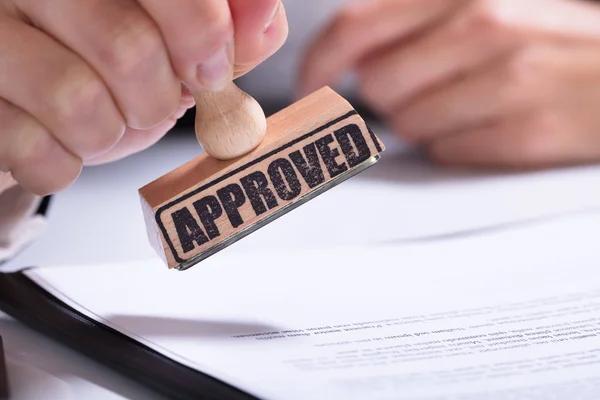
My Parents Slid a “Family Emergency” Folder Across the Dinner Table and Said, “Just Approve It”
The invitation came via text on a Tuesday afternoon while I was reviewing loan default patterns at my desk. Not a call. Not a conversation. Just eight words that should have set off every alarm I’d spent my adult life learning to hear.
“Dinner Thursday. 7pm. Important family matter.”
My name is Emory Castillo, and I should’ve known a dinner invite from my parents was never about food.
In our house—and I use that word loosely, because a house suggests warmth and the Charlotte estate where I grew up had all the emotional temperature of a quarterly earnings call—everything had a price tag. Attention, affection, even silence. Especially silence. My parents had built an empire on knowing what things cost and how to extract maximum value from every transaction, including the ones that involved their own children.
I stared at that text for longer than I should have, my coffee going cold in its corporate-branded mug, the fluorescent lights humming their endless mechanical prayer above me. My colleague Derek walked past with a stack of compliance reports and gave me the look—the one that said “you okay?” without actually asking, because in our line of work you learned to read people’s faces before they said anything stupid enough to get themselves in trouble.
“Fine,” I told him, which was the lie we all used when we meant the opposite.
I should have declined. Should have texted back something polite and distant. “Can’t make it, work emergency” or “Let’s reschedule for next month” or literally anything that would’ve kept me away from that house and whatever they were planning.
But I didn’t.
Because despite everything—despite the cold precision of my childhood, despite the way my mother treated maternal affection like a limited resource to be rationed and my father treated his children like mid-level employees he couldn’t quite fire—there was still some pathetic part of me that thought maybe this time would be different. Maybe this time they actually wanted to see me. Maybe this time the “important family matter” was just dinner.
I pulled up to the Charlotte estate at exactly 7:00 p.m. on Thursday, because being late in that driveway felt like stepping into a trap with your eyes closed.
The house sat back from the road behind iron gates and old-growth trees that had been there longer than the money. It was the kind of property that whispered wealth rather than shouted it—brick and ivy and windows that reflected the evening sky like dark water. The circular drive was empty except for my father’s Mercedes and my mother’s Range Rover, which told me this wasn’t a party or a gathering. This was targeted. Specific.
This was about me.
I parked my six-year-old Civic next to vehicles worth more than my annual salary and felt that old familiar thing settle into my chest—not quite shame, not quite inadequacy, but something in that family. The feeling that I’d never quite measured up to the standards of people who measured everything.
Inside, the air was cool and carried that expensive smell of furniture polish and fresh flowers that someone else had arranged. The foyer was exactly as I remembered it—marble floors that clicked under your shoes like a countdown, a chandelier that cost more than most people’s cars, family portraits in heavy frames that documented generations of Castillos looking vaguely disappointed.
“Emory. Punctual as always.”
My mother appeared from the direction of the living room, dressed like she was expecting a photographer from Architectural Digest. Cream silk blouse, tailored pants, pearls that had belonged to someone important three generations back. Her hair was perfect. Her makeup was perfect. Her smile was the kind that didn’t involve her eyes.
“Hi, Mom.”
“Your father’s in the dining room. We should get started.”
No “how are you,” no “good to see you,” no “thanks for coming.” Just straight to business, which I suppose was honest in a way that most families weren’t.
The dining room was spotless and empty—no plates, no candles, no pretense that we were actually going to eat anything together. Just a crystal pitcher of water sweating onto a silver tray and a thick manila folder placed at the head of the table in front of my father’s seat like a legal brief.
Sterling Castillo sat in his usual chair wearing his usual expression—the one that suggested he was three moves ahead of everyone else in the room and mildly bored by their inability to keep up. He was in his early sixties but looked younger, the way wealthy men do when they have personal trainers and dermatologists and the kind of healthcare that keeps you preserved like expensive wine.
“Sit,” he said, voice smooth as glass, gesturing to the chair directly across from him.
Not “hello, sweetheart.” Not “thanks for coming on short notice.” Just a command that assumed compliance.
I sat.
My mother took the chair to my father’s right, her hands folded on the table like she was about to lead a board meeting. Which, I was starting to realize, was exactly what this was.
“We need you to sign off on a verification for tomorrow morning,” she said, like she was asking me to pass the salt. “It’s routine. Just a formality for the estate reorganization we’re doing. Your signature as a family member provides an additional layer of validation for the bank.”
I work in risk compliance for a mid-sized financial institution. I review loan applications and flag suspicious patterns for a living. I know what money looks like when it’s moving legally and what it looks like when someone’s trying to make it look legal.
And “routine” is the word people use when they want you to stop looking closely.
I reached for the folder. My father slid it across the polished wood with two fingers, like he was moving a chess piece.
The first page was dense with legal language—the kind of prose designed to obscure meaning rather than clarify it. But I’d been reading these documents for years, and I knew how to find the bones underneath the meat.
Estate consolidation. Asset verification. Future income projections. Restructured holdings.
I flipped to the second page. Then the third. My pulse started to change—not panic yet, just that professional alertness that kicks in when the numbers don’t match reality.
They were describing assets as if they already existed. Listing properties as current holdings when I knew they were only under contract. Treating projected income from investments that hadn’t closed yet as present-day cash flow. Using my grandfather’s trust—the one he’d set up before he died, the one with my name on it—as collateral for a restructuring plan that would essentially allow them to borrow against it.
It wasn’t sloppy. It was bold.
It was also, if I understood correctly, potentially fraudulent.
“You want me to verify this,” I said quietly, still reading.
“We want you to sign it,” my mother corrected. “The language is already approved by our attorneys. We just need family confirmation.”
“This document says I’m affirming that these assets currently exist and are liquid.”
“They will be,” my father said. “The timeline is simply compressed for banking purposes.”
“That’s not how verification works.”
“It’s how it works when you understand the bigger picture,” he said, and there was an edge to it now, that subtle shift from cordial to controlling. “The bank needs assurance. We provide it. The deals close. Everyone benefits.”
“Including me?”
“Especially you. When this reorganization is complete, your position in the family portfolio increases substantially. You’ll have access to resources you can’t currently imagine.”
I looked down at the signature line. My name was already typed there, just waiting for me to make it real.
“And if I don’t sign?”
The temperature in the room dropped so fast I could feel it on my skin.
My mother’s mouth tightened into a line that could cut glass. My father leaned forward slightly, and when he spoke his voice had that quality it got when he was addressing an employee who’d disappointed him—not angry, just coldly factual.
“Emory, you’re a smart girl. Smart enough to understand that family loyalty isn’t optional. It’s the foundation of everything we’ve built. Your grandfather understood that. Your brother understands that.”
“Evan signed already?”
“Of course he did. Without hesitation.”
Of course he did. Evan had always been better at the family game—better at smiling when he was supposed to, agreeing when it benefited him, playing the role of dutiful son while somehow maintaining his own autonomy. I’d never figured out how he did it.
“This isn’t loyalty,” I said, keeping my voice level. “This is fraud.”
My father’s expression didn’t change, but something behind his eyes went arctic.
“That’s a very serious accusation to make about your own parents.”
“It’s a very serious document you’re asking me to sign.”
“We’re asking you to trust us. To be part of this family. To understand that sometimes the technical details matter less than the outcome.”
I closed the folder and pushed it back across the table, the sound of paper on wood unnaturally loud in the silent room.
“No.”
That single syllable hung in the air like smoke.
My mother recovered first, her voice taking on that sweet-poisonous tone she used when she was about to say something cruel and wanted it to sound like concern.
“Darling, I think you’re overreacting. You’re tired from work. Why don’t you take the folder home, sleep on it, and we can talk tomorrow when you’re thinking more clearly—”
“I’m thinking clearly now. The answer is no.”
My father stood up. Not quickly—Sterling Castillo never did anything quickly—but with the kind of deliberate movement that suggested he’d just made a decision and was now implementing it.
“If you walk out that door without helping,” he said, each word precisely placed, “don’t come back.”
The silence that followed was so complete I could hear the ice melting in the water pitcher.
“You’re serious,” I said, though it wasn’t really a question.
“I’ve never been anything else.”
I looked at my mother. She met my eyes with an expression I’d seen a thousand times before—the one that said “this is your own fault” without having to speak the words aloud.
I stood up anyway. The chair legs scraped against the floor like an alarm going off in a building everyone else had already evacuated.
“Goodbye, then.”
I walked to the front door with my heart hammering against my ribs, half-expecting one of them to call me back, to say they were testing me or this had all been some elaborate exercise in… something. Character building. Family dynamics. Whatever rationalization wealthy people used when they played games with their children’s lives.
No one called me back.
I stepped out into the night—cool air, smell of jasmine from the garden, distant sound of traffic from the main road—and froze.
My suitcase sat on the top step, packed and waiting.
Not the overnight bag I’d brought with me. My actual suitcase. The large one from my apartment. The one I kept in my bedroom closet.
They’d gone to my apartment. They’d used the spare key I’d given them years ago “for emergencies.” They’d packed my things—not all of them, just enough to make a point—and brought them here.
Like they’d rehearsed this scene without me.
Like they’d known exactly how I would respond and had prepared accordingly.
The door shut behind me. I heard the deadbolt slide into place with a sound like a vault closing. Final. Absolute.
I stood there for what felt like an hour but was probably thirty seconds, trying to process the reality that my parents had just disowned me with the same cold efficiency they brought to business dealings.
Then I reached for my phone to call Mara, my best friend from college who lived twenty minutes away and would let me crash while I figured out what to do next.
The phone lit up. I pulled up her contact. Hit dial.
A robotic message answered before the call could even connect: “This device has been deactivated by the primary account holder.”
My phone. My phone that my father had insisted on adding to the family plan three years ago because it was “more efficient” and “better rates” and I’d been stupid enough to think it was a generous gesture rather than a control mechanism.
Gone.
I drove to the nearest gas station on pure instinct, my hands shaking slightly on the wheel, my mind racing through scenarios and backup plans and the growing realization that I’d been naive about exactly how much of my life was connected to my parents’ infrastructure.
The gas station was one of those 24-hour places that sold lottery tickets and energy drinks and served as a waystation for people passing through on their way to somewhere better. Fluorescent lights. Cracked pavement. A clerk behind bulletproof glass who looked like he’d seen everything and was unimpressed by all of it.
I tried the ATM first. Slid my debit card into the slot and waited for the menu to appear.
The machine made a grinding noise. Then it swallowed my card completely.
“Card retained due to account status,” the screen informed me in cheerful blue letters.
I walked to the counter and tried my credit card, buying a bottle of water I didn’t want just to test whether it would work.
Declined.
The clerk handed me back the card without comment, his expression suggesting this wasn’t even the strangest thing that had happened to him that shift.
I sat in my car in that gas station parking lot while trucks roared past on the highway and tried to take inventory of my situation.
No phone. No credit cards. No access to my bank account. No apartment to go back to—not safely, not if my parents had a key and the willingness to use it.
In less than an hour, they’d cut every easy thing I relied on. Like erasing me was just another line item on a spreadsheet.
Then my car’s screen lit up with a notification from my work email—the one I’d set up to sync automatically because I was conscientious about my job, because I wanted to be responsive, because I’d built my entire identity around being competent and reliable.
Subject line: URGENT – Mandatory Meeting Tomorrow 9 AM
Body text: “Ms. Castillo, you are required to attend an emergency disciplinary hearing regarding a conflict of interest complaint filed this evening. Failure to attend will result in immediate suspension pending investigation.”
I read it three times, my vision blurring slightly at the edges.
Of course.
Of course they hadn’t just thrown me out. They were trying to poison the ground behind me so I couldn’t stand anywhere else. A “conflict of interest” complaint at a financial institution where I worked in compliance was basically a career death sentence, even if it turned out to be baseless. The investigation alone would tank my credibility.
They weren’t just cutting me off. They were burning every bridge I might use to escape.
I slept on Mara’s couch that night—or tried to sleep, anyway—with my coat still on because I couldn’t quite convince my body that I was safe. My throat was raw from not crying, from swallowing back every emotion that wanted to break through and acknowledg that my parents had just erased me with the casual cruelty of people canceling a subscription service.
Mara had answered the door in her pajamas, taken one look at my face, and pulled me inside without asking questions. She’d made tea I didn’t drink and offered blankets I didn’t use and eventually just sat with me in the dark living room while I stared at her ceiling and tried to figure out what came next.
At dawn, I found myself going through my suitcase—the one my parents had packed—looking for… I don’t know what. Evidence? Explanations? Some sign that this was all a misunderstanding?
That’s when I found it, tucked into the inner pocket where I kept things I didn’t want to lose.
My grandfather’s card.
Not a credit card or a debit card—just a small rectangle of scuffed silver metal with a number embossed on one side and a logo I didn’t recognize on the other. He’d pressed it into my palm three years ago when he was dying, his hospital room full of machines that beeped and hummed and couldn’t save him.
“For when the wolves come,” he’d whispered, his grip surprisingly strong for someone so close to the end. “Don’t let Sterling know you have this. Don’t tell your mother. When you need it—and you will need it, Emory, I’m sorry to say—take it to Summit Heritage Trust. They’ll know what to do.”
I’d tucked it away and mostly forgotten about it, filed under “grandfather’s paranoia” or “old man’s dramatic gesture.” He’d always been protective of me in a way that confused my parents, always insisted on private conversations and cryptic warnings about trusting the wrong people.
Now, sitting on Mara’s couch at six in the morning with my entire life in a suitcase and a disciplinary hearing in three hours, his paranoia was starting to look like prophecy.
I turned the card over in my hands. It was heavier than it looked, and the number wasn’t like any account number I’d seen before—too short, too simple, like it was designed to be memorable rather than secure.
Summit Heritage Trust.
I’d never heard of it. I pulled up Mara’s laptop and searched.
One result. A single website with minimal information. A Charlotte address in the financial district. No phone number. No hours listed. Just: “Private wealth management by appointment only.”
I looked at the card again. At my suitcase. At the email on my phone about the disciplinary hearing that would destroy my career before it even started.
The wolves had definitely come.
So I drove to a building with no big sign and no teller line, my wrinkled blazer from yesterday doing its best to make me look professional despite the fact that I’d slept in my car and my eyes were swollen from the crying I’d finally allowed myself in the predawn darkness.
Summit Heritage Trust occupied the fourth floor of a building that looked like it had been there since before ATMs were invented. The lobby was all dark wood and brass fixtures and a quiet that felt intentional—the kind of silence wealthy people pay for.
A security guard in the lobby directed me to the elevators without asking my business. The fourth floor had a single door with a brass plate and no other identifying information.
I walked up to a mahogany counter where a young man in an expensive suit sat behind a computer screen. He was maybe twenty-five, with the kind of grooming that suggested he made more than I did and knew it.
I slid the silver card across the counter.
His face emptied of color like someone had pulled a plug.
He didn’t touch the card. Didn’t pick it up to examine it. Just stared at it like it might explode, then reached for his phone with a hand that trembled slightly.
He whispered one word I couldn’t hear.
A minute later—maybe less—a door opened and a man appeared. Older, sixty-something, with silver hair and the kind of controlled expression that comes from years of handling other people’s secrets. He wore a suit that probably cost what I made in a month and moved with the careful precision of someone who knew exactly how much power he held.
“Ms. Castillo,” he said, and my last name in his mouth sounded different somehow—weighted, significant, like he’d been expecting me. “I’m Richard Pemberton, branch manager. We should do this in private.”
He already knew my name. I hadn’t introduced myself.
He led me down a quiet hallway past closed doors with brass nameplates, into a corner office with windows that overlooked the city. The door clicked shut behind us with a sound that suggested soundproofing and secrets.
“Please, sit.”
I sat in a leather chair that probably cost more than my car. Richard Pemberton took the seat across from me—not behind his desk, but in the other guest chair, like we were equals having a conversation rather than a bank manager and a woman who’d showed up in yesterday’s clothes.
“I need to verify your identity,” he said gently. “Driver’s license, please.”
I handed it over. He examined it, made notes on a tablet, then produced a small fingerprint scanner.
“Left index finger, please.”
I pressed my finger to the glass. It beeped.
Then he turned a small keypad toward me—the kind you see on hotel safes or security systems.
“The access code, please. Six digits.”
Six digits. The number my grandfather had made me memorize three years ago when his hands were cold and his breath was shallow and he was using the last of his strength to give me something I didn’t understand.
I typed: 0-8-2-7-5-3.
My birthday. August twenty-seventh, 1953. Backwards. Because my grandfather had always been paranoid about security and sentimental about family in ways my parents never were.
The terminal whirred. Lights blinked. The screen filled with text too small to read from where I was sitting.
Richard Pemberton stared at it. Then he looked up at me like he didn’t know whether to stand or kneel, and his voice came out thin and careful.
“Ms. Castillo… the total value of the trust in your name is approximately $1.2 billion.”
The office was very quiet.
Somewhere in the building, phones were probably ringing. People were probably having normal conversations about normal amounts of money. The city outside was waking up to traffic and coffee and ordinary problems.
But in that corner office, the world had just tilted sideways.
“I’m sorry,” I said, because my brain hadn’t caught up to my ears. “How much?”
“One point two billion dollars.” He paused. “Your grandfather established this trust thirty years ago. It’s been managed very conservatively, primarily in treasury bonds, blue-chip stocks, and commercial real estate. The growth has been… substantial.”
“My grandfather died with nothing,” I said, which was what my parents had told me. “He lost everything in bad investments.”
“Your grandfather,” Richard said carefully, “was one of the wealthiest men in North Carolina. He simply chose not to advertise that fact. Especially not to his son.”
The pieces started falling into place. My grandfather’s warnings. His insistence on private conversations. His paranoia about my father that I’d dismissed as old family grudges.
He’d known.
He’d known what my parents were, what they would do, and he’d built a lifeboat I couldn’t access until I needed it most.
“The trust is irrevocable,” Richard continued. “Your parents have no access, no knowledge of its existence, and no legal claim to any portion of it. Your grandfather made that very clear in the documentation.”
I sat there in that leather chair with my wrinkled blazer and my swollen eyes and my life in a suitcase, and started laughing.
Not hysterical laughter. Not relief. Just the dark, slightly unhinged sound of someone realizing that the wolves had come for the wrong person.
THE END

Adrian Hawthorne is a celebrated author and dedicated archivist who finds inspiration in the hidden stories of the past. Educated at Oxford, he now works at the National Archives, where preserving history fuels his evocative writing. Balancing archival precision with creative storytelling, Adrian founded the Hawthorne Institute of Literary Arts to mentor emerging writers and honor the timeless art of narrative.