The Empty Chairs
At my husband’s funeral, no one came but me.
The sanctuary was nearly empty that Tuesday afternoon, save for the pastor, the funeral director hovering near the back, and myself in the front row. Five chairs had been arranged for family. Four of them remained conspicuously vacant throughout the entire service.
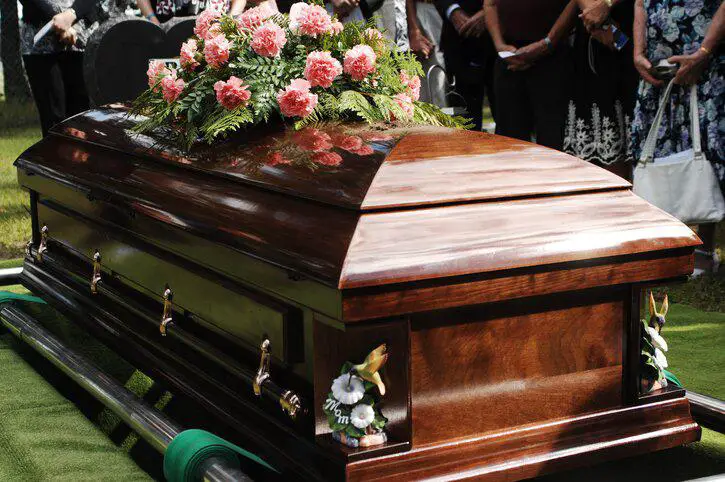
I kept my hands folded in my lap, my back straight, my eyes fixed on the mahogany casket at the front of the room. I did not cry. I did not turn around to see if anyone might still arrive late. I simply sat there, listening to words about a man I’d spent fifty-two years beside, spoken to a room that should have been full of the people we’d raised, the grandchildren we’d loved, the family we’d built our entire lives around.
The absence was louder than any eulogy.
My name is May Holloway. I am seventy-eight years old, and for more than fifty of those years, I defined myself by the people I took care of before I ever learned who I might have been on my own.
I was twenty-three when I married Richard. He was handsome in that dependable way—steady income, reliable car, the kind of man mothers approved of and fathers trusted. We bought a small house with a mortgage that felt enormous at the time. We planted tomatoes in the backyard and talked about the future in the careful, hopeful way young people do when they believe planning is the same as controlling fate.
Our son Peter arrived two years later, screaming his way into the world during a thunderstorm that knocked out the hospital’s power for twenty minutes. Celia followed three years after that, quieter but more demanding in ways that took longer to understand.
I gave up my teaching credential before I’d ever really used it. Richard’s job required long hours and frequent travel, and someone needed to be home. That someone was always me. I told myself it was temporary, that I’d go back to work when the children were older, when things settled down.
Things never settled down.
Instead, I became the person everyone needed me to be. I was the mother who volunteered for every field trip, the wife who hosted every holiday dinner, the grandmother who babysat on weekends, the emergency contact on every form, the first call in every crisis.
I worked part-time at the local library, shelving books and helping patrons find stories that might transport them somewhere beyond their ordinary lives. I envied those fictional characters sometimes—their clean narrative arcs, their resolution, their ability to simply end when the story was told.
At home, I clipped coupons at the kitchen table every Sunday morning, organizing them in a small accordion folder Richard had bought me one Christmas. I learned to stretch a single rotisserie chicken across three different meals. I made casseroles that could feed more people than the recipe intended. I knew which grocery stores had the best sales on which days, and I planned our meals around discounts and manager’s specials.
We weren’t poor, not exactly. But we were careful. Richard worked in middle management at a manufacturing plant, and his salary was respectable but not generous. We saved where we could because we knew our children would need things—many things, expensive things, urgent things.
And they did.
Over the decades, I paid for school field trips and yearbooks, prom dresses and rented tuxedos, car insurance deductibles and emergency room copays, braces that Peter needed twice because he refused to wear his retainer, summer camps and sports equipment and college application fees and dorm room furniture and security deposits on first apartments.
I wrote checks and made transfers and handed over cash in envelopes, sometimes with warnings about being more careful, but more often with just a kiss on the forehead and assurance that we’d manage somehow.
When Peter got engaged to Amanda, they wanted a wedding that was supposed to be “small and intimate” but somehow required a waterfront venue, a lobster dinner, and a string quartet. The budget they showed me was absurd, but Amanda cried about her dream day, and Peter looked at me with those same eyes he’d had as a boy when he wanted something desperately.
I wrote a check for fifteen thousand dollars—nearly a third of our savings at the time. I told Richard we’d skip our planned anniversary trip to the coast, that we’d cut back on other things, that we’d be fine.
He’d looked at me across the kitchen table that night and said quietly, “You give them too much, May.”
“They’re our children,” I’d answered, as if that explained everything. As if that justified anything.
When Celia called three years ago, crying about a leaking roof “right over the baby’s crib,” I didn’t hesitate. I wired nearly eight thousand dollars within the hour, pulling it from the retirement account we’d been building for thirty years. Richard was already sick by then, though we didn’t know how sick yet. The treatments would come later, and the bills, and the realization that our careful planning had somehow never been quite enough.
But Celia’s baby needed a dry room to sleep in. Peter’s kids needed new school clothes. Amanda’s car needed repairs she couldn’t afford. There was always something, always someone, always a reason why right now was the exception, why this time was different, why just this once we needed to help.
Every time, I heard the same words, delivered with genuine feeling, with tears or relieved laughter or tight hugs that smelled like my children’s shampoo.
“You always save us, Mom.”
“We don’t know what we’d do without you.”
“You’re the best. Seriously. The absolute best.”
I believed that meant something. I believed that all the giving would add up to something more than just empty bank accounts and postponed dreams. I believed in a kind of karmic accounting where sacrifice earned devotion, where love given would be love returned, where being needed was the same as being valued.
I believed that when the time came—when I needed them—they would be there.
Three weeks ago, on a gray Tuesday morning that felt too ordinary for what it held, I sat alone in the front row of Riverside Methodist Church as my husband was laid to rest.
Richard had died on a Sunday evening, quietly and without drama, his hand in mine as he took a last shallow breath and then simply stopped. We’d known it was coming. The cancer had made sure of that, eating away at him for fourteen months, giving us time to say everything we needed to say and also far too much time to sit with the knowing.
I’d called Peter first. He was in Seattle for work, or maybe Portland—I could never keep track of his travel schedule. He’d answered on the fourth ring, voice distracted.
“Mom? What’s up? I’m kind of in the middle of something.”
“Your father died an hour ago,” I’d said. My voice had sounded strange to my own ears, flat and factual.
There’d been a pause, then a sharp intake of breath. “Oh God. Mom. I’m so sorry. I—when’s the funeral? I’ll have to check flights and see what I can move around. This week is really insane, but I’ll figure something out.”
I’d given him the details. Tuesday afternoon. Riverside Methodist. Small service.
“Tuesday,” he’d repeated. “Okay. Let me talk to Amanda and see what we can do.”
That was Sunday evening.
Monday morning, I’d called Celia. She’d answered while clearly doing something else—I could hear her car radio in the background, the click of her turn signal.
“Hey Mom, what’s going on? I’m literally pulling into the nail salon right now.”
“Your father passed away last night,” I’d said.
More silence. Then: “Oh. Oh no. Mom, are you okay? That’s—I mean, we knew it was coming, but still. God. When’s the funeral?”
“Tomorrow afternoon. Tuesday. Two o’clock.”
“Tomorrow? That’s so fast. Mom, I don’t think I can cancel my appointment, and then I have Maddie’s dance recital rehearsal, and Tyler has a dentist thing. Can you maybe do it next week? Or I could come visit Dad next week and we could have like a private family thing?”
I’d stood in my kitchen, phone pressed to my ear, staring at the calendar on the refrigerator where I’d marked Richard’s doctor appointments in blue ink for over a year.
“Dead men don’t get next week, Celia,” I’d said quietly.
“Mom, that’s not—look, I’m here. I have to go. We’ll figure it out, okay? I love you.”
The line had gone dead.
Tuesday morning arrived with weak sunlight and temperatures too mild for November. I dressed in the black dress I’d bought for Richard’s sister’s funeral five years earlier. I did my makeup carefully, the way I always had for important occasions—foundation to even out the age spots, powder to set it, a subtle lipstick in mauve.
I looked at myself in the bathroom mirror and saw a woman who’d become somehow both familiar and strange. When had I gotten so old? When had the lines around my mouth deepened into permanent creases? When had my hands started to look like my grandmother’s?
My phone buzzed on the counter.
Peter: Sorry mom something came up can’t make it
No punctuation. No capitalization. Seven words to summarize his presence at his father’s funeral.
I stared at the message until the screen went dark, then slipped the phone into my purse and went downstairs.
Celia never sent anything at all.
The service was brief because there was no one there to make it longer. Pastor Williams spoke kindly about Richard, drawing from our conversations over the past weeks rather than from any crowd of mourners eager to share memories. He talked about Richard’s dedication to his family, his steady work ethic, his quiet faith.
I nodded along, hands folded, back straight.
The funeral director checked his watch twice.
When it was over, I walked alone behind the coffin as they wheeled it out to the hearse. The wind tugged at my coat and pulled at the hem of my dress. The sky was white with high clouds that looked like gauze stretched thin.
At the cemetery, I stood beside the grave as they lowered Richard into the earth. There were no flowers from our children. No grandchildren asking innocent questions about where Grandpa was going. No arms around my shoulders, no hands holding mine.
Just me, and the workers waiting at a respectful distance, and the sound of wind through the leafless trees.
I thanked Pastor Williams. I thanked the funeral director. I got into my car and drove home to a house that felt too large and too quiet and somehow unbearably loud in its emptiness.
Richard’s slippers were still beside the recliner, the left one tucked under at an angle the way he always left it. The remote control sat on the armrest, pointed toward the television that hadn’t been turned on in three days. His reading glasses were on the end table, folded next to a library book about World War II that he’d never finished.
I walked through rooms full of the debris of a shared life—photographs on walls, accumulated furniture, kitchen gadgets we’d bought together, wedding gifts we’d kept for fifty-two years.
And I felt nothing.
No, that’s not quite right. I felt something, but it was so unfamiliar that it took me hours to identify it.
I felt clear.
That night, I opened a bottle of wine I’d been saving “for company”—a phrase that suddenly seemed absurd, as if company was something that actually arrived in this house, as if people came and visited and celebrated with me rather than just calling when they needed something.
I poured myself a glass, then another. I sat at the kitchen table where I’d clipped so many coupons and paid so many bills and written so many checks.
And then I opened my phone.
I don’t know what I expected to find. Condolences, perhaps. Messages of sympathy. Some acknowledgment that today had been significant.
Instead, I found Celia’s Instagram story from two hours before the funeral.
The image was bright and cheerful—Celia and two friends at a restaurant with floor-to-ceiling windows, mimosas and pastries arranged artfully on the table. Everyone was smiling. Celia’s caption read: Living our best lives! Bottomless brunch with my favorite people! #blessed #momlife #treatyourself
I stared at it until my vision blurred.
Then I found Peter’s Facebook post, timestamped at 1:47 PM—thirteen minutes before his father’s funeral began.
The photo showed a sunlit golf course, green grass, blue sky, Peter with his arm around a colleague’s shoulders, both of them holding golf clubs. The caption: Perfect weather. Great deals. Closed two contracts before noon and still made the back nine. This is what winning looks like. #hustle #golflife #businessdevelopment
I set the phone down very carefully on the table.
I finished my wine.
And then I stood up, walked to the hallway cabinet where we kept important documents, and pulled out the folder labeled ESTATE in Richard’s careful handwriting.
Inside was the will Richard and I had prepared together five years ago, updated three years ago, reviewed annually with our attorney who always reminded us how important it was to keep these things current.
The house—split evenly between Peter and Celia.
The lake cabin we’d bought thirty years ago as an investment and family gathering place—split evenly between Peter and Celia.
The investment account we’d built over decades of sacrifice, forty-three years of automatic transfers and modest growth and careful reinvestment—$287,000 at last count—split evenly between Peter and Celia.
Our children, who couldn’t spare two hours to say goodbye to their father, stood to inherit everything we’d built.
I read through the documents twice, then three times. I looked at our signatures at the bottom—Richard’s bold and confident, mine smaller and neater, both of us signing away our life’s work to people who’d proven, definitively and without ambiguity, exactly how much we mattered to them.
My hands were shaking, but not from age or grief or exhaustion.
They were shaking with clarity.
The next morning, I called our attorney’s office before I’d even had breakfast.
“Harold Winters’s office, this is Diane.”
“Diane, this is May Holloway. I need to see Harold as soon as possible. Today, if he has time.”
There was a pause, the sound of clicking keys. “Mrs. Holloway, I’m so sorry for your loss. We heard about Richard. Let me check Harold’s calendar. He has an opening at eleven. Would that work?”
“That would be perfect.”
I sat across from Harold Winters at exactly eleven o’clock as autumn sunlight filtered through the blinds in his office. He was seventy-one, semiretired, with kind eyes behind wire-rimmed glasses. He’d handled our wills, our house purchase, Peter’s adoption paperwork when Richard officially adopted him after we married.
He looked at me with the particular gentleness people reserve for fresh widows.
“May, I’m so very sorry about Richard. He was a good man.”
“He was,” I agreed. “Thank you.”
“What can I do for you today?”
I folded my hands in my lap—the same gesture I’d held through the entire funeral—and felt fifty-two years of giving, of bending, of sacrificing, finally settling into my bones with immovable weight.
“I buried my husband alone yesterday, Harold,” I said. My voice was steady. “Our children chose not to be there. Peter sent a text message with no punctuation while he was on a golf course. Celia didn’t contact me at all. She posted photographs of brunch on social media during the funeral.”
Harold’s expression shifted from sympathy to something else—recognition, perhaps. Or understanding.
“I see,” he said quietly.
“I would like to make some changes to my will,” I continued. “Permanent ones.”
“What kind of changes are you considering?”
I opened the folder I’d brought with me and removed the documents inside—the will, the beneficiary forms, the property deeds.
“I want to remove Peter and Celia as beneficiaries. Completely. I want to retitle the house and cabin in my name only. I want to redirect all assets upon my death to charitable organizations of my choosing.”
Harold leaned back in his chair, studying me. “May, I need to ask you some questions. This is a significant decision, and I want to make sure you’ve thought it through carefully.”
“I’ve thought of nothing else since yesterday afternoon.”
“Are you angry right now?”
“Yes,” I said. “But not the way you mean. I’m not acting impulsively out of rage. I’m angry the way you get angry when you finally admit something you’ve been denying for years. I’m angry at myself for waiting this long.”
Harold nodded slowly. “Tell me what happened. Not just yesterday. Everything.”
So I did.
I told him about the fifteen thousand for Peter’s wedding. The eight thousand for Celia’s roof. The countless smaller amounts—the “loans” that were never repaid, the emergencies that only I could solve, the bills I covered, the gaps I filled.
I told him about Richard’s illness, about the calls I’d made to both children explaining that their father was dying, asking them to visit, to call, to send cards, to acknowledge that this was happening.
Peter had visited twice in fourteen months. Both times he’d stayed less than an hour, fidgeting with his phone, talking about work stress, leaving because he had calls to take or meetings to prepare for.
Celia had come once, brought her children for thirty minutes, then left because Maddie was “getting bored” and Tyler was “acting up.”
I told Harold about the silence—the weeks that would go by without contact unless they needed something. The unreturned voicemails. The text messages I’d send asking how everyone was, responded to days later with “good!” or “busy!” or not at all.
And I told him about the funeral, about the empty chairs, about standing alone beside my husband’s grave while our children performed their lives on social media for strangers who cared more than their own family did.
When I finished, Harold was quiet for a long moment.
“What would you like your legacy to be, May?”
The question surprised me. “I’m not sure I understand.”
“Your estate—it represents your life’s work. Yours and Richard’s. When you’re gone, what do you want that work to support? What matters to you?”
I thought about the library where I’d worked for so many years, about the children who’d come in every week for story time, about the adults who’d sought refuge in books and computers and the quiet kindness of a place that asked nothing of them.
I thought about the women’s shelter across town, where I’d volunteered making care packages, where I’d seen women rebuilding lives from nothing.
I thought about the hospice workers who’d cared for Richard with such dignity, who’d taught me how to keep someone comfortable in their final days.
“I want to support places that help people who have nothing,” I said. “I want to fund the library’s literacy program. I want to endow the hospice center. I want to contribute to the women’s shelter and the food bank and the organizations that help people who actually need help—not people who could help themselves but find it easier to take from their elderly mother.”
Harold picked up a legal pad and began taking notes.
“All right,” he said. “Let’s build something that reflects that.”
We spent two hours in his office. Harold asked questions; I provided answers. He explained tax implications; I listened carefully. He walked me through the process of retitling property, of updating beneficiary designations, of creating a new will that would stand up to any potential challenges.
“I need to tell you,” Harold said finally, “that Peter and Celia could contest this. They might argue you weren’t of sound mind, that you were unduly influenced, that this isn’t what you really wanted.”
“Let them try,” I said. “I’m seventy-eight, Harold, not demented. I’m grieving, but I’m not impaired. And I’m absolutely certain this is what I want.”
“They’re going to be very upset when they find out.”
“I imagine they will be.”
“Do you want to tell them yourself, or would you prefer they find out after you’re gone?”
I considered this. “I’ll tell them. They should know. They should understand that actions have consequences, even when it’s your mother you’re taking for granted.”
Harold nodded. “Then let’s make sure everything is documented perfectly. If they contest it, I want there to be no question about your capacity or your intentions.”
It took three weeks to finalize everything. Harold was thorough, building a case file that documented not just my wishes but my reasoning, my mental clarity, my understanding of what I was doing.
I had a psychiatric evaluation done voluntarily—Dr. Chen, a psychiatrist I’d never met, spent two hours with me asking questions, giving tests, evaluating my cognitive function. Her report concluded that I was “cognitively intact, mentally competent, and demonstrating clear understanding of complex financial and legal matters.”
I appreciated her clinical language. It felt like armor.
Harold also suggested I document everything—the financial support I’d given over the years, the attempts at contact, the pattern of neglect. I spent several evenings going through old bank statements, check registers, text messages, emails.
The evidence was overwhelming. Fifty-three thousand dollars in direct financial support over the past decade, not counting smaller amounts. Seventeen unreturned calls in the six months before Richard’s death. Forty-three text messages sent, twelve answered.
And two empty chairs at a funeral.
On a Wednesday afternoon exactly one month after Richard died, I invited Peter and Celia to the house for what I described as “an estate discussion.”
Peter arrived first, driving his new Tesla—electric blue, purchased eight months ago with a loan I’d cosigned when his credit wasn’t quite good enough on its own. He was forty-nine, successful in pharmaceutical sales, divorced from Amanda but dating someone he’d described as “amazing, Mom, you’d love her” but whom I’d never met.
He hugged me in the doorway, the kind of brief squeeze that fulfilled the obligation without requiring much contact.
“How are you holding up?” he asked, already looking past me into the house, probably calculating its value, thinking about equity.
“I’m managing,” I said.
Celia arrived ten minutes later, her SUV parked carelessly across part of the driveway. She was forty-six, worked part-time in real estate, married to Derek who worked in finance and rarely spoke at family gatherings. She had two children, Maddie and Tyler, whom I saw perhaps twice a year despite living thirty minutes away.
She hugged me longer than Peter had, adding an extra squeeze that might have seemed affectionate to someone who didn’t know better.
“You look tired, Mom. Are you sleeping okay?”
“Well enough.”
I led them both to the dining room table where Harold was already waiting, his briefcase open, documents arranged neatly in front of him.
Peter’s expression shifted when he saw the attorney. “What’s this about?”
“Sit down, please,” I said.
They sat. I remained standing at the head of the table—Richard’s place, where he’d sat for fifty-two years of family dinners.
“I asked you here because I need to tell you about some changes I’ve made,” I began. “Harold has helped me revise my estate plan.”
Celia smiled, the kind of indulgent smile you give someone you think is being unnecessarily formal. “Okay, Mom. That makes sense. Probably smart to update things now that Dad’s gone.”
“Yes,” I agreed. “That’s exactly what I thought.”
Harold cleared his throat. “May has made substantial revisions to her will and has retitled several assets. She asked me to be here to help explain the legal aspects, but the decisions are entirely hers.”
Peter leaned forward. “What kind of revisions?”
I folded my hands—that familiar gesture—and looked at my children directly.
“I’ve removed both of you as beneficiaries of my estate. The house, the cabin, and all financial assets will be directed to charitable organizations upon my death. You will inherit nothing.”
The silence that followed was profound.
Celia laughed, a short nervous sound. “What? Mom, that’s not funny.”
“I’m not joking.”
Peter’s face had gone red. “You can’t be serious.”
“I’m completely serious. Harold has all the documentation. Everything is legal and properly executed.”
“Why?” Celia’s voice had risen into a register I recognized from her teenage years, the pitch of genuine distress. “Mom, what are you talking about? Why would you do this?”
I sat down then, across from them, and for the first time in my life as their mother, I didn’t soften my words or cushion the blow.
“One month ago, I buried your father alone,” I said quietly. “Neither of you came. Peter, you sent a text message with no punctuation while you were on a golf course closing business deals. Celia, you posted photographs of brunch on Instagram during your father’s funeral service.”
“Mom, I explained about the brunch—” Celia started.
I held up one hand. She stopped.
“I’m not finished. For fourteen months, your father was dying. Slowly, painfully, losing pieces of himself week by week. I called you both repeatedly asking you to visit. Peter, you came twice, stayed less than an hour each time. Celia, you came once and left after thirty minutes because your children were restless.”
“We have lives, Mom,” Peter said, his voice hard. “We have responsibilities. Jobs. Kids. We can’t just drop everything.”
“No,” I agreed. “You can’t drop everything. But you could have dropped something. Anything. You could have chosen your dying father over a golf game. You could have chosen his funeral over bottomless brunch. You could have chosen to answer one of my calls, to visit for more than an hour, to acknowledge that your family was in crisis.”
“This is about the funeral?” Celia’s eyes were wet. “Mom, I explained about that. It was terrible timing. I had commitments—”
“Your father’s funeral was terrible timing?” I heard my voice rise for the first time. “Your father died exactly once, Celia. He had exactly one funeral. And you had a nail appointment.”
Tears were running down her face now. “You’re punishing us for one mistake?”
“No,” I said. “I’m responding to a pattern that’s been clear for years. I’m looking at fifty-three thousand dollars I’ve given you both over the past decade, and I’m looking at seventeen unreturned phone calls in the six months before your father died, and I’m looking at those empty chairs at his funeral, and I’m making a decision about what my life’s work will support.”
Peter stood up, his chair scraping loud against the floor. “This is bullshit. You’re our mother. You’re supposed to help us. That’s what parents do.”
“And what do children do, Peter? What do children owe their elderly parents who sacrificed everything to raise them?”
“We don’t owe you anything for doing what you signed up for when you had kids!”
The words hung in the air like smoke.
Harold shifted in his seat. I placed a hand on his arm to indicate I was fine.
“You’re right,” I said to Peter. “You don’t owe me anything for your childhood. I chose to have children. I chose to raise you, to care for you, to give you the best life I could. That was my job as a parent, and I did it.”
I stood then, meeting his eyes.
“But you’re not children anymore. You’re forty-nine and forty-six years old. And when I needed you—not financially, not for anything but your presence, your time, your acknowledgment that I was going through the hardest experience of my life—you chose golf and brunch and nail appointments. You chose everything and everyone except me.”
“So this is revenge?” Peter’s face was twisted with anger. “This is you getting back at us?”
“No,” I said. “This is me choosing where my resources go. This is me deciding that organizations that help people who have nothing are more deserving than people who have everything but take their mother for granted. This is me realizing that love and money are not the same thing, and giving you one doesn’t obligate me to give you the other.”
Celia was sobbing now, her hands covering her face. “Mom, please. Don’t do this. We’re sorry. We’re so sorry. We’ll do better. We’ll visit more. We’ll call. We’ll—”
“No,” I said. “I don’t want apologies motivated by money. I don’t want a relationship built on fear of disinheritance. If you can’t choose me because you love me, then I don’t want you to choose me at all.”
Peter grabbed his coat. “Fine. You want to give everything to charity? Go ahead. But don’t expect us to play happy family anymore. Don’t expect us to visit or call or pretend we’re okay with this.”
“I don’t expect anything anymore,” I said. “That’s the point.”
He stormed out. The door slammed hard enough to rattle the windows.
Celia lingered, her face red and wet. “Mom. Please. Think about the kids. Maddie and Tyler. They’re your grandchildren.”
“I love Maddie and Tyler,” I said. “But they’re not responsible for your choices, and they’re not a shield you can hide behind. If you want them to have a relationship with me, you’re welcome to bring them to visit. But that’s separate from this.”
“This is cruel,” she whispered.
“Cruelty would be lying to you. Cruelty would be pretending everything is fine when it isn’t. This is honesty, Celia. This is me finally telling you the truth about how it feels to be taken for granted by your own children.”
She left without another word.
That was three months ago.
I haven’t heard from Peter since. He’s blocked my number and unfriended me on social media. I see photographs of him sometimes through mutual friends—he’s still successful, still dating the woman I’ve never met, still living his life exactly as he was before.
Celia has texted twice. Short messages: Still so hurt by this, Mom. and When you’re ready to apologize, let me know.
I haven’t responded.
The house is quiet now in a different way than it was after Richard died. Then, it was the silence of absence, of loss, of one voice gone from a conversation.
Now, it’s the silence of clarity. Of decision. Of finally choosing myself.
I’ve started volunteering more at the library, leading a book group for seniors on Wednesday mornings. I’ve joined a community chorus—something I’ve wanted to do for forty years but never had time for. I’m taking a watercolor class at the community center, learning to paint landscapes that are probably terrible but are mine.
I’ve made friends with Margaret, a widow who lives three houses down and who’s been inviting me to dinner for years while I was always too busy caring for Richard. We have coffee every Tuesday and complain about our aching knees and laugh about things our grandchildren do and don’t.
I’ve traveled—just once so far, a weeklong trip to Charleston I’ve wanted to take since I was thirty. I walked the Battery, toured the gardens, ate she-crab soup and shrimp and grits. I went alone and didn’t feel lonely even once.
Harold tells me the documents are ironclad. If Peter or Celia contest the will after I’m gone, they’ll lose. He’s documented everything—my competency, my reasoning, their neglect. It’s all there in black and white, irrefutable.
But I don’t think they’ll contest it. I think they’ll be angry, bitter perhaps. They’ll tell people I was a difficult woman, an ungrateful mother, someone who punished her children for having their own lives.
And maybe they’re right. Maybe I am difficult. Maybe expecting your children to show up at their father’s funeral is asking too much in this modern world where everyone is busy and overwhelmed and doing their best.
Or maybe—just maybe—I’m finally understanding my own worth.
Maybe I’m finally realizing that sacrifice doesn’t entitle you to be taken for granted, that giving doesn’t mean you have to give everything, that being a mother doesn’t mean ceasing to be a person with your own needs and dignity and value.
The money I’ve redirected will fund the library’s literacy program for ten years. It will support the hospice center’s expansion. It will help women escaping violence rebuild their lives. It will feed families who don’t have enough, shelter people who have nowhere to go, provide care for people who have no one.
It will do actual good in the world instead of padding bank accounts of people who already have everything they need except the character to appreciate it.
And when I’m gone—whenever that day comes—I’ll rest knowing that my life’s work went to something that mattered. Not to people who saw me as a resource to be tapped, but to causes that help those who have nothing.
If you’ve ever wondered what happens when quiet loyalty finally runs out, when a mother who gave everything finally asks what she’s gotten in return, when love without reciprocity reaches its breaking point—this is it.
This is what it looks like when someone chooses themselves for the first time.
It’s quiet. It’s clear. And it’s mine.
THE END

Adrian Hawthorne is a celebrated author and dedicated archivist who finds inspiration in the hidden stories of the past. Educated at Oxford, he now works at the National Archives, where preserving history fuels his evocative writing. Balancing archival precision with creative storytelling, Adrian founded the Hawthorne Institute of Literary Arts to mentor emerging writers and honor the timeless art of narrative.