“I Was Already Sick When You Left.” Two Months After Our Divorce, I Ran Into My Ex-Wife Sitting Alone in a Hospital Hallway—and That One Sentence Made Me Realize I Walked Away at the Worst Possible Moment.
Two months after we signed the divorce papers, I never expected to see her again. Especially not in a place that smelled like antiseptic and exhaustion, where fluorescent lights hummed overhead and every face looked like it was waiting for news they were afraid to hear.
And yet there she was.
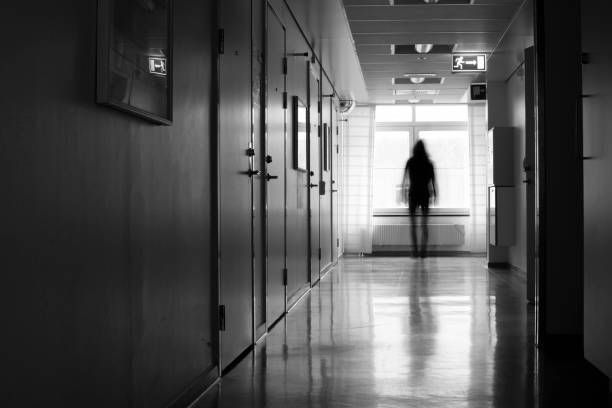
She sat quietly at the end of a hospital corridor in Northern California, wrapped in a thin hospital gown over street clothes, hands folded tightly in her lap as if trying to make herself as small and invisible as possible. An IV stand stood beside her like a silent companion, the tube disappearing under the sleeve of her gown.
At first, I honestly thought I was mistaken.
The woman sitting there didn’t look like the person I used to come home to—the one who hummed while cooking dinner, who fell asleep on the couch with a book on her chest, who remembered small details about my day even when I’d forgotten them myself. This woman looked diminished somehow, like a photograph left too long in sunlight, the colors slowly fading.
But then she looked up, and our eyes met across the hallway.
And I knew.
Her name is Serena.
My name is Adrian. I’m thirty-five years old. And until that moment, standing frozen in a hospital hallway on a Thursday afternoon, I believed the divorce was already the hardest consequence of my choices.
I was wrong.
We were married for almost six years.
We met when I was twenty-six, both of us working for the same tech company in Sacramento—me in software development, her in project management. We met in the break room during a fire drill, both of us annoyed at the interruption, both trying not to smile at how ridiculous it felt to stand in a parking lot at 2 PM on a Tuesday pretending there was an emergency.
“This is the most excitement I’ve had all week,” she said, and I laughed.
Three months later, we had our first date. Six months after that, I knew I wanted to marry her. A year later, I did.
Our wedding was small—just family and close friends at a botanical garden, followed by dinner at a restaurant we could barely afford but didn’t care because we were too happy to notice. Serena wore a simple white dress she’d found on sale, and when I saw her walking toward me, I felt like the luckiest man alive.
We lived a quiet life. Nothing glamorous, nothing dramatic. Just routines and inside jokes and the comfortable rhythm that develops between two people who genuinely like each other. Grocery shopping on Saturday mornings. Movie nights where we’d argue good-naturedly about what to watch. The way she’d steal the blankets in her sleep and I’d wake up freezing but couldn’t bring myself to wake her.
Serena was never demanding. She didn’t ask for much. She had this calm, steady presence that made life feel manageable, like no matter what happened, we’d figure it out together.
For a long time, I thought that kind of peace would last forever.
We talked about the future—kids, buying a house with a yard, getting a dog, growing old together on a porch somewhere, watching grandchildren play. We made plans the way young couples do, with the naive confidence that life would cooperate with our dreams.
Then reality intervened.
Serena got pregnant the first time when we’d been married three years. We were overjoyed, terrified, excited—all the emotions you’re supposed to feel. We told our families. We started looking at cribs online. We painted the spare bedroom a soft yellow that worked for either gender.
At twelve weeks, during what was supposed to be a routine checkup, the ultrasound tech went silent. Too silent. Then she left to get the doctor, and Serena grabbed my hand so tight I could feel her pulse through her fingertips.
“There’s no heartbeat,” the doctor said, her voice professionally gentle. “I’m very sorry.”
The D&C procedure happened two days later. Serena was quiet and composed through all of it, answering medical questions, filling out forms, nodding at the doctor’s explanations. It wasn’t until we got home that she broke down, collapsing on our bed and sobbing in a way that frightened me because I didn’t know how to stop it.
“It’s okay,” I kept saying, holding her, feeling completely helpless. “We’ll try again. It’s going to be okay.”
But I didn’t know that. Nobody did.
We tried again fourteen months later. This time we didn’t tell anyone. Didn’t paint the room. Didn’t look at cribs. We were superstitious now, afraid to jinx it, afraid to hope too much.
Serena made it to fifteen weeks before it happened again.
This time there was no dramatic moment in the doctor’s office. She started bleeding at home, on a Sunday morning, and by the time we got to the hospital, it was already over.
“Sometimes these things just happen,” the doctor said, which is what doctors say when they don’t have better answers. “There’s no reason to think you can’t carry to term in the future.”
But standing in that hospital room, watching Serena stare at the wall with empty eyes, I felt something fundamental shift between us.
After the second miscarriage, Serena changed.
Not in dramatic ways. Not in the kind of obvious breakdown that people recognize and know how to respond to. She still went to work. Still made dinner. Still smiled when appropriate.
But the light behind her eyes dimmed. Her laughter became rare and forced. She stopped making plans for the future, stopped talking about someday having kids, stopped humming while she cooked.
She became quieter. More distant. Like part of her had retreated to some place I couldn’t reach, some internal sanctuary where she could be safe from more disappointment.
And instead of stepping closer, instead of fighting to reach her, I stepped back.
I started working later. Taking on extra projects. Volunteering for assignments that required travel. I told myself I was giving her space, that she needed time to heal, that my presence was probably making things worse because I didn’t know what to say or how to fix what was broken.
But the truth—the truth I can admit now but couldn’t then—was that I was running away. Running from her grief, from my own helplessness, from the future we’d planned that was crumbling around us.
When we were together, the silences stretched longer. Conversations became surface-level exchanges about schedules and bills. We stopped touching except in the most perfunctory ways. We slept in the same bed but miles apart.
When we argued—which wasn’t often, because that would require energy neither of us had—it was the tired kind of fighting that comes from people who are worn down and running out of hope.
“You’re never here,” she said once, her voice flat.
“I’m trying to give you space,” I replied.
“I don’t need space, Adrian. I need my husband.”
But I didn’t know how to be what she needed. I didn’t know how to fix grief or carry hope for both of us. So I kept retreating, kept making excuses, kept convincing myself that distance was kindness.
One night, six months after the second miscarriage, we were sitting at the dinner table in silence. Not angry silence. Just empty silence. The kind that fills a house when two people have run out of words.
I looked at her across the table—this woman I’d promised to love through everything—and felt only exhaustion. Exhaustion and guilt and a desperate need to escape the weight of our shared sadness.
“Maybe we should separate,” I said.
The words came out before I’d fully thought them through, but once they were in the air, I couldn’t take them back.
Serena looked at me for a long moment, her expression unreadable.
“You’ve already decided, haven’t you?” she asked quietly.
I nodded. Because I had. Somewhere in the past months of retreat and avoidance, I’d already left the marriage. I just hadn’t made it official yet.
She didn’t cry. Didn’t shout. Didn’t beg me to reconsider. She just stood up from the table, walked to our bedroom, and started packing.
She moved out that same night, staying with a friend while we figured out the details. The divorce was quick, clean, almost emotionless. We divided our modest assets. Signed the papers. Shook hands like business associates concluding a transaction.
“I hope you find what you’re looking for,” she said at the final hearing, and I couldn’t tell if she meant it kindly or sarcastically.
I told myself it was the mature thing to do. That sometimes people grow apart. That moving on was healthier than staying in something broken. That we’d both be happier apart.
I dated other people. Threw myself into work. Convinced myself I’d made the right choice.
Standing in that hospital hallway two months later, seeing Serena small and sick and alone, I understood with devastating clarity how wrong I had been.
She looked smaller somehow. Fragile in a way that had nothing to do with her actual size. Her hair was cut short—not stylishly short, but practical short, the kind of cut that suggests medical necessity rather than fashion. Her skin had a grayish pallor that made the fluorescent lights seem even harsher. Her shoulders were hunched forward like she was carrying something too heavy to put down.
I walked toward her slowly, my heart hammering, my mind racing with questions I didn’t know if I had the right to ask.
“Serena?” I said, stopping a few feet away.
She looked up, and for a moment, I saw surprise flicker across her face. Then something else—resignation, maybe. Or just exhaustion.
“Adrian,” she said, her voice hoarse. “What are you doing here?”
“My coworker had surgery. I was visiting him. What are you—” I gestured vaguely at the hospital around us, at the IV stand, at her obvious patient status. “What’s wrong?”
She was quiet for a long moment, studying me with those eyes that used to know me better than I knew myself.
Then she said the words I will never forget:
“I was already sick when you left.”
The world seemed to tilt.
“What?” I managed.
“I was already sick,” she repeated, her voice steady but soft. “Before the divorce. Before you said we should separate. I was already sick, Adrian. I just didn’t know it yet.”
I felt my knees weaken. I sat down hard in the chair next to her, not caring about permission or boundaries or whether I had any right to be there.
“What do you mean?” I asked, though part of me already knew, already understood the terrible truth taking shape between us.
Serena took a slow breath, her hand unconsciously moving to her abdomen.
“Remember how tired I was all the time? How I kept losing weight even though I was eating? How I had those stomach pains that kept getting worse?”
I did remember. Vaguely. Distantly. The way you remember background noise you’ve learned to tune out.
“I thought it was depression,” I said quietly. “From the miscarriages.”
“So did I,” she said. “So did everyone. My doctor put me on antidepressants. My therapist said grief manifests physically. Everyone kept telling me it was normal to feel exhausted after what we’d been through.”
“But it wasn’t.”
“No.” She shook her head. “It wasn’t depression. It was cancer.”
The word hung in the air between us like something solid, something you could touch.
“What kind?” I asked, my voice barely working.
“Ovarian,” she said. “Stage three. They found it about three weeks after you moved out. I’d finally gone to a different doctor because the pain was getting unbearable. She ordered tests, and…” Serena gestured vaguely at herself, at the IV, at the hospital surrounding us. “Here I am.”
I felt like I’d been punched in the stomach. “Three weeks after I left?”
“Yeah.”
“Jesus, Serena. Why didn’t you tell me?”
She looked at me with an expression I couldn’t quite read. “Tell you what, exactly? That your ex-wife you’d just divorced had cancer? That you’d walked away right before everything fell apart? What would that have accomplished except making you feel guilty?”
“I should have known,” I said. “I should have seen—”
“How could you have seen?” she interrupted, her voice sharp for the first time. “I didn’t see it. The doctors didn’t see it. Everyone thought it was grief and depression. You’re not a mind reader, Adrian. And you’d already made your choice.”
We sat in silence for a moment, the weight of two months of separation and all the years before it pressing down on us.
“How bad is it?” I finally asked.
“Bad,” she said simply. “But not hopeless. I’ve been doing chemo for six weeks now. Today was supposed to be an outpatient infusion, but I had a reaction to one of the drugs, so they’re keeping me for observation.” She smiled tiredly. “Just another day in paradise.”
“Are you—” I struggled to find the right words. “Do you have people helping you? Your sister? Your mom?”
Something flickered across her face. Pain, maybe.
“My mom tries, but she’s in Arizona and can’t travel much anymore. Her hip surgery complications. My sister’s pregnant with her third kid and dealing with her own stuff. I have friends, but…” She trailed off. “Everyone has their own lives, you know? Can’t expect people to drop everything for months of treatment.”
“So you’re doing this alone.”
She didn’t answer, which was answer enough.
I stayed with her in that hallway for three hours.
At first, we didn’t talk much. Just sat there in the uncomfortable plastic chairs while nurses walked past and machines beeped in nearby rooms and the hospital went about its business of saving people and losing them.
But gradually, we started talking. Really talking, in a way we hadn’t in the final year of our marriage.
She told me about the diagnosis—how she’d gone to that doctor appointment expecting to be told she needed therapy or different antidepressants, and instead got the results of an ultrasound that showed a mass on her ovary. How they’d rushed her into surgery the following week to remove the tumor and stage the cancer. How she’d woken up from anesthesia to hear “stage three” and felt the ground drop out from under her.
“The worst part,” she said, her voice quiet, “was waking up alone. I mean, my friend Rachel was there, and she was great. But I woke up after cancer surgery without my husband, and that’s when it really hit me that my marriage was over. That I was going to fight this thing alone.”
“I’m so sorry,” I said, the words painfully inadequate.
“I know you are,” she said. “But sorry doesn’t change what happened.”
She told me about the chemo—how the first round had knocked her on her ass for two weeks, how she’d lost her hair within a month, how food tasted like metal and exhaustion felt like a permanent condition.
“I had to quit my job,” she said. “Couldn’t keep up with the schedule and the treatments. So now I’m living off short-term disability and savings and trying not to think about what happens when those run out.”
“Jesus, Serena. Let me help. Please. Let me pay for—”
“No,” she said firmly. “That’s not why I’m telling you this. I’m not asking for money or pity or anything else. You asked what was wrong, and I’m telling you. That’s all.”
We were quiet for a while after that.
Then she asked, “Are you happy?”
The question caught me off guard. “What?”
“Are you happy?” she repeated. “Is your life better without me in it?”
I thought about the past two months. The empty apartment I’d moved into. The dates that went nowhere. The way I’d thrown myself into work to avoid thinking about what I’d lost. The nights I’d lie awake wondering if I’d made a mistake but telling myself it was too late to undo.
“No,” I admitted. “I’m not happy.”
“Good,” she said, and there was no malice in it. Just exhaustion. “I’d hate to think I was the only one suffering.”
A nurse appeared then, a young woman with kind eyes and efficient movements.
“Mrs. Chen, we have a room ready for you now. Let’s get you settled.”
Serena stood slowly, gripping the IV pole for support. I stood too, unsure what to do with my hands or my presence or the guilt crushing my chest.
“Wait,” I said. “Can I—I’d like to help. However you need. Rides to appointments or groceries or just… whatever. Please.”
She looked at me for a long moment.
“Why?” she asked. “Why now?”
“Because you shouldn’t have to do this alone,” I said. “Because I was your husband for six years and I failed you when you needed me most, and maybe I can’t fix that, but I can at least try to be there now.”
“You’re not my husband anymore,” she said quietly.
“I know. But I still care about you. I never stopped caring.”
“You left,” she said, her voice cracking for the first time. “I was sick and scared and falling apart, and you left me, Adrian. You left me when I needed you most, even if neither of us knew why I needed you then.”
“I know,” I said, tears burning my eyes. “And I will regret that for the rest of my life. But please. Let me try to make it right.”
She studied my face, and I could see her weighing it—whether to trust me again, whether to let me back into her life even peripherally, whether my help would be worth the risk of more disappointment.
“Okay,” she finally said. “You can drive me home when they discharge me tomorrow. But that’s all I’m promising.”
“That’s enough,” I said. “Thank you.”
The nurse led her away down the corridor, the IV pole wheels squeaking softly on the linoleum. Serena didn’t look back.
I stood there for a long time after she disappeared, trying to process everything that had just happened.
Then I pulled out my phone and called my therapist.
“I need to move my appointment to this week,” I said when she answered. “Something happened. Something I need to talk through.”
“Of course,” she said. “How about tomorrow morning?”
“Perfect.”
I picked Serena up from the hospital at noon the next day.
She looked exhausted, moving slowly, her skin still that grayish pallor that spoke of illness and treatment. But she was dressed in regular clothes now—jeans and a soft sweater—and she’d put on a beanie that covered her hair loss.
“Thanks for coming,” she said as she settled into my passenger seat.
“Of course.”
We drove in silence for a while. Her apartment was in Midtown, a small one-bedroom in an older building. When I pulled up, I started to get out to help her, but she stopped me.
“I can manage,” she said. “But thank you.”
“Can I call you?” I asked. “To check in?”
She hesitated, then nodded. “Okay. But Adrian? Don’t make promises you can’t keep. If you’re going to be in my life, even just as someone who gives rides sometimes, you have to actually show up. I can’t handle any more people who say they’ll be there and then disappear when it gets hard.”
“I’ll be there,” I said. “I promise.”
“We’ll see,” she said, and got out of the car.
That was four months ago.
In the time since, I’ve learned what it means to actually show up for someone.
I drove Serena to her chemo appointments every two weeks, sitting in the infusion room with her for hours while poison dripped into her veins to kill the cancer trying to kill her. I brought her groceries when she was too weak to shop. I cleaned her apartment when she didn’t have the energy. I held the bucket when she got sick and rubbed her back and told her she was doing great even when she cursed me and told me to leave.
I learned the names of her medications. I memorized her oncologist’s phone number. I sat in waiting rooms reading magazines I didn’t care about while she had scans and tests and procedures with names I couldn’t pronounce.
I also learned about the woman I’d married and divorced without really knowing.
I learned that she was funnier than I’d realized, with a dark sense of humor about her situation that sometimes shocked me. (“At least I’m losing weight,” she’d joke after throwing up. “Cancer: the diet no one recommends!”)
I learned that she was stronger than I’d given her credit for, facing each treatment with a grim determination that inspired me even as it broke my heart.
I learned about her fears—not just of dying, but of dying alone, of being forgotten, of all this suffering being for nothing.
And I learned about my own failures. How I’d seen her grief after the miscarriages and called it distance instead of pain. How I’d interpreted her exhaustion as emotional withdrawal rather than physical illness. How I’d left when things got hard instead of fighting to stay.
My therapist helped me understand something important: I couldn’t change the past, but I could choose what I did with the present.
“You left when she needed you,” my therapist said during one session. “That’s a fact. You can’t undo it. But you can choose to show up now, for however long she’ll let you, and that matters too.”
So I showed up. Every appointment, every call, every crisis. I showed up.
Serena’s treatment plan was aggressive: six rounds of chemotherapy, followed by maintenance therapy if the tumors responded well. Each round knocked her down harder, but the scans showed progress. The tumors were shrinking.
“You’re responding beautifully to treatment,” her oncologist said after the fourth round, and Serena cried with relief while I held her hand in that sterile examination room.
By the sixth round, we’d fallen into a strange kind of routine. I’d pick her up early in the morning, we’d spend the day at the cancer center, then I’d take her home and stay until I was sure she was settled. Sometimes I’d sleep on her couch if she was having a particularly rough night.
We didn’t talk about the divorce. Didn’t talk about whether this was leading somewhere or if I was just her cancer buddy. We existed in this weird liminal space between ex-spouses and something else neither of us could name.
But there were moments.
Moments when our eyes would meet across the infusion room and something passed between us that felt like the early days of our relationship. Moments when she’d fall asleep with her head on my shoulder during a long treatment. Moments when I’d catch her watching me with an expression I couldn’t quite read.
After the sixth and final chemotherapy session, her oncologist scheduled a follow-up CT scan.
We sat together in the waiting room beforehand, Serena visibly nervous for the first time since I’d been back in her life.
“What if it didn’t work?” she asked quietly. “What if I went through all of this and the cancer’s still there?”
“Then we’ll deal with whatever comes next,” I said. “But Serena, you’ve responded to every treatment. The tumors have been shrinking. You’re going to be okay.”
“You don’t know that.”
“You’re right. I don’t. But I believe it anyway.”
She took my hand—the first time she’d initiated physical contact since the hospital hallway months ago.
“Thank you,” she said. “For being here. For all of it. I couldn’t have done this alone.”
“You shouldn’t have had to,” I said. “And I’m sorry it took me so long to figure that out.”
The scan results came back a week later.
No evidence of disease. The tumors were gone.
Serena sobbed when the doctor gave us the news, and I held her and cried too, relief flooding through me so intensely it felt like drowning.
“You did it,” I kept saying. “You beat it.”
“We’re not out of the woods yet,” her oncologist cautioned. “Ovarian cancer can recur. You’ll need regular monitoring, maintenance therapy, lifestyle changes. But for now, you’re cancer-free, and that’s worth celebrating.”
We went to dinner that night—the first real meal Serena had been able to stomach in months. Nothing fancy, just a Italian restaurant near her apartment, but it felt like the most important meal of our lives.
“I’m going back to work next month,” she said over pasta she could actually taste now that chemo wasn’t destroying her taste buds. “Part-time at first, but still. I’m ready to feel normal again.”
“That’s great,” I said. “Really great.”
We ate in comfortable silence for a while, and then she said, “Adrian, we need to talk about what happens next.”
My stomach clenched. “Okay.”
“You’ve been amazing these past few months. Truly. I don’t think I would have survived without you.”
“Serena—”
“Let me finish,” she said gently. “You’ve shown up in ways I didn’t think you were capable of. You proved me wrong about a lot of things. And I’m grateful.”
“I hear a ‘but’ coming.”
She smiled sadly. “Not a but. More like a question. What are we doing here? Are you just staying until the crisis is over? Are you trying to earn your way back into my good graces? Are you just guilty? I need to know, because I can’t…” Her voice cracked. “I can’t handle you disappearing again once you’ve decided you’ve done enough penance.”
I put down my fork and looked at her—really looked at her. At this woman I’d married and divorced and fallen in love with all over again while watching her fight for her life.
“I’m not going anywhere,” I said. “I’m here because I want to be. Because somewhere in the middle of all this, I remembered why I fell in love with you in the first place. And I realized I never actually fell out of love with you—I just got scared and ran away.”
“Adrian—”
“I’m not asking to get back together,” I continued quickly. “I’m not asking for forgiveness or a second chance or anything like that. I know I don’t deserve it. But I am asking if maybe, someday, when you’re ready, we could start over. Not picking up where we left off, but actually starting fresh. Dating. Getting to know each other again. Building something new instead of trying to resurrect something I killed.”
Serena was quiet for a long time, her hands wrapped around her water glass.
“I don’t know if I can trust you not to run again,” she said finally. “When things get hard. When life gets scary. How do I know you won’t leave again?”
“You don’t,” I said honestly. “I can’t prove it with words. I can only prove it by staying. By continuing to show up, day after day, until you believe it.”
“That could take a long time.”
“I’ve got time,” I said. “As long as you’ll give me.”
She smiled—a real smile this time, the first one I’d seen since that hospital hallway.
“Okay,” she said. “We can try. But slow, Adrian. Really slow. And if you hurt me again—”
“I won’t.”
“You can’t promise that.”
“You’re right. But I promise I’ll try my hardest not to.”
That was eight months ago.
Today, Serena has been cancer-free for a year. She’s back at work full-time, her hair has grown back—curly now, different than before—and she looks like herself again. Better than herself, actually. There’s a strength in her eyes that wasn’t there before, earned through surviving something that should have killed her.
We’ve been dating for six months. Actually dating—dinners, movies, walks in the park, all the normal things people do when they’re getting to know each other. It’s strange and wonderful to date your ex-wife, to discover new things about someone you thought you knew completely.
We haven’t moved back in together. We’re not rushing anything. We’re building something new, piece by careful piece, on a foundation of hard lessons and earned trust.
Sometimes people ask if we’re going to get remarried.
“Maybe someday,” Serena says. “If he keeps showing up.”
“I’ll keep showing up,” I always reply.
And I mean it. Because I learned something in that hospital hallway, something I should have known all along:
Love isn’t just about the good times. It’s not just candlelight dinners and vacation photos and easy laughter. Love is showing up when things are hard. It’s holding someone’s hair while they throw up from chemo. It’s sitting in waiting rooms and cleaning apartments and being present even when presence is all you have to offer.
I failed at that once. I ran when Serena needed me most, leaving her to face grief and illness alone. I convinced myself I was doing the right thing when really I was just choosing the easy thing.
But I got a second chance—not because I deserved it, but because Serena is more gracious and forgiving than I ever gave her credit for.
And this time, I’m not running.
This time, I’m staying.
Whatever comes next—health or illness, joy or sorrow, easy days or impossible ones—I’m staying.
Because that’s what love actually means.
And because I already know what it costs to leave.
My name is Adrian. I’m thirty-six years old. Two months after our divorce, I ran into my ex-wife in a hospital hallway and learned she’d been sick when I walked away.
That moment changed everything.
It taught me that timing matters. That running from pain doesn’t make it disappear. That the person you promise to love through “sickness and health” shouldn’t have to face sickness alone just because you were too scared to handle it.
It taught me that second chances are precious and rare, and you don’t waste them.
And it taught me that sometimes the worst moment of your life—standing in that hallway, hearing those words, realizing what you’d done—can become the catalyst for becoming the person you should have been all along.
I was already sick when you left.
Those seven words haunt me. They always will.
But they also saved me.
They woke me up. Made me face what I’d done. Gave me the chance to choose differently.
And I did.
I’m choosing differently every day.
For Serena. For us. For the future we’re carefully, cautiously building together.
Because love isn’t about perfect timing or ideal circumstances.
Love is about showing up.
Even when it’s hard.
Especially then.
THE END

Lila Hart is a dedicated Digital Archivist and Research Specialist with a keen eye for preserving and curating meaningful content. At TheArchivists, she specializes in organizing and managing digital archives, ensuring that valuable stories and historical moments are accessible for generations to come.
Lila earned her degree in History and Archival Studies from the University of Edinburgh, where she cultivated her passion for documenting the past and preserving cultural heritage. Her expertise lies in combining traditional archival techniques with modern digital tools, allowing her to create comprehensive and engaging collections that resonate with audiences worldwide.
At TheArchivists, Lila is known for her meticulous attention to detail and her ability to uncover hidden gems within extensive archives. Her work is praised for its depth, authenticity, and contribution to the preservation of knowledge in the digital age.
Driven by a commitment to preserving stories that matter, Lila is passionate about exploring the intersection of history and technology. Her goal is to ensure that every piece of content she handles reflects the richness of human experiences and remains a source of inspiration for years to come.