The Empty Chair: How My Husband’s Final Secret Changed Everything
At the dinner my son invited me to, I froze when I saw a place set neatly at the table—for my husband, who had died two years earlier. When I asked why, my son suddenly turned pale and said, “Mom, there’s something we’ve never told you.”
I used to think nothing about grief could surprise me anymore. Then I walked into my son’s colonial-style house in Millbrook, Pennsylvania, carrying an apple pie, and realized I had been naïve.
Two years earlier, my husband Robert had collapsed in the north pasture of our small farm just outside town. One minute he was checking the fence line in his favorite flannel, the next minute I was in the ER, listening to a doctor explain that the heart attack had been “instant” and he “wouldn’t have felt a thing.” I clung to that sentence the way some people cling to Bible verses. It was how I got through those first awful months alone in the farmhouse we’d shared for forty-one years.
So when my son Michael called me on a Tuesday and said, “Mom, come over for dinner Friday. Just family, nothing fancy,” I’d taken it as a good sign. Maybe we were finally getting back to something normal.
The Dinner Invitation
I baked the pie, put on my best navy dress, and drove into town, past the high school football field, past the little strip mall with the Starbucks that made Millbrook feel more like the rest of America and less like the middle of nowhere.
Vanessa opened the door in her polished leggings and perfect blowout, the kind of woman who never forgets her manicure even on a random Friday night.
“Brittney, you shouldn’t have,” she said, kissing the air near my cheek when she saw the pie. “We already have dessert.”
“I wanted to,” I answered. The house smelled like roast chicken and rosemary. Underneath it, something else—an aftershave I hadn’t smelled in two years—that tugged at a place deep in my memory I couldn’t quite reach.
“Where’s Emma?” I asked, looking past her for my granddaughter’s messy ponytail and glitter sneakers.
“Sleepover at Madison’s,” Vanessa said lightly. “We thought it’d be nice to just have the grown-ups tonight.”
Something in the way she said it made my skin prickle, but then Michael came in from the kitchen, wiping his hands on a dish towel.
“Mom, you made it,” he said, hugging me a little too hard, like he needed the contact more than I did.
He led me into the dining room and that’s when my heart stuttered.
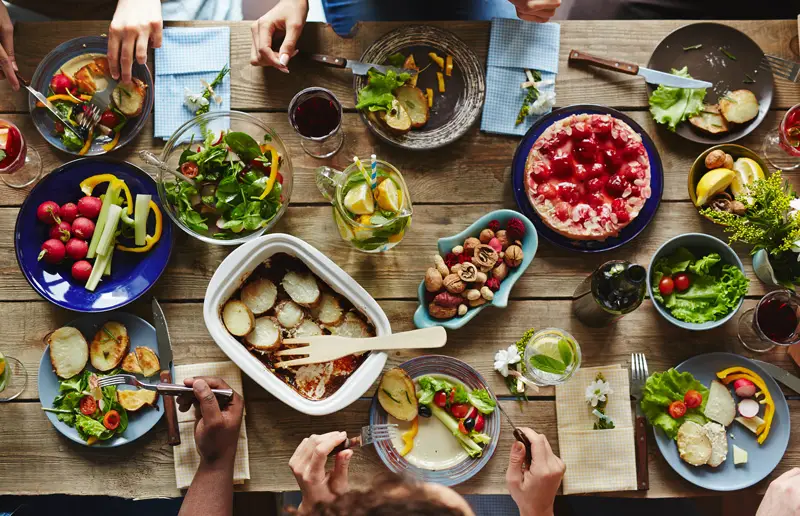
Four place settings. Four plates. Four wine glasses catching the candlelight. But there were only three of us.
The Extra Place Setting
The extra place was at the head of the table. The chair my husband had always taken at our own worn oak table back on the farm. The “Dad seat.” The one we never let the kids fight over.
“Michael,” I said, my voice just this side of steady. “Why are there four places?”
He went the color of copy paper. Vanessa’s hand flew to her mouth. The soft classical music playing from the wireless speaker suddenly felt obscene, like it belonged in someone else’s house.
“Michael,” I repeated. “What is this?”
He glanced at his wife, then back at me, and I watched him square his shoulders like a man about to jump into freezing water.
“Mom,” he said slowly, “there’s something we’ve never told you. About Dad. About what happened before he… before that morning in the pasture.”
Vanessa pushed back her chair so abruptly it almost fell.
“I’ll get the box,” she whispered.
“The what?” I asked, but she was already hurrying down the hall, heels clicking on the hardwood.
Michael leaned forward, elbows on the white tablecloth his wife saved for holidays.
“Dad came to see me a few weeks before he died,” he said. “He was… different. Nervous. He gave me something and made me promise not to say a word to you for two years. He said you needed time to grieve before you could handle what was inside.”
I wanted to laugh, to tell him this was some awful joke. But I’d seen my husband’s face in those last months, the way he would stare just a little too long at the evening news, the way he’d stand on the porch at dusk as if he were waiting for a car that never turned into our driveway.
The Wooden Box
Vanessa returned carrying a small wooden box, about the size of a hardcover novel, dark walnut with brass corners. When she set it down between the place settings, my stomach flipped.
I knew that box.
Robert’s old tackle box. The one his father had carved for him as a boy. The one I’d swear I’d seen sitting dusty and forgotten on a shelf in our farmhouse basement last December when I went searching for Christmas decorations.
“That was a copy,” Michael said quietly, when I told him exactly that. “He made a second one to leave at the farm so you wouldn’t notice this one was missing.”
“He lied to me,” I whispered. “Even about that.”
Michael slid the box closer to me.
“He told me not to open it,” he said. “Said it was for you. Said that if anything happened to him, I should wait exactly two years and then invite you over, set a place for him like this, and tell you the truth.”
My name was written on the underside of the lid in his careful handwriting. Inside, I could already see the edge of an envelope with my first name on it and what looked like old photographs and faded newspaper clippings beneath it.
I hadn’t even touched the envelope yet, hadn’t read a single word of the letter my husband had written from a life I’d never known he’d lived, when my son reached across the candles and said in a shaking voice, “Mom, before you open it… you need to understand that Dad wasn’t just a farmer from Millbrook.”
The Revelation
The room seemed to hold its breath as I sat there, staring at the box that now felt like both an anchor and a revelation waiting to unfold. My hands trembled as I lifted the envelope marked with my name in Robert’s familiar script.
The letter inside was pages long, written in the careful handwriting I’d seen on grocery lists and birthday cards for decades. But the words it contained belonged to a stranger.
My dearest Brittney,
If you’re reading this, then Michael has followed my instructions and it’s been two years since I left you. I pray that’s been enough time for you to remember me as the man who loved you, before you learn about the man I used to be.
I was never just a farmer from Millbrook. Before I met you, before we built our life on that beautiful land, I worked for the Central Intelligence Agency for eight years. I was a field operative specializing in Eastern European operations during the final years of the Cold War.
My vision blurred. I had to read that sentence three times before my brain would process it.
I know this sounds impossible. The Robert who taught Emma to ride a bike, who worried about corn prices and helped you can peaches every August—that man was real. But he was built on a foundation you never knew existed.
The letter went on to describe a young man who’d been recruited out of college, who’d spent his twenties in places like Prague and Budapest, gathering intelligence and living under assumed identities. He wrote about the decision to leave that life, about meeting me at the farmers market in 1981 and knowing immediately that he wanted to be the kind of man who could love someone openly, honestly.
I thought I’d buried that life completely. But three months before I died, someone from my past made contact. They wanted me to come out of retirement for one final operation. I refused, but they made it clear they knew where to find me. Where to find our family.
My hands were shaking so badly I could barely hold the pages.
The heart attack was real, Brittney. But the stress that caused it wasn’t just from farming or age. It was from the weight of knowing that my past might eventually touch our present, and I couldn’t bear the thought of that danger reaching you or the children.
The Evidence
Beneath the letter were photographs I’d never seen. A young Robert—maybe twenty-five—standing beside men in suits in front of buildings that looked European. Official documents with government seals and classification stamps. Newspaper clippings in languages I couldn’t read, with dates from the 1980s.
And at the very bottom, a small leather journal filled with his handwriting. Not the careful script from the letter, but hurried notes, codes, names, dates. The working papers of someone who’d lived a life I couldn’t have imagined.
Michael watched me process each item with the patient attention of someone who’d been carrying this secret for two years.
“He made me promise to wait,” he said quietly. “He said if anything happened to him in those final months, it might not have been natural causes, and he wanted you to have time to grieve the husband you knew before you had to confront the man he’d been.”
“But it was natural,” I said, looking up from a photograph of Robert shaking hands with someone whose face had been deliberately obscured. “The heart attack. The doctor said—”
“The doctor said what heart attacks look like,” Michael interrupted gently. “Dad said there were ways to induce them that wouldn’t show up in a standard autopsy. He was probably being paranoid, but he couldn’t take the chance of leaving you vulnerable without knowing the truth.”
I thought about those final months, about Robert’s increasing anxiety, his insistence on updating our wills, his sudden interest in teaching me to use the rifle he kept locked in our bedroom closet.
“The aftershave,” I whispered suddenly. “I smelled it when I walked in tonight.”
Vanessa nodded. “We found bottles of it in the box too. Different brands from different countries. Michael thinks Dad used them to remind himself of where he’d been. Who he’d been.”
The Final Instructions
At the very bottom of the box was one last envelope, sealed with red wax. My name was written across it in block letters: FOR BRITTNEY – ONLY IF SHE CHOOSES TO KNOW MORE.
“He said this part was optional,” Michael explained. “Said you might decide you’d learned enough.”
I held the sealed envelope for a long time, feeling its weight. Inside were answers to questions I’d never thought to ask. Details about missions, about close calls, about the reasons he’d walked away from that life and never looked back.
But sitting there at my son’s dinner table, with Robert’s empty chair facing me like a silent question, I realized something.
I didn’t need to know everything.
The man who’d held my hand through forty-one years of marriage, who’d worried about crop rotation and helped me raise three children, who’d built me a greenhouse when my arthritis made outdoor gardening difficult—that man was real. His love for me was real. His life with me was real.
The other life, the dangerous life, the secret life—that belonged to someone he’d chosen not to be anymore.
The Choice
I set the sealed envelope back in the box without opening it.
“I don’t need to read this,” I said. “Your father chose our life over that life. He chose to be a farmer, a husband, a father. Whatever he did before he met me, whoever he was—that wasn’t the man I married.”
Michael’s shoulders sagged with relief. “I was hoping you’d say that.”
“But I want to keep the box,” I added. “And someday, when Emma’s older, I want her to know that her grandfather lived an extraordinary life before he chose an ordinary one. That sometimes the bravest thing you can do is decide to be boring.”
We ate dinner with Robert’s place setting untouched, talking about memories instead of mysteries. Vanessa brought out photo albums from the children’s early years, and we laughed about the time Robert had tried to teach them to fish and ended up falling in the pond himself.
As I got ready to leave that evening, Michael walked me to my car.
“Are you angry?” he asked. “That he kept this from you? That we kept it from you?”
I thought about it as I looked back at the house where my son was building his own ordinary, extraordinary life with his wife and daughter.
“No,” I said finally. “I’m grateful. He could have chosen to stay in that dangerous world. He could have chosen the excitement, the importance, the adrenaline. Instead, he chose me. He chose us. He chose a quiet life where the biggest drama was whether the tomatoes would ripen before the first frost.”
I drove home through the Pennsylvania countryside, past fields Robert had plowed, past the pond where he’d taught our children to skip stones, past the little church where we’d been married in 1982.
The New Understanding
Back at the farmhouse, I walked through rooms filled with forty-one years of shared life. In our bedroom, I opened the drawer where Robert had kept his reading glasses and found myself looking at everything with new eyes.
The fact that he always locked the truck, even in our safe little town. The way he’d insisted on installing security lights around the property. His habit of checking the local newspaper for obituaries of people with Eastern European names.
Small things that had seemed like quirks now felt like echoes of training that had never fully faded.
But more than that, I understood something new about the depth of his commitment to our family. Every day for forty-one years, he’d chosen to be Robert the farmer instead of whatever code name he’d once carried. Every morning he’d woken up and decided to tend our land instead of living on the edge of danger.
That wasn’t just love. That was sacrifice.
Three weeks later, I was in the basement looking for Easter decorations when I found the copy of the tackle box Michael had mentioned. It was exactly where Robert had left it, dusty and ordinary-looking, containing nothing more dangerous than old fishing lures and tangled line.
For forty-one years, I’d walked past the evidence of an entire life my husband had never told me about. He’d been that good at becoming the man he’d chosen to be.
That night, I called Michael.
“I have a question about the box,” I said.
“What is it, Mom?”
“Do you think he was happy? Living our quiet life instead of the exciting one?”
Michael was quiet for a long moment. “Mom, do you remember what Dad used to say when people asked him if he ever missed the city? If he ever wanted to travel more or do something more exciting than farming?”
I smiled, remembering. “He’d say, ‘I’ve had enough excitement for three lifetimes. This is my reward.'”
“Exactly. He didn’t give up an exciting life for us, Mom. He earned a peaceful life with us.”
The Legacy
A year later, Emma asked me to help her with a school project about family history. As we sat at my kitchen table, surrounded by photo albums and family documents, she looked up at me with Robert’s eyes.
“Grandma,” she said, “do you think Grandpa ever did anything really exciting? Like, before he was a farmer?”
I thought about the sealed envelope I’d never opened, still sitting in the wooden box in my bedroom closet.
“I think your grandfather lived exactly the life he wanted to live,” I said. “And I think that’s the most exciting thing of all—choosing your own adventure and sticking with it.”
She nodded solemnly and went back to pasting photos into her presentation.
Later, after she’d gone home, I pulled the box out again and held that sealed envelope one more time. Part of me would always be curious about the details it contained. But a bigger part of me was grateful that some mysteries could stay mysterious.
Robert had given me two gifts in that box: the truth about his past, and the choice of how much truth I wanted to carry.
I’d chosen to carry his love instead of his secrets.
And every time I walked past that empty chair at my own dining table—the one I still set for him on important occasions—I remembered that the most extraordinary thing about my husband wasn’t the dangerous life he’d lived before me.
It was that he’d loved me enough to leave that life behind.
Some people spend their whole lives looking for adventure. Robert had found his adventure and then found something better: a home worth coming back to, a woman worth staying with, and a family worth protecting.
That tackle box full of secrets had been his way of making sure we stayed safe, even after he was gone.
And that empty chair at every family dinner would always remind us that some absences are louder than any presence—because they represent love so profound it transforms everything it touches.
Even in death, Robert was still choosing us.

Lila Hart is a dedicated Digital Archivist and Research Specialist with a keen eye for preserving and curating meaningful content. At TheArchivists, she specializes in organizing and managing digital archives, ensuring that valuable stories and historical moments are accessible for generations to come.
Lila earned her degree in History and Archival Studies from the University of Edinburgh, where she cultivated her passion for documenting the past and preserving cultural heritage. Her expertise lies in combining traditional archival techniques with modern digital tools, allowing her to create comprehensive and engaging collections that resonate with audiences worldwide.
At TheArchivists, Lila is known for her meticulous attention to detail and her ability to uncover hidden gems within extensive archives. Her work is praised for its depth, authenticity, and contribution to the preservation of knowledge in the digital age.
Driven by a commitment to preserving stories that matter, Lila is passionate about exploring the intersection of history and technology. Her goal is to ensure that every piece of content she handles reflects the richness of human experiences and remains a source of inspiration for years to come.