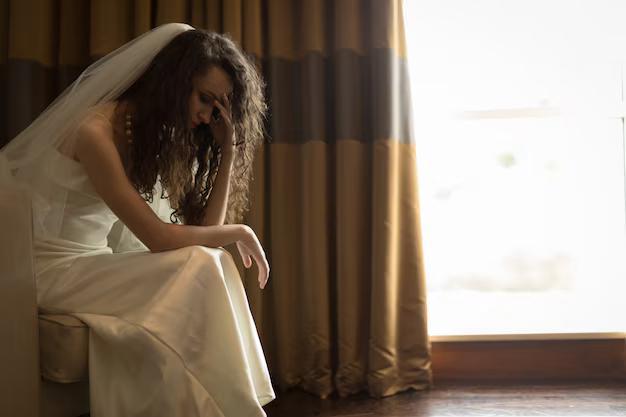
During the Wedding, My Mother-in-Law Declared, ‘We’ll Give the Apartment Only to Our Son, So She Won’t Get Any Share.’ Everyone Went Quiet. Then My Father, Who Works as a Long-Distance Driver, Said Calmly, ‘Now Let Me Speak.’ What Happened Next Left Her Silent…
The applause died instantly, choked off by a suffocating silence that pressed down on the room like a physical weight. The Sterling Room—moments ago alive with celebration, champagne toasts, and laughter—now felt like a tomb where joy had gone to die.
Eleanor Vance had just dropped a bomb on her son’s wedding day, and her smile remained as cold and sharp as a shard of broken glass.
“This luxury condominium in the heart of the city,” Eleanor announced, her voice cutting through the silence with the precision of a surgeon’s scalpel, “is a gift from my husband and me—exclusively to our son, Leo.”
She paused deliberately, letting the tension build, savoring the moment before delivering her final blow. Her eyes, cold and calculating, locked onto me—Anna, the bride in the simple white dress I’d rented because I couldn’t afford to buy one.
“I want to make one thing perfectly clear,” Eleanor continued, her voice dripping with false sweetness that barely concealed the venom beneath. “The deed will be in Leo’s name alone. Just to ensure that… as they say… this poor little country girl can’t get her hands on a single penny of our family legacy.”
The words hit me like a slap across the face.
I felt the blood drain from my face, my hands going numb where they clutched my bouquet. Around us, two hundred guests sat frozen in their seats, some with champagne glasses halfway to their lips, others with forks suspended over their dinner plates. No one knew where to look.
It was a public execution of my dignity, performed with Eleanor’s characteristic elegance and cruelty, timed for maximum humiliation during what should have been the happiest day of my life.
Beside me, Leo—my husband of exactly three hours—simply stared at his plate, his face burning red with shame. But he didn’t speak. Didn’t defend me. Didn’t tell his mother that what she’d just done was unspeakably cruel.
He just sat there, frozen, too cowed by Eleanor Vance to utter a single word of protest.
But I didn’t cry. I wouldn’t give her that satisfaction.
Instead, I swallowed the humiliation, forced my spine straight, and turned my gaze across the room toward the only anchor I had left in this nightmare.
My father.
My name is Anna Peterson—well, Anna Vance now, though after Eleanor’s little announcement, I’m questioning whether I want to keep that name.
I’m twenty-six years old, and I grew up in a small town two hours outside the city, the kind of place where everyone knows everyone and people still leave their doors unlocked. My mother died when I was eight, leaving my father Robert to raise me alone while working as a long-haul truck driver.
We didn’t have much. Dad was gone for weeks at a time, crossing the country in his big rig, while I stayed with my grandmother. Money was always tight. Christmas presents came from thrift stores. My clothes were hand-me-downs from cousins. College was only possible because of scholarships and student loans.
But I never felt poor. I felt loved.
Dad called me every single night he was on the road, no matter how tired he was, no matter what time zone he was in. He taught me to be strong, to work hard, to never let anyone make me feel less than I was. He showed up to every school play, every parent-teacher conference, every milestone, even if it meant driving through the night to get there.
When I met Leo Vance two years ago at a charity fundraiser where I was volunteering, I thought I’d found someone who saw past surface-level things like money and status. Leo was charming, kind, thoughtful in a way that felt genuine. He seemed embarrassed by his family’s wealth rather than defined by it.
“I’m not like them,” he told me on our third date, after I’d met his parents for the first time and felt Eleanor’s cold assessment cataloging all the ways I fell short. “I don’t care about any of that stuff. I just want to be with you.”
I believed him.
I believed him when he said his mother’s comments about my background didn’t matter. I believed him when he said we’d build our own life together, independent of his family’s money and expectations. I believed him when he promised that once we were married, he’d stand up to his parents and establish boundaries.
I believed a lot of things that turned out to be lies.
The warning signs had been there all along, I just hadn’t wanted to see them.
Like the time Eleanor “accidentally” scheduled a family dinner on the same night as my college graduation ceremony, then acted wounded when Leo chose to attend my graduation instead.
Or the way she always introduced me to her friends with a tight smile and the phrase, “This is Leo’s… friend, Anna,” even after we got engaged.
Or the engagement party she threw without consulting me, where every detail—from the guest list to the menu to the decorations—was chosen to showcase the Vance family’s taste and status, with no input from me whatsoever.
Or the way she’d casually mentioned, multiple times, that Leo’s ex-girlfriend Melissa came from “such a good family” and “knew how to handle herself in society.”
But I’d told myself it would get better after the wedding. That once we were officially married, Eleanor would have to accept me. That Leo would finally find his spine and defend me.
The wedding planning should have disabused me of those notions.
Eleanor took over every aspect of the wedding, overruling my preferences at every turn. I’d wanted a small, intimate ceremony in my hometown. Eleanor insisted on a lavish affair at the Sterling Room, the most prestigious venue in the city, with two hundred guests—most of whom I’d never met.
I’d wanted wildflowers and simple decorations. Eleanor hired the most expensive florist in the state and filled the room with elaborate arrangements that probably cost more than my father’s annual salary.
I’d wanted to wear my mother’s vintage wedding dress, carefully preserved in my grandmother’s attic. Eleanor insisted I needed something “appropriate” and dragged me to exclusive bridal boutiques, criticizing every dress I tried on before finally selecting one herself—an elegant, expensive gown that made me look like a stranger.
When I protested, Leo said, “Just let her have this, Anna. It makes her happy, and it’s easier than fighting about it.”
Easier for whom, I’d wondered.
In the end, I compromised on everything except one thing: I refused to wear Eleanor’s chosen dress. Instead, I rented a simple white gown that I actually liked, that felt like me. It cost $300—a fraction of what Eleanor wanted to spend—and when she saw it, her expression of disgust told me everything I needed to know about what she thought of my choice.
“Well,” she’d said, her voice dripping with false sympathy, “I suppose not everyone has the means for true elegance.”
My father arrived the morning of the wedding, after driving through the night to get there from a delivery in Montana. He looked exhausted, his weathered face lined with fatigue, but his eyes lit up when he saw me.
“You look beautiful, sweetheart,” he said, pulling me into one of his bear hugs that smelled like diesel fuel and coffee and safety.
“Thanks, Dad.”
He held me at arm’s length, studying my face with the intensity of someone who’d spent twenty-six years learning to read my every expression.
“You happy?” he asked quietly.
I hesitated a second too long, and his expression shifted to concern.
“I love Leo,” I said, which was true but didn’t answer his question.
“That’s not what I asked.”
“I’m fine, Dad. Really. Eleanor’s just… she’s difficult. But it’ll be okay once we’re married and living on our own.”
The doubt in his eyes told me he didn’t believe that any more than I did.
The ceremony itself was beautiful in the cold, impersonal way that expensive things often are. The Sterling Room was magnificent—all crystal chandeliers and marble floors and floor-to-ceiling windows overlooking the city. The flowers were perfect. The music was perfect. Everything was perfect except for the fact that it didn’t feel like my wedding at all.
It felt like Eleanor’s production, and I was just an actress playing a role she’d grudgingly allowed me to occupy.
During the vows, Leo’s hands shook as he slid the ring onto my finger. I wondered if he was nervous or afraid. Afraid of what—commitment? His mother’s disapproval? The weight of everything this marriage represented?
When the officiant pronounced us husband and wife, Leo kissed me chastely, and I heard Eleanor’s voice rise above the applause: “Finally! Now we can get to the reception. The real event.”
The reception began smoothly enough. Dinner was served—an elaborate five-course meal that probably cost more per plate than my monthly grocery budget. The wine flowed freely. People made small talk and admired the decorations and congratulated the happy couple.
My father sat at a table near the back with my grandmother and a few cousins from my mother’s side. He looked uncomfortable in his suit—a simple, off-the-rack ensemble that he’d bought specifically for today—surrounded by people in designer formalwear who kept glancing at him like he was a curiosity, something exotic and out of place.
Eleanor’s friends whispered behind their champagne glasses, their eyes sliding toward my father’s table with barely concealed disdain.
I saw it all. Felt it all. But I smiled and played my part, dancing with Leo, cutting the cake, posing for photographs.
Then came the toasts.
Leo’s father went first, giving a brief, warm speech about love and partnership that felt genuine. My grandmother spoke next, her voice quavering with emotion as she talked about how proud my mother would have been to see this day.
Then Eleanor stood up.
She walked to the microphone with the confidence of someone who’d never been challenged, never been told no, never faced a consequence she couldn’t buy her way out of. She adjusted the microphone, smiled at the room, and began to speak.
“Today we welcome Anna into the Vance family,” she said, her tone suggesting this was a great act of charity on their part. “We’re delighted that Leo has found someone who makes him… happy.”
The pause before “happy” was deliberate, laden with judgment.
“As a wedding gift,” Eleanor continued, “my husband and I are presenting the newlyweds with a luxury condominium in the heart of the city. It’s a beautiful three-bedroom unit in the prestigious Waterford Building, fully furnished, worth approximately $1.2 million.”
Gasps rippled through the room. People applauded. Leo looked stunned and grateful, exactly the reaction Eleanor wanted.
But she wasn’t finished.
“I want to make one thing perfectly clear, however,” Eleanor said, her voice hardening. “The deed to this condominium will be in Leo’s name alone. Just Leo’s. Not joint ownership.”
The applause faltered, confusion spreading across faces around the room.
Eleanor’s smile turned cruel. “Just to ensure that… well, as they say… certain people can’t get their hands on our family assets. We want to protect our son’s interests. Protect what we’ve built. I’m sure everyone understands.”
She looked directly at me as she said it, making absolutely certain that everyone in that room understood exactly what she meant. That she was protecting Leo from me. From the gold-digging country girl who’d trapped her son.
The silence that followed was absolute and suffocating.
I felt like I’d been stripped naked in front of two hundred people. Every eye in the room was on me, some pitying, some curious, some gleefully watching the drama unfold.
Leo sat frozen beside me, his face crimson, his hands gripping his champagne glass so tightly I thought it might shatter. But he didn’t speak. Didn’t stand up. Didn’t tell his mother she’d crossed a line.
He just sat there, silent and complicit.
That’s when I looked across the room and found my father’s eyes.
He was already standing.
Robert Peterson didn’t rush. He didn’t storm toward the microphone or shout across the room. He simply stood up from his table with the slow, deliberate movement of a man who’d made a decision and wouldn’t be deterred.
He was sixty years old, weathered from decades of highway driving, his hands callused and scarred from years of physical labor. He wore a simple gray suit that was clean but unremarkable, his tie slightly crooked, his shoes practical rather than fashionable.
Compared to the sleek, wealthy guests in their designer clothes and expensive jewelry, he looked like exactly what Eleanor had implied: someone who didn’t belong.
But as he walked toward the front of the room, something shifted. Maybe it was his posture—straight-backed and dignified despite his exhaustion. Maybe it was the quiet intensity in his eyes. Maybe it was simply the contrast between his authentic, unpretentious presence and the polished artificiality of everyone around him.
People turned to watch him, whispers starting up and then dying away as he reached the microphone.
Eleanor looked at him with barely concealed contempt, her arms crossed over her chest like a queen observing a peasant who’d dared approach the throne. She expected him to make a fool of himself, to prove with his simple words and awkward manner that Anna’s family was exactly as inferior as she’d always claimed.
She had no idea what was coming.
My father adjusted the microphone with his large, work-roughened hands. He looked out at the room full of strangers, then settled his gaze on Eleanor Vance.
When he spoke, his voice was calm but carried the weight of absolute certainty.
“Mrs. Vance,” he began. “Honored guests. I’m just a simple truck driver. I don’t know fancy words or how to speak in the elegant way you’re all accustomed to.”
He paused, and I saw Eleanor’s smile widen slightly, her satisfaction evident. This was going exactly as she’d expected.
“You’ve made your point about the power of money perfectly clear tonight,” my father continued. “You’ve shown everyone here that you have wealth, status, and the ability to give expensive gifts. And you’ve made equally clear that you think those things define worth.”
His eyes never left Eleanor’s face.
“But it seems you’ve forgotten the most basic lesson about human value. And since you won’t teach it… I believe it’s time I finished my toast with a gift of my own.”
He reached into his jacket pocket and pulled out a simple envelope.
“Twenty-six years ago, my wife died and left me with a eight-year-old daughter to raise alone,” he said, his voice steady despite the emotion underlying the words. “I was a truck driver then, same as now. I made a modest salary. We lived in a small house. Anna wore hand-me-down clothes and we couldn’t afford luxuries.”
Around the room, people had gone completely still, leaning forward to hear every word.
“But I had one thing that mattered more than money,” my father continued. “I had time to save. Time to plan. Time to make sure that my daughter—my brilliant, kind, hardworking daughter—would have something of her own. Something no one could take from her.”
He opened the envelope and pulled out several documents.
“For the past twenty-six years,” he said, “I’ve been putting aside a portion of every paycheck. Sometimes it was just fifty dollars. Sometimes less. But every single month, without fail, I contributed to an investment account in Anna’s name.”
My breath caught. I had no idea what he was talking about.
“I worked overtime. I took extra routes. I skipped vacations and drove through holidays. I did it quietly because I didn’t want Anna to worry about money or feel like she owed me anything. I did it because that’s what parents do—we sacrifice so our children can have better lives than we did.”
He held up one of the documents.
“This account, which Anna has never touched and barely knows exists, is now worth approximately $485,000.”
Gasps rippled through the room. Eleanor’s face went pale.
“That money,” my father continued, his voice growing stronger, “is Anna’s. Completely, irrevocably hers. She can use it however she chooses—to buy her own home, to start a business, to pursue dreams, to have security independent of anyone else.”
He looked directly at Eleanor, and his next words landed like hammer blows.
“You see, Mrs. Vance, I may not be able to give my daughter a penthouse or a fancy title or entrance into high society. But I gave her something far more valuable: the knowledge that she is worthy, capable, and deserving of respect. I gave her independence. I gave her the freedom to choose her own path without being beholden to people who view generosity as a tool for control.”
Eleanor’s mouth opened and closed soundlessly.
“Your gift comes with conditions,” my father said. “With strings attached. With the clear message that Anna isn’t trustworthy, isn’t equal, isn’t truly part of your family. My gift comes with only one condition: that Anna lives her life with dignity and never lets anyone make her feel less than she is.”
He turned away from Eleanor and looked at me, his eyes shining with tears.
“Sweetheart, this is yours. It always has been. I was planning to tell you on your thirtieth birthday, but I think you need to know now. You are not dependent on anyone’s charity. You are not a ‘poor country girl’ who needs to be grateful for scraps. You are a smart, strong, educated woman with resources of her own and a father who would drive a million miles if it meant you could stand tall and proud.”
The room erupted.
Not in applause—in something more chaotic and electric. People were standing, talking over each other, some crying, some looking at Eleanor with barely concealed disgust.
I stood up, my legs shaking, and walked to my father. He wrapped me in his arms, and I finally let the tears fall.
“Why didn’t you tell me?” I whispered.
“Because I didn’t want you to count on it,” he said softly. “I wanted you to build your own life, your own career, your own strength. The money was always just insurance—a safety net if you ever needed it. And honey, I think you need it now.”
I pulled back and looked at him, this man who’d sacrificed everything for me, who’d driven endless miles through storms and exhaustion, who’d lived frugally for decades so I could have something of my own.
“I love you, Dad,” I said.
“I love you too, sweetheart. And I’m so proud of you.”
Behind us, Eleanor had found her voice.
“This is outrageous!” she snapped, her composure finally cracking. “You’ve embarrassed me in front of all our guests! This is inappropriate! This is—”
“This is a father loving his daughter,” my grandmother interrupted, standing up from her table with surprising strength for someone in her eighties. “Something you might try learning, Eleanor, before you lose your son the same way you’re trying to lose his wife.”
Leo’s father—Richard Vance, who’d been silent throughout this entire disaster—stood up as well.
“Eleanor,” he said quietly but firmly, “that’s enough. Sit down.”
“But Richard—”
“I said sit down.”
For the first time in what was probably decades, Eleanor Vance did as she was told, sinking into her chair with a look of absolute shock.
Richard walked over to where my father and I stood.
“Mr. Peterson,” he said, extending his hand, “that was the finest wedding toast I’ve ever heard. Thank you for reminding us all what actually matters.”
My father shook his hand, nodding.
Richard turned to me, and I saw genuine regret in his eyes.
“Anna, I owe you an apology. I’ve watched my wife treat you poorly for two years, and I said nothing. I convinced myself it wasn’t my place to interfere, that she’d eventually come around. I was wrong. I’m sorry.”
“Thank you,” I managed to say.
He looked at Leo, who was still sitting at the head table, looking like he wanted the floor to swallow him whole.
“Son,” Richard said, his voice stern in a way I’d never heard before, “I think you have some decisions to make about the kind of husband you want to be. Right now, you’re failing spectacularly.”
The reception ended shortly after that. People left in clusters, some coming up to congratulate my father, others avoiding eye contact with Eleanor as they made their excuses.
Leo and I didn’t speak. We stood on opposite sides of the room, the distance between us feeling insurmountable.
Finally, as the venue staff began cleaning up, Leo approached me.
“Anna, I… I’m sorry. I should have stopped her. I should have said something.”
“Yes,” I agreed. “You should have.”
“I was in shock. I didn’t know what to do.”
“You’ve had two years to figure out what to do when your mother attacks me, Leo. Two years of watching her belittle me, exclude me, make me feel like I’m not good enough. And every single time, you’ve chosen her comfort over my dignity.”
“That’s not fair—”
“Isn’t it?” I looked at him—really looked at him—and saw clearly for the first time what I’d been denying for months. “Your mother just publicly humiliated me at our wedding. She literally announced to two hundred people that you can’t trust me with money, that I’m a gold digger, that I need to be protected against. And you sat there silent. You let it happen.”
“I’ll talk to her—”
“When, Leo? When will you talk to her? When will you set boundaries? When will you choose me?”
He didn’t have an answer.
“I’m going to stay with my dad tonight,” I said quietly. “I need time to think.”
“Anna, please—”
“I just need time.”
I walked away, found my father waiting by the exit, and left my own wedding reception without my husband.
That night, in my childhood bedroom at my father’s house, I made some decisions.
I called a lawyer first thing Monday morning. Filed for an annulment on the grounds that the marriage was entered into under false pretenses—specifically, that Leo had promised to be a partner but had proven incapable of standing up to his mother.
Leo contested it, of course. Begged me to give him another chance, swore he’d change, promised he’d set boundaries with Eleanor.
But I’d heard those promises before. For two years, I’d heard them. And I’d watched him break every single one.
The annulment was granted three months later.
That was five years ago.
Today, I’m thirty-one years old. I used the money my father saved to put a down payment on a small house in my hometown—the place I’d grown up, where I felt valued and seen. I used the rest to start my own business, a consulting firm that helps nonprofits with grant writing and fundraising.
My father still drives his truck, though he’s talking about retiring soon. We have dinner every Sunday when he’s in town, and he still calls me every night when he’s on the road.
I heard through mutual friends that Leo eventually did set boundaries with Eleanor—after I left, which was too late to save our marriage but hopefully helped him become the person he should have been all along. He’s engaged now to someone from his social circle, someone Eleanor presumably approves of.
I’m happy for him, genuinely. I hope he’s learned. I hope he’s better.
As for me, I’m dating a high school science teacher named Marcus who comes from a family remarkably similar to mine—working class, loving, uncomplicated. His parents welcomed me immediately, treating me like I already belonged. His mother hugs me every time she sees me and asks my opinion about things like it actually matters.
It’s startling, sometimes, to be with someone whose family doesn’t view me as a problem to be managed.
The $485,000 my father saved sits mostly untouched in its investment account, growing steadily. I think about it sometimes—all those overtime hours, all those extra routes, all those years of my father choosing sacrifice over comfort so I could have security.
Eleanor’s million-dollar condo was supposed to prove something about worth and value and who deserved to be in the Vance family.
My father’s gift proved something entirely different: that real love doesn’t come with conditions. That true generosity doesn’t require gratitude and obedience in return. That the most valuable thing a parent can give a child isn’t money or status or access—it’s the unshakeable knowledge that they are worthy, exactly as they are.
Eleanor gave me a very expensive lesson about what love isn’t.
My father gave me a lifetime of lessons about what love is.
I know which gift I’ll treasure forever.
THE END

Ethan Blake is a skilled Creative Content Specialist with a talent for crafting engaging and thought-provoking narratives. With a strong background in storytelling and digital content creation, Ethan brings a unique perspective to his role at TheArchivists, where he curates and produces captivating content for a global audience.
Ethan holds a degree in Communications from Zurich University, where he developed his expertise in storytelling, media strategy, and audience engagement. Known for his ability to blend creativity with analytical precision, he excels at creating content that not only entertains but also connects deeply with readers.
At TheArchivists, Ethan specializes in uncovering compelling stories that reflect a wide range of human experiences. His work is celebrated for its authenticity, creativity, and ability to spark meaningful conversations, earning him recognition among peers and readers alike.
Passionate about the art of storytelling, Ethan enjoys exploring themes of culture, history, and personal growth, aiming to inspire and inform with every piece he creates. Dedicated to making a lasting impact, Ethan continues to push boundaries in the ever-evolving world of digital content.