The Mother-In-Law He Never Knew
Keith walked into the Manhattan courtroom like it was his victory lap.
Three-piece suit. Designer watch. Expensive attorney at his side. He didn’t look like a man afraid of losing a marriage. He looked like a man checking his calendar, wondering if this hearing would make him late for lunch.
Across the aisle, Grace sat alone.
No lawyer. No folder stuffed with legal notes. No one leaning in to whisper strategy. Just a woman in a plain gray dress, fingers laced so tight her knuckles had gone white, staring at the empty judge’s bench like it was the edge of a cliff.
Keith glanced at the vacant chair beside her and smirked.
“She couldn’t even get someone to show up for her,” he murmured to his attorney, loud enough to carry. “I almost feel bad. Almost.”
But he didn’t feel bad. He felt victorious.
Six months earlier, Keith Simmons had been a different man—or at least, he’d been better at pretending to be one.
He’d met Grace Bennett at a charity gala in Tribeca, one of those events where young professionals mingled over expensive wine and tried to look like they cared about whatever cause was being championed that night. Keith had gone because his boss suggested it would be good for his image. Grace had gone because she genuinely believed in the cause.
She was working for a nonprofit at the time, coordinating housing programs for families in crisis. She wore a dress from Target and shoes she’d owned for three years, and when Keith asked her what she did for a living, she’d answered without a trace of apology or embellishment.
“I help people find homes when they’ve lost everything else.”
Keith had been charmed. Not by the work—he found most nonprofit people naive and impractical—but by her. She was pretty in an understated way, soft-spoken, kind. The kind of woman who made him feel like a better person just by standing next to her.
They dated for eight months before he proposed. The wedding was small, intimate, exactly what Grace wanted. Keith’s colleagues came. Grace’s friends came. Her father flew in from Ohio, a mechanic with callused hands who looked uncomfortable in his rented suit.
Keith noticed Grace’s mother wasn’t there.
“Where’s your mom?” he’d asked the night before the wedding.
Grace’s expression had shuttered slightly. “She couldn’t make it. She’s… busy with work.”
“What does she do?”
“She’s a lawyer.”
Keith had nodded, filing the information away as unimportant. If Grace’s mother was too busy to attend her own daughter’s wedding, she clearly wasn’t a significant part of Grace’s life. And if she wasn’t important to Grace, she wasn’t important to him.
That was the first mistake.
The second mistake was assuming Grace would always be the quiet, accommodating woman he’d married.
The marriage started well enough. They moved into Keith’s apartment in the Financial District, a two-bedroom with floor-to-ceiling windows that Grace tried to make feel like home with plants and throw pillows. Keith worked long hours at his investment firm. Grace continued her nonprofit work, though Keith frequently suggested she find “something more practical.”
“You could work in corporate social responsibility,” he’d say. “Better hours, better pay, and you’d still be helping people.”
“I like what I do,” Grace would respond quietly.
“You like being poor,” Keith would counter, half-joking, fully serious.
The cracks started showing around their first anniversary. Keith wanted to buy a second property in the Hamptons. Grace thought they should save money and build an emergency fund. Keith started making major financial decisions without consulting her. Grace started sleeping in the second bedroom when he came home drunk and angry about deals that had fallen through.
By their second anniversary, they were barely speaking.
By their third, Keith had decided he wanted out.
Not because he’d fallen out of love—he wasn’t sure he’d ever been in love—but because Grace had become inconvenient. She questioned his spending. She refused to quit her job. She wouldn’t play the role of the perfect corporate wife who attended client dinners and laughed at his boss’s jokes.
And then there was the affair.
Keith had met Vanessa at a conference in Miami. She was everything Grace wasn’t: ambitious, polished, uninterested in things like “values” and “character.” She understood that money was the point, that success was measured in zeros at the end of your bank statement.
When Grace found the texts, Keith didn’t apologize. He shrugged.
“This isn’t working anyway,” he’d said. “We both know it.”
“So fix it,” Grace had whispered. “We can try counseling, we can—”
“I don’t want to fix it. I want a divorce.”
Keith’s attorney was a man named Richard Thornton, nicknamed “the butcher” by other lawyers for his ruthless approach to divorce proceedings. He was expensive, effective, and utterly without sentiment.
“First thing we do,” Richard had explained in their initial consultation, “is lock down the finances. Everything’s in joint accounts right now, correct?”
“Mostly, yeah. Some investments are just in my name.”
“Good. We’ll freeze the joint accounts, claim you need to protect marital assets from being dissipated. Judges usually grant it. Once that’s done, she can’t hire a decent lawyer because she won’t have access to funds.”
“Is that legal?”
Richard smiled. “It’s strategy. And it’s very legal.”
Within a week, Grace had been locked out of their accounts. Her credit cards stopped working. Her access to their savings disappeared. She called Keith, panicked.
“What did you do?”
“I protected our assets,” Keith said calmly. “You can access your nonprofit salary. That should be enough for now.”
“Keith, I can’t even afford groceries on that. I can’t hire a lawyer—”
“Maybe you should have thought about that before you refused to be reasonable about this divorce.”
She’d hung up. Keith had felt a brief flicker of guilt, then remembered Vanessa’s text from that morning and felt nothing at all.
Richard had been confident from the start. “She’s going to show up to court with nothing. No representation, no case. The judge will push for a quick settlement, and we’ll offer her something minimal—enough that you look generous, not enough that it actually costs you anything significant.”
“What are we talking?”
“A car, maybe twenty thousand in cash, no alimony. She’s young, she’s employed, she doesn’t need long-term support. We’ll argue that the marriage was short, there are no kids, and she’s capable of supporting herself.”
“What about the apartment?”
“Yours. You bought it before the marriage. She has no claim.”
“The investments?”
“Also yours. You can prove the money came from your salary and bonuses. She contributed nothing financially. We’ll argue she’s not entitled to appreciate assets she didn’t build.”
Keith had smiled. “When can we get this done?”
“Soon. Very soon.”
The hearing had been scheduled for a Tuesday morning in late September. Keith had slept well the night before, eaten a good breakfast, and arrived at the courthouse feeling like a man about to close a deal he’d already won.
Grace was already seated when he arrived, looking small and lost at her empty table. She glanced up when he entered, and something in her expression made him pause—not fear, not defeat, but something else. Something almost like pity.
He dismissed it. She was the one without a lawyer. She was the one who’d lost.
Richard leaned in as they sat down. “This is going to be fast. I’ll request we proceed immediately, argue she’s had months to prepare, and the judge will likely agree. Then we present our settlement offer, she accepts because she has no choice, and you’re done. Divorced, minimal payout, clean break.”
“She couldn’t even get someone to show up for her,” Keith murmured, looking at the empty chair beside Grace. “I almost feel bad. Almost.”
Richard didn’t bother hiding his satisfaction. “No funds, no representation. You walked in here already three steps ahead.”
The bailiff called the room to order. Everyone stood as the judge entered—a tired-looking man in his sixties who’d probably seen a thousand cases like this one.
“Case Simmons versus Simmons,” the judge read, flipping open the file. “We’re here on division of property and support.”
He looked at Keith’s table first. “Good morning, counsel.”
Richard rose smoothly. “Good morning, Your Honor. We’re ready to proceed.”
Then the judge’s gaze shifted to Grace. “Mrs. Simmons, I see you’re alone. Are you expecting counsel?”
Grace stood slowly, her voice soft but steady. “Yes, Your Honor. She’s on her way. There was traffic.”
Keith huffed out a laugh he didn’t bother to hide. “Or maybe she just couldn’t find anyone willing to take the case. Hard to hire help when you don’t have access to a card anymore.”
The judge shot him a warning look, but Keith only softened his tone, not his words.
“I tried to be fair,” he told the court, palms open like he was the reasonable one. “I offered her a car, some cash to get started. She turned it down. She doesn’t understand how this works.”
Richard stepped in, all polished professionalism. “Your Honor, my client’s frustration aside, she’s had months to prepare. If there’s no attorney here now, we’d ask to move forward. The court’s time is valuable.”
The judge turned back to Grace, and for a moment Keith saw something in his expression—not quite sympathy, but a weariness that suggested he knew how this story usually ended.
“Mrs. Simmons,” the judge said, “if your attorney isn’t present, I’ll have to treat you as representing yourself. In a case this complicated… that would be unwise.”
“Please,” Grace said, her eyes fixed on the double doors at the back of the room. “Just a couple more minutes. She’s coming.”
Keith leaned forward, voice low but sharp enough to carry. “She’s stalling. Her dad fixed cars for a living, her friends are stay-at-home moms. Who’s she going to send in here, a yoga teacher?”
Richard didn’t laugh out loud, but the smile was there. “Your Honor, we’d move to deny any delay and proceed. My client is prepared. The other side is not.”
The judge sighed, picking up his gavel. Keith felt a surge of satisfaction. This was it. The moment Grace would have to accept defeat.
“Mrs. Simmons, I’m sorry,” the judge said. “We can’t wait any longer. We’ll begin with—”
He never finished the sentence.
The doors at the back of the courtroom didn’t open gently. They slammed against the walls with a crack that made even the bailiff jump.
Every head turned.
A woman stood in the doorway.
Not flustered. Not out of breath. Not some overworked public defender juggling ten cases at once.
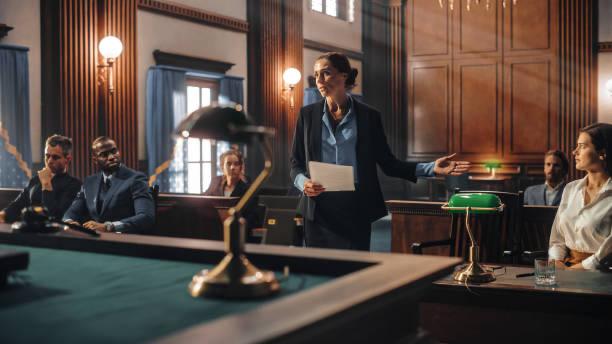
She was in a perfectly cut white suit that somehow made the whole room feel smaller. Silver hair in a sharp bob, heels clicking in an even rhythm as she walked straight down the center aisle like this was her courtroom and everyone else was just visiting.
Three younger attorneys moved behind her, briefcases in hand, keeping formation like soldiers following a general.
Keith frowned, confused. He glanced at Richard, expecting him to look equally puzzled.
Instead, Richard had gone completely still. The color had drained from his face.
“No way,” Richard whispered, barely moving his lips. “That can’t be her.”
“What?” Keith asked. “You know this lady?”
Richard didn’t answer. His eyes were fixed on the woman approaching, and for the first time since Keith had hired him, Richard Thornton looked genuinely afraid.
The woman reached Grace’s table and set down a heavy leather briefcase with a quiet, final thud. She didn’t hug Grace. Didn’t touch her. Didn’t even look at her yet.
Her eyes were on Keith.
“Sorry I’m late,” she said, her voice smooth and clear, carrying all the way to the back row. “I had to drop off some paperwork at a higher court this morning. It took a while to list out everything in your financial world, Mr. Simmons.”
Keith went very still. Something in her tone—calm, precise, utterly confident—made his stomach drop.
The judge leaned forward, suddenly wide awake. “Counselor, state your name for the record.”
She handed a card to the clerk, then looked up at the bench with a small, professional smile.
“Katherine Bennett,” she said. “I’m here on behalf of the defendant.”
She finally turned to Grace, just for a second, and there was something almost soft in her expression—a flicker of warmth that was gone as quickly as it appeared.
Then she faced Keith again, and her eyes were ice.
“And I’m also her mother.”
The room stopped breathing.
Keith stared at her, then at Grace, like the floor had just moved under his feet. His mind raced, trying to make sense of what he’d just heard.
Katherine Bennett. Bennett. Grace’s last name had been Bennett before they married.
Her mother was a lawyer.
But not just any lawyer.
Keith had heard the name Katherine Bennett before—everyone in New York legal circles had. She was a legend, a partner at one of the most prestigious firms in the city, specializing in high-stakes divorce and asset protection. She’d taken down CEOs, hedge fund managers, men who thought they were untouchable.
And she was Grace’s mother.
Richard was staring at his hands, his jaw clenched so tight Keith could see the muscles working. He looked like a man who’d just walked into an ambush.
The judge cleared his throat, and Keith saw something new in his expression: interest. The tired resignation was gone, replaced by the alertness of someone who knew they were about to witness something significant.
“Ms. Bennett,” the judge said carefully, “you may proceed.”
Katherine opened her briefcase, fingers steady, and pulled out the first stack of documents. She set them on the table with the precision of someone who’d done this a thousand times and won every single time.
“Your Honor,” she began, “I apologize for my tardiness. As I mentioned, I was filing documents this morning related to this case. Specifically, a motion to unfreeze the marital accounts that Mr. Simmons illegally restricted, a request for emergency spousal support, and a formal complaint regarding financial abuse.”
Keith’s head snapped toward Richard. “What is she talking about?”
Richard held up a hand, trying to project calm he clearly didn’t feel. “Your Honor, the account freeze was a standard protective measure—”
“Standard?” Katherine’s voice cut through the room like a knife. “Mr. Thornton, you froze accounts containing my daughter’s salary, her savings, and joint marital assets, leaving her unable to purchase food, pay rent, or secure legal representation. That’s not protection. That’s financial abuse designed to force an unfair settlement.”
“Your Honor—”
“I’m not finished.” Katherine pulled out another document. “I have here bank records showing that Mr. Simmons transferred over two hundred thousand dollars in marital assets to personal accounts in his name only, three weeks before filing for divorce. He then used those funds to purchase jewelry and pay for hotel rooms—expenses that correspond exactly with dates and locations where he was conducting an extramarital affair.”
The courtroom was silent. Keith felt his face flush.
“Additionally,” Katherine continued, “Mr. Simmons has been making cash withdrawals from their joint investment accounts, claiming they’re for ‘business expenses,’ when in reality he’s been funneling money to offshore accounts in the Cayman Islands. I have documentation of fifteen separate transactions over the past four months, totaling nearly half a million dollars.”
Keith’s mouth went dry. How did she know about the Cayman accounts?
Richard stood, his voice tight. “Your Honor, these accusations are—”
“Documented,” Katherine said calmly, sliding a thick folder across to the clerk. “Bank statements, transaction records, wire transfer receipts, and sworn testimony from Mr. Simmons’ bank manager, who was more than happy to cooperate once we explained that hiding assets during divorce proceedings is fraud.”
The judge took the folder, flipping through it with increasing interest. His expression was unreadable, but Keith noticed he was taking his time, actually reading the documents instead of skimming them.
“Your Honor,” Richard tried again, “even if some of these transactions occurred, they don’t constitute—”
“Mr. Thornton.” The judge’s voice was quiet but firm. “I suggest you let Ms. Bennett finish before you attempt to respond.”
Richard sat down.
Katherine smiled—not warmly, but with the satisfaction of someone who’d just played the exact card they’d been holding for this moment.
“Your Honor, my client is not asking for revenge. She’s asking for what she’s legally entitled to under New York law. Mr. Simmons has attempted to paint her as financially dependent and naive, when in fact she’s been the stabilizing force in this marriage while he’s been gambling with their future.”
She pulled out another stack of papers. “My client has been employed continuously throughout their marriage, contributing her entire salary to household expenses while Mr. Simmons used his income for personal investments and extramarital affairs. She’s the one who paid their rent. She’s the one who covered groceries, utilities, and household supplies. Mr. Simmons’ salary went toward building wealth he now claims is solely his.”
Keith shook his head, leaning toward Richard. “That’s not—I paid for plenty—”
“Did you?” Katherine’s gaze pinned him like a specimen under glass. “Because I have three years of bank records that say otherwise. Every rent payment: Grace. Every grocery bill: Grace. Every utility payment: Grace. Your salary went into investments, luxury purchases, and apparently, offshore accounts.”
“I—” Keith started, then stopped, because he didn’t actually know how to refute that. Grace had always handled the household bills. He’d assumed it was coming from their joint account, which technically it was, but if her salary was the only thing going into that account…
“Your Honor,” Katherine continued, “we’re asking for the following: First, immediate release of all frozen accounts and restoration of my client’s access to marital funds. Second, full disclosure of all assets, including offshore accounts, within thirty days. Third, temporary spousal support of fifteen thousand dollars per month pending final settlement. And fourth, we’re asking that Mr. Simmons be held responsible for my client’s legal fees, given that his financial abuse made it impossible for her to secure representation.”
The judge was nodding slightly, still reading through the documents. “Ms. Bennett, these are substantial requests.”
“They’re appropriate to the situation, Your Honor. My client has been systematically isolated from the marital assets she helped build, while her husband has been hiding money and conducting an affair. This isn’t a case of two people simply growing apart. This is a case of one spouse deliberately impoverishing the other to force an unfair settlement.”
She turned to look at Keith directly, and her expression was glacial.
“And I won’t let that happen.”
The judge set down the folder and removed his glasses, rubbing the bridge of his nose. When he looked up, his previous weariness was gone, replaced by something sharper.
“Mr. Thornton, do you have a response to these allegations?”
Richard stood slowly. Keith could see sweat beading at his hairline. “Your Honor, we would need time to review these documents and—”
“You’ve had months to prepare your case,” the judge interrupted. “Ms. Bennett has been here for fifteen minutes and has already presented more substantial evidence than I’ve seen from your side. So let me ask you directly: are these bank statements accurate?”
Richard glanced at Keith, who was staring at the table, his mind racing. The Cayman accounts. The transfers. The hotel charges. All of it was real, all of it was documented, and there was no way to deny it.
“Your Honor,” Richard said carefully, “while some of these transactions may appear concerning out of context—”
“They appear concerning in any context,” the judge said flatly. “Mr. Simmons, did you or did you not transfer marital assets to offshore accounts without your wife’s knowledge or consent?”
Keith opened his mouth. Closed it. Every word he could think of sounded like either a lie or an admission of guilt.
Katherine remained standing, perfectly still, watching him flounder.
“Your Honor,” Keith finally said, “I was protecting our investments. I was—”
“You were hiding assets,” the judge said. “And in the state of New York, that’s fraud. Ms. Bennett, your requests are granted. All accounts will be unfrozen immediately. Mr. Simmons will provide full financial disclosure within thirty days, including all offshore holdings. Temporary spousal support is set at fifteen thousand dollars per month. And Mr. Simmons will be responsible for Mrs. Simmons’ legal fees.”
He picked up his gavel. “We’ll reconvene in thirty days for a full hearing once all assets have been disclosed. Until then, Mr. Simmons, I suggest you consider settling this matter fairly, because if we go to trial, I suspect Ms. Bennett will bury you.”
The gavel came down.
The courtroom emptied slowly. Keith sat frozen at his table, watching Katherine pack up her briefcase with the same calm efficiency she’d displayed throughout the hearing. Her team of younger attorneys moved around her like a well-oiled machine, gathering documents, making notes, preparing for the next phase.
Grace stood and said something to her mother—Keith couldn’t hear what. Katherine smiled, just slightly, and squeezed her daughter’s hand.
Then they walked out together, Grace’s hand on her mother’s arm, both of them upright and steady.
Keith sat there in the empty courtroom, his expensive suit suddenly feeling too tight, his designer watch too heavy on his wrist.
Richard was packing his briefcase with sharp, angry movements. “Why didn’t you tell me about the offshore accounts?”
“You didn’t ask.”
“I asked about assets! That includes offshore accounts!”
“I thought—” Keith stopped, because he didn’t know what he’d thought. That he’d get away with it? That Grace would never find out? That her mechanic father and nonprofit friends meant she had no resources, no connections, no way to fight back?
“She played us,” Richard said quietly. “Grace played us. She sat there for months looking weak and helpless while her mother built a case that’s going to cost you millions.”
“Can we fight this?”
Richard laughed—a short, bitter sound. “Fight Katherine Bennett? In a case where you’ve committed fraud, hidden assets, and conducted an affair using marital funds? No, Keith. We can’t fight this. We can try to negotiate a settlement that doesn’t completely destroy you, but that’s the best we’re going to do.”
“How much?”
“Based on what I just saw? Half of everything, plus alimony for at least five years. Maybe ten. And that’s if you’re lucky.”
Keith felt something cold settle in his stomach. “Half of everything?”
“You gambled, Keith. You thought you were smarter than everyone else. You thought you could hide assets and intimidate your wife into accepting nothing. And you forgot the most important rule in divorce: never assume your opponent is as stupid as they look.”
Three months later, Keith signed the divorce settlement in the same conference room where he’d first met Richard. The terms were brutal: Grace received half of all marital assets, including investments, properties, and savings. She received spousal support of twelve thousand dollars per month for eight years. She received the apartment they’d shared, which Keith had thought was solely his but turned out to have been improved with joint marital funds, making it partially hers.
And she received every penny from the offshore accounts, which the judge ruled were hidden marital assets that Keith had attempted to fraudulently conceal.
In total, the divorce cost Keith approximately $3.7 million—nearly sixty percent of his net worth.
He signed the papers with Richard sitting beside him, both of them silent.
Katherine Bennett wasn’t present. She’d sent one of her junior associates to handle the signing, a young woman who accepted the documents with professional courtesy and left without comment.
Grace wasn’t there either.
Keith had heard through mutual friends that she’d quit her nonprofit job and was traveling—Thailand, Vietnam, somewhere far away from New York and the marriage that had nearly destroyed her.
He’d also heard she’d reconciled with her mother. Apparently they’d been estranged for years over Katherine’s workaholic tendencies and frequent absences during Grace’s childhood. But the divorce had brought them back together, had given them a chance to rebuild something Grace had thought was permanently broken.
Keith thought about that sometimes, in the months after the divorce. How he’d assumed Grace was alone, powerless, someone he could outmaneuver and intimidate.
How wrong he’d been.
A year after the divorce was finalized, Keith ran into Grace at a coffee shop in Brooklyn. She was with someone—a man around her age, casually dressed, laughing at something she’d just said.
She looked happy. Lighter somehow, like a weight had been lifted.
She saw Keith and paused, just for a moment. Their eyes met across the crowded café.
Keith thought about approaching her, about saying something—an apology, an explanation, anything that might make him feel less like the villain in a story that had already ended.
But Grace just gave him a small, polite nod, the kind you’d give a stranger you vaguely recognized, and turned back to her companion.
And Keith understood: he was already forgotten.
He was just a chapter in her life that she’d closed and moved past, while he was still standing in the wreckage of what he’d lost.
Two years after the divorce, Keith received a wedding invitation in the mail.
It was simple, elegant: cream cardstock with gold lettering, announcing the marriage of Grace Bennett to Michael Chen, a high school teacher she’d met through volunteer work.
The ceremony would be held in Ohio, where Grace’s father still lived.
And yes, her mother would be there.
Keith stared at the invitation for a long time, trying to decide if it was an olive branch or a final twist of the knife.
In the end, he decided it didn’t matter.
He sent a card with his congratulations—sincere ones, surprisingly—and a generous check as a wedding gift.
Then he filed the invitation away in a drawer and tried to move on with his life.
He never heard from Grace again.
Five years after the divorce, Keith was having drinks with a colleague when the subject of marriage came up.
“You ever think about trying again?” his colleague asked.
Keith swirled his whiskey, thinking. “Maybe. Someday.”
“What would you do differently?”
Keith was quiet for a long moment, remembering a courtroom in Manhattan, a woman in a white suit, and the way his entire world had shifted in the space of a single hearing.
“I’d treat her like a person,” he said finally. “Not a convenience. Not an accessory. A person.”
His colleague nodded, not understanding the weight behind the words.
But Keith understood. He’d learned the lesson the hard way, the expensive way, the way that left scars.
He’d learned that underestimating someone is the fastest way to lose everything.
And he’d learned that sometimes, the woman sitting alone at the defense table isn’t weak.
She’s just waiting for reinforcements.
THE END

Ethan Blake is a skilled Creative Content Specialist with a talent for crafting engaging and thought-provoking narratives. With a strong background in storytelling and digital content creation, Ethan brings a unique perspective to his role at TheArchivists, where he curates and produces captivating content for a global audience.
Ethan holds a degree in Communications from Zurich University, where he developed his expertise in storytelling, media strategy, and audience engagement. Known for his ability to blend creativity with analytical precision, he excels at creating content that not only entertains but also connects deeply with readers.
At TheArchivists, Ethan specializes in uncovering compelling stories that reflect a wide range of human experiences. His work is celebrated for its authenticity, creativity, and ability to spark meaningful conversations, earning him recognition among peers and readers alike.
Passionate about the art of storytelling, Ethan enjoys exploring themes of culture, history, and personal growth, aiming to inspire and inform with every piece he creates. Dedicated to making a lasting impact, Ethan continues to push boundaries in the ever-evolving world of digital content.