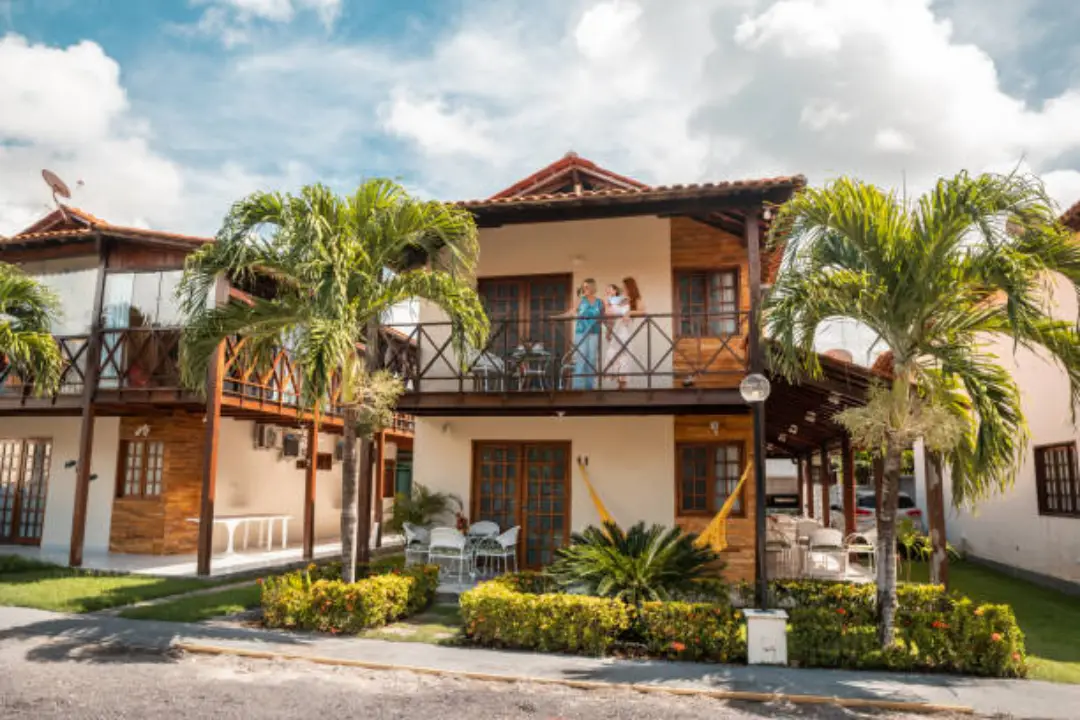
The brass keys to my dream beach house felt like victory in my palm. After thirty-two years as a librarian, after eight years of ruthless saving following my divorce, after decades of being told by my ex-husband Harold that I’d “never afford a beach house on a librarian’s salary,” I finally held proof that he’d been wrong. At sixty-seven, I, Dorothy Sullivan, stood on the weathered porch of my very own Cape Cod cottage, breathing in salt air and possibility.
The modest two-bedroom retreat had faded blue shutters and a panoramic Atlantic view that stole my breath. As I turned the key and stepped inside, sunlight painted the hardwood floors gold. My carefully selected furniture sat waiting, and through the bedroom window, I could see the narrow path leading down to my own slice of private beach.
“My home,” I whispered to the empty rooms, and the words carried a reverence earned through sacrifice—no vacations for eight years, weekend shifts at a bookstore in addition to my library position, clothes purchased only when absolutely necessary. Every penny saved while Harold’s dismissive voice echoed through our son Bradley: “Dorothy’s still chasing that beach house fantasy. Some people never learn.”
But I had learned. Just not the lesson Harold intended.
I unpacked my overnight bag slowly, savoring each moment. Tomorrow, Bradley and his wife Brooke would drive down from Boston to help move the rest of my belongings—primarily the books I couldn’t entrust to movers. I looked forward to showing my son what his mother had accomplished, though I harbored mild apprehension about Brooke’s reaction.
Brooke Thompson Sullivan had swept into our lives six years ago, a marketing director for a luxury hospitality group who lived in a world of five-star resorts and celebrity clients. My simple tastes seemed hopelessly provincial to her. She’d perfected the art of subtle dismissal—the raised eyebrow when I mentioned library work, the theatrical sigh when family gatherings didn’t meet her exacting standards, the barely concealed impatience when I spoke too long about books I loved.
I tried to maintain perspective. Brooke made Bradley happy, and with my beach house two hours from Boston, I could control visit frequency in ways impossible when I’d lived twenty minutes from their upscale condominium.
The thought had barely formed when my phone rang. Bradley’s name appeared on the screen.
“Hello, dear. I was just thinking about you,” I answered, settling into the window seat.
But it wasn’t Bradley’s voice that responded.
“Dorothy, it’s Brooke.” The clipped, efficient tone was unmistakable. “Change of plans. We won’t be coming tomorrow to help you move.”
“Oh.” I tamped down disappointment. “Is everything all right?”
“Better than all right. Bradley landed the Westfield account, so we’re celebrating. That’s why I’m calling. Since you’ve got that beach house now, we’re bringing the celebration to you. I’ve invited friends and family to join us for the weekend.”
I blinked, struggling to process this. “This weekend? But I’ve only just arrived, and the house isn’t ready for guests yet.”
“That’s why I’m giving you advance notice,” Brooke continued as if I’d expressed enthusiasm rather than reservation. “Get everything ready—bedrooms made, food on the table, and space for twenty-two people. We’re already on our way.”
“Twenty-two people?” My voice rose. “Brooke, that’s impossible. The house only has two bedrooms, and I haven’t even bought groceries.”
A dismissive laugh crackled through the phone. “Don’t be dramatic, Dorothy. People can sleep on air mattresses or whatever. There’s got to be a grocery store nearby. Bradley says your place has a deck, so we’ll mostly be outside anyway. Just make it work.”
The presumption left me momentarily speechless. This was my first day in my new home—a sanctuary purchased with years of sacrifice—and Brooke was treating it like a hotel she’d booked for a corporate retreat.
“Look, I know this is short notice,” Brooke continued, interpreting my silence as acquiescence, “but this is important for Bradley’s career. The Westfields will be there along with the senior partners. It’s a big deal. You wouldn’t want to spoil this opportunity for your son, would you?”
There it was—the subtle manipulation that had characterized so many of our interactions, the implication that my comfort and boundaries mattered less than whatever Brooke deemed a priority, with Bradley’s success used as irrefutable justification.
For a moment, I felt the familiar urge to accommodate, to apologize, to scramble to meet impossible expectations. It was what I’d done throughout my marriage to Harold, throughout Bradley’s childhood, throughout my career when patrons expected miracles with limited resources.
But something stopped me this time. Perhaps it was the brass key still clutched in my left hand, tangible proof of what I could accomplish when I valued my own desires. Perhaps it was the memory of Harold’s dismissive predictions, thoroughly disproven by the floor beneath my feet. Or perhaps at sixty-seven, I had finally reached the limit of my accommodation.
“Of course, Brooke,” I heard myself say, voice calm and pleasant. “I’ll make sure everything is ready for your arrival.”
“Perfect. We’ll be there around noon tomorrow. Don’t worry about anything fancy—just make sure it’s clean and there’s plenty to drink.”
As the call ended, I sat very still, watching waves crash beyond my window. The sun was beginning its descent, painting the water in deepening shades of blue and gold.
Slowly, deliberately, I placed my phone on the window seat and took a deep breath. A lifetime of being the reliable one, the accommodating one, the one who could always be counted on to sacrifice my needs for others, rose up to meet newfound resolve crystallizing within me.
“I’ll make sure everything is ready,” I repeated to the empty room, a smile spreading across my face that would have surprised anyone who knew only the agreeable librarian I’d been. “But not quite the way you’re expecting, Brooke.”
I’ve always believed that working in a library for three decades gives you certain skills people tend to underestimate—the ability to research efficiently, organize systematically, and most importantly, understand people’s needs, sometimes better than they understand themselves.
As I sat watching the last light fade, I began formulating my plan with the same methodical approach I’d used to catalog thousands of books.
Twenty-two people in my two-bedroom cottage with less than twenty-four hours’ notice. The sheer audacity might have overwhelmed me in the past, sent me into anxious preparation desperately trying to accommodate the impossible.
But not today. Not in this house that represented my independence, my perseverance, my refusal to accept Harold’s limitations on my dreams.
First, I needed information. I called Bradley back. My son answered on the third ring, his voice elevated by highway traffic sounds.
“Mom, did Brooke call you? Isn’t it great news about the Westfield account?”
“Congratulations, sweetheart. That’s wonderful.” I meant it, despite the circumstances. “Brooke mentioned you’re planning to celebrate at my house. Who exactly is coming, Bradley?”
“Oh, just some work people. The Westfields—they’re the clients. A couple of senior partners. Brooke’s parents are driving up from New York. Her sister Tiffany and brother-in-law. Some friends from her side. I’m not even sure I know everyone,” he admitted.
“And when did you and Brooke decide on this plan?”
A hesitation. “Well, it was kind of spontaneous. I closed the deal this morning, and Brooke thought—”
“So Brooke planned to bring twenty-two people to my new home without checking with me first.” I stated it as fact, not accusation.
Another pause. “When you put it that way… Look, Mom, I know it’s short notice, but it’s really important for my career. The Westfields are huge, and having them in a relaxed setting could mean future contracts. If it’s too much trouble—”
“It’s no trouble at all,” I interrupted smoothly. “I’ll take care of everything.”
I could practically hear his relief. “You’re the best, Mom. We should be there around noon. Love you.”
As I ended the call, I felt a familiar pang. My son had always been caught between his desire to please others and his awareness of what was right. Growing up with Harold’s dismissive attitude toward my ambitions had left its mark. Bradley had learned early that keeping peace often meant allowing stronger personalities to dictate terms.
Well, perhaps it was time for both of us to break those patterns.
I opened my laptop and began my research. First, the Thompson family—Brooke’s parents Richard and Elaine, who owned a successful chain of high-end furniture stores. Society page mentions showed Elaine was notoriously particular, serving on multiple charity boards where she was known for exacting standards. Tiffany Thompson Green and her husband Patrick ran a boutique PR firm in Manhattan specializing in crisis management for celebrities.
Next, the Westfields. Jonathan and Diana Westfield, third-generation owners of Westfield Properties, a luxury real estate development company. Their social media showed a couple in their fifties with expensive tastes and a penchant for exclusivity—private clubs, invitation-only events, carefully curated experiences.
By eleven p.m., I had compiled a comprehensive dossier on my unwanted guests. Now it was time to implement phase one.
First, I called Meredith Hansen, my oldest friend who’d retired to Wellfleet three years earlier—one reason I’d chosen this particular stretch of Cape Cod.
“Meredith, it’s Dorothy. I hope I’m not calling too late.”
“Dot, not at all. Are you finally at the beach house? How is it?”
“Perfect. Or it was until an hour ago.” I explained the situation without hiding my frustration.
Meredith’s indignation was comforting. “The nerve! After everything you went through to get that place. What are you going to do?”
“That’s why I’m calling. I need your help.”
By midnight, I’d made seven calls, sent twelve emails, and compiled a detailed schedule. My years organizing library fundraisers, community events, and children’s reading programs had given me a network of local contacts that would prove invaluable now.
People often underestimated librarians, assuming our expertise was limited to books and shushing. They failed to recognize that we were essentially community hubs, information specialists, and masters of quiet influence.
I slept surprisingly well that night. When I woke at six a.m., I felt more refreshed and focused than I had in years.
My first stop was Greta’s Market, the only grocery store within fifteen miles. The owner, Greta Svensson, had been one of my first calls the night before.
“Dorothy,” she greeted me warmly. “Everything’s arranged just as we discussed.”
“Thank you, Greta. I can’t tell you how much I appreciate this.”
“Are you kidding? After what you did for my grandson’s college applications? This is nothing.”
I smiled, remembering the hours I’d spent helping her grandson navigate scholarship opportunities and edit essays. He was now in his second year at MIT on a full scholarship.
“I still insist on paying the reservation fee.”
“Absolutely not,” she said firmly. “Consider it a housewarming gift.”
My next stop was Coastal Rentals, where Marshall Turner greeted me with equal enthusiasm. “Mrs. Sullivan, welcome to the neighborhood. Meredith called ahead. We’ve got everything set aside for you, including the special requests.”
“Especially those,” I confirmed.
He grinned. “Haven’t had this much fun since we pranked the summer tourists with the fake shark sighting last year.”
By ten a.m., I’d visited seven businesses, confirmed arrangements with local service providers, and returned home to make final preparations. As I placed fresh flowers on the dining table and made up the guest bedroom with my best linens, I hummed to myself—an old habit from library days when preparing for special events.
At eleven-thirty, I changed into a simple blue sundress, applied a touch of lipstick, and stepped onto my porch to await my guests. The ocean breeze ruffled my hair as I stood watching the road, hands clasped calmly before me, the very picture of a welcoming hostess.
Only I knew what awaited Brooke and her twenty-one guests. Only I understood that sometimes the quietest person in the room can orchestrate the loudest lesson.
At precisely eleven fifty-five, a caravan of luxury vehicles appeared, making their way down the narrow coastal road toward my little blue cottage.
I smiled, smoothing my dress with steady hands. “Let the education begin,” I whispered as the first car pulled into my driveway.
I’ve always believed the most effective lessons are delivered with a smile. As a librarian, I’d perfected the art of maintaining a pleasant demeanor while enforcing necessary boundaries.
That practiced smile was firmly in place as the first vehicle—a gleaming black Range Rover—pulled into my modest gravel driveway.
Brooke emerged from the passenger side, designer sunglasses perched on her nose, phone in hand. “Dorothy, there you are. The navigation kept trying to send us to the wrong place. This is so… quaint.” Her gaze swept over my cottage with barely concealed assessment. “Smaller than I expected from Bradley’s description.”
My son exited the driver’s side, looking harried but genuinely pleased. “Mom, the place looks great.” He embraced me warmly. “Sorry about the last-minute change of plans.”
“Not at all,” I replied. “I’m so proud of your accomplishment. Of course we should celebrate.”
Two more vehicles pulled in—a Mercedes sedan and an Audi SUV—disgorging well-dressed people who blinked in the bright coastal sunlight, their expressions ranging from curious to faintly dismayed as they surveyed their surroundings.
Brooke made rapid introductions: the Westfields, her parents Richard and Elaine Thompson, her sister Tiffany and brother-in-law Patrick, three senior partners from Bradley’s firm and their wives, two couples introduced as “dear friends,” and a young woman named Alexa, Brooke’s “absolute lifesaver of an assistant.”
Twenty-two people in total, now standing in my small front yard, designer luggage at their feet, expectation written across their faces.
“Shall we go inside?” I said brightly. “I’ve prepared a light welcome refreshment.”
I led the procession through my front door, listening to murmurs behind me. The main living area, while charming with exposed beams and panoramic ocean views, clearly wasn’t designed for twenty-two people. My carefully arranged furniture could comfortably seat perhaps eight.
“It’s so… cozy,” Elaine Thompson remarked, the word dripping with disdain.
“Where should we put our bags?” Jonathan Westfield asked, looking around for nonexistent bedrooms.
“I’ve made special arrangements,” I assured them, gesturing toward the dining table where I’d set out a pitcher of lemonade and cookies. “But first, please help yourselves while I explain the accommodations.”
They clustered awkwardly as I poured lemonade into deliberately mismatched glasses.
“As you can see,” I began pleasantly, “my cottage is rather intimate. With only two bedrooms, I knew I wouldn’t be able to accommodate everyone comfortably here. So I’ve arranged alternative accommodations at various locations around town.”
Confused murmurs rippled through the group. Brooke’s face flushed with alarm.
“Dorothy, that wasn’t necessary. We discussed this—”
“I couldn’t possibly allow everyone to be uncomfortable,” I interrupted warmly. “Though I should mention that being the start of spring season, availability was somewhat limited on such short notice.”
I retrieved a stack of envelopes and began distributing them. “I’ve prepared individual accommodation details for each of you.”
Diana Westfield opened hers first, her expression shifting to dismay. “The Harborview Motel on Route 6?”
“The only place with a vacancy for tonight,” I explained apologetically. “The reviews mentioned the traffic noise tapers off around midnight, and the musty smell is only noticeable in the bathroom.”
Jonathan’s envelope contained a reservation for the Seabreeze Inn, a modest bed-and-breakfast five miles away. “They only had one room available, so Diana will need to take the motel. I hope that’s not too inconvenient.”
As each envelope opened, reactions grew increasingly strained. The Thompson parents were assigned to separate establishments in neighboring towns. Tiffany and Patrick discovered they’d be staying at a campground with a rental tent already secured.
“The manager assured me the raccoon problem has been largely resolved,” I added helpfully.
The senior partners and their wives received bookings at a variety of establishments—a hostel with shared bathrooms, a fisherman’s cottage described as “rustic but functional,” and a room above the local bait shop.
“There must be some mistake,” Bradley said, looking uncomfortable. “Surely there are better options?”
“On a spring weekend with less than twenty-four hours’ notice?” I shook my head sadly. “I called everywhere within thirty miles. These were the only vacancies. The Cape gets quite busy with whale watching season beginning.”
Brooke had turned an interesting shade of pink. “This is unacceptable,” she hissed, dropping all pretense of politeness. “The Westfields cannot stay at a roadside motel. Do you have any idea how important they are?”
“I’m sure they’re lovely people regardless of where they sleep,” I replied innocently.
“What about here? Surely some of us can stay here.”
“Oh, of course. I’ve prepared my guest room for you and Bradley, and the Thompson parents can have my room. I’ll take the sofa. The rest will need to use the accommodations I’ve arranged.”
Diana Westfield cleared her throat delicately. “Perhaps we should consider returning to Boston.”
“But we’ve planned dinner at the Coastal Club,” Brooke protested. “It’s the most exclusive restaurant in the area. I’ve been on the waiting list for months.”
This was the moment I’d been waiting for.
“About that,” I said. “I took the liberty of confirming your reservation this morning. They have no record of a booking under your name.”
“That’s impossible,” Brooke snapped. “Check again. Thompson-Sullivan, party of twenty-two, seven p.m.”
“I spoke with the manager directly. Marcel is an old friend—he used to visit the library for our French literature discussions. He checked thoroughly and found nothing. Unfortunately, they’re fully booked tonight for a private event.”
The collective dismay was palpable. Brooke’s carefully orchestrated weekend was crumbling before her eyes.
“However,” I continued brightly, “I did manage to secure a group reservation at the Salty Dog down by the harbor. It’s not quite the Coastal Club, but they serve wonderful fresh catch, and their picnic tables have the most charming view of the fishing boats.”
“Picnic tables?” Elaine Thompson repeated faintly.
“Communal seating,” I confirmed. “Very rustic and authentic. I thought it might be a refreshing change from formal dining.”
Bradley looked utterly bewildered. The Westfields exchanged meaningful glances. Brooke’s assistant frantically typed on her phone, presumably searching for alternatives.
“Now,” I said cheerfully, “who would like a tour of the beach? The tide pools are particularly interesting this time of day.”
As the group stood in stunned silence, I caught a flicker of something unexpected on Diana Westfield’s face—not anger, but the faintest trace of amused respect. Our eyes met briefly, and I could have sworn she gave me the slightest nod.
Phase one was complete. The seeds of discomfort had been planted. Now it was time to let them grow.
The afternoon unfolded exactly as I’d orchestrated. I led my unwanted guests down to the beach, maintaining commentary about local wildlife and tidal patterns calculated to bore them senseless. Years of conducting educational tours for restless schoolchildren had taught me precisely how to sound enthusiastic while delivering information no one wanted.
“The horseshoe crab is actually more closely related to spiders than to true crabs,” I explained cheerfully, pointing to a specimen. “They’ve remained virtually unchanged for 450 million years. Isn’t that fascinating?”
Tiffany Thompson recoiled, her designer sandals sinking into wet sand. “Is it dead?”
“Oh no, just resting. Would you like to hold it? They’re quite harmless.”
The horror on her face was worth every penny I’d paid the local marine biology student to place that creature there.
After thirty minutes of my nature lecture, I suggested returning to the house for afternoon tea. Their relief was almost comical as they trudged back, designer footwear woefully inadequate for the terrain.
I’d arranged a spread that looked impressive at first glance—elegant tea service, dainty sandwiches, artfully arranged scones. “Please help yourselves. The sandwiches are a local specialty.”
Diana Westfield was first to bite into a cucumber sandwich, her expression shifting subtly as she chewed. “What an… interesting flavor.”
“Seaweed butter,” I explained enthusiastically. “And the scones contain dried dulse—a type of red algae harvested right off our shores. Tremendously nutritious, though the texture takes getting used to.”
One by one, they sampled the offerings, faces registering dismay at the deliberately unusual flavors. The tea itself—a specially ordered variety with notes of smoked fish—completed the sensory assault.
By mid-afternoon, the initial excitement had given way to dawning realization that this weekend wouldn’t be the sophisticated networking opportunity Brooke had promised. The Westfields huddled in quiet conversation. Brooke’s parents had disappeared to check accommodations, expressions grim. Various friends and colleagues formed small clusters, voices low but discomfort evident.
Brooke cornered me in the kitchen as I prepared another pot of malodorous tea.
“What exactly do you think you’re doing?” she hissed.
I arranged my features into innocent confusion. “I’m being a good hostess. Is something wrong?”
“Everything is wrong. The sleeping arrangements, the reservation mix-up, and what in God’s name is in those sandwiches? The Westfields are talking about leaving.”
“I’ve done my very best with the limited notice I was given,” I replied calmly. “Twenty-two people is quite a lot when one has owned a house for less than twenty-four hours.”
“This isn’t about the notice. You’re doing this deliberately.” Her eyes narrowed. “You’re sabotaging my event.”
I met her gaze steadily. “I’m simply working with what I have, Brooke. Just as I’ve always done when faced with other people’s expectations.”
Our standoff was interrupted by Bradley. “Everything okay?”
“Fine,” we answered simultaneously.
The evening proceeded as planned. The Salty Dog turned out to be nothing like I’d described—a charming waterfront restaurant with white tablecloths, excellent seafood, and a full bar. The owner, Jack Hansen—Meredith’s son—greeted me warmly.
“Dorothy’s practically family,” he told our group. “My father and she were great friends, and she helped me secure my small business loan when I took over. Without her letter of recommendation, I’d never have qualified.”
I watched Bradley study me with new eyes, as if seeing me clearly for the first time.
As dinner proceeded, the Westfields engaged me in conversation whenever possible, asking thoughtful questions about my library career and community service. Bradley’s colleagues, taking cues from the clients, showed newfound interest. Even Tiffany occasionally directed remarks my way, though Brooke and her parents remained coolly distant.
“A toast,” Jonathan proposed over dessert, raising his glass. “To Dorothy and her new home. May it bring you as much joy as our first property brought us.”
“To Dorothy,” the table echoed.
I raised my own glass, catching Brooke’s gaze. Her smile remained fixed, but her eyes held dawning comprehension. She was beginning to understand she’d severely underestimated her mother-in-law.
“Thank you all,” I said simply. “I’m so looking forward to tomorrow’s activities.”
The barely perceptible stiffening around the table told me they’d received my message loud and clear. The first day had been merely the opening chapter. The real lessons were yet to come.
I awoke at dawn in my own bedroom, having insisted Bradley and Brooke take the guest room. The house was quiet as I padded to the kitchen and brewed coffee—real coffee this time, not the seaweed blend I’d served yesterday.
I carried my mug to the deck, savoring solitude before the day’s events. This view, this moment of peaceful contemplation, was exactly what I’d worked eight years to achieve.
“It’s beautiful,” came a voice behind me.
I turned to find Bradley standing in the doorway, hair rumpled, looking younger and more vulnerable than usual.
“It is,” I agreed, gesturing for him to join me.
For several minutes, we sat in companionable silence.
“I owe you an apology,” he said finally. “Several, actually. I should never have let Brooke plan this weekend without consulting you first. It was presumptuous and disrespectful.”
“Thank you,” I said simply. “That means a lot.”
“The thing is, Mom, I didn’t even recognize what was happening until I saw you with the Westfields last night. The respect in their voices made me realize how long it’s been since I really saw you.”
I nodded, understanding exactly what he meant.
“Dad did that to you, didn’t he? He stopped seeing you.”
“Yes,” I acknowledged. “And eventually I stopped trying to be seen. It was easier that way, less painful—until it wasn’t.”
Bradley was quiet, absorbing this. “Is that why you’re doing all this?”
“I spent too many years being invisible, Bradley. I won’t do it anymore.”
“I get that. But the elaborate setup—you must have made dozens of calls.”
“I did. One advantage of being a librarian for thirty-two years is that you know everyone and everyone owes you a favor or two. People underestimate the influence of the woman who waived their late fees, helped their children with research projects, or wrote recommendation letters for college applications.”
Bradley chuckled. “Remind me never to get on your bad side.”
“You’re my son. You could never truly be on my bad side. But you can disappoint me. And you did.”
His smile faded. “I know. I’m sorry.”
“What happens next time Brooke makes plans that don’t consider my boundaries? Will you speak up then?”
He didn’t answer immediately. “I don’t know. I want to say I’ll do better, but it’s complicated. Brooke is… not easy to stand up to.”
“The question is whether the relationship allows each person to be fully themselves, or whether one must constantly diminish to accommodate the other.”
“Are you saying I should leave Brooke?”
“No. I’m saying you should remember who you are beneath the corporate success and strategic marriage. That thoughtful boy who stood up for bullied kids. That young man who chose to study literature before Harold convinced you business would be more practical. The son who called me every Sunday during college because you knew it would make me happy.”
Tears welled in his eyes. “I haven’t thought about that version of myself in a long time.”
“He’s still there, just waiting for permission to exist again.”
The sliding door opened and Brooke appeared, already immaculately dressed despite the early hour.
“There you are,” she said to Bradley. “We need to figure out today’s plan. Half the group wants to drive back to Boston, and the Westfields are being strangely non-committal.”
Bradley shot me a quick glance. “Maybe we should consider scaling back, Brooke. Mom just moved in yesterday.”
“Scaling back isn’t an option. The Westfield contract depends on this weekend going smoothly.” She turned to me. “Dorothy, I need to know what you’ve planned so I can work around it.”
I took a leisurely sip of coffee. “I’ve arranged a whale watching expedition. The boat leaves at ten.”
“Whale watching?” Brooke repeated incredulously. “The Westfields are not going whale watching.”
“Actually, Jonathan seemed quite enthusiastic when I mentioned it last night.”
The morning expedition unfolded exactly as planned. Captain Mike—an old friend whose children had grown up in my library’s reading corner—gave them the “full Cape Cod experience.” I was introduced as “Dr. Dorothy Sullivan, volunteer naturalist with the Cape Cod Marine Institute”—a magnificent fabrication that Mike embraced enthusiastically.
As the boat pitched through choppy waters, I delivered a meticulously researched presentation on the less appealing aspects of whale biology—parasitic infestations, blubber decomposition, digestive processes—all described in vivid detail calculated to unsettle even the strongest stomachs.
By the time I concluded, three of Bradley’s colleagues had retreated below deck, Tiffany was clinging to the railing looking distinctly unwell, and Brooke had abandoned all pretense of composure.
The “simple picnic” consisted of tuna sandwiches with extra mayonnaise left sitting too long, hard-boiled eggs with pungent dill sauce, and bread pudding with heavy cream—all served as the boat hit the roughest water.
But Diana Westfield proved remarkably resilient, approaching me at the railing as we returned to port. “This has been the most entertaining business weekend I’ve experienced in years.”
“I’m glad someone’s enjoying it,” I replied.
“Jonathan is absolutely delighted. He’s been complaining for years about artificial corporate social events. This is real. Uncomfortable at times, but authentic.” She paused. “You know what he said to me last night? ‘That woman has backbone. I like doing business with people who have backbone.'”
As our bedraggled party disembarked, Brooke attempted to rally her forces. “We’ll reconvene at six for cocktails—”
“Actually,” Jonathan interrupted, “Diana and I were rather looking forward to that beach bonfire Dorothy mentioned.”
Diana nodded enthusiastically. “It’s been ages since we’ve done anything so charmingly rustic.”
That evening, I hosted a bonfire on my private beach—simple, genuine, and surprisingly magical. As I told ghost stories under the stars, the Westfields engaged me in conversation about community building and authentic connection. Bradley’s colleagues showed newfound interest in my perspectives. Even Tiffany occasionally directed remarks my way.
Only Brooke remained detached, eventually excusing herself early.
The next morning, I found her on my deck, already dressed but lacking her usual commanding presence. She looked younger, vulnerable.
“May I join you?” she asked quietly.
“Of course.”
We sat in silence for several minutes before she spoke. “I couldn’t sleep. I kept thinking about something Diana said—that control is an illusion and the only real power comes from authenticity.”
I waited, giving her space.
“This whole weekend, you planned everything, didn’t you? It was all deliberate.”
“Yes,” I admitted simply.
To my surprise, she didn’t erupt in anger. Instead, a reluctant smile tugged at her mouth. “It was impressive. Meticulous, actually. I didn’t think you had it in you.”
“Most people don’t. That’s rather the point.”
She sipped her coffee thoughtfully. “In my world, respect is taken, not given. You identify what you want, strategize how to get it, and execute without hesitation. It’s always worked for me.”
“And yet here we are, with the Westfields connecting more authentically with me than with your carefully orchestrated luxury experience.”
Pain flashed across her face. “Yes. Here we are.”
“Brooke, what did you hope to achieve this weekend? Beyond impressing the Westfields, what outcome were you seeking?”
She stared into her coffee. “Security. Bradley’s position isn’t as solid as everyone thinks. The Westfield account is make-or-break for his partnership track. My parents struggled financially my entire childhood. I swore I’d never live that way as an adult. So the designer clothes, the luxury vacations, the social climbing—it’s all insurance. If you have the right connections, you’re protected.”
I reassessed her, seeing beyond the polished surface to the anxious child who’d grown up equating status with safety.
“True security comes from within, Brooke. From knowing who you are and standing firmly in that truth regardless of circumstances.”
She studied me thoughtfully. “Like you did when Harold dismissed your dream. When he sold your piano.”
So Bradley had shared our conversation.
“Yes. Though it took me far too long to learn that lesson.”
“I don’t know how to be any other way,” she admitted.
“It’s who you’ve chosen to be,” I said gently. “There’s a difference.”
Bradley emerged then, completing our small circle. As we sat together watching the morning unfold, I felt unexpected hope. Boundaries had been established, yes, but bridges had also been tentatively extended.
Later, at our final brunch, Jonathan announced they’d decided to move forward with Bradley’s proposal, with modifications inspired by my insights about community-centered design. “Your mother’s approach to authentic connection has been illuminating,” he told Bradley.
After the Westfields departed, the three of us lingered over coffee.
“Jonathan basically redesigned our entire approach based on conversations with you around a bonfire,” Bradley said in amazement.
“People connect through genuine experiences, not staged ones,” I replied, glancing at Brooke.
“I’ve been approaching this all wrong,” Brooke said suddenly. “Not just this weekend, but everything. I’ve been so focused on creating the perfect impression that I’ve missed what actually matters.”
Bradley reached across to take my hand. “I’m sorry, Mom. For taking you for granted, for not standing up for your boundaries, for forgetting who you really are.”
“And I’m sorry too,” Brooke added, the words clearly unfamiliar but sincere. “For treating your home like a hotel, your time like a commodity, and your feelings like an inconvenience.”
“Thank you both. That means a great deal.”
“So where do we go from here?” Bradley asked.
“You two head back to Boston. I have a house to settle into. And perhaps next time you visit”—I smiled at Brooke—”you might consider calling first and bringing fewer than twenty-two people.”
They both laughed, the sound carrying through the small cafe like a promise.
After they departed, I found a small package in the guest room—a framed photograph of five-year-old Bradley on my lap as I read to him, both of us absorbed in the story. Below it, Bradley had written: “To the woman who taught me the power of stories, boundaries, and second chances. I’m listening now.”
I placed the frame on my bedside table, then carried my favorite book and tea to the deck.
The weekend’s drama had concluded, but a new story was beginning—one where Dorothy Sullivan was finally the author of her own life.
As I opened my book, ocean breeze gently turning pages, I smiled at the perfect simplicity of this moment I’d worked so hard to achieve.
Some dreams take longer than others to realize. Some boundaries require dramatic defense before they’re respected. And some of life’s most important lessons arrive in unexpected packages—even in the form of twenty-two unwanted guests on the very first day of your hard-earned new beginning.
But sitting there surrounded by tangible results of my perseverance, I couldn’t help but think the timing had been perfect after all.
I raised my teacup to the horizon. “To new chapters,” I whispered. “May they be written entirely in my own hand.”

Adrian Hawthorne is a celebrated author and dedicated archivist who finds inspiration in the hidden stories of the past. Educated at Oxford, he now works at the National Archives, where preserving history fuels his evocative writing. Balancing archival precision with creative storytelling, Adrian founded the Hawthorne Institute of Literary Arts to mentor emerging writers and honor the timeless art of narrative.