At My Sister’s Engagement Party, Uncle James Hugged Me
I leaned against the bar at my sister’s engagement party, watching my family celebrate a life that wasn’t mine, in a room full of people who had long ago decided I wasn’t worth their attention. The glass of pinot noir in my hand had gone warm an hour ago, but I kept holding it anyway—a prop, a shield, something to do with my hands while I occupied the careful space between present and invisible.
My name is Sophia Martinez, and for eight years, I have been the “less successful” daughter. The one who made questionable choices. The one who never quite lived up to the family’s expectations. The one whose achievements—when acknowledged at all—were measured against my younger sister Brooke’s and found perpetually wanting.
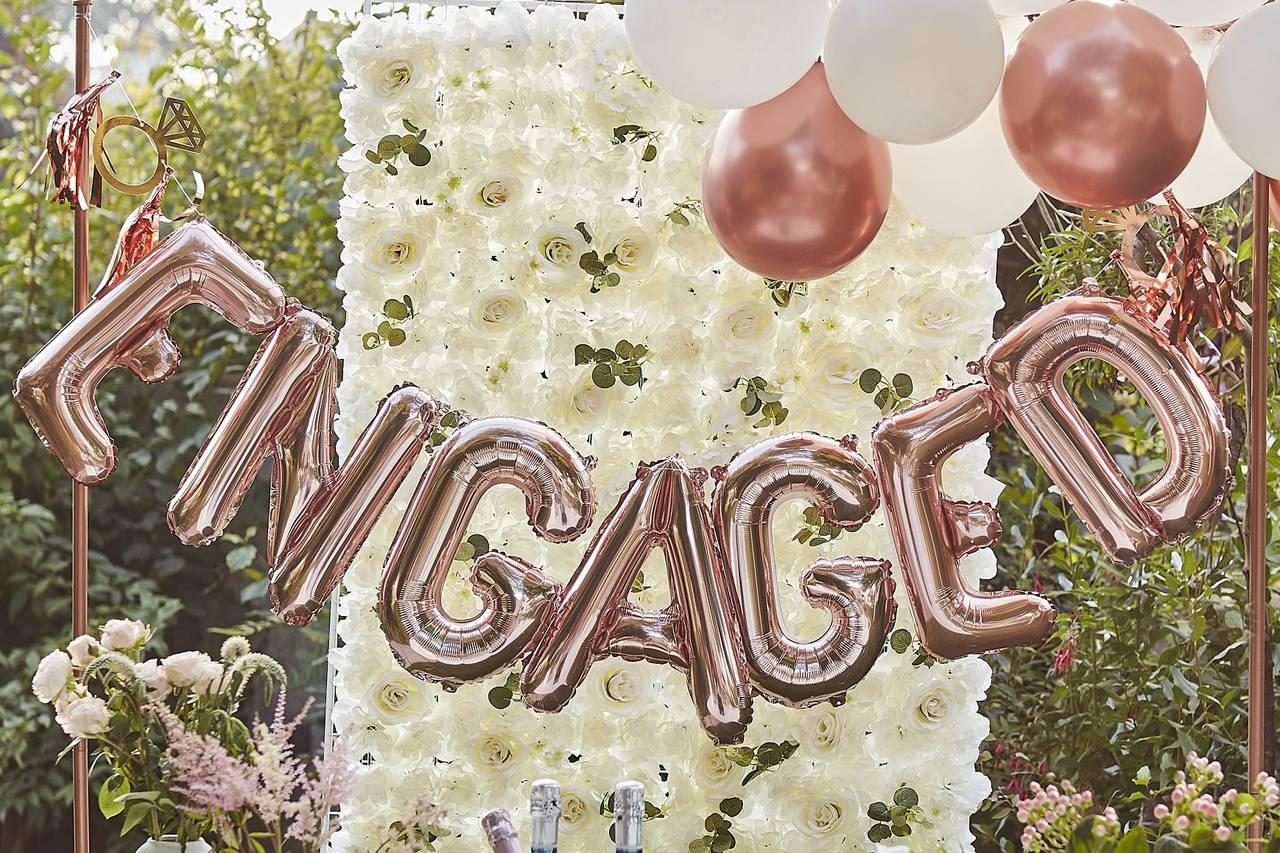
Tonight was supposed to be Brooke’s night. Her engagement party. Her moment to shine in a burgundy silk dress that probably cost more than my monthly car payment, showing off the two-carat diamond that my parents had casually mentioned cost “almost as much as a down payment on a house.”
Almost. That word hung in the air like a challenge every time they said it, heavy with implication.
The venue was predictably perfect—a historic mansion converted into an events space, with crown molding and crystal chandeliers and floor-to-ceiling windows that overlooked manicured gardens. My mother had planned every detail with the precision of a military campaign, from the color-coordinated floral arrangements to the carefully curated guest list that included every person whose opinion she valued.
Which meant extended family, her book club, my father’s golf buddies, Brooke’s entire social circle, and exactly three of my friends—the ones my mother deemed “presentable” enough to not embarrass the family.
I’d arrived on time, dressed in the navy dress my mother had suggested I wear because “it’s slimming and appropriate for the occasion.” I’d smiled at the right moments, made small talk with relatives who remembered my name but not what I did for a living, and spent most of the evening doing what I’d become exceptionally good at: fading into the background while remaining technically present.
“Refill, ma’am?” the bartender asked, appearing beside me with the practiced attentiveness of someone who’d been trained to anticipate needs.
I glanced at my glass. The wine had separated slightly, a faint film on top, evidence of how long I’d been holding it without drinking.
“I’m good, thanks,” I said.
He nodded and moved to the next customer, a woman in pearls who ordered a gin and tonic with specific instructions about the lime-to-tonic ratio.
I turned back to watch the party unfold like a performance I’d seen too many times to find entertaining anymore. Brooke stood at the center of a cluster of admirers—friends, cousins, my mother’s friends who treated her like a precious commodity—all of them cooing over the ring, the dress, the perfect fiancé who stood beside her with his hand on the small of her back in that possessive-but-tender way that screamed “good husband material.”
Michael was, by all objective measures, exactly what my parents had wanted for Brooke. Corporate finance, six-figure salary, family money, the right schools, the right connections. He was handsome in that catalog-model way—square jaw, perfect teeth, hair that probably required fifteen minutes and three products every morning. He laughed at my father’s jokes, complimented my mother’s event planning, and looked at Brooke like she was the sun around which his world orbited.
He was, in short, everything I’d apparently failed to find in my own life.
“You’re so lucky,” an older aunt—I think her name was Margaret, or maybe Martha—gushed from somewhere in the crowd around Brooke. “Two carats! When I got engaged back in 1978, we could barely afford a ring at all. We put it on layaway.”
My mother laughed, that particular laugh she reserved for moments when she wanted everyone to know she was both humble and proud at the same time. “Well, times are different now, aren’t they? And Michael really wanted to show how serious he is about taking care of our girl.”
Our girl.
Not “one of our girls.” Not “Brooke and Sophia.” Just the singular. The only one who mattered.
I swirled the wine in my glass, watching the liquid catch the light from the chandeliers overhead. The room smelled like expensive perfume and fresh flowers and the particular scent of money being spent on appearances. Somewhere behind me, someone laughed—high and bright and slightly drunk—and the sound cut through the murmur of conversation like a bell.
The DJ’s voice suddenly boomed over the sound system, cutting through the background music that had been providing a gentle soundtrack to the evening. “Ladies and gentlemen, let’s give another round of applause for our beautiful couple, Brooke and Michael!”
Obedient applause rippled through the room like a wave. I clapped along with everyone else, the sound of my own hands coming together lost in the collective noise. Brooke waved, her diamond catching the light like it had been choreographed. Michael pulled her close and kissed her temple, and several women near me actually sighed with vicarious romance.
The applause was just beginning to fade when I heard my father’s voice, pitched with genuine surprise and what sounded like relief.
“James! You made it!”
The name cut through my detached observation like a knife through silk. I turned, already knowing what I would see but needing to confirm it anyway.
Uncle James—my father’s younger brother—was weaving through the crowd toward our family’s central cluster, rolling a carry-on suitcase behind him, his suit jacket rumpled from travel, his tie loosened just enough to suggest he’d been tugging at it during a long flight.
“Sorry I’m late,” he called, raising one hand in greeting. “Connection out of Denver was a nightmare. I’m convinced airports are specifically designed to destroy the human soul.”
He said it with the easy humor of someone who was used to being the center of attention and enjoyed it. Heads turned toward him automatically, drawn by that particular magnetism that successful people seem to radiate without trying.
Uncle James wasn’t just my father’s brother. He was the family success story. The proof that the Martinez genes contained greatness, that we came from stock that could achieve extraordinary things if properly cultivated. A venture capitalist who’d caught the late-90s tech wave and managed to get off the surfboard before the bubble burst, he now lived in San Francisco in a townhouse that my mother had Googled and then shown to everyone she knew, whispering the Zillow estimate like it was a holy revelation.
“Three point two million,” she’d told her book club, her voice hushed with awe. “In Pacific Heights. Can you imagine?”
But more importantly to me—more importantly than his money or his success or his townhouse in Pacific Heights—Uncle James was the only person in my extended family who had consistently treated me like I was worth paying attention to. Who asked about my work, my life, my actual thoughts about things. Who remembered details from previous conversations and followed up on them. Who didn’t treat me like Brooke’s unfortunate older sister, but like an actual individual person with value.
He reached my parents first, pulling my father into a one-armed hug, kissing my mother on the cheek with practiced warmth.
“Look at you two,” he said, stepping back to survey them with genuine affection. “Parents of the bride-to-be. Patricia, you’re absolutely glowing.”
“It’s the lighting,” my mother said, waving her hand dismissively even as she preened under the compliment. “And probably the champagne.” She reached for another glass from a passing waiter’s tray.
James laughed. “Always so modest.”
He turned to Brooke next, and his expression softened with avuncular pride. “And there’s the star of the evening.”
Brooke practically glowed. “Uncle James,” she said, leaning in for a hug while carefully angling her left hand so the diamond would catch his eye. “I wasn’t sure you’d make it.”
“For my favorite niece’s engagement party?” he said, the teasing note obvious. “I’d have chartered a private plane if I had to.”
Brooke giggled—actually giggled, like she was fifteen instead of twenty-six—and my mother beamed with the satisfaction of someone whose event had just been validated by exactly the right person.
Then James’s gaze shifted, scanning the room with the automatic thoroughness of someone who knew there should be one more person to acknowledge. His eyes found me at the bar, and his entire expression changed—brightening in a way it hadn’t for anyone else, warming with what looked like genuine pleasure.
“Sophia,” he said, and my name in his voice sounded different than it did in anyone else’s. Like it belonged to someone important. “God, it’s good to see you.”
He left his suitcase with my father and closed the distance between us in three long strides, pulling me into a hug that was solid and unhurried and completely unlike the perfunctory greetings I’d received from everyone else that evening.
“You look incredible,” he said, stepping back to hold me at arm’s length, really looking at me. “Seriously. California clearly agrees with you. How’s life in that one-point-five million dollar house you bought? Is the neighborhood everything you hoped it would be?”
The words came out casual, conversational, the way someone might ask about a new job or a recent vacation.
The effect on the room was seismic.
The conversation in our immediate vicinity didn’t just quiet—it died. Stopped mid-sentence, mid-word, mid-breath. The guests nearest to us went utterly still, their heads turning with that particular angle people get when they know something interesting is happening and want to catch every word without appearing to eavesdrop.
The DJ’s transitional music suddenly sounded too loud in the silence.
Across the small circle of family, Brooke’s hand—which had been mid-gesture, probably describing the exact moment Michael had proposed—froze in the air. The diamond stopped mid-sparkle, caught in the chandelier light like a small, expensive exclamation point.
My mother’s champagne glass halted halfway to her lips, the golden liquid inside catching the light.
My father’s face went from pleasantly surprised to something else entirely. The color drained from his cheeks so fast it was like watching someone pull a plug.
And Brooke—Brooke just stared at me with an expression I’d never seen on her face before. Something between shock and calculation and dawning horror.
Uncle James, oblivious to the bomb he’d just detonated, was still smiling at me, waiting for my answer.
“It’s perfect,” I said, my voice surprisingly steady. “The neighborhood is exactly what I wanted. Quiet. Safe. Good schools nearby for when I—” I caught myself before finishing that sentence in front of this particular audience. “For the future.”
“Good schools?” my mother’s voice came out strangled. “Sophia, what is James talking about?”
I turned to look at her. Really look at her. At the confusion and accusation already forming on her face. At my father beside her, his mouth slightly open like he wanted to speak but couldn’t figure out what words to use. At Brooke, whose perfect evening was suddenly not about her anymore.
“My house,” I said simply. “In Pasadena. I closed on it three months ago.”
The silence that followed was so complete I could hear the ice settling in someone’s drink two tables away.
“You bought a house,” my father said slowly, like he was testing the words to see if they made sense when spoken aloud. “A house. In Pasadena.”
“Yes.”
“For one point five million dollars,” my mother added, her voice climbing slightly.
“One point four, actually,” I corrected. “But Uncle James always rounds up.”
James, finally sensing that something was very wrong, looked between me and my parents with growing confusion. “Wait, did you… did you not tell them?”
“I did,” I said. “I called Mom two weeks after I closed. I told her I’d bought a house. She said ‘that’s nice dear’ and changed the subject to Brooke’s engagement photos.”
“I thought you meant a condo!” my mother protested, her voice rising. “Or a townhouse! Something small! Not a…” She struggled for words. “Not a million-dollar house!”
“Why would you assume that?” I asked, genuinely curious.
“Because you…” She gestured vaguely at me, at the space I occupied, at everything I apparently represented. “You work in tech support!”
“I’m a senior software architect,” I corrected quietly. “I’ve been promoted three times in the last four years. I make $340,000 a year, plus stock options. I told you that. Multiple times.”
The number landed like a physical object. I watched my mother’s face cycle through expressions—confusion, disbelief, calculation, something that might have been anger or might have been grief.
“That’s impossible,” Brooke said, and her voice had an edge to it I recognized. The edge that appeared whenever I threatened to take attention away from her. “You can’t possibly make more than Michael, and he can barely afford—”
She stopped herself, but the damage was done.
“Barely afford what?” I asked. “The ring? The wedding? The house you’re planning to buy in that suburb you keep posting about?”
Brooke’s face flushed. “That’s not—I didn’t mean—”
“Sophia,” my father cut in, his lawyer voice activating. “I think we need to discuss this privately. This isn’t the time or place—”
“Really?” I set my wine glass down on the bar with a soft click. “Because for the last eight years, every family gathering has been the time and place to discuss my failures. My questionable choices. My lack of direction. My inability to ‘settle down’ or ‘find something stable’ or ‘be more like Brooke.'”
“We never said that,” my mother protested weakly.
“You said exactly that. Last Thanksgiving. You said, ‘Why can’t you be more like your sister? She has her life together.'”
My mother’s mouth opened and closed. No sound came out.
Uncle James was watching this unfold with the expression of someone who’d accidentally started a fire and was trying to decide whether to pour water on it or just let it burn.
“I’m confused,” he said carefully. “You all didn’t know Sophia bought a house? She didn’t tell you about the promotion? The raise? Any of it?”
“I tried,” I said, looking at him instead of my parents because it was easier. “I told them I got promoted. Mom said that was nice but had I heard that Brooke made partner at her consulting firm—which she didn’t, by the way, she’s still a senior associate. I told them I was looking at houses. Dad said I should be careful about overextending myself and maybe consider renting for a few more years. When I tried to explain that I’d been pre-approved for a substantial mortgage, Mom changed the subject to Brooke’s engagement.”
“Because Brooke’s engagement was happening right then,” my mother said defensively. “It was important family news—”
“And my life isn’t?” I asked. “My promotions aren’t? My house isn’t? When exactly does my news become important enough to acknowledge?”
The silence that followed was different than before. Heavier. More terrible.
Around us, the party had essentially stopped. Guests were no longer even pretending not to listen. The DJ had given up trying to fill the silence with music. Even the waiters had slowed their circuits, sensing drama.
“You’re being dramatic,” Brooke said, but her voice lacked conviction. “We’ve always supported you. We came to your college graduation. We—”
“You came to my college graduation and spent the entire lunch afterward talking about the internship you’d just landed,” I interrupted. “Dad spent twenty minutes explaining to the waiter how proud he was of his daughter who was going into consulting. He meant you. The waiter thought I was a family friend.”
“That’s not—”
“It is. You know it is. All of you know it is.” I looked at each of them in turn. “I have spent eight years trying to get you to see me. Really see me. To acknowledge that I’m successful. That I’m capable. That my life and my choices have value. And every single time, you’ve found a way to dismiss it or minimize it or redirect the conversation back to Brooke.”
“That’s not fair,” my father said. “We love both our daughters equally—”
“No, you don’t.” The words came out flat, factual. “You love the daughter who meets your expectations and tolerates the one who doesn’t. And somewhere along the way, you decided I was the disappointment without ever actually paying attention to what I was accomplishing.”
“We didn’t decide you were a disappointment,” my mother said, and there were tears in her eyes now. “We just… Brooke was always so clear about her path. So focused. And you were always… trying different things. Changing jobs. We worried—”
“I changed jobs because I was being recruited up,” I said. “Every job change came with a promotion and a significant salary increase. But you never asked about that. You never asked why I was leaving or where I was going or what the new role entailed. You just saw me changing jobs and decided I was unstable.”
Uncle James cleared his throat. “For what it’s worth,” he said quietly, “I’ve been following Sophia’s career for years. She’s one of the most talented software architects in her field. She was headhunted by three major tech companies last year alone. The house she bought? She paid forty percent down. In cash. She has zero debt except the mortgage, and she could pay that off in five years if she wanted to. She’s not just successful. She’s wildly successful. And you all missed it because you weren’t looking.”
The words hung in the air like an accusation.
My mother’s tears spilled over. “Sophia, honey, if we’d known—”
“You did know,” I said. “I told you. Multiple times. You just didn’t believe me. Or you didn’t care enough to pay attention. I’m not sure which is worse.”
“So what?” Brooke snapped, and there it was—the anger she’d been holding back. “You bought a nice house. Congratulations. Do you want a medal? Do you want us to throw you a party?”
“I don’t want anything from you,” I said, and realized as I said it that it was true. “I stopped wanting your approval somewhere around year three of you not giving it. I stopped trying to compete for your attention around year five. By year six, I was just showing up to these things out of obligation. And now?” I looked around at the frozen party, at the relatives watching like this was dinner theater. “Now I’m done.”
“Done?” my mother echoed. “What do you mean, done?”
“I mean I’m leaving. Not just the party. All of it. The obligatory holiday dinners where you ask Brooke about her life and ask me if I’m ‘still doing that computer thing.’ The birthday lunches where you spend an hour talking about Brooke’s accomplishments and five minutes asking if I’m dating anyone. The family photos where you position Brooke in the center and me slightly off to the side. All of it.”
“You don’t mean that,” my father said, but his voice was uncertain.
“I do.” I picked up my clutch from the bar. “I’m tired of being the daughter you pretend to care about. I’m tired of being the less successful one when I’m objectively more successful than anyone in this room except maybe Uncle James. I’m tired of watching you celebrate Brooke’s life while treating mine like an afterthought. And I’m especially tired of feeling guilty about being tired.”
“Sophia, please,” my mother reached for me, but I stepped back.
“I hope you have a beautiful wedding, Brooke,” I said. “I really do. You deserve to be happy. But I won’t be there. I can’t keep showing up to celebrate a family that doesn’t celebrate me back.”
“You’re seriously going to miss my wedding because you’re jealous?” Brooke’s voice was sharp, cutting.
“I’m not jealous,” I said. “I’m exhausted. There’s a difference.”
I turned to Uncle James. “Thank you,” I said. “For seeing me. For asking about my life. For being the one person in this family who treated me like I mattered.”
“Sophia,” he said gently, “you don’t have to do this.”
“Yeah,” I said. “I really do.”
I walked through the silent crowd, through the relatives who would definitely be talking about this for years, through the beautiful venue my mother had spent months planning, and out into the cool evening air.
My phone buzzed before I even reached my car. Text messages, already coming in.
Mom: “Please come back. We can talk about this.”
Dad: “You’re being irrational. Come back inside.”
Brooke: “You just ruined my engagement party. I hope you’re happy.”
I deleted them all without responding.
There was one more text, from Uncle James: “I’m proud of you. Lunch next week? My treat. I want to see the house.”
I smiled and typed back: “Absolutely. Thank you.”
I drove home to my 1.4 million dollar house in Pasadena—the one with the garden I was planning and the home office with the view and the guest room I’d decorated in blues and grays because I liked them, not because they matched anyone else’s aesthetic. I parked in my two-car garage, walked through my front door, and stood in my living room looking at the life I’d built without their approval or their acknowledgment or their support.
And for the first time in eight years, I felt light.
My phone rang around midnight. My mother, probably. Or my father. Maybe even Brooke, ready to tell me exactly what she thought of my dramatic exit.
I let it go to voicemail.
The next morning, I woke up in my house, made coffee in my kitchen, and sat on my back patio watching the sunrise over the neighborhood I’d chosen. My phone had seventeen missed calls, twenty-three text messages, and four voicemails.
I didn’t check any of them.
Instead, I called my real estate agent. “Hey, Jennifer? It’s Sophia. Remember that investment property we talked about? The duplex in Silver Lake? Let’s make an offer.”
Because here’s what my family never understood: I didn’t need them to believe in me. I’d been succeeding without their belief for years. What I’d needed was for them to see me. To acknowledge that I existed as more than Brooke’s less interesting sister.
And when they finally did see me—when Uncle James had forced them to see me—it was already too late.
I spent that week blocking numbers, deleting emails, and building the life I wanted. Uncle James came for lunch the following Tuesday. We sat on my patio, ate takeout from the Thai place down the street, and talked about everything except my family.
“They’re calling me,” he admitted. “Your parents. They want me to talk to you.”
“Are you going to?” I asked.
“Nope,” he said. “I think you made the right call. Family isn’t about obligation. It’s about respect. And they didn’t respect you.”
“Thank you for saying that.”
“Thank you for finally believing it.”
Six months later, I’m sitting in that same house, in the home office I designed, working on a project that will probably earn me another promotion. My investment property is generating positive cash flow. I’m dating someone who thinks my success is attractive rather than threatening. And I haven’t spoken to my parents or Brooke since that night.
I heard through Uncle James that Brooke’s wedding was beautiful. That my mother cried when she realized I really wasn’t coming. That my father gave a speech about family that everyone said was touching but that Uncle James described as “too little, too late.”
I don’t know if I’ll ever reconcile with them. Maybe someday. Maybe never.
But I know this: I’m done being the less successful daughter. I’m done being the afterthought. I’m done showing up for people who can’t be bothered to show up for me.
And I’m finally, completely, peacefully done apologizing for being exactly who I am.
THE END

Ethan Blake is a skilled Creative Content Specialist with a talent for crafting engaging and thought-provoking narratives. With a strong background in storytelling and digital content creation, Ethan brings a unique perspective to his role at TheArchivists, where he curates and produces captivating content for a global audience.
Ethan holds a degree in Communications from Zurich University, where he developed his expertise in storytelling, media strategy, and audience engagement. Known for his ability to blend creativity with analytical precision, he excels at creating content that not only entertains but also connects deeply with readers.
At TheArchivists, Ethan specializes in uncovering compelling stories that reflect a wide range of human experiences. His work is celebrated for its authenticity, creativity, and ability to spark meaningful conversations, earning him recognition among peers and readers alike.
Passionate about the art of storytelling, Ethan enjoys exploring themes of culture, history, and personal growth, aiming to inspire and inform with every piece he creates. Dedicated to making a lasting impact, Ethan continues to push boundaries in the ever-evolving world of digital content.