They Demolished My Lake House for My Brother—I Made Them Pay
I pulled into the gravel driveway of my lake house just after noon on Friday, already exhaling the week out of my chest. The sound of tires crunching on stone had always been the signal that the real world was falling away behind me. Three days off. No clients, no calls, no emails flagged urgent. Just me, the Hill Country lake, and the little house I’d spent five years turning into a sanctuary.
The drive from Austin had taken exactly two hours and seventeen minutes, the same route I’d taken dozens of times before. Past the highway exits that grew progressively more rural, through the small towns where gas stations doubled as restaurants, finally onto the winding roads where cedar trees pressed close to the asphalt and the air smelled like limestone and water.
I had been fantasizing about this weekend for six weeks, ever since I’d closed the Henderson deal that had consumed every waking hour of my life. Commercial real estate brokerage in Austin was lucrative, but lately the pressure had been suffocating—fourteen-hour days, client dinners that stretched past midnight, negotiations that required the diplomatic skills of a UN ambassador and the patience of a saint.
This lake house was supposed to be my antidote to all of that.
When I opened the front door, I thought I had walked into the wrong house.
The cream sofas I’d found at an estate sale in Fredericksburg—the ones I’d spent a weekend reupholstering myself, choosing fabric that wouldn’t show stains but still felt luxurious—were gone. The vintage lake photographs I’d collected over years, each one a black-and-white moment of Texas lake life from the 1940s and 50s, carefully framed and arranged—gone. The hardwood floors I’d sanded and stained myself over one brutal July weekend, working until my back screamed and my hands blistered—buried under dust and splintered boards and what looked like sawdust mixed with drywall powder.
The living room wasn’t a living room anymore. It was exposed beams, ripped-out drywall hanging in jagged strips, and a concrete mixer sitting where my coffee table used to be. A coffee table I’d built myself from reclaimed barn wood, following YouTube tutorials and cursing my way through joinery that should have been simple but never was.
I stood in the doorway, unable to process what I was seeing. My brain kept trying to reconcile the memory of this space—warm and cozy, with afternoon sunlight streaming through the windows onto those cream sofas—with the construction zone in front of me.
The kitchen was worse. So much worse.
My custom cabinets—the ones I’d saved for three years to afford, designed by a carpenter in Dripping Springs who did beautiful work with local cedar—were ripped out. Not carefully removed. Ripped out, leaving gaping holes in the walls and exposed pipes jutting from where the sink used to be. The marble countertops I’d installed last spring, a pale gray-veined stone I’d found at a remnant sale and had spent weeks planning how to template and install—shattered on the floor in chunks and shards that crunched under my feet as I stepped forward.
My vintage farmhouse sink, the one I’d driven four hours to San Antonio to find after seeing it at an antique architectural salvage yard, the one that had cost me $800 and required two strong friends to help me load into my SUV—gone. Just gone.
In its place: concrete dust, construction debris, and stacks of new cabinetry still in boxes leaning against the far wall. High-end appliances wrapped in plastic with brand names I recognized as expensive. A blueprint spread out on a makeshift table made from sawhorses.
I was standing there, phone already in my hand though I wasn’t sure who to call first—the police? my insurance company? a lawyer?—when I heard footsteps on the porch. Heavy footsteps, followed by lighter ones.
“Bella, sweetie, you’re here early.”
My mother walked in like she was arriving at a spa day, not a construction site. White linen pants that probably cost more than my monthly car payment, a coral blouse that complemented her carefully maintained tan, silver hair pulled back in the neat bun she’d worn for as long as I could remember. My father hovered behind her, looking uncomfortable in cargo shorts and a fishing vest, his eyes not quite meeting mine.
Her smile—bright and cheerful—froze on her face when she saw my expression.
“What happened to my house?”
My voice came out thin, reedy. I sounded young. I hated how young I sounded.
“Oh, don’t worry about the mess,” she said, waving her hand like we were talking about a dirty dish left in the sink. Her rings caught the light—were those new? “The contractor said they’ll have everything cleaned up by next month. It’s going to look absolutely beautiful when it’s finished. You’re going to love the new kitchen. The designer picked out this gorgeous quartzite for the counters, and the appliances are top-of-the-line. Viking range, Sub-Zero refrigerator—”
“Finished?” I repeated, my voice getting sharper. “Who authorized this?”
The Discovery
I had bought this house five years ago with my own money. My own down payment that I’d saved for seven years, living in a studio apartment and driving a car that broke down twice a month. My own mortgage payments that came out of my account every single month without fail, even during the lean years when deals fell through and commissions were sparse.
I had spent countless weekends driving back and forth from Austin, choosing paint colors and testing them on the walls in different lights, refinishing the dock that extended into the lake plank by plank, planting flower beds along the stone pathway that led from the driveway to the water. I’d learned about native Texas plants—bluebonnets and Indian paintbrush, black-eyed Susans and purple coneflowers—so the landscaping would be both beautiful and sustainable.
This wasn’t just a house. This was proof that I could build something, that I could create a space that was entirely mine.
And now it was destroyed.
My mother blinked at me, genuinely confused by my reaction. Her head tilted slightly, the way it did when she was trying to understand why someone wasn’t agreeing with her obvious wisdom.
“Well, we did, honey. Your father and I. We’ve been planning this renovation for months. I’ve been working with the most wonderful designer—she has an office in Marble Falls, does work all over the Hill Country—and she helped us plan everything. Open concept, really modern but still rustic. It’s going to increase the property value significantly.”
I pulled out my phone and scrolled frantically through my texts. My mother texted me constantly—multiple times a day, usually. Updates about my nephew’s baseball games, questions about whether I was coming to Sunday dinner, reminders about my cousin’s upcoming wedding, photos of recipes she thought I should try, links to articles about successful women in real estate that she thought would “inspire” me.
Nothing—absolutely nothing—about demolishing my house. Not a single text that said “we’re planning a renovation” or “the contractors are coming next week” or “by the way, we’re destroying your kitchen.”
“There is nothing here about a renovation,” I said, holding up my phone, scrolling back through weeks of messages. “Nothing. Mom, you never told me about any of this.”
My father cleared his throat, the sound guilty and uncomfortable. “Your mother mentioned it at dinner three weeks ago. You said it sounded fine.”
I stared at him. My father, who had taught me to fish when I was six, who had helped me move into my first apartment, who I’d thought would always be on my side. “I said what sounded fine?”
“The remodeling,” Mom interjected, stepping closer, her voice taking on that patient tone she used when she thought someone was being deliberately difficult. “We told you we wanted to update the kitchen and open up the living room. You were sitting right there at the dinner table. You were on your phone, but you nodded and said it sounded nice.”
The memory came back hazily, filtered through exhaustion and stress. I had been at their house for Sunday dinner three weeks ago, sitting at their dining room table while my mother talked about something. I’d been responding to urgent emails from a client who was threatening to pull out of a deal, typing responses while mechanically eating pot roast. I had probably nodded at some point, made some vague sound of acknowledgment, the way you do when someone’s talking but you’re not really processing the words.
“Even if I said that—which I don’t remember, and which I certainly didn’t understand as permission to demolish my house—this is my property,” I said slowly, enunciating each word carefully. “You can’t just hire contractors and tear it apart without my explicit, informed permission. This is not your house. It’s not your property to renovate.”
My mother’s expression shifted. The confusion melted away, replaced by something harder, colder. Something I’d seen before when I’d disappointed her, when I’d failed to meet her expectations.
“Bella, honey, don’t be dramatic. We’re doing this for the family. Your brother and Victoria are going to need more space soon, and this house is just sitting here empty most of the time. You’re barely here—what, twice a month? It makes sense to make it more functional for when they visit.”
The words hit me like a physical blow, like she’d reached out and shoved me backward. I felt the air leave my lungs.
“For when Jacob and Victoria visit.”
“For when they move in,” Mom corrected gently, like she was explaining something simple to a child. “We’ve been talking about this for months, sweetheart. Jacob’s marketing firm is expanding, and he wants to open a satellite office out here by the lake. The house is perfect for them—plenty of room for a home office, Victoria has always loved the water, and you know they’re trying for a baby. They need space. You’re in your little apartment in Austin, you’re always working, and you just don’t need this place the way they do.”
I felt the room spinning. The dust in the air, the destruction around me, my mother’s calm reasonable voice—it all swirled together into something nightmarish and surreal.
“Move in. Mom, this is my house. I bought it. I own it.”
“Well, technically, we helped with the down payment,” my father said quietly, still not meeting my eyes.
“You gave me fifteen thousand dollars five years ago as a birthday gift,” I said, my voice shaking now. “A gift. You said it was a gift for my thirtieth birthday. The remaining seventy-five thousand came from my savings—savings I accumulated over seven years of living in a four-hundred-square-foot studio apartment—and I’ve been paying the mortgage by myself ever since. Every single month. Two thousand three hundred and forty-seven dollars. Every month for five years.”
My mother sighed, the sound heavy with disappointment, like I was being unnecessarily difficult about something obvious. “Nobody’s taking anything from anyone. Don’t be so possessive, Bella. We’re just making it nicer for everyone to use. For the whole family. You’re always so busy with work anyway—you barely come out here twice a month, and when you do, you’re on your laptop the whole time. Jacob and Victoria will actually live here. Take care of it properly. Be present.”
The implication hung in the air: I was the bad daughter, the one too focused on career, too selfish to understand the value of family. Jacob, meanwhile, was the good son who understood what really mattered.
“Get out,” I said quietly.
“Bella, you’re overreacting—”
“Get out of my house.” My voice was louder now, echoing in the demolished space. “Right now. Both of you.”
My mother’s face went red. “Don’t you dare speak to me that way. I am your mother, and I was trying to do something nice for this family—”
“GET OUT!”
I was screaming now, something I hadn’t done since I was a child. My hands were shaking. I pointed at the door.
They left. My mother’s protests faded as my father guided her out to their car, his hand on her elbow, both of them walking carefully around the construction debris scattered across my porch. I stood in the doorway and watched them drive away, dust rising from the gravel behind their tires, that familiar sound now associated with this nightmare instead of with peace and escape.
The moment they disappeared from view, I pulled out my phone and called the only person I knew would understand what this felt like.
“Bella.”
My best friend Jessica’s voice came through clear and concerned. We’d been friends since college, roommates for three years, bridesmaids in each other’s weddings even though my marriage had ended badly and quickly. She was the one person who knew my family dynamics, who understood the particular weight of being the daughter who was never quite enough.
“I thought you were at the lake house this weekend. Unplugged. No cell service, no contact, remember? Wasn’t that the whole point?”
“Jess, I need help.” My voice cracked. I pressed my palm against my forehead, trying to hold back tears. “They destroyed it. They destroyed my house.”
The Aftermath
Twenty minutes later, I had explained everything while Jessica listened without interrupting. When I finished, there was a long silence on her end, the kind of silence that meant she was processing, thinking, getting angry.
“Let me make sure I understand this correctly,” she finally said, her voice carefully controlled. “Your parents hired contractors to demolish your kitchen and living room—your property that you own, that’s in your name only—without your permission, because they’re planning to give your house to your brother so he can live there rent-free while he opens a satellite office.”
“Apparently, according to my mother, it’s been discussed for months and I somehow agreed to all of it during a dinner where I was working.”
“Bella, that’s not legal. At all. Like, not even close to legal. They can’t just take over your property like this. This is—this is trespassing, destruction of property, possibly even fraud depending on how they authorized the work.”
I wiped my eyes with the back of my hand. My mascara was probably everywhere. “I know. I just can’t believe they actually did it. That they thought they could just—that they’d even want to—”
Jessica made a disgusted sound. “Your family has always treated Jacob like the golden child, but this is beyond anything I’ve heard before. This is insane. What are you going to do?”
I looked around at the destruction—at years of work and savings demolished in the name of my brother’s convenience, in service of my mother’s vision of how our family should be arranged. Something hard and cold settled in my chest, like ice crystallizing around my heart.
“I’m going to call my attorney,” I said. “And then I’m going to make sure this never happens again.”
After I hung up, I walked through the house slowly, methodically, documenting everything with my phone camera. I photographed the destroyed kitchen from every angle—the holes in the walls, the shattered marble on the floor, the missing sink. I took pictures of the demolished living room, making sure to capture the exposed beams, the torn drywall, the construction equipment that didn’t belong here.
I photographed the boxes of new cabinets, clearly much more expensive than what I had installed, with designer labels and high-end hardware. The appliances still wrapped in plastic—Viking, Sub-Zero, Bosch—brands I had looked at when I was renovating and decided I couldn’t afford. The blueprint spread out on the sawhorses, showing an elaborate open-concept design that bore no resemblance to the cozy space I had created.
My hands were shaking so badly I could barely hold the phone steady, but I forced myself to be thorough. I knew enough about legal matters from my real estate work to understand that documentation was everything.
I took photos of the vintage light fixtures that were missing, the hardwood floors that were scratched and gouged. I photographed the built-in bookshelves in what used to be the reading nook—completely ripped out, leaving just studs and exposed electrical wiring.
Each photo felt like documenting a crime scene. Which, I supposed, it was.
When I was finished, I had over a hundred photos. I uploaded them all to cloud storage, backed them up three different ways, and then emailed them to myself with a timestamp.
I drove into town to the only hotel near the lake, a small bed-and-breakfast run by an elderly couple, Martha and Gene, who knew me from my frequent visits. I’d stayed with them briefly when I was closing on the house, before I had furniture, and had stopped by dozens of times over the years for coffee and Martha’s legendary cinnamon rolls.
“Bella!” Martha’s face lit up when she saw me at the front desk. “I thought you had the whole weekend at your place. What brings you here?”
“Change of plans,” I said, trying to keep my voice steady. “Family issues. I need a room for a couple nights.”
Her smile faded, replaced by concern. Martha had a gift for reading people, for sensing when something was wrong. “Honey, are you okay? You look upset.”
“I will be,” I said. “I just need a quiet place to stay while I figure some things out.”
She set me up in their nicest room, the one with the lake view and the antique four-poster bed. She didn’t ask questions, just patted my hand and told me to come down if I needed anything, anytime, even in the middle of the night.
That night, lying in an unfamiliar bed that smelled of lavender sachets and old quilts, I pulled out my laptop and opened the file where I kept all my property documents. Years of organization, of careful record-keeping—now it was going to save me.
The deed was there, crisp and clear and unambiguous. The house was in my name. Only my name. Bella Christine Morrison. No joint ownership, no contingencies, no clauses giving anyone else rights to the property.
My parents had no legal claim to it. None.
I drafted an email to my attorney, Gregory Chen, explaining the situation in careful detail. Gregory had helped me close on the house five years ago and had handled several contract disputes for me in my real estate work. He was sharp, thorough, and—most importantly—not afraid to take on difficult cases.
“Dear Gregory,” I wrote. “I need to request an emergency consultation regarding a serious matter involving my lake property. I discovered today that my parents hired contractors without my knowledge or permission and have demolished significant portions of my house. I have extensive documentation and need legal counsel urgently on how to proceed.”
I hit send at 11:47 PM, not expecting a response until Monday.
He emailed back at 6:23 AM. “Bella, this is quite serious. I’ve cleared my Monday morning schedule. Can you come to my office at 9 AM? Bring all your documentation.”
Saturday morning, I drove back to the house early, arriving just after sunrise. The place looked even worse in the bright daylight, in the unforgiving clarity of morning sun. Dust motes floated in the air, made visible by the light streaming through windows that no longer had curtains—those had been taken down too, apparently deemed insufficient for whatever vision my mother and her designer had concocted.
I walked through each room again, making more detailed notes on my phone about every single thing that had been damaged or removed. The process was methodical, almost meditative. Each item I documented felt like reclaiming a small piece of what had been taken from me.
The custom light fixtures I had bought from a craftsman in Fredericksburg—blown glass in shades of amber and cream, each one slightly different—were gone. The hardwood floors I had refinished, choosing a warm honey stain after testing seven different colors, were scratched and gouged by equipment and careless boots. Even the built-in bookshelves in what used to be the reading nook had been ripped out, leaving gaping holes in the wall where I’d watched countless sunsets with a book and a glass of wine.
I was photographing the damage when I heard a car pull up outside. Through the window, I saw Jacob’s silver sedan, new enough that it still had temporary tags.
My brother stepped out, followed by his wife Victoria. Jacob was thirty-four, three years older than me, with our father’s tall frame and broad shoulders and our mother’s easy charm that made people instinctively like him. He’d always been the favorite, the one who could do no wrong, whose failures were seen as temporary setbacks while my successes were dismissed as expected or not quite enough.
Victoria was petite and blonde, with a sweet smile and a soft voice that I had never quite trusted. She’d been with Jacob for six years, married for three, and had always been unfailingly polite to me in a way that felt calculated.
They walked in without knocking, without even pausing at the door.
“Bella! Hey,” Jacob said, grinning at me like we were meeting for brunch instead of standing in my demolished house. “Mom said you were upset about the renovation. I thought I’d come by and show you the plans. Once you see what we’re doing, you’re going to love it. It’s going to be incredible.”
I set down my phone carefully on what remained of a window sill. “Jacob, this is my house. Right?”
“Yeah, of course.” He pulled out his phone, swiping through what looked like design renderings. “But Mom and Dad explained about the arrangement, right? How it makes more sense for Victoria and me to be out here full-time since you’re barely ever here anyway. You’re always working. We can actually enjoy it, make use of it properly.”
“There is no arrangement,” I said, hearing my voice go cold and flat. “This is my property. I own it—solely, completely, legally. Nobody asked my permission before hiring contractors to tear it apart.”
Victoria stepped forward, her head tilting in that sympathetic way that made me want to scream. “Bella, I know change is hard, but this is really going to be better for everyone. The kitchen was so outdated—those cabinets were already showing wear—and the living room layout was really closed off and dark. We’re opening everything up, adding those French doors to the deck, putting in a real master suite upstairs with a proper bathroom. The designer says we can add another bedroom too, which will be perfect when we have kids.”
“I don’t care,” I said, each word sharp and distinct. “I care that this is my house, and you have no right to be here making decisions about renovations I never approved. I never agreed to any of this.”
Jacob’s smile faded. His eyebrows drew together in that annoyed expression I remembered from childhood, the one that appeared when I wasn’t going along with what he wanted. “Come on, Bella. Don’t be like this. You’re being unreasonable. Mom and Dad are helping us out—they’re paying for everything—and it’s not like you’re using the place. You come out here, what, once a month? Twice if we’re lucky? You’re always working, always too busy for family stuff. Victoria and I actually want to be here. We want to make this a real home.”
The implication was clear, deliberate. I was the selfish career woman, too focused on work to appreciate what I had, too cold to understand the value of family. Jacob and Victoria, meanwhile, understood what really mattered. They would be better stewards of this property. They deserved it more.
“Get out,” I said quietly.
“Bella, you’re being ridiculous—”
“Get out of my house. Right now. Both of you, or I’m calling the police for trespassing.”
Victoria’s sweet smile turned sharp, her eyes hardening. “You know, your mother was right about you. She said you’d react this way, that you’ve always been incredibly selfish when it comes to family. This is exactly what she meant.”
“What I am,” I said, my voice shaking now with fury, “is someone whose property was illegally vandalized. Leave. Now.”
They left, Victoria’s heels clicking indignantly across the debris-covered floor. I stood alone in the ruins of my living room, my heart pounding so hard I thought I might be sick.
Legal Action
I called Gregory from the front porch, sitting on the steps and looking out at the lake that had always brought me peace. The water was calm, mirror-smooth, reflecting the morning sky. The dock I’d refinished stretched out into that perfect stillness, a path to nowhere now.
He answered on the second ring. “Bella, I got your email. I’ve been thinking about this since I read it. This is quite a situation.”
I explained everything that had happened since my Friday arrival, including the conversations with my parents and then with Jacob and Victoria. Gregory listened without interrupting, occasionally making a sound that suggested he was taking notes.
When I finished, he was quiet for a moment.
“All right,” he said, his voice taking on the crisp, professional tone I recognized from our previous work together. “Here’s what we’re going to do. First, you need to document everything—every piece of damage, every conversation, every text message. I know you’ve already started, but I need it all organized chronologically. Second, I’m going to draft a cease-and-desist letter to the contractors and your family members, making it crystal clear that no further work is to be done without your written authorization. Third, we’re going to send formal notice that any family members currently occupying or attempting to occupy your property are doing so illegally and will be prosecuted for trespassing if they return.”
“My parents are going to lose their minds,” I said, feeling a knot in my stomach even as I said it.
“That’s not your problem. What they did is trespassing and destruction of property, at minimum. Depending on how they authorized the work with the contractors, it could be fraud. You would be well within your rights to press criminal charges, though I wouldn’t recommend starting there. We’ll begin with civil action and see how they respond.”
“What about the renovation? Can I hold them liable for the costs?”
“Absolutely. If they hired contractors without your permission, they’re responsible for both the cost of the unauthorized work and the cost of restoring your property to its previous condition. Do you have documentation of what the house looked like before?”
I thought of the dozens of photos I’d taken over the years, documenting every improvement. The before-and-after shots of the kitchen renovation, the floor refinishing, the bathroom updates. Photos I’d posted on Instagram, sent to friends, kept in albums on my computer.
“Yes, I have everything. Photos, receipts, even some of the original listings from when I bought the place.”
“Good. Send me all of it. I’ll put together a demand letter as well. And Bella, if they don’t pay and we can’t settle this…” Gregory paused. “Then we take them to court. But I have to ask: are you prepared for that? Suing your family is going to create a permanent rift. Your mother, your father, your brother—they’re not going to forgive this.”
I looked at the exposed beams of my demolished living room visible through the open door. I thought about my mother’s casual dismissal of my ownership, Jacob’s entitled assumption that he could just take what was mine because he wanted it more. I thought about years of being the responsible one, the reliable one, the one who showed up and did the work while Jacob coasted on charm and excuses.
“Yes,” I said. The word came out firm, certain. “I am prepared.”
That afternoon, I spent hours gathering every piece of documentation I had. Photos of the house before and after each improvement. Receipts for the appliances, the furniture, the custom work. Screenshots of my mortgage payments, set up on auto-pay, never missing a month. My property tax records, my insurance records, everything with my name on it proving this was mine.
I organized everything into folders on my laptop—”Original Purchase,” “Improvements,” “Financial Records,” “Destruction Documentation”—and sent it all to Gregory via secure file transfer.
Then I drafted a message to my family group chat. My hands were shaking as I typed.
“I need to make something very clear. The lake house is my property. I purchased it with my own money. I pay the mortgage with my own money, and I am the sole owner according to the deed filed with the county. No one had my permission to hire contractors or begin any renovations. Effective immediately, all work must stop and all family members must vacate the property. My attorney will be sending formal notice of this shortly. Any further trespassing or damage to my property will result in legal action.”
I hesitated before hitting send. This was it. The moment I drew a line that could not be uncrossed. The moment I chose myself over family peace, over the role I’d been assigned as the accommodating daughter, over the hope that maybe this time they’d see me as a person with rights instead of a resource to be managed.
I hit send.
The responses came almost immediately. My mother first, a long paragraph about how hurt she was that I would threaten the family with legal action over a simple misunderstanding. My father, shorter, saying I was overreacting and should calm down before I did something I’d regret. Jacob, angry, accusing me of ruining his plans and being vindictive out of jealousy of his relationship with Victoria.
Then my aunt Linda chimed in: “I can’t believe you would treat your parents this way after everything they’ve done for you.”
Followed by my uncle Mark: “Family is supposed to stick together. This is shameful.”
Followed by my cousin Rachel: “Your mom is crying. I hope you’re happy.”
I watched the messages pile up, the entire family turning against me, everyone rallying around the established narrative that I was being unreasonable, difficult, selfish. Not one person asked for my side of the story. Not one person questioned whether maybe, just maybe, my parents had crossed a line.
I muted the group chat and set my phone face down on the nightstand.
Sunday morning, I met Jessica for coffee at a small café in town, a local place with mismatched furniture and strong coffee and pastries made fresh every morning. She was already there when I arrived, sitting at a corner table with two lattes waiting.
She hugged me tightly when she saw me, holding on longer than usual.
“You look terrible,” she said when she pulled back, which was why I loved her. Jessica never sugarcoated anything, never pretended things were fine when they weren’t.
“I feel terrible,” I admitted, sitting down heavily. “Like I’m the worst person in the world for wanting to keep my own house.”
We sat down with our coffees and I filled her in on everything that had happened since our phone call—Jacob and Victoria showing up, the family group chat explosion, the attorney consultation.
“I can’t believe Jacob actually showed up at your house and acted like he had a right to be there,” she said, shaking her head. “The entitlement is unreal. Like, genuinely psychotic levels of entitlement.”
“That’s the worst part,” I said, wrapping my hands around the warm mug. “He genuinely doesn’t see anything wrong with it. None of them do. In their minds, I’m being selfish for not just handing over property I worked for years to afford. And everyone in the family agrees with them.”
My phone buzzed. Another message in the family group chat that I’d unmuted to show Jessica. This time from my aunt Linda.
“Your mother is devastated. She only wanted to do something nice for Jacob, and you’re treating her like a criminal. After she gave you that money for the down payment, this is how you repay her kindness?”
I showed it to Jessica, who rolled her eyes dramatically. “Let me guess. She has no idea what actually happened. She just heard your mom’s version where she’s the victim of your ungrateful cruelty.”
“Exactly. And even if I tried to explain, she wouldn’t believe me. My mom’s version is already the official family truth.”
The Contractor’s Call
Monday morning arrived with an email from Gregory. The cease-and-desist letters had been sent via certified mail and email to my parents, Jacob, Victoria, and Henderson Construction—the contracting company doing the work.
I was sitting in the hotel breakfast room, picking at Martha’s cinnamon rolls without really tasting them, when my phone rang. An unfamiliar number with a local area code.
“Is this Bella Morrison?”
A woman’s voice, professional and crisp, with the efficient tone of someone who handled difficult conversations for a living.
“Yes. Who is this?”
“My name is Patricia Henderson. I’m calling from Henderson Construction—the company that was doing work on your property before we received the cease-and-desist letter from your attorney this morning. I wanted to reach out personally because something about this situation has been bothering me since we got the letter, and I felt you deserved to know what actually happened.”
I sat up straighter, my heart rate picking up. “Okay. I’m listening.”
Patricia continued, her voice careful and measured, choosing words like she was walking through a minefield. “When your parents hired us three weeks ago, they presented documentation that they said proved they had the right to authorize work on the property. I want to be very clear about this—we would never take on a project without verifying ownership or authorization. After we received the legal notice from your attorney this morning, I immediately pulled our file to review everything again.”
“Okay,” I said slowly, trying to keep my voice neutral.
“The documents they showed us were partially falsified, or at the very least, they misrepresented what they were. They had a copy of your property deed—apparently from when they helped you with the down payment—but they told us explicitly that the property was in their name, that you were just using it. They also had what they claimed was a power of attorney giving them the right to make decisions about the property. After your attorney’s letter arrived, I had our legal team verify everything with the county clerk’s office. The deed is in your name only, exactly as you stated. There is no power of attorney on file with the county, period.”
I felt cold, like someone had dumped ice water down my back. “They forged documents to hire you.”
“Not forged exactly—the deed was real, they just lied about what it said and who it named. But yes, essentially they misrepresented their authority in order to hire us. If we had known they did not have legal permission to authorize this work, we never would have accepted the job. It puts us in a terrible legal position.”
“Why are you telling me this?” I asked. “You don’t have to tell me any of this.”
Patricia hesitated, and I could hear her take a breath. “Because I’ve been in this business for twenty years, Ms. Morrison, and I know the difference between a family disagreement and something more serious. What your parents did crosses a line. You deserve to know exactly what happened. Also, frankly, we don’t want to be caught in the middle of what I suspect is going to become a lawsuit. If you need any documentation from us about what we were told, what documents we were shown, transcripts of our conversations with your parents—we will provide all of it.”
After I hung up with Patricia, I sat at the small table in my hotel room for a long time, staring at my laptop screen without really seeing it.
My parents had lied to the contractors. They had deliberately misrepresented documents—real documents, but twisted in their presentation—to make it seem like they had the authority to demolish my house. This wasn’t a misunderstanding. This wasn’t a difference of opinion about family property or a miscommunication about what I’d agreed to at Sunday dinner.
This was calculated deception. This was fraud.
I called Gregory immediately and told him everything Patricia had said.
“That changes things significantly,” he said, his voice grim. “If they knowingly misrepresented their authority to the contractors, that could support criminal fraud charges. It certainly strengthens our civil case immensely. Can you get a written statement from this Patricia?”
“She said they would provide documentation of everything.”
“Good. Follow up with her today and get everything in writing—emails, contracts, notes from conversations, everything. This is going to be crucial.”
The Lawsuit
By Tuesday afternoon, I had received copies of everything from Patricia—the initial contract signed by my mother, notes from their consultation where my parents claimed ownership, copies of the documents they’d shown. Seeing my mother’s signature on a contract authorizing tens of thousands of dollars of work on property she didn’t own was surreal.
I also had estimates from three different contractors on the cost of restoring my house to its previous condition. Each contractor had walked through, taken measurements, examined the damage, and provided detailed breakdowns.
The numbers were staggering. Absolutely staggering.
Between the custom cabinets that had been destroyed, the hardwood floors that were damaged, the fixtures that were missing, the furniture that had been removed or ruined, and the labor to undo all the demolition work, I was looking at close to $90,000 in repairs and replacements.
I sent all the estimates to Gregory with a note: “Does this seem reasonable? I feel like I’m going insane seeing these numbers.”
He called me instead of emailing back. “The estimates are consistent with the scope of damage you’ve documented. High-quality custom work isn’t cheap, and restoring something after demolition often costs more than the original installation because you’re also dealing with repair work. I’ll include all three estimates in our demand to your parents—it shows you’ve done due diligence and these aren’t inflated numbers.”
He paused. “We received a response from their attorney this morning.”
My stomach dropped. “They hired a lawyer.”
“They did. A colleague of your father’s, apparently—I know him, Donald Winters. The response is… not strong. He’s arguing that your parents had implied permission to make improvements based on your conversation at dinner and their financial contribution to your down payment five years ago. He’s also trying to claim that since you’re family, this is a domestic matter that should be resolved privately rather than through the courts.”
“That’s ridiculous.”
“I agree completely. And frankly, so would any judge. Implied permission doesn’t exist for something like this—you can’t demolish someone’s house based on a vague nod at a dinner party. And a gift given five years ago doesn’t grant ongoing property rights. But it does mean they’re fighting this rather than accepting responsibility and trying to settle.”
I closed my eyes, pressing my fingers against my eyelids until I saw stars. Part of me had hoped—stupidly, naively—that once they saw the legal documents, once they understood the seriousness of what they’d done, they would back down. Apologize. Offer to pay for repairs. Acknowledge that they’d made a terrible mistake.
That hope was dead now.
“What’s our next step?” I asked.
“We file a lawsuit. Civil trespass and destruction of property. We sue for the cost of repairs, plus damages for loss of use of your property during the restoration period, plus our legal fees. Given the evidence we have, particularly the documentation from the contractor about how your parents misrepresented their authority, I think we have an extremely strong case.”
“Do it,” I said. “File everything.”
“Bella, I need to make sure you understand what this means. Suing your family—taking them to court—this will create a permanent rift. Even if you win, even if they eventually pay, your relationship with them will never recover from this. Are you certain this is what you want?”
I thought about my mother standing in my demolished living room, dismissing my ownership. I thought about Jacob’s entitled assumption that he deserved my house more than I did. I thought about the family group chat, everyone rallying to attack me without asking a single question about what had actually happened.
“Yes,” I said firmly. “I am certain. File the lawsuit.”
The next few days blurred together in a haze of documentation and legal filings. I hired one of the restoration contractors to begin work immediately, paying out of my savings account and meticulously documenting every expense. The contractor was apologetic, careful, treating my house like a crime scene that needed to be respectfully restored.
Gregory filed for a restraining order along with the lawsuit. The hearing was scheduled for Friday afternoon in front of Judge Wilson, a no-nonsense woman in her sixties with a reputation for not tolerating nonsense.
My parents showed up with their attorney, Donald Winters, a silver-haired man in an expensive suit who looked like he belonged on a golf course rather than in a courtroom. My mother wore black as though attending a funeral—her daughter’s reputation, perhaps. My father looked tired and old in a way I’d never seen before.
Judge Wilson reviewed our motion quickly, her reading glasses perched on the end of her nose. She looked up at my parents’ attorney.
“Mr. Winters, your clients hired contractors to demolish significant portions of a house they don’t own, using what appears to be fraudulent misrepresentation of their authority. Your response argues implied permission. Can you explain to me how someone can implicitly agree to have their house demolished?”
Donald Winters stood, clearing his throat. “Your Honor, this is a family matter. Ms. Morrison’s parents helped her purchase this property, and there has been ongoing discussion about—”
“Did they have written permission to authorize this work?” the judge interrupted.
“No, Your Honor, but—”
“Did they have power of attorney or any legal authority over this property?”
“No, Your Honor, however—”
“Then I don’t see how this is complicated.” Judge Wilson signed the restraining order without ceremony. “The property owner has a right to exclude others from her property. Restraining order granted. The defendants are to stay at least 500 feet from the property until this case is resolved. Next case.”
The family fallout was immediate and brutal.
My phone exploded with messages from relatives I barely knew—second cousins, family friends, people I hadn’t spoken to in years—all telling me I was destroying the family over money. My mother’s best friend called to tell me I should be ashamed of myself. My grandmother—eighty-six years old and usually the gentle voice of reason in our family—left a voicemail saying she was disappointed in the woman I had become, that she’d raised my mother better than to have a daughter like me.
Only Jessica and a handful of my work friends understood what was actually happening. The rest of the world saw only what they wanted to see: an ungrateful daughter attacking her loving parents.
“They’re circling the wagons,” Jessica said when I showed her some of the messages over wine at her apartment that weekend. “Classic family behavior. You’re threatening the established order—the order where your mom gets to make all the decisions and everyone just goes along with it—so everyone’s rallying to protect it. To protect her.”
“I just wanted them to admit what they did was wrong and pay to fix it,” I said, feeling exhausted down to my bones. “That’s all. I wasn’t trying to destroy anyone.”
“You’re not destroying anyone,” Jessica said firmly. “They destroyed your house, they destroyed your trust, and now they’re angry that there are consequences. That’s on them, not you.”
By Friday, one week after I had discovered the destruction, I was back in Austin for work. I tried to focus on client calls and contract negotiations, but my mind kept wandering back to the lake house, to the restoration work happening, to the lawsuit that was moving forward with the momentum of a freight train.
The restoration contractor called every few days with updates. The demolition had been undone. The new drywall was going up. The floors were being refinished. It would take time—six weeks minimum, possibly eight—but it would be restored.
It would never be the same, of course. The original cabinets I’d saved for years to buy were gone forever. The vintage sink I’d driven four hours to find was gone. But it would be mine again, clean and whole and protected.
The Trial
Three months after the initial incident, I sat in a conference room in downtown Austin for my deposition. My parents’ attorney, Donald Winters, sat across from me with a video camera running and a court reporter taking down every word. Gregory sat beside me, a calming presence.
The deposition went on for three hours. They asked about everything—my relationship with my parents, with Jacob, how often I used the house, whether I had ever discussed selling it, whether I was jealous of my brother’s marriage and professional success. They tried every angle to paint me as an unreasonable, difficult person who was making trouble over nothing, who was using this “misunderstanding” to punish her family.
I answered every question calmly and factually, exactly as Gregory and I had practiced. Yes, I had a complicated relationship with my family. No, I was not jealous of my brother. Yes, I used the house regularly as my personal retreat. No, I had never discussed selling it or transferring ownership. Yes, I would have been open to my brother using the house occasionally if he had asked. No, I never gave permission for any demolition or renovation work.
When it was over, Gregory walked me to my car.
“You did very well,” he said. “You stayed calm, you didn’t get defensive, you stuck to the facts. That’s exactly what we needed.”
“Do you think they’ll settle?” I asked.
“They’re going to have to. That deposition did not go the way they hoped. Their entire case rests on implied permission, and you made it very clear that no permission was ever granted. When we combine that with the contractor’s testimony about how your parents misrepresented their authority, they don’t have a leg to stand on.”
Four months after the initial incident, I received a call from Gregory on a Tuesday morning while I was sitting in traffic on I-35, cursing Austin’s eternal construction and congestion.
“They’re offering to settle.”
I pulled into a parking lot, my heart suddenly racing. “For how much?”
“Full cost of restoration plus your legal fees. No admission of wrongdoing, but a statement that they ‘regret the misunderstanding’ and will not contest your ownership of the property going forward.”
I did quick math in my head. The restoration had cost $87,000. My legal fees were up to $40,000 and climbing with every hour Gregory worked.
“Give me twenty-four hours to think about it,” I said.
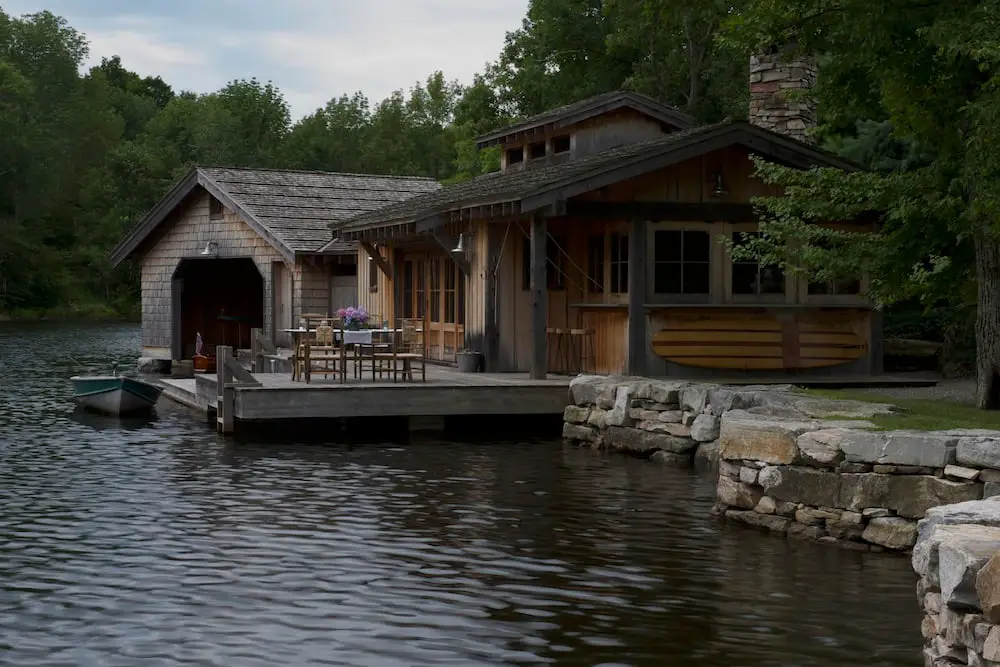
That night, I sat on the deck of my lake house—fully restored now, beautiful again, mine again—looking out at the water under the moonlight. The dock stretched into darkness, the water lapping gently against the pilings. This was the view I had bought five years ago, the peace I had worked so hard to create.
I thought about accepting the settlement. Getting my money back, ending the legal battle, moving on with my life. It would be the reasonable thing to do. The mature thing. The thing that would let everyone start healing.
But it wouldn’t be justice.
I called Gregory the next morning.
“I want to counteroffer. Full cost of restoration, legal fees, and an additional $100,000 in damages for emotional distress and loss of use of property during the eight weeks of restoration. Plus a written apology signed by both parents that explicitly acknowledges they did not have permission to hire contractors or authorize work on my property.”
Gregory was quiet for a long moment. “That’s going to push us back toward trial. They’re not going to agree to that, especially not the written apology. You’ll be asking them to admit fault in writing.”
“Then we go to trial,” I said. “I’m done pretending this wasn’t as bad as it was. I’m done accepting half-measures and letting them save face.”
Two weeks later, my parents rejected the counteroffer through their attorney. Donald Winters called it “unconscionable” and “vindictive.” Gregory scheduled the trial for eight weeks out.
I spent those eight weeks preparing. Gregory took me through everything—what to expect, how to testify, how to handle cross-examination. We practiced until I could recite the timeline of events without hesitation, until I could explain calmly why each piece of evidence mattered.
The trial took three days in a small courtroom that smelled of old wood and floor polish.
My parents’ attorney tried to paint me as an ungrateful daughter who was estranged from her “loving family” over a simple misunderstanding. He brought character witnesses—my aunt Linda, my mother’s best friend Sharon—who testified that I had always been difficult, always been more focused on career than family.
But when Gregory cross-examined those same relatives, none of them could explain how being a close family justified demolishing someone’s house without permission. None of them could explain why my parents had misrepresented documents to contractors. None of them had even asked for my version of events before deciding I was the villain.
I testified on the second day. Gregory walked me through everything—buying the house, the improvements I had made, the years of mortgage payments and care, the discovery of the destruction, my conversations with my parents and brother.
I kept my voice steady and factual, the way we’d practiced. I explained how I’d saved for seven years for the down payment, how I’d spent countless weekends refinishing and improving the property, how the house represented not just an investment but a sanctuary I’d built for myself.
Under cross-examination, Donald Winters tried to make me seem cold and vindictive.
“Ms. Morrison, isn’t it true that you barely spoke to your parents for months after this incident?”
“That’s correct,” I said calmly. “After they destroyed my house and refused to take responsibility, I limited contact with them.”
“And isn’t it true that you rejected their attempts to reconcile?”
“They never attempted to reconcile. They demanded that I drop the lawsuit and accept that what they did was acceptable. That’s not reconciliation.”
The contractor, Patricia Henderson, testified on the third day. She was professional and thorough, bringing documentation of everything—the initial contract, her notes from conversations with my parents, copies of the documents they’d shown her claiming ownership.
“In your professional opinion,” Gregory asked, “were you misled by the defendants about their authority to authorize this work?”
“Absolutely,” Patricia said without hesitation. “If they had told us the truth—that the property was owned by their daughter and they had no legal authority—we never would have accepted the job. What they did put our company at serious legal risk.”
The jury deliberated for four hours.
When they came back, the verdict was in my favor on every single count.
The judge awarded me the full cost of restoration, all legal fees, and $75,000 in additional damages. He also issued a permanent injunction preventing my parents or Jacob from entering the property or making any claims to it.
I sat in the courtroom and watched my mother cry, her face crumpling into her hands. My father stared at the table, his face gray and old. Jacob looked furious, whispering angrily to Victoria, who looked like she wanted to disappear.
Outside the courthouse, Gregory leaned close. “You won. Completely.”
But I didn’t feel victorious. I felt tired and sad and relieved all at once, like I’d survived something that had almost destroyed me.
Moving Forward
That weekend, I drove to the lake house. It was mid-October, the weather perfect—crisp mornings and warm afternoons, the trees just starting to turn colors. I walked through every room slowly, running my hands over the restored cabinets, the refinished floors, the new furniture that approximated what I’d had before.
It was mine. Completely and legally and permanently mine, with court documents to prove it. No one could take it from me now.
The next morning, there was a car in my driveway—my grandmother’s old sedan.
Grandma was sitting on my front porch, a basket beside her containing what looked like baked goods.
“I brought muffins,” she said when she saw me. “Blueberry. Your favorite.”
I sat down on the step below her, not quite ready to trust this. “Grandma, what are you doing here?”
“I wanted to apologize.” Her voice was quiet, tired. “I was wrong about what I said to you. I was wrong to take your mother’s side without asking for your side of the story. I was wrong to tell you I was disappointed in you when I should have asked what happened first.”
We sat together in silence for a while, eating muffins and watching the lake, watching the morning mist burn off as the sun rose higher. It wasn’t forgiveness, not yet, but it was a start. A crack in the wall.
Three months after the trial, I received a certified letter from my parents’ attorney. They were declaring bankruptcy. The judgment against them, combined with their legal fees and the debt they had taken on for the renovation they had planned for Jacob, had destroyed their finances.
They’d mortgaged their own house to pay for materials and contractors, expecting to recoup it somehow from me or from Jacob’s eventual occupancy. Now that plan had collapsed, taking their retirement savings with it.
I called Gregory immediately, my hands shaking as I held the letter. “Can they do this? Can they just declare bankruptcy and make the judgment go away?”
“They can declare bankruptcy, yes. Whether the debt gets discharged depends on how the bankruptcy court views the circumstances. Debts arising from fraud or willful injury typically can’t be discharged.”
Six weeks after the bankruptcy filing, I got a phone call from Patricia Henderson, the contractor.
“I thought you should know—Jacob contacted us last week asking for copies of all our files from the original project. He said he was considering filing his own lawsuit against your parents for promising him property they did not have the right to give away.”
I sat down heavily. “Jacob is suing Mom and Dad?”
“That’s what he said. He wanted documentation of all the promises your mother made about him moving into the house, all the plans they’d discussed. I told him we’d provide whatever was legally required but nothing more. I thought you’d want to know.”
I called my grandmother, who confirmed it. “He filed papers last week. Your mother called me in hysterics. She can’t understand how her own son could do this to her after everything she tried to do for him.”
The irony was almost too much to bear. My mother, who had enabled Jacob’s entitlement his entire life, was now being destroyed by it.
The bankruptcy judge issued his ruling in August. He allowed my parents to discharge most of their debts, but he specifically excluded the judgment I held against them. His written opinion stated that debts arising from intentional wrongdoing and fraud—particularly the misrepresentation to contractors—could not be discharged under bankruptcy law.
It meant they still owed me the full amount of the judgment—$202,000 in total. They would be making payments to me for years, probably for the rest of their lives.
I didn’t feel triumphant. I felt hollow.
Rebuilding
In October, a year after the initial discovery, I threw a party at the lake house. Not a family gathering. Not a reconciliation attempt. A party for my friends, my colleagues, the people who had supported me through the worst year of my life.
Jessica helped me plan it, and we invited thirty people for an autumn afternoon by the water. People swam in the lake even though the water was getting cold. We grilled burgers and hot dogs. Someone brought a guitar and played folk songs as the sun set, and someone else brought a firepit so we could roast marshmallows as the stars came out.
I stood on my deck—my restored, beautiful, legally protected deck—looking out at the people who had chosen to be in my life, and felt something I hadn’t felt in a year.
Grateful. Happy. At peace.
“This is nice,” Jessica said, coming to stand beside me with a beer in her hand. “You look happy. Actually happy.”
“I am happy,” I realized, surprised by the truth of it. “For the first time in a year, I’m actually happy.”
My parents never recovered financially or emotionally from the double blow of my lawsuit and Jacob’s. Their bankruptcy left them with ruined credit, limited housing options, and the bitter knowledge that both their children had sued them. They sold their house and moved to a small rental. They stopped attending family functions. They became the cautionary tale whispered about at holiday gatherings.
Jacob’s business struggled under the weight of his own debts and his ruined relationship with our parents. His divorce from Victoria was finalized six months after the trial, leaving him in a small apartment and paying alimony he could barely afford. His reputation took a hit when word spread through his professional network about him suing his own parents.
I saw him once, months later, at a stoplight in Austin. He didn’t see me. He looked older, tired, diminished.
I felt nothing. Not satisfaction, not sympathy. Just… nothing.
I stood on my dock one evening in November, looking at my house, my property, my sanctuary that I had defended at such cost, and I felt something settle deep in my chest.
The anger was gone. The hurt was fading, replaced by scars that had healed clean.
What remained was a quiet certainty that I had done the right thing—even when it was hard, even when it cost me relationships I had once valued, even when it meant standing completely alone.
I had learned that protecting yourself is not selfish. That standing up for your rights is not vindictive. That boundaries are not walls meant to hurt others but foundations meant to support yourself.
And that sometimes, the people who are supposed to love you are the ones who will hurt you most—if you let them.
Looking back on everything that had happened, I realized this was never really about a house at all.
It was about refusing to disappear. Refusing to be convenient. Refusing to sacrifice myself on the altar of family peace. Refusing to let other people’s expectations and entitlement define my worth or dictate my choices.
It was about learning that “family” is not a free pass to violate boundaries. That “love” is not the same as letting people harm you. That sometimes the most loving thing you can do for yourself is to refuse to be harmed anymore.
And in that refusal, in that fight, in that year of hell and heartbreak and courtrooms and depositions—I had found something more valuable than family approval or the comfort of being the good daughter who never makes waves.
I had found myself. The version of me that existed independent of their expectations. The version that knew her worth and defended it. The version that could stand alone and be okay with it.
My lake house sat behind me, lights glowing warm in the windows, completely and permanently mine. The water lapped gently at the dock. The stars were coming out, bright and sharp in the clear Hill Country sky.
And for the first time in as long as I could remember, I felt like I was exactly where I belonged.

Lila Hart is a dedicated Digital Archivist and Research Specialist with a keen eye for preserving and curating meaningful content. At TheArchivists, she specializes in organizing and managing digital archives, ensuring that valuable stories and historical moments are accessible for generations to come.
Lila earned her degree in History and Archival Studies from the University of Edinburgh, where she cultivated her passion for documenting the past and preserving cultural heritage. Her expertise lies in combining traditional archival techniques with modern digital tools, allowing her to create comprehensive and engaging collections that resonate with audiences worldwide.
At TheArchivists, Lila is known for her meticulous attention to detail and her ability to uncover hidden gems within extensive archives. Her work is praised for its depth, authenticity, and contribution to the preservation of knowledge in the digital age.
Driven by a commitment to preserving stories that matter, Lila is passionate about exploring the intersection of history and technology. Her goal is to ensure that every piece of content she handles reflects the richness of human experiences and remains a source of inspiration for years to come.