The Table Five Revelation: How One Waiter’s Words Exposed My Husband’s Double Life
The night a waiter in midtown told me my husband was at table five with his fiancée.
“I’m stuck at work.”
Eric’s text was still glowing on my phone screen when I pushed open the glass door of the restaurant. It was a classic New York City spot in Midtown Manhattan, the kind with chrome edges, soft yellow light, and stainless-steel tables that always felt a little too cold.
I hadn’t even cleared the notification when a server stepped toward me. His voice was quiet, careful, the same tone you might use to tell a customer they’re out of their favorite dish.
“He’s at table five,” he said. “With his fiancée.”
I let out a small breath.
“Ah.”
No embarrassment. No anger. It felt like hearing the ending of a story I’d known for a long time. I just hadn’t seen it printed in full until that second.
The Signs I Missed
My name is Vivian. I do graphic design for a small studio downtown, the kind of place where we make logos for coffee shops in Brooklyn and websites for law firms in New Jersey. The job forces you to see details: a line off by a few pixels, a color that shouldn’t be there, a patch of empty space in the wrong spot. I’m used to catching tiny flaws people try to hide.
Unless the one hiding them is my husband.
Eric was a project manager at a midsize tech company based in New York. He always looked a little too put together. Flat shirt, flat words, flat smile. He knew exactly where to stand in any conference room to look like a man with direction.
About three months before the night at table five, Eric started caring about his appearance more than usual. One weekday morning, he checked himself in the hallway mirror before leaving for work, fixing his collar for the third time.
“Big meeting?” I asked.
“Not really,” he said. “Just want to look professional.”
His voice was normal. But his eyes shifted off to the side for one beat too long.
Then came the late-night phone calls. His voice would soften in a way you only use with someone you want to impress.
“Yes, I understand,” he said during one call. “Thank you for the opportunity.”
When he hung up, I asked, “Who was that?”
“Andrew,” he replied—too fast. “Just a coworker.”
I wasn’t suspicious, not really. But something in the way he spoke made me file the moment away.
The Distance Grows
The distance between us started with very small things. Eric talked less. Not because he was tired, but because he was choosing what to say.
When I asked about work, he answered with clipped lines.
“You wouldn’t understand my environment,” he said once. “Work stuff is complicated.”
His tone wasn’t annoyed. It was cold and oddly gentle, like he was soothing a child who asked too many questions.
Then he started turning his phone off at night. When I called late, it went straight to voicemail. “Emergency meeting,” he’d text hours later.
One evening, while gathering clothes for laundry, a slip of paper fell from his pants pocket. It was a receipt from an upscale restaurant in Midtown—expensive wine, two entrées, dessert.
“Who did you eat with?” I asked casually.
“A male coworker,” he said quickly. “The table next to us was loud. They probably mixed up the wine order on the bill.”
He said it naturally, but something about the rehearsed quality of his response made me fold the receipt and slip it into a drawer.
The Diamond Ring
Then there was the diamond ring. I found it in a small velvet box tucked into his jacket pocket one weekend evening.
“Who’d you buy this for?” I asked.
“A female client at the company,” he said smoothly. “A reward for hitting a target. It’s part of a recognition program.”
He said it with such confidence that I almost felt foolish for questioning it. Almost.
A few weeks later, Eric mentioned something that made me pay closer attention.
“My boss is starting to notice me,” he said while rinsing his coffee mug. “His family really values stability.”
The way he emphasized family made me pause, but he changed the subject so quickly I didn’t have time to unpack it.
The Financial Manipulation
Then Eric asked me to sign a loan application.
He sat across from me at our dining table, hands laced together.
“I need a loan to prove financial capability,” he said. “The company is considering me for a new position, but I’ve hit my limit with the bank. Just this once—could you sign for it?”
“Why do you need to prove financial capability for a promotion?” I asked.
“Internal process,” he said. “You wouldn’t understand. It’s just how these big corporations work.”
There it was again. You wouldn’t understand.
I signed. Not because I was foolish, but because I still thought I was helping an ambitious husband navigate corporate America. I didn’t know his ambition no longer included me.
The Text Message
One evening, as Eric walked out for another “late meeting,” his phone lit up with a notification. He shoved it into his pocket fast, but I’d already caught three letters on the screen.
A-l-i.
Not Andrew. Not anyone he’d ever mentioned from work.
That smile was too perfect. It wasn’t the distracted smile of a husband leaving for overtime. It was the composed smile of a man about to step onto a stage.
That small moment was the line. Not painful—just clear.
Following the Trail
The night Eric left for his “client meeting,” I did something I’d never done before. I opened the GPS app we both shared—the one he thought I never checked.
A red dot moved across the map of New York City, crossed a bridge, then stopped in Midtown, right in front of an upscale restaurant he’d once said was “too far out of the way.”
I grabbed my keys and followed.
Table Five
When I walked into the restaurant, the server approached me immediately.
“I’m waiting for my husband,” I said simply, showing him Eric’s text: I’m stuck at work.
The server’s expression shifted. He glanced at my phone, then back at me.
“He’s at table five,” he said quietly. “With his fiancée.”
No one prepares you for that line. But I didn’t need preparation. I already knew. This was merely confirmation.
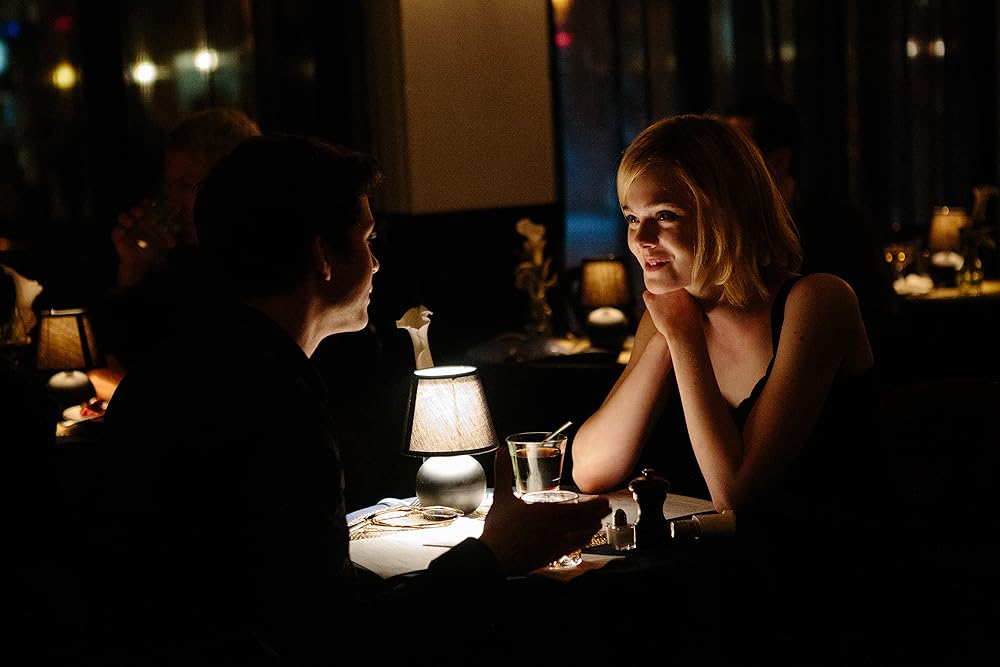
Table five was tucked into the back corner, a little away from the main walkway. Eric sat with his back to me, head tilted in that controlled way he used when trying to look relaxed and in charge.
Across from him sat a young woman with long hair and bright eyes. She wore an understated but expensive dress that matched the restaurant perfectly.
Alina.
I recognized the role the moment I saw the ring on her hand—nearly identical to the one I’d found in his drawer.
They moved like a couple with a promised future. Eric looked at her with the eyes of a man being evaluated, trying to impress.
The Revelation
I understood everything in that moment. Eric had mentioned “the chairman’s family values stability.” He’d asked what wealthy people want to see in a man with direction. None of that was for me—those were lines he’d practiced on me.
Alina was the daughter of his company’s chairman. The “Ali” whose name I’d seen on his phone. His fiancée.
The loan I’d signed—the money from my bank account—had become the story he bragged about to her family. He used it to prove he was stable, responsible, capable of taking care of their daughter.
I had paid for him to buy status. He had used me as the down payment for his future.
I walked straight to table five. My heels made a steady rhythm on the floor—not fast, not shaky.
Alina saw me first, tilting her head slightly. Eric turned, and the color drained from his face.
“Vivian, you—” he started.
“I’m not here to talk,” I cut in.
I set a neat stack of papers on the white tablecloth: the loan contract in my name, bank statements showing the money transferred to Eric’s account. A simple, undeniable trail.
I looked straight at Alina.
“If you’re his fiancée,” I said quietly, “you should know you’re investing in a man who lives off his wife’s signature.”
No anger. No sarcasm. Just truth, sharp enough.
The Collapse
Alina looked at the papers, then at Eric. Her eyes dropped, as if she’d just realized she’d been standing in the wrong place in this story.
Eric shot up from his seat. “She’s lying,” he said quickly. “It’s an internal transaction. I can explain.”
I just looked at him. Cold, like the stainless-steel tables I’d passed walking in.
Alina stood up without a word. She grabbed her bag and walked away—straight, quick, decisive. The kind of walk a person takes when they realize they were being used as a prop.
“Alina, wait,” Eric called, reaching toward her. But she was already gone.
His phone buzzed. The screen lit up: Mr. Hale. Alina’s father. The chairman.
Eric answered in a voice so small only the closest tables could hear. “Yes, I understand. I’ll come in.”
He turned back to me, his eyes no longer confident. “Vivian, we need to talk. You’re misunderstanding—”
I stepped back. Just a small step, but enough. He no longer had the right to touch me.
“I’ll send the divorce papers tomorrow,” I said, my voice low and calm.
The words dropped into the space between us like a stone into still water.
The Aftermath
I walked out without looking back. Eric ran after me, but not because he loved me—because he was afraid. Afraid of losing his position, his image, the life he’d constructed on false foundations.
“You’re ruining my life,” he called out.
I almost laughed. In his mind, his life had always been the center of the story. Not ours. His.
That night, I canceled all authorizations tied to the loan I’d signed. I contacted a divorce attorney. I didn’t feel dramatic—just clear.
The next morning, I received messages. Eric had been suspended. The wedding was off. Alina’s family wanted to cut ties.
A powerful American family with a public reputation isn’t going to embrace a man who built his image on a loan in his ex-wife’s name. They need someone whose story is clean.
Eric’s wasn’t.
Freedom
I rented a small, bright apartment. No trace of Eric there. No shadow from the life before. I bought a light wood desk, a soft rug, and a small plant by the window. Everything else, I left empty.
Not because I lacked anything, but because I wanted to see the space. To remind myself I no longer had to make room for anyone who didn’t value me.
Eric called a few times. I didn’t pick up. Not to punish him, but because there was no reason to listen anymore.
People don’t fall apart from one big shock. They fall apart when they’re forced to face themselves without disguise. And Eric was finally looking at his real reflection.
The day he was exposed, I didn’t defeat him. I just took back what was mine. The rest of his life collapsed on its own.
Sometimes the strongest thing you can do isn’t holding someone in place. It’s walking away when the truth is already clear.
You don’t lose by leaving. You choose yourself again.
Freedom isn’t a scream. Freedom is when you walk away without carrying any part of someone who used you.
And that night, I was free.

Sophia Rivers is an experienced News Content Editor with a sharp eye for detail and a passion for delivering accurate and engaging news stories. At TheArchivists, she specializes in curating, editing, and presenting news content that informs and resonates with a global audience.
Sophia holds a degree in Journalism from the University of Toronto, where she developed her skills in news reporting, media ethics, and digital journalism. Her expertise lies in identifying key stories, crafting compelling narratives, and ensuring journalistic integrity in every piece she edits.
Known for her precision and dedication to the truth, Sophia thrives in the fast-paced world of news editing. At TheArchivists, she focuses on producing high-quality news content that keeps readers informed while maintaining a balanced and insightful perspective.
With a commitment to delivering impactful journalism, Sophia is passionate about bringing clarity to complex issues and amplifying voices that matter. Her work reflects her belief in the power of news to shape conversations and inspire change.