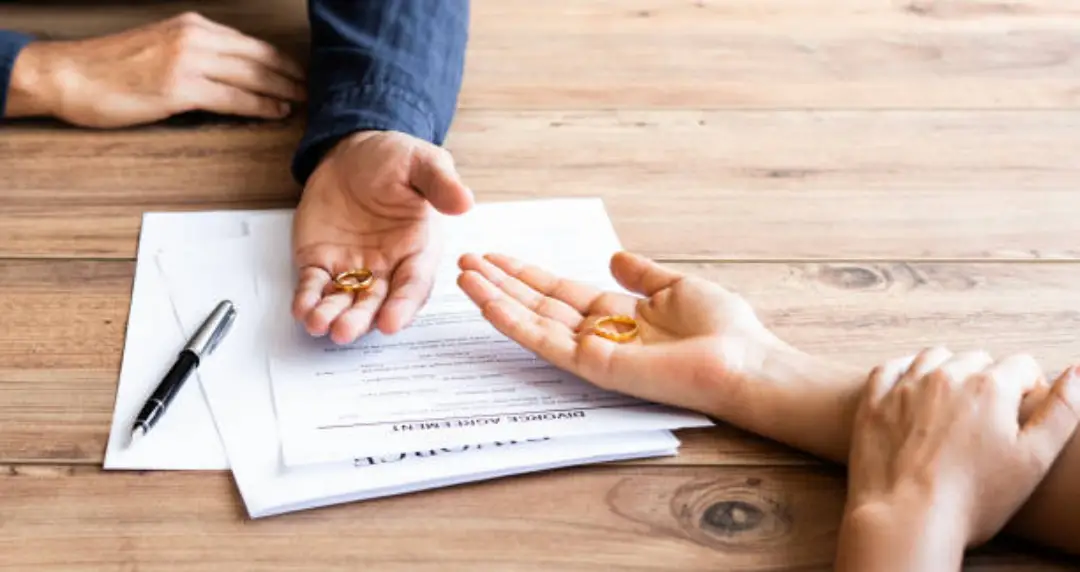
The pen scratching against paper was louder than any word Liam had ever spoken to me. He didn’t just sign the divorce papers—he scribbled his name with a smirk that could cut glass, then pushed the document across the sticky Formica table of the Rusty Spoon diner like he was discarding trash. His eyes met mine for just a second, and in that glance I saw everything I’d spent three years refusing to see: contempt, impatience, and the cold satisfaction of a man who believed he’d finally freed himself from a burden.
“You were just a stepping stone, Natalie,” he said, wiping his hands on a napkin as if my proximity had contaminated him. “I need a queen, not a servant who smells like French fries.”
The fluorescent lights hummed overhead, casting harsh shadows across his face—a face I’d once traced with gentle fingers on Sunday mornings, a face I’d kissed goodbye every day as he left for law school while I headed to my second shift. That face now belonged to a stranger wearing a tailored charcoal suit that cost more than I earned in three months, or at least more than he thought I earned. The cologne he wore was expensive, suffocating, nothing like the cheap drugstore aftershave I used to buy him when money was tight.
I looked down at the papers. The terms were as brutal as his tone: zero alimony, no division of assets, complete relinquishment of any claim to the life we’d built together. Not that he knew what I’d actually built, or who had truly been building it all along. He was keeping the apartment I’d paid the deposit for through a shell corporation. He was keeping the car I’d arranged for him to “win” in a dealership promotion. Everything he thought he’d earned through merit had been carefully orchestrated by me, and he had no idea.
“Liam,” I said quietly, my voice steady despite the ache spreading through my chest, “it’s our anniversary.”
He laughed—a short, cruel bark that made the trucker two booths over look up from his coffee with a frown. Liam glanced toward the diner entrance where a woman with platinum blonde hair and a crimson dress stood beside a gleaming Mercedes, tapping her heel impatiently. Vanessa. The senior partner’s daughter at Liam’s new firm, the woman who represented everything he thought he deserved.
“Anniversaries are for people with a future,” he said, leaning forward so I could smell the mint on his breath, the same mints I used to stock in his briefcase. “Look at you, Natalie. You reek of grease and failure. I’m a junior partner now. I close million-dollar deals in Manhattan boardrooms. Do you honestly think I can bring you to a gala? You’re a waitress. You take orders for a living.”
“I was a waitress so you could study,” I reminded him, keeping my tone even though my hands wanted to shake. “I worked seventy-hour weeks so you wouldn’t have to work at all. I paid your tuition—”
“And I appreciate the charity,” he interrupted, checking his reflection in the polished napkin dispenser, adjusting a strand of his perfectly styled hair. “But let’s be honest, Nat. That was a transaction. You invested in a stock, but you don’t have the portfolio to keep it. I’ve outgrown you. Vanessa fits the life I’m living now. She has class, connections, breeding. When I walk into a room with her, people respect me. When I walked in with you, they pitied me.”
The cruelty of it hung in the air like smoke. I could feel the stares of the other patrons—Jenny the manager watching from behind the counter with fury in her eyes, old Mr. Patterson in his usual corner booth shaking his head in disgust, Maria the line cook peeking through the kitchen window with her hand over her mouth. They all knew me, knew how hard I worked, knew I’d come in on my days off when someone called in sick. This diner had been my home for three years, and Liam was desecrating it with his contempt.
I picked up the cheap blue ballpoint pen lying beside the papers. My hand was steady. Broken women cry and beg. Strategic women go quiet and plan. I’d learned that lesson from my father, though Liam had never bothered to ask about my family beyond the vague story I’d told him about being estranged from them.
“You’re absolutely certain about this?” I asked one final time, giving him the chance I knew he wouldn’t take. “Once I sign these papers, Liam, there’s no going back. You’re walking away from everything we built and everything we could have been.”
“I’m counting on it,” he said, his smirk widening. “Just sign the damn papers and stop being dramatic. This is embarrassing.”
I looked at him—really looked at him—and saw the man I’d been testing for three years. My father had warned me that wealth reveals and poverty proves, that men without money show their true character while men with money simply show their true desires. I’d wanted to prove him wrong. I’d wanted to believe that love could exist in a vacuum, that someone could value me for myself rather than for the Blackwood name that carried more weight than he could possibly imagine.
I’d been wrong.
With a steady hand, I signed the document in my true name: Natalie Blackwood.
Liam frowned, squinting at my signature. “Blackwood? What the hell is that? You can’t even sign your own name right. God, you’re incompetent to the end.”
“It’s my maiden name,” I said softly, sliding the papers back across the table. “I thought you might want your precious name back, considering you believe it’s too valuable to be associated with someone like me.”
He snatched the papers without really looking, too eager to be finished with this chapter of his life. He stood, buttoned his jacket with practiced precision, and pulled out his wallet. With deliberate slowness, he withdrew a crisp hundred-dollar bill and tossed it onto the table between us.
“Keep the change, Natalie. Buy yourself a new apron. Maybe one that doesn’t smell like your crushed dreams.”
He walked out without looking back, the bell above the diner door chiming cheerfully as if celebrating his departure. Through the window, I watched him stride to the Mercedes where Vanessa wrapped her arms around his neck and kissed him with theatrical passion, making sure I could see every second of her victory. The car pulled away, leaving exhaust fumes hanging in the humid afternoon air.
Jenny rushed over immediately, her face flushed with anger. “Honey, I’m so sorry. I should have thrown that bastard out the moment he walked in here with that smug look on his face. Take the rest of the day off. Hell, take the week. I’ll cover your shifts.”
I sat very still, looking at the hundred-dollar bill Liam had thrown at me like I was a beggar. The silence around me felt heavy, expectant. Then slowly, deliberately, I reached for the money and folded it neatly into my apron pocket. I would need this later, I thought. Evidence has a way of becoming useful.
“No, Jenny,” I said, and my voice had changed. The tired, deferential tone I’d cultivated for three years was gone, replaced by something sharper, clearer, edged with the authority I’d been born into. “I don’t need the day off. What I need is to make a phone call.”
Jenny’s eyes widened at the shift in my demeanor. “A phone call?”
“Yes,” I stood up, untying my grease-stained apron and letting it fall to the floor. Underneath, my posture straightened, my shoulders squared, and I felt the weight of my real identity settling back onto me like a familiar coat. “I need to call my father. It seems the experiment is over.”
I walked to the back of the diner, past the industrial dishwasher and the walk-in freezer, to the small employee area where my locker stood. I pulled out the cheap flip phone I’d been using for three years and dropped it into the trash without ceremony. From the very bottom of my bag, wrapped carefully in an old dish towel, I retrieved a sleek black satellite phone that cost more than everything in this building combined.
I dialed a number I’d memorized since childhood.
“Status,” a deep, cultured voice answered immediately. No pleasantries, just professional readiness. Charles had been my father’s head of security for thirty years, and mine by extension.
“It’s done, Charles,” I said, stepping out into the alley behind the diner where the afternoon sun couldn’t quite reach. “He signed.”
“I’m sorry to hear that, Miss Blackwood.” Charles’s voice carried genuine regret. He’d been against this experiment from the beginning, had argued passionately that I was wasting my youth on a test that would only break my heart. “Though I confess, I’m not surprised.”
“He threw money at me, Charles. A hundred-dollar bill, like I was a beggar he’d taken pity on. He said I smelled like French fries and despair.”
“Shall I initiate acquisition protocols for his firm?” Charles asked, and I could hear the barely restrained anger beneath his professional tone.
“Not yet,” I said, leaning against the brick wall of the building where I’d spent three years proving my father’s cynical wisdom correct. “I want him to climb higher first. Let him think he’s finally made it, let him taste the champagne and wear the expensive suits and stand in rooms where he believes he belongs. The fall is so much more devastating from the penthouse than from the gutter.”
“Understood. And for you, Miss Blackwood?”
“Send the car, Charles. I’m done pretending to be poor.”
Fifteen minutes later, the residents of this small Connecticut town stopped whatever they were doing to stare. A convoy of three black SUVs flanking a custom Rolls-Royce Phantom rolled slowly down Main Street, looking as out of place as a royal procession in a mining town. The vehicles were bulletproof, the windows tinted to opacity, the presence unmistakably that of serious wealth.
The convoy stopped in front of the alley behind the Rusty Spoon.
A chauffeur in an immaculate uniform stepped out of the Rolls-Royce and walked directly to where I stood in my jeans and worn sneakers, my hair still smelling faintly of the fryer. He didn’t look at the dumpster or acknowledge the stray cat watching from behind a crate. He simply approached me and bowed formally.
“Miss Blackwood,” he said with the kind of deference usually reserved for heads of state. “Your father is waiting in Zurich. The jet has been fueled and the flight plan filed.”
I nodded, taking one last look at the diner that had been my home away from home, at the life I’d constructed to test a hypothesis about human nature. Three years. I’d spent three years living below my means, working jobs that destroyed my hands and my back, all to answer one simple question: could someone love me without the Blackwood name?
My father, Harrison Blackwood, who owned shipping lanes and satellite companies and more real estate than some small countries, had warned me this would happen. “Men are fundamentally mercenary, Natalie,” he’d said when I announced my intention to disappear into ordinary life. “Without the fortune, they reveal their true appetites. You’ll waste your youth learning a lesson I could teach you over dinner.”
I’d argued with him. I’d believed in Liam, in the shy law student I’d met at a coffee shop who seemed so different from the trust-fund parasites who’d circled me my entire life. I’d paid his tuition through anonymous scholarships, arranged his job interview through shell corporations so he’d think he’d earned it on merit alone, bought this diner building through a holding company and ensured Jenny hired me without questions. I’d built the entire stage for this experiment, and Liam had performed exactly as my father predicted.
“Burn it,” I said to the chauffeur as I slid into the leather interior of the Rolls-Royce, where the temperature was precisely controlled and the air smelled of nothing at all.
“Excuse me, Miss Blackwood?”
“The apron I left on the floor inside. Burn it. And purchase the building—put the deed in Jenny’s name. Tell her it’s severance pay for tolerating three years of my deception.”
“Of course, miss.”
The heavy door closed with a sound like a bank vault sealing, cutting off the noise of the outside world. I leaned back against leather softer than anything Liam had ever touched and reached for the crystal glass of San Pellegrino waiting for me. In the tinted window, I caught my reflection—the waitress was already fading, and the heiress was returning.
Three months passed like a carefully choreographed production. While I was being systematically remade in the salons and spas of Zurich and Paris—hair darkened to a richer color, skin treated until it glowed, posture coached until I moved with the unconscious authority of old money—Liam was living what he thought was his best life. He’d moved into Vanessa’s downtown apartment, was spending money he hadn’t earned yet, and according to Charles’s detailed reports, was congratulating himself daily on his brilliant escape from poverty.
Then came the opportunity I’d been waiting for.
“The Blackwood Group is looking for legal representation,” Liam’s senior partner, Mr. Sterling, announced at the Monday morning meeting. His voice carried a reverence usually reserved for religious experiences. “This is a trillion-dollar conglomerate. If we land this account, gentlemen, we’re set for life.”
Liam sat up straighter in his chair, his ambitious heart racing. He’d been crushing his smaller cases, performing with the desperate energy of someone trying to prove they belonged. This was his moment.
“I can handle it, sir,” he said immediately. “I’ve been preparing for exactly this kind of high-stakes negotiation.”
Sterling studied him for a long moment. “The Blackwood daughter—Natalie Blackwood—is hosting a preliminary gala in Manhattan next week to evaluate firms. She’s notoriously private, hasn’t been photographed in years. But if you can impress her, Liam, you’re looking at a seven-figure bonus.”
Natalie Blackwood. Liam rolled the name around in his mind, thinking it was a curious coincidence that his pathetic ex-wife had shared a first name with a billionaire heiress. He actually laughed at the absurdity of it.
“Don’t worry, sir,” Liam said with the confidence of someone who’d never experienced real consequence. “I know exactly how to handle women. I’ll have the contract signed before dessert arrives.”
What Liam didn’t know was that the invitation to the gala hadn’t been random. It had been personally approved by me, and I was preparing a reception he would never forget.
The Metropolitan Museum of Art had been closed to the public for the evening, rented in its entirety for what society columnists were already calling the event of the season. The grand staircase was lined with white orchids flown in from Thailand, and the ambient lighting had been designed to make everyone look like they belonged in an oil painting. This was where empires met and deals were forged, where the truly powerful congregated away from the eyes of those who merely aspired to power.
Liam arrived in a rented tuxedo that almost fit, his hand proprietarily on Vanessa’s lower back as they climbed the stone steps. He felt like he was finally arriving at his destiny, finally entering the rooms he’d always known he deserved access to. Vanessa wore a red sequined dress that was perhaps too loud for old money, but Liam thought she looked perfect—a trophy that announced his success.
Inside, the great hall had been transformed into something from a fairy tale, if fairy tales were designed by billionaires with unlimited budgets. Crystal chandeliers the size of compact cars hung from the ceiling, and a string quartet played Debussy so subtly you almost didn’t notice the music was live. The champagne flowed freely, carried by servers who moved like ghosts, and every face Liam recognized from financial news programs and Forbes covers.
“Where is she?” Vanessa whispered, scanning the crowd. “The heiress. I want to see what a trillion dollars looks like on a person.”
“Patience,” Liam said, though his own eyes were searching. “Sterling said she’s elusive. Probably doesn’t want to be mobbed.”
Then the room changed. It wasn’t a gradual shift but a sudden dropping of temperature, a collective holding of breath. The string quartet stopped mid-phrase. Every conversation died. All eyes turned toward the grand marble staircase that descended from the second-floor gallery.
At the top of the stairs stood a woman who seemed to have been constructed from moonlight and diamonds.
It was me, but it wasn’t the me that Liam had known.
I wore a custom Alexander McQueen gown in midnight blue, structured at the shoulders and flowing like dark water down to a train that whispered against the marble. Around my neck rested the Blackwood emerald, a stone so historically significant it was usually kept in a museum vault, so large and perfect it looked almost fake under the lights. My hair had been transformed into a sophisticated architectural arrangement that made my features look sharper, more aristocratic. The makeup was subtle but precise, emphasizing eyes that now scanned the crowd with cool assessment.
I didn’t walk down those stairs. I descended like a queen surveying her kingdom, each movement deliberate and weighted with the absolute certainty of someone who knew every person in this room needed her more than she needed them.
Liam stared. His mouth actually opened slightly, hanging there like he’d forgotten how faces worked. Something nagged at the back of his mind—a feeling of familiarity, like seeing your own face in an antique mirror and not quite recognizing it. But the thought was absurd. His ex-wife wore polyester and smelled like industrial cleaning products. This woman smelled like power and ozone, like standing too close to a lightning storm.
“That’s her,” Vanessa breathed, genuinely awed for once. “That’s Natalie Blackwood.”
The crowd parted automatically as I reached the bottom of the stairs. I didn’t smile or acknowledge the attention. I simply nodded to a senator, exchanged a few words in flawless Mandarin with a tech mogul, and accepted a glass of champagne that appeared in my hand as if by magic.
Liam grabbed Vanessa’s wrist. “Come on. This is our chance. Sterling said to make contact early.”
He pushed through the crowd with less grace than he thought, pulling Vanessa behind him. He approached the circle forming around me, waiting for an opening like a predator stalking prey. He watched me speak, noticed how I switched effortlessly between languages, how people leaned in when I talked and straightened when I looked at them.
Finally, I turned slightly and my gaze swept across the crowd, landing momentarily on Liam.
Our eyes met.
For just a second, I let him see something—a flicker of recognition, maybe, or perhaps just cold assessment. Then I looked away, dismissing him as thoroughly as one dismisses a server who’s brought the wrong wine.
But that second had been enough. Liam felt a jolt run through him, some primal recognition that his conscious mind couldn’t quite grasp. He shook it off and stepped forward, putting on his most charming smile.
“Miss Blackwood,” he said, his voice smooth and practiced. He’d used this tone a thousand times—on professors, on judges, on women he wanted to impress. “What an absolutely stunning evening. I’m Liam Davis, junior partner at Sterling and Associates. We’re tremendously excited about the possibility of representing the Blackwood Group’s North American expansion.”
The circle around me quieted. Several people frowned slightly—Liam had just interrupted a conversation between me and the mayor of New York, a breach of etiquette that marked him as an outsider.
I turned slowly, very slowly, and looked at him. Really looked at him. Up close, the expensive suit couldn’t quite hide the desperation in his eyes, the slight tremor in his hands that came from running on ambition and credit card debt.
“Mr. Davis,” I said, my voice like ice water. “Sterling and Associates. Yes, I’ve reviewed your firm’s portfolio.”
Relief flooded Liam’s face. She knew who he was. This was going well.
“We’re tremendous admirers of the Blackwood Group’s trajectory,” he gushed, the words tumbling out too fast. “We believe we have the aggressive edge you need for the North American market. We’re hungry, we’re innovative, and we’re not afraid to—”
“Aggressive,” I repeated the word, tasting it like spoiled wine. “Tell me, Mr. Davis, do you believe aggression is always the optimal strategy? Or do you think sometimes, underestimation can be a far deadlier weapon?”
Liam blinked, thrown off balance by the philosophical turn. “Well, in the courtroom, aggression wins. You have to dominate the opposition, establish superiority from the first motion.”
“Dominate.” I nodded slowly, a slight smile playing at my lips. “Interesting word choice. I find that people who feel compelled to dominate are usually compensating for a profound fear of inadequacy. They mistake volume for value.”
Vanessa bristled beside him, finally sensing the insult beneath the academic language, but Liam laughed it off—a nervous sound that didn’t quite land right.
“A fascinating perspective, Miss Blackwood. Perhaps we could discuss it over dinner? My firm has prepared a comprehensive proposal—”
“I’m sure you have,” I cut him off, my tone making it clear the conversation was ending. Then I let the mask slip, just slightly, just enough for someone looking closely to see. “You know, Mr. Davis, you remind me of someone I used to know. Someone who always ordered the most expensive item on the menu but never quite had the wallet to support his appetites.”
Liam froze. The color drained from his face as something cold slithered down his spine. That phrase—it was too specific, too close to something real.
Before he could process it, I signaled to Charles, who materialized at my elbow like a well-dressed shadow.
“Charles, schedule a private meeting with Mr. Davis for tomorrow morning. Ten a.m. at my offices.”
I looked back at Liam, and this time I let him see something real in my eyes—not hatred, not love, but something far more unsettling: complete awareness.
“Don’t be late, Mr. Davis. I absolutely despise people who waste my time. I’ve had quite enough of that in my past.”
Without waiting for a response, I turned and walked away, my silk train swirling around my ankles. The crowd closed behind me like water, and I disappeared into the protection of the powerful.
Liam stood frozen, his champagne glass trembling in his hand.
“She liked you,” Vanessa squealed, squeezing his arm hard enough to hurt. “Did you see how intense that was? You totally have this.”
“Yeah,” Liam said slowly, that nagging feeling of familiarity stronger now, pulling at his consciousness like a hook in his stomach. “She definitely… liked me.”
But as he watched the woman who owned buildings and companies and futures disappear into the crowd, part of him wondered why her eyes had looked so cold, and why that coldness had felt so devastatingly familiar.
The next morning, Liam arrived at Blackwood Tower at nine forty-five, sweating through his shirt despite the autumn chill. The building was a monolith of steel and blue glass that seemed designed to make visitors feel small, and the security process involved three separate checkpoints that made airport screening look casual.
Charles met him at the elevator on the ninetieth floor, his face an mask of professional neutrality. “Mr. Davis. Follow me.”
They walked down a corridor lined with art that Liam suspected was worth more than his entire life’s earning potential. They stopped before massive mahogany doors.
“She’s waiting,” Charles said, and pushed them open.
The boardroom was designed to intimidate. A table of polished black obsidian stretched the length of the room, reflecting the lights like dark water. At the far end, silhouetted against floor-to-ceiling windows showcasing all of Manhattan, stood a figure in white.
I turned slowly as Liam entered, and in the harsh morning light, away from the theatrical staging of the gala, my features were clearer. I wore a white suit that looked almost surgical in its precision, my hair pulled back severely, my expression absolutely neutral.
“Sit,” I commanded, my voice carrying in the acoustics of the room.
Liam sat at the far end of the table, feeling incredibly small and far away. He pulled out his files, launched into his prepared pitch about hostile takeovers and aggressive litigation strategies.
“I’m not interested in Henderson,” I interrupted, still facing the window. “I’m interested in liability, Mr. Davis. Specifically, the liability of investing in people who lack fundamental integrity.”
“Integrity is the cornerstone of my practice,” Liam said automatically, the lie smooth from repetition.
“Is it?” I turned then, walking slowly toward the table. My heels clicked against the hardwood floor like a countdown. “Tell me about your wife.”
Liam’s prepared speech died in his throat. “My… ex-wife?”
“Why did you leave her?”
“With all due respect, Miss Blackwood, that’s personal.” But he was already defending, already explaining because he couldn’t help himself. “But if you must know—she was unsuitable. A waitress. She had no ambition, no connections, nothing that could help me advance. She held me back. I needed someone who could stand beside me in rooms like this, someone with class. Someone who didn’t smell like cheap grease and broken dreams.”
“I see,” I said, coming to stand just ten feet from him. “So you discarded her because she was poor.”
“I discarded her because she was dead weight,” Liam said, warming to his justification. “In business, you cut losses. She was a bad investment. I outgrew her.”
“A bad investment,” I repeated softly. I reached for a slim folder on the table and slid it toward him. “Look at the document, Liam.”
He pulled it closer, expecting a contract.
It was his divorce papers.
His signature, angry and impatient, next to another signature that read: Natalie Blackwood.
He frowned at it, his brain refusing to connect the dots his eyes were showing him. “Yeah, she signed it with your name for some delusional reason. She was always—”
“I didn’t sign it with your name,” I said, and suddenly my voice dropped an octave, becoming the voice that had said “I love you” a thousand mornings, the voice that had asked about his day every evening. “I signed it with mine.”
Liam’s head snapped up.
He looked at me—really looked at me for the first time. He stripped away the expensive makeup, the architectural clothing, the context of power and wealth. He looked at the shape of my nose, the curve of my jaw, the small scar above my left eyebrow where I’d hit my head on a cabinet in our cramped apartment.
The world stopped turning.
“Nat…” he whispered, the sound barely human. “Natalie.”
“Hello, Liam,” I said, and my voice was colder than space. “I made sure the coffee here doesn’t taste like the burnt sludge you used to complain about. You’re welcome.”
He stood up so violently his chair crashed backward. He stumbled away from the table, his hands shaking uncontrollably.
“No. This is impossible. You’re a waitress. You’re broke. You’re nobody.”
“I was never nobody,” I said, stepping toward him as he backed away. “I was always exactly this. I was the daughter of Harrison Blackwood, heiress to a fortune that makes your little bonus look like pocket change. I paid your tuition, Liam. Every semester, through anonymous scholarships I created specifically for you. I arranged your job interview through shell companies. I put money in your account that you thought was your own earnings. I built the pedestal you’re standing on, and now I’m going to burn it.”
The realization hit him like a physical blow. His knees actually buckled, and he caught himself against the table. “You’re a trillionaire,” he gasped.
“And you,” I pointed at him with a finger that didn’t tremble, “are a thief.”
“Natalie, baby, please—” He lunged forward, trying to grab my hands, his survival instinct overriding everything else. “I didn’t know. If I’d known, I never would have—this is all a misunderstanding. I was stressed. The pressure got to me. I still love you. We can fix this. Tear up the papers—”
Charles materialized from the shadows and had Liam’s arm twisted behind his back before he could touch me, slamming him face-first onto the obsidian table.
“I would strongly advise against touching the CEO,” Charles whispered in his ear.
“Release him, Charles,” I said calmly, returning to my seat and crossing my legs. “We’re not done.”
Charles let him go, and Liam slumped into the nearest chair, rubbing his shoulder.
“I own your debt,” I said simply, pulling up a holographic display from the table’s built-in projector. Complex financial data filled the air between us. “Three maxed-out credit cards. A car lease you can’t afford. And most interestingly, a fifty-thousand-dollar loan from a rather unpleasant individual in New Jersey that you took out to pay for Vanessa’s ring and your new wardrobe, expecting to repay it with your bonus.”
Liam went white. “How—”
“I bought the debt this morning. You now owe Blackwood Financial Group fifty thousand dollars, due immediately.”
“I can’t pay that!” Liam’s voice rose in panic. “Not until the bonus comes through. Sterling promised—”
“Ah yes, Sterling.” I pressed a button on the intercom. “Send him in.”
The doors opened and Mr. Sterling walked in, looking like a man facing execution. He was sweating profusely, his expensive suit wilted and damp.
“Mr. Sterling,” Liam cried out, hope flooding his face. “Tell her. Tell her about my performance, about the bonus—”
Sterling couldn’t look at him. He kept his eyes on the floor. “Liam… at eight-oh-two this morning, Blackwood Global acquired controlling interest in Sterling and Associates. They bought the firm.”
The words didn’t make sense. They couldn’t make sense.
“She owns you,” Sterling continued, his voice hollow. “She owns the building, the client list, the coffee machine, and every contract we’ve ever signed. She owns our futures.”
I stood up, walking to where Liam sat frozen in his chair. “And as the new owner, I’ve been reviewing personnel files. It seems, Mr. Davis, that you’ve been engaging in some creative accounting. Client trust funds temporarily borrowed to cover personal expenses, with the intention of repaying them before anyone noticed.”
“You can’t prove—”
“I have the bank transfers, the receipts, and testimony from three other associates who were concerned about your behavior. You’re fired, Mr. Davis. Effective immediately. And since you’re now unemployed, that fifty-thousand-dollar debt is being called. You have twenty-four hours to pay or I’ll seize every asset you have, starting with that overpriced car you can’t actually afford.”
“You can’t do this,” Liam sobbed, and they were real tears now, the tears of a man watching his world collapse. “We were married. I loved you.”
“You loved what I could give you,” I corrected coldly. “You just didn’t know how much that was. Now get out of my office.”
Charles grabbed Liam and dragged him toward the door, his expensive shoes squeaking against the floor as he tried to dig in his heels, as he pleaded and promised and bargained with the desperation of someone who’d just watched their entire future evaporate.
From my seat at the head of the table, I watched him leave with the same clinical detachment I’d use to observe a failed experiment.
The elevator doors closed on his crying face, and then he was gone.
I sat alone in the boardroom, the city spreading below me like a game board, and felt nothing but the cold satisfaction of a test completed and a hypothesis proven.
Five years later, the New Horizons Foundation charity gala was being held in a renovated Brooklyn warehouse that had been transformed into something magical through the liberal application of money and good taste. I stood at the podium in a simple white dress, speaking about resilience and second chances to a room full of Manhattan’s most generous donors, people who wrote checks that could change lives.
I had become more than just an heiress. I’d become a philanthropist, a business leader, someone profiled in Time magazine for innovative approaches to sustainable development. The experiment with Liam had taught me valuable lessons about human nature that I’d applied to everything from hiring practices to international negotiations.
In the shadows of the elegant room, a gaunt man with graying hair moved between tables, collecting champagne flutes and dirty plates. He wore the cheap black uniform of a catering company, moved with the nervous energy of someone terrified of making mistakes, and kept his head down to avoid being noticed.
It was Liam, though he now went by Lee on his name tag.
Prison had aged him decades. He’d served five years of his eight-year sentence before being released on parole, and the felony conviction followed him like a curse. No law firm would touch him, no company would hire him for anything beyond menial labor. He worked for a catering company under a slightly modified name, earning minimum wage to pay for a basement room in Queens that smelled like mildew and broken dreams.
“Lee! Get that tray to the VIP section,” his manager hissed at him.
Liam flinched, grabbed a tray of hors d’oeuvres, and lowered his head. The VIP section was right by the stage where I stood. He had no choice but to approach.
He kept his eyes down, navigating carefully through the crowd of expensive shoes and designer hemlines. He was almost past the stage when someone turned abruptly, bumping his arm.
The tray tipped.
A canapé slid off and landed with a wet sound directly on the hem of my pristine white dress.
The room went silent.
Liam felt his heart stop. He dropped to his knees immediately, grabbing napkins, trying desperately to blot the stain, his hands shaking so badly he could barely hold the cloth.
“I’m so sorry, Miss Blackwood,” he stammered, his voice cracking. “It was an accident. Please. I need this job.”
He looked up at me, and our eyes met for the first time in five years.
“Natalie,” he whispered, tears starting to form. “It’s me. It’s Liam. I’ve paid for what I did. I’ve lost everything. I’m sorry. Please—”
I looked down at him kneeling at my feet, at his trembling hands and gray hair and the desperation in his eyes. He wanted acknowledgment. He wanted me to be angry, to gloat, to finally show some reaction that proved he still mattered, that he still had the power to affect me.
Instead, I tilted my head slightly, my expression pleasant but distant, the way you look at a stranger who’s done something mildly inconvenient.
“I’m afraid you have me mistaken for someone else,” I said politely. “But thank you for your concern about the dress. Charles, could you ensure this gentleman receives a fresh towel? He seems to be having a difficult evening.”
“Of course, Miss Blackwood,” Charles said, appearing at my side.
“But we were married,” Liam said, his voice breaking. “I’m Liam. Don’t you remember? The diner, the divorce papers, everything—”
I looked at him with genuine confusion, as if he were speaking a language I’d never learned.
“I’m sorry,” I said gently, kindly even, “but I really don’t know what you’re talking about. The past is a foreign country, sir. I don’t visit places I’ve never been.”
I turned away, rejoining my circle of donors and philanthropists and people who mattered, the stain on my dress already being addressed by an assistant.
Liam knelt there on the floor, surrounded by the crowd but utterly alone.
Charles approached and pressed something into his hand. Liam looked down to find a crisp hundred-dollar bill—exactly like the one he’d thrown at me in the diner five years ago.
“For your trouble,” Charles said quietly.
Liam looked up wildly, trying to catch my eye one more time, trying to make me acknowledge him, to prove that he still existed in my world.
But I was already gone, swallowed by the crowd, laughing at someone’s joke.
He realized then that this was the ultimate punishment. Not prison. Not poverty. Not public humiliation.
It was erasure.
He had become so insignificant that I couldn’t even remember his face.
Liam stood slowly, pocketed the hundred dollars, and went back to the kitchen to wash dishes, his hands shaking and his eyes wet with tears nobody would ever see.
And somewhere in that glittering room, I continued my conversation about hope and redemption, never once looking back at the ghost of a man I’d married once in another lifetime, in another world where I’d been naive enough to believe love could exist without respect.
The wheel had turned completely, and I had built something far more valuable than revenge: I had built indifference.
That, I’d learned, was the truest form of moving on.

Sophia Rivers is an experienced News Content Editor with a sharp eye for detail and a passion for delivering accurate and engaging news stories. At TheArchivists, she specializes in curating, editing, and presenting news content that informs and resonates with a global audience.
Sophia holds a degree in Journalism from the University of Toronto, where she developed her skills in news reporting, media ethics, and digital journalism. Her expertise lies in identifying key stories, crafting compelling narratives, and ensuring journalistic integrity in every piece she edits.
Known for her precision and dedication to the truth, Sophia thrives in the fast-paced world of news editing. At TheArchivists, she focuses on producing high-quality news content that keeps readers informed while maintaining a balanced and insightful perspective.
With a commitment to delivering impactful journalism, Sophia is passionate about bringing clarity to complex issues and amplifying voices that matter. Her work reflects her belief in the power of news to shape conversations and inspire change.