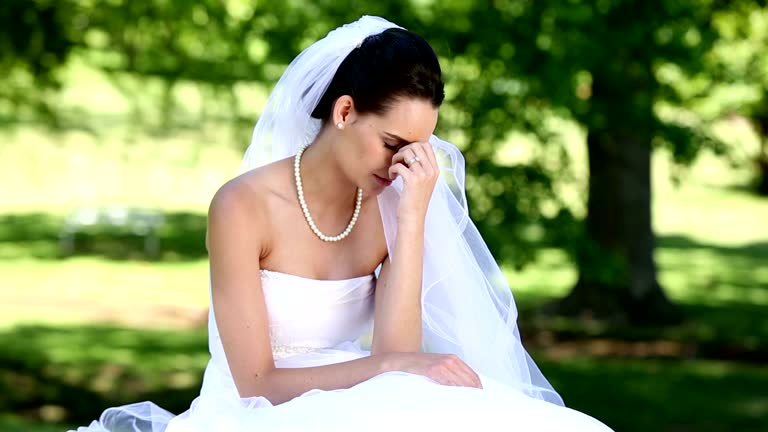
The Mask That Hid More Than Scars: How I Married a Serial Killer and Lived to Tell
To escape poverty, I married a dying millionaire. On our wedding night, he took off his mask. What I saw wasn’t a face—it was a warning.
I didn’t sleep that night.
He didn’t touch me—not in the way I feared. Instead, Charles poured us both a drink, gestured for me to sit, and spoke like we were old friends trapped in a waiting room.
My name is Leah Morrison, and six months ago I was waitressing at a truck stop diner outside Charleston, living paycheck to paycheck in a studio apartment with water damage and roaches. When the marriage proposal came through a lawyer’s office—$50,000 upfront, plus inheritance rights to a dying millionaire who needed a wife for legal reasons—I thought it was the answer to every prayer I’d whispered into my pillow at 3 AM.
I was wrong. It was something much more dangerous.
The wedding was small, private, conducted in the library of Charles Harwood’s estate in the Blue Ridge Mountains. He wore a surgical mask throughout the ceremony, claiming recent facial surgery. The lawyer who’d contacted me, a nervous man named Peterson, handled the paperwork with trembling hands and left immediately after the vows.
That should have been my first warning.
The Wedding Night Revelation
“I wasn’t born Charles Harwood,” he began that first night, settling into the leather chair across from me. “My name was Gregory Humes. I was a cosmetic surgeon in Los Angeles for nearly thirty years. A damn good one, too.”
I sat stiffly, still wearing my simple wedding dress. I could barely look at his face—how it shifted, how it clung too tightly in the wrong places. The glow of the lamp caught the sheen of synthetic skin, applied with clinical precision.
“I made a fortune off desperation. Actresses, executives, wives of senators—they came to me to become someone else. And they paid well.”
He took a sip of his bourbon, the liquid disappearing behind lips that didn’t quite move naturally. “But I got greedy. Too greedy.”
Charles—or Gregory—had developed an illegal side business. Using experimental surgeries, facial reconstruction, and synthetic grafting, he helped criminals disappear by literally giving them new faces. He called it “erasure work.”
“The FBI caught wind of it six years ago. My license was revoked. I faced thirty years in federal prison. But instead of serving time, I cut a deal. I testified against high-profile clients—names that could bury governments—and in return, they gave me a new identity: Charles Harwood.”
He gestured to his face with a bitter laugh. “But the irony is that I had to become my own patient. The government paid another surgeon to rebuild my face so I’d disappear forever. They used one of my own designs. That’s why it doesn’t move right. It’s not mine.”
I asked him why he needed a wife.
He was quiet for a long time, staring into his glass. “Because the money has conditions. The trust activates in full only if I’m legally married by age sixty-three. It’s a clause meant for someone else, but I inherited the identity completely.”
I asked him why he chose me.
He looked me dead in the eyes. “Because you were desperate—and honest about it. No pretense. No lies.”
I stood up and left the room. He didn’t follow.
Life in the Shadows
The next morning, I found him in the garden, pruning roses with latex gloves. He acted like nothing had happened. That became our pattern. We lived like ghosts in that house—a sprawling estate with too many rooms and not enough warmth.
No intimacy. No arguments. Just silence and expensive wine.
Charles was methodical in everything. He rose at exactly 6 AM, read three newspapers with his coffee, spent his mornings gardening, and his afternoons in his study. He never asked about my past, never inquired about my day. We ate dinner together in complete silence, like two actors who’d forgotten their lines.
The house itself felt like a museum. Everything was perfectly arranged, perfectly clean, perfectly lifeless. The staff—a housekeeper named Maria and a groundskeeper named Thomas—came twice a week but never stayed after dark. They spoke to Charles in hushed tones and avoided eye contact with me entirely.
I had everything I’d thought I wanted: designer clothes, gourmet food, a bedroom the size of my old apartment. But I felt more trapped than I ever had in my studio with the broken air conditioner.
The Letter That Changed Everything
Five weeks into this strange marriage, everything shifted when I received a letter from a woman named Iris Caldwell. The return address was from Nevada.
The letter said:
“You don’t know me, but I was married to Charles Harwood ten years ago. If you’re reading this, you’re in danger. He’s not what he says. He lied to me, too. And I barely escaped alive.”
My hands shook as I read the rest. It was handwritten, each line tightly scrawled, like someone had forced the words onto the page. Iris wrote about her wedding to Charles—same mask, same secrecy, same estate—but ten years earlier, under a different name: Michael Desmond.
He’d told her the same story. Former surgeon. Government deal. Hidden life.
“He uses different aliases,” the letter continued. “And every marriage is a transaction. Mine ended after six months, when I tried to leave.”
Iris claimed she’d discovered records hidden in a safe—documents proving that Charles had never testified against anyone. Instead, he’d staged his own disappearance after being connected to at least three missing women, all former patients of his so-called erasure clinic.
“The FBI file was sealed,” she wrote. “But I copied parts of it before I ran. He’s not under witness protection. He’s hiding. And every woman he marries disappears.”
At the bottom of the letter, in different ink, as if added later: “Check the study. Third floorboard from the east wall.”
The Confrontation
I confronted Charles that night after dinner, sliding the letter across the mahogany table like evidence in a trial.
He didn’t flinch when he read it. He didn’t even look surprised.
“I wondered when you’d hear from her,” he said, calmly placing a bookmark in his novel. “Iris is alive, yes. She ran. Took a hundred thousand dollars and disappeared. Smart woman.”
His matter-of-fact tone chilled me more than anger would have.
I asked him if what she wrote was true.
He sighed and suddenly looked much older than his sixty-two years. “Some of it.”
He admitted to the aliases, the staged identity. The government protection story was partially true—he had information that powerful people wanted buried. But the women?
“They weren’t victims,” he said, his voice dropping to something almost clinical. “They were partners. We had arrangements. Business arrangements. And some couldn’t keep their side of the deal.”
“What kind of arrangements?” I pressed.
“The kind where everyone benefits, provided they follow the rules.”
I asked what happened to the ones who didn’t follow the rules.
He didn’t answer. He just stood up, cleared the dinner plates with mechanical precision, and went to his study.
I sat alone at that massive dining table, staring at my reflection in the polished wood, and realized I was living with a man who spoke about missing women like they were failed business ventures.
The Discovery
That night, I crept into Charles’s study. The third floorboard from the east wall gave way under pressure, just as Iris had written. Beneath it: a metal lockbox.
Inside were driver’s licenses, passports, credit cards—all from different women. Five names. Five faces staring back at me from official photographs.
Sarah Chen, 28. Disappeared 2019. Maria Santos, 31. Disappeared 2017. Jennifer Walsh, 26. Disappeared 2015. Rebecca Torres, 29. Disappeared 2013. And at the bottom: Iris Caldwell, 32. Listed as disappeared 2014.
Except Iris wasn’t disappeared. She’d escaped and was warning me.
There was also a scalpel, its blade still gleaming despite its age.
I photographed everything with my phone, my hands shaking so badly I had to retake several shots. Then I carefully replaced everything and returned to my room, where I spent the rest of the night planning my escape.
The Trap
The next morning, I packed a small bag with essential items and told Charles I needed to visit a doctor in town. He nodded absently from behind his newspaper.
But when I tried to leave, the estate gates were locked. The intercom buzzed uselessly. The driver who usually took me to town was nowhere to be found. My cell phone showed no signal—something that hadn’t happened in the five weeks I’d lived there.
Charles met me in the foyer as I returned to the house, my escape attempt obvious from the overnight bag in my hand.
“You broke the contract,” he said simply.
He didn’t shout. He didn’t strike me. He just looked… disappointed. Like I’d failed to follow basic instructions.
“The agreement was clear, Leah. You stay until the trust activates. That’s eight more months.”
“What happens to me after eight months?” I asked.
“That depends on how well you’ve learned to follow the rules.”
His tone was the same one he’d used to discuss pruning roses. Casual. Clinical. Terrifying.
The Gambit
But I had planned for this possibility. Before attempting to leave, I’d sent the photos of the IDs to my friend Carmen back in Charleston, along with detailed instructions to forward them to both local police and the FBI if I didn’t check in within 48 hours.
I’d also hidden a letter in my old apartment, giving Carmen the key and telling her exactly where to look for it.
Charles stared at me when I told him about my insurance policy.
Then, unexpectedly, he smiled. It was the first genuine expression I’d seen on his reconstructed face, and it was absolutely chilling.
“That was clever, Leah,” he said, and for a moment he sounded almost proud. “Much more clever than the others.”
“Iris got away,” I reminded him.
“Iris got lucky,” he corrected. “She found my old hiding place before I’d moved everything. You found the decoy box.”
My blood turned to ice.
“Those IDs belong to women who are very much alive,” Charles continued conversationally. “They’re all living under new identities I created for them. New faces, new lives, new everything. My erasure work.”
“Then why—”
“Because it keeps wives focused on the wrong thing,” he said. “While they’re worried about becoming victims, they’re not asking about becoming business partners.”
The Real Truth
Charles led me back to his study and opened a different safe, this one behind a bookshelf. Inside were financial documents, bank statements, and photographs.
“Every woman I’ve married has become part of my operation,” he explained. “Iris lasted six months because she was good with numbers. Sarah is currently managing a clinic in Costa Rica. Maria handles European connections. Jennifer runs our Pacific Northwest operations.”
The photographs showed all of them—alive, successful, wearing different faces than the ones on the IDs I’d found.
“You were recruited because you’re intelligent and desperate,” Charles said. “But mostly because you’re clean. No family asking questions. No digital footprint worth following.”
“Recruited for what?”
“To help run the most sophisticated identity erasure service in the world,” he said. “Criminals, witnesses, abuse victims, political refugees—we give them new lives. Complete lives. And we charge accordingly.”
“Why the marriage requirement?”
“Because married couples can’t be compelled to testify against each other. And because the trust fund isn’t mine—it belongs to a dead arms dealer whose identity I purchased. The marriage clause ensures the money stays hidden.”
The Choice
Charles gave me a choice. I could become a partner in his operation—learn the business, undergo minor cosmetic changes to obscure my identity, and earn more money in five years than most people see in a lifetime.
Or I could leave, with a generous severance and a new identity of my own, provided I signed agreements that would ensure my silence.
“What about the scalpel?” I asked.
“A memento,” he said simply. “From my surgical days. I keep it to remember what I used to be.”
“And if I choose neither option?”
Charles’s reconstructed face attempted what might have been sympathy. “Then you become a missing person who chose to disappear. Clean. Simple. Untraceable.”
I told him I needed time to think.
“You have until morning,” he said.
The Escape
That night, I didn’t try to run. Instead, I stayed awake and planned. At 4 AM, I accessed Charles’s computer using a password I’d observed him typing. I copied everything I could find onto a flash drive—financial records, client lists, communication logs, and most importantly, evidence of his real identity and location.
I encrypted the files and sent them to a delayed-delivery email service, scheduled to release them to multiple law enforcement agencies in 72 hours unless I logged in to cancel the delivery.
Then I went to breakfast and told Charles I’d made my decision.
“I want the partnership,” I lied.
He smiled that unsettling smile again. “I thought you might.”
The Final Game
I spent the day learning about his operation—which was far more extensive than I’d imagined. Charles had been running identity erasure services for nearly a decade, with clients ranging from corporate whistleblowers to war criminals. The missing women weren’t victims; they were employees who’d chosen new lives over old ones.
But I also learned something else: Charles’s operation was funded by some very dangerous people who wouldn’t appreciate federal attention.
That evening, I told Charles about the delayed email.
“I know you’re not going to hurt me,” I said. “But your clients might not be as understanding if the FBI starts investigating.”
For the first time since I’d met him, Charles looked genuinely concerned.
“What do you want?” he asked.
“Safe passage out. Today. With enough money to disappear on my own terms.”
“And the emails?”
“I cancel them once I’m safely away.”
Charles considered this for a long moment. Then he nodded.
“You really are too smart for your own good,” he said. But this time, he sounded almost admiring rather than threatening.
The Exit
I left the estate that afternoon in a black sedan with tinted windows. The driver—a woman with a extensively scarred face who introduced herself only as “Alex”—gave me an envelope containing cash, a new driver’s license, and a phone number.
“If you ever change your mind about disappearing permanently,” Alex said, “call that number. Charles doesn’t usually make offers twice, but you impressed him.”
I threw the number away at the first rest stop.
Two weeks later, federal agents raided Charles Harwood’s estate. They found it completely empty—not just of people, but of everything. The house had been stripped down to the walls, professionally cleaned, and abandoned.
Charles was gone. His staff was gone. Even the furniture had vanished.
The Aftermath
The FBI questioned me extensively, but I maintained that Charles had simply been an eccentric millionaire who’d paid me for a marriage of convenience. I never mentioned the identities, the operation, or the other women. Partly because I wasn’t sure who to trust, and partly because I realized that some secrets are too dangerous to share.
Charles had been right about one thing: I was smart enough to understand that involving federal authorities in an identity erasure operation would put a lot of innocent people at risk—including the women who’d chosen new lives over old ones.
Six months have passed since I left that estate. I’m living in Portland now, working as a bookkeeper and trying to build something resembling a normal life. I kept some of the cash Charles gave me, but I’ve donated most of it to organizations that help people escape dangerous situations.
Sometimes, I still get letters. No return address. Just a white envelope with a pressed rose inside. Always with the same note:
“Well played.”
I don’t know if Charles is watching me or simply acknowledging that I’d beaten him at his own game. I don’t know if the women in those photographs are really living new lives or if that was just another layer of manipulation.
What I do know is that I married a man who traded in human reinvention, who offered people the chance to literally become someone else. In the end, I chose to remain myself—damaged, struggling, but authentic.
Some mornings, I wake up and wonder if I made the right choice. The money would have been life-changing. The power would have been intoxicating. But then I look in the mirror and see my own face—scarred by poverty and disappointment, but real.
Charles offered me everything I thought I wanted: wealth, security, a chance to become someone else entirely. But the price was my identity, my conscience, and possibly my life.
I chose to stay poor and stay myself.
Most days, that feels like the right decision.
But on the days when I’m counting pennies for groceries, when my apartment heater breaks and I can’t afford to fix it, when I remember the silk sheets and gourmet dinners and the promise of never worrying about money again—on those days, I find myself looking at those pressed roses and wondering if Charles’s offer is still open.
Because the most frightening thing about my brief marriage wasn’t that Charles was dangerous.
It was that his offer was genuinely tempting.
And sometimes, on my worst days, it still is.

Lila Hart is a dedicated Digital Archivist and Research Specialist with a keen eye for preserving and curating meaningful content. At TheArchivists, she specializes in organizing and managing digital archives, ensuring that valuable stories and historical moments are accessible for generations to come.
Lila earned her degree in History and Archival Studies from the University of Edinburgh, where she cultivated her passion for documenting the past and preserving cultural heritage. Her expertise lies in combining traditional archival techniques with modern digital tools, allowing her to create comprehensive and engaging collections that resonate with audiences worldwide.
At TheArchivists, Lila is known for her meticulous attention to detail and her ability to uncover hidden gems within extensive archives. Her work is praised for its depth, authenticity, and contribution to the preservation of knowledge in the digital age.
Driven by a commitment to preserving stories that matter, Lila is passionate about exploring the intersection of history and technology. Her goal is to ensure that every piece of content she handles reflects the richness of human experiences and remains a source of inspiration for years to come.