The bag of fried chicken from Ingles was still warm in my hand when I heard my stepson’s voice cutting through the darkness of my garage. “Yeah, I already cut the brake line.” I froze, fingers tightening on the paper bag until it crinkled. Through the crack in the side door, I could see the blue glow of a phone screen illuminating Trevor’s face as he stood near my workbench, shoulders relaxed, discussing my death like he was ordering pizza. “See you at his funeral tomorrow.”
The words hit me like ice water. For a second, my body forgot how to move. The garage smelled the way it always did—motor oil, concrete dust, that sharp bite of December air leaking through the gaps. I’d stopped at Ingles on the way home from work because I thought maybe we could have one normal evening, a peace offering after months of tension that nobody wanted to acknowledge out loud. Now I was standing in the cold holding fried chicken while my thirty-two-year-old stepson casually discussed my funeral.
“You sure about this?” That was Deborah’s voice, faint and tinny through the phone speaker. My wife of eleven years. She didn’t sound shocked or angry or horrified. She sounded cautious, like she was confirming a dinner reservation. “Yeah,” Trevor said, his tone flat and businesslike. “It’s done. He won’t make it to Monday.” He actually chuckled, and that sound—that casual amusement—made my stomach turn. I waited for Deborah to say my name, to say stop, to say anything that sounded like a conscience. Instead, she exhaled, and it sounded like relief. “Tomorrow,” she said. “Just be careful.”
My boot scuffed the concrete just once, and Trevor’s head snapped toward the door. I didn’t breathe, my chest burning from holding it in, but he didn’t come looking. After a beat, he turned back to the phone. “Yeah, I’ll text you when it’s done.” I slid out quietly, pulling the door shut until it rested without clicking, then moved fast around the side of the house. The neighborhood looked too normal—porch lights glowing up and down Kuga Road, Christmas wreaths already hanging on doors, Mrs. Wallace’s dog barking once before going quiet. Hendersonville doing what it always does: going to bed early, pretending trouble only happens on the news.
My hands shook so badly I almost dropped my keys. I walked to the sidewalk trying to look casual, like I was just out for an evening stroll instead of someone who’d just overheard a murder plot. “Patience is my tool,” I whispered to myself, a line I’d said a thousand times to apprentices when I was still working HVAC full-time. When they rushed a job and stripped a screw, I’d tell them to slow down, to use patience first. Now I had to use it on myself. I got into my sedan and sat there with the engine off, breath fogging the windshield, phone slick in my trembling hand.
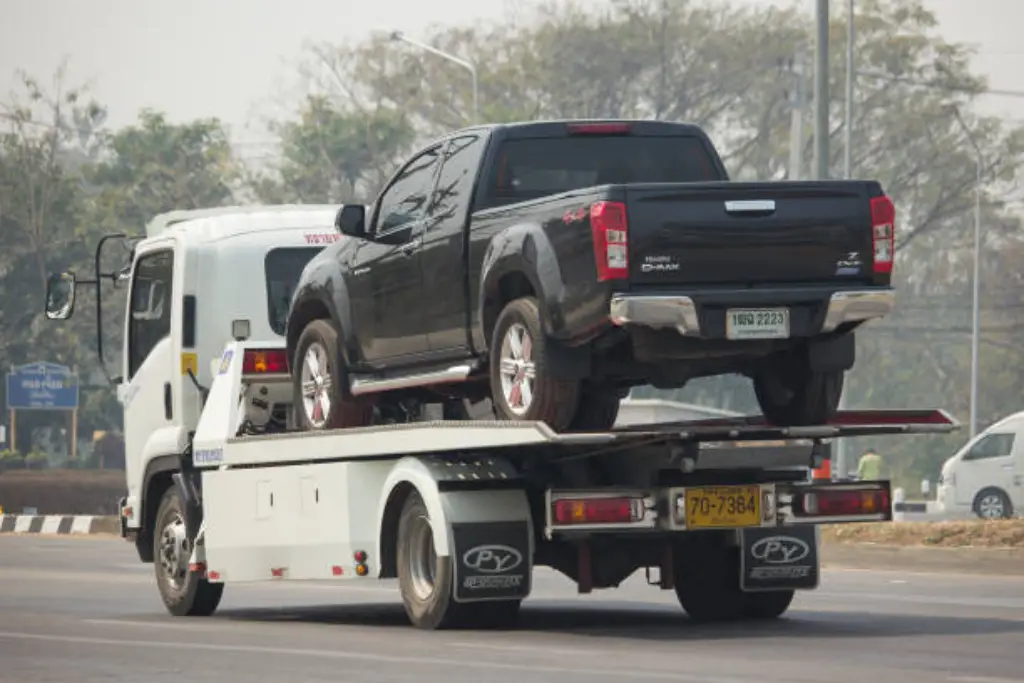
Call the police, I thought. Then the next thought came: what do I say? Hello officer, my stepson said he cut my brake line. No, I don’t have a recording. No, there isn’t a body yet. In a small town like this, that turns into a punchline or worse—you get labeled unstable, paranoid. Trevor would smile and say Thomas has been stressed, forgetting things. Deborah would dab her eyes and say they’re worried about me. I couldn’t let that happen. So I opened my roadside assistance app and called for a tow truck instead.
The dispatcher sounded half asleep. “What’s the pickup location?” I stared at my house like it belonged to someone else. “Front driveway,” I said, forcing my voice steady. “Silver Ford F-150. Need it towed tonight.” She asked if it was drivable, and I said no, safety issue, as soon as possible. Then, because I couldn’t help it, I added “please” before hanging up. I sat listening to the quiet tick of my engine, my hands still shaking, but my brain was already moving through what mattered—evidence, dates, times, moves that keep you alive.
Trevor had asked me to co-sign a loan a few months back. Twenty-eight thousand five hundred dollars for debt consolidation at an interest rate that would make a loan shark blush. I’d looked at the paperwork and told him no, explaining that I’d learned what debt does to a person. He’d stared at me with that slow, cold smile and said, “You always think you’re better than me.” That night, Deborah had taken his side in the quiet ways—the way she stopped talking when I walked into a room, the way she made peace feel like my job alone. Now I understood what letting it go meant to them.
Headlights swung down the street. The tow truck driver was a thick guy in a beanie, breath puffing white in the cold air. He looked at the F-150, then at me sitting in the sedan, walked over and knocked on my window. “You the one who called?” I rolled it down an inch. “Yes.” He nodded at the truck. “What’s wrong with it?” I swallowed hard. “Brake problem. Taking it to a friend’s to get looked at.” He squinted at me. “At this hour?” I met his eyes. “I’m up. He’s up. It’s important.” He shrugged like he’d seen every kind of weird and went to work. The winch started, the metal cable rattled like chains, and I watched my truck roll onto the flatbed.
That truck had been mine before Deborah and I ever shared a bank account. I’d driven it through snowstorms and years that now felt like they belonged to somebody else. The driver came back with a clipboard. “Sign here.” My pen shook, but I forced my hand steady. He looked at my face like he was deciding if I was drunk or sick. “You all right, man?” I stared past him at the warm light leaking through my curtains. “I’m fine. Just tired.” As the flatbed pulled away, something tore loose in my chest—grief, anger, the last shred of the life I thought I had. My phone buzzed. Deborah: “Where are you?” Another buzz. Trevor: “Did you move the truck?” My throat went dry. I didn’t answer. Not yet.
The drive to Eugene’s place in Asheville took thirty minutes through dark mountain roads. Eugene Carter was Trevor’s biological father, a retired mechanic who’d raised Trevor until he was five before Deborah left and eventually married me. We’d been civil over the years, polite in that way you are when you’re both trying not to make things harder. But Eugene knew cars, and more importantly, Eugene knew Trevor better than I ever would. When I pulled into his driveway, the porch light flicked on and he appeared in sweatpants and flannel, gray hair flattened from sleep. “Thomas,” he said, my name coming out like a question.
I killed the engine. “Eugene, I need to talk. The truck’s on the way, towed.” His eyebrows jumped. “Towed? Why?” I looked him in the eye. “Because I don’t trust it.” Inside his house, which smelled like black coffee and old leather, I explained what I’d overheard. Eugene sat back in his chair, which creaked under his weight. “You accusing Trevor?” he asked carefully. “I’m telling you I’m not driving that truck,” I said. “And I want it checked by someone who won’t sugarcoat it.” Eugene stared at me for a long moment, then stood. “All right. I’ll look. But if this thing is dangerous, I’m not driving it anywhere. I’m pulling it into the garage and putting it on stands.”
When the tow truck arrived and dropped my F-150, Eugene grabbed a flashlight and slid underneath on a creeper. I stood in the doorway watching his boots stick out, my heart hammering. “Tell me exactly what you heard,” he called from under the truck. “He said he cut the brake line.” Silence. Then Eugene rolled out halfway and looked at me, his face serious. “Thomas, come look at this.” I crouched down and he angled the flashlight. I’m not a mechanic, but I know the difference between worn and broken. The brake line wasn’t frayed or rusted. It was cut. Clean. Straight. Deliberate. “That’s not an accident,” Eugene said quietly. “That’s someone trying to kill you.”
My vision blurred. “When did you last drive it?” he asked. “Yesterday afternoon. It felt fine.” He nodded slowly. “Then it was done after that. Tonight.” He pulled out his phone. “I’m calling the police.” I stepped away and called Elizabeth Garrett, an attorney I’d worked with when I bought back the family house five years ago. She picked up on the second ring, and when I explained the situation, she was silent for a moment before speaking. “Listen carefully. You didn’t touch it. You didn’t drive it. Document everything—dates, times, witnesses. Call the police tonight, and stay calm. Facts beat fear.” When I hung up, Eugene was already dialing 911.
Red and blue lights washed over the garage minutes later. Two officers took statements, photographed the brake line, asked why the truck was at Eugene’s house. I told them the truth—calm, clear, factual. The younger officer frowned. “You’re saying your stepson did this?” I met his eyes. “I’m saying the brake line was cut, and I overheard him say he did it.” They left after an hour, promising follow-up. When the garage went quiet, Eugene leaned against the workbench and rubbed his face. “My own kid,” he said softly. I sank into a chair, my hands shaking. “You okay?” Eugene asked. I opened my mouth to say yes, but instead I gagged and made it to the trash can just in time. Eugene held the can steady and waited. After, I sat there staring at the floor. “I don’t feel like I won,” I said. Eugene shook his head. “You didn’t win. You survived.”
I woke up on Eugene’s couch the next morning with my coat still on and my neck stiff. The smell of coffee drifted from the kitchen. For a few seconds I didn’t know where I was, then the image of that clean-cut brake line snapped back into place. Eugene was at the table scrolling through his phone, jaw tight. “You’re internet famous,” he said without looking up. My stomach sank as he turned the screen toward me. Deborah’s Facebook post was long, emotional, carefully written: “Please pray for my family. Thomas left last night in a fit of anger and took things too far. My son is being accused of something terrible and we are heartbroken. Lies can destroy a family faster than any accident.”
The comments were already stacking up. So sorry, Deborah. Praying for you and Trevor. Some men just can’t handle losing control. You deserve better. I felt like I’d been punched in the chest. By noon, the neighborhood had chosen its version of the truth. When I drove back to Hendersonville to grab clothes, people I’d waved to for years suddenly found reasons to look at their phones. Mrs. Wallace stared at me like I’d tracked mud into her church. In a small town, your reputation is currency, and mine was tanking fast. The thing about a lie is that it doesn’t need to be big—it just needs to be first.
The next week blurred together—a cheap motel room off I-26, paperwork, phone calls with Elizabeth, updates from Detective Warren about the investigation. My blood pressure spiked so high that one night at three in the morning, I woke up with chest pain so severe I thought I was dying. The paramedics took me to Mission Hospital, where Dr. Hughes told me my heart was fine but my body was breaking down from stress. “Your blood pressure is 190 over 110,” he said seriously. “Stress can kill you just as surely as a blocked artery. You need to remove yourself from this situation, or you won’t make it to trial.”
Eugene picked me up and insisted I stay at his place. Days passed. Deborah tried to reach me three times—first soft and tearful, then sharp and angry, finally ice-cold: “You’re destroying this family.” I forwarded all three voicemails to Elizabeth without listening twice. Then came a breakthrough. My friend Stanley Coleman, who I’d worked with for years in HVAC, called to say he’d done some digging. He’d checked with an AutoZone manager and found security footage showing Trevor buying a tubing cutter two days before I’d overheard him in the garage. And ten minutes after Trevor left the store, Deborah walked in and bought supplies, paying cash to avoid a paper trail.
“She knew,” Stanley said quietly as we sat in a back booth at a diner off exit nine, watching the video on his phone. “She knew from the beginning.” I stared at the frozen image of my wife standing in an auto parts store, and whatever hope I’d been holding onto—that maybe she’d been manipulated, that maybe she didn’t understand—died completely. This wasn’t manipulation. This was coordination. I forwarded the footage to Elizabeth and Detective Warren, and for the first time since the garage, I felt something besides fear. I felt hope, not because I’d won, but because the truth had finally gotten a voice.
But I needed one more piece of evidence. Two weeks before the preliminary hearing, I returned to the house with Deputy Morrison to collect my personal belongings. Deborah had agreed to stay at a friend’s place during the supervised visit. The house was too quiet, smelling faintly of her lavender candles, everything looking the same but feeling completely different. I was packing systematically when I opened the nightstand drawer and noticed it didn’t sit flush. I pulled it all the way out and reached into the cavity, my fingers brushing against something taped underneath. A phone. A cheap prepaid burner. I pressed the power button, and it flickered to life with no password, just two apps: Messages and Calls.
The message thread was long, hundreds of texts to and from someone saved as “G.” I scrolled to the top and started reading. “Deborah, I can’t wait to start our life together.” “G, me neither. But are you sure about the divorce?” “It won’t be a divorce. Just a few more months and I’ll be free.” My hands shook as I kept scrolling. “The house will be mine, plus the retirement account and the life insurance policy.” “What are you planning, Deborah?” “Nothing you need to worry about. Just be patient.” The next message was timestamped two days before I’d overheard Trevor: “It’ll be handled soon. Then we can finally be together.”
I sat on the edge of the bed, the phone clutched in my hand, understanding with perfect clarity that this wasn’t just about getting rid of me. This was about replacing me. Deborah had built a whole new life in secret, and I was the only obstacle. I called Deputy Morrison and handed him the phone to be bagged as evidence. Detective Warren later traced the number to Glenn Hartman, a fifty-two-year-old insurance agent in Asheville who believed Deborah was getting a divorce and had no idea she was planning murder instead of legal separation.
Then I made one final discovery. I’d been sorting through the garage when I glanced up and saw a tiny red light blinking in the corner of the ceiling. A camera. Four months ago, after a neighbor’s shed was broken into, I’d installed a basic security system with two cameras—one facing the driveway, one inside the garage. Cloud storage, motion-activated recording. I’d completely forgotten about it, never checking the app after the first week. But the cameras kept recording whether I was paying attention or not. With shaking fingers, I opened the app on my phone and scrolled to the night I’d overheard Trevor. The timestamp glowed: 11:47 p.m.
The video began. Trevor entering the garage, checking corners to make sure no one was watching. Then Deborah appearing in the doorway, arms crossed. “You sure about this, Mom?” Trevor’s voice came through clearly. He’d never called her mom when I was around, but here in the dark, planning my death, he called her mom. Deborah stepped closer, her face calm, not conflicted. “Just do it. Make it clean. No fraying. It has to look like normal wear.” Trevor knelt beside my sedan with a tubing cutter, and I heard the soft snip of the blade cutting through the brake line. “When’s he driving it next?” Deborah asked. “Tomorrow. He always takes it on Saturdays.” “Good. The sooner this is over, the better.”
Three minutes and forty-seven seconds. That’s how long it took for my wife to orchestrate my murder, all captured on camera with crystal-clear audio. I called Elizabeth immediately, and when she arrived at the house and watched the video, her jaw went tight. “Thomas, this changes everything. This isn’t just evidence anymore—this is a confession. Premeditation, conspiracy, attempted murder, all on tape with audio of her giving instructions.” She called Detective Warren, and we sat in the garage waiting, the tiny red light still blinking in the corner, proof that Trevor’s biggest mistake was assuming my neglect meant the system wasn’t working.
One week before the hearing, Elizabeth turned my motel room into a war room, papers spread across the bed, timelines taped to the walls, evidence photos lined up like soldiers. We practiced my testimony over and over. “Stay factual, don’t get defensive, and don’t hide your fear,” she coached. “Fear is human. The jury will understand.” The morning of the preliminary hearing, I drove to the Henderson County Courthouse on Main Street, my stomach in knots. Inside, I saw Deborah and Trevor standing near the courtroom door. Deborah wore a navy blazer and silver cross necklace, eyes red-rimmed, tissue clutched in one hand, looking smaller and more fragile than I remembered. Performing.
When she saw me, she stepped forward. “Thomas, you don’t have to do this.” Elizabeth moved between us immediately. “Ma’am, he’s not doing anything. He’s reporting a crime.” Deborah’s eyes filled with tears. “A crime, Thomas? This is our family.” I looked at her steadily. “It stopped being a family the night you told Trevor to cut my brake line.” Her face flickered—just for a second—and I saw it. Not grief or confusion, but anger. Then the mask slid back into place. Inside the courtroom, Judge Reynolds entered—a woman in her sixties with steel-gray hair and sharp eyes—and called the proceedings to order.
The prosecutor stood. “Your honor, the state calls Richard Mason.” The forensic technician who’d examined my brake line walked to the witness stand with the careful posture of someone who’d spent years bent over engines. His testimony was clear and damning: the brake line had been severed cleanly, perpendicular to the tubing, consistent with a hand tool, no fraying or corrosion, impossible to be accidental. “If this was maintenance,” he said, his jaw tight, “it was criminally negligent at best.” Then came the store footage showing Trevor buying the tubing cutter, followed by Deborah arriving ten minutes later. The courtroom murmured as the evidence stacked up.
But nothing compared to what came next. The lights dimmed, and the security footage from my garage played on a screen wheeled into the courtroom. The audio was amplified through speakers, and every word was crystal clear. Trevor’s voice: “You sure about this, Mom?” Deborah’s calm reply: “Just do it. Make it clean. No fraying. It has to look like normal wear.” The sound of metal being cut. “The sooner this is over, the better.” The courtroom fell into the kind of silence that comes from shock, from watching something so undeniable there’s nothing left to say. I heard someone gasp. Mrs. Wallace covered her mouth. Deborah’s face went pale, the tissue she’d been clutching falling to the floor.
When the video ended and the lights came back up, Judge Reynolds leaned forward, pen moving fast across her notepad. “Counselor, do you have anything further?” The prosecutor shook his head. “Not at this time, your honor.” Then it was my turn to testify. I walked to the witness stand on unsteady legs, placed my hand on the Bible, and swore to tell the truth. The prosecutor asked me to describe what happened on October 6th, and I did—calmly, factually, explaining how I’d overheard the conversation, called a tow truck instead of confronting them because I needed distance and proof, had the vehicle inspected by Eugene because I needed someone trustworthy who knew cars.
Attorney Pearson, Trevor’s lawyer, tried to shake me during cross-examination. “You’ve had conflicts with Trevor before, haven’t you?” I stayed level. “We’ve had disagreements about money and responsibility. Normal family issues.” He pressed: “Why didn’t you call 911 the moment you overheard that conversation?” I looked him in the eye. “Because I was afraid. If I’d called the police that night with no proof, it would have been my word against theirs, and I would have been living in the same house with two people who wanted me dead. So I documented everything and built a case because I wanted to survive long enough to see justice.”
The final witness was Glenn Hartman, the man from the burner phone messages. He walked in looking hollow, exhausted, wearing a wrinkled dress shirt like he’d grabbed it from the back of his closet without thinking. His testimony was devastating. He’d been involved with Deborah for four months, believed they were going to be together after her divorce, had no idea she was planning murder. The prosecutor read text messages aloud: “The house will be mine, plus the retirement account and the life insurance policy.” “It’ll be handled soon. Then we can finally be together.” Glenn’s voice cracked as he testified that he’d thought Deborah meant her husband might have a heart attack naturally, not that she was planning it.
And then it happened. Deborah stood up suddenly, her chair scraping against the floor, hands trembling, face flushed. “I didn’t think he would actually—” She stopped, eyes darting to Trevor. “Trevor, what did you do?” Trevor’s head snapped up, face twisted with rage. “What did I do? You told me to! You said to make it look like an accident, you said—” Attorney Pearson grabbed Trevor’s shoulder. “Don’t say another word.” But it was too late. The words hung in the air. A public confession. The courtroom erupted until Judge Reynolds slammed her gavel.
“I’ve heard enough,” Judge Reynolds said, removing her glasses. “There is more than sufficient probable cause to bind both defendants over for trial on charges of conspiracy to commit murder. Mr. Bennett, you are remanded into custody without bail.” Two deputies moved forward to cuff Trevor. As he was led past me, his eyes met mine with pure burning hatred. I didn’t look away. Deborah was guided toward a different door, her voice small and broken: “This wasn’t supposed to… I didn’t mean for it to…” She looked at me with disbelief as she passed, like she couldn’t understand how I was still alive, still standing.
I stepped out of the courthouse into pale December sunlight. The air felt clean and sharp. Eugene stood on the steps, hands in his pockets. “You did the right thing,” he said quietly. “I’m sorry about Trevor.” He shook his head. “Don’t be. Whatever he became, that’s on me too. But that doesn’t change what needed to happen. You survived. That’s what matters.” Elizabeth appeared at my elbow. “This isn’t over—there’s still the trial, sentencing, appeals. But the hardest part is done.” I drove back to the motel, and when I sat in the quiet car, the tears finally came. Not sobs, just slow heavy tears for the marriage I’d thought I had, for the years I’d given to a woman who’d planned my death.
The months that followed brought their own kind of healing. Trevor took a plea deal—eighteen to twenty-five years with no parole eligibility for fifteen. Deborah went to trial, and the jury deliberated for less than four hours before finding her guilty on all counts. Fifteen to twenty years. I got a short handwritten letter from Glenn Hartman, apologizing for his blindness, hoping I’d find peace. I read it once and put it in a drawer without responding. With the settlement money from the divorce—eighty-five thousand from the house equity—I bought a small apartment in Asheville overlooking the French Broad River. Second floor, two bedrooms, locks that only I had keys to.
The first morning in my new place, I made coffee and stood on the balcony watching the river. The December air was cold but clean and real. I didn’t feel victorious. I felt tired and older than fifty-eight, but I felt safe. Safe enough to breathe without tasting fear. I started going to a support group for survivors of domestic violence, where a seventy-three-year-old woman looked at me and said, “You trusted your gut. That’s what saved you.” I started seeing Dr. Patterson, a therapist who helped me process what had happened. “You didn’t cause this,” he said during one session. “And you did everything right. You documented, stayed calm, protected yourself. That’s survival.”
Six months after the trial, I started dating Margaret, a fifty-four-year-old school librarian I’d met at the support group. She understood what it meant to rebuild trust, understood that some days were harder than others. We took things slowly—coffee, dinner, walks along the French Broad River when the dogwoods were blooming. “You don’t have to rush,” she said when I apologized for being cautious. “One day at a time.” My daughter Sarah visited twice, the second time bringing my grandkids who ran around the apartment asking about dinosaurs. We threw rocks in the river and talked about normal things. Blessedly normal.
Exactly one year after that night in the garage, I stood on my balcony holding warm coffee, watching the French Broad River catch the morning light. A year ago I’d been holding fried chicken, listening to my stepson plan my murder. Today I was planning dinner with Margaret, looking forward to Sarah’s visit next weekend. My phone buzzed with a text from an unknown number: “You destroyed everything.” I stared at it for a long moment, then deleted it without responding. Some battles aren’t worth fighting. Some people aren’t worth your energy. Real strength isn’t a clever comeback—it’s refusing to play their game anymore. Silence is a boundary. Silence is strength.
I thought about what I’d learned standing in that garage, clutching a bag of fried chicken while my world fell apart. Patience isn’t weakness—it’s strategy. I didn’t scream or confront or swing. I stepped aside and let the truth do the hitting. I trusted my gut when it told me something was wrong, even though every part of me wanted to believe I’d misheard. I documented everything and built a case that couldn’t be denied. I reached out for help instead of carrying it alone. And most importantly, I survived—not just physically, but whole enough to build something new.
My father used to say, “Patience is your tool. Use it first.” He was talking about HVAC systems, but it applies to everything. The right time to act isn’t always the first time. Sometimes you have to wait for proof, wait for allies, then act decisively. That’s exactly what I did. I didn’t call 911 the night I overheard them because I needed evidence first. I let them think they were safe while I gathered what I needed. And when I finally moved, I had everything—the towed truck, the forensic report, the store footage, the burner phone, the security video showing the whole thing. Every piece mattered.
If you take anything from my story, remember this: trust your gut, not your pride or hope or the version of someone you want to believe in. If something feels wrong in your own home, it is wrong. Document what you can, get help from people you trust, and act strategically instead of emotionally. Don’t confront until you’re ready. Build your case first. Patience and evidence will save your life when confrontation might end it. And know that healing isn’t linear—there will be hard days, but keep walking. You deserve to survive, and survival is possible if you listen to that voice inside you that says something is wrong.
I finished my coffee and went inside. Margaret was coming over tonight. Sarah was visiting next weekend. Eugene would call next month. Life wasn’t perfect, but it was mine, and no one could take that from me anymore. The river kept flowing. So did I.

Ethan Blake is a skilled Creative Content Specialist with a talent for crafting engaging and thought-provoking narratives. With a strong background in storytelling and digital content creation, Ethan brings a unique perspective to his role at TheArchivists, where he curates and produces captivating content for a global audience.
Ethan holds a degree in Communications from Zurich University, where he developed his expertise in storytelling, media strategy, and audience engagement. Known for his ability to blend creativity with analytical precision, he excels at creating content that not only entertains but also connects deeply with readers.
At TheArchivists, Ethan specializes in uncovering compelling stories that reflect a wide range of human experiences. His work is celebrated for its authenticity, creativity, and ability to spark meaningful conversations, earning him recognition among peers and readers alike.
Passionate about the art of storytelling, Ethan enjoys exploring themes of culture, history, and personal growth, aiming to inspire and inform with every piece he creates. Dedicated to making a lasting impact, Ethan continues to push boundaries in the ever-evolving world of digital content.
Great story…believable. Although fictional, it might help someone one day!
Really beautiful story!! He did every thing right.
Beautiful story!! He most certainly did every thing right.