The morning sun filtered through the silk curtains of our bedroom, casting gentle shadows across marble floors that cost more than most people’s annual salary. But the warmth of that light couldn’t touch the coldness in my heart or ease the burning pain in my left cheek. Preston had struck me again—this time over a shirt collar he deemed insufficiently crisp.
Standing before the full-length mirror in our walk-in closet, I examined the redness blooming across my skin. It would fade by afternoon, carefully concealed beneath foundation and powder. Everything in this house was carefully concealed. The bruises. The fear. The desperate, clawing hopelessness that had become my constant companion.
If you saw Preston Davenport in the world beyond these gates, you’d never suspect the truth. He was everything a successful man should be—charming, generous, impeccably dressed. The local youth center had a wing named after him. The PTA mothers giggled when he smiled. He was the man other men aspired to become, the husband women dreamed of having.
But behind the towering fence topped with decorative iron spikes, behind the security cameras that watched every corner except the bathrooms, Preston Davenport was a monster. He had rules—nonsensical, ever-changing rules that governed everything from how I arranged the flowers to the exact temperature of his morning coffee. Deviation meant punishment, and his hands were always faster than his explanations.
I had tried to escape once, confiding in a neighbor over tea. Within a week, Preston had convinced her I was suffering from stress-induced delusions. Suddenly, I was the unstable one, the wife who needed careful watching. The isolation became absolute. My phone was inspected nightly. The guard at the gate reported my every movement. Even the housekeeper, Maria, kept her eyes down and her mouth shut, understanding that survival meant silence.
That afternoon, as I cleaned the bathroom where he’d struck me that morning, an idea took root. It was desperate and dangerous, but desperation had become my most familiar feeling. Preston had one weakness that eclipsed all his power—his reputation. He was terrified of the world discovering who he truly was. He would never willingly take me outside these walls in a state that might raise questions, but what if I created a situation he couldn’t control?
The hospital. It was the only neutral ground I could imagine, the only place his authority might falter. But I needed to get there legitimately, in a way that couldn’t be blamed directly on him. The plan crystallized with terrible clarity. I needed to be hurt, but not by his hand.
I waited until he left for his office, the sound of his luxury sedan fading down the driveway. Then I retrieved the lemon floor cleaner from beneath the sink. The master bathroom was enormous, floored in unforgiving Italian marble. I poured the cleaning solution near the vanity, creating a slick, treacherous puddle. My hands trembled as I stared at what I’d done.
This was going to hurt. The physical pain might be intense, but it was nothing compared to the soul-crushing agony of living in this gilded cage, of waking each morning wondering which trivial mistake would earn me a slap or worse. I had become a ghost in my own life, and ghosts, I had learned, sometimes needed to be more dramatic to be seen.
Evening came with the smooth purr of Preston’s car returning. I positioned myself near the bathroom, heart hammering. When I heard his footsteps on the stairs, I called out to him, ensuring he knew where I was. Then, before courage could abandon me, I stepped deliberately onto the soapy puddle.
The world tilted violently. My feet flew out from under me and I crashed backward onto the marble with a force that drove the air from my lungs. The pain was extraordinary, a white-hot explosion across my back and hips. I screamed—partly from genuine shock, partly to ensure the sound carried through the house.
Through the ringing in my ears, I heard Preston’s running footsteps. I forced myself to go limp, to slow my breathing, to play dead. This had to look serious. If I simply appeared injured, he’d tell me to apply ice and criticize my clumsiness. I needed him to panic.
‘Ellie! Ellie!’ His voice was sharp with alarm, but I recognized it—not the panic of a loving husband fearing for his wife’s life, but the panic of a man watching his perfect facade crack. He slapped my face, too hard. ‘Wake up. Don’t you dare cause trouble now.’
Even in this moment, his first concern was himself. But his hands were shaking as he felt for my pulse. Good. Let him tremble. Let him taste the fear I’d lived with for five years.
The journey to the hospital was a blur of Manny’s anxious driving and Preston’s muttered curses about traffic. I remained motionless, barely breathing, as we raced through the city streets. When we finally reached the emergency room, Preston’s transformation was instantaneous and complete.
‘Doctor! Nurse! Please, help my wife!’ His voice cracked with perfectly performed anguish. ‘She fell in the bathroom. She won’t wake up. Please, money is no object. Save her!’
I was rushed through fluorescent-lit corridors, the squeak of gurney wheels accompanying Preston’s continued performance. He gripped my hand, whispering endearments that had never passed his lips at home. The Oscar for Best Actor in a Medical Emergency would surely be his.
A nurse’s firm voice cut through his dramatics. ‘Sir, please wait outside. We need to examine the patient.’ Preston tried to object, citing his rights as a husband, but the nurse was immovable. Finally, with visible reluctance, he released my hand and stepped beyond the curtain.
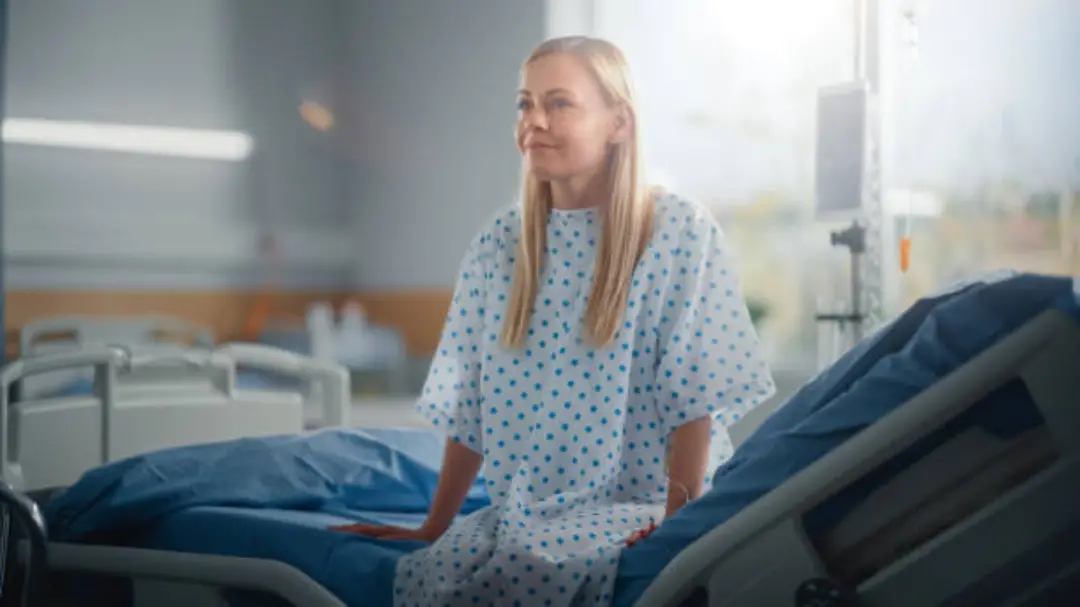
For the first time in hours, I could truly breathe. The pain in my back and hip was real enough to make tears leak from my closed eyes, but beneath that pain was something else—a fragile, tentative hope. I had made it out. I was in a place where Preston’s power had limits.
The curtain swished open and I heard measured footsteps approach. Through barely parted lashes, I saw not a young resident but a senior physician, gray-haired and dignified, with keen eyes behind wire-rimmed glasses. He examined my chart, then began a methodical assessment.
Suddenly, Preston’s voice cut through from beyond the curtain. ‘Doctor, how is she? I’m her husband. I need to know what’s happening.’
The doctor paused, his fingers still on my wrist taking my pulse. When he turned to face the curtain, I saw his expression change—not to the professional sympathy one might expect, but to something harder, colder.
‘Good evening, Mr. Davenport.’ The doctor’s voice was flat, almost emotionless. ‘It’s a small world, isn’t it? Do you remember me?’
I heard Preston’s sharp intake of breath. Through my lashes, I watched my husband’s face drain of color. His confident stance crumbled. His hands began to shake.
‘Dr. Miles,’ Preston whispered, and in that whisper was the sound of a man confronting his worst nightmare.
The doctor stepped closer to Preston, his voice dropping but losing none of its intensity. ‘I will be handling your wife’s case tonight. I will make sure she receives the justice—’ he paused, ‘the care that my sister never had the chance to get.’
The words hung in the air like a pronouncement of judgment. His sister. Preston’s first wife. The pieces clicked into place with terrible clarity.
Preston tried to speak, but Dr. Miles cut him off with a raised hand. ‘Please wait outside, Mr. Davenport. Medical protocol. I’ll call you when we have results.’ It wasn’t a request.
After Preston retreated, his footsteps unsteady, Dr. Miles turned back to me. His voice softened. ‘Mrs. Davenport, he’s gone. You can open your eyes now. Your acting is good, but your breathing is too steady for someone with severe back pain.’
I opened my eyes, meeting his gaze. Dr. Miles pulled a stool beside my bed and sat down. ‘Don’t worry. I won’t expose your secret. I know you’re not unconscious, and I know you didn’t slip because the floor was wet. You did this to escape that house, didn’t you?’
Tears I’d been holding back broke free. He’d understood everything. When he gently rolled up my sleeve, revealing the constellation of purple and yellow bruises marring my arm, his jaw tightened.
‘A marble floor doesn’t leave marks like these, Mrs. Davenport.’ His finger traced the clear imprint of fingers on my skin. ‘These are from a hand. A person’s hand.’
‘Help me,’ I whispered. ‘I can’t go back there. If I do, I won’t survive.’
Dr. Miles’s expression hardened with resolve. ‘Five years ago, another woman was brought to this hospital by Preston Davenport. Same story—she slipped in the bathroom. Her name was Rebecca. She was my only sister. She never woke up.’
The revelation struck like lightning. Preston’s first wife, the one he claimed died in an accident. My predecessor in this nightmare.
‘Preston refused an autopsy,’ Dr. Miles continued, his voice thick with suppressed emotion. ‘He had her buried quickly, paid people off, cited privacy and religious reasons. I was overseas when it happened. By the time I returned, it was too late. I’ve suspected him for five years, but I had no proof. Until now.’
He leaned forward, his eyes intense. ‘I failed to save my sister, Mrs. Davenport. But I swear I won’t let Preston hurt another woman the same way. Tonight, you’re safe here. I’m going to diagnose you with a concussion and possible spinal trauma. You’ll need to stay for at least three days. That buys us time.’
He pressed something into my palm—a small piece of paper. ‘My personal number and an address for a safe house. But Eleanor, we can’t just play defense. We need evidence. Before she died, Rebecca told me she’d hidden something in that house, something that would protect her from Preston. She called it her insurance. She said to look in the place that was brightest but also darkest.’
‘Brightest but darkest?’ I repeated, confused.
‘Those were her exact words. I never understood them. But if we can find what she hid, we might finally have enough to put Preston away for good.’
The next three days passed in a strange limbo. Preston insisted on the most expensive private room, not out of love but to isolate me from potential confidantes. He visited daily, playing the devoted husband for any nurse who might be watching, then dropping the mask the moment we were alone.
‘Don’t say anything strange to the staff,’ he hissed during one visit. ‘Especially not to that doctor. If any rumors start, you know what will happen.’
But on the third day, Preston’s paranoia overcame his patience. ‘We’re going home tomorrow. I don’t like this place. That doctor has a personal vendetta. I’ve arranged for private care at the house.’
Dr. Miles tried to object on medical grounds, but Preston was legally within his rights to sign me out against medical advice. Before I left, Dr. Miles slipped me something smaller than a fingernail—a micro SD card.
‘This contains a tracking app,’ he whispered while checking my IV. ‘Install it on any device you can hide. The moment you activate it, I’ll know your location. And Eleanor—find what Rebecca left. The brightest, but darkest place. Think about what those words might mean to a narcissist like Preston.’
The drive home felt like a return to prison. As we pulled through the familiar gates, I stared at the mansion with new eyes. Somewhere within those walls was the evidence that could free me and bring justice for Rebecca. I just had to find it before Preston discovered what I was looking for.
Preston wasted no time reasserting control. ‘You’ll rest in the bedroom. Don’t leave unless necessary. Maria will bring meals to the door.’ He held out his hand. ‘Phone.’
I surrendered it without argument. He’d expected resistance, and my compliance seemed to satisfy him. ‘Good. The radiation is bad for your recovery anyway. I have work to do. Don’t disturb me unless it’s an emergency.’
Alone in the bedroom, I began my search. Brightest but darkest. The phrase circled my mind endlessly. Preston loved light—the house blazed with it. He hated shadows, dark corners, anything he couldn’t see and control. So where would be bright to others but dark to him?
My eyes fell on the vanity table, Preston’s temple of self-worship. It was ringed with bright bulbs like a Broadway dressing room, illuminating the large mirror where he spent countless hours admiring his reflection. The brightest spot in the room.
But to a narcissist, what could be darker than the truth behind their own reflection? Preston saw only what he wanted to see in that mirror—his success, his charm, his superiority. He never looked deeper than the surface. The mirror was bright with light but dark with his self-deception.
With trembling hands, I approached the vanity. I switched on the ring of lights and began examining the frame. One bulb in the bottom corner sat slightly crooked. Using a tissue to protect my fingers from the heat, I carefully unscrewed it.
Inside the empty socket, wedged between ceramic and wood, was a small object wrapped in plastic. I fished it out with a bobby pin. An old micro SD card, Rebecca’s final testament, hidden in plain sight behind the lights that illuminated Preston’s vanity every single day.
That night, while Preston slept, I crept to the bathroom with an old tablet I’d found in a drawer. My hands shook as I inserted Rebecca’s card. A single audio file appeared, dated five years ago—the day she died.
I pressed play with the volume barely audible. Preston’s voice filled my ear, raised in anger. ‘You think you can hide that money from me? I know you sent it to your brother.’
Rebecca’s tearful reply: ‘That was my inheritance. It wasn’t yours.’
Then sounds of violence—something shattering, a slap, a heavy thud. Preston’s ragged breathing. ‘Rebecca, wake up. Damn it. Don’t die now.’ A pause. ‘Whatever. I’ll just say she slipped.’
I covered my mouth to muffle my sobs. Rebecca had recorded her own murder. And now I held the key to everything.
I quickly installed Dr. Miles’s tracking app and began uploading Rebecca’s file. The progress bar moved agonizingly slowly. Fifty percent. Seventy percent.
The bathroom doorknob rattled. ‘Ellie, are you in there?’
‘My stomach hurts,’ I called back, watching the upload. Ninety percent.
‘Open this door now, or I’m breaking it down.’
One hundred percent. Upload complete. I shoved the cards into my pocket and hid the tablet under towels, flushing the toilet for effect before unlocking the door.
Preston stood there, suspicious and angry. He pushed past me, scanning the bathroom. His eyes landed on the towel shelf where a corner of the tablet peeked out. He yanked the towels away.
‘What is this?’ He grabbed the tablet, saw the tracking app still displayed on screen. His face transformed into something inhuman. ‘You’re working with that doctor.’ He smashed the tablet on the marble floor. ‘What did you send him?’
His hand shot out, closing around my throat. ‘You want to destroy me? You want to end up like Rebecca?’
The confession spilled from his own lips. As my vision darkened, my hand found the can of hairspray on the shelf. I aimed it at his eyes and pressed hard.
Preston screamed, releasing me. He staggered backward, and I heard the familiar wheeze—his asthma triggered by rage and chemicals. He stumbled toward me, hand outstretched for his inhaler that I knew was in the bedroom drawer.
I reached the drawer first, grabbed the inhaler, and kicked it under the wardrobe, far from his reach. ‘Get it yourself, Preston.’
He collapsed, gasping, as sirens wailed in the distance, growing louder. Dr. Miles had received the file and called the police.
The police burst through the bedroom door moments later. While paramedics stabilized Preston’s breathing, officers handcuffed him. Dr. Miles appeared behind them, his face showing grim satisfaction.
‘You treacherous wife,’ Preston rasped as they led him away.
I smiled through my tears. ‘Not treacherous. Just done being your victim.’
The recording Rebecca left behind became the cornerstone of the prosecution’s case. Combined with Dr. Miles’s testimony, the medical evidence of my injuries, and the reopened investigation into Rebecca’s death, Preston’s defense crumbled completely.
Rebecca’s body was exhumed. The autopsy revealed a skull fracture inconsistent with a simple fall but perfectly consistent with being struck by a blunt object. The truth she’d tried to preserve in that tiny recording was finally heard.
At the sentencing hearing, the courtroom was packed. When the judge pronounced a life sentence without possibility of parole, Dr. Miles wept openly. He found my hand in the gallery and squeezed it.
‘Thank you,’ he whispered. ‘Thank you for being brave enough to finish what Rebecca started.’
‘Thank you for believing me,’ I replied. ‘For seeing what everyone else refused to see.’
Six months have passed since that night. I live in a modest apartment now, nothing like the mansion I escaped. The walls are thin, the plumbing occasionally groans, and the roof leaks when it rains hard. But when I wake up in the morning, there’s no one there to criticize or hit me. The peace is worth more than all of Preston’s wealth ever was.
I started a small catering business, cooking the meals Preston used to criticize. My clients rave about my food. It turns out my cooking was never the problem—his cruelty was.
I still flinch at sudden noises. Therapy helps, slowly untangling five years of trauma. Dr. Miles checks in regularly, and we’ve formed an unlikely friendship born of shared loss and shared victory. Rebecca’s memory lives on in the domestic violence foundation we started in her name.
This morning, I received a text from Dr. Miles: ‘Preston was moved to solitary confinement for fighting over food rations. He lost.’ I found myself laughing at the cosmic justice of it all. The man who once controlled everything couldn’t even win a fight over a piece of bread.
I sit on my small balcony, sipping tea from a chipped mug, watching the sunset paint the sky in shades of orange and gold. The tea is sweet—exactly the right amount of sweet, because I’m the one who measured it. It’s a small thing, but in this new life of mine, the small things matter most.
My name is Eleanor Davenport, and I am no longer a victim. I am a survivor. And every morning when I wake up safe and free, I whisper a silent thank you to Rebecca, the woman who left me the key to my freedom hidden in the brightest, darkest place she knew—right under the nose of a man too vain to see beyond his own reflection.
The mirror’s secret set us both free.

Ethan Blake is a skilled Creative Content Specialist with a talent for crafting engaging and thought-provoking narratives. With a strong background in storytelling and digital content creation, Ethan brings a unique perspective to his role at TheArchivists, where he curates and produces captivating content for a global audience.
Ethan holds a degree in Communications from Zurich University, where he developed his expertise in storytelling, media strategy, and audience engagement. Known for his ability to blend creativity with analytical precision, he excels at creating content that not only entertains but also connects deeply with readers.
At TheArchivists, Ethan specializes in uncovering compelling stories that reflect a wide range of human experiences. His work is celebrated for its authenticity, creativity, and ability to spark meaningful conversations, earning him recognition among peers and readers alike.
Passionate about the art of storytelling, Ethan enjoys exploring themes of culture, history, and personal growth, aiming to inspire and inform with every piece he creates. Dedicated to making a lasting impact, Ethan continues to push boundaries in the ever-evolving world of digital content.