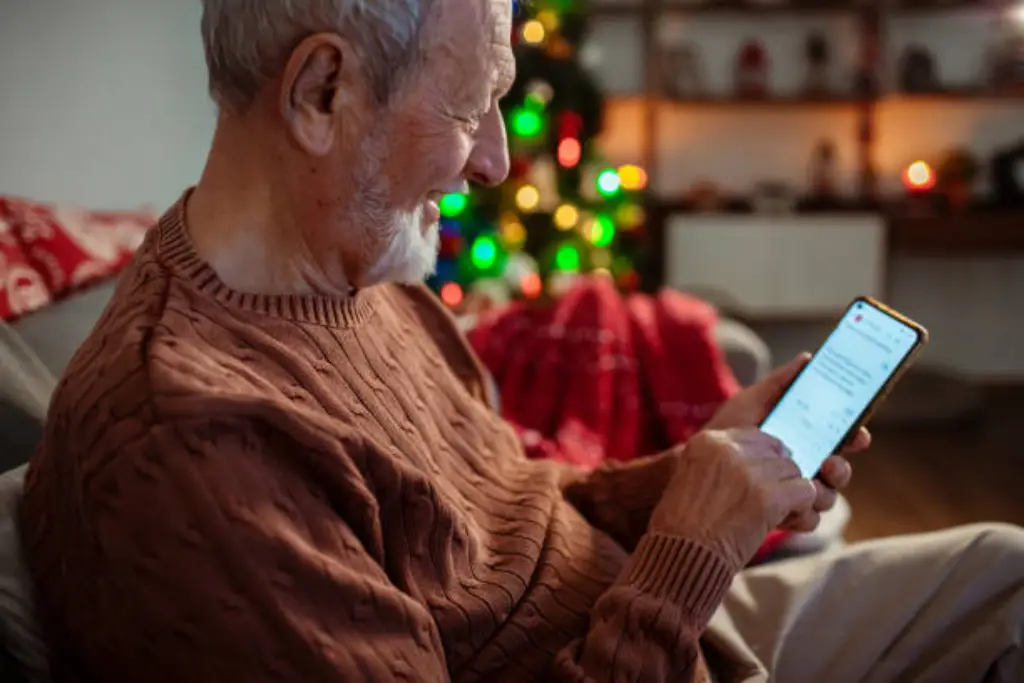
The call came at 6:47 on a Tuesday morning in late January, cutting through the quiet of my Toronto kitchen like a blade through silk. I was already awake, nursing my second cup of coffee and watching snow fall outside the window in that particular Toronto way—thick, deliberate flakes that transformed the city into something softer and more forgiving than it actually was. The radiator clicked its familiar rhythm, the kettle still carried the faint metallic scent of yesterday’s Earl Grey, and for a brief moment I was just another retired man in a small warm kitchen, trying to make peace with a winter morning and the slow, careful architecture of a life rebuilt after loss.
Then my phone lit up with my brother’s name.
Glenn.
We hadn’t spoken in three weeks, not since our last tense visit to Mom’s nursing home, where he’d stood at the foot of her bed checking his watch like a man calculating the exact dollar value of each wasted minute. I stared at the screen until it stopped ringing, then immediately it rang again, and something in my chest tightened in that old, familiar way—the way it always did when Glenn called, as if he were summoning me rather than simply reaching out.
I answered.
“Douglas,” he said, and his voice had that false solemnity that immediately put me on edge, the careful tone of someone who’d rehearsed this moment in front of a mirror. “I have some difficult news.”
I stood by the sink, my mug halfway to my mouth, watching steam curl upward and disappear.
“Mom passed away last night,” he continued without pause. “Peacefully in her sleep.”
I set the coffee down too hard, ceramic clinking against granite. My hands went unsteady, like the floor had shifted beneath me and my body hadn’t gotten the update yet. “What?” I heard myself say. “When? I was planning to visit her today.”
“The funeral is Friday,” Glenn said, cutting me off without hesitation. His tone shifted, becoming almost businesslike, the way he sounded when listing features of a house to prospective buyers. “I’ve already made all the arrangements at Thornhill Funeral Home. Two o’clock.”
He didn’t ask if I was okay. He didn’t pause to let the news settle in my bones or offer the kind of comfort one brother might offer another in the face of shared loss.
“Oh,” he added, and there it was—the real purpose slipping out like a knife from beneath a coat. “And Douglas, about Mom’s estate. The will is very clear. Everything goes to me. The house, the cottage in Muskoka, her investments, all of it. You get nothing. Don’t even think about contesting it.”
Then he hung up.
I stood in my kitchen staring at the phone in stunned disbelief, my mother allegedly dead just like that, and Glenn’s first priority—his immediate, urgent priority—was to inform me I was getting nothing. Not “I’m sorry.” Not “She went peacefully.” Not even “Do you want to come by the house.”
Just a preemptive threat not to contest a will I hadn’t even known existed.
Something was very, very wrong.
Let me back up, because this story doesn’t start with that phone call. It starts forty years earlier, with two brothers shoveling snow off a driveway in North York, pretending they were NHL stars while their mother yelled from the porch that the neighbors could hear them. It starts with a childhood that looked normal from the outside but carried seeds of something that would bloom decades later into betrayal.
My name is Douglas Harrison. I’m sixty-four years old, a retired civil engineer who spent four decades designing infrastructure across Ontario—bridges, road expansions, drainage systems, the unglamorous bones of cities that keep people moving even when they don’t think about it. For most of my professional life, I lived by plans, permits, inspections, and the stubborn belief that if you build something properly, it holds. My wife Catherine passed away three years ago from cancer, a slow cruel erosion that took eighteen months and left me hollow in ways I’m still learning to articulate. We had one daughter, Emma, who’s now twenty-eight and working as a marine biologist in Vancouver. After Catherine died, I did what I’d always done when life became unbearable—I tried to be useful. I threw myself into volunteering, stayed close to Mom, and learned to exist in a world that felt like it had lost its primary light source.
My brother Glenn is four years younger—fifty-eight. We grew up close enough in that casual way siblings do, playing street hockey, arguing about whose turn it was to take out the garbage, building snow forts that collapsed before we could defend them. Back then Glenn could be fun, charming, quick to laugh. He could also be quick to take, quick to twist situations to his advantage, quick to make himself the center of any room without seeming to try. As adults we drifted the way many siblings do, into separate lives that intersected mainly at holidays and family obligations.
Glenn became a real estate agent, married Patricia, had two kids—Marcus and Sophie, now seventeen and fifteen. On the surface everything looked fine, but I’d noticed patterns over the years, because engineers notice patterns even when they don’t want to. Glenn was always chasing the next big deal, always stretching himself financially thin. His business had rough patches. There were whispered conversations at family dinners about investments that went south, about Patricia working double shifts as an ICU nurse to keep them afloat, about Glenn doing that tight smile he did when he felt cornered but refused to admit vulnerability.
Our mother, Helen Harrison, was eighty-five and had been sharp as a tack her entire life. A retired elementary school teacher, she could still recite Tennyson from memory and beat anyone at Scrabble. She was the kind of woman who corrected your grammar with love and a raised eyebrow, who remembered the name of every child she ever taught, who kept an emergency chocolate stash in the freezer because, as she liked to say, “Life is long and sometimes you need immediate sweetness.” She lived independently in her home in Richmond Hill until about nine months ago, when Glenn convinced her she needed extra help managing her affairs.
He suggested he become her power of attorney—”just to manage bills and medical appointments,” he said, with that smooth, persuasive voice that made strangers trust him immediately. Mom was hesitant, but Glenn was her baby boy, and I had learned long ago that a mother’s blind spot can be the child who asks with a smile.
That’s when everything changed.
Within weeks of Glenn getting the POA, Mom was suddenly diagnosed with severe dementia. Glenn moved her into Maple Grove Care Center, saying she couldn’t live alone anymore, that her cognitive decline had accelerated dramatically. When I visited, I was shocked. My vibrant, witty mother sat in a chair staring vacantly out the window, hands folded like someone had turned her into a wax figure. She didn’t recognize me. She barely spoke. When she did, it was confused, fragmented, like a radio stuck between stations broadcasting nothing coherent.
“Is this really possible?” I’d asked her doctor, Dr. James Whitmore, after one particularly devastating visit where Mom had called me by my father’s name—and my father had been dead for fifteen years. “She was completely fine two months ago. She was volunteering at the library.”
“Dementia can progress very rapidly in some cases,” he said smoothly, with the practiced ease of someone who’d delivered this explanation many times. “The cognitive decline in patients her age can be quite sudden and severe.”
He said it like a memorized line from a textbook. And I remember thinking, even then, that it sounded too convenient, too perfectly timed with Glenn’s new authority. But I wasn’t a doctor. I was a grieving husband still processing Catherine’s death, a worried son trying to understand a disease I didn’t have the expertise to question, a man who wanted desperately to believe there was an explanation that wasn’t monstrous.
So I did what I could. I visited Mom three times a week without fail. Even when she didn’t know who I was, I’d hold her hand, tell her about Emma’s research on ocean acidification, about the community center repairs I was helping coordinate as a volunteer, about the small daily details that kept my hands busy when my heart was drowning. Glenn visited too, but less frequently, and when he did he always seemed rushed, always checking his watch. He’d lean down, kiss Mom’s forehead like it was a performance for invisible cameras, then step into the hallway to take calls that apparently couldn’t wait.
Now, standing in my kitchen with Glenn’s words still ringing in my ears—”She left everything to me, you get nothing”—I realized what I’d been too blind or too trusting to see. This wasn’t grief talking. This was greed, pure and calculated.
I called Maple Grove Care Center immediately, my hands shaking so badly I nearly dropped the phone.
“I’m calling about my mother, Helen Harrison,” I said when someone finally answered. “I just heard she passed away last night.”
There was a pause, the sound of computer keys clicking.
“I’m sorry, Mr. Harrison,” the nurse said, careful and professional, “but I don’t have any record of that. Let me physically check her room to be certain.”
My heart started pounding, loud enough that I could hear it over the hum of my refrigerator. I gripped the counter and waited, each second stretching into an eternity.
A few minutes later the nurse came back on the line, slightly breathless. “Sir, your mother is fine. She’s having breakfast right now in the common dining area. Is there some confusion?”
I sat down heavily, my knees suddenly unreliable. “Can you do me a favor?” I said, my voice barely steady. “Don’t tell anyone I called, especially not my brother Glenn.”
I hung up and immediately dialed my daughter in Vancouver.
Emma answered on the third ring, sounding worried. “Dad, it’s barely seven in the morning there. What’s wrong?”
“Your uncle just told me Grandma died,” I said, the words coming out rough and jagged, “but she didn’t. She’s alive. Emma… I think Glenn is trying to steal her estate, and I think he’s planning something worse.”
There was silence on the line, the kind of profound silence that means your words have landed like a physical blow.
“Dad,” Emma said finally, her voice tight with controlled fury, “that’s elder abuse. That’s fraud. That’s—Dad, what are you going to do?”
“I don’t know yet,” I admitted, hating how helpless I sounded. “But I need to figure this out fast. He said the funeral is Friday. That’s three days from now.”
After talking to Emma, I spent the morning making calls, moving through my home like a man in a controlled panic, my coffee going cold, the snowfall outside turning from beautiful to oppressive. First, I contacted Robert Chen, a lawyer I’d worked with on a construction contract dispute years ago. Robert was the kind of man who spoke softly and carried a mind like a surgical instrument—precise, efficient, devastating when necessary.
I explained the situation as calmly as I could manage.
“Douglas,” Robert said after a long pause, “this is extremely serious. If your brother has power of attorney and is misrepresenting your mother’s condition or misappropriating her assets, we’re talking about criminal charges—elder abuse, theft, fraud, possibly even attempted murder depending on what we discover. But you need evidence. Solid, irrefutable evidence.”
Next, I hired a private investigator named Sarah Mitchell who came highly recommended by Robert. She arrived at my house that afternoon, a sharp woman in her mid-forties with gray streaking through her dark hair and eyes that assessed everything with clinical detachment. She didn’t waste time on sympathy or small talk. She asked questions like she was building a case brick by brick, each answer a foundation for the next inquiry.
“How long has your brother had power of attorney?” she asked, taking meticulous notes in a leather-bound notepad.
“Nine months,” I said. “Right after Mom supposedly developed dementia. But before that, she was completely competent—volunteering at the library, playing bridge twice a week, managing her own finances, reading three books a month. Then suddenly she couldn’t remember her own name.”
Sarah nodded, her eyes narrowing slightly. “I’ve seen cases like this before. The pattern is unfortunately familiar. Give me forty-eight hours. I’ll find out exactly what’s happening with your mother’s finances and medical care.”
That evening, I drove through the snow to Maple Grove. I didn’t call ahead, didn’t announce my visit. I wanted to see what I’d see when Glenn hadn’t had time to prepare or stage the environment. When I got to Mom’s room, she was sitting in her usual chair by the window, staring out at the darkening winter sky. Her gray hair was thinner than I remembered, her face more lined, but her posture still carried that teacher’s dignity even when she looked utterly lost.
Something about her seemed different that night—less drugged, more present, as if the fog had lifted slightly and something underneath was trying to push through.
“Mom,” I said softly, pulling up a chair beside her and taking her hand.
She turned slowly, those familiar brown eyes meeting mine. There was something in them—recognition, or hope, or maybe just my desperate imagination projecting what I wanted to see.
“It’s me, Douglas,” I said gently. “Your son.”
She blinked, her mouth working like she wanted to say something but couldn’t find the pathway from thought to speech. Then a nurse came in to check her vitals, and the moment shattered like glass, whatever connection had been building dissipating instantly.
I drove home through heavy snow, my mind racing through possibilities I didn’t want to consider but couldn’t ignore. What was Glenn planning? A fake funeral to convince everyone Mom was dead, then transfer all her assets while everyone mourned? It was insane. It was also, I was realizing with growing horror, potentially brilliant in its audacity—if everyone believed she was dead and buried, who would question the estate settlement?
Sarah called me the next morning while I was attempting to eat breakfast and failing.
“Douglas, you need to sit down.”
I was already sitting, but I gripped the edge of my kitchen table anyway, bracing myself.
“Your brother has been very busy over the past eight months,” she said, her voice carrying the weight of discovered truth. “He’s transferred approximately two hundred and eighty thousand dollars from your mother’s accounts into his own personal accounts and a numbered company I’m still tracing but strongly suspect he controls. He sold her cottage in Muskoka to another numbered company—again, likely his—for significantly below market value. He’s been drawing heavily on her credit cards, and the spending patterns suggest personal use, not care-related expenses.”
My stomach turned, bile rising in my throat.
“And Douglas,” she continued, “there’s something else. Dr. James Whitmore, the physician who diagnosed your mother’s dementia, went to university with your brother. They’ve been friends for over thirty years. I found photos of them together at various events, including a fishing trip last summer.”
I felt sick, like the kitchen air had thickened into something toxic. “So Mom’s dementia could be artificially induced,” I said, forcing myself to think like an engineer, to follow the logical chain even when it led somewhere horrifying. “If she’s being over-prescribed sedatives or anti-psychotics, it would explain the sudden cognitive decline and the vacant behavior.”
“That’s what I suspect,” Sarah said bluntly. “And if that’s true, depending on the dosages and intent, we could be looking at attempted murder or at minimum criminal negligence causing bodily harm. I’m working on getting copies of her complete medical records, but that takes time and legal maneuvering. In the meantime, I’d strongly suggest you visit your mother again soon. Document everything you can. If you can, record any conversations with your brother—Ontario’s a one-party consent jurisdiction, so as long as you’re part of the conversation, it’s legal.”
That afternoon I was back at Maple Grove, my phone in my pocket set to record, my nerves stretched tight as wire. When I got to Mom’s floor, her room was empty. A nurse I didn’t recognize was changing the sheets with mechanical efficiency.
“Where’s my mother?” I asked, trying to keep the panic out of my voice.
“Oh, Mr. Harrison,” she said brightly, “your brother took her out for a drive. He said she needed some fresh air and a change of scenery.”
My blood ran cold. “When?”
“About an hour ago, maybe a bit more.”
I ran to the parking lot, but Glenn’s black Mercedes was already gone. I tried calling him. No answer. I called five times in succession. Nothing. Each unanswered ring felt like confirmation of something terrible unfolding just beyond my reach.
Finally, three hours later, they returned. Glenn helped Mom out of the car, supporting her as she shuffled back toward the building. She looked exhausted, utterly drained, as if she’d been taken somewhere she didn’t understand and then dragged back against her will. Her eyes were unfocused, her movements slow and uncertain.
Glenn saw me waiting in the hallway outside her room, and his expression shifted from neutral to annoyed in the span of a heartbeat.
“Douglas,” he said, not even bothering to hide his irritation. “What are you doing here? Don’t you have anything better to do?”
“You said Mom died yesterday,” I replied, keeping my voice level with effort. “Yet here she is, very much alive.”
He actually laughed, a short bark of sound that held no humor. “Oh, that. Yeah, sorry about the confusion. I meant to call you back. False alarm. Mom had a bad episode yesterday, and I thought—well, you know how these things are with dementia. Sometimes you think the end is coming.”
“Where did you take her today?” I asked, watching his face carefully.
“Just for a drive around the neighborhood. She likes getting out, seeing familiar places. The doctor recommended it.”
“Really?” I said, my voice sharpening despite my attempt at control. “Because she looks like she can barely stand. That doesn’t look like the result of a pleasant drive.”
Glenn’s expression hardened, the mask of concern dropping away to reveal something colder underneath. “Back off, Douglas. I’m her power of attorney. I make the decisions about her care, not you. You want to challenge that? Get a lawyer. Until then, stay out of my way.”
He brushed past me, helping Mom into her room with an exaggerated gentleness that looked performative, theatrical. Through the doorway I watched him settle her into her chair, speaking to her in a low voice I couldn’t hear, his hand on her shoulder like a statement of ownership.
Then he left without another word, not even a glance in my direction.
I was about to leave myself, feeling defeated and uncertain about what to do next, when my phone buzzed with an incoming call from an unknown number. I almost ignored it—I was in no mood to deal with telemarketers or wrong numbers—but something made me answer.
“Hello?”
Silence, but not the empty silence of a dead line. This was the silence of someone on the other end deciding whether to speak.
Then a whisper came through, a woman’s voice, faint and scratchy as if traveling through static. “Douglas.”
“Yes, this is Douglas. Who is this?”
“Douglas… it’s me.”
The voice was so quiet I had to press the phone hard against my ear, straining to hear over the ambient noise of the nursing home hallway.
“Who is this?” I asked again, my heart beginning to race for reasons I couldn’t articulate.
“It’s your mother.”
I froze completely, every muscle in my body going rigid. That couldn’t be possible. Mom was right there in her room twenty feet away, sitting in her chair, and this call was coming from… I checked the screen. A blocked number.
“Douglas, listen very carefully,” the voice continued, stronger now, more familiar. “I don’t have much time. I need you to come to my room tonight after ten o’clock. Make absolutely certain Glenn isn’t here. And Douglas—don’t tell anyone about this call. No one. Do you understand?”
The line went dead before I could respond.
I stood in that hallway for several minutes, staring at my phone like it had transformed into something alien and incomprehensible. That was impossible. Mom couldn’t have called me. She could barely string two words together coherently. And yet that voice, even whispered and strained, had sounded like her—not the confused shell I’d been visiting for months, but the real her, the sharp, clear-minded woman I’d known my entire life.
I waited in my car in the parking lot until after ten o’clock that night, watching the nursing home through intermittent snowfall. Glenn’s Mercedes was long gone. The night shift was on, just a skeleton crew moving through the building’s warm yellow windows. I used my key code to enter through the side entrance and made my way quietly to Mom’s floor, my heart pounding so hard I could feel it in my throat.
Her room was dark except for a small lamp on the bedside table. She was sitting up in bed, and when I entered and closed the door behind me, she turned to look at me. In the dim light, I saw her eyes—completely clear, focused, lucid, with none of the vacant confusion I’d grown accustomed to seeing.
“Close the door and lock it,” she said in a normal voice. Not the confused mumble or fragmented half-sentences I’d heard for months. A normal, strong, utterly familiar voice.
I did as she asked, my hands shaking. “Mom, what—what’s happening? Are you—”
“Sit down, sweetheart,” she said, patting the edge of the bed. “We need to talk, and we don’t have much time before the next medication round.”
I sat, completely stunned, feeling like I’d stepped into an alternate reality. “Are you okay? What’s going on? The dementia, the diagnosis, you couldn’t even recognize me for months—”
“Because I was pretending,” she said simply, and then she smiled. Actually smiled, with that wry, knowing expression I remembered from childhood when she’d caught me and Glenn doing something we thought we’d gotten away with.
The room seemed to tilt on its axis. “Pretending?” I repeated stupidly.
She reached over and took my hand, her grip firm and steady, nothing like the weak, trembling hands I’d held throughout her supposed illness. “Douglas, I’m eighty-five years old. I’ve been thinking about mortality, about what happens when I’m gone, about what kind of legacy I’ll leave. And I realized I needed to know something important. I needed to know which of my sons would actually take care of me—not for my money, not for inheritance, not for appearances, but because they genuinely loved me.”
I felt like I couldn’t breathe properly. “So you faked dementia to test us?”
“When Glenn suggested becoming my power of attorney, I saw an opportunity,” she replied, her voice steady and clear. “I agreed, but I also consulted my own lawyer secretly—Robert Chen, actually. The same one you just hired. We’ve been working together for over a month now. I put most of my assets into an irrevocable trust weeks before Glenn got the POA. The accounts he has access to… I only left enough in them to see what he would do. To see if my suspicions about his character were correct or if I was being an unfair, paranoid old woman.”
My mind struggled to process this information, to reconcile the confused, helpless woman I’d been visiting with this sharp, strategic person sitting before me.
“Mom, why didn’t you tell me?” I asked, hurt bleeding into my voice. “Why did you let me think you were… Why did you make me go through that?”
Her eyes grew sad, and she squeezed my hand. “Because I had to test both of you, Douglas. I had to see who would visit me when I couldn’t give them anything back, when I was a burden instead of a benefit. Who would hold my hand even when I didn’t know their name. Who would show up week after week with no reward, no recognition, no inheritance to hope for.”
Tears were already running down my face, hot and unexpected. “Of course I came. Of course I was here. You’re my mother.”
“I know that now,” she said, her own voice thickening with emotion. “I know it in my bones, Douglas. But I had to be certain. And you—you came three times a week without fail. You sat with me, talked to me, held my hand, brought me flowers, read to me from my favorite books, even when I acted like I had no idea who you were. Even when I called you by your father’s name. Even when it must have broken your heart.”
I couldn’t speak. I could only nod.
“But Glenn,” she continued, her voice hardening, “Glenn failed worse than I ever imagined possible. Worse than my darkest fears.”
She took a slow, deliberate breath, composing herself. “I’ve been documenting everything with Robert’s help. Every time Glenn came to pressure me to sign papers. Every time he got angry when I played confused. Every time he took something from this room thinking I wouldn’t notice—first my mother’s ring, then the silver picture frames, small things he thought I was too far gone to remember. I have it all recorded. The two hundred and eighty thousand dollars—I let him take it from the accounts I left accessible. I’ve been letting him dig his own grave one shovelful at a time.”
My chest felt tight, constricted. “Mom, he told me you were dead. He’s planning an actual funeral for Friday. He’s sent out announcements, booked a funeral home, written an obituary.”
She nodded grimly. “I know. He told me yesterday during our drive. He said I was going to have an ‘accident,’ that I would pass away peacefully very soon, that everything was arranged. He wanted me to sign papers first, transferring the last of what he thought were my assets, but I refused. I played confused, agitated. He’s running out of time, and he knows it. The funeral is his endgame—convince everyone I’m dead, forge the final documents, liquidate everything before anyone can question it.”
“This is insane,” I whispered. “This is dangerous. Mom, we need to call the police right now, tonight. This has gone too far.”
“No,” she said, immediate and firm. “Not yet. Robert and I have a plan, but I need you to trust me. Can you do that, sweetheart?”
I looked at this remarkable woman—my mother, who I’d thought was slipping away from me, who had instead been orchestrating the most elaborate test of character I’d ever witnessed—and I squeezed her hand.
“Always,” I said.
Over the next two days, we set everything in motion with the precision of engineers building a bridge—every element calculated, every contingency planned. Robert brought in Detective Sarah Okonkwo from the Toronto Police Service Elder Abuse Unit. She reviewed the evidence Mom and Robert had compiled and agreed to let the plan proceed to catch Glenn in the act with irrefutable, public proof that couldn’t be plea-bargained away or reduced to a lesser charge. We installed hidden cameras in Mom’s room—tiny devices the size of buttons that recorded everything. We coordinated with the nursing home administrator and the staff members we could trust, and their faces when they learned the truth were a mixture of shock, anger, and something that looked like they’d been waiting for someone to finally say the words out loud.
Mom continued her performance, playing the confused, declining patient whenever Glenn was around, and watching her do it was one of the most surreal experiences of my life. She was utterly convincing—the vacant stare, the trembling hands, the fragmented speech. It was masterful and heartbreaking in equal measure.
Glenn came twice more before Friday.
The first time, Wednesday afternoon, he brought papers for Mom to sign—transfer documents for her house and remaining investment accounts. Mom scribbled something illegible and acted like she didn’t understand what he was asking. Glenn’s frustration was palpable, barely contained beneath a veneer of patience. “Just sign clearly, Mom,” he said through gritted teeth, and I watched the recording later with Robert. “I’m trying to help you. This is all for your own good.”
The second time, Thursday night, he brought a syringe.
When I watched that footage later with Detective Okonkwo, I felt physically ill. Glenn told Mom it was her evening medication, but we had the contents tested through channels Robert arranged. It was a massive dose of lorazepam combined with another sedative—enough to heavily sedate someone, possibly enough to cause respiratory failure in an elderly patient, especially one he’d already been systematically drugging for months.
Mom pretended to take the injection but had learned from a sympathetic nurse how to tense her arm muscle in a way that made the needle barely penetrate. Most of the liquid stayed in the syringe.
“Tomorrow,” Glenn said on the recording, smoothing Mom’s hair with what might have looked like tenderness if you didn’t know the context. “Tomorrow you’ll finally be at peace, Mom. No more confusion. No more suffering. Just peace.”
Friday morning arrived cold and clear, the kind of winter day where everything is sharp-edged and crystalline. Glenn had booked Thornhill Funeral Home for two o’clock. He’d sent out death announcements and called relatives. Cousins I hadn’t seen in years called me offering condolences, and I forced myself to play along because the plan depended on the deception being complete and convincing.
“Yes,” I told them, my voice heavy with false grief. “It was very sudden. Very peaceful. The funeral is at two.”
By one-thirty, the funeral home was packed with over a hundred people. Glenn had spared no expense—flowers everywhere, professional photographs of Mom from various stages of her life arranged on easels, a glossy program with her picture on the cover and an obituary full of flowery language about “a beloved mother and teacher” who had “passed after a long illness with her devoted son by her side.” The words read like something borrowed from a template and customized with the minimum effort necessary.
I sat in the front row with Emma, who had flown in the night before, her eyes sharp and furious beneath the exhaustion of cross-country travel. Glenn sat across the aisle with Patricia and their kids, Marcus and Sophie. His face was composed, appropriately sorrowful, and Patricia kept touching his arm in comfort because as far as she knew—or as far as she’d allowed herself to believe—her husband was grieving his mother while handling all the difficult logistics with admirable strength.
His children looked genuinely heartbroken. They’d loved their grandmother, and the cruelty of what Glenn had put them through—the unnecessary grief, the manipulation—added another layer of rage to what I was feeling.
At exactly two o’clock, Glenn stood and walked to the podium. He adjusted the microphone with the practiced ease of someone comfortable with public speaking and began his eulogy.
“We are gathered here today to celebrate the life of Helen Margaret Harrison,” he said, his voice carrying the perfect blend of sorrow and strength. “Born February 14th, 1939. Passed away peacefully January 7th, 2025, with her family by her side.”
“Mom was an incredible woman,” he continued. “A dedicated teacher who shaped young minds for thirty-five years. A mother who always put her children first, who sacrificed so we could have better lives. And in her final months, when the dementia took so much from her, she trusted me to care for her. She knew I would protect her interests, manage her affairs with integrity, ensure she was comfortable and safe.”
He paused, his voice catching with emotion that I now knew was completely fabricated. “Mom told me many times in her lucid moments that she wanted me to have her house, her cottage, everything she’d worked for, because she knew I would use it to take care of the family. She knew I was the responsible one who would honor her legacy.”
I stood up, my chair scraping loudly against the floor.
Every head in the room turned.
“That’s interesting, Glenn,” I said clearly, projecting my voice so everyone could hear. “Want to tell everyone where Mom’s body actually is right now?”
Confusion rippled through the assembled mourners like a wave hitting shore. People looked at each other, then at Glenn, then at me.
Glenn’s face went from composed to white in the span of a heartbeat. “Douglas, sit down. This isn’t the time or place for whatever grievance you think you have.”
“Where’s the body, Glenn?” I demanded. “Where exactly is Mom’s body?”
“She’s being cremated per her wishes,” he said, his voice tight. “We discussed this.”
“Really? Because I called the crematorium you listed in the program. They don’t have her body. They’ve never heard of this case.”
Patricia grabbed Glenn’s arm, her face stricken with confusion. “Glenn… what is he talking about?”
And then the doors at the back of the funeral home opened with a dramatic sweep.
Every single person in the room turned to look.
Framed in the doorway, backlit by winter sunlight streaming through, was my mother. She stood there using a walker but with her back straight and her eyes blazing with clarity and purpose. Behind her stood Detective Okonkwo in full uniform, along with two other officers.
The room erupted. People stood up, gasping. Someone screamed. Glenn’s daughter Sophie burst into tears. Marcus looked like he might faint. The shock was total, absolute, the kind of moment that breaks reality and reforms it into something new.
Mom made her way slowly down the center aisle, the walker’s wheels squeaking slightly against the carpet. When she reached Glenn, who stood frozen at the podium like a statue, she stopped and looked up at him.
“Hello, son,” she said in a voice that carried to every corner of the room. “I’m not dead. But your inheritance certainly is.”
Glenn’s mouth opened and closed soundlessly. His face had gone from white to a sickly gray.
“Mom,” he finally managed. “You’re confused. You’re sick. This is some kind of episode. Someone’s manipulating you. Douglas has poisoned your mind against me.”
“I’m not confused, Glenn,” she said with devastating clarity. “I’ve been recording everything for the past eight months. Every threat, every theft, every time you tried to coerce me into signing documents transferring my assets to you, every time you over-medicated me to keep me compliant and confused, every time you stole from my room thinking I was too far gone to notice or remember.”
She turned to address the assembled crowd, many of whom were crying now—some in relief, others in shock, all in profound confusion about what they were witnessing.
“I apologize for deceiving all of you,” Mom said, her voice steady despite the emotion clearly visible on her face. “But I had to know the truth. I had to see what my son would do when he thought I was helpless and vulnerable. And what I discovered broke my heart into pieces I’m not sure will ever fully mend.”
Detective Okonkwo stepped forward, her voice professional and clear. “Glenn Harrison, you’re under arrest for elder abuse, theft over five thousand dollars, fraud over five thousand dollars, attempted fraud, and criminal negligence. You have the right to retain and instruct counsel without delay.”
Glenn tried to run. He actually pushed past his family and tried to bolt for the side exit, but he made it maybe five steps before two officers intercepted him and took him to the ground. The sound of handcuffs clicking shut was loud in the shocked silence.
His children were sobbing. Patricia stood frozen, her face a mask of horror and dawning comprehension. As they hauled Glenn to his feet, he shouted back at Mom, all pretense of love or concern stripped away.
“I’m your son! You can’t do this to me! I needed that money! Do you have any idea how much debt I’m in? You were just going to die anyway and leave it all sitting there!”
Mom watched him, tears streaming down her weathered face, but her voice remained steady when she spoke. “You were my son, Glenn. You stopped being my child the moment you decided my life was worth less than my bank account. The moment you chose to drug me, steal from me, and plan my death rather than simply asking for help.”
They led him out of the funeral home through a back entrance, and the assembled mourners sat in stunned silence, some still processing, others beginning to grasp the full scope of what they’d just witnessed.
The legal proceedings took eight months, and they were brutal for everyone involved. Glenn initially tried to fight the charges, claiming Mom was actually incompetent and he was just trying to help, that he’d been under extreme financial pressure and made poor decisions but never intended real harm. His lawyer tried to paint him as a desperate man driven to bad choices by circumstances beyond his control.
But the evidence was overwhelming and damning. Video footage of him trying to coerce Mom into signing documents. Audio recordings of his threats and his admission that he was planning her “accident.” Bank records showing systematic theft over eight months. Dr. Whitmore’s testimony after he was granted immunity—how Glenn had pressured him to prescribe unnecessary medications, how he’d falsified the dementia diagnosis in exchange for promised financial compensation that never materialized. The testimony from nursing staff about their concerns that had been dismissed or suppressed.
In the end, faced with the possibility of fifteen years in prison if convicted on all charges, Glenn took a plea deal. He pleaded guilty to elder abuse, theft over five thousand, and fraud. He was sentenced to five years in federal prison and ordered to repay the two hundred and eighty thousand dollars he’d stolen, plus an additional fifty thousand in fines and restitution. He lost his real estate license permanently. The Law Society opened an investigation into whether he’d committed professional misconduct in other transactions.
Patricia filed for divorce within a month of his arrest and was granted full custody of Marcus and Sophie. They were devastated, traumatized by the discovery that their father had been planning to murder their grandmother for money, that the grief they’d felt at the funeral had been manufactured through lies and manipulation. Emma and I tried to stay in their lives, tried to be the stable, honest family they desperately needed, but they were understandably wary of trusting anyone for a long time.
Dr. Whitmore lost his medical license permanently. The College of Physicians and Surgeons of Ontario was ruthless in their disciplinary proceedings. He’d knowingly prescribed dangerous medications to an elderly patient without proper evaluation, falsified diagnoses, and engaged in professional misconduct that could have resulted in death. He would never practice medicine again.
As for Mom, she moved into a comfortable condo just three blocks from my house in Toronto. She was done with the big house in Richmond Hill, done with maintaining property and worrying about stairs and isolation. She wanted to be close to family, close to Emma when she visited from Vancouver, close to me for our twice-weekly dinners that became the cornerstone of both our routines.
She started volunteering at the Toronto Elder Abuse Prevention Center, sharing her story to help others recognize warning signs of financial exploitation and family manipulation. She became something of a local celebrity in the elder advocacy community—the woman who’d faked dementia to expose her own son’s greed. She gave talks at community centers, spoke to social workers and healthcare providers, helped develop educational materials about power of attorney abuse.
We established the Helen Harrison Elder Protection Fund with part of the money Glenn had returned, along with matching contributions from people who heard Mom’s story and wanted to help. The fund provides free legal assistance to seniors fighting financial abuse cases and funds educational programs about POA responsibilities and elder rights.
One evening about a year after everything had happened, Mom and I sat on my back porch despite the cold, wrapped in heavy blankets and watching another Toronto snowfall. She held a mug of tea in both hands, steam rising into the frigid air.
“Do you ever regret it?” I asked, watching snowflakes collect on the railing. “The way you tested us? The deception?”
She was quiet for a long time, her breath forming clouds in the winter air.
“I regret that it was necessary,” she said finally. “I regret that I couldn’t simply trust that both my sons loved me without needing proof. I regret that my own child could look at me and see nothing but dollar signs and inconvenience. But Douglas, I don’t regret finding out the truth. I had to know who would love me when I had nothing to give back, when I was a burden instead of a benefit. You gave me the only thing that truly matters—your presence, your care, your love without conditions.”
“You taught me that,” I said, my throat tight. “You taught me that integrity matters. That doing the right thing is what defines you, especially when it’s hard, especially when no one’s watching, especially when there’s no reward.”
She smiled, reaching over to squeeze my hand with that familiar firm grip. “And that’s exactly why you passed the test—not just because you visited, though that mattered enormously. But because even when you thought I was gone, even when you thought you were getting nothing, you fought for what was right. You didn’t let Glenn get away with it. You protected me even when I couldn’t protect myself. That’s what family does. Real family.”
“Real family,” she repeated, her voice gaining strength. “Because blood doesn’t automatically make you family, Douglas. Love makes you family. Choice makes you family. Showing up makes you family, day after day, week after week, with no promise of reward. Glenn was my blood, but he stopped being my family the moment he decided I was just an asset to liquidate, a problem to solve, an obstacle to his financial freedom.”
We sat in comfortable silence, watching snow accumulate on the bare tree branches, on the fence, on the garden that would bloom again in spring. Inside, I could hear my phone buzzing—Emma, calling for our weekly check-in, her voice a reminder that life moves forward, that healing happens in small increments, that love persists even after betrayal tries to destroy it.
Mom looked at me, her eyes still sharp and clear, no trace of the vacant confusion she’d performed so convincingly.
“You know what the truly heartbreaking part is?” she said quietly.
“What?”
“If Glenn had just asked for help, if he’d been honest about his financial problems, I would have helped him. Not with everything, not enabling his poor choices or bailing him out completely, but I would have helped. I would have offered support, guidance, maybe assistance with refinancing or restructuring. Instead, he chose to steal. He chose to drug me. He chose to plan my death. And that choice cost him everything—his freedom, his family, his children’s respect, his mother’s love, his career, his dignity.”
I didn’t know what to say to that, so I just held her hand and let the silence speak for both of us.
This remarkable woman who’d taught me more about strength, courage, and moral clarity in the past year than in all the years before. She’d survived betrayal by her own son, orchestrated her own rescue with strategic precision, and emerged determined to help others avoid the same nightmare.
That’s the thing about family—the real kind, the kind that matters. It’s not about blood or obligation or inheritance. It’s not about who gets the house or the cottage or the investment accounts. It’s about showing up when there’s nothing to gain. It’s about loving someone even when they can’t give you anything in return. It’s about fighting for what’s right even when it means standing against your own brother, even when it costs you, even when it’s the harder path.
Glenn made his choices. He chose greed over compassion, theft over honesty, exploitation over love. And he’s paying the price—not just in prison time, but in the permanent loss of his children’s trust, his wife, his career, his mother’s love, and his own self-respect.
As for me, I got something infinitely more valuable than any inheritance could ever be. I got more years with my mother—real years where we could talk honestly, laugh freely, and heal together. I got the knowledge that when tested, I did the right thing. I got the privilege of being part of something bigger than myself, helping create systems that protect other vulnerable seniors from the predators who see them as nothing but assets to exploit.
Blood doesn’t excuse betrayal. Being family doesn’t give you the right to abuse, steal, or manipulate. And sometimes the bravest thing an eighty-five-year-old woman can do is pretend to be helpless just to discover who will help her when she can’t help herself.
That’s what I learned from Helen Harrison—my mother, my hero, my teacher to the very end. She taught me that dignity matters more than dollars, that character is revealed in crisis, that real love shows up without the promise of reward, and that sometimes the greatest inheritance isn’t money or property but the example of how to live with integrity even when facing the darkest betrayal.
The snow continued to fall, soft and relentless, covering everything in clean white silence. And sitting there beside my mother, I felt something I hadn’t felt in years—complete peace, the kind that comes from knowing you did the right thing, from loving without conditions, from being exactly the person you were raised to be.
That’s the real ending to this story. Not revenge, not triumph, not even justice—though justice was certainly served. Just the quiet satisfaction of knowing that when tested, you showed up. You loved. You protected. You honored the values you were taught.
And in the end, that’s all any of us can hope to do.

Ethan Blake is a skilled Creative Content Specialist with a talent for crafting engaging and thought-provoking narratives. With a strong background in storytelling and digital content creation, Ethan brings a unique perspective to his role at TheArchivists, where he curates and produces captivating content for a global audience.
Ethan holds a degree in Communications from Zurich University, where he developed his expertise in storytelling, media strategy, and audience engagement. Known for his ability to blend creativity with analytical precision, he excels at creating content that not only entertains but also connects deeply with readers.
At TheArchivists, Ethan specializes in uncovering compelling stories that reflect a wide range of human experiences. His work is celebrated for its authenticity, creativity, and ability to spark meaningful conversations, earning him recognition among peers and readers alike.
Passionate about the art of storytelling, Ethan enjoys exploring themes of culture, history, and personal growth, aiming to inspire and inform with every piece he creates. Dedicated to making a lasting impact, Ethan continues to push boundaries in the ever-evolving world of digital content.