THE KEY THAT DIDN’T BELONG
The airport smelled like burnt coffee and recycled air, the kind of atmosphere that makes every goodbye feel both urgent and forgettable at the same time. I stood there holding my son’s hand, watching my husband disappear into the security line with his perfectly packed carry-on and his perfectly pressed suit, and I told myself this was just another Thursday. Another business trip. Another three days of single-parenting and microwaved dinners and bedtime stories read in the voice I use when I’m trying not to fall asleep mid-sentence.
Airport goodbyes are supposed to be simple, predictable even. A quick kiss that tastes like the mint gum he always chews before flights. A reminder about taking out the trash on collection day. “Text me when you land,” delivered in that tone that’s half concern, half going-through-the-motions. And then you drive home through traffic that feels thicker than it should, and you slide right back into the routine that fills the space where another person used to be.
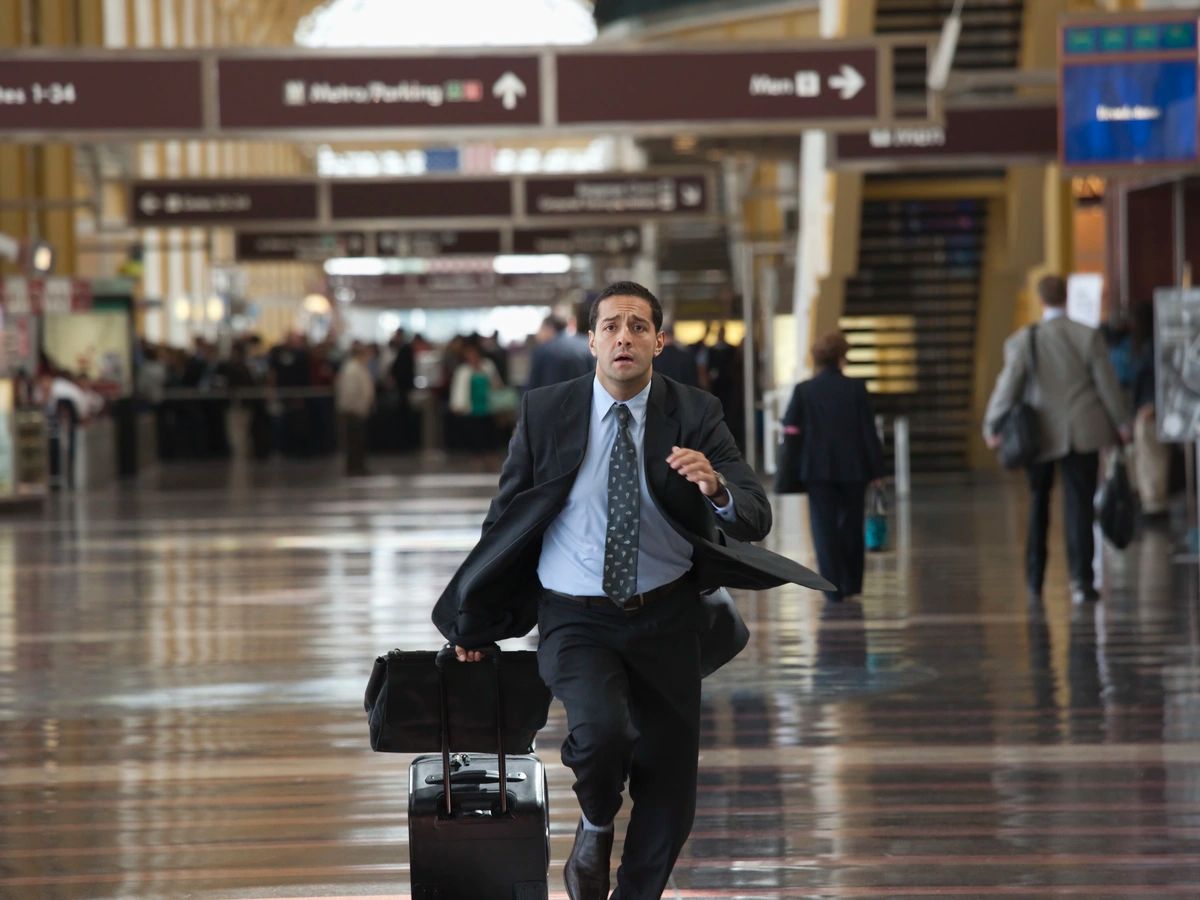
That’s what I thought I was doing at Hartsfield-Jackson Atlanta International—navigating one more ordinary departure under fluorescent lights that make everyone look vaguely ill, surrounded by the symphony of rolling suitcases and boarding announcements and tired faces checking phones for gate changes. My husband looked flawless in that way some people seem to practice until it becomes effortless: crisp charcoal suit that probably cost more than my car payment, calm smile that revealed nothing, black carry-on positioned at his side like a loyal companion, already half-gone even though he was still standing right in front of me.
“Chicago. Three days tops,” he said, kissing my forehead with the mechanical precision of someone following a script they’d memorized years ago. “Conference starts tomorrow morning. I’ll try to call after the keynote.”
“Drive safe,” I started to say, then caught myself. “Fly safe. Sorry. Long day.”
He smiled that smile again—the one that should have felt warm but somehow didn’t quite reach the temperature it promised. “You okay? You seem distracted.”
“Fine,” I lied, because what else do you say when you can’t quite name the feeling crawling up your spine? “Just tired. You know how Thursdays are.”
He nodded like he understood, adjusted his watch—that expensive one his father had given him for our fifth anniversary, the one he wore like armor—and stepped into the TSA line, already pulling out his phone, already somewhere else entirely.
And that should have been it. That should have been the moment where I turned around, gathered our son, and headed to the parking garage to begin the familiar drive home through Atlanta traffic that never quite moves the way you hope it will.
But right then, right as my husband’s silhouette merged with the crowd of travelers shedding shoes and belts and dignity at the security checkpoint, my six-year-old son tugged my hand. Not the casual tug of a child who wants attention or needs the bathroom or spotted something interesting in a gift shop window. This was hard, urgent, the kind of grip that comes from genuine fear.
I looked down at him—at Lucas, with his Spider-Man backpack and his untied shoelaces and his father’s dark eyes that always seemed to see more than a six-year-old should—and he leaned in close, so close I could smell the strawberry toothpaste from this morning’s rushed bathroom routine.
“Mom…” His voice came out barely above a whisper, like he was sharing a secret the whole terminal wasn’t allowed to hear. “We can’t go back home.”
The words hung there between us while announcements echoed overhead about unattended baggage and final boarding calls and gates that were closing in five minutes. Around us, the airport kept moving—businessmen checking watches, families herding children, a woman in yoga pants arguing with someone on her phone—but in our small bubble, everything had stopped.
“What?” I tried to keep my voice light, tried to smile like he’d said something adorable rather than something that made my stomach clench. “Sweetie, of course we’re going home. Where else would we go?”
But Lucas didn’t smile back. His grip on my hand tightened, his small fingers pressing against my palm with an intensity that felt wrong for a child who should have been thinking about what cartoon he’d watch when we got home, what snack he’d demand from the pantry, whether I’d let him stay up past bedtime since Dad wasn’t there to enforce the rules.
“This morning,” he said, each word chosen carefully, like he’d been rehearsing this moment in his head for hours. “I heard Dad on the phone. He was in his office, and the door was almost closed, but I heard him. He said something about us… and it didn’t sound right.”
My first instinct—my immediate, visceral, protective-mother instinct—was to laugh it off. To ruffle his hair and tell him he’d misunderstood, that he’d heard wrong, that grown-ups talk about complicated things that sound scary when you only catch pieces of conversation. Kids misunderstand. Kids exaggerate. Kids get spooked by shadows under their beds and sounds in the walls and perfectly innocent things that their imaginations transform into monsters.
But something stopped me from delivering that reassurance. Maybe it was the way his hands were shaking slightly. Maybe it was the way his eyes kept darting toward the security line where his father had vanished, like he was afraid of being overheard even though the man was already fifty yards away and moving further with each passing second. Maybe it was the way his voice cracked when he added the part that made my throat tighten and my heart start beating in a rhythm that felt off, wrong, dangerous.
“Please believe me this time, Mom. Please.”
This time.
Those two words landed like stones in my chest.
Because he was right. It wasn’t the first warning. It wasn’t even the second or third. It was just the first time I was actually listening instead of explaining away, instead of smoothing over, instead of doing what I’d been doing for months now—maybe longer—which was pretending that everything was fine because fine was easier than the alternative.
Three weeks earlier—or was it four? Time had started blurring lately in that way it does when you’re not paying close enough attention—Lucas had pointed at a car lingering near the HOA mailbox cluster at the entrance of our subdivision. It was a Tuesday afternoon, and we were coming back from his karate class, and he’d said, so casually it should have been meaningless, “That car’s been there before. A lot.”
It was a dark sedan, nothing remarkable about it except for how unremarkable it was. No bumper stickers, no distinguishing features, just another car in a world full of cars. I’d glanced at it for maybe half a second before telling Lucas it was probably a neighbor’s friend, or someone waiting to pick up a kid, or a delivery driver checking an address. I’d said it with complete confidence, the kind of confidence mothers develop when they’re trying to keep their children’s worlds feeling safe and predictable.
Lucas hadn’t argued. He’d just gone quiet in that way kids do when they know they won’t be believed, and we’d driven home and had dinner and done homework and watched an episode of whatever cartoon was currently holding his attention, and I’d forgotten about it completely.
Until two weeks ago—or maybe it was ten days ago, the timeline kept shifting in my memory like sand—when Lucas had mentioned, over breakfast, that Dad’s office door had been closed before sunrise. That he’d gotten up early because he’d had a bad dream, and he’d heard Dad’s voice through the wood, low and sharp and using words Lucas didn’t understand but that “didn’t sound like bedtime-story Dad.”
I’d told him that grown-ups talk about grown-up things. Work stress. Business calls. Boring adult stuff that wasn’t anything for a six-year-old to worry about. I’d poured him another glass of orange juice and reminded him to finish his eggs, and I’d pushed the conversation away into that mental drawer where mothers keep all the things they don’t want to examine too closely.
And last week—definitely last week, because it was the day before the parent-teacher conference—Lucas had asked me why Dad had come home at two in the morning three times in one week. How did he know? Because Lucas had been having trouble sleeping lately, and he’d heard the garage door, heard footsteps on the stairs, heard the shower running at hours when the house should have been silent and dreaming.
I’d explained that Dad was working late. Important projects. Big clients. The demands of a job that paid for our house in the good school district, for Lucas’s karate classes and piano lessons and the college fund we’d started when he was born. I’d made it sound noble, sacrificial even—Dad working hard to give us a good life.
Lucas had nodded, but his eyes had held something I’d chosen not to see. Something that looked uncomfortably like pity, like a child who knew his mother was lying to herself and didn’t know how to help her stop.
Now, standing in Hartsfield-Jackson Airport with travelers streaming past us like we were stones in a river, I looked at my son—really looked at him—and saw what I’d been refusing to acknowledge for weeks, maybe months.
He was terrified. Not confused. Not imaginative. Not overly sensitive like the school counselor had suggested at the last meeting when I’d mentioned he’d been having nightmares. He was genuinely, deeply, bone-level terrified, and his terror was specific and directed and based on patterns he’d been noticing long before I’d been willing to admit those patterns existed.
Kids notice things. They notice when the rhythm of a household changes, when a father’s smile becomes a mask, when the space between parents grows wider even though they’re standing in the same room. They notice before adults admit what those changes mean, because they don’t have years of justifications and rationalizations and “surely it’s nothing” to get in the way of their observations.
My son was trembling, and my body knew what my mind kept refusing: something was wrong. Had been wrong. Was going to get worse if I kept pretending otherwise.
So I made a decision that felt like jumping off a cliff while simultaneously feeling like the only sane choice available.
We didn’t go back home.
I did the opposite of muscle memory, the opposite of routine, the opposite of every Thursday afternoon for the past six years. I didn’t aim the car toward our subdivision with its neat lawns and its HOA regulations and its families that all looked vaguely similar when you saw them at a distance. I didn’t turn onto the familiar streets where I knew every pothole and every stop sign and every house that still had their Christmas decorations up in January.
Instead, I guided Lucas toward the parking garage with a hand that felt steadier than it should have, given that my entire world was tilting sideways. I buckled him into his booster seat in the back—he was really too big for it now, but the law said eight years or sixty pounds, and we were following rules even as we were breaking them—and I started the car and took the exit that led away from home instead of toward it.
“Where are we going?” Lucas asked, his voice small and uncertain but also relieved, like he’d been waiting for me to finally listen.
“I don’t know yet,” I admitted, because lying seemed pointless now. “But we’re going to figure it out together, okay?”
I drove through Atlanta like I was trying to lose a tail I couldn’t prove existed. I took the back way through Buckhead, winding through neighborhoods I barely knew, making turns that probably looked random to anyone who might be following—though who would be following? The question felt absurd and terrifying in equal measure.
My brain kept reaching for normal things like they were lifelines thrown to a drowning woman. The leftover Costco lasagna in the fridge that would go bad if we didn’t eat it soon. The paper plates stacked under the sink for Lucas’s class party next week. The PTA email thread buzzing on my phone with fourteen unread messages about the spring fundraiser. If I could just focus on one ordinary thing, maybe the world would settle back into place. Maybe this would turn out to be nothing—a misunderstanding, an overreaction, a story we’d laugh about years from now.
But my hands were shaking on the steering wheel, and Lucas was silent in the back seat, and somewhere in the rational part of my brain that hadn’t been completely overridden by panic, I knew that mothers don’t drive aimlessly through Atlanta on Thursday afternoons because everything is fine.
I needed to see the house. Needed to know if I was losing my mind or if my son’s fear had a foundation in reality. So I navigated back toward our neighborhood but stopped one street over, tucking my car into shadow between two large oaks where the streetlights didn’t quite reach, where I could see our house without being immediately visible myself.
I killed the engine. Cut the lights. Sat there in the gathering darkness of early evening with my son breathing quietly behind me, both of us staring at the house that was supposed to be our safe place, our haven, the location where our life happened.
From this angle, everything looked exactly as it always did. The porch light glowed with its reliable yellow warmth, the same light I’d left on a thousand mornings when we’d headed out early, the same light that welcomed us home on late afternoons. The lawn was neat, freshly mowed last weekend by the service we’d hired because my husband was too busy and I was too overwhelmed. The flower beds held their winter pansies in tidy rows. The window of Lucas’s room showed the faint glow of his nightlight—the one shaped like a football that I’d forgotten to turn off this morning in our rush to get to the airport.
It looked so aggressively normal that I felt a wave of relief mixed with embarrassment. What was I doing? Hiding from my own house like a paranoid character in a thriller movie? My husband was on a plane to Chicago. We were supposed to be home making dinner, doing homework, following the routine that made life manageable.
I reached for my phone, thinking I’d call my sister, maybe explain what was happening, maybe hear her tell me I was being ridiculous and that Lucas had just had a nightmare that had gotten stuck in his head. My sister was practical, grounded, the kind of person who dealt with reality instead of spiraling into worst-case scenarios.
But before I could dial, my phone buzzed in my hand.
A text from my husband, perfectly timed and painfully normal: Just landed. Hope you two are home safe. Love you both.
I stared at the message until the letters started to blur. The words were right. The sentiment was right. It was exactly what he always texted when he landed, the same message with minor variations that I’d received dozens of times over the years of business trips and conferences and client meetings.
But something about it felt wrong. The timing, maybe? Or the phrasing? Or perhaps I was just so primed for wrongness now that everything looked suspicious, every normal thing transformed into a clue in a mystery I didn’t want to be solving.
I was still staring at my phone, trying to decide whether to respond, when headlights slipped into our street.
The movement was wrong immediately. Too slow for someone who knew where they were going. Too deliberate for a lost driver looking for an address. The car—no, a van, I realized as it came closer—rolled past driveways like it was counting them, measuring distances, following a plan.
It was dark. Not just dark-colored but actually dark, like it had been chosen specifically not to be memorable. No company decals on the sides advertising plumbing services or carpet cleaning or any of the legitimate reasons a van might be in a residential neighborhood at dusk. No front license plate that I could see, though Georgia law required them. Windows tinted so deep they looked like solid panels of black glass, like nothing and no one existed behind them.
The van slowed as it approached our house, then stopped directly in front of it. Not in the driveway—that would have been too obvious, too much of an announcement. Just at the curb, idling like it had every right to be there, like it belonged.
My son’s breath hitched in the back seat, sharp and sudden. I heard the rustle of his Spider-Man backpack as he hugged it tighter to his chest, saw his reflection in the rearview mirror—eyes wide, face pale even in the dim light.
“That’s the one,” he whispered, and his voice held a certainty that chilled me more than anything else had. “That’s the car I saw before. Mom, that’s it.”
I wanted to tell him he was wrong. That all dark vans look the same. That it was just a coincidence. But the words died in my throat because I was watching two men step out of the van, and everything about them screamed wrong.
They moved with purpose, with practice, with the kind of calm efficiency that comes from doing something many times before. Hoodies pulled up despite the mild Atlanta evening. Hands in pockets. Movements coordinated without visible communication, like dancers who’d rehearsed their steps until they became automatic.
They weren’t visiting. They weren’t delivering something or looking for an address or any of the innocent explanations my brain kept trying to generate. They were following steps in a plan, and somehow—impossibly, terrifyingly—that plan involved our house.
One of them walked straight to our front door. Not hesitant, not checking to see if anyone was watching. Just walked up like he owned the place, like he’d done this before, like this was completely normal.
He reached into his pocket.
I expected something loud and obvious. A weapon, maybe, or tools for breaking in. I expected something that would match the thriller-movie scenario playing out in my head, something that would either confirm my fears or reveal them as overblown paranoia.
Instead, there was just a brief silver glint that caught the porch light for half a second.
A key.
Small. Ordinary. The kind of thing you see a hundred times a day without noticing.
Except this key was sliding into our front door lock with the smooth confidence of familiarity. No fumbling. No trying multiple keys or checking the address or any of the things someone would do if they were uncertain. Just key into lock, smooth and practiced, like he’d done it before.
Like he had every right to be there.
Like someone had given him that key.
The lock turned with a soft click I couldn’t actually hear from a street away but imagined so vividly I could almost feel it. The door opened. The man stepped inside our house—inside my house, the place where my son’s toys were scattered across the living room floor, where my coffee mug from this morning still sat on the kitchen counter, where my life was supposed to be happening—and disappeared into the interior darkness.
My heart squeezed tight in my chest, literally tight, like someone had reached through my ribs and grabbed it with a fist. I couldn’t breathe properly. Couldn’t think properly. Could only sit there frozen in my car one street over, watching this impossible thing unfold.
The second man remained outside, standing by the van like a sentinel. Waiting. Watching. I could feel him scanning the street even though I couldn’t see his eyes behind the shadow of his hood.
“Mom?” Lucas’s voice was tiny, terrified. “What’s happening?”
I didn’t have an answer. Didn’t have anything except a growing certainty that my six-year-old son had been right, had been trying to warn me, had been noticing things I’d been too busy or too comfortable or too unwilling to acknowledge.
My phone buzzed again. Another text from my husband: Everything okay? You didn’t respond.
I looked at the message. Looked at our house where a stranger was walking through rooms with a key he shouldn’t have. Looked at my son in the rearview mirror, waiting for me to be the adult, to know what to do, to fix this.
And I realized, with a clarity that felt like ice water in my veins, that I had no idea who I’d actually married. No idea what our life had really been. No idea what was happening right now except that it was dangerous and deliberate and involved my husband in ways I couldn’t yet fully comprehend.
“Everything’s not okay,” I whispered, not sure if I was talking to Lucas or to myself or to the universe that had just revealed itself to be far more complicated and threatening than I’d believed. “But we’re going to figure it out.”
I started the car as quietly as possible, my hands shaking so badly I could barely grip the steering wheel. I didn’t turn on the headlights. I just eased out of my hiding spot and drove slowly, carefully away from our street, away from our house, away from whatever was unfolding in rooms where my family was supposed to live safely.
Behind us, the van remained parked at the curb. Inside our house, a stranger with a key moved through our life.
And somewhere in Chicago, my husband’s phone was probably buzzing with my non-response, a silence that was about to become the loudest thing in our marriage.
I drove without destination for what felt like hours but was probably only twenty minutes. My mind raced through possibilities, each one more disturbing than the last. Who were those men? What were they doing in our house? How did they have a key? And the question that made my stomach churn: what did my husband know about this?
Lucas stayed quiet in the back seat, occasionally sniffling, clutching his backpack like it was a life preserver. I wanted to comfort him, to tell him everything would be okay, but the lie felt too big to speak out loud. Instead, I kept driving, taking random turns, checking my mirrors obsessively for dark vans that might be following.
Eventually, I found myself pulling into the parking lot of a chain hotel near the Perimeter—the kind of anonymous mid-range place where business travelers stayed and no one asked questions. I sat in the idling car, trying to make a plan from the scattered pieces of panic in my head.
First things first: we needed a place to stay that wasn’t our house, wasn’t any friend’s house where my husband might think to look, wasn’t anywhere predictable. This hotel was as good as anywhere.
“We’re going to stay here tonight,” I told Lucas, trying to keep my voice steady. “Just for tonight, while I figure some things out.”
“Are we hiding from Dad?” he asked, and the question was so direct, so clear-eyed, that I almost started crying right there.
“I don’t know yet,” I admitted. “But we’re hiding from whoever those men were, and we need to understand what’s happening before we go home.”
I checked us in using cash I’d withdrawn from an ATM two blocks away—some paranoid instinct telling me not to leave a credit card trail. The clerk barely looked at us, just handed over a key card and pointed toward the elevators with the exhausted expression of someone who’d seen every kind of guest and stopped being curious years ago.
The room was generic and clean: two double beds with industrial-pattern comforters, a TV bolted to the dresser, a window that looked out at the parking lot. It should have felt safe—a locked door, a space my husband didn’t know about, distance from whatever was happening at home. Instead, it felt temporary and fragile, like we were refugees from our own life.
Lucas immediately climbed onto the bed nearest the window and pulled his knees to his chest. “What do we do now?” he asked.
What did we do now? The question hung in the air like smoke. I sat on the other bed and pulled out my phone, staring at the screen like it might provide answers.
My husband had texted twice more: Babe, you’re worrying me. Please respond.
And then: Is Lucas okay? Did something happen?
The concern sounded genuine. But then, everything about my husband always sounded genuine. That was the problem—or maybe it was the point. Maybe I’d been living with someone who was professionally, expertly good at sounding like exactly what I needed him to be.
I thought about calling him. About demanding answers. About confronting him directly with what we’d seen. But something stopped me—some survival instinct I didn’t know I possessed. If my husband was involved in something dangerous, if those men in our house were connected to him somehow, then revealing what we’d witnessed might make things worse. Might make us targets. Might transform us from witnesses into problems that needed to be solved.
Instead, I typed: Sorry, Lucas wasn’t feeling well. Stopped to get him some medicine. We’re fine. Talk tomorrow?
A lie. My first deliberate lie to my husband in six years of marriage, if you didn’t count all the times I’d said “I’m fine” when I wasn’t, or “It doesn’t bother me” when it did, or “I trust you” when I was starting to wonder.
His response came immediately: Of course. Feel better, buddy. Love you both.
I set the phone face-down on the nightstand and looked at my son, who was watching me with those too-knowing eyes.
“You don’t believe him,” Lucas said. Not a question. An observation.
“I don’t know what to believe,” I said honestly. “But I believe you. I believe that you heard something wrong. I believe that car has been watching our house. I believe those men shouldn’t have had a key. And I believe we’re going to figure this out.”
“How?”
Good question. Excellent question. Impossible question.
I thought about the life I thought I’d been living: married to a successful consultant, raising a smart kid, living in a safe neighborhood, following a script that millions of families followed. Ordinary problems like money and scheduling and whose turn it was to do the dishes. Nothing dramatic. Nothing dangerous.
But underneath that surface—or maybe parallel to it, in some version of reality I hadn’t been seeing—something else had been happening. My husband taking calls behind closed doors. Coming home at hours when the house should have been sleeping. A dark van circling our street. Men with keys walking into our home like they owned it.
Two lives. Two versions of my marriage. And I’d only been seeing the one I wanted to believe in.
“I need to make some calls,” I told Lucas. “Can you watch TV for a little while? Keep the volume low?”
He nodded and reached for the remote, but his eyes stayed cautious, watchful. He was learning, in real time, that the adults in his life didn’t always have things under control. I hated teaching him that lesson.
I stepped into the bathroom—the only private space in our small hotel room—and closed the door. Sat on the closed toilet lid and stared at my phone, trying to decide who to trust.
My sister? She’d help, but she’d also think I was overreacting. She’d probably convince me to just call my husband, talk it out, find a reasonable explanation. That’s what I would have done yesterday. That’s what I’d done for weeks when Lucas had tried to tell me something was wrong.
The police? And tell them what, exactly? That I saw men enter my own house with a key? That my husband might be involved in something but I had no idea what? That my six-year-old had a bad feeling? They’d think I was having some kind of breakdown. They’d probably call my husband to come collect his unstable wife.
My best friend Marissa? She was sensible, level-headed, wouldn’t jump to conclusions. But she also had three kids and a husband and a life that didn’t include hiding in hotel rooms from shadows I couldn’t quite explain.
Then I thought of someone I hadn’t considered in years: Detective Chen.
I’d met him five years ago at a neighborhood watch meeting our HOA had organized after a series of break-ins. He’d been the one to present on home security, on what to watch for, on the difference between random crime and targeted surveillance. He’d given out his card and told us to call if we ever noticed anything that felt wrong—not 911-emergency wrong, but something-doesn’t-add-up wrong.
I’d kept his card in my wallet, one of those things you hold onto without quite knowing why.
I pulled it out now, creased and faded but still readable: Detective Michael Chen, Major Crimes Division.
Major Crimes. Not petty theft or neighborhood disputes. Major crimes.
My hands shook as I dialed the number, not even sure what I’d say if he answered. It was past business hours. He probably wouldn’t even pick up. This was stupid. I was overreacting. I should just go home and—
“Chen,” a voice answered, clipped and professional.
I almost hung up. Instead, I heard myself say, “Detective Chen? This is Sarah Martinez. We met at a neighborhood watch meeting about five years ago in Roswell. I don’t know if you remember, but you said to call if—”
“Mrs. Martinez,” he interrupted, and something in his tone made my breath catch. “Where are you right now?”
The question was too sharp, too immediate. “I… how do you—”
“Are you somewhere safe? Not at home?”
My heart started racing. “I’m at a hotel. Near the Perimeter. With my son. How do you know my—”
“Stay there. Don’t go home. Don’t contact your husband. I’m sending someone to you within the hour.” He paused, and I heard papers rustling. “Room number?”
“What’s happening? How do you know about—”
“Mrs. Martinez, what’s your room number?” Firmer now. Not a request.
“237,” I whispered. “But I don’t understand—”
“Two-three-seven. Extended Stay?”
“No, the Marriott Courtyard.”
“Perfect. Lock your door. Don’t open it for anyone except Detective Rodriguez—she’ll show you her badge through the peephole. She’ll be there in approximately forty-five minutes.”
“Detective Chen, please, what’s—”
“Your husband,” he said, and his voice carried something I couldn’t quite identify—was it pity? Warning? “He’s been under investigation for eight months. We’ve been trying to find a way to approach you without alerting him, but your disappearance tonight has likely accelerated things. Stay where you are. Detective Rodriguez will explain everything.”
The line went dead.
I sat there on the toilet lid in a hotel bathroom, phone pressed to my ear, listening to silence and trying to process what I’d just heard.
Under investigation. Eight months. Don’t contact your husband.
The bathroom walls felt too close. The fluorescent light buzzed overhead like a trapped insect. In the room beyond, I could hear the muffled sounds of Lucas’s cartoon, something innocent and bright that belonged to a world where mothers didn’t hide from their husbands in anonymous hotels.
I stood up on shaky legs and looked at myself in the mirror. Same face I’d seen this morning when I’d brushed my teeth and considered whether I had time to put on makeup before the airport run. Same brown eyes, same freckle on my left cheekbone, same small scar near my hairline from a childhood accident with a swing set.
But somehow, I looked different. Or maybe I was just finally seeing clearly.
I opened the bathroom door. Lucas looked up from the TV, concern creasing his small forehead. “Mom? You okay?”
“Someone’s coming to help us,” I said, because it was the truth and also because I needed to believe it. “A detective. She’s going to explain what’s happening.”
“Are we in trouble?”
“No, baby. We’re not in trouble.” I sat next to him on the bed, pulled him close. “But I think maybe… I think maybe we’ve been in danger. And we didn’t know it.”
He nodded against my shoulder, and I realized he’d known something was wrong long before I’d been willing to see it. Children sense disruption in the force field of family long before adults admit the field is crackling with instability.
“I’m sorry I didn’t believe you earlier,” I whispered into his hair. “I’m sorry it took so long.”
“It’s okay, Mom,” he said, and his forgiveness felt too generous, too mature. “You believe me now.”
We sat there together, waiting for the knock on the door that would change everything, while somewhere in Chicago my husband was probably wondering why his wife wasn’t responding to his texts, and somewhere in our house strangers were doing things I couldn’t imagine with a key that shouldn’t exist.
The TV played cheerful music. The parking lot lights flickered on outside. And my phone stayed silent, though I could feel the weight of messages I wasn’t reading, calls I wasn’t answering, a whole life I’d thought I understood revealing itself to be something else entirely.
Forty-five minutes, Detective Chen had said.
I checked the time: 7:47 PM.
So by 8:30, I’d know. By 8:30, whatever truth I’d been living next to without seeing would have a shape and a name.
I held my son and waited for the world to explain itself.
The knock came at exactly 8:31.
Three sharp raps, professional and distinct from the hesitant tapping of hotel guests who’d forgotten their key cards or delivery drivers with the wrong room. This was a knock that expected to be answered.
“Mrs. Martinez?” A woman’s voice, clear and authoritative. “Detective Rodriguez. I’m going to hold my badge up to the peephole.”
I crept to the door, heart hammering, and looked through the tiny circle of distorted glass. A badge appeared, official and detailed enough to make out even through the fish-eye lens: Atlanta Police Department, Detective Isabella Rodriguez, Major Crimes Division.
I opened the door to a woman in her mid-forties, professional but not intimidating: dark pants, blazer over a simple blouse, her black hair pulled back in a no-nonsense ponytail. She had the kind of face that could probably be warm when needed but was currently set in an expression of focused concern.
“May I come in?” she asked, already stepping forward in a way that made it clear this wasn’t really a question.
I moved aside, and she entered quickly, glancing around the room with the practiced assessment of someone who’d been in many hotel rooms for many reasons. Her eyes landed on Lucas, still sitting on the bed, and her expression softened slightly.
“Hey there,” she said to him. “I’m Isabella. I’m a police detective, which means I help people figure out complicated situations. Your mom called my friend Detective Chen, and he asked me to come talk to you both. That okay with you?”
Lucas nodded solemnly, and I appreciated that she’d addressed him directly, treated him like a person whose consent mattered rather than just a child to be managed.
Detective Rodriguez settled into the room’s single chair and pulled out a tablet. “Mrs. Martinez, first let me say that you and your son are safe. Nothing about this situation suggests you’re in immediate physical danger. But we do need to have a serious conversation about your husband.”
“What did he do?” The question came out more forcefully than I intended. “Detective Chen said he’s under investigation. For what?”
She looked at me for a long moment, clearly calculating how much to reveal. “Your husband is Daniel Martinez, correct? Works as a senior consultant for Meridian Global Solutions?”
“Yes.” Though even as I said it, I realized I didn’t actually know much about what his consultancy did. Whenever he’d tried to explain, it had been generic business jargon—”strategic optimization,” “client retention,” “market analysis”—words that meant everything and nothing.
“Mrs. Martinez, Meridian Global Solutions is a shell company,” Rodriguez said flatly. “On paper, it’s a legitimate consultancy. It has a website, client testimonials, contracts. But it exists primarily as a front for money laundering operations connected to several drug trafficking organizations operating between Atlanta and Chicago.”
The words didn’t make sense at first. They were too big, too dramatic, too disconnected from the man I’d kissed goodbye at the airport that morning. Money laundering. Drug trafficking. These were things that happened on TV shows, not to suburban families with HOA fees and karate classes.
That’s impossible,” I heard myself say. “Daniel’s a consultant. He works on spreadsheets and PowerPoints. He’s boring. His job is specifically boring. He complains about meetings and conference calls and—”
“He’s been under investigation by a joint task force—DEA, FBI, Atlanta PD—for eight months,” Rodriguez continued, not unkindly but relentlessly. “We have evidence of financial transactions that don’t match any legitimate consulting activity. We have recorded communications about shipment schedules and distribution networks. We have surveillance showing your husband meeting with known associates of the Sinaloa cartel.”
“No.” I shook my head, physically rejecting the information. “No, you’re wrong. You have the wrong person. Daniel is—”
“The men who entered your house tonight,” she interrupted. “What did you see?”
I froze. “How do you know about that?”
“We’ve had intermittent surveillance on your residence for the past two months. Not constant—we don’t have the resources—but periodic check-ins. One of our units happened to be rotating through your neighborhood when you returned from the airport. They saw you park one street over. They saw the van arrive. They saw the entry.” She leaned forward. “Mrs. Martinez, those men work for the same organization your husband works for. And they used a key that your husband provided. They were there to collect something—we believe it’s documents or possibly cash that your husband has been storing at your home.”
“In our home?” I looked at Lucas, at our son who played with Legos on our living room floor and did homework at our kitchen table and slept in a bed twenty feet from whatever my husband had been hiding. “He kept drug money in our house? Where our son lives?”
“We believe so, yes. Which is why when Detective Chen learned you’d made contact, he wanted to secure you immediately. The organization your husband works for doesn’t tolerate exposure. If they believe you’ve become aware of the operation—if they think you might talk to police—you become a liability.”
The word landed like a stone: liability.
“But I didn’t know anything,” I protested. “I still don’t really understand what—”
“It doesn’t matter what you actually know,” Rodriguez said gently. “It matters what they think you might know. Your husband boarded a plane to Chicago this afternoon—a trip that our intel suggests was not about a conference but about a meeting with his handlers to discuss next month’s distribution schedule. You and your son were supposed to be safely at home, predictable and routine. Instead, you disappeared. You’re not answering calls or texts beyond brief, suspicious responses. From their perspective, that suggests you know something. That suggests you might be planning to talk. That suggests you’re a problem.”
I felt cold despite the overheated hotel room. “So what happens now?”
“Now, we move quickly. We were planning to execute arrest warrants next month when we had all the evidence fully compiled. But your disappearance tonight has changed the timeline. Your husband will realize something’s wrong—if he hasn’t already. The organization will react. We need to bring you and your son into protective custody while we accelerate the arrests.”
“Protective custody? What does that mean?”
“It means a safe house. Federal oversight. New identities if necessary, depending on what happens with the trials. It means your old life is effectively over, Mrs. Martinez. I’m sorry, but that’s the reality.”
The room tilted slightly. Old life over. New identities. The words didn’t feel real, didn’t connect to the woman who’d been worried about PTA emails and expiring milk this morning.
“Mom?” Lucas’s voice was small, frightened. “What’s happening?”
I went to him, pulled him close, tried to be the anchor when I was the one drowning. “We’re going to be okay,” I told him, and hoped desperately that it was true.
Detective Rodriguez stood. “I need you to pack whatever you have. We’re leaving in five minutes. There’s a team outside ready to transport you to a secure location. You won’t be able to contact anyone—not friends, not family—until we’ve made the arrests and assessed the threat level.”
“But my sister. My parents. They’ll worry when they can’t reach me.”
“They’ll be told you and Lucas are safe but unreachable. They won’t be given details for their own protection.” She moved toward the door, then paused. “Mrs. Martinez, I know this is overwhelming. I know it feels impossible. But your son was right to warn you. If you’d gone home tonight, if you’d walked into that house while those men were there, if you’d confronted them or called the police without understanding the full situation… the outcome could have been very different.”
I looked at Lucas, at my brave, observant, terrified son who’d tried to tell me the truth and had to wait for me to finally listen. “He saved us, didn’t he?”
“He did,” Rodriguez confirmed. “By being smart enough to notice. And by having a mother smart enough to eventually believe him.”
Eventually. The word stung, but it was accurate. How many warnings had I dismissed? How many clues had I explained away?
“Five minutes,” Rodriguez repeated, opening the door. “Bring everything. You won’t be coming back.”
She stepped out, and I heard her speaking quietly to someone in the hallway—other police, presumably, other people whose job was to manage the fallout of lives exploding without warning.
I turned to Lucas. “Grab your backpack, sweetie. We’re going on a trip.”
“Where?”
“I don’t know yet. Somewhere safe.”
“Is Dad coming?”
The question I’d been avoiding. I knelt down so we were eye to eye. “Dad did some things that weren’t okay. Things that weren’t legal. And now he’s going to have to face consequences for those things. But that’s not your fault, and it’s not my fault, and it doesn’t mean he doesn’t love you. It just means… grown-ups make mistakes sometimes. Really big ones.”
His eyes filled with tears. “I don’t want Dad to be bad.”
“I know, baby. I don’t either.” I pulled him into a hug, and we cried together for the life we’d thought we had, for the man we’d thought we knew, for the future that had just evaporated like morning fog.
Then I wiped my eyes, wiped his, and started gathering our things with shaking hands. Toothbrushes from the bathroom. Lucas’s backpack from the bed. My purse. My phone—though Rodriguez would probably confiscate it.
My phone.
I looked at the screen one more time. Seven missed calls from my husband. Eleven texts, progressing from concerned to confused to worried to angry.
The last one, time-stamped three minutes ago: Sarah, what the hell is going on? Where are you?
I thought about responding. About telling him I knew. About asking why, about demanding explanations for six years of lies. About screaming at him through digital text for putting our son in danger, for turning our home into a crime scene, for being someone completely different than who he’d pretended to be.
Instead, I just turned off the phone.
Some conversations don’t deserve to happen.
The safe house was a nondescript apartment in a complex somewhere in the suburbs—I deliberately didn’t pay attention to which direction we drove or what exit we took. Detective Rodriguez said it was better if I didn’t know exactly where we were, and I was too exhausted to argue.
It was clean, furnished with the kind of practical furniture you’d find in a rental: a couch, a table, two bedrooms with twin beds and basic linens. There were groceries in the cabinets, toiletries in the bathrooms, and an overwhelming sense of temporary displacement hanging over everything.
“You’ll have protection,” Rodriguez explained as she showed us around. “Officers will be stationed outside at all times. You don’t answer the door for anyone, you don’t leave without escort, and you absolutely don’t contact anyone from your previous life. Clear?”
“Clear,” I echoed, though nothing felt clear.
Lucas was asleep within an hour, emotionally exhausted, curled up in one of the twin beds wearing a borrowed t-shirt three sizes too big. I sat in the living room with Rodriguez, who walked me through what would happen next.
“Arrests will happen within forty-eight hours,” she said. “Your husband, three of his associates at Meridian Global, and approximately a dozen other individuals connected to the distribution network. Once they’re in custody, we’ll reassess your security situation.”
“And then what? We just… go back to our life?”
She gave me a look that was almost sympathetic. “Mrs. Martinez, there is no going back. Even if the organization doesn’t pose a continued threat—which is not guaranteed—your husband will likely face twenty to thirty years in federal prison. Your finances are going to be frozen and investigated. Your home may be seized as an asset acquired through criminal proceeds. Your son will have a father in prison and a mother who needs to completely rebuild her life.”
I nodded, not trusting myself to speak.
“The good news,” Rodriguez continued, “is that you’re a victim in this situation, not a co-conspirator. We’re confident you had no knowledge of your husband’s activities. You won’t face charges. But you will face consequences—social, financial, emotional. It’s going to be hard.”
“Okay,” I whispered. “Okay.”
She stood to leave, then paused at the door. “Your son is extraordinary, you know. Most six-year-olds wouldn’t have noticed what he noticed. Wouldn’t have persisted in trying to warn you. Wouldn’t have been brave enough to say ‘we can’t go home.'” She smiled slightly. “Whatever happens next, he’s got a good mom who eventually listened. That matters.”
Eventually listened. There was that word again.
After she left, I sat in the silence of the safe house and let myself finally fall apart. Silent, shaking sobs that I muffled with my hand so I wouldn’t wake Lucas. Crying for the marriage that had been a lie, for the future that had evaporated, for the six years I’d spent building a life on a foundation that had never been solid.
But also—and this felt strange and complicated—crying with a kind of relief. Because some part of me had known something was wrong. Had felt the hairline cracks in our life but had been too afraid or too comfortable to investigate them closely. Had accepted my husband’s explanations because questioning them would have meant acknowledging that I’d married a stranger.
Lucas had been braver than me. A six-year-old had seen more clearly than a grown woman who should have known better.
I wouldn’t make that mistake again.
The arrests happened thirty-six hours later, at 6:47 AM on a Saturday. Detective Rodriguez called to inform me, her voice neutral and professional.
“Daniel Martinez was taken into custody at Chicago O’Hare Airport as he was preparing to board a return flight to Atlanta. He’s being held without bail on federal charges including money laundering, conspiracy to distribute controlled substances, and racketeering. Twelve other individuals were arrested simultaneously in coordinated raids across Atlanta and Chicago.”
“Did he… did he say anything? About us?”
“He asked to speak with you. We declined that request. His attorney will likely reach out, asking you to provide a character statement or appear at his bail hearing. I strongly advise against any contact or cooperation.”
“I wasn’t planning on it,” I said, and meant it.
Over the next days and weeks, the story unfolded in pieces. News reports with my husband’s photo—the same professional headshot from his LinkedIn profile, the one where he looked successful and trustworthy and nothing like a criminal. Articles about Meridian Global Solutions and its web of shell companies and offshore accounts. Reports estimating that the organization had moved over $47 million through Atlanta in the past three years alone.
My phone—which Rodriguez eventually returned with a new number—filled with messages from people I’d known in my old life. Friends asking if I was okay. Neighbors gossiping about the scandal. Distant family members suddenly interested in our well-being. I didn’t respond to any of them.
The house was indeed seized as a criminal asset. Everything in it—furniture, photos, Lucas’s toys, my grandmother’s china—was cataloged and would eventually be auctioned. I was allowed to retrieve some personal items under supervision: clothes, documents, a few of Lucas’s favorite things.
When I walked through those rooms one last time, they felt like a museum of someone else’s life. The kitchen where I’d made a thousand dinners. The living room where we’d watched movies. Lucas’s bedroom where I’d read bedtime stories. All of it contaminated now by the knowledge of what had been happening in the shadows.
I found it in the back of our bedroom closet, behind boxes of old tax returns: a safe I’d never known existed. It was open—the men with the key had clearly emptied it—but its very existence was a revelation. My husband had kept secrets in our most intimate space. Had lived a double life while sleeping beside me.
I didn’t cry. I just closed the closet door and walked away.
Six months later, Lucas and I lived in a different apartment in a different city under our same names but with a fundamentally different life. I had a job at a nonprofit—nothing glamorous, but honest work that didn’t require me to lie about my past. Lucas had a new school, new friends, a therapist who specialized in helping children process trauma.
He still had nightmares sometimes. Still occasionally asked questions about his father that I didn’t know how to answer. But he was resilient in the way children can be, adapting to this new reality with a flexibility that shamed my own struggle to adjust.
The trial was scheduled for next spring. I’d been told I’d likely have to testify, to confirm details about our life together, to provide context for the prosecution’s case. I was dreading it but also, strangely, looking forward to it. To having my moment to speak. To saying out loud what I’d learned: that my husband had used our family as cover, had weaponized our normalcy, had hidden behind our suburban respectability while doing things that put us in danger.
But mostly, I just focused on moving forward. On building something real and honest with Lucas. On teaching him that sometimes the bravest thing you can do is trust your instincts, speak up when something feels wrong, and refuse to accept easy explanations when the truth is more complicated.
On teaching myself those same lessons.
One year to the day after that Thursday at Hartsfield-Jackson Airport, Lucas and I stood at a different airport, waiting to board a plane to visit my sister in Colorado. It was a vacation, a normal trip, the kind of thing families did.
As we waited in the security line, Lucas tugged my hand.
I looked down at him, at this eight-year-old who’d saved our lives by paying attention when I wouldn’t, and smiled. “What’s up, kiddo?”
“I’m glad we didn’t go home that day,” he said quietly.
“Me too, baby. Me too.”
“And Mom?” He looked up at me with those serious dark eyes. “Next time I tell you something feels wrong, you’ll believe me faster, right?”
I knelt down so we were eye level, right there in the middle of airport chaos. “I promise,” I said. “I will always, always listen when you tell me something feels wrong. Always.”
He nodded, satisfied, and we moved forward in line.
Later, on the plane, Lucas fell asleep against my shoulder while I stared out the window at clouds and sky and the infinite distance from where we’d been to where we were going.
I thought about that moment at Hartsfield-Jackson when he’d tugged my hand and whispered that we couldn’t go home. Thought about how close I’d come to dismissing him, to following routine, to walking into a house where strangers with keys were doing dangerous things.
Thought about how children see clearly sometimes, before adults teach them not to trust what they see.
Thought about keys that shouldn’t exist, and lives that turn out to be performances, and the moment when you finally stop accepting the version of reality you’ve been sold and start demanding the truth.
The plane leveled off. Lucas stirred slightly but didn’t wake. And I sat there holding my son, heading toward something new, leaving behind everything that hadn’t been real.
It wasn’t the life I’d planned. It wasn’t the story I’d thought I was living.
But it was honest. It was safe. It was ours.
And that, I was learning, was enough.
THE END

Lila Hart is a dedicated Digital Archivist and Research Specialist with a keen eye for preserving and curating meaningful content. At TheArchivists, she specializes in organizing and managing digital archives, ensuring that valuable stories and historical moments are accessible for generations to come.
Lila earned her degree in History and Archival Studies from the University of Edinburgh, where she cultivated her passion for documenting the past and preserving cultural heritage. Her expertise lies in combining traditional archival techniques with modern digital tools, allowing her to create comprehensive and engaging collections that resonate with audiences worldwide.
At TheArchivists, Lila is known for her meticulous attention to detail and her ability to uncover hidden gems within extensive archives. Her work is praised for its depth, authenticity, and contribution to the preservation of knowledge in the digital age.
Driven by a commitment to preserving stories that matter, Lila is passionate about exploring the intersection of history and technology. Her goal is to ensure that every piece of content she handles reflects the richness of human experiences and remains a source of inspiration for years to come.