The Disowned Daughter
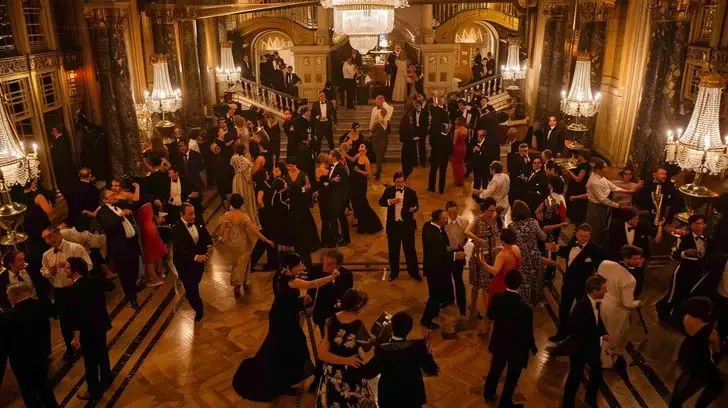
The ballroom was perfect. Too perfect, really—the kind of flawless that only comes from spending someone else’s money without counting. Crystal chandeliers cast warm light over tables draped in ivory silk, each centerpiece a explosion of white roses and baby’s breath that probably cost more than my monthly rent. The string quartet in the corner played something classical and vaguely romantic, the kind of music that makes people feel sophisticated even if they can’t name the composer.
I stood in the back, near the service entrance, because that’s where I’d learned to position myself at family events. Close enough to technically be present, far enough away that my existence didn’t disrupt the carefully curated atmosphere. My navy blue dress—the one I’d spent three weeks’ grocery budget on because my mother had insisted “you can’t embarrass us, not at your sister’s wedding”—suddenly felt too tight around my ribs.
The guests were settling in after dinner, that pleasant lull when the speeches begin and everyone’s had just enough wine to laugh at jokes that aren’t quite funny. One hundred and fifty people, most of whom I’d known my entire life, filled the ornate ballroom of the Riverside Hotel. Extended family, my parents’ colleagues, friends from the country club, my sister’s sorority sisters—a carefully assembled audience for what was supposed to be the social event of the season.
My sister, Victoria, looked radiant at the head table. Her dress was a custom Vera Wang, her makeup done by someone who’d flown in from New York specifically for this occasion. She’d always been beautiful—the kind of effortless beauty that photographs well and makes strangers do double-takes—but today she was luminous. Her new husband, Preston, sat beside her with the satisfied smile of a man who’d just married exactly the right type of woman from exactly the right type of family.
I should probably explain that my family operates on a very specific hierarchy, one that’s never been officially stated but has been enforced with absolute consistency for as long as I can remember. Victoria is the golden child—Harvard MBA, engagement ring from a man whose family name appears on hospital wings, a career in “strategic consulting” that seems to involve a lot of expense-account lunches and very little actual work. She has my mother’s blonde hair and my father’s business instincts, and she’s spent her entire life being exactly what they wanted her to be.
I am… something else entirely.
My name is Claire, though my parents introduced me at events as “our other daughter” in a tone that suggested I was a clerical error they’d been too polite to correct. I work in cybersecurity for a network of hospitals—actual work, the kind that involves irregular hours and genuine problem-solving and people’s medical data depending on whether I’ve done my job correctly. I have my father’s dark hair but apparently none of his charm, my mother’s height but none of her grace. I graduated from a state university on a scholarship, live in a one-bedroom apartment with a radiator that clangs like it’s angry, and I’ve been single for three years because my schedule doesn’t exactly accommodate the kind of dating life my mother thinks I should maintain.
The fundamental difference between Victoria and me isn’t just personality or career choice. It’s that Victoria was planned—enthusiastically planned, discussed over dinner parties, celebrated from the moment my mother peed on that pregnancy test. I was… well, I was what my father would later call “a surprise we weren’t prepared for,” which is a polite way of saying I derailed their carefully mapped five-year plan and caused my mother to miss an important charity gala because she was dealing with morning sickness.
From the beginning, I was the wrong child at the wrong time, and they’ve spent three decades making sure I understood that.
But I kept showing up to family events anyway, kept answering their calls, kept playing the role of dutiful daughter even though the script never quite fit. Why? Honestly, I’m still not entirely sure. Hope, maybe. Or stubbornness. Or the kind of desperate optimism that makes people buy lottery tickets—the belief that maybe, eventually, something would change.
So there I was, at my sister’s wedding, wearing the expensive dress, having helped with setup that morning even though no one had asked me to, standing in my designated spot in the back while my father prepared to give his father-of-the-bride speech.
He stood up, tall and imposing in his custom tuxedo, every inch the successful executive. Richard Morrison, CEO of Morrison & Associates, board member of three different companies, the kind of man who gets recognized at restaurants and invited to speak at business schools. He had that particular brand of confidence that comes from never having been told no, never having failed at anything that mattered to him.
He lifted his champagne glass, and the room quieted immediately. People leaned forward slightly, the way audiences do when they expect to be entertained.
For one ridiculous, pathetic second, I thought he might remember he had two daughters.
Out of pure habit—the kind of habit that’s saved my career more than once—I pulled out my phone and opened my voice memo app. My thumb hit record before my brain fully processed what I was doing. In my line of work, when something feels wrong, you document it. You don’t wait for permission. You don’t second-guess your instincts. You record, you save, you back up. It’s kept me out of trouble with difficult bosses, protected me during hospital system audits, provided evidence when contractors tried to blame system failures on my department.
I didn’t know why I was recording my father’s speech. I just knew something felt off, the same way you know when a system’s about to crash even before the error messages start appearing.
“To my daughter,” he began, and I felt my chest actually lift with something dangerous and foolish: hope.
Then he smiled. Not a warm smile, not a proud-father smile. The smile of a man about to deliver a punchline he’d rehearsed, one he knew would land.
“I should clarify—my only daughter,” he said, and the hope in my chest turned to ice.
The room was absolutely silent now, everyone watching him, waiting.
“This amazing woman up here,” he continued, gesturing toward Victoria with his champagne glass, “is the pride of my life. The daughter who made every sacrifice worth it, who exceeded every expectation we had. Harvard MBA, brilliant career, and now married to this outstanding young man.” He raised his glass toward Preston, who nodded with the modest smile of someone accepting praise they believe they deserve.
Then my father’s hand moved, almost casually, flicking in my direction like he was indicating a piece of furniture he’d been meaning to get rid of.
“And that person standing in the back?” His voice carried across the ballroom with perfect clarity, amplified slightly by the room’s acoustics. “That was just a regret from thirty years ago. A mistake we should have handled differently when we had the chance. We should have let someone else raise you when we had the opportunity.”
The words hung in the air for a moment, and I watched in something like detached fascination as the room processed what he’d just said. Was it a joke? Was this that dry Morrison humor people always talked about?
Then the laughter started.
Not everyone laughed—I’d like to think that matters, though maybe it doesn’t. But enough people did. Uncomfortable chuckles at first, then louder as people decided it must be okay to laugh because other people were laughing. Some of the country club friends, the business colleagues who’d probably heard my father make similar “jokes” before. A few of Victoria’s sorority sisters, young women who’d never been taught that some things aren’t funny even when important men say them.
My mother laughed—a practiced, social laugh that I’d heard a thousand times before. Victoria smiled, neither encouraging it nor stopping it, the way she’d always handled my father’s comments about me. Neutral, non-participating, but certainly not defending.
Not one person stood up. Not one person said “Hey, that’s not funny.” Not one person looked at me with anything resembling sympathy or solidarity. The relatives who’d hugged me in the receiving line, the second cousins who’d made small talk during dinner, the family friends who’d known me since I was six years old—they either laughed or looked away or suddenly became very interested in their champagne glasses.
I stood there, phone still recording in my hand, and something fundamental shifted inside me. Not broke—breaking implies there was still something whole left to damage. This was more like a chemical reaction, the kind that’s irreversible once it starts. The desperate hope that had kept me coming to these events, calling on holidays, trying to earn something I was never going to receive—it didn’t shatter dramatically. It simply… evaporated.
I looked at my father long enough to make sure he saw me, long enough that he’d know I’d heard every word and understood exactly what he meant. His expression was triumphant, satisfied, the look of a man who’d just successfully entertained his audience.
Then I turned and walked toward the exit.
I didn’t run. I didn’t cry. I didn’t make a scene or shout back or give them the dramatic reaction that would let them tell the story later as “Claire always was so sensitive, can’t take a joke.” I just walked with my phone clutched in my hand, past tables full of people who were already turning back to their conversations, through the lobby with its marble floors and elaborate floral arrangements, and out the front doors into the November night.
It was raining—the cold, wind-driven kind of rain that Boston does best, the kind that soaks through your clothes in seconds and makes you question every life choice that led you to be outside. I stood on the sidewalk in my expensive dress, rain plastering my hair to my face, and I looked down at my phone.
The recording was still running. Forty-three minutes captured, including every word of that speech.
I stopped the recording, saved it, and immediately backed it up to three different cloud services. Then I titled it with one word: evidence.
My hands were shaking—from cold, from shock, from something else I didn’t have a name for yet. I stood there on that sidewalk, water pooling in my shoes, and I made myself a promise: this would be the last time they used me as entertainment without consequences.
I had spent thirty years trying to earn their love, or at least their basic respect. Thirty years of showing up, being helpful, keeping my head down, hoping that eventually they’d see me as something other than their mistake. And for what? So my father could humiliate me in front of 150 people while my mother laughed and my sister smiled and not one person—not one—thought I deserved better?
I was done hoping. I was done trying. I was done being the regret they’d kept around out of obligation.
But I wasn’t going to go quietly.
I walked four blocks through the rain until I found an open coffee shop, went into the bathroom, and changed into the jeans and sweater I’d stashed in my car that morning (old habit from years of not quite fitting in at family events—always have an escape outfit ready). I bought the largest coffee they had, sat in a corner booth, and pulled out my laptop.
That night, I made three phone calls and sent one email.
The first call was to my apartment building’s management office, leaving a message that I needed my emergency contact information updated immediately. My parents had been listed as emergency contacts since I’d moved in. They wouldn’t be anymore.
The second call was to my bank, requesting that I be removed from the joint account my mother had insisted on maintaining “for emergencies,” which she’d used twice in the last year to “borrow” money she’d never paid back. That account would be closed by morning.
The third call was to my lawyer—yes, I have a lawyer, because when you work in cybersecurity and data protection, you learn early that documentation and legal protection matter. I left a detailed message about updating my will, my medical power of attorney, and my advance directive. My parents were listed as beneficiaries and decision-makers on all of them. Not anymore.
The email was more complicated.
My father sits on the board of three different organizations. One of them is a non-profit that provides educational support to underprivileged youth—scholarships, mentoring programs, college prep courses. It’s his pet project, the thing he talks about at dinner parties to prove he’s not just about making money. He chairs the board, he’s the face of their fundraising campaigns, and his company matches donations dollar-for-dollar every year.
What the board doesn’t know—what nobody knows except me, because I’m the one who does the actual cybersecurity work for their systems—is that my father has been rather creative with his expense reporting. Nothing illegal exactly, just… ethically questionable. Charging personal expenses to the non-profit’s accounts, using the charity’s credit card for family dinners and golf memberships, listing vacation trips as “board business.” It’s the kind of thing that flies under the radar when the person doing it is also the person everyone trusts.
I discovered it six months ago while doing a routine security audit of their financial systems. I’d flagged it internally, professionally, to their treasurer. I’d been told it was being “handled internally” and I should focus on my actual job responsibilities. Classic whistleblower shutdown—thank the person who found the problem, then make it clear that pursuing it further would be career suicide.
So I’d documented everything, backed it up, and filed it away. Not because I was planning revenge—honestly, I’d hoped I’d never need it. But because in my line of work, you don’t delete evidence. You preserve it. Just in case.
Now I had a case.
The email went to the board’s independent auditor, a woman I’d met during the security audit who’d struck me as someone who took her job seriously. I didn’t editorialize. I didn’t make accusations. I just provided a carefully organized folder of documentation: expense reports, credit card statements, travel receipts, dates and amounts and purposes that didn’t quite add up to legitimate business expenses.
I included one line at the end: “These irregularities were flagged six months ago and do not appear to have been addressed. I thought the board should have access to this information for their review. Please let me know if you need additional documentation.”
Professional. Factual. Unimpeachable.
Then I closed my laptop, finished my coffee, and drove home through the rain.
I didn’t post anything on social media. I didn’t send angry texts or write dramatic emails to my family. I didn’t call my sister to tell her what I’d done or my mother to explain why I’d left. I just went home, took a long shower, changed into pajamas, and went to bed.
For the first time in years, I slept through the night without waking up.
The next morning, I listened to the recording again. The audio was crystal clear—no music loud enough to blur the words, no clinking glasses to soften the blow. My father’s voice, confident and clear: “That was just a regret from thirty years ago. A mistake we should have handled differently when we had the chance.”
I saved seventeen copies across different platforms. Local storage, cloud backup, encrypted external drive. I wasn’t sure what I’d need it for, but I knew I needed it preserved.
Then I went to work.
For two months, nothing happened. Or rather, nothing visible happened. I went to work, did my job, came home to my clanging radiator and my tiny apartment. I ignored the few texts from my mother (“Where did you go? It was rude to leave early”), the single message from Victoria (“Dad said you were upset? It was just a joke, you know how he is”), and the complete radio silence from my father.
I didn’t reach out. I didn’t explain. I didn’t defend myself or try to make them understand. I just… stopped participating in their narrative of who I was supposed to be.
At work, I threw myself into a major project—upgrading security protocols across our entire hospital network. It was the kind of complex, detail-oriented work that requires absolute focus, which was exactly what I needed. My colleagues probably thought I was unusually intense during those weeks, but nobody complained since I was getting more done than I had in months.
I also started therapy. Real therapy, not the kind where you vent to friends over wine. A actual therapist who specialized in family trauma and dysfunctional family systems. Twice a week, I sat in her comfortable office with its overstuffed chairs and talked about thirty years of being the unwanted child, the mistake, the regret.
“You know they can’t actually make you less valuable, right?” Dr. Sarah asked during our third session. “Your worth isn’t determined by whether they recognize it.”
Intellectually, I knew that. But there’s a difference between knowing something and feeling it, and I was only beginning to understand how much damage had been done by spending three decades trying to earn something that was never going to be given.
Then, two months after the wedding, my phone exploded.
I was in a training session—one of those mandatory cybersecurity update courses that’s mostly reviewing material I already know—when my bag started vibrating. Not a single call, not a few texts. Continuous, relentless vibrating that made my bag physically slide across the floor.
I pulled out my phone during the break and stared at the screen in something like shock.
Sixty-eight missed calls.
Forty-three text messages.
Five voicemails.
All in the last hour and a half.
My mother: twelve calls, eight texts. My father: eighteen calls, six texts. Victoria: fifteen calls, seven texts. Relatives I barely spoke to: uncles, aunts, cousins I hadn’t heard from in years. And numbers I didn’t recognize at all—probably more family members calling from work phones or friends’ cells.
The text messages all said essentially the same thing in different words, like they’d been coordinated in a group chat I wasn’t part of:
“Claire, call me immediately.”
“What did you do??”
“You need to call Dad right now. This is serious.”
“Please call back. We need to talk to you urgently.”
“Claire, this isn’t funny. Call me.”
And then, buried in the middle of the chaos, three words I’d never seen from my father before:
“We’re begging you.”
I stood in the break room, coffee forgotten in my hand, scrolling through message after message of panic and urgency and barely concealed desperation. The training instructor poked his head in to say we were resuming, and I heard myself say, “I need to take the rest of the day. Family emergency.”
It wasn’t really a lie.
I drove home slowly, methodically, checking my mirrors and using my turn signals and following every traffic law with absolute precision. My hands weren’t shaking. My breathing was steady. I felt oddly calm, like I was watching myself from a distance.
At home, I sat on my couch and started listening to the voicemails.
My mother’s voice, high and strained: “Claire, I don’t know what you think you’re doing, but you need to call your father immediately. This is completely inappropriate. Whatever you’re angry about, this is not how we handle things in this family.”
Victoria, trying for reasonable: “Hey, so, apparently something happened with Dad’s board position? I don’t really understand it, but everyone’s freaking out and they seem to think you’re involved? Can you just call and explain what’s going on? I’m sure it’s just a misunderstanding.”
An aunt I hadn’t spoken to in five years: “Claire Marie Morrison, I don’t know what you’ve done, but you’re tearing this family apart. Your father is devastated. How could you do this to him?”
And finally, my father. His voice was different than I’d ever heard it—rough, almost hoarse: “Claire. I need you to call me. Right now. Whatever you sent to the board… we need to talk about this. Please. Just call me back.”
That last word—please—from a man who’d never asked me for anything politely in his entire life, hung in the air of my small apartment like something toxic.
I deleted all the voicemails.
Then I blocked every number that had called me.
I didn’t call back. I didn’t send explanatory texts. I didn’t rush to fix whatever crisis my documentation had created. I just… let it happen.
Over the next few days, the full picture started to emerge through news articles and industry gossip sites. The non-profit’s board had launched an immediate independent investigation after receiving “concerning financial documentation from an anonymous source.” My father had been placed on administrative leave pending the outcome. Major donors were reportedly “reevaluating their relationship with the organization.” The matching program with my father’s company had been suspended.
It was exactly the kind of scandal that ruins reputations in their social circles—not dramatic enough for national news, but devastating within the small, interconnected world of Boston charity boards and country club memberships.
My mother’s friends would be talking. Victoria’s wedding would be remembered not for the expensive dress or the perfect centerpieces, but for being right before “that whole thing with Richard Morrison.”
The calls and texts continued for a week. When I didn’t respond, they started showing up.
My mother came to my apartment building and rang the buzzer for twenty minutes. I watched her on the security camera, pacing back and forth in her Burberry coat, eventually sitting on the front steps like she was prepared to wait me out. I didn’t buzz her in.
Victoria sent an email—a long, rambling thing about family loyalty and forgiveness and “Dad made a mistake but you’re making it so much worse.” I didn’t respond.
My father showed up at my workplace. Hospital security called me to say someone was in the lobby asking for me, and when I came down, there he was. Looking older than I remembered, his tie slightly loose, his expression desperate in a way I’d never seen before.
“Claire,” he started, and I held up my hand.
“I’m at work,” I said. “You need to leave.”
“We need to talk about this. What you did—”
“What I did,” I interrupted, my voice perfectly steady, “was provide accurate documentation of financial irregularities to the appropriate oversight board. That’s not a personal attack. That’s a professional obligation.”
“You’re destroying me over a joke,” he said, and for the first time, I heard real emotion in his voice. “At your sister’s wedding—I was just joking. You know how I am. Everyone knows I didn’t mean it.”
I looked at him—really looked at him—and felt absolutely nothing. No anger, no pain, no satisfaction. Just a vast, empty space where thirty years of desperate hope had finally burned out.
“I have a recording of that joke,” I said quietly. “Forty-three minutes of audio where you call me a regret and a mistake you should have gotten rid of. Where you tell 150 people that you only have one daughter. And do you know the interesting thing about that recording?”
He stared at me.
“Nobody stopped you. Not one person. Not Mom, not Victoria, not any of the people who are now calling me and telling me I’m tearing the family apart. You humiliated me in public, and everyone either laughed or looked away. So no, Dad. I’m not destroying you over a joke. I’m simply done being the punchline.”
I turned and walked back into the hospital, leaving him standing in the lobby.
Security escorted him out.
The investigation took six weeks. The board found evidence of over $47,000 in inappropriate expenses over a three-year period. My father wasn’t charged criminally—the amounts were right on the edge of where criminal prosecution becomes viable, and the non-profit didn’t want the publicity of a lawsuit. But he was removed from the board immediately, required to repay everything with interest, and his name was quietly removed from their donor walls and program materials.
His company’s board of directors launched their own review. He wasn’t fired—he’d built that company, and it’s harder to remove a founder than most people realize—but he was “encouraged to step down as CEO” and move into a consulting role. Which is corporate speak for being stripped of power while keeping your salary.
The matching program never resumed. The non-profit had to cancel two scholarship programs due to funding shortfalls.
My mother’s friends stopped calling her for lunch. Victoria’s mother-in-law, who’d been so impressed with the family connections, suddenly became much cooler in her interactions. Preston started working late more often.
I learned all of this secondhand, through industry gossip and the occasional news article, because I never answered any of their calls.
Six months after the wedding, I received a letter. Not an email, not a text—an actual physical letter, addressed by hand, my mother’s careful penmanship on the envelope.
I let it sit on my kitchen counter for three days before I opened it.
It was from Victoria.
“Claire,” it started, and I could hear her voice in the words. “I know you probably won’t read this, but I need to try.
“I’ve spent the last six months trying to understand what happened. Everyone keeps saying you overreacted, that you destroyed Dad over a joke, that you’re being vindictive and cruel. But I keep thinking about that night, and I keep hearing what he actually said, and I’m starting to realize something I should have seen a long time ago.
“It wasn’t a joke, was it? It wasn’t even the worst thing he’s ever said to you. It was just the most public.
“I’ve been thinking about all the times growing up when he’d introduce you differently than me. When Mom would sign me up for things and ‘forget’ to sign you up too. When they’d talk about your college choices like you were being deliberately difficult by not going to an Ivy League school, like they hadn’t spent my entire college fund and left you to figure it out yourself.
“I told myself it wasn’t that bad. That you were just sensitive. That families have dynamics and that’s just how ours worked. But that’s not actually true, is it? That’s just what I told myself because it was easier than admitting I was part of it.
“I should have stood up at my wedding. When Dad said those things, I should have stopped him. At minimum, I should have checked on you after you left. But I didn’t, because I never have, and I’m starting to understand that saying nothing is still a choice.
“I’m not asking you to forgive me. I’m not asking you to come back or fix things or make this easier for everyone. I’m just saying that I finally see it. I see what they did to you. I see what I did to you by pretending not to see it.
“I’m sorry. For all of it. For everything.
“Your sister, Victoria”
I read the letter three times. Then I folded it carefully, put it back in the envelope, and filed it in a drawer.
I didn’t respond.
Maybe I would someday. Maybe, in a year or five years or ten years, I’d be ready to have a conversation about forgiveness and rebuilding and what family means when the family you’re born into has spent your entire life making you feel like you don’t belong.
But not today.
Today, I had work to do. I had a life to build that wasn’t defined by their rejection or their belated recognition. I had friendships to invest in—real ones, with people who’d never once made me feel like a regret or a mistake. I had therapy appointments and work projects and a radiator that still clanged but was starting to feel less like a problem and more like a quirky feature of the place I’d chosen to live.
I wasn’t someone’s regret anymore. I wasn’t someone’s mistake. I wasn’t the daughter they wished they’d given away.
I was just Claire. And for the first time in thirty years, that was enough.
My phone hasn’t exploded with desperate calls in months. My mother stopped trying to ambush me at my apartment. My father’s lawyer sent one official letter requesting I sign something saying I wouldn’t pursue further action, which my lawyer responded to with a polite “my client has no comment at this time.”
I changed my last name legally last month—not to anything dramatic, just back to my maternal grandmother’s maiden name, Petrova. It’s in the process of being updated on all my professional accounts.
Sometimes, late at night, I think about what would have happened if I hadn’t recorded that speech. If I hadn’t had evidence, hadn’t had documentation, hadn’t had a professional obligation that gave me an ethical way to hold him accountable. Would I have just swallowed it, like I’d swallowed everything else? Would I still be showing up to family events, standing in the back, hoping this time would be different?
Probably.
But I did record it. I do have evidence. And I didn’t just swallow it.
I’m not sure if that makes me vindictive or just finally, mercifully, done.
Either way, I sleep well now. The radiator still clangs, the apartment is still small, and my social calendar is still primarily filled with work events and therapy appointments.
But when I look in the mirror, I see someone who stood up for herself. Someone who decided her dignity was worth more than their approval.
Someone who walked out into the rain and never looked back.
And that person? She’s not a regret at all.
THE END

Lila Hart is a dedicated Digital Archivist and Research Specialist with a keen eye for preserving and curating meaningful content. At TheArchivists, she specializes in organizing and managing digital archives, ensuring that valuable stories and historical moments are accessible for generations to come.
Lila earned her degree in History and Archival Studies from the University of Edinburgh, where she cultivated her passion for documenting the past and preserving cultural heritage. Her expertise lies in combining traditional archival techniques with modern digital tools, allowing her to create comprehensive and engaging collections that resonate with audiences worldwide.
At TheArchivists, Lila is known for her meticulous attention to detail and her ability to uncover hidden gems within extensive archives. Her work is praised for its depth, authenticity, and contribution to the preservation of knowledge in the digital age.
Driven by a commitment to preserving stories that matter, Lila is passionate about exploring the intersection of history and technology. Her goal is to ensure that every piece of content she handles reflects the richness of human experiences and remains a source of inspiration for years to come.