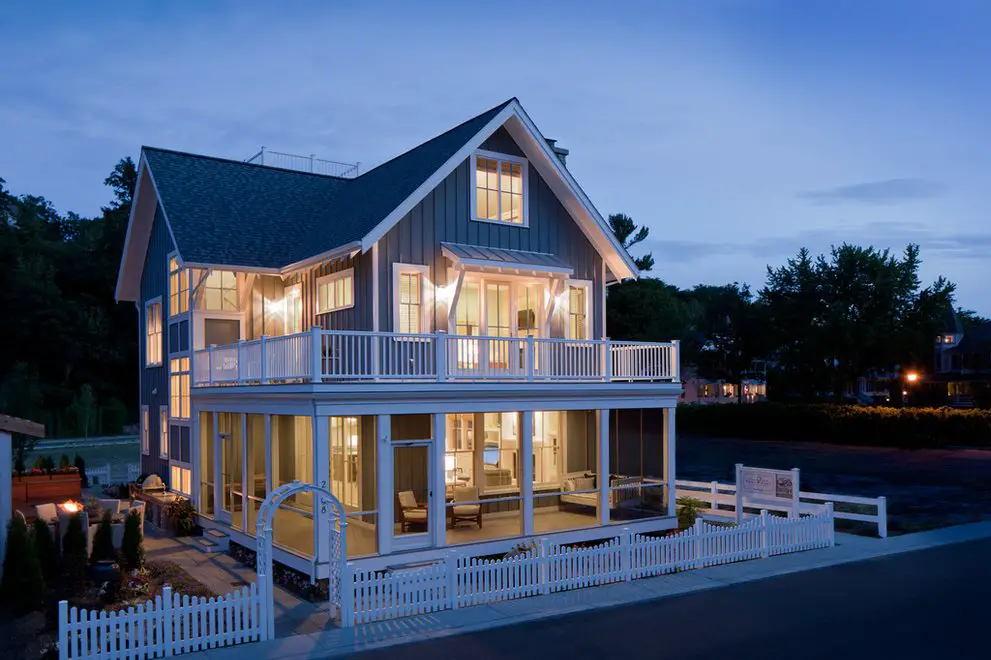
The Perfect Storm: When a Mother’s Knowledge Becomes Her Greatest Weapon The call came on a Tuesday afternoon, cutting through the peaceful silence of my modest seaside home like a blade through silk. I was balanced precariously on a stepladder in the guest bedroom, my sixty-six-year-old knees protesting as I wrestled with a vintage brass curtain rod. The Atlantic Ocean stretched endlessly beyond my window, its waters a deep gray under the gathering October clouds. I had spent my birthday alone just three weeks earlier. A slice of grocery store lemon cake, a cup of chamomile tea, and the sound of waves against the rocks below. No calls. No visits. Just me and the house I had bought with every penny of my teacher’s pension, the first thing in my life that was truly, completely mine. The phone rang insistently from downstairs. When I finally reached it, my daughter Megan’s voice sliced through the receiver with that particular tone she used for emergencies or commands. “Mom, I need the house,” she announced without preamble. I gripped the phone tighter, looking around at the walls I had carefully painted a soft, creamy biscuit color, at the floors I had refinished myself over countless weekends. This converted fishing warehouse perched on the edge of Cedar Point, Massachusetts, was weathered and small, but it was mine. “What do you mean you need the house?” I asked, my voice steady despite the sudden tightness in my chest. “For my launch party. The consulting firm. I told you about this,” Megan replied with barely contained impatience. “We’re doing the official opening next Saturday. Clients, investors, local politicians. It’s huge, Mom. Your place is perfect for the whole rustic seafront aesthetic. Very authentic New England.” I sank onto the edge of my bed, feeling the familiar weight of expectation settling on my shoulders. For forty years, I had bent to accommodate Megan’s needs, her demands, her vision of how I should live my life. “Megan, I live here. This isn’t a venue.” “I know that.” Her voice sharpened. “That’s why I’m calling ahead. You can stay in the shed for a few days. The storage building out back. You fixed it up last summer, right? Put in heat?” The shed. She was talking about the small outbuilding where I kept gardening tools and paint supplies. I had thrown a cot in there once when a neighbor’s grandson needed a place to crash, but it was hardly fit for extended habitation. “That’s a tool shed, Megan. It’s damp and barely—” “Mom, please.” Her tone shifted to that false reasonableness she employed when she wanted something. “Don’t make this difficult. This is critical for my career. You know how hard I’ve worked to get this firm off the ground. It’s just for the weekend.” I stared out at the ocean, watching the gulls circle lower as the wind picked up. “And if I say no?” The silence stretched between us, heavy with unspoken threats. When Megan spoke again, her voice was ice cold. “If you’re going to be difficult about this, if you’re going to embarrass me in front of my colleagues and investors, then maybe we need to have a different conversation.” My heart began to race, but I kept my voice level. “What conversation is that?” “About whether this isolated house is really the best place for you. Whether you’re managing okay out here, all alone. Maybe it’s time to look at that assisted living facility in Worcester. The one with the memory care unit.” The threat hung in the air like a storm cloud. She had planted these seeds before, casual comments about my age, my isolation, my ability to care for myself. All lies, but legal competency could be a fragile thing when you had a determined daughter and a mother who didn’t fight back. I closed my eyes and felt something inside me break. Not my spirit, but the chain that had bound me to her expectations for so many years. “I’ll stay in the shed,” I heard myself say. “Thank you.” Relief flooded her voice, the threat vanishing as if it had never existed. “I really appreciate this, Mom. And listen, during the party, stay out of sight. I don’t want you wandering around in your gardening clothes. This is professional. Image is everything.” The line went dead, leaving me holding the phone and staring at my reflection in the darkening window. The next morning brought stronger winds that rattled the glass and sent spray high over the seawalls. I walked down to the harbor early, needing to clear my head and think through what had just happened. The docks were slick with overnight rain, and the smell of brine was heavy in the air. “Storm coming,” a gravelly voice said beside me. I turned to see Andrew, one of the longtime fishermen who kept his small lobster boat moored nearby. He was seventy if he was a day, his face deeply lined from decades of squinting into salt spray and sun. “When?” I asked, pulling my jacket tighter against the wind. “Saturday, most likely.” He nodded toward the southeast horizon. “Big one. They’re calling for high winds, heavy rain. But the real problem is going to be the tide.” I felt something stir in my chest. “The tide?” Andrew’s weathered face grew serious. “We’re just past the autumn equinox, full moon Saturday night. Spring tide, they call it. Highest of the month. Add in storm surge from those winds, and the water’s going to come right up into the lower buildings.” I looked back toward my house, sitting on reclaimed land where the old warehouse district met the water. The original builders had reinforced it and added drainage, but on the worst storm days, I had seen seawater seep under the front door. “How high?” I asked, though I was already beginning to understand. “Hard to say exactly,” Andrew replied, checking his watch. “But if you’ve got anything valuable in the front rooms, I’d move it. Peak tide’s going to be around two-thirty, three o’clock Saturday afternoon.” Exactly when Megan’s party would be in full swing. I thanked Andrew and walked home slowly, my mind racing with possibilities. By the time I reached my driveway, an idea had taken root, growing stronger with each step. I spent the next two days preparing with the methodical precision of a woman who had taught high school for thirty years. I moved my favorite paintings upstairs, wrapping them carefully in old sheets. My important documents, the few photographs of my parents, my grandmother’s china – everything that truly mattered went into waterproof bins and disappeared into the attic. I locked the doors to the upper floor and pocketed the keys. Most importantly, I checked the weather forecast obsessively. The National Weather Service confirmed Andrew’s prediction: Severe Coastal Flood Warning. Peak tide at 2:47 PM on Saturday. Residents in low-lying areas advised to take precautions. Friday afternoon, Megan arrived with a convoy of white rental vans and an army of assistants. She barely acknowledged me as workers began transforming my home into an upscale event space. They shoved my furniture against the walls, covered my floors with protective plastic, and strung pretentious Edison bulbs across my ceiling. “Caterers will be here at eight tomorrow morning,” Megan barked, directing the placement of rental chairs. “Party starts at two. I need you in the shed by noon, Mom. And remember what I said about staying out of sight.” I nodded silently, watching them turn my house into a stage set. By evening, it looked beautiful but cold, utterly impersonal. That night, I checked the forecast one final time. The red alert blazed across my phone screen: Severe Coastal Flood Warning remains in effect. Take immediate action to protect life and property. I packed a small bag with warm clothes, a thermos of coffee, and a book. I left a note on the kitchen counter where Megan would see it: Gone for a walk. Be back later. Saturday morning, I left before the caterers arrived. I walked three blocks inland to Rita’s Café, a cozy place with large windows overlooking the harbor but safely positioned on higher ground. I ordered coffee and claimed a table by the window, settling in to wait. The transformation of the weather was remarkable to watch. The sky turned the color of a fresh bruise, deep purple and gray, around noon. By one o’clock, guests were arriving at my house, fighting their umbrellas against increasingly strong winds, their expensive shoes splashing through puddles that were already forming in the street. From my elevated position, I had a perfect view of the unfolding drama. Megan would be in her element now, I thought. She had shown me pictures of the green silk dress she planned to wear, had practiced her elevator pitch about the consulting firm until she could deliver it in her sleep. She believed she was in complete control. “You okay, Alice?” Rita asked, refilling my mug for the fourth time. “You’ve been sitting here for hours.” “Just watching the weather,” I replied calmly. Rita peered through the glass at the harbor, where waves were now crashing violently over the breakwater. “It’s going to be a bad one. Look at that water.” The harbor had transformed into a churning gray mass, angry and relentless. White foam flew high into the air as waves battered the seawalls. The street in front of my house was beginning to glisten with something that wasn’t just rain – it was seawater, dark and thick with debris. At 2:30 PM, I watched luxury cars sitting in ankle-deep water. Inside my house, warm light glowed from every window. I could imagine the scene: champagne flutes catching the light from those Edison bulbs, the careful networking conversations, the presentation of Megan’s business plan to potential investors. They were completely unaware that the Atlantic Ocean was gathering its strength just outside the door. At 2:45 PM, the sea made its move. It didn’t creep or trickle. It surged. A massive wave, pushed by gale-force winds and the astronomical high tide, crested the seawall and hit my house like a physical blow. Even from three blocks away, I saw the impact. “Oh my God,” Rita whispered, appearing at my shoulder. The front door – my heavy oak door that I had refinished myself – buckled under the pressure. Then it gave way completely. Water poured into the house in a torrent. The lights flickered wildly and died, plunging the party into gray twilight. Through the rain and spray, I could see chaos erupting. People spilled out of the ruined doorway, stumbling into waist-deep freezing water, their formal attire instantly soaked and heavy. Men in expensive suits floundered toward their cars, only to discover the vehicles were useless in the flood. Women in cocktail dresses screamed as the frigid Atlantic water reached their waists. The careful choreography of Megan’s professional debut dissolved into pure panic. And then I saw her. Megan emerged onto the front porch, her green silk dress plastered to her body like seaweed, her carefully styled hair hanging in wet ropes around her face. She was shouting something at the ocean, gesturing wildly as if she could command the tide to retreat through sheer force of will. One of her assistants grabbed her arm, pulling her toward higher ground. I took a sip of my coffee. It was lukewarm by now, but it tasted like victory. The fire department arrived within minutes, their red lights strobing against the storm. They began evacuating guests, wrapping them in emergency blankets, guiding them up the street away from the flood zone. The scene looked like a disaster movie, except this disaster had been entirely predictable. “Alice,” Rita said softly, looking at me with wide eyes. “Did you know this was going to happen?” I met her gaze steadily. “I grew up here, Rita. I know these waters.” I waited until the tide began to recede around 4:00 PM before paying my tab and walking home. The devastation was complete. The street was littered with debris: waterlogged napkins, broken catering equipment, a melted ice sculpture that looked like abstract art made of salt and disappointment. Megan stood in the middle of the driveway, shivering under a firefighter’s blanket. Her mascara had run in black streaks down her cheeks, and her green dress was stained with mud and seaweed. When she saw me approaching, calm and dry in my raincoat, her face twisted with a mixture of relief and pure rage. “Where were you?” she screamed over the wind. “Why didn’t you warn me?” I stopped several feet away from her, close enough to be heard but far enough to avoid the worst of her fury. “You told me to stay away,” I said calmly. “You told me not to make a scene.” “You knew this was going to happen!” She stepped toward me, splashing in the muddy water. “You knew about the storm!” “I checked the weather forecast, Megan. Anyone could have. But you didn’t ask about the weather when you planned this event. You asked about the aesthetics.” Her face contorted with fury. “You ruined everything! My investors, my clients – do you have any idea how much money I lost today? I’m going to sue you for this! I’ll have you declared incompetent! I’ll put you in that nursing home so fast your head will spin!” Something inside me that had been stretched and bent for decades finally snapped back into place. “Get off my property,” I said. Megan blinked, clearly not having heard me correctly. “What?” “This is my house,” I said, my voice growing stronger. “My name is on the deed. I bought it with my pension money. You asked to use it, and I agreed. What happened today was an act of nature, not sabotage. But what happens next is entirely up to me.” “You can’t kick me out! I’m your daughter!” “I’m not kicking my daughter out,” I replied, pulling the keys to the upper floors from my pocket. “I’m kicking out a woman who threatened to institutionalize her mother because she was inconvenient. A woman who treats her mother like a prop in her own life.” I walked past her toward the back door, which had remained dry and functional. “Mom!” she screamed behind me, and there was something raw and desperate in her voice that I had never heard before. “Mom, please! I don’t have anywhere to go! My car is flooded!” I didn’t turn around. I unlocked the back door, stepped into the safe, dry rear of my house, and engaged the deadbolt. Then I climbed the stairs to my bedroom, which was exactly as I had left it: quiet, warm, and undisturbed. I sat on my bed and listened to the ocean, no longer an enemy but an ally in my own liberation. The silence that followed lasted three weeks. I used my credit card to hire a local restoration crew. They tore out the water-damaged drywall in the front rooms, ripped up the sodden floors, and set up industrial fans that hummed around the clock. The repair bill was substantial, but I didn’t hesitate to pay it. When the rental company sent me an invoice for their ruined equipment, I forwarded it to Megan’s business address with a note: This was your event. Megan called repeatedly. I didn’t answer. She sent text messages that ranged from tearful apologies to legal threats. I deleted them all without reading past the first line. One crisp November morning, while I was planting tulip bulbs in the garden, Andrew appeared with a grease-stained paper bag. “Fresh mackerel,” he said, holding it out. “Heard you stood your ground during the storm.” “News travels fast in a small town,” I replied, accepting the fish with a smile. “That it does. Folks are saying you handled things right. Megan was always a bit intense, but threatening to put her mother away?” He shook his head. “That crossed a line.” We stood in comfortable silence for a moment, watching seagulls wheel overhead. “I have a favor to ask,” Andrew continued. “My granddaughter Iris is staying with me for a while. Dropped out of engineering school. Parents are furious, and she’s feeling pretty lost. She needs work, something meaningful to do with her hands. I thought maybe you could use some help with the restoration.” I looked around at my property, which still showed signs of the flood damage. The garden needed attention, and the shed required organization. “Send her over,” I said. Iris arrived the next day. She was twenty-two, with purple-dyed hair and enough ear piercings to stock a jewelry store. She wore ripped jeans and an oversized flannel shirt, and she wouldn’t make eye contact when she introduced herself. “Grandpa said you need help,” she mumbled. “I do,” I confirmed. “Do you know anything about painting?” “I can learn.” And she did. Over the following month, Iris became a fixture in my daily life. We worked side by side in companionable silence, transforming the water-damaged front hall into something even more beautiful than it had been before. We chose a soft gray color that reminded me of storm clouds, a daily reminder of my newfound strength. Iris was nothing like Megan. She was quiet, observant, and incredibly skilled with her hands. She didn’t want to manage or control anything; she simply wanted to build and create. “My parents think I’m a complete failure,” she confided one afternoon as we sanded the front door frame. “Because I didn’t want to be an engineer. I hated the theory, the endless equations. I just wanted to make things with my hands.” “There’s no shame in knowing who you are, Iris,” I replied, pausing in my work. “The shame comes from pretending to be someone else to please people who don’t have to live your life.” She looked at me then, really looked at me for the first time. “Is that what happened with your daughter?” “Yes. I spent forty years trying to be the mother she wanted. The accommodating, invisible mother who never caused problems. It nearly erased me completely.” “I’m glad it didn’t,” Iris said softly. “So am I.” December brought the sharp, clean air of approaching winter. The house was finished, stronger and more beautiful than before. I had installed better drainage, reinforced the front entrance, and even added storm shutters that I could deploy when the weather turned threatening. On a quiet Tuesday evening, a silver sedan pulled into my driveway. Megan. I was sitting on the back porch with Iris, sharing hot tea and watching a stray orange cat we had named Rusty hunt for field mice in the garden. When I saw the car, I felt my body tense automatically, a response conditioned by decades of anxiety. “Want me to leave?” Iris asked, starting to stand. “No,” I said, settling back into my chair. “Stay.” Megan walked around to the back of the house. She looked thinner, almost fragile. Her hair was pulled back in a severe style, but her shoulders sagged with exhaustion. She stopped at the bottom of the porch steps and looked up at us. “Mom,” she said. Her voice was quiet, lacking its usual commanding edge. “Can we talk?” “That depends,” I replied without rising from my chair. “Are you here to threaten me again? Or are you here to ask for money?” Megan flinched as if I had slapped her. “Neither. I came to apologize. For real this time.” She glanced at Iris, then back at me. “I’ve been seeing a therapist since the flood. She says I have serious control issues, that I project my anxiety onto other people instead of dealing with it myself.” “That sounds like an accurate diagnosis,” I said. “I lost the consulting firm,” Megan blurted out, tears beginning to well in her eyes. “After the launch disaster, clients pulled their contracts. Investors walked away. The insurance company is fighting the flood damage claim. I’m bankrupt, Mom. I lost my apartment.” I felt the familiar tug of maternal instinct, the urge to rush down and fix everything, to write a check I couldn’t afford and smooth away her problems. But I remained seated. “I’m sorry to hear that, Megan. Truly.” “I don’t have anywhere to go,” she whispered. “I was hoping maybe I could stay here, just for a few weeks while I figure things out.” The silence stretched between us, filled only by the rhythmic sound of waves against the rocks below. “No,” I said. Megan’s head snapped up. “What? Mom, I’m your daughter. You can’t just let me be homeless.” “You are a thirty-four-year-old woman with a master’s degree,” I replied steadily. “You have friends, colleagues, resources. You will figure this out. But you cannot live here. Not now. Not until you understand that I am a person with my own needs, not just a resource for you to exploit.” “So you’re abandoning me? Just like Dad did?” “No.” I stood up then, looking down at her from the porch. “I am establishing boundaries. There’s a difference. If you want to build a real relationship with me, one based on mutual respect rather than obligation, we can start with dinner. Once a month. In town. But you don’t get to live in my house, and you don’t get to threaten my independence.” Megan stared at me for a long moment. She looked at Iris, who was watching with protective alertness. She looked at the house she had tried to commandeer, now restored and fortified against future storms. “You’ve changed,” Megan said bitterly. “I hope so,” I replied. “It took me long enough.” She turned and walked back to her car, her footsteps echoing in the cold air. I watched her drive away, her taillights disappearing into the winter darkness. It hurt to turn her away, but beneath the pain was something stronger: a deep sense of relief. “You okay?” Iris asked quietly. I looked out at the ocean, dark and vast under the star-filled sky. The tide was coming in, steady and predictable, a force that could destroy but also one that washed things clean. “I’m better than okay,” I said, sitting back down beside her. “For the first time in my adult life, I know exactly who I am.” The house around us was solid and secure, built to withstand whatever storms might come. I had learned to read the weather, to prepare for difficulties, and most importantly, to value my own peace above other people’s convenience. Six months later, Megan did call for that monthly dinner. We met at a small restaurant in town, and for the first time in years, we had a conversation instead of a monologue. She was working as a freelance consultant now, living with a friend, slowly rebuilding her career with more realistic expectations. “I still don’t understand why you didn’t warn me about the flood,” she said over dessert. I set down my coffee cup and looked at her directly. “Because you never asked. You told me what you wanted me to do, but you never asked what I knew or what I needed. You treated me like a piece of furniture that could be moved around for your convenience.” Megan was quiet for a long moment. “I never thought of it that way.” “I know,” I said. “That’s exactly the problem.” We’re still working on our relationship, taking it slowly, building something based on respect rather than habit. It may never be the close bond I once imagined, but it’s honest, and that’s more valuable than I used to understand. As for me, I’m still in my seaside house, still learning to read the weather and trust my own judgment. Iris finished her apprenticeship with me and now runs her own home renovation business. She stops by every few weeks, usually bringing Rusty some treats and me some of Andrew’s fresh fish. The ocean outside my window is constant but never predictable, powerful but not malicious. It taught me that some storms can be weathered, some can be avoided with proper preparation, and some can even be used to wash away what no longer serves you. I am sixty-seven years old, and for the first time in my life, I am exactly where I belong.

Lila Hart is a dedicated Digital Archivist and Research Specialist with a keen eye for preserving and curating meaningful content. At TheArchivists, she specializes in organizing and managing digital archives, ensuring that valuable stories and historical moments are accessible for generations to come.
Lila earned her degree in History and Archival Studies from the University of Edinburgh, where she cultivated her passion for documenting the past and preserving cultural heritage. Her expertise lies in combining traditional archival techniques with modern digital tools, allowing her to create comprehensive and engaging collections that resonate with audiences worldwide.
At TheArchivists, Lila is known for her meticulous attention to detail and her ability to uncover hidden gems within extensive archives. Her work is praised for its depth, authenticity, and contribution to the preservation of knowledge in the digital age.
Driven by a commitment to preserving stories that matter, Lila is passionate about exploring the intersection of history and technology. Her goal is to ensure that every piece of content she handles reflects the richness of human experiences and remains a source of inspiration for years to come.