I pulled into the driveway on a gray January afternoon, the kind of winter light that makes everything look colder than it already is. My duffel bag sat in the passenger seat—the same one I’d carried through rotations in Alaska and training in Arizona, the same one that had been shoved under bunks and rattled in helicopters for six years. I’d told myself the drive home to Tacoma would feel like crossing a finish line. I’d finished my last active-duty assignment at the end of the year and signed my separation papers with a mix of relief and confusion, wondering who I would be once the dust of military life finally settled.
Instead, I froze.
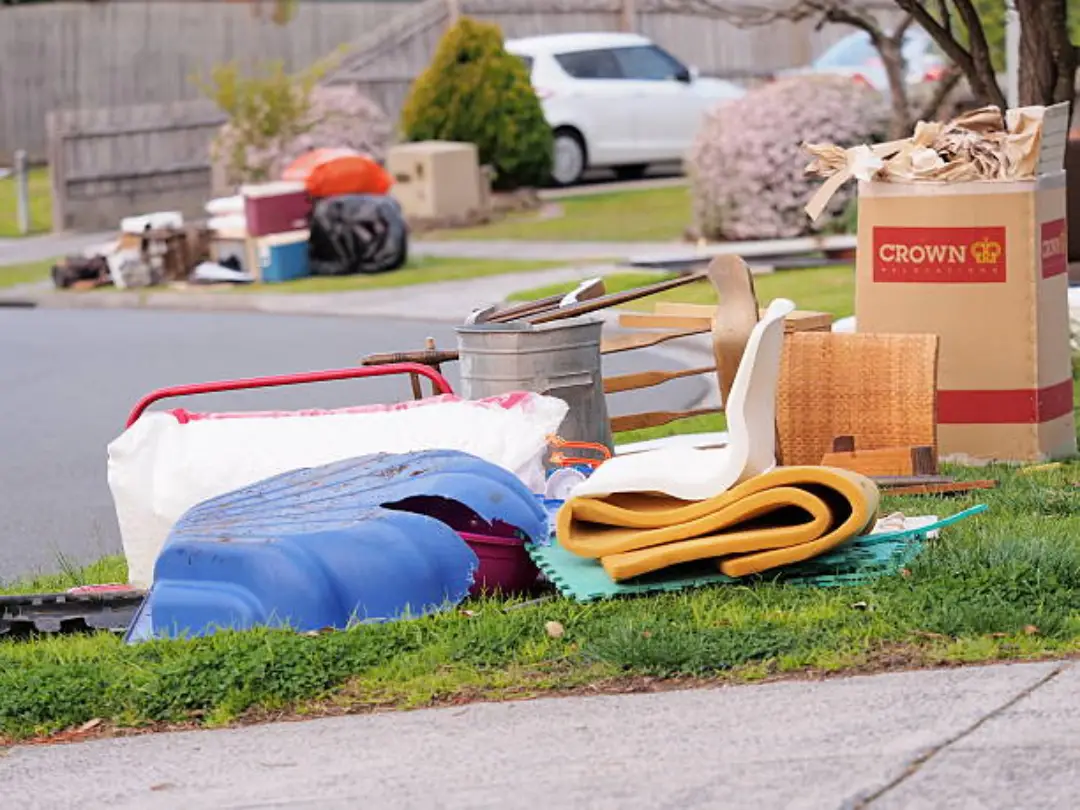
My things were everywhere—scattered across the front lawn like debris after a storm. Clothes, gear, paperwork, boxes I knew too well, even the tan container that held my folded flag. I sat behind the wheel for a full minute trying to make sense of it, trying to reconcile what I was seeing with what I’d expected. It looked like someone had taken my entire life and shaken it out like trash.
The cold air seeped in around the cracked window as I studied the scene. The neighborhood was quiet, but not in a comforting way—more like the hush before someone admits something shameful. I finally stepped out of the car, boots pressing into the damp grass, my breath leaving in slow clouds.
That’s when I spotted the green storage bin I’d kept tucked in the back of my closet, the one that held my old unit patches and the dog tags of friends who never made it home. The lid was cracked. A couple of tags had spilled onto the lawn. Seeing them lying there in the open, exposed to the elements and curious neighbors, made something in my ribs tighten.
I bent down and brushed my fingers over the metal, the chill biting into my skin. Before I could pick anything up, I looked toward the house.
Dad stood on the porch, hands resting on his hips like he was waiting for me to thank him. The strangest part was his expression—not guilty, not confused, but annoyed. Almost bored, like this was an inconvenience for him rather than a devastation for me.
My name is Selena Wright. I’m twenty-eight years old, and I just finished six years as a Pararescue specialist in the Air Force. I’ve pulled people out of wrecked helicopters, performed emergency medicine in combat zones, and jumped out of perfectly good aircraft more times than I can count. I’ve faced things that would break most people.
But standing in my own front yard, looking at my life scattered like garbage while my father watched with mild irritation, I felt something crack inside me that had nothing to do with fear and everything to do with finally seeing the truth I’d been avoiding for years.
I straightened slowly, meeting his eyes across the lawn. “What is this?”
“Cleaning up,” he said, like it was obvious. “I needed to make the house more functional. Marabel needs space with the new baby coming. All this stuff was just taking up room.”
“This stuff,” I repeated carefully, “is my life. These are my belongings. My uniforms. My awards. My—” I looked down at the dog tags again, feeling my jaw tighten. “These are people who died, Dad.”
He waved a hand dismissively. “It’s all trash, Selena. You should be grateful I took the time to sort through it and clean up for you. The house was getting cluttered.”
The words landed slowly, each one sounding more unreal than the one before. Trash. Grateful. Cleaned up.
I could feel that tingling at the base of my neck, the way I used to when a mission brief turned toward something dangerous. Not fear, not even anger—just absolute clarity settling over everything like a filter snapping into place.
Dad looked at me like he expected me to argue, maybe to beg him to explain, but I just watched him, letting the cold air fill the silence between us. Then I spoke, my voice calmer than I expected.
“If this is how you sort things, then I’ll start deciding what’s useless to me, too.”
Something in his expression shifted—just a flicker, but enough to show he hadn’t planned for that response. For the first time since I stepped out of the car, he looked unsure.
Across the street, Darla stood behind her fence, bundled up in a blue jacket, holding her mail like she’d forgotten what she came outside for. She didn’t wave. She didn’t call out. She just watched with a mix of sympathy and discomfort, the way people always feel awkward witnessing a family unravel in daylight.
I bent down and started gathering my things, not rushing, not scrambling. I wanted him to see I wasn’t panicking. I picked up each item deliberately—a framed picture, a pair of desert boots, a worn notebook with water stains from a mission in Idaho. The steadiness in me came from training, but it felt like something older too, like a part of me had been expecting this for a long time.
Dad finally spoke again. “While you were gone, I needed to make the house more functional. Marabel needs space with the new baby coming. The house has changed, and you haven’t been around to notice.”
He said it like it justified throwing my life across the front yard.
I listened carefully, because listening can sometimes make you see a person more clearly than arguing ever could. And what I saw was a man who had convinced himself that my absence meant surrender—that serving my country meant forfeiting my place at home.
But there was something he’d forgotten. Something crucial.
This house was mine. My name alone was on the deed. I’d bought it six years ago before my first deployment, using my enlistment bonus and savings, because I wanted Dad to have stability after years of financial anxiety. Mom had passed not long after, and the house became Dad’s emotional lifeline—not legally, just in his mind. And sometimes emotional claims become the most dangerous kind.
I carried an armload of items toward the front door. He stepped aside, not because he wanted to, but because he didn’t know what else to do. Inside, the house felt still, as if everything had paused the moment I left and never learned how to move again.
The living room was rearranged. The walls were a different color. Some of my old pictures were gone, replaced by photos of Marabel’s growing family. There were toys by the staircase and a car seat leaning against the banister.
I studied it all with clinical curiosity, like stepping into someone else’s story instead of my own.
I made several trips, carrying my belongings inside piece by piece. By the time I brought in the last box, a soft drizzle had begun to fall. I wiped my hands on my jeans and stood in the entryway, listening to the small ticking sound of water hitting the roof.
Then I went upstairs.
When I reached what had once been my bedroom, I stopped in the doorway. The walls were no longer the muted blue I’d painted before my first deployment. They were now a soft peach color with little star decals scattered across one corner. A white crib sat near the window. A rocking chair rested in the opposite corner. The floor was covered with a beige rug, and shelves held stuffed animals, diapers, and folded onesies.
There was no sign of my life anywhere. It looked like I had never existed here at all.
Behind me, I heard footsteps. Dad stood in the doorway, one hand braced against the frame. “Marabel needed more space,” he said stiffly. “The baby’s coming soon.”
“Where are my things?” I asked quietly.
He mumbled something about putting them aside, then rubbed the back of his neck. “We can talk later. Marabel’s been working hard preparing for the baby. The house needed to be functional.”
Functional. A word he used when he didn’t want to say fair.
I didn’t respond. I just stood there until he walked away.
A moment later, Marabel appeared—hair pulled into a loose bun, one hand resting on her lower back. Her expression was carefully soft. “I was meaning to call, but things got busy. The pregnancy’s been harder than expected. This house always felt like a second home, so it made sense to settle here until we figure out something long-term.”
I looked around the room again—my room, now a nursery—and asked directly, “Where am I supposed to sleep?”
The question hung in the air. Marabel’s smile faltered. She glanced toward the hallway as if hoping Dad would reappear and take the question off her shoulders.
“Maybe the garage would work for now,” she said carefully, like she was offering me a solution instead of pushing me out.
Maybe the garage. I repeated the words in my mind. They tasted bitter.
I didn’t raise my voice. I didn’t argue. I just looked at her, and sometimes silence reveals more than any outburst.
Her cheeks went pink. “I hope you understand.”
I nodded once, because there was nothing else to say.
That night, I made a temporary space in the garage—a sleeping mat on the concrete floor, my duffel bag for a pillow. I’d slept in worse places during field training. But the meaning was what stung. Not the garage itself, but being told without being told that this was all that was available to me in a house that legally belonged to me.
Over the next few days, the reality settled in fully. Dad and Marabel moved through the house as if they were the ones making decisions, setting rules, determining where I fit. They’d forgotten—or chosen to ignore—the truth of the foundation beneath them.
I could have exploded. I could have thrown them out immediately. But I’m not impulsive. Six years in Pararescue taught me that the best operations are planned carefully, executed with precision, and leave no room for misunderstanding.
So I started gathering information.
I found a box in the garage labeled with my name in Dad’s handwriting. Inside were documents—closing papers, purchase agreements, and finally, the deed. I opened it carefully under the dim garage light.
There was one name on the deed. Only one.
Selena Wright.
I traced my finger over the ink, feeling something shift inside me. Dad had acted like this was his house. Marabel had acted like I was intruding. But the paper in my hands told the real story, the story that had never stopped being true.
Even when I stepped away to serve my country, the deed was mine. The house was mine. The ground under my feet was mine.
All the power I thought I’d lost had never actually been given away. It had only been ignored.
The next morning, I called a lawyer—Josh Holt, a local attorney who handled property issues. His office was small but professional, and when I explained the situation, he listened without interrupting.
“Your house is entirely yours,” he confirmed after reviewing the deed. “One hundred percent. No co-owners, no life estate, no transfer rights. As for your father and sister, they’re occupants by permission. They have no lease, they’re not paying rent, and they have no legal right to dictate space or remove your belongings.”
The words settled over me like armor. I wasn’t crazy. The imbalance I’d felt was real.
“What do you want to happen?” Josh asked gently.
“I want my space back,” I said. “My room, my dignity, the ability to walk into my house without feeling like I’ve been pushed aside.”
He nodded. “I can draft a notice—not an eviction, just a clear statement that the house belongs to you and any arrangement going forward needs structure. You can decide whether you want them to stay with conditions or move out eventually.”
“Prepare the notice,” I said.
Two days later, I walked into the kitchen and placed the printed notice on the table between Dad and Marabel. The paper made a soft sound against the wood.
Dad stared at it but didn’t reach for it. “What is this?”
“It’s a written notice outlining expectations for anyone living in the house,” I said calmly. “It explains boundaries and confirms that permission to stay is decided by me, as the owner.”
Marabel’s eyes filled with tears before she even read the first line. “Selena, why would you do this? We’re family. I’m pregnant. How could you choose now to put pressure on us?”
I didn’t respond to the emotional hook. This wasn’t about cruelty. It was about clarity.
Dad snatched the paper and skimmed it in jerky motions. His face reddened. “This is ridiculous. You’re acting like some outsider trying to take over. This is my house too.”
I stayed still, letting the accusation land without absorbing it. “No, Dad. It’s not.”
His mouth tightened. “What did you say?”
“The house is legally mine. One hundred percent. You know that. You’ve always known that.”
Marabel wiped her nose. “Why are you doing this to us?”
“I’m not doing anything to you,” I said quietly. “I’m setting boundaries in my home. That’s not an attack. That’s my responsibility.”
Dad jabbed a finger toward me. “You’re betraying your own family after everything we’ve done for you.”
That sentence hit so many old places inside me, but I’d learned in the military how to stay steady under pressure. “You threw my things in the yard. You assigned me the garage. You told neighbors I don’t live here anymore. I’m not betraying anyone. I’m acknowledging reality.”
The kitchen went silent.
Then footsteps sounded on the back deck. Darla appeared at the screen door, holding a plate covered with foil. She froze when she saw the tension.
“Everything all right, Selena?”
Dad spun around. “Darla, this is family business.”
But she didn’t move. Instead, she looked at the notice in Dad’s hand, then at me, then back at him. “Harold, this house has always been Selena’s. She bought it. I was there the day she signed the papers. Your name isn’t on anything.”
The words hit the room like a dropped stone. Dad’s face went slack. Marabel covered her face, letting out a broken sob.
I didn’t move. I just stood there, breathing slowly, letting the truth settle into the air.
Darla stepped a little farther inside. “Everyone in the neighborhood knows she owns it. She paid for it while she was saving lives overseas. You should be grateful she even lets you stay.”
Dad looked at me with shock and wounded pride. For the first time in years, he looked small. His voice cracked. “You went behind my back.”
I shook my head slowly. “No, I didn’t. I’ve never lied about the house. I just never fought you when you decided to act like it was yours.”
Marabel wiped her face and looked at me with wide eyes. “So what happens now?”
“Now,” I said gently, “we follow what’s written in the notice. Shared respect. Clear boundaries. That’s all.”
Dad looked down at the paper again, but this time there was no anger—just confusion, and maybe the beginning of understanding that a line had been drawn.
Over the next few weeks, the dynamics shifted. Josh came to the house and explained everything to Dad and Marabel in plain terms. They had two options: sign a lease acknowledging me as the property owner with clear expectations, or develop a timeline to move out.
Dad’s hand shook as he signed. Marabel signed next, her signature small and tight.
That moment was quiet but monumental. The house felt truly mine again—not because I needed control, but because they finally acknowledged what had always been true.
Within a month, they decided to find their own place. The day they moved out, it was raining lightly. I stood on the porch as they loaded boxes into their car. Dad paused at the bottom of the steps.
“You take care now,” he said stiffly.
“I will.”
He hesitated, then added, “This house suits you. Always did.”
It was the closest thing to acknowledgment I would ever get. I accepted it.
When their car pulled away, the tires sent a soft spray of water into the air. I watched until the taillights faded, then stepped back inside.
My footsteps echoed differently. The walls felt lighter. The air was clearer.
The house exhaled.
That evening, I cooked dinner for myself—just pasta with garlic and lemon—and sat at the kitchen table alone. Not lonely. Just alone, and there’s a difference. I listened to the steady hum of the refrigerator and the quiet settling sounds of a house that was finally, completely mine.
I went to my room—my real room, reclaimed and repainted—and opened the windows. A cool breeze swept in, carrying the scent of wet grass. I could see the patch of lawn where my belongings had once been thrown.
The memory didn’t sting anymore. It simply served as a marker of where things began to change.
Over the following months, my life became full in ways that had nothing to do with confrontation. I settled into my job at an urgent care clinic, using my emergency medicine training to help people in my community. I painted the entryway. I replaced the flickering porch light. I planted flowers in the front yard.
Slowly, the house transformed from a battlefield into a home—not the place where I was pushed out, but the place where I chose myself fully.
One quiet evening, I stood in the front yard as the sky streaked with pink and orange. I looked at the house, its windows glowing warmly, and I thought about the woman I used to be—the veteran who returned hoping to fit back into old patterns, the daughter who allowed herself to be treated like a visitor in the place she’d paid for.
That woman was gone.
In her place stood someone stronger, someone clearer, someone who understood that reclaiming power doesn’t always require shouting or breaking or punishing. Sometimes it only requires standing still in the truth and refusing to move.
I stepped back inside, closing the door with a soft click. The house held its warmth around me, and in that moment I knew exactly who was in charge—not through force, not through fear, but through clarity, through boundaries, through choosing myself without apology.
If you’ve ever been told you were too much or not enough for your own family, remember this: the most powerful revenge isn’t making someone suffer. It’s choosing yourself after years of choosing everyone else. It’s reclaiming the parts of you that were overlooked or dismissed. It’s stepping into your rightful place without apology.
Real revenge is living in your own home with dignity instead of guilt. It’s waking up each morning knowing you’re not taking up too much space. It’s resting each night knowing you no longer allow yourself to be erased.
The house my father tried to take became the place where I learned to stand my ground.
And standing there, in the home that was always mine, I finally understood what it meant to come home—not to a building, but to myself.

Ethan Blake is a skilled Creative Content Specialist with a talent for crafting engaging and thought-provoking narratives. With a strong background in storytelling and digital content creation, Ethan brings a unique perspective to his role at TheArchivists, where he curates and produces captivating content for a global audience.
Ethan holds a degree in Communications from Zurich University, where he developed his expertise in storytelling, media strategy, and audience engagement. Known for his ability to blend creativity with analytical precision, he excels at creating content that not only entertains but also connects deeply with readers.
At TheArchivists, Ethan specializes in uncovering compelling stories that reflect a wide range of human experiences. His work is celebrated for its authenticity, creativity, and ability to spark meaningful conversations, earning him recognition among peers and readers alike.
Passionate about the art of storytelling, Ethan enjoys exploring themes of culture, history, and personal growth, aiming to inspire and inform with every piece he creates. Dedicated to making a lasting impact, Ethan continues to push boundaries in the ever-evolving world of digital content.