THE SILENT WITNESS
My husband invited me to a business dinner with a French client. The invitation came casually, tossed over his shoulder while he adjusted his cufflinks in the bathroom mirror—the same careless way he might ask me to pick up his dry cleaning or remember to smile at his mother’s birthday lunch. There was something in his tone that night, something I couldn’t name then but would understand later. A thread of anticipation, perhaps. Or certainty. The kind that comes when a man believes he’s already won a game his opponent doesn’t know they’re playing.
I said yes, of course. I always said yes.
My name is Chloe Davis—or at least, it was Davis before I became a hyphenated afterthought, a Mrs. attached to someone else’s legacy. I’m thirty-one years old, though some mornings I wake up feeling decades older, worn down by the weight of playing a role I never auditioned for. That Friday night—the night everything changed—started like so many others: with me standing in front of my closet, trying to select the right armor.
Not too flashy. Not too plain. Not too much of anything that might draw attention away from him.
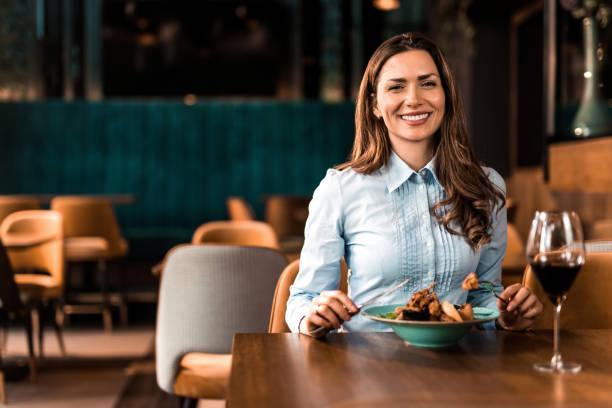
The restaurant he’d chosen was one of those Manhattan establishments where the lighting is deliberately dim, the acoustics designed to swallow secrets, and the prices printed without dollar signs because if you have to ask, you don’t belong. Le Bernardin? No. Somewhere newer, trendier—the kind of place where tech money meets old world elegance and everyone pretends the contradiction doesn’t exist.
I arrived first, as instructed. My husband, James, was always late to things he considered beneath his immediate attention, which included most activities that involved me. The hostess led me to a corner booth upholstered in midnight blue velvet that felt like sin under my fingertips. I ordered sparkling water and waited, watching the door, practicing the expression I’d wear when he arrived: pleasant but not eager, present but not demanding.
Decoration with a pulse.
When James finally swept through the entrance twenty minutes later, he was already on his phone, already elsewhere even as he slid into the booth beside me instead of across from it. The message was clear: we were a unit, a package deal, him with his attractive wife as proof of his success. Under the table, his Italian leather shoe found my shin—tap, tap—a physical reminder of the script we were performing.
“Just smile,” he murmured without looking at me, his attention already scanning the restaurant for his guest. “Don’t make this weird. This deal is important.”
Everything was always important. Everything except me.
“Of course,” I said softly, and I meant it. I had become very good at meaning the things I said, even when I didn’t mean them at all.
The client arrived like weather—inevitable, transformative, impossible to ignore. Monsieur Lauron was tall in the way Europeans often are, with silver threading through dark hair and the kind of weathered elegance that suggested yacht clubs and winter chalets and summers on the Côte d’Azur. His suit was understated in that way that screams expense, each line speaking of tailors who measure in millimeters and charge in thousands.
“James!” His accent rolled the name into something softer, more lyrical. They shook hands with the enthusiasm of men who see profit in each other’s eyes.
“Monsieur Lauron, please, call me Jim. And this,” he gestured toward me with the casualness of someone indicating a piece of furniture, “is my wife, Chloe.”
I extended my hand. Monsieur Lauron took it with a slight bow, his lips not quite touching my knuckles, his eyes kind in a way that made something in my chest ache. “Enchanté, Madame.”
“Lovely to meet you,” I replied in careful, American-accented English. Not a hint of the four years I’d spent in Paris. Not a whisper of the language that still sometimes filled my dreams.
That was my first lie of the evening.
There would be many more.
For the first half hour, the conversation flowed in English—safe, professional, punctuated by laughter that sounded genuine but wasn’t, not really. They discussed markets and margins, timelines and projections. James was in his element, gesturing with his wine glass, dropping names like breadcrumbs leading to his own importance. I sipped my water and smiled at the appropriate moments, my eyes drifting occasionally to the other diners, the soft candlelight, anywhere but the two men dissecting numbers like they were performing surgery.
Then the sommelier arrived with the wine list.
It was bound in leather, heavy with pages, presented to James like a sacred text. He made a show of considering it, though I knew he’d already decided. James always decided everything in advance.
“What do you recommend for the lady?” Monsieur Lauron asked politely, including me in the moment with a warmth that felt almost radical.
James barely glanced my way. “She’ll have whatever we’re having. She’s not particular.”
Another small death. Another moment of being erased.
But it was what happened next that changed everything.
James leaned toward Monsieur Lauron, his voice dropping into something more intimate, and switched to French. His accent was decent—he’d taken lessons for six months specifically for this deal—but it lacked the fluid ease of someone who’d lived inside the language, who’d dreamed in it, who’d argued with landlords and flirted in café corners and learned that some things can only be said in certain tongues.
“Entre nous,” James began, his tone conspiratorial, “ma femme ne comprend pas vraiment ces choses. Les affaires, je veux dire.” Between us, my wife doesn’t really understand these things. Business, I mean.
I kept my expression neutral, my hands folded in my lap like a good girl at prayer.
Monsieur Lauron made a noncommittal sound, but James was already continuing, emboldened by wine and assumption and the absolute certainty that I couldn’t understand.
“Elle est—comment dire—decorative.” She is—how to say—decorative. He laughed lightly, as if this were amusing rather than devastating. “Jolie, bien sûr, mais pas exactement une partenaire dans le vrai sens du terme.” Pretty, of course, but not exactly a partner in the true sense of the term.
Something inside me went very still. Not frozen—that implies a loss of control, a surrender to shock. No, this was something else. A sharpening. A focusing. Like when you press your thumb against a blade to test its edge and feel the moment just before it breaks skin.
I reached for my water glass, my hand steady, and took a small sip.
Monsieur Lauron shifted in his seat, clearly uncomfortable. “Monsieur Hartley, peut-être nous devrions—” Mr. Hartley, perhaps we should—
But James waved him off, too pleased with himself to read the room. “Non, non, c’est parfait. Elle ne sait rien.” No, no, it’s perfect. She knows nothing. He gestured at me as if I were an abstract concept rather than a person sitting eighteen inches away. “Je peux parler librement.” I can speak freely.
And speak freely he did.
Over the next twenty minutes, as appetizers arrived and were consumed, as wine was poured and bread was broken, my husband laid out his plan in perfect, damning detail. The deal with Lauron would close by Friday—today, I realized, calculating backward—and immediately after, he would “nettoyer les choses.” Clean things up.
The things, I understood with growing horror, were me.
“Les avocats sont prêts,” he said casually, cutting into his scallops. The lawyers are ready. “Tout sera transféré avant qu’elle comprenne ce qui se passe.” Everything will be transferred before she understands what’s happening. “Les comptes, les propriétés, même les actions qu’elle pense être à son nom.” The accounts, the properties, even the stocks she thinks are in her name.
He’d choreographed my own erasure like it was a ballet.
“C’est peut-être un peu… cruel?” Monsieur Lauron suggested carefully. Perhaps it’s a bit… cruel?
James shrugged with the ease of someone for whom cruelty was a tool rather than a moral failing. “Les affaires sont les affaires. Et franchement, elle sera mieux sans les complications.” Business is business. And frankly, she’ll be better off without the complications. He smiled then, a smile I’d seen a thousand times but never understood until that moment. “Propre. Simple. Pas de drame.” Clean. Simple. No drama.
I watched his mouth form the words. I felt my heart beating against my ribs like something caged and frantic. But my face—my face remained a mask of polite incomprehension, the expression of a woman thinking about nothing more pressing than whether to order dessert.
This is what years of marriage to James had taught me: how to disappear while remaining visible.
The rest of the dinner passed in a blur of French and English, declarations and lies. Monsieur Lauron grew quieter as the evening progressed, his responses more measured, his glances toward me more frequent and weighted with something that might have been pity or might have been respect or might have been both.
When the check came—paid, of course, by James with a flourish of platinum—we said our goodbyes on the sidewalk. The city hummed around us, Friday night in Manhattan, everyone going somewhere, everyone certain of their destination.
“Au revoir, Madame Hartley,” Monsieur Lauron said, taking my hand once more. “Ce fut un plaisir.” It was a pleasure.
I met his eyes and allowed myself the tiniest deviation from script. “Tout le plaisir était pour moi, Monsieur.” All the pleasure was mine. My accent was flawless, my pronunciation perfect, my meaning clear.
The pleasure of learning exactly who my husband was.
His eyes widened fractionally. Understanding flickered across his face, followed by something else—alarm? Warning? But James was already hailing a car, already moving us toward the next scene in his carefully orchestrated production, and the moment passed.
In the town car heading uptown, James was jubilant. He loosened his tie, spread his legs wide in that way men do when they feel they’ve conquered something. “You were perfect,” he said, his English now that he believed we were alone feeling almost like an insult. “Exactly what I needed you to be.“
“What’s that?” I asked quietly.
“Invisible.“
The word hung between us like smoke.
I turned to look out the window, watching the city stream past in ribbons of light and shadow. My reflection stared back at me, unfamiliar. Or perhaps finally familiar. Perhaps this was who I’d been becoming all along and simply hadn’t had the courage to acknowledge.
When I didn’t respond, James reached over and patted my knee, the gesture both possessive and dismissive. “Don’t pout. You’ll get your shopping money. I’ll make sure you’re… comfortable.“
Comfortable. Like a pet. Like something kept rather than loved.
“How generous,” I said, and he missed the edge in my voice entirely because he’d stopped listening to my actual words years ago.
We rode the rest of the way in silence.
The penthouse was ablaze when we arrived, every light burning, music drifting from the speakers—Sinatra, because James thought it made him sophisticated. He’d given me a key years ago with great ceremony, made a whole speech about trusting me with “his space,” but somewhere along the way, the apartment had stopped feeling like ours and started feeling like his, the way everything eventually did.
The elevator opened directly into the foyer, and I heard them before I saw them.
Voices. Laughter. The clink of crystal.
James’ sister, Victoria, was sprawled on my white sofa—my sofa that I’d spent weeks selecting, fighting for, defending against James’ preference for leather and chrome. She wore her usual armor of Chanel and disdain, her legs crossed at the ankle, a champagne flute dangling from manicured fingers.
At the bar, Victoria’s husband, Marcus, was playing bartender, pouring my Veuve Clicquot like it was tap water, making himself at home in the space I’d tried so hard to make mine.
“Finally!” Victoria trilled when she saw us. “We were beginning to think you’d gotten lost.“
“What’s going on?” I asked, though I already knew. Could feel it in the air like electricity before a storm.
James kissed his sister’s cheek, accepted a drink from Marcus, settled into the room like a king returning to his throne. “Just a little celebration. Didn’t I mention it?“
He hadn’t. Of course he hadn’t.
“The deal closed,” Marcus announced, raising his glass. “To new ventures and fresh starts.“
They toasted. All three of them. I stood in the doorway of my own home and watched them celebrate something I didn’t understand but could feel pressing against my skin like a blade.
On the coffee table, arranged with the casual precision of a threat, sat a manila folder. The tab was labeled in the same font James’ company used for official documents: ASSET LIQUIDATION — J & C.
J for James.
C for Chloe.
My name. My assets. My liquidation.
“Come sit, Chloe,” Victoria purred, patting the cushion beside her. “We should discuss some logistics.“
I crossed the room slowly, each step measured, my heels clicking against the marble floor like a countdown. “What kind of logistics?“
“Paperwork, mostly.” Marcus had that tone, the one men use when they’re about to explain something they think you won’t understand. “Just some restructuring of holdings. Standard stuff during a transition.“
“What transition?“
The question hung in the air. Victoria and Marcus exchanged glances. James took a long sip of his drink, his back to me, his shoulders tight in a way that suggested he was bracing for something.
“Chloe,” Victoria began, her voice dripping with false sympathy, “you had to know this wasn’t working.“
“What wasn’t working?“
“This. You and James. The whole… arrangement.” She waved her hand vaguely, encompassing our marriage, our home, my entire existence. “It’s time to be realistic. Time to make a clean break.“
I looked at the folder. At the three of them. At James, still refusing to face me.
“I see,” I said quietly. “And this is how we’re doing it? Ambush by family?“
“Don’t be dramatic,” James said, finally turning. His face was flushed—from drink or anticipation or the simple cruelty of the moment, I couldn’t tell. “This is business. The company needs to consolidate. The assets need to be reallocated. It’s not personal.“
Everything was personal. How had I missed that?
“When?” I asked.
“Monday,” Victoria supplied. “The papers will be filed Monday morning. We just need your signature on a few things tonight.“
I walked to the coffee table and picked up the folder. It was heavy. Inside were page after page of legal documents, transfer forms, releases and waivers and acknowledgments. My name appeared again and again, X’s marking where I was meant to sign away pieces of myself.
Shell companies I’d never heard of. Accounts I didn’t know existed. Debts attributed to my spending, my lifestyle, my apparent financial incompetence.
It was brilliant, really. A complete rewriting of history.
“What if I don’t sign?” I asked.
Victoria laughed, actually laughed. “Darling, look at the documents. Look at the dates, the signatures. Half of these are already processed. We’re asking for your consent as a courtesy, not a requirement.“
“A courtesy,” I repeated.
“Think of it as a generous severance package,” Marcus added. “James is offering you the apartment in Brooklyn, your car, and a monthly allowance for two years while you… transition.“
The apartment in Brooklyn that James had bought as an investment and complained about constantly. The car that was registered in his company’s name. An allowance like I was a child who needed supervision.
In exchange, I would lose everything else. The home I’d decorated. The savings I’d contributed to. The stock options I’d thought were mine. The future I’d imagined, naive as that imagination had been.
I set the folder down carefully. “I need to use the bathroom.“
“Now?” James sounded annoyed, as if my bodily functions were an inconvenience to his timeline.
“Unless you’d prefer I do it here on your sister’s shoes.“
Victoria recoiled. “Crass, Chloe. Even for you.“
I walked away without responding, down the hall to the master bath with its heated floors and rainfall shower and the mirror that had witnessed a thousand mornings of me trying to become small enough to be loved.
I locked the door.
My hands were shaking now, the adrenaline finally breaking through the shock. I pulled out my phone and opened the photo I’d taken discreetly of one of the summary pages while they were busy pouring drinks and congratulating themselves.
The light was poor, the angle wasn’t perfect, but I could read enough. Account numbers. Transfer dates. Names of companies that sounded legitimate but felt hollow. And there, buried in the fourth paragraph: details about James’ deal with Lauron.
Not just any deal. The deal.
James was selling something that didn’t belong to him—proprietary client data from his firm, information worth millions, secrets people had trusted him with. Dressed up as innovation, packaged as proprietary software, but built on stolen foundations.
The deal with Lauron wasn’t just about money. It was about escape. About having enough to run, to rebuild, to start over somewhere my lawyers couldn’t reach and his reputation wouldn’t follow.
And I was the liability he needed to eliminate first.
I sat on the edge of the bathtub, my dress pooling around me like blood, and I felt something shift. The woman who’d walked into that restaurant—polite, obedient, convinced that if she just tried hard enough she could earn the love she’d been promised—that woman was gone.
In her place was someone sharper. Angrier. Someone who spoke French.
I stayed in the bathroom for twenty minutes, letting them wonder, letting them worry I might do something unpredictable. When I emerged, my makeup was perfect, my smile was calm, and I’d made several decisions.
“I’ll look over the documents tonight,” I announced. “Have my lawyer review them Monday morning.“
“Chloe—” James started.
“Monday,” I repeated firmly. “You can wait forty-eight hours for me to understand what I’m signing. If it’s all as standard and generous as you say, there’s no reason to rush.“
Victoria looked like she wanted to argue, but Marcus put a hand on her arm. “That’s fair. Monday’s fine.“
It had to be fine because I’d said it in a tone that suggested I might become difficult otherwise, and difficult wives were unpredictable, and unpredictable variables ruined carefully laid plans.
They left shortly after, Victoria air-kissing my cheeks like we were friends, Marcus offering a handshake like we were colleagues. James walked them to the elevator, and I heard him laughing in the hallway, the sound of a man who believed he’d won.
When he came back inside, I was on the sofa with the folder, a pen in my hand, playing the part he expected.
“Smart choice,” he said. “This way is better for everyone.“
“Of course,” I agreed. “You’re right. Like always.“
He smiled, satisfied, and headed to his office to make calls, to move money, to close loops and finalize schemes.
I waited until I heard his voice behind the closed door, confident and carrying.
Then I went to work.
James’ home office was off-limits under normal circumstances, but these weren’t normal circumstances, and the rules had changed even if he didn’t know it yet. He kept files there—backups of backups, the paper trail of a man who trusted technology but loved the security of physical copies.
At three in the morning, while he snored in our bed, I picked the lock with a hairpin and a YouTube tutorial education. My hands shook. My heart hammered. But I got inside.
And I found everything.
Bank statements showing transfers to offshore accounts. Emails printed and filed about the Lauron deal. NDAs that clients had signed, information they’d trusted him with, data he’d promised to protect. Names, numbers, secrets—all of it packaged and ready to sell.
I photographed everything with my phone, uploaded it to a cloud drive under my maiden name, and put everything back exactly as I’d found it.
Dawn was breaking when I finished, pink light creeping through the windows, the city waking up below us. I made coffee. I sat at the kitchen island. I looked at the woman in the reflection of the dark window and barely recognized her.
But I liked her better than the woman I’d been.
Monday morning, I didn’t go to my lawyer. Instead, I went to the bank—my bank, the one I’d had since college, separate from James, one of the few things I’d kept to myself. I withdrew enough cash for a plane ticket and a hotel. I closed the account. I thanked the teller and walked out into the autumn sunshine feeling lighter than I had in years.
That afternoon, I bought a ticket to Paris under my maiden name—Chloe Davis, not Chloe Hartley, not Mrs. Anyone. One way. Leaving Wednesday.
And then I wrote an email.
Monsieur Lauron,
I hope this message finds you well. We met briefly on Friday evening at dinner with my husband, James Hartley. You may not remember me—I was the decoration, the one who didn’t understand business, the one who was meant to stay quiet and unnoticed.
But I understood every word.
I’m writing to you now in the hopes that you value integrity in your business dealings as much as my husband claims you do. Attached you will find documentation that I believe you’ll find extremely relevant to your recent agreement with James.
I’m not asking for anything. I’m not seeking revenge or compensation. I simply believe you deserve to know exactly what you’ve purchased, and from whom, before Friday’s celebration makes everything permanent.
The papers describe proprietary software and innovative data solutions. What they don’t describe is that the data is stolen, the clients are unaware, and the entire foundation of this deal is built on information James has no legal right to sell.
I’ve copied legal counsel on this email as well as the appropriate regulatory authorities. Not because I want to hurt James—though I won’t pretend the thought doesn’t bring some satisfaction—but because people trusted him with their information, their privacy, their secrets, and he’s selling them like commodities.
I’ve learned recently that silence isn’t always kindness. Sometimes it’s complicity.
Thank you for your time, and my apologies for any disruption this may cause to your Friday evening.
Respectfully, Chloe Davis
I hit send before I could second-guess myself.
Then I packed a single suitcase—only things I’d bought with my own money, only clothes that felt like mine rather than his. I left behind the jewelry he’d given me, the designer handbags, the shoes he liked me to wear. Let Victoria have them. Let them be auctioned or thrown away or burned for all I cared.
They weren’t mine. They’d never been mine. They were props in someone else’s story.
Wednesday morning came wrapped in rain. I told James I had a spa day, that I needed to think, that I’d be back for dinner. He barely looked up from his laptop, already focused on Friday, on the celebration, on counting money that wasn’t quite his yet.
“Take the AmEx,” he said. “Get your nails done. You look tired.“
I left the AmEx on the kitchen counter.
I took a taxi to JFK. I boarded the plane. I flew across an ocean and landed in a version of myself I’d forgotten existed.
The woman who spoke French fluently, who’d once believed she could be anything, who hadn’t yet learned to fold herself into shapes that fit other people’s expectations.
Friday evening in Paris, I was sitting in a café on the Left Bank, drinking wine that cost less than the appetizers at Le Bernardin and tasted infinitely better. My phone was off. My future was uncertain. My marriage was over even if the paperwork wasn’t official yet.
And I was happy.
Across the Atlantic, at the Plaza Hotel in Manhattan, James was discovering that Monsieur Lauron had canceled. That the deal was dead. That lawyers were asking questions and regulators were reviewing files and everything he’d built on lies was crumbling like wet sand.
I heard about it later from Victoria, who called me screaming, who somehow blamed me even though she couldn’t figure out how I’d done it, who accused me of sabotage and manipulation and everything James had actually done to me.
I let her yell herself out. Then I said, very calmly, in perfect French: “Je ne comprends pas.“
I don’t understand.
And I hung up.
The divorce took eight months. It was ugly, public, expensive. James tried every trick, every manipulation, every lawyer’s gambit. But the evidence spoke for itself, and I’d learned to speak up.
In the end, I kept my name—the one I’d been born with, the one I should have never abandoned. I kept my dignity. I kept my knowledge that silence and invisibility aren’t the same as stupidity or weakness.
And I kept Paris.
Sometimes, late at night, I wonder what would have happened if I’d never learned French. If I’d been exactly what James thought I was—decorative, shallow, easy to discard. Maybe I’d have signed those papers. Maybe I’d be in that Brooklyn apartment right now, living on an allowance, still trying to understand where it all went wrong.
But I did learn French. I did understand. And understanding changed everything.
They say revenge is a dish best served cold, but that’s not quite right. Revenge is a language you speak fluently while pretending you don’t understand a word. It’s a game where you let your opponent believe they’re winning right up until the moment you flip the board.
It’s walking into a room full of people who underestimated you and showing them exactly how wrong they were.
My name is Chloe Davis. I’m thirty-one years old. I live in Paris. I’m learning to take up space again, to speak loudly, to be anything but invisible.
And I never, ever pretend not to understand anymore.
THE END

Adrian Hawthorne is a celebrated author and dedicated archivist who finds inspiration in the hidden stories of the past. Educated at Oxford, he now works at the National Archives, where preserving history fuels his evocative writing. Balancing archival precision with creative storytelling, Adrian founded the Hawthorne Institute of Literary Arts to mentor emerging writers and honor the timeless art of narrative.